

- Industry Size (2026)
- USD 826.7 Mn
- Forecast (2036)
- USD 1903.9 Mn
- CAGR (2026 to 2036)
- 8.7%
Non-Metal Antifreeze and Coolant Formulations Market Forecast and Outlook 2026 to 2036
The non-metal antifreeze and coolant formulations market is expected to experience steady growth from 2026 to 2036. In 2026, the market value is projected to be USD 826.7 million, with growth anticipated to reach USD 1,903.9 million by 2036. The compound annual growth rate (CAGR) for this market is forecasted at 8.7%, driven by increasing demand for environmentally friendly and non-toxic antifreeze and coolant formulations in various industries such as automotive, industrial, and HVAC systems. Non-metal antifreeze and coolants are gaining popularity due to their ability to offer efficient cooling without the environmental and health risks associated with traditional metal-based formulations.
The market’s growth is supported by rising environmental awareness, increased adoption of electric vehicles (EVs), and stricter regulations on the use of toxic chemicals. As electric vehicles and alternative energy solutions grow in popularity, the demand for safer and more sustainable antifreeze and coolant solutions is expected to rise. Furthermore, innovations in formulation technologies will enhance the performance and environmental benefits of these products, driving the market forward. Over the forecast period, the market is expected to experience steady growth, driven by these trends and technological advancements.
Quick Stats of the Non-Metal Antifreeze and Coolant Formulations Market
- Non-Metal Antifreeze and Coolant Formulations Market Value (2026): USD 826.7 million
- Non-Metal Antifreeze and Coolant Formulations Market Forecast Value (2036): USD 1,903.9 million
- Non-Metal Antifreeze and Coolant Formulations Market Global Forecast CAGR (2026-2036): 8.7%
- Non-Metal Antifreeze and Coolant Formulations Market Leading Segment: End-Use Industry (Automotive & EV) 36%
- Key Growth Regions in Non-Metal Antifreeze and Coolant Formulations Market: India
- Top Players in Non-Metal Antifreeze and Coolant Formulations Market: BASF SE, Dow Inc., Chevron Oronite, Shell Chemicals, TotalEnergies
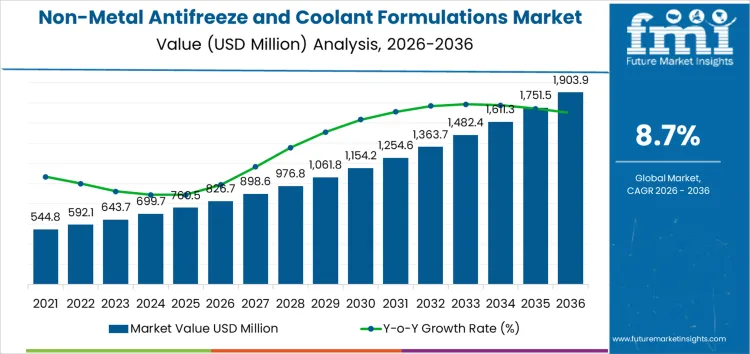
What is the Growth Forecast for the Non-Metal Antifreeze and Coolant Formulations Market through 2036?
The growth rate volatility index for the non-metal antifreeze and coolant formulations market shows moderate fluctuations throughout the forecast period. The market begins with a steady growth trajectory in the early years, particularly from 2026 to 2031, with a predictable increase in demand driven by technological adoption and regulatory compliance. However, as the market matures and a significant number of industries adopt non-metal formulations, the growth rate may experience periods of stabilization in the later years, particularly after 2031.
The volatility index reflects these gradual changes, showing that the early phase of adoption (2026-2031) will see a more rapid increase in demand as industries transition to safer, non-toxic alternatives. The later phase (2031-2036) will likely exhibit a slower rate of growth as the market approaches saturation, with further gains driven by incremental improvements in formulation technology rather than major shifts in industry adoption. The overall volatility will remain moderate, indicating a stable but growing market throughout the forecast period.
Non-Metal Antifreeze and Coolant Formulations Market Key Takeaways
| Metric | Value |
|---|---|
| Industry Sales Value (2026) | USD 826.7 million |
| Industry Forecast Value (2036) | USD 1,903.9 million |
| Industry Forecast CAGR (2026-2036) | 8.7% |
What Is Driving the Demand for the Non-Metal Antifreeze and Coolant Formulations Market Globally?
The global demand for non metal antifreeze and coolant formulations is driven by heightened regulatory pressure on traditional metal based formulations and a growing emphasis on environmental and human health safety. Conventional coolants often contain corrosion inhibitors based on silicates, phosphates, or borates combined with ethylene glycol or propylene glycol, and while effective, some metal related chemistries can lead to disposal challenges, increased aquatic toxicity, or strained wastewater treatment profiles. In response, automotive OEMs, heavy equipment manufacturers, and industrial end users are turning to non metallic corrosion inhibiting additives, such as organic acids, carboxylates, and tailored polymeric inhibitors, that provide effective protection for aluminium, magnesium, and mixed metal heat exchange systems without introducing metal ions that may accelerate galvanic corrosion or complicate recycling.
Environmental regulations in Europe, North America, and Asia Pacific increasingly restrict hazardous constituents and push for formulations with improved biodegradability, lower aquatic toxicity, and reduced burden on end of life handling. Concurrently, fleet operators and vehicle owners are prioritising longer service intervals, reduced maintenance costs, and coolants that deliver stable thermal performance across varied climate conditions, which reinforces adoption of non metal alternatives that can maintain efficiency and component longevity without reliance on traditional metal based inhibitors.
Future demand for non metal antifreeze and coolant formulations is expected to grow as vehicle electrification, hybrid platforms, and advanced thermal management systems become more prevalent in both automotive and industrial sectors. Electric and hybrid vehicles, with their sophisticated battery and power electronics cooling requirements, benefit from coolant chemistries that are thermally stable, electrically non conductive, and compatible with diverse materials, criteria that align closely with non metal inhibitor systems. Advances in additive technology are improving the protective performance of organic and polymer based corrosion inhibitors, enabling extended intervals between fluid changes and reduced total cost of ownership.
Expansion of green procurement policies and sustainability reporting tied to extended producer responsibility will further encourage adoption of formulations with reduced environmental impact throughout the lifecycle. Growth in heavy duty equipment, off road machinery, and power generation assets in emerging markets will sustain demand for coolants that can withstand harsh operating conditions while minimising ecological footprint. As regulatory frameworks continue to tighten limits on hazardous substances and end users prioritise operational efficiency and environmental stewardship, the non metal antifreeze and coolant formulations market is expected to expand steadily across global applications.
What are the Leading Segments in the Global Non-Metal Antifreeze and Coolant Formulations Market?
The global non-metal antifreeze and coolant formulations market is segmented by formulation type and end-use industry. Among formulation types, organic acid technology (OAT) leads the market, capturing 32% of the share, followed by hybrid organic acid technology (HOAT), polypropylene glycol-based formulations, bio-based & glycerin coolants, and other metal-free coolant systems. OAT formulations are preferred due to their superior long-term protection and reduced environmental impact. On the end-use industry side, automotive & EV dominates the market, holding 36% of the share, followed by industrial machinery, data centers & cooling systems, HVAC and refrigeration, and marine & aerospace. The automotive and electric vehicle (EV) sectors are the largest consumers of non-metal antifreeze and coolant formulations due to their critical role in vehicle engine cooling and thermal management systems.
What Drives the Growth of Organic Acid Technology (OAT) in the Non-Metal Antifreeze and Coolant Formulations Market?
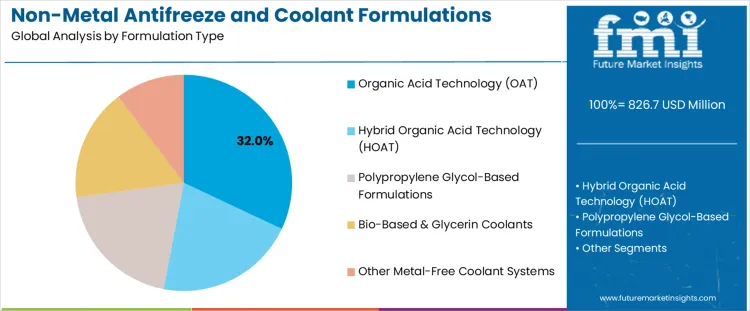
Organic acid technology (OAT) is the leading formulation type in the non-metal antifreeze and coolant formulations market, holding 32% of the share. OAT-based coolants are highly valued for their ability to provide long-lasting protection against corrosion, scale buildup, and engine overheating. They are more environmentally friendly compared to traditional coolants due to their reduced use of toxic metals such as silicates and phosphates. OAT formulations also offer extended service life, which reduces the need for frequent coolant changes and contributes to cost savings in both automotive and industrial applications. The rising demand for sustainable, high-performance coolants in industries like automotive, especially with the growing adoption of electric vehicles (EVs), is driving the increasing adoption of OAT-based coolants. As regulations on coolant safety and environmental impact continue to tighten, OAT coolants are expected to maintain their dominant position in the market.
What is Driving the Demand for Automotive & EV in the Non-Metal Antifreeze and Coolant Formulations Market?
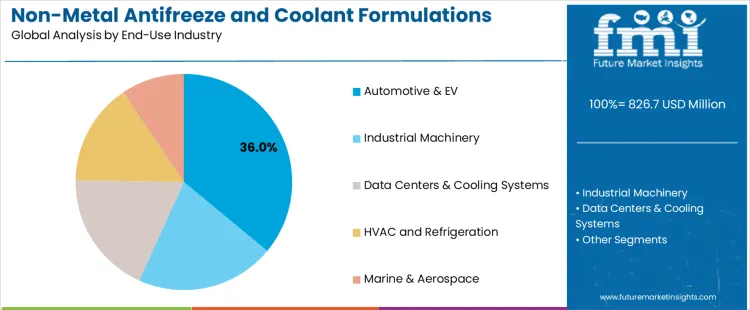
Automotive & EV is the leading end-use industry in the non-metal antifreeze and coolant formulations market, capturing 36% of the share. This growth is driven by the increasing demand for high-performance coolants that can effectively manage the thermal management systems of both internal combustion engine (ICE) vehicles and electric vehicles (EVs). In particular, EVs require coolants that can efficiently manage battery and motor temperatures, which is a key challenge in maintaining the vehicle's performance and lifespan. Non-metal antifreeze and coolant formulations, especially those based on OAT and bio-based glycerin, are increasingly being adopted in both traditional automotive and EV applications due to their superior performance, environmental benefits, and sustainability. As the automotive industry shifts toward greener, more energy-efficient vehicles, the demand for non-metal, eco-friendly coolants is expected to continue growing, further driving the dominance of the automotive & EV sector in the market.
What are the Key Dynamics in the Global Non-Metal Antifreeze and Coolant Formulations Market?
The global non metal antifreeze and coolant formulations market is growing as automotive, industrial and specialty equipment manufacturers shift toward coolant solutions that deliver effective heat transfer and freeze protection while minimizing corrosion, environmental risks and metal ionic additives. Non metal formulations typically rely on organic acids, glycol based carriers and advanced inhibitors that protect aluminum, plastics and mixed metal systems increasingly found in modern engines and heat exchange applications. Growth is supported by stricter emissions and sustainability standards, longer service intervals, and demand for coolants that align with advanced material compatibility and performance expectations across diverse geographies.
What are the Key Drivers for the Non Metal Antifreeze and Coolant Formulations Market?
A primary driver is increasing use of lightweight and mixed material engine components in passenger vehicles, commercial trucks and electric hybrid systems that require corrosion protection without heavy reliance on traditional metal based inhibitors. Regulatory pressure to improve environmental performance, such as reduced ecotoxicity and biodegradability, encourages adoption of non metal organic acid technology (OAT) and hybrid organic acid technology (HOAT) coolants. Expanded industrial applications, including power generation, construction equipment and marine systems, further support demand for versatile coolant chemistries. Consumer preference for longer coolant life, reduced maintenance cycles and robust thermal management advances market uptake.
What are the Restraints for the Non Metal Antifreeze and Coolant Formulations Market?
A key restraint is the technical challenge of balancing high temperature thermal capacity with corrosion inhibition over extended service life, particularly in heavy duty and extreme duty applications. Some older coolant systems and legacy engines are optimized for traditional inorganic additive technology (IAT), which may limit immediate transition to non metal formulations without compatibility testing. Initial formulation and validation costs for advanced non metal coolants, especially in specialty industrial segments, can be higher than basic antifreeze products, influencing pricing sensitivity. Variability in regional standards and certification requirements for coolant performance adds complexity for global suppliers and OE integration.
What are the Key Trends in the Non Metal Antifreeze and Coolant Formulations Market?
A key trend is growth of long life coolant technologies that extend drain intervals and reduce waste, supporting sustainability and lower lifecycle cost of ownership. Manufacturers are investing in organic acid and polymeric inhibitor systems that resist degradation and provide stable protection for aluminum and mixed metal systems. Bio based and biodegradable carrier fluids are emerging to meet stricter environmental and ecotoxicity criteria. Integration of digital monitoring systems in vehicles and industrial equipment enables predictive coolant health tracking, reinforcing specification of advanced formulations. Collaboration between OEMs, formulators and aftermarket channels is increasing to standardize non metal coolant performance and encourage broader adoption across sectors.
What is the Country-Wise Analysis of the Non-Metal Antifreeze and Coolant Formulations Market?
The non-metal antifreeze and coolant formulations market is expected to grow steadily, driven by increasing demand for eco-friendly and efficient solutions in automotive and industrial cooling systems. These formulations, which are free of metals like boron and silicates, are gaining popularity due to their improved performance, environmental safety, and lower toxicity compared to traditional coolants. High-growth markets such as India and China are experiencing strong demand due to their rapidly expanding automotive and industrial sectors. Developed markets such as the United States, Germany, and South Korea are also seeing steady growth, supported by stricter environmental regulations, a focus on sustainable technologies, and the increasing adoption of electric and hybrid vehicles, which require advanced cooling solutions.
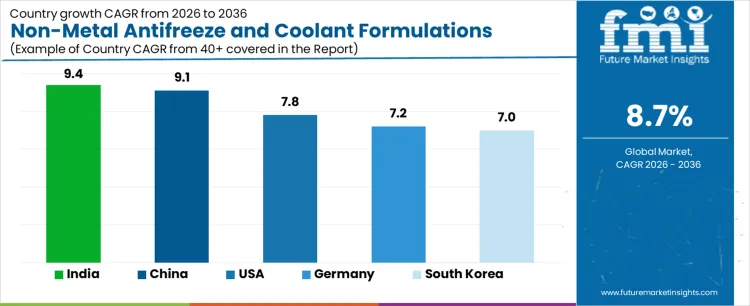
| Country | CAGR (2026-2036) |
|---|---|
| India | 9.4% |
| China | 9.1% |
| United States | 7.8% |
| Germany | 7.2% |
| South Korea | 7% |
What is the Growth Outlook for the Non-Metal Antifreeze and Coolant Formulations Market in India?
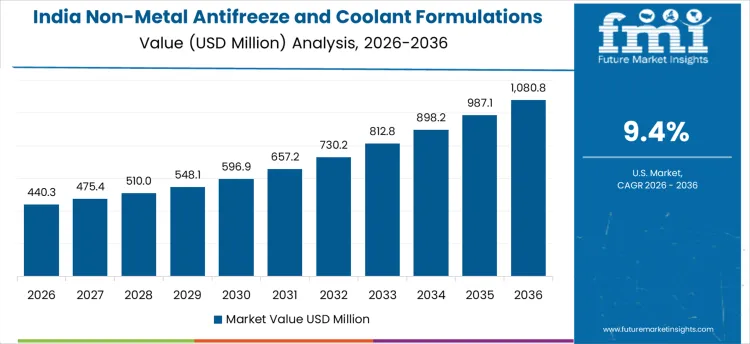
The non-metal antifreeze and coolant formulations market in India is expected to grow at the highest rate, with a projected CAGR of 9.4%. India’s rapidly expanding automotive sector, driven by rising vehicle production and a growing consumer base, is a key factor driving the demand for these advanced coolants. As the automotive industry embraces greener technologies, including electric and hybrid vehicles, the need for efficient, non-toxic, and environmentally safe coolant formulations is increasing. Additionally, India’s rising industrialization and infrastructure development are further boosting demand for non-metal coolants in industrial machinery and equipment. Government policies promoting the adoption of eco-friendly products and reducing toxic emissions are expected to support continued growth in the market. As India continues to modernize its automotive and industrial sectors, the market for non-metal antifreeze and coolant formulations is set for significant expansion.
What is the Market Outlook for the Non-Metal Antifreeze and Coolant Formulations Market in China?
The non-metal antifreeze and coolant formulations market in China is projected to grow steadily, with a projected CAGR of 9.1%. As China’s automotive and industrial sectors continue to grow rapidly, the demand for advanced cooling solutions is increasing. The shift towards electric vehicles (EVs) and the increasing need for sustainable and safe coolants are driving the market for non-metal antifreeze formulations. China’s focus on improving air quality and reducing emissions has led to stricter regulations on automotive coolants, further encouraging the adoption of eco-friendly, non-toxic alternatives. Moreover, as Chinese manufacturers aim to meet global sustainability standards, non-metal coolants are becoming more widely used. The combination of increased industrialization, government regulations, and the rising popularity of electric vehicles is expected to fuel continued demand for non-metal antifreeze and coolant formulations in China.
What is the Growth Forecast for the Non-Metal Antifreeze and Coolant Formulations Market in the United States?
The non-metal antifreeze and coolant formulations market in the United States is expected to grow steadily, with a projected CAGR of 7.8%. In the U.S., the increasing adoption of electric and hybrid vehicles, along with growing environmental concerns, is driving the demand for advanced, non-toxic antifreeze and coolant solutions. As environmental regulations on automotive fluids become more stringent, manufacturers are moving towards greener alternatives, including non-metal antifreeze formulations. The U.S. automotive and industrial sectors are key drivers of market growth, with increasing investments in vehicle innovation and machinery upgrades. Additionally, rising consumer awareness of the environmental impact of traditional coolants is encouraging the adoption of safer, more sustainable formulations. The market is expected to continue expanding as the demand for electric vehicles and energy-efficient solutions increases.
What is the Market Outlook for the Non-Metal Antifreeze and Coolant Formulations Market in Germany?
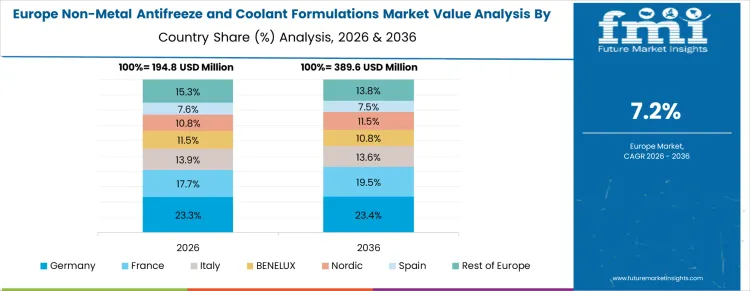
The non-metal antifreeze and coolant formulations market in Germany is projected to grow steadily, with a projected CAGR of 7.2%. Germany’s automotive industry, which is one of the largest in Europe, is increasingly focused on sustainability, pushing demand for non-metal antifreeze formulations. With growing environmental regulations, stricter emissions standards, and the shift toward electric and hybrid vehicles, there is a rising demand for eco-friendly coolants. Additionally, Germany’s commitment to reducing the use of toxic substances in industrial and automotive applications is driving the adoption of these safer alternatives. The market growth in Germany is also supported by the increasing awareness of the need for efficient, environmentally safe products across various sectors, including automotive, machinery, and equipment manufacturing.
What are the Growth Prospects for the Non-Metal Antifreeze and Coolant Formulations Market in South Korea?
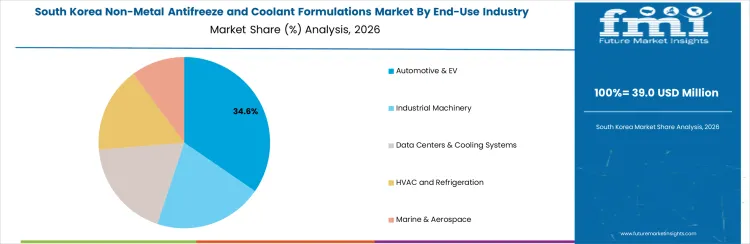
The non-metal antifreeze and coolant formulations market in South Korea is expected to grow at a moderate pace, with a projected CAGR of 7%. South Korea’s advanced automotive industry, which is rapidly transitioning towards electric vehicles and more energy-efficient solutions, is a key driver of demand for non-metal coolants. The government’s emphasis on sustainability and environmental regulations is also contributing to the growth of the market as manufacturers seek to comply with stricter emission standards and consumer demand for safer, greener products. South Korea’s strong focus on technological innovation and eco-friendly manufacturing practices will continue to support the adoption of non-metal antifreeze and coolant formulations in the automotive and industrial sectors. As the demand for electric vehicles and sustainable solutions grows, South Korea’s market for non-metal antifreeze formulations is set for steady expansion.
What is the Competitive Landscape for the Non-Metal Antifreeze and Coolant Formulations Market?
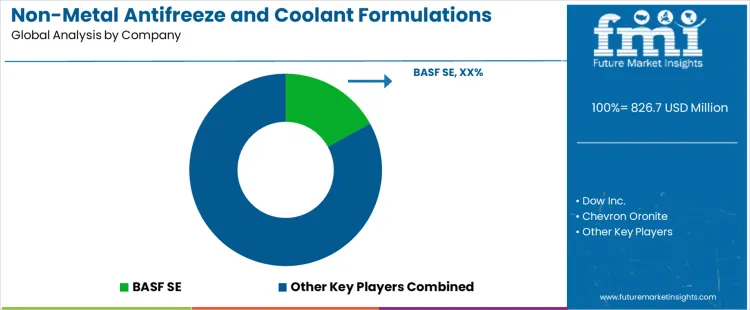
The non-metal antifreeze and coolant formulations market is growing as the demand for sustainable, high-performance coolants increases in automotive, industrial, and commercial applications. BASF SE leads the market with its innovative non-metal antifreeze and coolant formulations, offering solutions designed to provide effective temperature regulation and protection without the use of harmful metals, contributing to safer and more environmentally responsible systems. Their focus on product quality, performance, and sustainability has positioned them as a dominant player. Dow Inc., Chevron Oronite, and Shell Chemicals are key competitors, each offering specialized antifreeze and coolant formulations designed to meet the diverse needs of the market. Dow Inc. provides advanced coolant technologies that optimize system performance, while Chevron Oronite and Shell Chemicals focus on creating high-efficiency, non-metal-based solutions that enhance engine and system protection.
TotalEnergies further strengthens the competitive landscape by offering a range of non-metal antifreeze and coolant formulations designed to meet global regulatory standards and improve the performance of cooling systems. TotalEnergies emphasizes sustainability and innovation in its coolant products. These companies compete by focusing on product performance, environmental impact, and regulatory compliance, offering solutions that meet the growing demand for high-quality, non-metal antifreeze and coolant formulations across various sectors. As the market shifts towards more sustainable solutions, the demand for non-metal coolants is expected to rise, further driving competition and innovation in this space.
Key Players of the Non-Metal Antifreeze and Coolant Formulations Market
- BASF SE
- Dow Inc.
- Chevron Oronite
- Shell Chemicals
- TotalEnergies
Scope of the Report
| Items | Values |
|---|---|
| Quantitative Units (2026) | USD Million |
| Formulation Type | Organic Acid Technology (OAT), Hybrid Organic Acid Technology (HOAT), Polypropylene Glycol-Based Formulations, Bio-Based & Glycerin Coolants, Other Metal-Free Coolant Systems |
| End-Use Industry | Automotive & EV, Industrial Machinery, Data Centers & Cooling Systems, HVAC and Refrigeration, Marine & Aerospace |
| Base Fluid Type | Ethylene Glycol (EG), Propylene Glycol (PG), Bio-Based Glycol & Glycerin, Water-Blended Advanced Coolants, Other Specialty Metal-Free Fluids |
| Company | BASF SE, Dow Inc., Chevron Oronite, Shell Chemicals, TotalEnergies |
| Regions Covered | North America, Latin America, Western Europe, Eastern Europe, South Asia and Pacific, East Asia, Middle East & Africa |
| Countries Covered | United States, Canada, Mexico, Brazil, Argentina, Germany, France, United Kingdom, Italy, Spain, Netherlands, China, India, Japan, South Korea, ANZ, GCC Countries, South Africa |
| Additional Attributes | Dollar by sales by formulation type, end-use industry, base fluid type, and region. Includes market trends in non-metal antifreeze and coolant formulations, focusing on OAT, HOAT, glycol-based, and bio-based coolants. Highlights the role of automotive, industrial machinery, and cooling systems in the antifreeze market. Focus on sustainability, cost-effectiveness, performance, regulatory compliance, market share, and competitive positioning of key companies in the antifreeze and coolant industry. |
Non-Metal Antifreeze and Coolant Formulations Market Segmentation
Formulation Type:
- Organic Acid Technology (OAT)
- Hybrid Organic Acid Technology (HOAT)
- Polypropylene Glycol-Based Formulations
- Bio-Based & Glycerin Coolants
- Other Metal-Free Coolant Systems
End-Use Industry:
- Automotive & EV
- Industrial Machinery
- Data Centers & Cooling Systems
- HVAC and Refrigeration
- Marine & Aerospace
Base Fluid Type:
- Ethylene Glycol (EG)
- Propylene Glycol (PG)
- Bio-Based Glycol & Glycerin
- Water-Blended Advanced Coolants
- Other Specialty Metal-Free Fluids
Region:
- Asia Pacific
- China
- Japan
- South Korea
- India
- Australia & New Zealand
- ASEAN
- Rest of Asia Pacific
- Europe
- Germany
- United Kingdom
- France
- Italy
- Spain
- Nordic
- BENELUX
- Rest of Europe
- North America
- United States
- Canada
- Mexico
- Latin America
- Brazil
- Chile
- Rest of Latin America
- Middle East & Africa
- Kingdom of Saudi Arabia
- Other GCC Countries
- Turkey
- South Africa
- Other African Union
- Rest of Middle East & Africa
Frequently Asked Questions
How big is the non-metal antifreeze and coolant formulations market in 2026?
The global non-metal antifreeze and coolant formulations market is estimated to be valued at USD 826.7 million in 2026.
What will be the size of non-metal antifreeze and coolant formulations market in 2036?
The market size for the non-metal antifreeze and coolant formulations market is projected to reach USD 1,903.9 million by 2036.
How much will be the non-metal antifreeze and coolant formulations market growth between 2026 and 2036?
The non-metal antifreeze and coolant formulations market is expected to grow at a 8.7% CAGR between 2026 and 2036.
What are the key formulation types in the non-metal antifreeze and coolant formulations market?
The key formulation types in non-metal antifreeze and coolant formulations market are organic acid technology (oat), hybrid organic acid technology (hoat), polypropylene glycol-based formulations, bio-based & glycerin coolants and other metal-free coolant systems.
Which end-use industry segment to contribute significant share in the non-metal antifreeze and coolant formulations market in 2026?
In terms of end-use industry, automotive & EV segment to command 36.0% share in the non-metal antifreeze and coolant formulations market in 2026.
Preview the report firsthand - request a free sample
Get SampleGet the brochure for pricing and purchase details.
Get PDFTable of Content
- Executive Summary
- Global Market Outlook
- Demand-side Trends
- Supply-side Trends
- Technology Roadmap Analysis
- Analysis and Recommendations
- Market Overview
- Market Coverage / Taxonomy
- Market Definition / Scope / Limitations
- Market Background
- Market Dynamics
- Drivers
- Restraints
- Opportunity
- Trends
- Scenario Forecast
- Demand in Optimistic Scenario
- Demand in Likely Scenario
- Demand in Conservative Scenario
- Opportunity Map Analysis
- Product Life Cycle Analysis
- Supply Chain Analysis
- Investment Feasibility Matrix
- Value Chain Analysis
- PESTLE and Porter’s Analysis
- Regulatory Landscape
- Regional Parent Market Outlook
- Production and Consumption Statistics
- Import and Export Statistics
- Market Dynamics
- Global Market Analysis 2021 to 2025 and Forecast, 2026 to 2036
- Historical Market Size Value (USD Million) Analysis, 2021 to 2025
- Current and Future Market Size Value (USD Million) Projections, 2026 to 2036
- Y-o-Y Growth Trend Analysis
- Absolute $ Opportunity Analysis
- Global Market Pricing Analysis 2021 to 2025 and Forecast 2026 to 2036
- Global Market Analysis 2021 to 2025 and Forecast 2026 to 2036, By Formulation Type
- Introduction / Key Findings
- Historical Market Size Value (USD Million) Analysis By Formulation Type , 2021 to 2025
- Current and Future Market Size Value (USD Million) Analysis and Forecast By Formulation Type , 2026 to 2036
- Organic Acid Technology (OAT)
- Hybrid Organic Acid Technology (HOAT)
- Polypropylene Glycol-Based Formulations
- Bio-Based & Glycerin Coolants
- Other Metal-Free Coolant Systems
- Organic Acid Technology (OAT)
- Y-o-Y Growth Trend Analysis By Formulation Type , 2021 to 2025
- Absolute $ Opportunity Analysis By Formulation Type , 2026 to 2036
- Global Market Analysis 2021 to 2025 and Forecast 2026 to 2036, By End-Use Industry
- Introduction / Key Findings
- Historical Market Size Value (USD Million) Analysis By End-Use Industry, 2021 to 2025
- Current and Future Market Size Value (USD Million) Analysis and Forecast By End-Use Industry, 2026 to 2036
- Automotive & EV
- Industrial Machinery
- Data Centers & Cooling Systems
- HVAC and Refrigeration
- Marine & Aerospace
- Automotive & EV
- Y-o-Y Growth Trend Analysis By End-Use Industry, 2021 to 2025
- Absolute $ Opportunity Analysis By End-Use Industry, 2026 to 2036
- Global Market Analysis 2021 to 2025 and Forecast 2026 to 2036, By Base Fluid Type
- Introduction / Key Findings
- Historical Market Size Value (USD Million) Analysis By Base Fluid Type, 2021 to 2025
- Current and Future Market Size Value (USD Million) Analysis and Forecast By Base Fluid Type, 2026 to 2036
- Ethylene Glycol (EG)
- Propylene Glycol (PG)
- Bio-Based Glycol & Glycerin
- Water-Blended Advanced Coolants
- Other Specialty Metal-Free Fluids
- Ethylene Glycol (EG)
- Y-o-Y Growth Trend Analysis By Base Fluid Type, 2021 to 2025
- Absolute $ Opportunity Analysis By Base Fluid Type, 2026 to 2036
- Global Market Analysis 2021 to 2025 and Forecast 2026 to 2036, By Region
- Introduction
- Historical Market Size Value (USD Million) Analysis By Region, 2021 to 2025
- Current Market Size Value (USD Million) Analysis and Forecast By Region, 2026 to 2036
- North America
- Latin America
- Western Europe
- Eastern Europe
- East Asia
- South Asia and Pacific
- Middle East & Africa
- Market Attractiveness Analysis By Region
- North America Market Analysis 2021 to 2025 and Forecast 2026 to 2036, By Country
- Historical Market Size Value (USD Million) Trend Analysis By Market Taxonomy, 2021 to 2025
- Market Size Value (USD Million) Forecast By Market Taxonomy, 2026 to 2036
- By Country
- USA
- Canada
- Mexico
- By Formulation Type
- By End-Use Industry
- By Base Fluid Type
- By Country
- Market Attractiveness Analysis
- By Country
- By Formulation Type
- By End-Use Industry
- By Base Fluid Type
- Key Takeaways
- Latin America Market Analysis 2021 to 2025 and Forecast 2026 to 2036, By Country
- Historical Market Size Value (USD Million) Trend Analysis By Market Taxonomy, 2021 to 2025
- Market Size Value (USD Million) Forecast By Market Taxonomy, 2026 to 2036
- By Country
- Brazil
- Chile
- Rest of Latin America
- By Formulation Type
- By End-Use Industry
- By Base Fluid Type
- By Country
- Market Attractiveness Analysis
- By Country
- By Formulation Type
- By End-Use Industry
- By Base Fluid Type
- Key Takeaways
- Western Europe Market Analysis 2021 to 2025 and Forecast 2026 to 2036, By Country
- Historical Market Size Value (USD Million) Trend Analysis By Market Taxonomy, 2021 to 2025
- Market Size Value (USD Million) Forecast By Market Taxonomy, 2026 to 2036
- By Country
- Germany
- UK
- Italy
- Spain
- France
- Nordic
- BENELUX
- Rest of Western Europe
- By Formulation Type
- By End-Use Industry
- By Base Fluid Type
- By Country
- Market Attractiveness Analysis
- By Country
- By Formulation Type
- By End-Use Industry
- By Base Fluid Type
- Key Takeaways
- Eastern Europe Market Analysis 2021 to 2025 and Forecast 2026 to 2036, By Country
- Historical Market Size Value (USD Million) Trend Analysis By Market Taxonomy, 2021 to 2025
- Market Size Value (USD Million) Forecast By Market Taxonomy, 2026 to 2036
- By Country
- Russia
- Poland
- Hungary
- Balkan & Baltic
- Rest of Eastern Europe
- By Formulation Type
- By End-Use Industry
- By Base Fluid Type
- By Country
- Market Attractiveness Analysis
- By Country
- By Formulation Type
- By End-Use Industry
- By Base Fluid Type
- Key Takeaways
- East Asia Market Analysis 2021 to 2025 and Forecast 2026 to 2036, By Country
- Historical Market Size Value (USD Million) Trend Analysis By Market Taxonomy, 2021 to 2025
- Market Size Value (USD Million) Forecast By Market Taxonomy, 2026 to 2036
- By Country
- China
- Japan
- South Korea
- By Formulation Type
- By End-Use Industry
- By Base Fluid Type
- By Country
- Market Attractiveness Analysis
- By Country
- By Formulation Type
- By End-Use Industry
- By Base Fluid Type
- Key Takeaways
- South Asia and Pacific Market Analysis 2021 to 2025 and Forecast 2026 to 2036, By Country
- Historical Market Size Value (USD Million) Trend Analysis By Market Taxonomy, 2021 to 2025
- Market Size Value (USD Million) Forecast By Market Taxonomy, 2026 to 2036
- By Country
- India
- ASEAN
- Australia & New Zealand
- Rest of South Asia and Pacific
- By Formulation Type
- By End-Use Industry
- By Base Fluid Type
- By Country
- Market Attractiveness Analysis
- By Country
- By Formulation Type
- By End-Use Industry
- By Base Fluid Type
- Key Takeaways
- Middle East & Africa Market Analysis 2021 to 2025 and Forecast 2026 to 2036, By Country
- Historical Market Size Value (USD Million) Trend Analysis By Market Taxonomy, 2021 to 2025
- Market Size Value (USD Million) Forecast By Market Taxonomy, 2026 to 2036
- By Country
- Kingdom of Saudi Arabia
- Other GCC Countries
- Turkiye
- South Africa
- Other African Union
- Rest of Middle East & Africa
- By Formulation Type
- By End-Use Industry
- By Base Fluid Type
- By Country
- Market Attractiveness Analysis
- By Country
- By Formulation Type
- By End-Use Industry
- By Base Fluid Type
- Key Takeaways
- Key Countries Market Analysis
- USA
- Pricing Analysis
- Market Share Analysis, 2025
- By Formulation Type
- By End-Use Industry
- By Base Fluid Type
- Canada
- Pricing Analysis
- Market Share Analysis, 2025
- By Formulation Type
- By End-Use Industry
- By Base Fluid Type
- Mexico
- Pricing Analysis
- Market Share Analysis, 2025
- By Formulation Type
- By End-Use Industry
- By Base Fluid Type
- Brazil
- Pricing Analysis
- Market Share Analysis, 2025
- By Formulation Type
- By End-Use Industry
- By Base Fluid Type
- Chile
- Pricing Analysis
- Market Share Analysis, 2025
- By Formulation Type
- By End-Use Industry
- By Base Fluid Type
- Germany
- Pricing Analysis
- Market Share Analysis, 2025
- By Formulation Type
- By End-Use Industry
- By Base Fluid Type
- UK
- Pricing Analysis
- Market Share Analysis, 2025
- By Formulation Type
- By End-Use Industry
- By Base Fluid Type
- Italy
- Pricing Analysis
- Market Share Analysis, 2025
- By Formulation Type
- By End-Use Industry
- By Base Fluid Type
- Spain
- Pricing Analysis
- Market Share Analysis, 2025
- By Formulation Type
- By End-Use Industry
- By Base Fluid Type
- France
- Pricing Analysis
- Market Share Analysis, 2025
- By Formulation Type
- By End-Use Industry
- By Base Fluid Type
- India
- Pricing Analysis
- Market Share Analysis, 2025
- By Formulation Type
- By End-Use Industry
- By Base Fluid Type
- ASEAN
- Pricing Analysis
- Market Share Analysis, 2025
- By Formulation Type
- By End-Use Industry
- By Base Fluid Type
- Australia & New Zealand
- Pricing Analysis
- Market Share Analysis, 2025
- By Formulation Type
- By End-Use Industry
- By Base Fluid Type
- China
- Pricing Analysis
- Market Share Analysis, 2025
- By Formulation Type
- By End-Use Industry
- By Base Fluid Type
- Japan
- Pricing Analysis
- Market Share Analysis, 2025
- By Formulation Type
- By End-Use Industry
- By Base Fluid Type
- South Korea
- Pricing Analysis
- Market Share Analysis, 2025
- By Formulation Type
- By End-Use Industry
- By Base Fluid Type
- Russia
- Pricing Analysis
- Market Share Analysis, 2025
- By Formulation Type
- By End-Use Industry
- By Base Fluid Type
- Poland
- Pricing Analysis
- Market Share Analysis, 2025
- By Formulation Type
- By End-Use Industry
- By Base Fluid Type
- Hungary
- Pricing Analysis
- Market Share Analysis, 2025
- By Formulation Type
- By End-Use Industry
- By Base Fluid Type
- Kingdom of Saudi Arabia
- Pricing Analysis
- Market Share Analysis, 2025
- By Formulation Type
- By End-Use Industry
- By Base Fluid Type
- Turkiye
- Pricing Analysis
- Market Share Analysis, 2025
- By Formulation Type
- By End-Use Industry
- By Base Fluid Type
- South Africa
- Pricing Analysis
- Market Share Analysis, 2025
- By Formulation Type
- By End-Use Industry
- By Base Fluid Type
- USA
- Market Structure Analysis
- Competition Dashboard
- Competition Benchmarking
- Market Share Analysis of Top Players
- By Regional
- By Formulation Type
- By End-Use Industry
- By Base Fluid Type
- Competition Analysis
- Competition Deep Dive
- BASF SE
- Overview
- Product Portfolio
- Profitability by Market Segments (Product/Age /Sales Channel/Region)
- Sales Footprint
- Strategy Overview
- Marketing Strategy
- Product Strategy
- Channel Strategy
- Dow Inc.
- Chevron Oronite
- Shell Chemicals
- TotalEnergies
- BASF SE
- Competition Deep Dive
- Assumptions & Acronyms Used
- Research Methodology


