

- Market Size (2026)
- USD 420.0 Mn
- Forecast (2036)
- USD 717.4 Mn
- CAGR (2026 to 2036)
- 5.5%
Coolant Bleeder Valve Market Forecast and Outlook 2026 to 2036
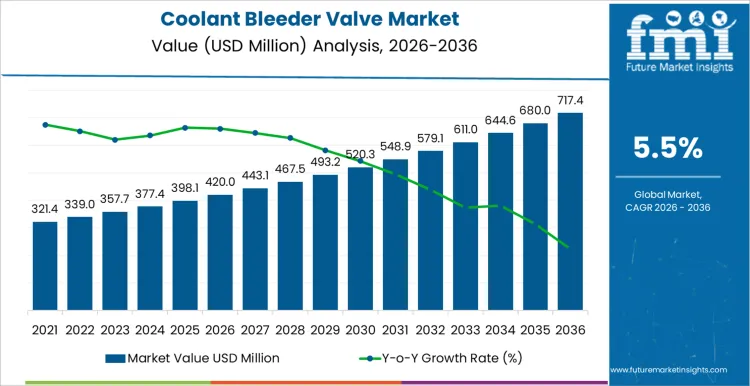
The coolant bleeder valve market represents a crucial component segment within the broader automotive thermal management and industrial cooling systems ecosystem, positioned for steady growth from USD 420.0 million in 2026 to USD 717.0 million by 2036, achieving a compound annual growth rate of 5.5% throughout the forecast period. This specialized market encompasses precision-engineered valves designed to remove trapped air from cooling systems, ensuring optimal heat transfer efficiency, preventing cavitation damage, and maintaining system pressure integrity across diverse applications including automotive engines, HVAC systems, and industrial process cooling equipment. The market's expansion reflects increasing complexity of modern cooling systems, stringent emission regulations driving thermal management optimization, and growing emphasis on system reliability that demands sophisticated air bleeding solutions.
Coolant bleeder valves serve critical functions in maintaining cooling system performance by eliminating air pockets that can cause localized overheating, pump cavitation, and reduced heat transfer effectiveness that compromise system efficiency and component longevity. Modern cooling systems incorporate multiple heat sources, complex geometries, and varying flow rates that create challenging conditions for air removal while demanding precise bleeding control to maintain optimal coolant circulation. Advanced bleeder valve technologies address these challenges through sophisticated designs including automatic air venting, temperature-activated operation, and integrated pressure relief that optimize system performance while minimizing maintenance requirements.
Quick Stats for Coolant Bleeder Valve Market
- Coolant Bleeder Valve Market Value (2026): USD 420.0 million
- Coolant Bleeder Valve Market Forecast Value (2036): USD 717.0 million
- Coolant Bleeder Valve Market Forecast CAGR: 5.5%
- Leading Media in Coolant Bleeder Valve Market: Engine Coolant (64%)
- Key Growth Countries in Coolant Bleeder Valve Market: China, USA., Germany, South Korea, Japan
- Key Players in Coolant Bleeder Valve Market: Mahle, Bosch, Pierburg, Valeo, Denso
Coolant Bleeder Valve Market Key Takeaways
| Metric | Value |
|---|---|
| Market Value (2026) | USD 420.0 million |
| Market Forecast Value (2036) | USD 717.0 million |
| Forecast CAGR 2026 to 2036 | 5.5% |
Why Is Thermal Management Complexity Driving Bleeding Technology Innovation?
The escalating complexity of modern thermal management systems creates unprecedented challenges for air removal that drive innovation in coolant bleeder valve technology beyond traditional passive bleeding approaches toward sophisticated automated and electronically controlled solutions.
Contemporary automotive engines incorporate multiple cooling circuits, variable flow pumps, and complex heat exchanger arrangements that create diverse air trapping locations requiring coordinated bleeding strategies to ensure complete air removal. Electric vehicle thermal management adds another layer of complexity through battery cooling loops, power electronics cooling, and heat pump systems that operate under varying pressure and temperature conditions demanding adaptive bleeding capabilities.
How Is the Market Structured Across Actuation Technology Platforms?
The coolant bleeder valve market exhibits sophisticated segmentation reflecting diverse actuation mechanisms, application requirements, and performance specifications that create distinct market segments addressing specific air bleeding challenges across automotive, commercial vehicle, and industrial cooling applications.
Market structure encompasses actuation categories representing different operational philosophies from manual intervention to fully automated operation, application segments reflecting varying cooling system complexity and performance demands, and media classifications addressing specific fluid characteristics and system operating conditions. This multidimensional segmentation reflects the specialized nature of cooling system air bleeding where generic solutions prove inadequate for addressing specific performance and reliability requirements.
Which Actuation Technology Dominates Market Applications?
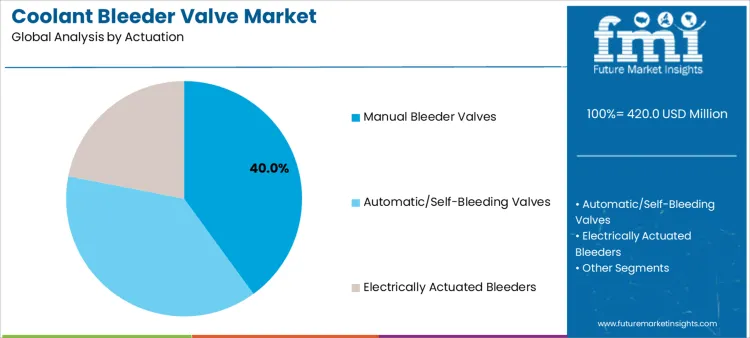
Manual bleeder valves command 40.0% market share, representing the most established actuation category due to their simplicity, reliability, and cost-effectiveness for applications where periodic maintenance access enables routine air bleeding procedures. Manual valves provide direct operator control over bleeding operations while eliminating complexity associated with automated systems that may require additional sensors, actuators, or control electronics. These systems excel in applications where cooling system filling and maintenance procedures include scheduled air bleeding as part of routine service intervals while providing failsafe operation that does not depend on electrical or pneumatic power sources.
Which Application Segment Drives Market Demand?
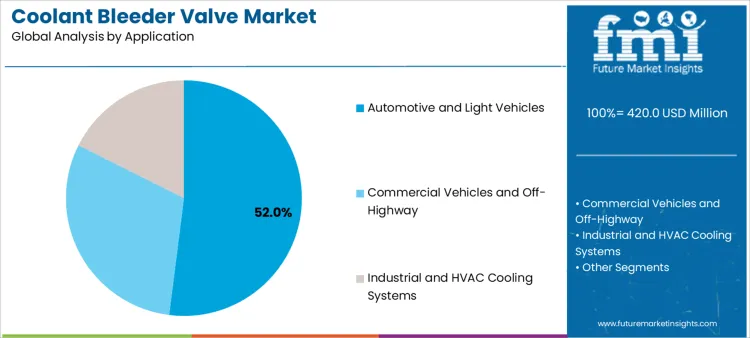
Automotive and light vehicle applications dominate with 52.0% market share, reflecting the massive scale of global automotive production and the critical importance of cooling system reliability for engine performance, emissions compliance, and component longevity in passenger cars and light trucks. Modern automotive engines operate at higher specific power outputs while meeting stringent emissions requirements that demand optimal cooling system performance throughout vehicle service life. Automotive bleeder valves must accommodate diverse engine architectures, varying coolant formulations, and extreme operating conditions while maintaining reliability over hundreds of thousands of miles.
Which Media Category Leads Market Applications?
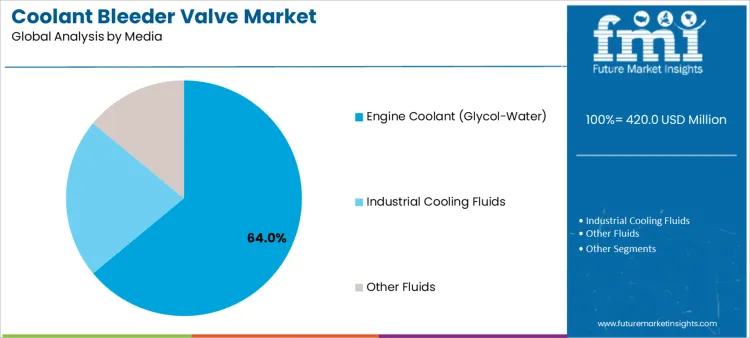
Engine coolant applications using glycol-water mixtures dominate with 64.0% market share, representing the most common cooling medium across automotive and many industrial applications due to glycol's freeze protection, boiling point elevation, and corrosion inhibition properties that enable year-round operation under diverse climatic conditions. Ethylene glycol and propylene glycol coolants create specific challenges for bleeding valve design including altered fluid density, modified thermal properties, and chemical compatibility requirements that affect valve materials and sealing systems. Modern extended-life coolants incorporate sophisticated additive packages that may interact with valve materials while requiring long-term chemical stability.
Which Sales Channel Enables Optimal Market Access?
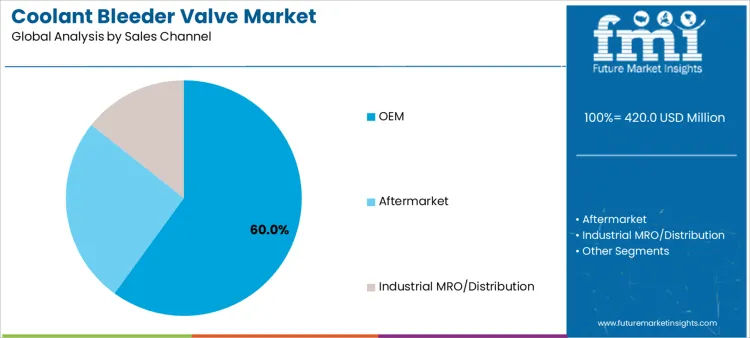
Original Equipment Manufacturer (OEM) channels dominate with 60.0% market share, representing the primary market access route for bleeder valves integrated into new cooling systems during vehicle production or equipment manufacturing. OEM relationships require extensive engineering collaboration, testing validation, and quality certification while providing opportunities for high-volume production and long-term supply agreements. OEM specifications often drive product development toward custom solutions that optimize performance for specific cooling system architectures while meeting cost targets essential for mass production applications.
How Are Vehicle Electrification Trends Reshaping Cooling Requirements?
The automotive industry's transition toward electrification creates fundamental changes in cooling system requirements that drive innovation in bleeder valve technology to address unique thermal management challenges associated with battery systems, power electronics, and integrated thermal management architectures.
Electric vehicles incorporate multiple cooling circuits including battery thermal management, motor cooling, power electronics cooling, and cabin heating systems that operate at different temperatures and pressures while requiring coordinated air bleeding strategies. Battery cooling systems often operate at lower temperatures compared to engine cooling while demanding precise thermal control that prevents cell-to-cell temperature variations affecting battery performance and longevity.
Do Regulatory Emissions Requirements Drive Technology Innovation?
Increasingly stringent emissions regulations create pressure for optimal cooling system performance that drives demand for advanced bleeding technologies capable of maintaining precise thermal control essential for emissions compliance throughout vehicle service life. Modern emissions control systems including diesel particulate filters, selective catalytic reduction systems, and gasoline particulate filters generate significant heat loads while requiring precise temperature control that depends on cooling system effectiveness. Inadequate air bleeding can compromise cooling system performance leading to elevated component temperatures that affect emissions system operation and catalyst efficiency.
Advanced emissions control strategies often require engine thermal management optimization that maintains specific temperature profiles for optimal catalyst operation while preventing excessive temperatures that could damage expensive emissions components. Cooling system air entrapment can create localized hot spots that affect emissions system performance while compromising fuel economy through altered engine operating strategies designed to protect components from overheating.
How Do Service and Maintenance Trends Influence Valve Design?
The automotive industry's trend toward extended service intervals creates challenges for cooling system maintenance while driving demand for bleeding technologies that maintain long-term performance without frequent service intervention. Extended-life coolants designed for 150,000-mile service intervals require bleeding systems that maintain effectiveness throughout extended service periods while accommodating coolant chemical changes that occur during extended operation. Advanced coolant formulations may affect bleeding valve operation through altered fluid properties while requiring valve materials that maintain compatibility throughout extended service life.
Dealer service efficiency requirements drive demand for bleeding systems that enable rapid air removal during service procedures while minimizing technician time and training requirements. Automated bleeding systems that eliminate manual procedures can reduce service time while ensuring consistent air removal quality across different technician skill levels. Electronic bleeding systems that integrate with diagnostic equipment can guide service procedures while providing verification of complete air removal.
How Is the Coolant Bleeder Valve Market Expected to Evolve Across Major Nations?
The global coolant bleeder valve market demonstrates distinct regional development patterns reflecting varying automotive manufacturing concentrations, industrial development levels, regulatory requirements, and technology adoption rates that influence market growth opportunities and technology deployment strategies.
Regional market evolution encompasses both established automotive manufacturing centers implementing advanced cooling technologies and emerging markets developing automotive and industrial capabilities that create new demand for cooling system components.
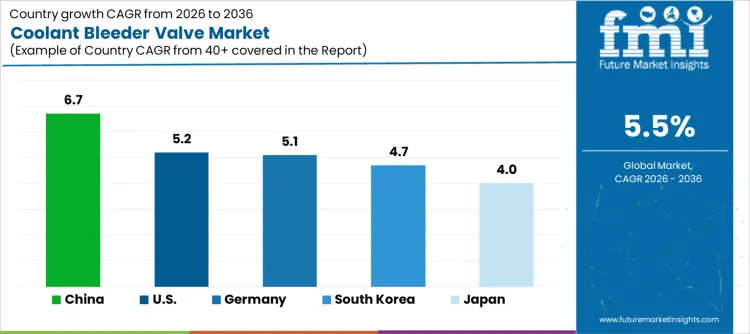
| Country | CAGR (%) |
|---|---|
| China | 6.7% |
| USA. | 5.2% |
| Germany | 5.1% |
| South Korea | 4.7% |
| Japan | 4.0% |
What Drives China's Market Leadership?
China's coolant bleeder valve market is projected to achieve a CAGR of 6.7%, representing the highest growth rate globally and reflecting the country's dominant position in global automotive manufacturing combined with rapid industrial development that creates substantial demand for cooling system components across automotive and industrial applications. Chinese automotive production includes both domestic manufacturers and international companies establishing local production facilities while government policies promoting new energy vehicles drive demand for advanced thermal management technologies. The integration of electric vehicle production with traditional automotive manufacturing creates diverse requirements for cooling system components including specialized bleeding technologies.
Chinese industrial development encompasses manufacturing facilities, power generation, and infrastructure projects that require industrial cooling systems while creating demand for specialized bleeding valves designed for industrial applications. Government initiatives promoting energy efficiency and environmental protection drive adoption of advanced cooling technologies while establishing performance standards that favor premium bleeding solutions over basic alternatives.
How Are US Automotive and Industrial Markets Driving Growth?
The United States coolant bleeder valve market is projected to record a CAGR of 5.2%, reflecting the country's diverse automotive manufacturing base, extensive industrial infrastructure, and emphasis on cooling system reliability that creates sustained demand for advanced bleeding technologies. American automotive production includes domestic manufacturers implementing advanced powertrains and international companies establishing US production facilities to serve North American markets while regulatory requirements drive adoption of sophisticated thermal management systems.
US industrial applications encompass manufacturing facilities, data centers, power generation, and specialized processes that require reliable cooling systems while creating opportunities for custom bleeding solutions designed for specific industrial requirements. The emphasis on energy efficiency and operational reliability drives investment in premium cooling technologies while creating market opportunities for advanced bleeding systems that optimize performance and reduce maintenance requirements.
What Drives Germany's Engineering Excellence in Cooling Technology?
Germany's coolant bleeder valve market is likely to rise at a CAGR of 5.1%, reflecting the country's leadership in automotive engineering and systematic approach to cooling system optimization that creates demand for precision bleeding technologies meeting exceptional performance standards. German automotive manufacturers including BMW, Mercedes-Benz, and Volkswagen implement advanced cooling systems while driving innovation in thermal management technologies that require sophisticated bleeding solutions. The country's automotive supplier industry maintains technological leadership through extensive research and development investments focused on cooling system optimization.
German industrial applications emphasize precision and reliability while requiring cooling solutions that meet stringent performance criteria and environmental standards. Manufacturing facilities often incorporate advanced process cooling systems that demand specialized bleeding technologies while energy efficiency requirements drive adoption of optimized cooling strategies that minimize power consumption and environmental impact.
Why Does South Korea Emphasize Technology Innovation?
South Korea's coolant bleeder valve market is projected to increase at a CAGR of 4.7%, driven by the country's advanced automotive manufacturing capabilities and emphasis on technology innovation that creates opportunities for sophisticated cooling solutions. Korean automotive manufacturers including Hyundai and Kia implement advanced powertrain technologies while building expertise in electric vehicle development that requires innovative thermal management solutions. The country's electronics industry creates additional demand for precision cooling systems while driving technology development that benefits automotive applications.
Korean companies invest heavily in research and development while building technological capabilities that support both domestic manufacturing and export opportunities in global automotive markets. Government support for automotive technology development includes funding for advanced cooling system research while promoting collaboration between automotive manufacturers and component suppliers advancing thermal management technologies.
How Does Japan's Quality Focus Shape Market Development?
Japan's coolant bleeder valve market is likely to expand at a CAGR of 4.0%, reflecting the country's emphasis on precision manufacturing and quality excellence that creates demand for premium bleeding solutions meeting exceptional reliability standards. Japanese automotive manufacturers including Toyota, Honda, and Nissan maintain rigorous quality requirements while implementing advanced cooling systems that require proven bleeding technologies with demonstrated long-term reliability. The country's automotive supplier industry emphasizes systematic quality improvement while building expertise in thermal management optimization.
The Japanese market's emphasis on continuous improvement and systematic optimization creates opportunities for bleeding technologies that provide incremental performance advantages while demonstrating measurable improvements in cooling system efficiency and reliability. Research institutions and companies advance fundamental understanding of thermal management while building practical applications that address specific Japanese market requirements and quality standards.
How are Manufacturers Securing Market Share in coolant bleeder valves?
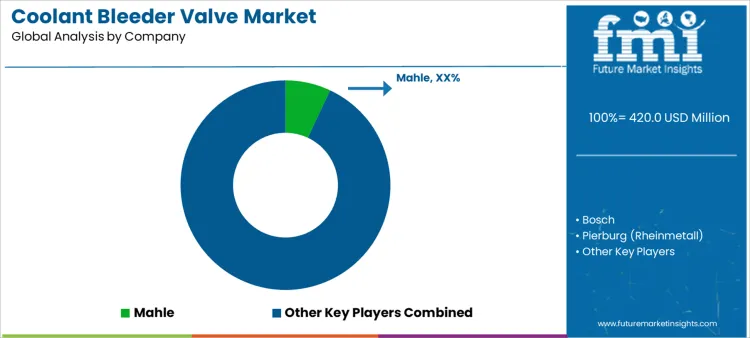
As cooling circuits get more packed and more sensitive, trapped air causes real problems like hot spots, noise, and unstable temperature control. That is why buyers care most about valves that vent air quickly, seal well afterward, and keep doing it after years of heat cycles and vibration. Price matters, but OEMs usually pick the part that saves headaches on the line and reduces warranty risk.
New designs are aimed at cutting manual work. Many programs want valves that support faster fill and purge at end-of-line, and that work cleanly in multi-loop systems used in hybrids and EVs where battery, power electronics, cabin heating, and other loops interact. Some suppliers are adding features that help with diagnostics or automatic purge logic, but even basic improvements like better packaging, easier mounting, and more stable opening behavior can win programs.
The strongest suppliers do not just ship valves. They help tune the fill process, suggest placement in the circuit, and offer quick variants for different platforms, while keeping quality consistent across regions.
Key Players in the Coolant Bleeder Valve Market
- Mahle
- Bosch
- Pierburg (Rheinmetall)
- Valeo
- Denso
- Delphi Technologies (BorgWarner)
- HELLA (Forvia)
- Hanon Systems
- Gates Corporation
- Stant
Scope of Report
| Items | Values |
|---|---|
| Quantitative Units | USD Million |
| Actuation Segments | Manual Bleeder Valves; Automatic/Self-Bleeding Valves; Electrically Actuated Bleeders |
| Application Categories | Automotive and Light Vehicles; Commercial Vehicles and Off-Highway; Industrial and HVAC Cooling Systems |
| Media Types | Engine Coolant (Glycol-Water); Industrial Cooling Fluids; Other Fluids |
| Sales Channel Categories | OEM; Aftermarket; Industrial MRO/Distribution |
| Regions Covered | North America, Europe, Asia Pacific, Latin America, Middle East & Africa |
| Key Countries | USA, Germany, China, South Korea, Japan |
| Key Companies Profiled | Mahle, Bosch, Pierburg, Valeo, Denso, and others |
Coolant Bleeder Valve Market by Segments
By Actuation:
- Manual Bleeder Valves
- Automatic/Self-Bleeding Valves
- Electrically Actuated Bleeders
By Application:
- Automotive and Light Vehicles
- Commercial Vehicles and Off-Highway
- Industrial and HVAC Cooling Systems
By Media:
- Engine Coolant (Glycol-Water)
- Industrial Cooling Fluids
- Other Fluids
By Sales Channel:
- OEM
- Aftermarket
- Industrial MRO/Distribution
Bibliography
- American Society of Heating, Refrigerating and Air-Conditioning Engineers. (2024). HVAC systems design manual: Cooling system air removal procedures. ASHRAE Publications.
- Automotive Engineering International. (2024). Thermal management challenges in electric vehicles: Air bleeding system requirements. Automotive Engineering, 132(4), 28-35.
- International Organization for Standardization. (2024). ISO 14687-2:2024-Engine cooling systems: Air bleeding valve performance specifications. ISO Publications.
Frequently Asked Questions
How big is the coolant bleeder valve market in 2026?
The global coolant bleeder valve market is estimated to be valued at USD 420.0 million in 2026.
What will be the size of coolant bleeder valve market in 2036?
The market size for the coolant bleeder valve market is projected to reach USD 717.4 million by 2036.
How much will be the coolant bleeder valve market growth between 2026 and 2036?
The coolant bleeder valve market is expected to grow at a 5.5% CAGR between 2026 and 2036.
What are the key product types in the coolant bleeder valve market?
The key product types in coolant bleeder valve market are manual bleeder valves, automatic/self-bleeding valves and electrically actuated bleeders.
Which application segment to contribute significant share in the coolant bleeder valve market in 2026?
In terms of application, automotive and light vehicles segment to command 52.0% share in the coolant bleeder valve market in 2026.
Preview the report firsthand - request a free sample
Get SampleGet the brochure for pricing and purchase details.
Get PDFTable of Content
- Executive Summary
- Global Market Outlook
- Demand-side Trends
- Supply-side Trends
- Technology Roadmap Analysis
- Analysis and Recommendations
- Market Overview
- Market Coverage / Taxonomy
- Market Definition / Scope / Limitations
- Market Background
- Market Dynamics
- Drivers
- Restraints
- Opportunity
- Trends
- Scenario Forecast
- Demand in Optimistic Scenario
- Demand in Likely Scenario
- Demand in Conservative Scenario
- Opportunity Map Analysis
- Product Life Cycle Analysis
- Supply Chain Analysis
- Investment Feasibility Matrix
- Value Chain Analysis
- PESTLE and Porter’s Analysis
- Regulatory Landscape
- Regional Parent Market Outlook
- Production and Consumption Statistics
- Import and Export Statistics
- Market Dynamics
- Global Market Analysis 2021 to 2025 and Forecast, 2026 to 2036
- Historical Market Size Value (USD Million) Analysis, 2021 to 2025
- Current and Future Market Size Value (USD Million) Projections, 2026 to 2036
- Y-o-Y Growth Trend Analysis
- Absolute $ Opportunity Analysis
- Global Market Pricing Analysis 2021 to 2025 and Forecast 2026 to 2036
- Global Market Analysis 2021 to 2025 and Forecast 2026 to 2036, By Actuation
- Introduction / Key Findings
- Historical Market Size Value (USD Million) Analysis By Actuation , 2021 to 2025
- Current and Future Market Size Value (USD Million) Analysis and Forecast By Actuation , 2026 to 2036
- Manual Bleeder Valves
- Automatic/Self-Bleeding Valves
- Electrically Actuated Bleeders
- Manual Bleeder Valves
- Y-o-Y Growth Trend Analysis By Actuation , 2021 to 2025
- Absolute $ Opportunity Analysis By Actuation , 2026 to 2036
- Global Market Analysis 2021 to 2025 and Forecast 2026 to 2036, By Application
- Introduction / Key Findings
- Historical Market Size Value (USD Million) Analysis By Application, 2021 to 2025
- Current and Future Market Size Value (USD Million) Analysis and Forecast By Application, 2026 to 2036
- Automotive and Light Vehicles
- Commercial Vehicles and Off-Highway
- Industrial and HVAC Cooling Systems
- Automotive and Light Vehicles
- Y-o-Y Growth Trend Analysis By Application, 2021 to 2025
- Absolute $ Opportunity Analysis By Application, 2026 to 2036
- Global Market Analysis 2021 to 2025 and Forecast 2026 to 2036, By Media
- Introduction / Key Findings
- Historical Market Size Value (USD Million) Analysis By Media, 2021 to 2025
- Current and Future Market Size Value (USD Million) Analysis and Forecast By Media, 2026 to 2036
- Engine Coolant (Glycol-Water)
- Industrial Cooling Fluids
- Other Fluids
- Engine Coolant (Glycol-Water)
- Y-o-Y Growth Trend Analysis By Media, 2021 to 2025
- Absolute $ Opportunity Analysis By Media, 2026 to 2036
- Global Market Analysis 2021 to 2025 and Forecast 2026 to 2036, By Sales Channel
- Introduction / Key Findings
- Historical Market Size Value (USD Million) Analysis By Sales Channel, 2021 to 2025
- Current and Future Market Size Value (USD Million) Analysis and Forecast By Sales Channel, 2026 to 2036
- OEM
- Aftermarket
- Industrial MRO/Distribution
- OEM
- Y-o-Y Growth Trend Analysis By Sales Channel, 2021 to 2025
- Absolute $ Opportunity Analysis By Sales Channel, 2026 to 2036
- Global Market Analysis 2021 to 2025 and Forecast 2026 to 2036, By Region
- Introduction
- Historical Market Size Value (USD Million) Analysis By Region, 2021 to 2025
- Current Market Size Value (USD Million) Analysis and Forecast By Region, 2026 to 2036
- North America
- Latin America
- Western Europe
- Eastern Europe
- East Asia
- South Asia and Pacific
- Middle East & Africa
- Market Attractiveness Analysis By Region
- North America Market Analysis 2021 to 2025 and Forecast 2026 to 2036, By Country
- Historical Market Size Value (USD Million) Trend Analysis By Market Taxonomy, 2021 to 2025
- Market Size Value (USD Million) Forecast By Market Taxonomy, 2026 to 2036
- By Country
- USA
- Canada
- Mexico
- By Actuation
- By Application
- By Media
- By Sales Channel
- By Country
- Market Attractiveness Analysis
- By Country
- By Actuation
- By Application
- By Media
- By Sales Channel
- Key Takeaways
- Latin America Market Analysis 2021 to 2025 and Forecast 2026 to 2036, By Country
- Historical Market Size Value (USD Million) Trend Analysis By Market Taxonomy, 2021 to 2025
- Market Size Value (USD Million) Forecast By Market Taxonomy, 2026 to 2036
- By Country
- Brazil
- Chile
- Rest of Latin America
- By Actuation
- By Application
- By Media
- By Sales Channel
- By Country
- Market Attractiveness Analysis
- By Country
- By Actuation
- By Application
- By Media
- By Sales Channel
- Key Takeaways
- Western Europe Market Analysis 2021 to 2025 and Forecast 2026 to 2036, By Country
- Historical Market Size Value (USD Million) Trend Analysis By Market Taxonomy, 2021 to 2025
- Market Size Value (USD Million) Forecast By Market Taxonomy, 2026 to 2036
- By Country
- Germany
- UK
- Italy
- Spain
- France
- Nordic
- BENELUX
- Rest of Western Europe
- By Actuation
- By Application
- By Media
- By Sales Channel
- By Country
- Market Attractiveness Analysis
- By Country
- By Actuation
- By Application
- By Media
- By Sales Channel
- Key Takeaways
- Eastern Europe Market Analysis 2021 to 2025 and Forecast 2026 to 2036, By Country
- Historical Market Size Value (USD Million) Trend Analysis By Market Taxonomy, 2021 to 2025
- Market Size Value (USD Million) Forecast By Market Taxonomy, 2026 to 2036
- By Country
- Russia
- Poland
- Hungary
- Balkan & Baltic
- Rest of Eastern Europe
- By Actuation
- By Application
- By Media
- By Sales Channel
- By Country
- Market Attractiveness Analysis
- By Country
- By Actuation
- By Application
- By Media
- By Sales Channel
- Key Takeaways
- East Asia Market Analysis 2021 to 2025 and Forecast 2026 to 2036, By Country
- Historical Market Size Value (USD Million) Trend Analysis By Market Taxonomy, 2021 to 2025
- Market Size Value (USD Million) Forecast By Market Taxonomy, 2026 to 2036
- By Country
- China
- Japan
- South Korea
- By Actuation
- By Application
- By Media
- By Sales Channel
- By Country
- Market Attractiveness Analysis
- By Country
- By Actuation
- By Application
- By Media
- By Sales Channel
- Key Takeaways
- South Asia and Pacific Market Analysis 2021 to 2025 and Forecast 2026 to 2036, By Country
- Historical Market Size Value (USD Million) Trend Analysis By Market Taxonomy, 2021 to 2025
- Market Size Value (USD Million) Forecast By Market Taxonomy, 2026 to 2036
- By Country
- India
- ASEAN
- Australia & New Zealand
- Rest of South Asia and Pacific
- By Actuation
- By Application
- By Media
- By Sales Channel
- By Country
- Market Attractiveness Analysis
- By Country
- By Actuation
- By Application
- By Media
- By Sales Channel
- Key Takeaways
- Middle East & Africa Market Analysis 2021 to 2025 and Forecast 2026 to 2036, By Country
- Historical Market Size Value (USD Million) Trend Analysis By Market Taxonomy, 2021 to 2025
- Market Size Value (USD Million) Forecast By Market Taxonomy, 2026 to 2036
- By Country
- Kingdom of Saudi Arabia
- Other GCC Countries
- Turkiye
- South Africa
- Other African Union
- Rest of Middle East & Africa
- By Actuation
- By Application
- By Media
- By Sales Channel
- By Country
- Market Attractiveness Analysis
- By Country
- By Actuation
- By Application
- By Media
- By Sales Channel
- Key Takeaways
- Key Countries Market Analysis
- USA
- Pricing Analysis
- Market Share Analysis, 2025
- By Actuation
- By Application
- By Media
- By Sales Channel
- Canada
- Pricing Analysis
- Market Share Analysis, 2025
- By Actuation
- By Application
- By Media
- By Sales Channel
- Mexico
- Pricing Analysis
- Market Share Analysis, 2025
- By Actuation
- By Application
- By Media
- By Sales Channel
- Brazil
- Pricing Analysis
- Market Share Analysis, 2025
- By Actuation
- By Application
- By Media
- By Sales Channel
- Chile
- Pricing Analysis
- Market Share Analysis, 2025
- By Actuation
- By Application
- By Media
- By Sales Channel
- Germany
- Pricing Analysis
- Market Share Analysis, 2025
- By Actuation
- By Application
- By Media
- By Sales Channel
- UK
- Pricing Analysis
- Market Share Analysis, 2025
- By Actuation
- By Application
- By Media
- By Sales Channel
- Italy
- Pricing Analysis
- Market Share Analysis, 2025
- By Actuation
- By Application
- By Media
- By Sales Channel
- Spain
- Pricing Analysis
- Market Share Analysis, 2025
- By Actuation
- By Application
- By Media
- By Sales Channel
- France
- Pricing Analysis
- Market Share Analysis, 2025
- By Actuation
- By Application
- By Media
- By Sales Channel
- India
- Pricing Analysis
- Market Share Analysis, 2025
- By Actuation
- By Application
- By Media
- By Sales Channel
- ASEAN
- Pricing Analysis
- Market Share Analysis, 2025
- By Actuation
- By Application
- By Media
- By Sales Channel
- Australia & New Zealand
- Pricing Analysis
- Market Share Analysis, 2025
- By Actuation
- By Application
- By Media
- By Sales Channel
- China
- Pricing Analysis
- Market Share Analysis, 2025
- By Actuation
- By Application
- By Media
- By Sales Channel
- Japan
- Pricing Analysis
- Market Share Analysis, 2025
- By Actuation
- By Application
- By Media
- By Sales Channel
- South Korea
- Pricing Analysis
- Market Share Analysis, 2025
- By Actuation
- By Application
- By Media
- By Sales Channel
- Russia
- Pricing Analysis
- Market Share Analysis, 2025
- By Actuation
- By Application
- By Media
- By Sales Channel
- Poland
- Pricing Analysis
- Market Share Analysis, 2025
- By Actuation
- By Application
- By Media
- By Sales Channel
- Hungary
- Pricing Analysis
- Market Share Analysis, 2025
- By Actuation
- By Application
- By Media
- By Sales Channel
- Kingdom of Saudi Arabia
- Pricing Analysis
- Market Share Analysis, 2025
- By Actuation
- By Application
- By Media
- By Sales Channel
- Turkiye
- Pricing Analysis
- Market Share Analysis, 2025
- By Actuation
- By Application
- By Media
- By Sales Channel
- South Africa
- Pricing Analysis
- Market Share Analysis, 2025
- By Actuation
- By Application
- By Media
- By Sales Channel
- USA
- Market Structure Analysis
- Competition Dashboard
- Competition Benchmarking
- Market Share Analysis of Top Players
- By Regional
- By Actuation
- By Application
- By Media
- By Sales Channel
- Competition Analysis
- Competition Deep Dive
- Mahle
- Overview
- Product Portfolio
- Profitability by Market Segments (Product/Age /Sales Channel/Region)
- Sales Footprint
- Strategy Overview
- Marketing Strategy
- Product Strategy
- Channel Strategy
- Bosch
- Pierburg (Rheinmetall)
- Valeo
- Denso
- Delphi Technologies (BorgWarner)
- HELLA (Forvia)
- Hanon Systems
- Gates Corporation
- Stant
- Mahle
- Competition Deep Dive
- Assumptions & Acronyms Used
- Research Methodology


