

- Industry Size (2026)
- USD 0.6 Bn
- Forecast (2036)
- USD 1.4 Bn
- CAGR (2026 to 2036)
- 8.8%
Coolant Monitoring Sensors Market Size and Share Forecast Outlook 2026 to 2036
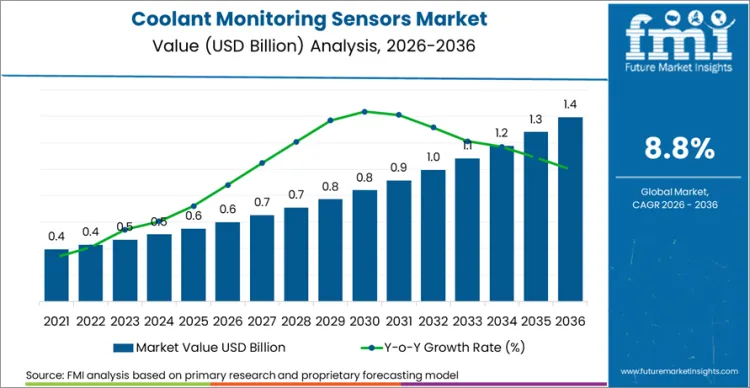
Coolant monitoring sensors market revenue is projected to total USD 0.6 billion in 2026, increasing to USD 1.4 billion by 2036, at a CAGR of 8.8%. FMI analysis indicates the market is undergoing a fundamental shift from reactive alarm generation to predictive health analytics. The 2026-2027 period will be defined by the fusion of sensor data with AI-driven facility management platforms and the rise of sensors capable of detecting coolant degradation precursors.
Growth is anchored in the critical need to protect high-value assets cooled by specialized dielectric fluids. The 2026 update to the ANSI/ASHRAE Standard 90.4 for data center energy efficiency introduces a recommended practice for continuous coolant quality monitoring, linking sensor deployment directly to compliance with energy credit programs. This formalizes sensor deployment in new liquid-cooled data center designs.
Honeywell International Inc. announced in Q1 2026 the launch of its Forge Coolant Analytics platform, which pairs new multi-parameter MEMS sensor pucks with cloud-based machine learning models. The system predicts ion exchange resin exhaustion in closed-loop systems and provides maintenance alerts 30 days prior to coolant conductivity exceeding thresholds, shifting from monitoring to prognostics.
Technical innovation focuses on non-invasive sensing and miniaturization. TE Connectivity Ltd. disclosed in late 2025 the development of a clamp-on ultrasonic flow and temperature sensor requiring no system penetration. Approved for use in the European Union’s ATEX-regulated environments, this sensor enables retrofit monitoring in hazardous industrial settings without shutdowns for installation.
Sensata Technologies Holding plc acquired a specialist in electrochemical sensing in early 2026 to integrate real-time pH and oxidation-reduction potential (ORP) measurement into its coolant sensor portfolio. This capability is critical for detecting early-stage microbial growth or chemical breakdown in water-glycol blends used in EV battery pack cold plates.
Amphenol Corporation expanded its ruggedized, military-spec connector lines in 2026 to include integrated sensor pods for mobile defense computing arrays, where monitoring coolant integrity is essential for operation in high-vibration, extreme-climate environments.
Summary of Coolant Monitoring Sensors Market
What is the Long-Term Growth Outlook for the Coolant Monitoring Sensor Market?
FMI projects the global coolant monitoring sensor market to expand from USD 0.6 billion in 2026 to USD 1.4 billion by 2036, registering an 8.8% CAGR. Market expansion reflects the transformation of coolant systems into instrumented, data-generating assets. Sensors are no longer optional gauges but are essential components for warranty compliance, safety certification, and optimizing total cost of ownership for thermal management systems.
This growth is propelled by the capital intensity of advanced coolants, the catastrophic cost of downtime in AI compute and semiconductor fabrication, and stringent environmental regulations regarding coolant leakage and disposal. Demand is accelerating for sensors that provide a composite health score of the coolant loop, incorporating flow, chemical, and particulate data.
FMI Research Approach: This projection is derived from FMI’s proprietary forecasting framework integrating asset values of cooled infrastructure, coolant volume and cost analysis, regulatory penalty structures for leaks, and primary interviews with reliability engineers across data center, industrial, and transportation sectors.
How do FMI Analysts Expect the Coolant Monitoring Sensor Market to Evolve Structurally?
FMI analysts anticipate a convergence from single-parameter, point-sensor deployments to networked, multi-parameter sensing modules with onboard diagnostics. This evolution is driven by the data requirements of digital twin models for thermal systems and the need to reduce wiring complexity in dense racks. The market will stratify into high-accuracy, lab-grade sensors for coolant quality validation and ruggedized, cost-optimized sensors for volume deployment.
Innovations such as sensors with embedded spectral analysis for additive concentration, microfluidic particle counters, and passive wireless sensors powered by flow-induced vibration are redefining monitoring possibilities. Sensors are increasingly being designed as firmware-upgradable devices, allowing new detection algorithms to be deployed remotely throughout the product lifecycle.
FMI Research Approach: Insights are informed by analysis of digital twin platform requirements, patent filings related to spectroscopic and electrochemical sensing in fluids, and OEM specifications for sensor data output formats (e.g., OPC UA, MQTT).
Which Geographies Command the Largest Share of the Coolant Monitoring Sensor Market?
China leads the global coolant monitoring sensor market, advancing at an estimated 11.4% CAGR, driven by its national mandate for smart manufacturing and the world’s largest installed base of industrial chillers. The United States follows with a 10.9% CAGR, underpinned by liability-driven sensor adoption in data centers and federal mandates for condition-based maintenance in military assets.
The UK and Germany represent high-value regulatory-driven markets, expanding at 9.9% and 9.8% CAGR, respectively. Growth is fueled by EU circular economy directives requiring proof of coolant treatment efficacy and local safety regulations mandating leak detection in public buildings housing IT equipment.
FMI Research Approach: Country-level forecasts are built using analysis of national smart infrastructure investments, industrial accident reporting databases, insurance premium structures for equipment failure, and local enforcement of coolant handling regulations.
What Will Be the Market Size of Coolant Monitoring Sensors by 2036?
By 2036, the coolant monitoring sensor market is expected to reach USD 1.4 billion. This growth will be supported by the proliferation of sensor points per cooling loop, the rising value of coolant itself necessitating vigilant stewardship, and the integration of sensor data into automated building management and industrial control systems. The market will see a significant revenue shift toward sensors sold with analytics software subscriptions or as part of sensor-as-a-service models.
FMI Research Approach: Long-term market sizing incorporates analysis of sensor density growth per system, the expanding definition of monitored parameters, and the monetization models for sensor-derived data in operational efficiency contracts.
What are some Globally Distinct Trends Shaping the Coolant Monitoring Sensor Market?
Globally, the market is being shaped by the interplay of asset protection, regulatory traceability, and operational automation. The rising use of expensive, low-global-warming-potential (GWP) refrigerants and dielectric fluids is making real-time leak detection and purity monitoring a financial imperative. New regulations, such as the “coolant passport” concept emerging in the EU, require documented history of temperature and contamination levels, creating a permanent data logging role for sensors.
Concurrently, the push for autonomous data centers and lights-out factories is driving demand for sensors that can trigger automated responses such as isolating a leak, switching to a backup loop, or dispensing additives without human intervention, elevating sensors from passive monitors to active control system actuators.
FMI Research Approach: Trend analysis is informed by tracking refrigerant pricing and environmental regulations, reviewing incident reports from industrial facilities, and analyzing the integration requirements of autonomous facility management software platforms.
Coolant Monitoring Sensors Market Key Takeaways
| Metrics | Values |
|---|---|
| Expected Value (2026E) | USD 0.6 billion |
| Projected Value (2036F) | USD 1.4 billion |
| CAGR (2026 to 2036) | 8.8% |
Source: Future Market Insights (FMI) analysis, based on proprietary forecasting model and primary research
Why is the Coolant Monitoring Sensors Market Growing?
The financial risk associated with advanced coolant loss is driving intensive monitoring. 3M’s 2026 global service report indicated that the replacement cost of dielectric fluid in a single fully populated 42U AI rack can exceed USD 50,000. This asset value, combined with the potential for multi-million-dollar hardware damage from a dry-run event, is compelling operators to install redundant, high-fidelity flow and level sensors. Insurance providers like Lloyd’s of London now offer reduced premiums for liquid-cooled data centers that implement third-party-validated sensor arrays with continuous off-site data logging.
Coolant is becoming a regulated waste stream with traceability requirements. The German Environmental Agency’s (UBA) 2026 amendment to waste code 130702 (“halogen-free cooling lubricants”) mandates that any coolant leaving a facility for disposal must have a digital log of its operational temperature and conductivity history to determine if it can be classified for recycling or must be incinerated. This regulation transforms coolant sensors from operational tools into legal compliance instruments, requiring calibrated and auditable data outputs.
The chemistry of next-generation coolants demands more sophisticated monitoring. The commercial rollout of conductive aqueous coolants for direct-to-chip applications, such as those being piloted by ZutaCore, requires precise real-time monitoring of electrochemical potential to prevent corrosion. This creates a new market segment for sensors that go beyond traditional conductivity measurement to provide specific ion detection, akin to sensors used in pharmaceutical water systems.
How is Coolant Monitoring Sensors Market Segmented?
The coolant monitoring sensor segment landscape is defined by the critical parameter for system health, the underlying technology enabling measurement, and the level of integration with the cooling unit.
Flow sensors dominate as the primary indicator of system function, MEMS technology leads due to its suitability for compact, multi-parameter designs, and standalone probes remain prevalent for retrofit and spot-check applications.
Why is Flow the Dominant Monitored Parameter?
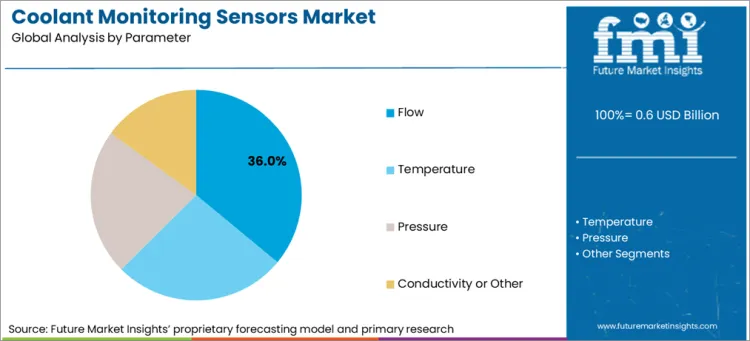
Flow sensors account for a 36% market share. This dominance is due to flow being the primary and most immediate indicator of system failure, a pump failure, blockage, or severe leak manifests as a flow anomaly. The 2026 certification criteria for the USA Green Building Council’s LEED Data Center v4.1 award points for continuous flow monitoring to prove system efficiency.
This has standardized the installation of ultrasonic or MEMS-based flow sensors on both the supply and return lines of primary cooling loops in all new construction aiming for gold or platinum certification.
Which Factors are Driving MEMS Technology Adoption?
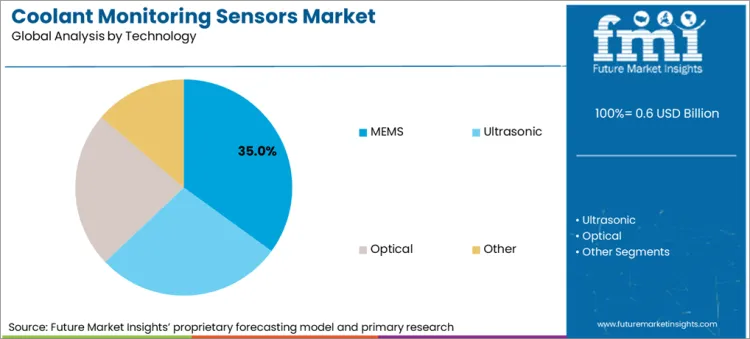
MEMS-based sensors command a 35% share of the technology segment. Their leadership is rooted in their ability to integrate multiple sensing elements (pressure, temperature, flow) on a single silicon chip, enabling compact, low-power, and low-cost multi-parameter sensor nodes.
Bosch Sensortec GmbH’s 2026 launch of a MEMS-based Coriolis mass flow sensor for microfluidic coolant channels in silicon photonics packages demonstrates this trend. The device provides direct mass flow measurement independent of fluid properties, a critical advantage for monitoring novel coolants with variable viscosity.
What is Sustaining Demand for Standalone Probes?
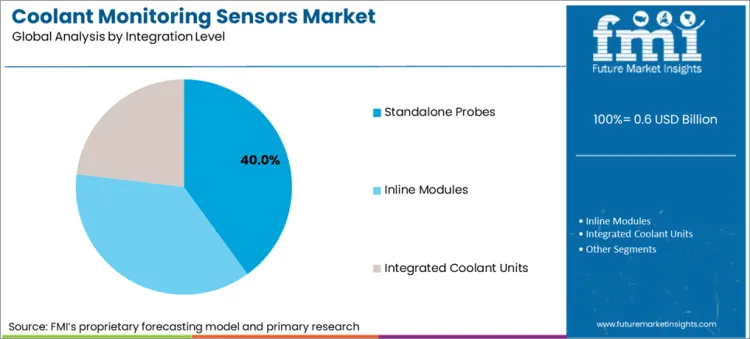
Standalone probes hold a 40% share of the integration segment. Their continued dominance is due to their role in validation, troubleshooting, and retrofit markets. The International Organization for Standardization (ISO) 21416 standard for Condition monitoring of coolant in metalworking plants, published in 2025, r
equires periodic manual checks using calibrated portable probes for concentration and pH. This standard ensures a persistent, replacement-driven market for high-accuracy handheld sensor probes across millions of machine tools globally, irrespective of advancements in inline systems.
What Drivers, Restraints, Opportunities, and Trends Prevail in the Coolant Monitoring Sensors Market?
Expansion is driven by the formalization of coolant management standards. The Cooling Technology Institute’s (CTI) 2026 release of its “Standard for Continuous Monitoring of Water Treatment in Evaporative Cooling Systems” establishes minimum sensor requirements for conductivity, pH, and ORP. Adoption of this standard by facility management firms like CBRE and JLL for their global portfolios creates a uniform, large-scale demand driver for specific sensor types and data reporting formats.
A key restraint is the lack of standardization in sensor data communication and fluid property libraries. A 2026 interoperability audit by the Open Compute Project found that sensor data from five major vendors required proprietary middleware for interpretation against the same coolant type, increasing integration cost and complexity. This fragmentation slows adoption in multi-vendor environments and increases total system cost.
A significant trend is the development of “soft sensors” that infer coolant state using physical sensor data and AI models. Start-up ThermoAI’s 2026 field trial with a European automotive manufacturer demonstrated that a combination of inlet/outlet temperature, flow, and pump power sensors could accurately predict glycol concentration and additive depletion within a 5% margin of error, reducing the need for expensive chemical sensors.
The trend toward predictive maintenance integration is creating a service-model opportunity. Companies like Fluence Analytics are offering subscription-based monitoring where sensor hardware is provided at low cost, but revenue is generated from analytics dashboards and predictive maintenance alerts, changing the business model from component sales to ongoing service revenue.
Analysis of Coolant Monitoring Sensors Market by Key Countries
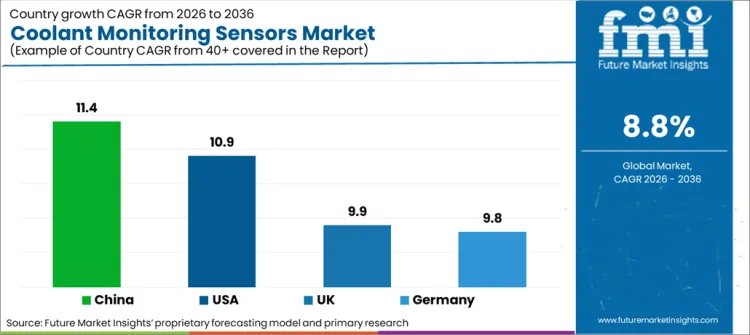
| Country | CAGR (2026 to 2036) |
|---|---|
| China | 11.4% |
| USA | 10.9% |
| UK | 9.9% |
| Germany | 9.8% |
Source: Future Market Insights (FMI) analysis, based on proprietary forecasting model and primary research
How are China's Megaprojects and Safety Regulations Defining Sensor Specifications?
China’s 11.4% CAGR is heavily influenced by its national East Data West Computing project and parallel Safety Production Year initiatives. The state-owned China Telecommunications Corporation’s technical specifications for its massive data center clusters in Guizhou mandate the use of optical fiber-based DTS along the entire length of coolant supply and return pipes.
This requirement, aimed at detecting and locating pinprick leaks before they escalate, has created a specialized, high-value market for DTS systems adapted from oil and gas pipeline monitoring, driving local innovation and production. Following a 2025 chemical plant incident in Jiangsu, provincial safety codes now require triple-redundant pressure and leak sensors on all external coolant reservoirs, directly boosting volumes for domestic sensor manufacturers.
What Role Do Liability and Federal Procurement Play in the US Market?
USA’s 10.9% CAGR is shaped by litigation risk and defense procurement. A 2026 class-action lawsuit against a major colocation provider, alleging that undetected coolant contamination caused USD 200 million in server damages, established a legal precedent for duty to monitor. This is forcing data center operators to implement comprehensive, auditable sensor networks as a defensive measure.
The U.S. Department of Defense’s 2026 “RAIDER” program (Resilient Advanced Infrastructure for Deployed Environments) for forward-operating mobile data centers includes a mandatory technical requirement for self-diagnosing coolant systems. This specification calls for sensors that can self-calibrate in the field and detect sabotage or adulteration of coolant, funding R&D into novel sensing techniques like micro-resonator-based dielectric constant monitoring.
How is the UK's Water Stress and Nuclear Legacy Influencing Sensor Demand?
The UK’s 9.9% CAGR is uniquely driven by water conservation and legacy industrial site management. The Environment Agency’s 2026 tightening of abstraction licenses for data centers in the Thames River Basin mandates proof of zero coolant evaporation or leakage. This is pushing adoption of closed-loop systems with vacuum pressure sensors and laser-based airborne leak detection, but also requires inline concentration sensors to monitor for dilution from internal condensation.
In a distinct segment, the Nuclear Decommissioning Authority’s (NDA) 2026-2036 plan for Sellafield includes extensive monitoring of coolant loops in legacy waste storage facilities. These sensors must be radiation-hardened, have a 50-year design life, and use non-invasive clamp-on technology, creating a niche, high-specification market dominated by a few specialist firms like Baker Hughes.
What Impact Do German Engineering Standards and Product Liability Laws Have?
Engineering norms and stringent product liability (Produkthaftung) laws dictate Germany’s 9.8% CAGR. The VDI 3035 guideline for Cooling of Electrical Equipment, updated in 2026, now includes detailed sensor placement diagrams and accuracy classes (Class 1 for safety, Class 2 for efficiency) for different applications. Compliance with VDI guidelines is often a contractual requirement for public projects, creating a prescribed market.
German courts have repeatedly applied strict liability in cases where equipment failure could have been prevented by available monitoring technology. This legal environment makes sensor installation a de facto requirement for manufacturers of large industrial chillers and printing presses to limit liability exposure, embedding sensor cost as a non-negotiable component of the base machine price.
What is the Competition Outlook for Coolant Monitoring Sensors?
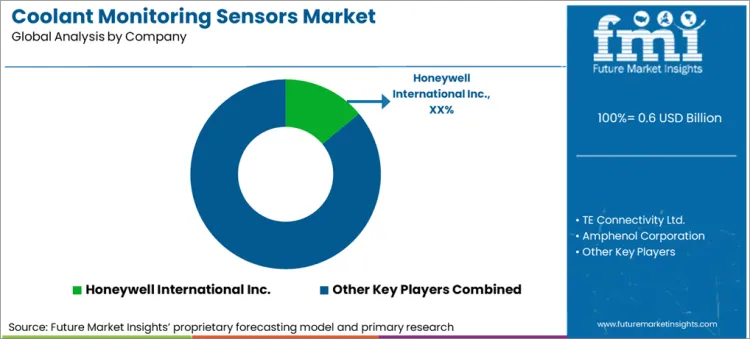
Competitive intensity reflects the convergence of sensor hardware, fluid chemistry, and data analytics. The landscape is dividing between broad-line sensor conglomerates offering extensive portfolios and agile specialists dominating niche parameters like microbial detection or microfluidic flow. Competition is focused on providing calibrated sensor “profiles” for specific branded coolants, creating partnerships between sensor makers and chemical companies.
Strategic evolution before 2024 involved sensor companies from adjacent markets adapting existing products for the cooling market, often lacking optimal material compatibility. The observable strategic direction for 2026 and beyond is the vertical integration of sensor manufacturing to ensure supply chain control for critical components like laser diodes for optical sensors or specialized MEMS membranes. For instance, Amphenol Corporation’s 2025 acquisition of a specialty glass and optics fabricator aimed to secure supply for its fiber-optic temperature sensor lines.
Strategic leadership is shifting toward providing certified sensor data for regulatory compliance. Sensata Technologies’ 2026 launch of its “Insight-Certified” sensor line includes a cryptographic signature in the data stream, providing tamper-proof evidence for environmental regulators or insurance auditors that the data is authentic and the sensor was calibrated. This transforms the sensor from a measurement device into a compliance instrument.
Recent Developments
- Honeywell International Inc. and Chemours Company entered a strategic partnership in February 2026 to co-develop and co-brand sensors pre-calibrated for Chemours’ Opteon line of low-GWP refrigerants, ensuring accuracy across the fluid’s operational lifecycle.
- The Taiwan Semiconductor Manufacturing Company (TSMC) selected TE Connectivity Ltd. in late 2025 as the sole supplier for ultra-high-purity pressure and flow sensors in its next-generation fabrication plant cooling systems, citing TE’s expertise in preventing outgassing in vacuum environments.
- A consortium led by Bosch Sensortec GmbH, including several European automotive OEMs, published an open standard in Q1 2026 for a digital coolant sensor interface, aiming to reduce validation costs and enable plug-and-play sensor replacement across vehicle platforms.
Key Players Profiled
- Honeywell International Inc.
- TE Connectivity Ltd.
- Amphenol Corporation
- Sensata Technologies Holding plc
- Bosch Sensortec GmbH
Market Definition
The coolant monitoring sensors market comprises revenue generated from the design, manufacture, and supply of devices that measure physical and chemical properties of liquid coolants in real-time. These sensors monitor parameters including flow rate, temperature, pressure, conductivity, pH, and particulate levels to ensure system performance, prevent failure, and optimize efficiency. The market includes standalone probes, inline sensor modules, and fully integrated sensing units utilizing MEMS, ultrasonic, optical, and other technologies.
The market scope covers sensors used in data center liquid cooling systems, industrial process chillers, electric vehicle battery thermal management, and high-performance computing. Revenue includes value from calibration services, proprietary communication modules, and associated mounting hardware sold as part of the sensor package. The market excludes general-purpose temperature or pressure sensors not specifically designed or marketed for coolant monitoring, and sensors integrated into final products like chillers or CDUs unless sold separately as aftermarket or replacement components.
Scope of Report
| Items | Values |
|---|---|
| Quantitative Units | USD 0.6 billion |
| Parameter | Flow; Temperature; Pressure; Conductivity or Other |
| Technology | MEMS; Ultrasonic; Optical; Other |
| Integration Level | Standalone Probes; Inline Modules; Integrated Coolant Units |
| Regions Covered | North America, Western Europe, Eastern Europe, East Asia, South Asia & Pacific, Latin America, Middle East & Africa |
| Countries | China, USA, UK, Germany and 40+ countries |
| Key Companies | Honeywell International Inc.; TE Connectivity Ltd.; Amphenol Corporation; Sensata Technologies Holding plc; Bosch Sensortec GmbH |
Source: Future Market Insights (FMI) analysis, based on proprietary forecasting model and primary research
Coolant Monitoring Sensors Market Key Segments
By Parameter:
- Flow
- Temperature
- Pressure
- Conductivity or Other
By Technology:
- MEMS
- Ultrasonic
- Optical
- Other
By Integration Level:
- Standalone Probes
- Inline Modules
- Integrated Coolant Units
By Region:
- North America
- Western Europe
- Eastern Europe
- East Asia
- South Asia & Pacific
- Latin America
- Middle East & Africa
Bibliography
- Cooling Technology Institute (CTI). (2026). Standard 2026-01: Continuous Monitoring of Water Treatment in Evaporative Cooling Systems.
- International Organization for Standardization (ISO). (2025). ISO 21416: Condition monitoring of coolant in metalworking plants.
- USA Green Building Council (USGBC). (2026). LEED v4.1 for Data Centers: Updated Reference Guide.
- German Environmental Agency (UBA). (2026). Technical Instruction on Waste Codes for Cooling Lubricants.
- Open Compute Project (OCP). (2026). Advanced Cooling Solutions: Sensor Interoperability White Paper.
Frequently Asked Questions
What is the expected value of the coolant monitoring sensors market in 2026?
The coolant monitoring sensors market is expected to reach USD 0.6 billion in 2026, supported by the critical need to protect high-value assets and comply with evolving operational and environmental standards.
What is the projected value by 2036 and CAGR from 2026 to 2036?
By 2036, the market is projected to reach USD 1.4 billion, expanding at a CAGR of 8.8% between 2026 and 2036.
How is the rising value of advanced coolants influencing the market?
The high replacement cost of dielectric and low-GWP coolants is transforming monitoring from an operational tool into an asset protection requirement, driving demand for leak detection, purity monitoring, and predictive quality sensors to maximize fluid service life and prevent catastrophic loss.
What role do regulatory and liability pressures play in shaping the market?
Environmental regulations requiring coolant traceability, building codes mandating leak detection, and product liability laws establishing a “duty to monitor” are making sensor deployment a legal and financial imperative, not just a technical choice, across data center and industrial sectors.
Which parameter segment is most critical for immediate failure prevention?
Flow monitoring remains the dominant parameter segment, as it is the primary real-time indicator of systemic failure (pump loss, blockage, major leak). It is often the first and most mandated sensor for safety-critical cooling applications.
Preview the report firsthand - request a free sample
Get SampleGet the brochure for pricing and purchase details.
Get PDFTable of Content
- Executive Summary
- Global Market Outlook
- Demand-side Trends
- Supply-side Trends
- Technology Roadmap Analysis
- Analysis and Recommendations
- Market Overview
- Market Coverage / Taxonomy
- Market Definition / Scope / Limitations
- Research Methodology
- Chapter Orientation
- Analytical Lens and Working Hypotheses
- Market Structure, Signals, and Trend Drivers
- Benchmarking and Cross-market Comparability
- Market Sizing, Forecasting, and Opportunity Mapping
- Research Design and Evidence Framework
- Desk Research Programme (Secondary Evidence)
- Company Annual and Sustainability Reports
- Peer-reviewed Journals and Academic Literature
- Corporate Websites, Product Literature, and Technical Notes
- Earnings Decks and Investor Briefings
- Statutory Filings and Regulatory Disclosures
- Technical White Papers and Standards Notes
- Trade Journals, Industry Magazines, and Analyst Briefs
- Conference Proceedings, Webinars, and Seminar Materials
- Government Statistics Portals and Public Data Releases
- Press Releases and Reputable Media Coverage
- Specialist Newsletters and Curated Briefings
- Sector Databases and Reference Repositories
- FMI Internal Proprietary Databases and Historical Market Datasets
- Subscription Datasets and Paid Sources
- Social Channels, Communities, and Digital Listening Inputs
- Additional Desk Sources
- Expert Input and Fieldwork (Primary Evidence)
- Primary Modes
- Qualitative Interviews and Expert Elicitation
- Quantitative Surveys and Structured Data Capture
- Blended Approach
- Why Primary Evidence is Used
- Field Techniques
- Interviews
- Surveys
- Focus Groups
- Observational and In-context Research
- Social and Community Interactions
- Stakeholder Universe Engaged
- C-suite Leaders
- Board Members
- Presidents and Vice Presidents
- R&D and Innovation Heads
- Technical Specialists
- Domain Subject-matter Experts
- Scientists
- Physicians and Other Healthcare Professionals
- Governance, Ethics, and Data Stewardship
- Research Ethics
- Data Integrity and Handling
- Primary Modes
- Tooling, Models, and Reference Databases
- Desk Research Programme (Secondary Evidence)
- Data Engineering and Model Build
- Data Acquisition and Ingestion
- Cleaning, Normalisation, and Verification
- Synthesis, Triangulation, and Analysis
- Quality Assurance and Audit Trail
- Market Background
- Market Dynamics
- Drivers
- Restraints
- Opportunity
- Trends
- Scenario Forecast
- Demand in Optimistic Scenario
- Demand in Likely Scenario
- Demand in Conservative Scenario
- Opportunity Map Analysis
- Product Life Cycle Analysis
- Supply Chain Analysis
- Investment Feasibility Matrix
- Value Chain Analysis
- PESTLE and Porter’s Analysis
- Regulatory Landscape
- Regional Parent Market Outlook
- Production and Consumption Statistics
- Import and Export Statistics
- Market Dynamics
- Global Market Analysis 2021 to 2025 and Forecast, 2026 to 2036
- Historical Market Size Value (USD Million) Analysis, 2021 to 2025
- Current and Future Market Size Value (USD Million) Projections, 2026 to 2036
- Y-o-Y Growth Trend Analysis
- Absolute $ Opportunity Analysis
- Global Market Pricing Analysis 2021 to 2025 and Forecast 2026 to 2036
- Global Market Analysis 2021 to 2025 and Forecast 2026 to 2036, By Parameter
- Introduction / Key Findings
- Historical Market Size Value (USD Million) Analysis By Parameter , 2021 to 2025
- Current and Future Market Size Value (USD Million) Analysis and Forecast By Parameter , 2026 to 2036
- Flow
- Temperature
- Pressure
- Conductivity or Other
- Flow
- Y-o-Y Growth Trend Analysis By Parameter , 2021 to 2025
- Absolute $ Opportunity Analysis By Parameter , 2026 to 2036
- Global Market Analysis 2021 to 2025 and Forecast 2026 to 2036, By Technology
- Introduction / Key Findings
- Historical Market Size Value (USD Million) Analysis By Technology, 2021 to 2025
- Current and Future Market Size Value (USD Million) Analysis and Forecast By Technology, 2026 to 2036
- MEMS
- Ultrasonic
- Optical
- Other
- MEMS
- Y-o-Y Growth Trend Analysis By Technology, 2021 to 2025
- Absolute $ Opportunity Analysis By Technology, 2026 to 2036
- Global Market Analysis 2021 to 2025 and Forecast 2026 to 2036, By Integration Level
- Introduction / Key Findings
- Historical Market Size Value (USD Million) Analysis By Integration Level, 2021 to 2025
- Current and Future Market Size Value (USD Million) Analysis and Forecast By Integration Level, 2026 to 2036
- Standalone Probes
- Inline Modules
- Integrated Coolant Value (USD Million)s
- Standalone Probes
- Y-o-Y Growth Trend Analysis By Integration Level, 2021 to 2025
- Absolute $ Opportunity Analysis By Integration Level, 2026 to 2036
- Global Market Analysis 2021 to 2025 and Forecast 2026 to 2036, By Region
- Introduction
- Historical Market Size Value (USD Million) Analysis By Region, 2021 to 2025
- Current Market Size Value (USD Million) Analysis and Forecast By Region, 2026 to 2036
- North America
- Latin America
- Western Europe
- Eastern Europe
- East Asia
- South Asia and Pacific
- Middle East & Africa
- Market Attractiveness Analysis By Region
- North America Market Analysis 2021 to 2025 and Forecast 2026 to 2036, By Country
- Historical Market Size Value (USD Million) Trend Analysis By Market Taxonomy, 2021 to 2025
- Market Size Value (USD Million) Forecast By Market Taxonomy, 2026 to 2036
- By Country
- USA
- Canada
- Mexico
- By Parameter
- By Technology
- By Integration Level
- By Country
- Market Attractiveness Analysis
- By Country
- By Parameter
- By Technology
- By Integration Level
- Key Takeaways
- Latin America Market Analysis 2021 to 2025 and Forecast 2026 to 2036, By Country
- Historical Market Size Value (USD Million) Trend Analysis By Market Taxonomy, 2021 to 2025
- Market Size Value (USD Million) Forecast By Market Taxonomy, 2026 to 2036
- By Country
- Brazil
- Chile
- Rest of Latin America
- By Parameter
- By Technology
- By Integration Level
- By Country
- Market Attractiveness Analysis
- By Country
- By Parameter
- By Technology
- By Integration Level
- Key Takeaways
- Western Europe Market Analysis 2021 to 2025 and Forecast 2026 to 2036, By Country
- Historical Market Size Value (USD Million) Trend Analysis By Market Taxonomy, 2021 to 2025
- Market Size Value (USD Million) Forecast By Market Taxonomy, 2026 to 2036
- By Country
- Germany
- UK
- Italy
- Spain
- France
- Nordic
- BENELUX
- Rest of Western Europe
- By Parameter
- By Technology
- By Integration Level
- By Country
- Market Attractiveness Analysis
- By Country
- By Parameter
- By Technology
- By Integration Level
- Key Takeaways
- Eastern Europe Market Analysis 2021 to 2025 and Forecast 2026 to 2036, By Country
- Historical Market Size Value (USD Million) Trend Analysis By Market Taxonomy, 2021 to 2025
- Market Size Value (USD Million) Forecast By Market Taxonomy, 2026 to 2036
- By Country
- Russia
- Poland
- Hungary
- Balkan & Baltic
- Rest of Eastern Europe
- By Parameter
- By Technology
- By Integration Level
- By Country
- Market Attractiveness Analysis
- By Country
- By Parameter
- By Technology
- By Integration Level
- Key Takeaways
- East Asia Market Analysis 2021 to 2025 and Forecast 2026 to 2036, By Country
- Historical Market Size Value (USD Million) Trend Analysis By Market Taxonomy, 2021 to 2025
- Market Size Value (USD Million) Forecast By Market Taxonomy, 2026 to 2036
- By Country
- China
- Japan
- South Korea
- By Parameter
- By Technology
- By Integration Level
- By Country
- Market Attractiveness Analysis
- By Country
- By Parameter
- By Technology
- By Integration Level
- Key Takeaways
- South Asia and Pacific Market Analysis 2021 to 2025 and Forecast 2026 to 2036, By Country
- Historical Market Size Value (USD Million) Trend Analysis By Market Taxonomy, 2021 to 2025
- Market Size Value (USD Million) Forecast By Market Taxonomy, 2026 to 2036
- By Country
- India
- ASEAN
- Australia & New Zealand
- Rest of South Asia and Pacific
- By Parameter
- By Technology
- By Integration Level
- By Country
- Market Attractiveness Analysis
- By Country
- By Parameter
- By Technology
- By Integration Level
- Key Takeaways
- Middle East & Africa Market Analysis 2021 to 2025 and Forecast 2026 to 2036, By Country
- Historical Market Size Value (USD Million) Trend Analysis By Market Taxonomy, 2021 to 2025
- Market Size Value (USD Million) Forecast By Market Taxonomy, 2026 to 2036
- By Country
- Kingdom of Saudi Arabia
- Other GCC Countries
- Turkiye
- South Africa
- Other African Union
- Rest of Middle East & Africa
- By Parameter
- By Technology
- By Integration Level
- By Country
- Market Attractiveness Analysis
- By Country
- By Parameter
- By Technology
- By Integration Level
- Key Takeaways
- Key Countries Market Analysis
- USA
- Pricing Analysis
- Market Share Analysis, 2025
- By Parameter
- By Technology
- By Integration Level
- Canada
- Pricing Analysis
- Market Share Analysis, 2025
- By Parameter
- By Technology
- By Integration Level
- Mexico
- Pricing Analysis
- Market Share Analysis, 2025
- By Parameter
- By Technology
- By Integration Level
- Brazil
- Pricing Analysis
- Market Share Analysis, 2025
- By Parameter
- By Technology
- By Integration Level
- Chile
- Pricing Analysis
- Market Share Analysis, 2025
- By Parameter
- By Technology
- By Integration Level
- Germany
- Pricing Analysis
- Market Share Analysis, 2025
- By Parameter
- By Technology
- By Integration Level
- UK
- Pricing Analysis
- Market Share Analysis, 2025
- By Parameter
- By Technology
- By Integration Level
- Italy
- Pricing Analysis
- Market Share Analysis, 2025
- By Parameter
- By Technology
- By Integration Level
- Spain
- Pricing Analysis
- Market Share Analysis, 2025
- By Parameter
- By Technology
- By Integration Level
- France
- Pricing Analysis
- Market Share Analysis, 2025
- By Parameter
- By Technology
- By Integration Level
- India
- Pricing Analysis
- Market Share Analysis, 2025
- By Parameter
- By Technology
- By Integration Level
- ASEAN
- Pricing Analysis
- Market Share Analysis, 2025
- By Parameter
- By Technology
- By Integration Level
- Australia & New Zealand
- Pricing Analysis
- Market Share Analysis, 2025
- By Parameter
- By Technology
- By Integration Level
- China
- Pricing Analysis
- Market Share Analysis, 2025
- By Parameter
- By Technology
- By Integration Level
- Japan
- Pricing Analysis
- Market Share Analysis, 2025
- By Parameter
- By Technology
- By Integration Level
- South Korea
- Pricing Analysis
- Market Share Analysis, 2025
- By Parameter
- By Technology
- By Integration Level
- Russia
- Pricing Analysis
- Market Share Analysis, 2025
- By Parameter
- By Technology
- By Integration Level
- Poland
- Pricing Analysis
- Market Share Analysis, 2025
- By Parameter
- By Technology
- By Integration Level
- Hungary
- Pricing Analysis
- Market Share Analysis, 2025
- By Parameter
- By Technology
- By Integration Level
- Kingdom of Saudi Arabia
- Pricing Analysis
- Market Share Analysis, 2025
- By Parameter
- By Technology
- By Integration Level
- Turkiye
- Pricing Analysis
- Market Share Analysis, 2025
- By Parameter
- By Technology
- By Integration Level
- South Africa
- Pricing Analysis
- Market Share Analysis, 2025
- By Parameter
- By Technology
- By Integration Level
- USA
- Market Structure Analysis
- Competition Dashboard
- Competition Benchmarking
- Market Share Analysis of Top Players
- By Regional
- By Parameter
- By Technology
- By Integration Level
- Competition Analysis
- Competition Deep Dive
- Honeywell International Inc.
- Overview
- Product Portfolio
- Profitability by Market Segments (Product/Age /Sales Channel/Region)
- Sales Footprint
- Strategy Overview
- Marketing Strategy
- Product Strategy
- Channel Strategy
- TE Connectivity Ltd.
- Amphenol Corporation
- Sensata Technologies Holding plc
- Bosch Sensortec GmbH
- Honeywell International Inc.
- Competition Deep Dive
- Assumptions & Acronyms Used


