

- Industry Size (2025)
- USD 7.5 Bn
- Forecast (2035)
- USD 11.2 Bn
- CAGR (2025 to 2035)
- 4.1%
Teeth Whitening Market Size, Market Forecast and Outlook By FMI
The global teeth whitening market is expected to expand from USD 7.5 billion in 2025 to USD 11.2 billion by 2035. Market value is anticipated to increase at a 4.1% CAGR during the forecast period. Teeth whitening devices are likely to lead with 38.4% share, and retail sales are projected to account for 52.7% distribution channel share in 2025.
Summary of the Teeth Whitening Market
- Demand and Growth Drivers
- Rising interest in personal appearance is expected to lift demand for easy teeth whitening products across daily oral care routines.
- Higher awareness of oral hygiene is likely to encourage regular use of whitening strips and device-based home systems.
- Cosmetic dentistry adoption is anticipated to expand as consumers seek non-invasive options for brighter smiles and better confidence.
- Product and Segment View
- Teeth whitening devices are expected to lead the product segment as LED systems offer fast use and convenient home application.
- Whitening gels and strips are likely to gain steady demand from consumers seeking affordable products for routine oral care.
- Retail sales are anticipated to lead distribution as pharmacies and online platforms make whitening products easier to compare.
- Geography and Competitive Outlook
- North America is expected to sustain high adoption as dental aesthetics and branded oral care products have strong household reach.
- The United Kingdom is likely to record faster expansion as cosmetic dental care gains stronger consumer attention.
- Companies with safer formulations and stronger retail visibility are anticipated to strengthen their position in whitening product lines.
- Analyst Opinion
- Anurag Sharma, Principal Consultant for Healthcare at FMI, suggests, “The teeth whitening market is expected to favor brands able to combine safe ingredients with simple home-use formats. Device makers and oral care companies are likely to gain advantage as retail channels reward trusted products with visible results and repeat-purchase appeal.”
- Teeth Whitening Market Value Analysis
- The teeth whitening market is moving from occasional cosmetic treatment toward regular personal care spending among appearance-focused consumers.
- Demand is likely to rise as at-home devices and whitening strips make cosmetic oral care easier to access.
- Adoption is expected to gain traction through retail pharmacies and online channels with strong brand comparison options.
- Spending is anticipated to increase as consumers place greater attention on smile appearance and daily grooming habits.
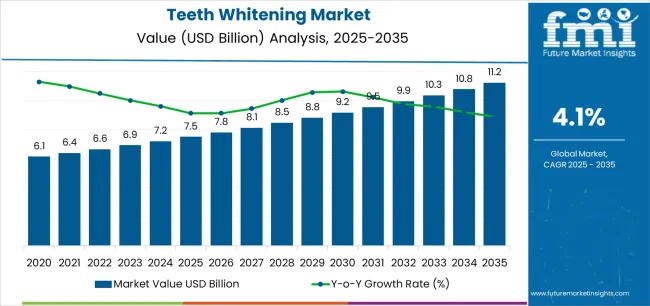
Key Takeaways, Market Size, and Forecast
- The global teeth whitening market is expected to reach USD 7.5 billion in 2025 across consumer and clinical channels.
- By 2035, the teeth whitening market is projected to reach USD 11.2 billion as retail access expands steadily.
- From 2025 to 2035, the market is anticipated to expand at a 4.1% CAGR across the study period.
- Teeth whitening devices are likely to account for 38.4% share of the product segment in 2025.
- Retail sales are expected to hold 52.7% share of the distribution channel segment in 2025.
- The United Kingdom is projected to record the fastest country-level expansion at 6.5% CAGR through 2035.
| Metric | Value |
|---|---|
| Teeth Whitening Market Estimated Value in (2025 E) | USD 7.5 billion |
| Teeth Whitening Market Forecast Value in (2035 F) | USD 11.2 billion |
| Forecast CAGR (2025 to 2035) | 4.1% |
Segmental Analysis
The market is segmented by Product and Distribution Channel and region. By Product, the market is divided into Teeth Whitening Devices, Halogen Lights, Oral Care Products, Others, and Teeth Whitening Gels & Strips. In terms of Distribution Channel, the market is classified into Retail Sales and Institutional Sales. Regionally, the market is classified into North America, Latin America, Western Europe, Eastern Europe, Balkan & Baltic Countries, Russia & Belarus, Central Asia, East Asia, South Asia & Pacific, and the Middle East & Africa.
Insights into the Product Segment:
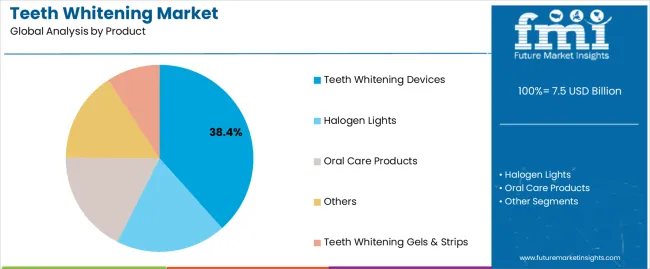
The teeth whitening devices segment, holding 38.4% of the product category, has emerged as the leading segment due to its convenience, rapid results, and growing preference for at-home treatment solutions. Advancements in LED and laser-assisted devices have enhanced whitening efficiency while ensuring safety and comfort. Increased affordability and product availability through online platforms have broadened access to consumers across various income segments.
Professional-grade results without clinical intervention have strengthened demand among younger demographics and working professionals. Manufacturers are focusing on ergonomic designs, rechargeable systems, and improved formulation compatibility to meet evolving expectations.
The segment’s growth is being reinforced by promotional campaigns and celebrity endorsements that elevate product visibility Continuous innovation and user-centric product differentiation are expected to sustain the segment’s leadership position in the global teeth whitening market.
Insights into the Distribution Channel Segment:
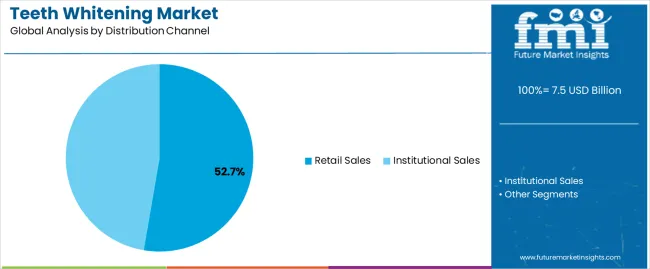
The retail sales segment, accounting for 52.7% of the distribution channel category, has maintained dominance through wide product accessibility and evolving consumer purchasing preferences. Availability of whitening kits, strips, and devices in supermarkets, pharmacies, and online marketplaces has accelerated adoption. Retail channels offer consumers flexibility, price transparency, and promotional benefits, which have driven repeat purchases.
Manufacturers are leveraging retail partnerships and direct-to-consumer strategies to expand market reach. The growing influence of e-commerce platforms and social media marketing is reshaping sales dynamics by enabling targeted campaigns and convenient purchasing experiences.
Strong brand presence and competitive pricing within retail environments continue to strengthen consumer trust The segment’s leadership is expected to persist as retail networks expand globally, offering greater product visibility and accessibility to both urban and emerging market consumers.
Opportunity and Adoption Analysis in the Teeth Whitening Industry
- Rising awareness about the importance of dental health and hygiene, coupled with an increasing focus on preventive dental care, has LED individuals to seek teeth whitening treatments as part of their overall oral care routine.
- With regard to population growth on a global scale, there will be an increased demand for teeth whitening technologies, especially among elderly people who want to get rid of natural discoloration and staining caused by aging, thus boosting market growth.
- There has been an upsurge in demand for teeth whitening as a mechanism toward self-improvement due to health consciousness involving oral aesthetics, which has LED people to value self-care routines such as brushing with these gels to attain self-confidence and enjoy better life quality.
Trends Reshaping the Global Teeth Whitening Industry
- Increasing Demand for Cosmetic Dentistry
Dental aesthetics are increasingly being focused on as an aspect of beauty, with patients seeking dental treatments that enhance their attractiveness. This demand has been propelled by social media, celebrity endorsements and a desire for whiter teeth. There is therefore need to brighten teeth at home or by any other methods.
- Availability of Over-the-Counter Products
Over the counter products such as toothpaste, whitening strips, and even pens which aid in the process of bleaching have been used to facilitate easier access to these processes. Consequently, affordable tightening solutions make domestic options viable for all people hence promoting growth in teeth whitening market.
- Natural and Organic Trends
With a growing preference for natural and organic products in the oral care sector, there is increasing demand for eco-friendly and chemical-free teeth whitening options. Consumers are drawn to whitening products formulated with natural ingredients like activated charcoal, coconut oil, and baking soda, which offer gentler alternatives to traditional whitening agents. As sustainability and wellness become paramount, natural teeth whitening solutions gain traction in the market.
- Dental Tourism
The rise of dental tourism in emerging markets, driven by lower treatment costs, advanced dental facilities, and quality care, has made teeth whitening procedures more accessible and affordable to a global audience. Patients seeking cost-effective dental treatments, including professional whitening services, are drawn to popular dental tourism destinations, boosting the demand for teeth whitening treatments worldwide.
Category-wise Insights in the Teeth Whitening Market
This section provides detailed insights into specific segments in the teeth whitening industry.
Teeth Whitening Devices Anticipated to Lead with a Share of 40% in 2025
| By Product | Teeth Whitening Devices |
|---|---|
| Market Share in 2025 | 40% |
The teeth whitening devices to capture a dominant share of 40% in 2025.
- Whitening strips or trays, as mentioned above, constitute an easy way of doing it at home when compared with professional treatments.
- Manufacturers are constantly producing new items that have varying aspects, attracting users from different backgrounds financially.
- This is because they can now purchase them directly from online distributors, which makes it a lot more convenient for the customer.
- Modern devices offer effective whitening results, making them an attractive alternative for consumers seeking a whiter smile.
Retail Sales Estimated to Secure a Share of 59% in 2025
| Leading Distribution Channel | Retail Sales |
|---|---|
| Market Share in 2025 | 59% |
The retail sector is expected to secure a significant share of 59% in 2025, showcasing its position as the leading distribution channel for teeth whitening products.
- Many brands in different retail stores across the world offer a much wider selection of teeth whitening products that serve to meet various tastes and preferences of consumers.
- Retail stores make it easy for customers to find and compare the many choices available, allowing them to make informed decisions as they buy.
- Promotion strategies like discounts and bundled offers are commonly applied by retail stores, thus making teeth whitening products more accessible and attractive to consumers.
- This makes the products readily available in stores to make people buy on impulse also making the retail sector dominate.
Country-wise Insights in the Teeth Whitening Products Market
This part of the report examines the teeth whitening market across key countries such as Thailand, Germany, India, United Kingdom and the United States among others. The analysis includes key drives influencing the demand for teeth whitening in these countries.
| Countries | CAGR |
|---|---|
| United States | 2.80% |
| United Kingdom | 6.5% |
| Thailand | 3.40% |
| India | 4.3% |
| Germany | 3.0% |
Teeth Whitening Industry in the United States
The United States market boasts a mature teeth whitening industry, with a projected CAGR of 2.80% through 2035.
- Teeth whitening products have high market penetration in the United States, resulting in a slower yet steady increase as compared to growing markets.
- Established players in the United States market are always innovating to bring in new teeth whitening solutions and more improved ones, too.
- While it remains a popular treatment of choice for ensuring whiter teeth, there could be some movement towards other types of cosmetic dental procedures provided by dentists.
Teeth Whitening Industry in the United Kingdom
The United Kingdom market is projected to expand at a CAGR of 6.5% through 2035.
- Growing financial resources empower individuals to invest in non-essential cosmetic procedures like teeth whitening.
- Increased marketing efforts and readily available at-home and professional options have raised consumer awareness and accessibility.
- The widespread influence of celebrities and social media promoting whiter smiles further propels the market forward.
- Teeth whitening is increasingly seen as a form of routine dental care, contributing to its widespread adoption.
Teeth Whitening Industry in Thailand
Thailand's teeth whitening market is experiencing a moderate CAGR of 3.40% through 2035.
- Increasing disposable income allows individuals to prioritize personal care and invest in aesthetic procedures like teeth whitening.
- Increased marketing and media exposure are raising consumer awareness of teeth whitening options in Thailand.
- The growing popularity of aesthetic procedures in Thailand further contributes to the market's expansion.
Teeth Whitening Industry in India
India's teeth whitening industry is projected to rise at a CAGR of 4.30% through 2035.
- India's large and young population, with growing disposable income and increasing awareness of personal care, presents a significant consumer base for teeth whitening products and services.
- There is a growing societal emphasis on aesthetics in India, with teeth whitening becoming increasingly popular among young adults.
- The availability of affordable at-home teeth whitening options is making these treatments more accessible to a wider audience.
- The expansion of dental care facilities and the increasing availability of qualified dentists are contributing to the growth of the teeth whitening market.
Teeth Whitening Industry in Germany
The teeth whitening market in Germany is expected to grow at a moderate pace, with a projected CAGR of 3.0% through 2035.
- Germany has a strong emphasis on preventative dental care, and teeth whitening may not be seen as essential by all individuals.
- Cultural differences compared to countries like the United Kingdom and the United States may influence the perception of teeth whitening, with a focus on maintaining natural teeth rather than achieving a dramatically white smile.
- Despite the focus on prevention, there is a growing interest in cosmetic dentistry procedures, including teeth whitening, among certain segments of the German population.
- German consumers prioritize high-quality products and services, and the market is likely to see a focus on offering safe and effective teeth whitening solutions.
Competitive Landscape of the Global Teeth Whitening Market
The teeth whitening industry is brimming with established players, emerging startups, and private label brands, all vying for a whiter smile in the consumer's basket. With a constant influx of new technologies and ingredients, product innovation is paramount for brands to stay ahead of the curve.
This translates to developing effective yet gentle whitening formulas, creating convenient at-home whitening kits with new application methods, and exploring advancements in light-based whitening technologies.
Disrupting the market, DTC brands are offering convenient online subscriptions and personalized teeth whitening solutions at competitive prices. This forces conventional brick-and-mortar retailers and dental clinics to change their offerings and pricing strategies.
These days, there is a wave of mergers and acquisitions as companies seek out new product portfolios, distribution channels, and consumer markets. In addition, established brands can team up with dental practitioners so as to combine their skills and build consumer trust. Additionally, collaborations between established brands and dental professionals can leverage each other's expertise and build consumer trust.
Recent Developments in the Teeth Whitening Industry
- Procter & Gamble launched Crest Whitening Emulsions, which is a breakthrough formula that delivers five times more active hydrogen peroxide to the teeth and does not require rinsing or brushing.
- Colgate Palmolive expanded its Colgate Optic White line of products with offerings such as Colgate Optic White Renewal Toothpaste.
- Johnson & Johnson launched Listerine Healthy White Vibrant Multi-Action Rinse, which is a mouthwash that whitens teeth, prevents stains, and kills bad breath germs. The company also partnered with Byte, a direct-to-consumer brand that offers at-home teeth aligners and whitening kits, to provide oral care products and education to Byte customers.
Leading Suppliers in the Teeth Whitening Industry
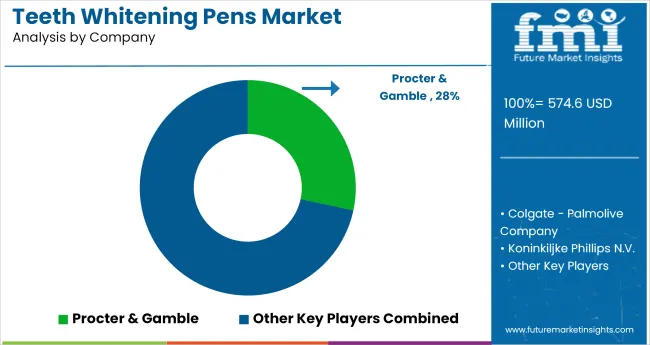
- Procter & Gamble
- Colgate Palmolive
- Johnson & Johnson
- Unilever
- Ultradent Products Inc.
- Church & Dwight Co.
- GlaxoSmithKline Plc
- 3M Company
- DENTSPLY international
- Henkel AG & Co KGaA
- Institut Straumann AG
- Ivoclar Vivadent AG
Top Segments Studied in the Teeth Whitening Market Research Report
- Demand Analysis of Teeth Whitening System
- Teeth Whitening Strips Market Outlook
- Teeth Whitening Market Trends
- Demand for Professional Teeth Whitening
- Expendable Teeth Whitening Product Market Outlook
Teeth Whitening Market Segmentation Analysis
By Product:
- Teeth Whitening Gels & Strips
- Carbamide Peroxide with Potassium Nitrate and Fluoride
- Carbamide Peroxide
- Hydrogen Peroxide
- Teeth Whitening Devices
- LED Lights
- Corded LED Lights
- Cordless LED Lights
- UV Lights
- Halogen Lights
- LED Lights
- Oral Care Products
- Others
By Distribution Channel:
- Institutional Sales
- Dental Hospitals
- Dental Clinics
- Group Dental Practice
- Retail Sales
- Retail Pharmacies
- Drug Stores
- Hypermarket and Supermarket
- Online Sales
By Region:
- North America
- Latin America
- Europe
- East Asia
- South Asia
- Oceania
- Middle East and Africa
Frequently Asked Questions
How big is the teeth whitening market in 2025?
The global teeth whitening market is estimated to be valued at USD 7.5 billion in 2025.
What will be the size of teeth whitening market in 2035?
The market size for the teeth whitening market is projected to reach USD 11.2 billion by 2035.
How much will be the teeth whitening market growth between 2025 and 2035?
The teeth whitening market is expected to grow at a 4.1% CAGR between 2025 and 2035.
What are the key product types in the teeth whitening market?
The key product types in teeth whitening market are teeth whitening devices, led lights, uv lights, halogen lights, oral care products, others, teeth whitening gels & strips, carbamide peroxide with potassium nitrate and fluoride, carbamide peroxide and hydrogen peroxide.
Which distribution channel segment to contribute significant share in the teeth whitening market in 2025?
In terms of distribution channel, retail sales segment to command 52.7% share in the teeth whitening market in 2025.
Preview the report firsthand - request a free sample
Get SampleGet the brochure for pricing and purchase details.
Get PDFTable of Content
- Executive Summary
- Global Market Outlook
- Demand-side Trends
- Supply-side Trends
- Technology Roadmap Analysis
- Analysis and Recommendations
- Market Overview
- Market Coverage / Taxonomy
- Market Definition / Scope / Limitations
- Market Background
- Market Dynamics
- Drivers
- Restraints
- Opportunity
- Trends
- Scenario Forecast
- Demand in Optimistic Scenario
- Demand in Likely Scenario
- Demand in Conservative Scenario
- Opportunity Map Analysis
- Product Life Cycle Analysis
- Supply Chain Analysis
- Investment Feasibility Matrix
- Value Chain Analysis
- PESTLE and Porter’s Analysis
- Regulatory Landscape
- Regional Parent Market Outlook
- Production and Consumption Statistics
- Import and Export Statistics
- Market Dynamics
- Global Market Analysis 2020 to 2025 and Forecast, 2025 to 2035
- Historical Market Size Value (USD Billion) Analysis, 2020 to 2025
- Current and Future Market Size Value (USD Billion) Projections, 2025 to 2035
- Y-o-Y Growth Trend Analysis
- Absolute $ Opportunity Analysis
- Global Market Pricing Analysis 2020 to 2025 and Forecast 2025 to 2035
- Global Market Analysis 2020 to 2025 and Forecast 2025 to 2035, By Product
- Introduction / Key Findings
- Historical Market Size Value (USD Billion) Analysis By Product , 2020 to 2025
- Current and Future Market Size Value (USD Billion) Analysis and Forecast By Product , 2025 to 2035
- Teeth Whitening Devices
- LED Lights
- UV Lights
- Halogen Lights
- Oral Care Products
- Others
- Teeth Whitening Gels & Strips
- Carbamide Peroxide With Potassium Nitrate And Fluoride
- Carbamide Peroxide
- Hydrogen Peroxide
- Teeth Whitening Devices
- Y-o-Y Growth Trend Analysis By Product , 2020 to 2025
- Absolute $ Opportunity Analysis By Product , 2025 to 2035
- Global Market Analysis 2020 to 2025 and Forecast 2025 to 2035, By Distribution Channel
- Introduction / Key Findings
- Historical Market Size Value (USD Billion) Analysis By Distribution Channel, 2020 to 2025
- Current and Future Market Size Value (USD Billion) Analysis and Forecast By Distribution Channel, 2025 to 2035
- Retail Sales
- Retail Pharmacies
- Drug Stores
- Hypermarket And Supermarket
- Online Sales
- Institutional Sales
- Dental Hospitals
- Dental Clinics
- Group Dental Practice
- Retail Sales
- Y-o-Y Growth Trend Analysis By Distribution Channel, 2020 to 2025
- Absolute $ Opportunity Analysis By Distribution Channel, 2025 to 2035
- Global Market Analysis 2020 to 2025 and Forecast 2025 to 2035, By Region
- Introduction
- Historical Market Size Value (USD Billion) Analysis By Region, 2020 to 2025
- Current Market Size Value (USD Billion) Analysis and Forecast By Region, 2025 to 2035
- North America
- Latin America
- Western Europe
- Eastern Europe
- East Asia
- South Asia and Pacific
- Middle East & Africa
- Market Attractiveness Analysis By Region
- North America Market Analysis 2020 to 2025 and Forecast 2025 to 2035, By Country
- Historical Market Size Value (USD Billion) Trend Analysis By Market Taxonomy, 2020 to 2025
- Market Size Value (USD Billion) Forecast By Market Taxonomy, 2025 to 2035
- By Country
- USA
- Canada
- Mexico
- By Product
- By Distribution Channel
- By Country
- Market Attractiveness Analysis
- By Country
- By Product
- By Distribution Channel
- Key Takeaways
- Latin America Market Analysis 2020 to 2025 and Forecast 2025 to 2035, By Country
- Historical Market Size Value (USD Billion) Trend Analysis By Market Taxonomy, 2020 to 2025
- Market Size Value (USD Billion) Forecast By Market Taxonomy, 2025 to 2035
- By Country
- Brazil
- Chile
- Rest of Latin America
- By Product
- By Distribution Channel
- By Country
- Market Attractiveness Analysis
- By Country
- By Product
- By Distribution Channel
- Key Takeaways
- Western Europe Market Analysis 2020 to 2025 and Forecast 2025 to 2035, By Country
- Historical Market Size Value (USD Billion) Trend Analysis By Market Taxonomy, 2020 to 2025
- Market Size Value (USD Billion) Forecast By Market Taxonomy, 2025 to 2035
- By Country
- Germany
- UK
- Italy
- Spain
- France
- Nordic
- BENELUX
- Rest of Western Europe
- By Product
- By Distribution Channel
- By Country
- Market Attractiveness Analysis
- By Country
- By Product
- By Distribution Channel
- Key Takeaways
- Eastern Europe Market Analysis 2020 to 2025 and Forecast 2025 to 2035, By Country
- Historical Market Size Value (USD Billion) Trend Analysis By Market Taxonomy, 2020 to 2025
- Market Size Value (USD Billion) Forecast By Market Taxonomy, 2025 to 2035
- By Country
- Russia
- Poland
- Hungary
- Balkan & Baltic
- Rest of Eastern Europe
- By Product
- By Distribution Channel
- By Country
- Market Attractiveness Analysis
- By Country
- By Product
- By Distribution Channel
- Key Takeaways
- East Asia Market Analysis 2020 to 2025 and Forecast 2025 to 2035, By Country
- Historical Market Size Value (USD Billion) Trend Analysis By Market Taxonomy, 2020 to 2025
- Market Size Value (USD Billion) Forecast By Market Taxonomy, 2025 to 2035
- By Country
- China
- Japan
- South Korea
- By Product
- By Distribution Channel
- By Country
- Market Attractiveness Analysis
- By Country
- By Product
- By Distribution Channel
- Key Takeaways
- South Asia and Pacific Market Analysis 2020 to 2025 and Forecast 2025 to 2035, By Country
- Historical Market Size Value (USD Billion) Trend Analysis By Market Taxonomy, 2020 to 2025
- Market Size Value (USD Billion) Forecast By Market Taxonomy, 2025 to 2035
- By Country
- India
- ASEAN
- Australia & New Zealand
- Rest of South Asia and Pacific
- By Product
- By Distribution Channel
- By Country
- Market Attractiveness Analysis
- By Country
- By Product
- By Distribution Channel
- Key Takeaways
- Middle East & Africa Market Analysis 2020 to 2025 and Forecast 2025 to 2035, By Country
- Historical Market Size Value (USD Billion) Trend Analysis By Market Taxonomy, 2020 to 2025
- Market Size Value (USD Billion) Forecast By Market Taxonomy, 2025 to 2035
- By Country
- Kingdom of Saudi Arabia
- Other GCC Countries
- Turkiye
- South Africa
- Other African Union
- Rest of Middle East & Africa
- By Product
- By Distribution Channel
- By Country
- Market Attractiveness Analysis
- By Country
- By Product
- By Distribution Channel
- Key Takeaways
- Key Countries Market Analysis
- USA
- Pricing Analysis
- Market Share Analysis, 2025
- By Product
- By Distribution Channel
- Canada
- Pricing Analysis
- Market Share Analysis, 2025
- By Product
- By Distribution Channel
- Mexico
- Pricing Analysis
- Market Share Analysis, 2025
- By Product
- By Distribution Channel
- Brazil
- Pricing Analysis
- Market Share Analysis, 2025
- By Product
- By Distribution Channel
- Chile
- Pricing Analysis
- Market Share Analysis, 2025
- By Product
- By Distribution Channel
- Germany
- Pricing Analysis
- Market Share Analysis, 2025
- By Product
- By Distribution Channel
- UK
- Pricing Analysis
- Market Share Analysis, 2025
- By Product
- By Distribution Channel
- Italy
- Pricing Analysis
- Market Share Analysis, 2025
- By Product
- By Distribution Channel
- Spain
- Pricing Analysis
- Market Share Analysis, 2025
- By Product
- By Distribution Channel
- France
- Pricing Analysis
- Market Share Analysis, 2025
- By Product
- By Distribution Channel
- India
- Pricing Analysis
- Market Share Analysis, 2025
- By Product
- By Distribution Channel
- ASEAN
- Pricing Analysis
- Market Share Analysis, 2025
- By Product
- By Distribution Channel
- Australia & New Zealand
- Pricing Analysis
- Market Share Analysis, 2025
- By Product
- By Distribution Channel
- China
- Pricing Analysis
- Market Share Analysis, 2025
- By Product
- By Distribution Channel
- Japan
- Pricing Analysis
- Market Share Analysis, 2025
- By Product
- By Distribution Channel
- South Korea
- Pricing Analysis
- Market Share Analysis, 2025
- By Product
- By Distribution Channel
- Russia
- Pricing Analysis
- Market Share Analysis, 2025
- By Product
- By Distribution Channel
- Poland
- Pricing Analysis
- Market Share Analysis, 2025
- By Product
- By Distribution Channel
- Hungary
- Pricing Analysis
- Market Share Analysis, 2025
- By Product
- By Distribution Channel
- Kingdom of Saudi Arabia
- Pricing Analysis
- Market Share Analysis, 2025
- By Product
- By Distribution Channel
- Turkiye
- Pricing Analysis
- Market Share Analysis, 2025
- By Product
- By Distribution Channel
- South Africa
- Pricing Analysis
- Market Share Analysis, 2025
- By Product
- By Distribution Channel
- USA
- Market Structure Analysis
- Competition Dashboard
- Competition Benchmarking
- Market Share Analysis of Top Players
- By Regional
- By Product
- By Distribution Channel
- Competition Analysis
- Competition Deep Dive
- Colgate Palmolive
- Overview
- Product Portfolio
- Profitability by Market Segments (Product/Age /Sales Channel/Region)
- Sales Footprint
- Strategy Overview
- Marketing Strategy
- Product Strategy
- Channel Strategy
- Procter & Gamble
- Johnson & Johnson
- Unilever
- Ultradent Products Inc.
- Church & Dwight Co.
- GlaxoSmithKline Plc
- 3M Company
- DENTSPLY International
- Henkel AG & Co KGaA
- Institut Straumann AG
- Ivoclar Vivadent AG
- Colgate Palmolive
- Competition Deep Dive
- Assumptions & Acronyms Used
- Research Methodology


