


- Private label is a major competitive force in allergen-free food because retailers can turn free-from products from specialty items into mainstream household staples.
- Retail and supermarkets lead sales channels, giving retailer brands direct control over shelf placement, label comparison, pricing, and assortment depth.
- Gluten-free is especially attractive for private label because it is widely recognized and easy for shoppers to understand at shelf.
- Bakery and snacks are highly exposed because they are everyday categories where families need affordable, repeatable allergen-free substitutes.
- Premium brands are safer when they defend trust through better taste, stronger certification, dedicated production, and clear multi-allergen control.
- The biggest misconception is that allergen-free products are protected from private label because safety is difficult. Retailers can compete strongly once reliable manufacturing partners are qualified.
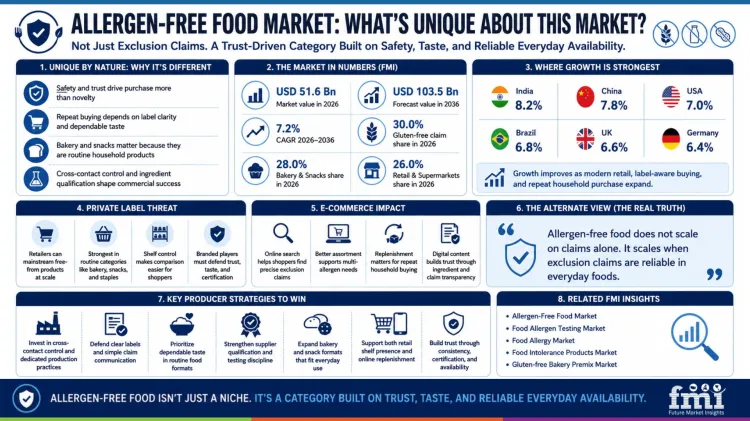
Private label matters more in the Allergen-Free Food Market than many brands assume. Allergen-free products were once treated as specialty or medicalized foods, but they are increasingly becoming normal basket items. As the category becomes more mainstream, retailers have a stronger reason to build their own free-from ranges.
As per FMI, the topmost sales channel is retail and supermarkets, which have a 26.0% market share by 2026. This is the most important point for taking private labels seriously. The retailers can control the shelf space, pricing strategy, product placement, promotions, and comparisons. They could easily move the product category from a niche to the mainstream level.
Gluten-free is the most obvious private-label entry point. FMI identifies gluten-free as the leading claim type with 30.0% share in 2026. The claim is widely recognized and does not require heavy shopper education. A supermarket can launch gluten-free bread, pasta, biscuits, crackers, baking mixes, and snacks under its own brand and place them next to national brands or within dedicated free-from aisles.
The Gluten-free Bakery Premix Market is especially relevant because bakery is one of the clearest areas for private-label expansion. Retailers can use premixes, contract manufacturers, and bakery ingredient systems to develop gluten-free breads, muffins, cakes, pizza bases, and cookies. If the product performs well enough, shoppers may choose the retailer brand for value and convenience.
Bakery and snacks are highly exposed to private label because FMI identifies them as the leading product category with 28.0% share in 2026. These are routine household categories, not occasional treats. Parents buying lunchbox snacks, adults buying breakfast products, or families replacing pantry staples may prioritize affordability if safety and taste are acceptable.
The USA Gluten-free Prepared Food Market shows why prepared and packaged free-from formats matter. Once allergen-free eating becomes part of routine meal planning, shoppers need convenient products that fit normal eating habits. Private label can compete strongly in frozen meals, ready meals, prepared snacks, and easy pantry substitutes.
Retailers also gain by simplifying the shopping journey. A shopper looking for allergen-free foods often wants trust, clarity, and easy comparison. A retailer-owned free-from line can use consistent packaging, simple claim hierarchy, and visible shelf blocks. This makes the category easier to shop and can increase loyalty to the retailer, not just the product brand.
The Egg-free Mayonnaise Market is a useful example of how specific exclusion claims can move into everyday food categories. Egg-free, dairy-free, soy-free, nut-free, and multi-allergen-free products can all become private-label opportunities when the retailer sees enough repeat demand.
Premium brands are not powerless, but they need sharper differentiation. A branded allergen-free product cannot rely only on the claim. If a private-label product offers the same exclusion claim, acceptable taste, clear packaging, and a lower price, the premium brand is exposed. Branded players must defend through better taste, broader allergen control, dedicated manufacturing, third-party certification, ingredient transparency, and innovation.
The Food Allergen Testing Market matters because private-label retailers will not scale free-from ranges without supplier confidence. Testing, documentation, cleaning validation, and cross-contact controls help retailers reduce risk. Once these systems are in place, private-label expansion becomes easier.
Private-label threats are most prevalent for well-known items such as gluten-free bread, cookies, crackers, pasta, cereal, snacks, dairy alternatives, egg free condiments, children’s snacks, and ready meals. This threat will be less prevalent in foods where product reliability, medical necessity, complicated multi-allergen management, or taste differentiation is more important. Nonetheless, the trend is clear, as allergen-free items become common, private label presence will grow.
The Food Intolerance Products Market supports the broader free-from logic because households often shop across allergy, intolerance, digestive comfort, and lifestyle-driven avoidance. Retailers can organize these needs into a stronger private-label platform.
The misconception to avoid is that private label cannot compete because allergen-free food is too sensitive. Safety does raise barriers, but retailers can overcome them by partnering with qualified manufacturers, using validated controls, and building clear claim systems.
Bottom line: Private label will not replace specialist allergen-free brands, but it can pressure mainstream free-from products where the claim is familiar, the format is routine, and the shopper is price-sensitive. Branded players must defend trust, taste, and manufacturing credibility.

