


Aerial Work Platforms Market : Global Industry Analysis 2016 - 2025 and Opportunity Assessment 2026 - 2036
The Aerial Work Platforms Market is segmented by Product (Boom Lifts, Scissor Lifts, Vertical Mast Lifts, Personal Portable Lifts, Telehandlers), Power Source (Diesel Powered, Electric Powered, Hybrid Powered), Application, End User, Sales Channel, and Region. Forecast for 2026 to 2036.
Historical Data Covered: 2016 - 2025 | Base Year: 2025 | Estimated Year: 2026 | Forecast Period: 2026 - 2036
Aerial Work Platforms Market Size, Market Forecast and Outlook By FMI
Aerial work platforms market was valued at USD 12.1 billion in 2025 and is expected to reach USD 12.8 billion in 2026. Market value is forecast to rise to USD 22.3 billion by 2036 at 5.7% CAGR during 2026 to 2036 as rental fleets refresh machines and contractors choose safer height access. Diesel powered platforms are expected to represent 48.0% share and direct sales are forecast to account for 45.0% share in 2026.
Summary of the Aerial Work Platforms Market
- Demand and Growth Drivers
- Construction teams need boom lifts for façade work and overhead installation because fixed access can slow the job.
- Warehouses and factories prefer electric scissor lifts as indoor work needs cleaner machines with less noise.
- Fleet owners are replacing older machines so contractors can rent safer units with better uptime and service support.
- Product and Segment View
- Boom lifts suit outdoor jobs that need reach over barriers and movement around unfinished structures.
- Scissor lifts are used for straight vertical access in warehouses and commercial buildings.
- Diesel units support rough outdoor sites, while electric units are becoming useful inside factories and storage spaces.
- Geography and Competitive Outlook
- China and India offer wider demand as infrastructure and building work need more mobile height access.
- Germany and the United States support replacement demand as rental companies renew older fleets.
- Suppliers with faster parts support and better service networks are more likely to win repeat fleet orders.
- Analyst Opinion
- Nikhil Kaitwade, Principal Consultant at FMI, says, “Aerial work platforms are drawing value from a practical change in jobsite planning. Contractors want faster access to elevated work points without long scaffold setup. Rental fleets want machines able to return to work quickly after checks and service. Diesel units keep a firm role in outdoor construction. Electric scissor lifts are becoming more useful inside warehouses and industrial sites.”
- Aerial Work Platforms Market Value Analysis
- The aerial work platforms market is moving from basic height-access equipment into a planned jobsite and rental fleet asset.
- Demand is supported by contractors that need safer access for façade work and overhead installation without long scaffold setup.
- Rental companies add value by matching boom lifts and scissor lifts with project length and site height needs.
- The market is expected to see stronger value from electric units for indoor work and diesel units for rough outdoor sites.
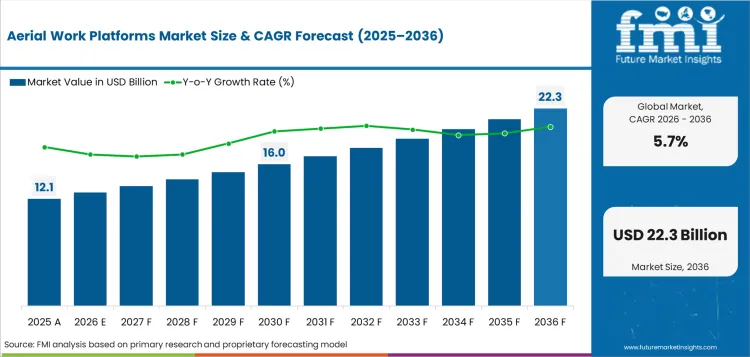
Aerial work platform selection is shifting toward safer elevated access, lower site disruption and easier fleet control. In August 2024, ISO published ISO 16368:2024 for mobile elevating work platforms covering design, calculations and test methods. That makes verified safety records more important for OEMs and rental fleets serving regulated job sites. In March 2025, IPAF stated that its new MEWP Operator Training Course was finalized with behavioral science built into the program. Training quality now has a stronger role in fleet selection because contractors need equipment that supports safer daily use. In April 2026, Haulotte stated in its 2025 annual report that its offer includes telematics and fleet management tools for monitoring machine performance and usage. Telematics support service planning and utilization tracking across rental branches. The market is moving toward suppliers that combine compliant machines, and fleet data instead of selling height access equipment as a standalone asset.
Aerial Work Platforms Market Definition
Aerial work platforms are mobile elevating machines used to lift workers, tools, and light materials to temporary elevated work areas, mainly across construction sites, factories, warehouses, utilities, and maintenance locations.
Aerial Work Platforms Market Inclusions
Scope includes boom lifts, scissor lifts, vertical mast lifts, personal portable lifts, telehandlers used for access, diesel powered units, electric powered units, hybrid powered units, rental fleet purchases, direct sales, distributor sales, and aftermarket services.
Aerial Work Platforms Market Exclusions
Scope excludes fixed scaffolding, tower cranes, permanent elevators, rope access systems, forklifts used only for material handling, truck-mounted utility bucket trucks, lifting slings, hoists, and uncertified man baskets.
Aerial Work Platforms Market Research Methodology
- Primary Research: FMI analysts reviewed rental fleet needs and manufacturer product lines. Dealer support models and contractor purchase criteria were assessed.
- Desk Research: Public construction output data and safety standards shaped market checks. Company releases and official statistical sources supported equipment activity review.
- Market Sizing and Forecasting: Sizing used equipment value and fleet replacement cycles. Application mix and country construction activity were used to adjust the forecast.
- Data Validation: Forecast checks compared access equipment demand with construction spending and safety standards. Product launches and rental fleet behavior were checked for consistency.
Why is the Aerial Work Platforms Market Expanding?
- Construction sites need safer elevated work access as scaffold setup can delay short-cycle building and maintenance work.
- Rental companies are refreshing fleets to meet contractor demand for newer diesel and electric platforms.
- Electric scissor lifts support indoor maintenance and warehouse use as facility operators reduce emissions inside closed spaces.
- Fleet telematics increases platform value as rental companies track service timing and machine use across many sites.
Aerial work platforms are becoming more useful because contractors need safer access for work at height. Fixed scaffolding can take time to set up and remove. Boom lifts and scissor lifts help operators reach work areas faster with better control on active sites.
Rental fleets are supporting wider use because many contractors need these machines only for selected project stages. A contractor can rent a lift by height or site condition in place of buying a full fleet. IPAF finalized its new MEWP Operator Training Course in March 2025 with behavioral science built into the program, which makes operator readiness a clearer part of platform selection.
Indoor work is creating more demand for electric platforms. Warehouses and factories need machines that can move on finished floors with less noise. Skyjack launched the SJ5545 E in October 2025 with 51-ft working height and 770-lb load capacity, showing how electric scissor lifts are moving toward higher slab-access work. Scissor lifts are expected to see wider use as maintenance staff handle lighting work and overhead repairs.
Market Segmentation Analysis
- Boom lifts are expected to account for 45.0% product share in 2026.
- Diesel powered platforms are forecast to represent 48.0% of power source demand in 2026.
- Construction demand is expected to hold 41.0% application share in 2026.
- Rental companies are expected to represent 37.0% of end-user demand in 2026.
- Direct sales are forecast to account for 45.0% sales channel share in 2026.
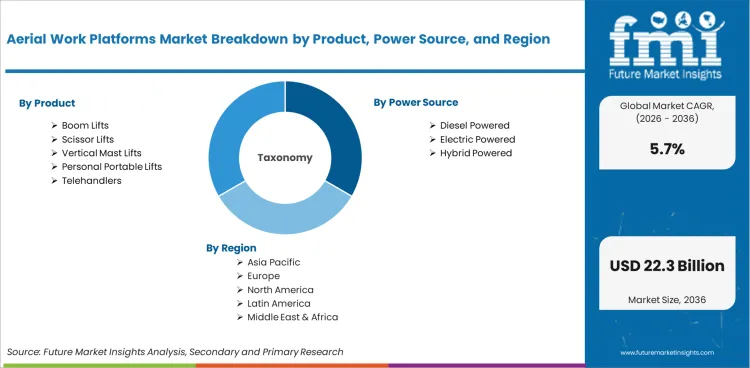
Aerial work platforms market is segmented by product, power source, application, end user, sales channel, and region. Product includes boom lifts, scissor lifts, vertical mast lifts, personal portable lifts, and telehandlers. Power source includes diesel powered, electric powered, and hybrid powered units. Application includes construction, industrial, utilities, and logistics. End user includes rental companies, construction contractors, and industrial facilities. Sales channel includes direct sales, distributors, and aftermarket.
Insights into Aerial Work Platforms Market by Product
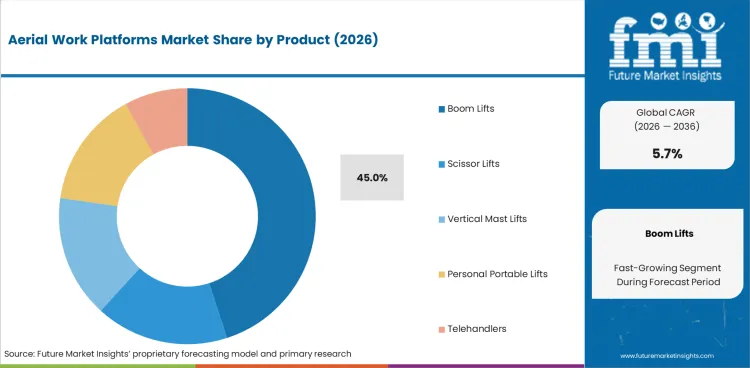
- Boom lifts are expected to hold 45.0% share in 2026. These machines help contractors reach steel frames and bridge sections without setting up long fixed access. Wider use of aerial work platforms keeps boom lifts important for outdoor project work.
- Scissor lifts support indoor slab work because they move workers straight upward in a stable way. Vertical mast lifts and portable lifts serve tight facility spaces that need compact access equipment.
Insights into Aerial Work Platforms Market by Power Source
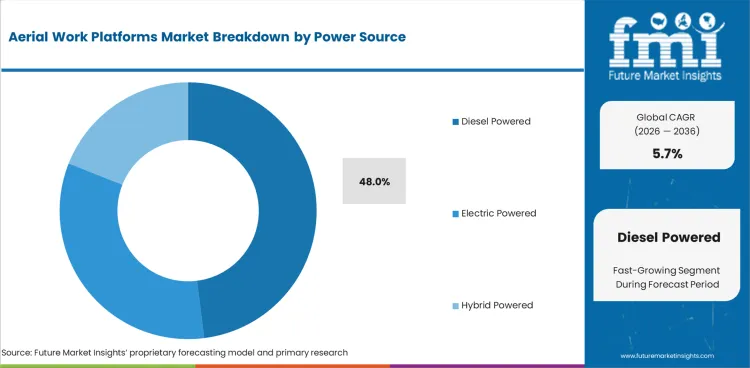
- Diesel powered platforms are forecast to account for 48.0% share in 2026. Outdoor construction sites need machines with stronger travel power for rough ground. Larger boom lifts often use diesel power because they work for longer hours on open sites.
- Electric powered units are expected to serve more warehouses and indoor maintenance sites. Hybrid powered units are useful for projects that need indoor movement and outdoor reach in the same job cycle.
Insights into Aerial Work Platforms Market by Application
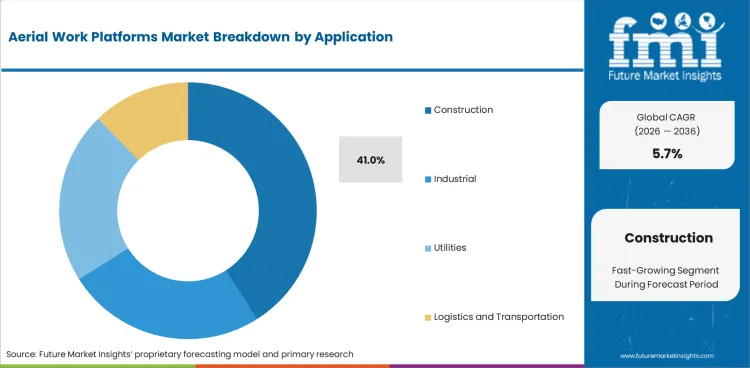
- Construction is expected to represent 41.0% share in 2026. Commercial and residential sites need quicker access to elevated work areas.
- Industrial plants use platforms for repairs near racking and overhead systems. Utilities need stable access for power line checks and telecom service work.
Insights into Aerial Work Platforms Market by End User
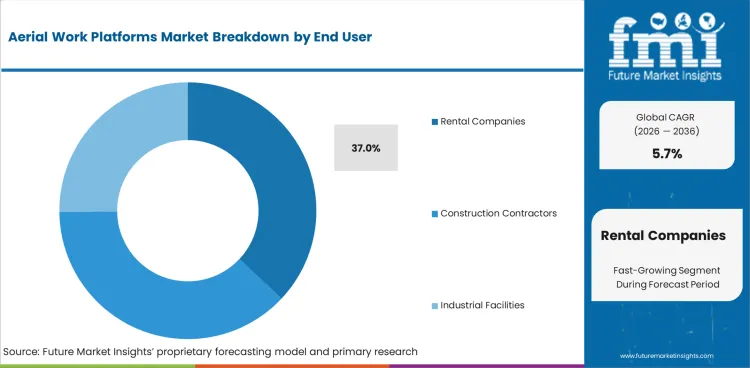
- Rental companies are forecast to account for 37.0% share in 2026. Contractors often need lifts for one project stage, so rental access reduces ownership pressure. This supports general equipment rental services as an important route for platform use.
- Construction contractors buy platforms once the same machine can be used across many projects. Industrial facilities choose owned or leased units for routine maintenance and warehouse access.
Insights into Aerial Work Platforms Market by Sales Channel
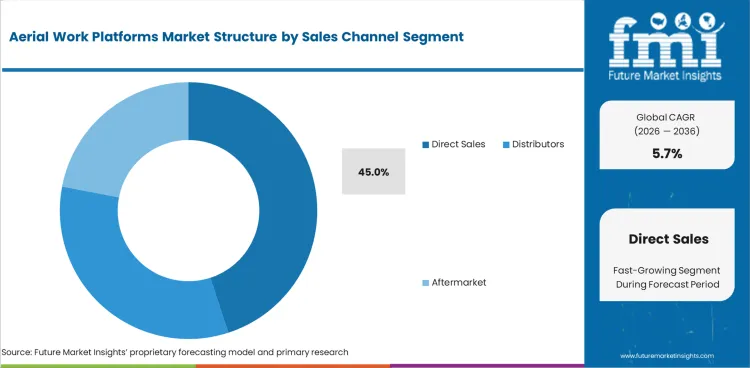
- Direct sales are expected to hold 45.0% share in 2026. Large rental fleets often work with manufacturers to control fleet mix and service terms. Direct buying also helps them keep machine types consistent across branches.
- Distributors stay important for regional firms that need local advice and faster parts access. Aftermarket demand continues as fleet owners replace tires and hydraulic parts during regular service.
Aerial Work Platforms Market Drivers, Restraints, and Opportunities
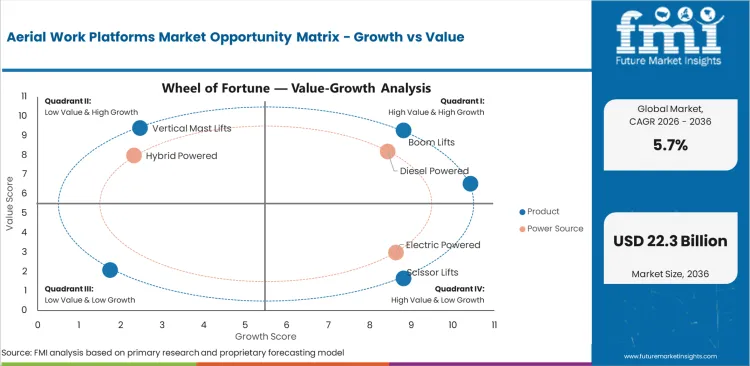
- Safer height access supports demand because contractors need stable machines for overhead work and façade tasks.
- High purchase cost can slow direct buying among smaller contractors. Rental fleets help users access machines without full ownership.
- Electric platforms are creating new demand in indoor sites. Warehouses and factories need cleaner machines for daily maintenance work.
Safer Height Access Supports Platform Use
Work at height needs better control because small mistakes can delay a project and raise safety risk. Aerial work platforms give operators a guarded work area and controlled movement. ISO 16368:2024 gives users a safety reference for mobile elevating work platforms because it covers safety requirements and verification methods for MEWPs. Fleet owners can use such standards during machine design and operating safety checks. Suppliers with clear safety documents can move faster through approval checks.
Rental Fleets Support Wider Use
Rental companies make aerial work platforms easier to use across short projects. Contractors can select a boom lift or scissor lift based on working height and ground condition. This works well on urban jobs because site needs often change as work moves ahead. Fleet owners prefer machines that are easy to service. Better uptime helps rental companies keep more machines active across customer sites.
Analysis of Aerial Work Platforms Market by Key Countries
.webp "Top Country Growth Comparison — Aerial Work Platforms Market CAGR (2026–2036)")
| Country | CAGR |
|---|---|
| China | 6.8% |
| India | 6.3% |
| Germany | 5.9% |
| Brazil | 5.6% |
| United States | 5.4% |
| United Kingdom | 5.1% |
| Japan | 4.8% |
Source: Future Market Insights, 2026.
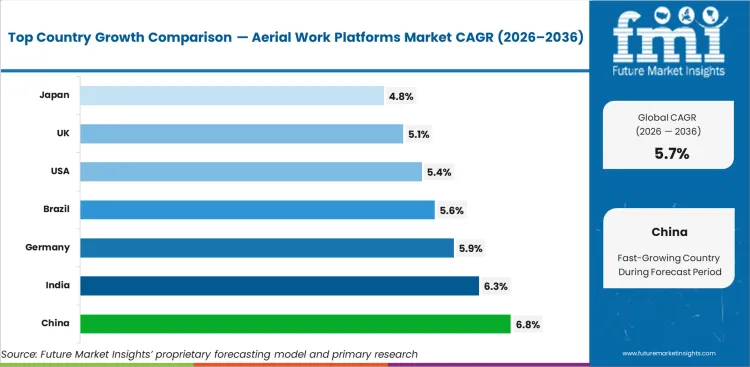
Aerial Work Platforms Market CAGR Analysis by Country
- China is forecast to record 6.8% CAGR through 2036.
- India is likely to rise by 6.3% CAGR between 2026 and 2036.
- Germany is expected to advance at 5.9% CAGR by 2036.
- Brazil is forecast at 5.6% CAGR during the forecast period.
- United States demand is expected to move at 5.4% CAGR by 2036.
- Industry outlook in the United Kingdom points to 5.1% CAGR through 2036.
- Japan is anticipated to move ahead at 4.8% CAGR during 2026 to 2036.
Demand Outlook for Aerial Work Platforms Market in China
China has a strong need for aerial work platforms because large construction projects use mobile access machines at many stages. China’s national statistical agency recorded construction enterprise value added of CNY 8,642.5 billion in 2025. China is forecast to record 6.8% CAGR through 2036 as infrastructure work supports fleet expansion. Large sites need boom lifts for outdoor work and scissor lifts for building interiors. Local suppliers need immediate parts support because downtime can affect project schedules.
- Large infrastructure projects create steady need for boom lifts that can reach outdoor work areas.
- Local manufacturing can shorten delivery time for fleet purchases and replacement parts.
- Rental use is expected to widen as contractors choose machines by working height and project length.
Demand Outlook for Aerial Work Platforms Market in India
India is likely to grow at a CAGR of 6.3% by 2036 as rental fleets help contractors control upfront cost. India is building more transport and commercial projects, which means contractors need safer ways to work at height. India’s government proposed capital expenditure of INR 12.2 lakh crore for FY 2026 to 2027. Road and metro projects need boom lifts for elevated installation work.
- Infrastructure projects are creating demand for access machines used in outdoor installation work.
- Rental fleets help smaller contractors use certified machines without buying costly equipment.
- Service support will affect repeat orders because machine delays can slow active projects.
Opportunity Analysis of Aerial Work Platforms Market in Germany
Germany has steady demand because factories and commercial buildings need safe access for maintenance work. Industrial sites use scissor lifts and vertical mast lifts for overhead repairs. Germany is expected to advance at 5.9% CAGR by 2036. Buyers are expected toprefer suppliers that provide safe machines with dependable service support.
- Factories use compact electric platforms for racking work and ceiling maintenance.
- Rental fleet renewal supports machines that are easy to inspect and service.
- Safety documents help suppliers meet approval needs in construction and industrial sites.
Sales Analysis of Aerial Work Platforms Market in Brazil
Brazil is forecast at 5.6% CAGR through 2036 as rental use improves in commercial construction. Demand in country is shaped by construction activity and contractor cost control. Brazil’s National Index of Civil Construction rose 5.63% in 2025. Higher project cost can make rental access more useful for contractors that need machines for short project stages. Diesel boom lifts will stay important for outdoor sites with uneven ground.
- Rental access helps contractors avoid heavy ownership cost during price-sensitive projects.
- Diesel boom lifts are useful for outdoor jobs that need higher travel power.
- Regional distributors can support demand by keeping parts available outside main cities.
Sales Analysis of Aerial Work Platforms Market in the United States
Industry growth in the United States is attributable to rental fleets and replacement needs across construction sites. Large nonresidential projects use aerial platforms for façade work and overhead installation. Construction spending reached USD 2,185.5 billion at a seasonally adjusted annual rate in March 2026. United States demand is expected to move at 5.4% CAGR by 2036. Large rental groups are expected to buy directly from manufacturers to standardize fleets.
- Rental firms buy direct because standard machine types make servicing easier across many branches.
- Warehouse construction supports electric scissor lift use for indoor access work.
- Training and inspection needs make safer platform design more important for fleet owners.
Future Outlook for Aerial Work Platforms Market in the United Kingdom
United Kingdom demand is supported by repair work and commercial maintenance. Contractors often rent access equipment because project timelines can shift. The Office for National Statistics reported annual construction output price change of 2.7% in the 12 months to December 2025. Industry outlook in the United Kingdom points to 5.1% CAGR through 2036. Rental firms are expected toprefer machines that reduce service time and keep fleets available.
- Repair work supports compact scissor lifts used inside commercial buildings.
- Electric units suit indoor jobs because they reduce noise and protect finished floors.
- Regional dealers help contractors keep machines working during short project windows.
Future Outlook for Aerial Work Platforms Market in Japan
Japan needs compact access machines because many construction and maintenance sites have limited working space. Equipment buyers often choose platforms that move safely in tight areas. Japan’s transport ministry reported large contractor orders fell 14.4% year on year in March 2026. Japan is anticipated to move ahead at 4.8% CAGR during 2026 to 2036 as compact lifts serve urban sites. Local suppliers with good service systems are expected to stay important for fleet buyers.
- Compact city projects need platforms that can move safely in narrow work areas.
- Local equipment makers support access needs for building work and facility maintenance.
- Older buildings continue to need maintenance access even during softer new-order periods.
Competitive Landscape and Strategic Positioning
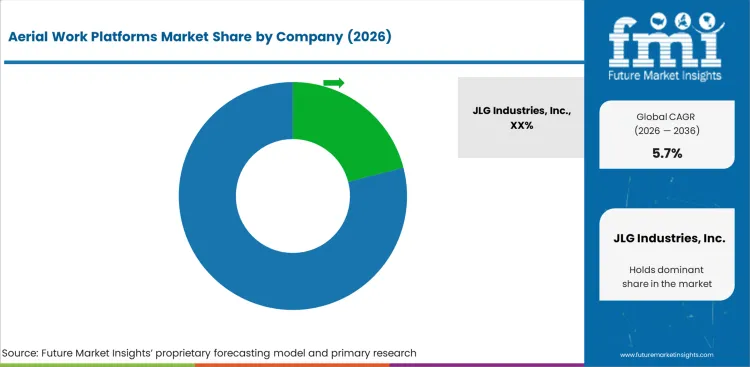
- Suppliers compete on machine uptime because rental fleets lose revenue when equipment stays idle. Fast parts supply and quick service support influence supplier selection.
- Manufacturers with electric scissor lifts and high-reach boom lifts serve both indoor and outdoor jobs. Fleet monitoring tools make service planning easier for rental companies.
- Established suppliers have an advantage because large rental fleets buy machines in repeat programs. Familiar service terms and proven dealer support reduce operating risk.
- New suppliers face barriers in safety certification and dealer coverage. Rental companies prefer machines with clear resale value and simple operator training.
Competition in the aerial work platforms market is driven by uptime and service reach. Rental companies need machines that can return to work quickly after service checks. Contractors prefer platforms that match working height and ground conditions without making site work harder. Large suppliers have an advantage because they offer many working heights and power choices. Dealer networks add value because rental fleets need quick parts support. Electric models are becoming more useful for indoor work and diesel machines continue to serve outdoor projects.
Digital fleet support is becoming more important in supplier comparisons. Smaller suppliers can compete if they offer dependable service and clear pricing. Regional firms may find openings in compact platforms and replacement demand. Trust is the main barrier because rental companies lose money when machines stay idle during active projects.
Key Companies in the Aerial Work Platforms Market
- Global Access Equipment Leaders: Oshkosh Corporation through JLG Industries and Terex Corporation through Genie lead through broad platform ranges and rental fleet access.
- European and Specialist Groups: Haulotte Group and Manitou Group support regional needs through boom lift and scissor lift lines.
- Asia-Focused Lifting Specialists: Aichi Corporation and Tadano Ltd. serve local and export needs through safe access equipment and lifting know-how.
Competitive Benchmarking: Aerial Work Platforms Market
| Company | Boom and Scissor Range | Electric Fleet Depth | Rental Support | Geographic Footprint |
|---|---|---|---|---|
| JLG Industries, Inc. | High | High | High | Global with North America strength |
| Terex Corporation / Genie | High | High | High | Global with dealer depth |
| Haulotte Group | High | Medium | Medium | Europe and global coverage |
| Skyjack Inc. | Medium | High | High | North America and Europe |
| Snorkel International | Medium | Medium | Medium | North America and Europe |
| Manitou Group | Medium | Medium | Medium | Europe and global channels |
| Aichi Corporation | Medium | Medium | Medium | Japan and Asia centered |
| Tadano Ltd. | Medium | Medium | Medium | Japan and North America |
Source: Future Market Insights competitive analysis, 2026.
Key Developments in Aerial Work Platforms Market
- In April 2026, JLG Industries previewed its new 600AJ+ articulating boom lift for the 60-ft class.
- In October 2025, Skyjack launched the SJ5545 E electric drive scissor lift with a 51-ft working height and 770-lb load capacity.
Key Players in the Aerial Work Platforms Market
Major Global Players
- Oshkosh Corporation / JLG Industries, Inc.
- Terex Corporation / Genie
- Haulotte Group
- Skyjack Inc.
Specialist and Regional Players
- Snorkel International
- Manitou Group
- Aichi Corporation
- Tadano Ltd.
Report Scope and Coverage
| Parameter | Details |
|---|---|
| Quantitative Units | USD 12.8 billion to USD 22.3 billion at 5.7% CAGR |
| Market Definition | Mobile elevating work platforms used to position personnel and tools at temporary elevated work locations |
| Regions Covered | North America, Latin America, Western Europe, Eastern Europe, East Asia, South Asia and Pacific, Middle East and Africa |
| Countries Covered | United States, China, India, Germany, Brazil, United Kingdom, Japan and additional countries |
| Key Companies Profiled | JLG Industries, Inc., Terex Corporation, Haulotte Group, Skyjack Inc., Snorkel International, Manitou Group, Aichi Corporation, Tadano Ltd. |
| Forecast Period | 2026 to 2036 |
| Approach | Hybrid bottom-up and top-down method using platform type and power source mix. Rental fleet demand and country construction activity complete the model. |
Aerial Work Platforms Market Breakdown by Product, Power Source, Application, End User, Sales Channel, and Region
Aerial Work Platforms Market Segmented by Product
- Boom Lifts
- Scissor Lifts
- Vertical Mast Lifts
- Personal Portable Lifts
- Telehandlers
Aerial Work Platforms Market Segmented by Power Source
- Diesel Powered
- Electric Powered
- Hybrid Powered
Aerial Work Platforms Market Segmented by Application
- Construction
- Industrial
- Utilities
- Logistics and Transportation
Aerial Work Platforms Market Segmented by End User
- Rental Companies
- Construction Contractors
- Industrial Facilities
Aerial Work Platforms Market Segmented by Sales Channel
- Direct Sales
- Distributors
- Aftermarket
Aerial Work Platforms Market by Region
- North America
- Latin America
- Western Europe
- Eastern Europe
- East Asia
- South Asia and Pacific
- Middle East and Africa
Research Sources and Bibliography
- International Organization for Standardization. (2024, August). ISO 16368:2024: Mobile elevating work platforms: Design, calculations, safety requirements and test methods. International Organization for Standardization.
- International Powered Access Federation. (2025, March 18). IPAF Annual Report 2024: A year of growth & achievements. International Powered Access Federation.
- Haulotte Group. (2026, April). 2025 Annual Report. Haulotte Group.
- Skyjack. (2025, October 8). Skyjack launches new SJ5545 E: Their highest working height slab scissor. Skyjack.
- National Bureau of Statistics of China. (2026, February 28). Statistical communiqué of the People’s Republic of China on the 2025 national economic and social development. National Bureau of Statistics of China.
- Press Information Bureau. (2026, February 1). Highlights of Union Budget 2026-27. Government of India.
- Instituto Brasileiro de Geografia e Estatística. (2026, January 9). National Index of Civil Construction reaches 0.51% in December; closes 2025 with a rise of 5.63%. IBGE.
- USA Census Bureau. (2026, May 7). Monthly construction spending, March 2026. USA Census Bureau.
- Office for National Statistics. (2026, February 12). Construction output in Great Britain: December 2025, new orders and construction output price indices, October to December 2025. Office for National Statistics.
- Ministry of Land, Infrastructure, Transport and Tourism. (2026, April 30). Construction work orders survey of 50 major constructors: March 2026 results. Ministry of Land, Infrastructure, Transport and Tourism.
- JLG Industries, Inc. (2026, April 2). JLG previews new 600AJ+ boom lift, advancing productivity and serviceability in the 60-ft class. JLG Industries, Inc.
This Report Answers
- What is the 2026 market size for aerial work platforms and how much value is forecast by 2036?
- What CAGR is expected for aerial work platforms during 2026 to 2036 across global demand?
- Which power source is expected to hold the leading share in the aerial work platforms market?
- Which sales channel is forecast to account for the main share of aerial work platform purchases?
- Why do rental companies influence aerial work platform specifications and replacement cycles?
- How do construction safety rules and ISO standards affect aerial work platform purchases?
- Which countries are forecast to record faster CAGR values in the aerial work platforms market?
- Which companies are active in boom lifts and scissor lifts?
- What equipment is included and excluded from the aerial work platforms market scope?
- How does the forecast method connect platform demand with construction and rental fleet activity?
Frequently Asked Questions
How large is the Aerial Work Platforms Market in 2026?
Aerial Work Platforms Market is expected to reach USD 12.8 billion in 2026, supported by construction access needs and fleet replacement.
What will the Aerial Work Platforms Market be worth by 2036?
Aerial Work Platforms Market is forecast to reach USD 22.3 billion by 2036 as rental fleets and safety-based access use expand.
What CAGR is forecast for the Aerial Work Platforms Market?
Demand for aerial work platforms is expected to rise at 5.7% CAGR during 2026 to 2036 across global applications.
Which power source leads the Aerial Work Platforms Market?
Diesel powered platforms are expected to hold 48.0% share in 2026 due to outdoor construction reach and rough-ground use.
Which sales channel is important for aerial work platform suppliers?
Direct sales are forecast to account for 45.0% share in 2026 as large rental fleets negotiate manufacturer contracts.
Why is China important for aerial work platforms demand?
China is forecast to record 6.8% CAGR through 2036 as infrastructure work and local equipment supply support fleet expansion.
What is included in the Aerial Work Platforms Market?
Scope includes boom lifts and scissor lifts. Vertical mast lifts and certified mobile platforms for temporary height access are included.
How was the Aerial Work Platforms Market forecast built?
Forecasting used platform type demand and power source mix. Rental fleet replacement and country construction activity completed the model.
How do scissor lifts differ from boom lifts in daily use?
Scissor lifts move mostly upward for stable slab work. Boom lifts provide outreach for façade work and difficult elevated points.
Why do rental companies buy many aerial work platforms?
Rental companies serve contractors needing specific platform heights for short jobs without long ownership costs.
How long can aerial work platforms stay useful for fleets?
Useful life depends on hours and terrain. Maintenance quality and parts access guide fleet replacement timing.
Table of Content
- Executive Summary
- Global Market Outlook
- Demand to side Trends
- Supply to side Trends
- Technology Roadmap Analysis
- Analysis and Recommendations
- Market Overview
- Research Methodology
- Chapter Orientation
- Analytical Lens and Working Hypotheses
- Market Structure, Signals, and Trend Drivers
- Benchmarking and Cross-market Comparability
- Market Sizing, Forecasting, and Opportunity Mapping
- Research Design and Evidence Framework
- Desk Research Programme (Secondary Evidence)
- Company Annual and Sustainability Reports
- Peer-reviewed Journals and Academic Literature
- Corporate Websites, Product Literature, and Technical Notes
- Earnings Decks and Investor Briefings
- Statutory Filings and Regulatory Disclosures
- Technical White Papers and Standards Notes
- Specialist Newsletters and Curated Briefings
- Sector Databases and Reference Repositories
- FMI Internal Proprietary Databases and Historical Market Datasets
- Subscription Datasets and Paid Sources
- Social Channels, Communities, and Digital Listening Inputs
- Additional Desk Sources
- Expert Input and Fieldwork (Primary Evidence)
- Primary Modes
- Qualitative Interviews and Expert Elicitation
- Quantitative Surveys and Structured Data Capture
- Blended Approach
- Why Primary Evidence is Used
- Field Techniques
- Interviews
- Surveys
- Focus Groups
- Observational and In-context Research
- Social and Community Interactions
- Stakeholder Universe Engaged
- C-suite Leaders
- Board Members
- Presidents and Vice Presidents
- R&D and Innovation Heads
- Technical Specialists
- Domain Subject-matter Experts
- Scientists
- Physicians and Other Healthcare Professionals
- Governance, Ethics, and Data Stewardship
- Research Ethics
- Data Integrity and Handling
- Primary Modes
- Tooling, Models, and Reference Databases
- Desk Research Programme (Secondary Evidence)
- Data Engineering and Model Build
- Data Acquisition and Ingestion
- Cleaning, Normalisation, and Verification
- Synthesis, Triangulation, and Analysis
- Quality Assurance and Audit Trail
- Market Background
- Market Dynamics
- Drivers
- Restraints
- Investment Feasibility Matrix
- Value Chain Analysis
- PESTLE and Porter’s Analysis
- Regulatory Landscape
- Regional Parent Market Outlook
- Production and Consumption Statistics
- Import and Export Statistics
- Global Market Analysis 2021 to 2025 and Forecast, 2026 to 2036
- Historical Market Size Value (USD Million) Analysis, 2021 to 2025
- Current and Future Market Size Value (USD Million) Projections, 2026 to 2036
- Y to o to Y Growth Trend Analysis
- Absolute $ Opportunity Analysis
- Global Market Pricing Analysis 2021 to 2025 and Forecast 2026 to 2036
- Global Market Analysis 2021 to 2025 and Forecast 2026 to 2036, By Product Type
- Introduction / Key Findings
- Historical Market Size Value (USD Million) Analysis By Product Type , 2021 to 2025
- Current and Future Market Size Value (USD Million) Analysis and Forecast By Product Type , 2026 to 2036
- Remanufactured ECUs
- New ECUs
- Programmed ECUs
- ECU Repair Kits
- Remanufactured ECUs
- Y to o to Y Growth Trend Analysis By Product Type , 2021 to 2025
- Absolute $ Opportunity Analysis By Product Type , 2026 to 2036
- Global Market Analysis 2021 to 2025 and Forecast 2026 to 2036, By Vehicle Type
- Introduction / Key Findings
- Historical Market Size Value (USD Million) Analysis By Vehicle Type, 2021 to 2025
- Current and Future Market Size Value (USD Million) Analysis and Forecast By Vehicle Type, 2026 to 2036
- Passenger Cars
- Light Commercial
- Heavy Trucks
- Two Wheelers
- Passenger Cars
- Y to o to Y Growth Trend Analysis By Vehicle Type, 2021 to 2025
- Absolute $ Opportunity Analysis By Vehicle Type, 2026 to 2036
- Global Market Analysis 2021 to 2025 and Forecast 2026 to 2036, By Engine Type
- Introduction / Key Findings
- Historical Market Size Value (USD Million) Analysis By Engine Type, 2021 to 2025
- Current and Future Market Size Value (USD Million) Analysis and Forecast By Engine Type, 2026 to 2036
- Gasoline Engines
- Diesel Engines
- Hybrid Engines
- CNG Engines
- Gasoline Engines
- Y to o to Y Growth Trend Analysis By Engine Type, 2021 to 2025
- Absolute $ Opportunity Analysis By Engine Type, 2026 to 2036
- Global Market Analysis 2021 to 2025 and Forecast 2026 to 2036, By Sales Channel
- Introduction / Key Findings
- Historical Market Size Value (USD Million) Analysis By Sales Channel, 2021 to 2025
- Current and Future Market Size Value (USD Million) Analysis and Forecast By Sales Channel, 2026 to 2036
- Independent Aftermarket
- OEM Service
- Online Retail
- Core Exchange
- Independent Aftermarket
- Y to o to Y Growth Trend Analysis By Sales Channel, 2021 to 2025
- Absolute $ Opportunity Analysis By Sales Channel, 2026 to 2036
- Global Market Analysis 2021 to 2025 and Forecast 2026 to 2036, By Repair Type
- Introduction / Key Findings
- Historical Market Size Value (USD Million) Analysis By Repair Type, 2021 to 2025
- Current and Future Market Size Value (USD Million) Analysis and Forecast By Repair Type, 2026 to 2036
- Direct Replacement
- Reprogramming
- Board Repair
- Module Exchange
- Direct Replacement
- Y to o to Y Growth Trend Analysis By Repair Type, 2021 to 2025
- Absolute $ Opportunity Analysis By Repair Type, 2026 to 2036
- Global Market Analysis 2021 to 2025 and Forecast 2026 to 2036, By Region
- Introduction
- Historical Market Size Value (USD Million) Analysis By Region, 2021 to 2025
- Current Market Size Value (USD Million) Analysis and Forecast By Region, 2026 to 2036
- North America
- Latin America
- Western Europe
- Eastern Europe
- East Asia
- South Asia and Pacific
- Middle East & Africa
- Market Attractiveness Analysis By Region
- North America Market Analysis 2021 to 2025 and Forecast 2026 to 2036, By Country
- Historical Market Size Value (USD Million) Trend Analysis By Market Taxonomy, 2021 to 2025
- Market Size Value (USD Million) Forecast By Market Taxonomy, 2026 to 2036
- By Country
- USA
- Canada
- Mexico
- By Product Type
- By Vehicle Type
- By Engine Type
- By Sales Channel
- By Repair Type
- By Country
- Market Attractiveness Analysis
- By Country
- By Product Type
- By Vehicle Type
- By Engine Type
- By Sales Channel
- By Repair Type
- Key Takeaways
- Latin America Market Analysis 2021 to 2025 and Forecast 2026 to 2036, By Country
- Historical Market Size Value (USD Million) Trend Analysis By Market Taxonomy, 2021 to 2025
- Market Size Value (USD Million) Forecast By Market Taxonomy, 2026 to 2036
- By Country
- Brazil
- Chile
- Rest of Latin America
- By Product Type
- By Vehicle Type
- By Engine Type
- By Sales Channel
- By Repair Type
- By Country
- Market Attractiveness Analysis
- By Country
- By Product Type
- By Vehicle Type
- By Engine Type
- By Sales Channel
- By Repair Type
- Key Takeaways
- Western Europe Market Analysis 2021 to 2025 and Forecast 2026 to 2036, By Country
- Historical Market Size Value (USD Million) Trend Analysis By Market Taxonomy, 2021 to 2025
- Market Size Value (USD Million) Forecast By Market Taxonomy, 2026 to 2036
- By Country
- Germany
- UK
- Italy
- Spain
- France
- Nordic
- BENELUX
- Rest of Western Europe
- By Product Type
- By Vehicle Type
- By Engine Type
- By Sales Channel
- By Repair Type
- By Country
- Market Attractiveness Analysis
- By Country
- By Product Type
- By Vehicle Type
- By Engine Type
- By Sales Channel
- By Repair Type
- Key Takeaways
- Eastern Europe Market Analysis 2021 to 2025 and Forecast 2026 to 2036, By Country
- Historical Market Size Value (USD Million) Trend Analysis By Market Taxonomy, 2021 to 2025
- Market Size Value (USD Million) Forecast By Market Taxonomy, 2026 to 2036
- By Country
- Russia
- Poland
- Hungary
- Balkan & Baltic
- Rest of Eastern Europe
- By Product Type
- By Vehicle Type
- By Engine Type
- By Sales Channel
- By Repair Type
- By Country
- Market Attractiveness Analysis
- By Country
- By Product Type
- By Vehicle Type
- By Engine Type
- By Sales Channel
- By Repair Type
- Key Takeaways
- East Asia Market Analysis 2021 to 2025 and Forecast 2026 to 2036, By Country
- Historical Market Size Value (USD Million) Trend Analysis By Market Taxonomy, 2021 to 2025
- Market Size Value (USD Million) Forecast By Market Taxonomy, 2026 to 2036
- By Country
- China
- Japan
- South Korea
- By Product Type
- By Vehicle Type
- By Engine Type
- By Sales Channel
- By Repair Type
- By Country
- Market Attractiveness Analysis
- By Country
- By Product Type
- By Vehicle Type
- By Engine Type
- By Sales Channel
- By Repair Type
- Key Takeaways
- South Asia and Pacific Market Analysis 2021 to 2025 and Forecast 2026 to 2036, By Country
- Historical Market Size Value (USD Million) Trend Analysis By Market Taxonomy, 2021 to 2025
- Market Size Value (USD Million) Forecast By Market Taxonomy, 2026 to 2036
- By Country
- India
- ASEAN
- Australia & New Zealand
- Rest of South Asia and Pacific
- By Product Type
- By Vehicle Type
- By Engine Type
- By Sales Channel
- By Repair Type
- By Country
- Market Attractiveness Analysis
- By Country
- By Product Type
- By Vehicle Type
- By Engine Type
- By Sales Channel
- By Repair Type
- Key Takeaways
- Middle East & Africa Market Analysis 2021 to 2025 and Forecast 2026 to 2036, By Country
- Historical Market Size Value (USD Million) Trend Analysis By Market Taxonomy, 2021 to 2025
- Market Size Value (USD Million) Forecast By Market Taxonomy, 2026 to 2036
- By Country
- Kingdom of Saudi Arabia
- Other GCC Countries
- Turkiye
- South Africa
- Other African Union
- Rest of Middle East & Africa
- By Product Type
- By Vehicle Type
- By Engine Type
- By Sales Channel
- By Repair Type
- By Country
- Market Attractiveness Analysis
- By Country
- By Product Type
- By Vehicle Type
- By Engine Type
- By Sales Channel
- By Repair Type
- Key Takeaways
- Key Countries Market Analysis
- USA
- Pricing Analysis
- Market Share Analysis, 2025
- By Product Type
- By Vehicle Type
- By Engine Type
- By Sales Channel
- By Repair Type
- Canada
- Pricing Analysis
- Market Share Analysis, 2025
- By Product Type
- By Vehicle Type
- By Engine Type
- By Sales Channel
- By Repair Type
- Mexico
- Pricing Analysis
- Market Share Analysis, 2025
- By Product Type
- By Vehicle Type
- By Engine Type
- By Sales Channel
- By Repair Type
- Brazil
- Pricing Analysis
- Market Share Analysis, 2025
- By Product Type
- By Vehicle Type
- By Engine Type
- By Sales Channel
- By Repair Type
- Chile
- Pricing Analysis
- Market Share Analysis, 2025
- By Product Type
- By Vehicle Type
- By Engine Type
- By Sales Channel
- By Repair Type
- Germany
- Pricing Analysis
- Market Share Analysis, 2025
- By Product Type
- By Vehicle Type
- By Engine Type
- By Sales Channel
- By Repair Type
- UK
- Pricing Analysis
- Market Share Analysis, 2025
- By Product Type
- By Vehicle Type
- By Engine Type
- By Sales Channel
- By Repair Type
- Italy
- Pricing Analysis
- Market Share Analysis, 2025
- By Product Type
- By Vehicle Type
- By Engine Type
- By Sales Channel
- By Repair Type
- Spain
- Pricing Analysis
- Market Share Analysis, 2025
- By Product Type
- By Vehicle Type
- By Engine Type
- By Sales Channel
- By Repair Type
- France
- Pricing Analysis
- Market Share Analysis, 2025
- By Product Type
- By Vehicle Type
- By Engine Type
- By Sales Channel
- By Repair Type
- India
- Pricing Analysis
- Market Share Analysis, 2025
- By Product Type
- By Vehicle Type
- By Engine Type
- By Sales Channel
- By Repair Type
- ASEAN
- Pricing Analysis
- Market Share Analysis, 2025
- By Product Type
- By Vehicle Type
- By Engine Type
- By Sales Channel
- By Repair Type
- Australia & New Zealand
- Pricing Analysis
- Market Share Analysis, 2025
- By Product Type
- By Vehicle Type
- By Engine Type
- By Sales Channel
- By Repair Type
- China
- Pricing Analysis
- Market Share Analysis, 2025
- By Product Type
- By Vehicle Type
- By Engine Type
- By Sales Channel
- By Repair Type
- Japan
- Pricing Analysis
- Market Share Analysis, 2025
- By Product Type
- By Vehicle Type
- By Engine Type
- By Sales Channel
- By Repair Type
- South Korea
- Pricing Analysis
- Market Share Analysis, 2025
- By Product Type
- By Vehicle Type
- By Engine Type
- By Sales Channel
- By Repair Type
- Russia
- Pricing Analysis
- Market Share Analysis, 2025
- By Product Type
- By Vehicle Type
- By Engine Type
- By Sales Channel
- By Repair Type
- Poland
- Pricing Analysis
- Market Share Analysis, 2025
- By Product Type
- By Vehicle Type
- By Engine Type
- By Sales Channel
- By Repair Type
- Hungary
- Pricing Analysis
- Market Share Analysis, 2025
- By Product Type
- By Vehicle Type
- By Engine Type
- By Sales Channel
- By Repair Type
- Kingdom of Saudi Arabia
- Pricing Analysis
- Market Share Analysis, 2025
- By Product Type
- By Vehicle Type
- By Engine Type
- By Sales Channel
- By Repair Type
- Turkiye
- Pricing Analysis
- Market Share Analysis, 2025
- By Product Type
- By Vehicle Type
- By Engine Type
- By Sales Channel
- By Repair Type
- South Africa
- Pricing Analysis
- Market Share Analysis, 2025
- By Product Type
- By Vehicle Type
- By Engine Type
- By Sales Channel
- By Repair Type
- USA
- Market Structure Analysis
- Competition Dashboard
- Competition Benchmarking
- Market Share Analysis of Top Players
- By Regional
- By Product Type
- By Vehicle Type
- By Engine Type
- By Sales Channel
- By Repair Type
- Competition Analysis
- Competition Deep Dive
- Bosch Mobility
- Overview
- Product Portfolio
- Profitability by Market Segments (Product/Age /Sales Channel/Region)
- Sales Footprint
- Strategy Overview
- Marketing Strategy
- Product Strategy
- Channel Strategy
- DENSO Corporation
- AUMOVIO SE
- Standard Motor Products
- Dorman Products
- CARDONE Industries
- BorgWarner Inc.
- Bosch Mobility
- Competition Deep Dive
- Market Dynamics
- Assumptions & Acronyms Used
- Research Methodology
List of Tables
- Table 1: Global Market Value (USD Million) Forecast by Region, 2021 to 2036
- Table 2: Global Market Value (USD Million) Forecast by Product Type , 2021 to 2036
- Table 3: Global Market Value (USD Million) Forecast by Vehicle Type, 2021 to 2036
- Table 4: Global Market Value (USD Million) Forecast by Engine Type, 2021 to 2036
- Table 5: Global Market Value (USD Million) Forecast by Sales Channel, 2021 to 2036
- Table 6: Global Market Value (USD Million) Forecast by Repair Type, 2021 to 2036
- Table 7: North America Market Value (USD Million) Forecast by Country, 2021 to 2036
- Table 8: North America Market Value (USD Million) Forecast by Product Type , 2021 to 2036
- Table 9: North America Market Value (USD Million) Forecast by Vehicle Type, 2021 to 2036
- Table 10: North America Market Value (USD Million) Forecast by Engine Type, 2021 to 2036
- Table 11: North America Market Value (USD Million) Forecast by Sales Channel, 2021 to 2036
- Table 12: North America Market Value (USD Million) Forecast by Repair Type, 2021 to 2036
- Table 13: Latin America Market Value (USD Million) Forecast by Country, 2021 to 2036
- Table 14: Latin America Market Value (USD Million) Forecast by Product Type , 2021 to 2036
- Table 15: Latin America Market Value (USD Million) Forecast by Vehicle Type, 2021 to 2036
- Table 16: Latin America Market Value (USD Million) Forecast by Engine Type, 2021 to 2036
- Table 17: Latin America Market Value (USD Million) Forecast by Sales Channel, 2021 to 2036
- Table 18: Latin America Market Value (USD Million) Forecast by Repair Type, 2021 to 2036
- Table 19: Western Europe Market Value (USD Million) Forecast by Country, 2021 to 2036
- Table 20: Western Europe Market Value (USD Million) Forecast by Product Type , 2021 to 2036
- Table 21: Western Europe Market Value (USD Million) Forecast by Vehicle Type, 2021 to 2036
- Table 22: Western Europe Market Value (USD Million) Forecast by Engine Type, 2021 to 2036
- Table 23: Western Europe Market Value (USD Million) Forecast by Sales Channel, 2021 to 2036
- Table 24: Western Europe Market Value (USD Million) Forecast by Repair Type, 2021 to 2036
- Table 25: Eastern Europe Market Value (USD Million) Forecast by Country, 2021 to 2036
- Table 26: Eastern Europe Market Value (USD Million) Forecast by Product Type , 2021 to 2036
- Table 27: Eastern Europe Market Value (USD Million) Forecast by Vehicle Type, 2021 to 2036
- Table 28: Eastern Europe Market Value (USD Million) Forecast by Engine Type, 2021 to 2036
- Table 29: Eastern Europe Market Value (USD Million) Forecast by Sales Channel, 2021 to 2036
- Table 30: Eastern Europe Market Value (USD Million) Forecast by Repair Type, 2021 to 2036
- Table 31: East Asia Market Value (USD Million) Forecast by Country, 2021 to 2036
- Table 32: East Asia Market Value (USD Million) Forecast by Product Type , 2021 to 2036
- Table 33: East Asia Market Value (USD Million) Forecast by Vehicle Type, 2021 to 2036
- Table 34: East Asia Market Value (USD Million) Forecast by Engine Type, 2021 to 2036
- Table 35: East Asia Market Value (USD Million) Forecast by Sales Channel, 2021 to 2036
- Table 36: East Asia Market Value (USD Million) Forecast by Repair Type, 2021 to 2036
- Table 37: South Asia and Pacific Market Value (USD Million) Forecast by Country, 2021 to 2036
- Table 38: South Asia and Pacific Market Value (USD Million) Forecast by Product Type , 2021 to 2036
- Table 39: South Asia and Pacific Market Value (USD Million) Forecast by Vehicle Type, 2021 to 2036
- Table 40: South Asia and Pacific Market Value (USD Million) Forecast by Engine Type, 2021 to 2036
- Table 41: South Asia and Pacific Market Value (USD Million) Forecast by Sales Channel, 2021 to 2036
- Table 42: South Asia and Pacific Market Value (USD Million) Forecast by Repair Type, 2021 to 2036
- Table 43: Middle East & Africa Market Value (USD Million) Forecast by Country, 2021 to 2036
- Table 44: Middle East & Africa Market Value (USD Million) Forecast by Product Type , 2021 to 2036
- Table 45: Middle East & Africa Market Value (USD Million) Forecast by Vehicle Type, 2021 to 2036
- Table 46: Middle East & Africa Market Value (USD Million) Forecast by Engine Type, 2021 to 2036
- Table 47: Middle East & Africa Market Value (USD Million) Forecast by Sales Channel, 2021 to 2036
- Table 48: Middle East & Africa Market Value (USD Million) Forecast by Repair Type, 2021 to 2036
List of Figures
- Figure 1: Global Market Pricing Analysis
- Figure 2: Global Market Value (USD Million) Forecast 2021-2036
- Figure 3: Global Market Value Share and BPS Analysis by Product Type , 2026 and 2036
- Figure 4: Global Market Y-o-Y Growth Comparison by Product Type , 2026-2036
- Figure 5: Global Market Attractiveness Analysis by Product Type
- Figure 6: Global Market Value Share and BPS Analysis by Vehicle Type, 2026 and 2036
- Figure 7: Global Market Y-o-Y Growth Comparison by Vehicle Type, 2026-2036
- Figure 8: Global Market Attractiveness Analysis by Vehicle Type
- Figure 9: Global Market Value Share and BPS Analysis by Engine Type, 2026 and 2036
- Figure 10: Global Market Y-o-Y Growth Comparison by Engine Type, 2026-2036
- Figure 11: Global Market Attractiveness Analysis by Engine Type
- Figure 12: Global Market Value Share and BPS Analysis by Sales Channel, 2026 and 2036
- Figure 13: Global Market Y-o-Y Growth Comparison by Sales Channel, 2026-2036
- Figure 14: Global Market Attractiveness Analysis by Sales Channel
- Figure 15: Global Market Value Share and BPS Analysis by Repair Type, 2026 and 2036
- Figure 16: Global Market Y-o-Y Growth Comparison by Repair Type, 2026-2036
- Figure 17: Global Market Attractiveness Analysis by Repair Type
- Figure 18: Global Market Value (USD Million) Share and BPS Analysis by Region, 2026 and 2036
- Figure 19: Global Market Y-o-Y Growth Comparison by Region, 2026-2036
- Figure 20: Global Market Attractiveness Analysis by Region
- Figure 21: North America Market Incremental Dollar Opportunity, 2026-2036
- Figure 22: Latin America Market Incremental Dollar Opportunity, 2026-2036
- Figure 23: Western Europe Market Incremental Dollar Opportunity, 2026-2036
- Figure 24: Eastern Europe Market Incremental Dollar Opportunity, 2026-2036
- Figure 25: East Asia Market Incremental Dollar Opportunity, 2026-2036
- Figure 26: South Asia and Pacific Market Incremental Dollar Opportunity, 2026-2036
- Figure 27: Middle East & Africa Market Incremental Dollar Opportunity, 2026-2036
- Figure 28: North America Market Value Share and BPS Analysis by Country, 2026 and 2036
- Figure 29: North America Market Value Share and BPS Analysis by Product Type , 2026 and 2036
- Figure 30: North America Market Y-o-Y Growth Comparison by Product Type , 2026-2036
- Figure 31: North America Market Attractiveness Analysis by Product Type
- Figure 32: North America Market Value Share and BPS Analysis by Vehicle Type, 2026 and 2036
- Figure 33: North America Market Y-o-Y Growth Comparison by Vehicle Type, 2026-2036
- Figure 34: North America Market Attractiveness Analysis by Vehicle Type
- Figure 35: North America Market Value Share and BPS Analysis by Engine Type, 2026 and 2036
- Figure 36: North America Market Y-o-Y Growth Comparison by Engine Type, 2026-2036
- Figure 37: North America Market Attractiveness Analysis by Engine Type
- Figure 38: North America Market Value Share and BPS Analysis by Sales Channel, 2026 and 2036
- Figure 39: North America Market Y-o-Y Growth Comparison by Sales Channel, 2026-2036
- Figure 40: North America Market Attractiveness Analysis by Sales Channel
- Figure 41: North America Market Value Share and BPS Analysis by Repair Type, 2026 and 2036
- Figure 42: North America Market Y-o-Y Growth Comparison by Repair Type, 2026-2036
- Figure 43: North America Market Attractiveness Analysis by Repair Type
- Figure 44: Latin America Market Value Share and BPS Analysis by Country, 2026 and 2036
- Figure 45: Latin America Market Value Share and BPS Analysis by Product Type , 2026 and 2036
- Figure 46: Latin America Market Y-o-Y Growth Comparison by Product Type , 2026-2036
- Figure 47: Latin America Market Attractiveness Analysis by Product Type
- Figure 48: Latin America Market Value Share and BPS Analysis by Vehicle Type, 2026 and 2036
- Figure 49: Latin America Market Y-o-Y Growth Comparison by Vehicle Type, 2026-2036
- Figure 50: Latin America Market Attractiveness Analysis by Vehicle Type
- Figure 51: Latin America Market Value Share and BPS Analysis by Engine Type, 2026 and 2036
- Figure 52: Latin America Market Y-o-Y Growth Comparison by Engine Type, 2026-2036
- Figure 53: Latin America Market Attractiveness Analysis by Engine Type
- Figure 54: Latin America Market Value Share and BPS Analysis by Sales Channel, 2026 and 2036
- Figure 55: Latin America Market Y-o-Y Growth Comparison by Sales Channel, 2026-2036
- Figure 56: Latin America Market Attractiveness Analysis by Sales Channel
- Figure 57: Latin America Market Value Share and BPS Analysis by Repair Type, 2026 and 2036
- Figure 58: Latin America Market Y-o-Y Growth Comparison by Repair Type, 2026-2036
- Figure 59: Latin America Market Attractiveness Analysis by Repair Type
- Figure 60: Western Europe Market Value Share and BPS Analysis by Country, 2026 and 2036
- Figure 61: Western Europe Market Value Share and BPS Analysis by Product Type , 2026 and 2036
- Figure 62: Western Europe Market Y-o-Y Growth Comparison by Product Type , 2026-2036
- Figure 63: Western Europe Market Attractiveness Analysis by Product Type
- Figure 64: Western Europe Market Value Share and BPS Analysis by Vehicle Type, 2026 and 2036
- Figure 65: Western Europe Market Y-o-Y Growth Comparison by Vehicle Type, 2026-2036
- Figure 66: Western Europe Market Attractiveness Analysis by Vehicle Type
- Figure 67: Western Europe Market Value Share and BPS Analysis by Engine Type, 2026 and 2036
- Figure 68: Western Europe Market Y-o-Y Growth Comparison by Engine Type, 2026-2036
- Figure 69: Western Europe Market Attractiveness Analysis by Engine Type
- Figure 70: Western Europe Market Value Share and BPS Analysis by Sales Channel, 2026 and 2036
- Figure 71: Western Europe Market Y-o-Y Growth Comparison by Sales Channel, 2026-2036
- Figure 72: Western Europe Market Attractiveness Analysis by Sales Channel
- Figure 73: Western Europe Market Value Share and BPS Analysis by Repair Type, 2026 and 2036
- Figure 74: Western Europe Market Y-o-Y Growth Comparison by Repair Type, 2026-2036
- Figure 75: Western Europe Market Attractiveness Analysis by Repair Type
- Figure 76: Eastern Europe Market Value Share and BPS Analysis by Country, 2026 and 2036
- Figure 77: Eastern Europe Market Value Share and BPS Analysis by Product Type , 2026 and 2036
- Figure 78: Eastern Europe Market Y-o-Y Growth Comparison by Product Type , 2026-2036
- Figure 79: Eastern Europe Market Attractiveness Analysis by Product Type
- Figure 80: Eastern Europe Market Value Share and BPS Analysis by Vehicle Type, 2026 and 2036
- Figure 81: Eastern Europe Market Y-o-Y Growth Comparison by Vehicle Type, 2026-2036
- Figure 82: Eastern Europe Market Attractiveness Analysis by Vehicle Type
- Figure 83: Eastern Europe Market Value Share and BPS Analysis by Engine Type, 2026 and 2036
- Figure 84: Eastern Europe Market Y-o-Y Growth Comparison by Engine Type, 2026-2036
- Figure 85: Eastern Europe Market Attractiveness Analysis by Engine Type
- Figure 86: Eastern Europe Market Value Share and BPS Analysis by Sales Channel, 2026 and 2036
- Figure 87: Eastern Europe Market Y-o-Y Growth Comparison by Sales Channel, 2026-2036
- Figure 88: Eastern Europe Market Attractiveness Analysis by Sales Channel
- Figure 89: Eastern Europe Market Value Share and BPS Analysis by Repair Type, 2026 and 2036
- Figure 90: Eastern Europe Market Y-o-Y Growth Comparison by Repair Type, 2026-2036
- Figure 91: Eastern Europe Market Attractiveness Analysis by Repair Type
- Figure 92: East Asia Market Value Share and BPS Analysis by Country, 2026 and 2036
- Figure 93: East Asia Market Value Share and BPS Analysis by Product Type , 2026 and 2036
- Figure 94: East Asia Market Y-o-Y Growth Comparison by Product Type , 2026-2036
- Figure 95: East Asia Market Attractiveness Analysis by Product Type
- Figure 96: East Asia Market Value Share and BPS Analysis by Vehicle Type, 2026 and 2036
- Figure 97: East Asia Market Y-o-Y Growth Comparison by Vehicle Type, 2026-2036
- Figure 98: East Asia Market Attractiveness Analysis by Vehicle Type
- Figure 99: East Asia Market Value Share and BPS Analysis by Engine Type, 2026 and 2036
- Figure 100: East Asia Market Y-o-Y Growth Comparison by Engine Type, 2026-2036
- Figure 101: East Asia Market Attractiveness Analysis by Engine Type
- Figure 102: East Asia Market Value Share and BPS Analysis by Sales Channel, 2026 and 2036
- Figure 103: East Asia Market Y-o-Y Growth Comparison by Sales Channel, 2026-2036
- Figure 104: East Asia Market Attractiveness Analysis by Sales Channel
- Figure 105: East Asia Market Value Share and BPS Analysis by Repair Type, 2026 and 2036
- Figure 106: East Asia Market Y-o-Y Growth Comparison by Repair Type, 2026-2036
- Figure 107: East Asia Market Attractiveness Analysis by Repair Type
- Figure 108: South Asia and Pacific Market Value Share and BPS Analysis by Country, 2026 and 2036
- Figure 109: South Asia and Pacific Market Value Share and BPS Analysis by Product Type , 2026 and 2036
- Figure 110: South Asia and Pacific Market Y-o-Y Growth Comparison by Product Type , 2026-2036
- Figure 111: South Asia and Pacific Market Attractiveness Analysis by Product Type
- Figure 112: South Asia and Pacific Market Value Share and BPS Analysis by Vehicle Type, 2026 and 2036
- Figure 113: South Asia and Pacific Market Y-o-Y Growth Comparison by Vehicle Type, 2026-2036
- Figure 114: South Asia and Pacific Market Attractiveness Analysis by Vehicle Type
- Figure 115: South Asia and Pacific Market Value Share and BPS Analysis by Engine Type, 2026 and 2036
- Figure 116: South Asia and Pacific Market Y-o-Y Growth Comparison by Engine Type, 2026-2036
- Figure 117: South Asia and Pacific Market Attractiveness Analysis by Engine Type
- Figure 118: South Asia and Pacific Market Value Share and BPS Analysis by Sales Channel, 2026 and 2036
- Figure 119: South Asia and Pacific Market Y-o-Y Growth Comparison by Sales Channel, 2026-2036
- Figure 120: South Asia and Pacific Market Attractiveness Analysis by Sales Channel
- Figure 121: South Asia and Pacific Market Value Share and BPS Analysis by Repair Type, 2026 and 2036
- Figure 122: South Asia and Pacific Market Y-o-Y Growth Comparison by Repair Type, 2026-2036
- Figure 123: South Asia and Pacific Market Attractiveness Analysis by Repair Type
- Figure 124: Middle East & Africa Market Value Share and BPS Analysis by Country, 2026 and 2036
- Figure 125: Middle East & Africa Market Value Share and BPS Analysis by Product Type , 2026 and 2036
- Figure 126: Middle East & Africa Market Y-o-Y Growth Comparison by Product Type , 2026-2036
- Figure 127: Middle East & Africa Market Attractiveness Analysis by Product Type
- Figure 128: Middle East & Africa Market Value Share and BPS Analysis by Vehicle Type, 2026 and 2036
- Figure 129: Middle East & Africa Market Y-o-Y Growth Comparison by Vehicle Type, 2026-2036
- Figure 130: Middle East & Africa Market Attractiveness Analysis by Vehicle Type
- Figure 131: Middle East & Africa Market Value Share and BPS Analysis by Engine Type, 2026 and 2036
- Figure 132: Middle East & Africa Market Y-o-Y Growth Comparison by Engine Type, 2026-2036
- Figure 133: Middle East & Africa Market Attractiveness Analysis by Engine Type
- Figure 134: Middle East & Africa Market Value Share and BPS Analysis by Sales Channel, 2026 and 2036
- Figure 135: Middle East & Africa Market Y-o-Y Growth Comparison by Sales Channel, 2026-2036
- Figure 136: Middle East & Africa Market Attractiveness Analysis by Sales Channel
- Figure 137: Middle East & Africa Market Value Share and BPS Analysis by Repair Type, 2026 and 2036
- Figure 138: Middle East & Africa Market Y-o-Y Growth Comparison by Repair Type, 2026-2036
- Figure 139: Middle East & Africa Market Attractiveness Analysis by Repair Type
- Figure 140: Global Market - Tier Structure Analysis
- Figure 141: Global Market - Company Share Analysis


