

- Industry Size (2026)
- USD 133.7 Mn
- Forecast (2036)
- USD 631.8 Mn
- CAGR (2026 to 2036)
- 16.80%
AI Smart Bathroom Heater Market Forecast and Outlook 2026 to 2036
The AI smart bathroom heater market is likely to be valued at USD 133.7 million in 2026, is projected to reach USD 631.8 million by 2036, and is expected to grow at a 16.8% CAGR. Value capture is being concentrated with brands that control the software layer app onboarding, voice-assistant links, data permissions, and firmware updates because that layer anchors repeat engagement and reduces price-only comparisons at the time of replacement. Margin is also defended through safety and compliance spend (water ingress protection, thermal cut-offs, insulation design, certification testing), which raises barriers for low-cost entrants and keeps premium pricing credible in a moisture-heavy room.
Component economics matter: PTC ceramic elements and sensor stacks are sourced from a limited pool of qualified suppliers, so scale buyers tend to secure better costs and steadier availability, widening the gap versus smaller assemblers. Apartments amplify this dynamic because procurement is often centralized; developers and facility managers standardize on models that simplify installation, warranties, and maintenance. Fragmentation still persists across regions due to electrical standards, mounting formats, and different smart-home ecosystems, leaving room for local specialists even as platform-led players keep pulling share.
Quick Stats for AI Smart Bathroom Heater Market
- AI Smart Bathroom Heater Market Value (2026): USD 133.7 Million
- AI Smart Bathroom Heater Market Forecast Value (2036): USD 631.8 Million
- AI Smart Bathroom Heater Market Forecast CAGR 2026 to 2036: 16.80%
- Leading Product Type in AI Smart Bathroom Heater Market: PTC Ceramic Heating
- Leading End Use in AI Smart Bathroom Heater Market: Apartment
- Key Growth Regions in AI Smart Bathroom Heater Market: Asia Pacific, North America, Latin America, Middle East & Africa
- Top Key Players in AI Smart Bathroom Heater Market: Haier Group, Xiaomi Inc., AUPU, Canpro, Yeelight, Opple, Kohler Co., Stiebel Eltron, Rheem Manufacturing Company, Rinnai Corporation
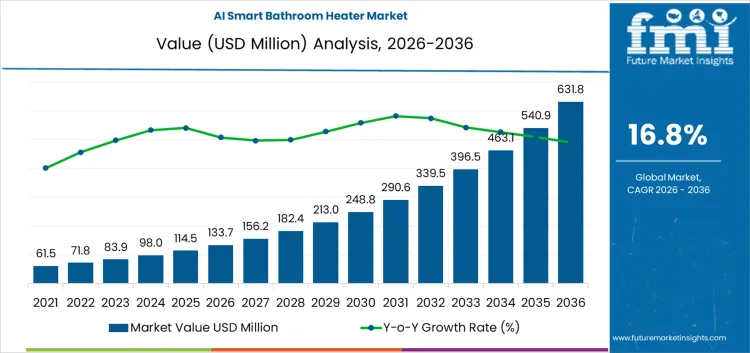
AI Smart Bathroom Heater Market Key Takeaways
| Metric | Value |
|---|---|
| Industry Value (2026) | USD 133.7 Million |
| Forecast Value (2036) | USD 631.8 Million |
| Forecast CAGR 2026 to 2036 | 16.80% |
How is the Global AI Smart Bathroom Heater Market Advancing?
The global AI smart bathroom heater market is advancing rapidly, driven by increasing adoption of intelligent home appliances and growing demand for personalized thermal comfort in residential spaces. AI-enabled bathroom heaters are designed to provide rapid, energy-efficient heating while adapting to user behavior, room occupancy, and ambient conditions, making them particularly suitable for short-duration, high-comfort use cases such as bathrooms.
A key driver supporting market growth is the rising penetration of smart home ecosystems and connected devices. AI smart bathroom heaters integrate sensors, machine learning algorithms, and connectivity features to automatically adjust heating output based on usage patterns, humidity levels, and temperature preferences. This capability improves user comfort while optimizing energy consumption, which is increasingly important in modern residential developments.
Advancements in control systems and heating technologies are further strengthening market adoption. Improved infrared and ceramic heating elements, voice assistant compatibility, and mobile app-based controls are enhancing product usability and responsiveness. Safety features such as moisture detection, overheating protection, and automated shutoff functions are increasing consumer confidence in bathroom-specific heating solutions. As smart home adoption continues to expand and consumers prioritize comfort-driven, intelligent appliances, the AI smart bathroom heater market is expected to experience strong growth over the forecast period.
What Is the Segment-Wise Overview of the AI Smart Bathroom Heater Market?
The AI smart bathroom heater market is shaped by advanced heating technology adoption and concentrated demand from multi-unit residential living. PTC ceramic heating leads with a 42% share, as it offers rapid heat-up, energy efficiency, and inherent safety features that align well with smart control integration. These heaters are widely used in compact indoor environments such as bathrooms. By end use, apartments account for 78% of demand, reflecting large-scale deployment across urban residential buildings where centralized design standards and space efficiency influence product selection. Together, these segments highlight a market focused on safe, efficient heating technologies and high-volume adoption in apartment-based housing.
Why Does PTC Ceramic Heating Lead the AI Smart Bathroom Heater Market?
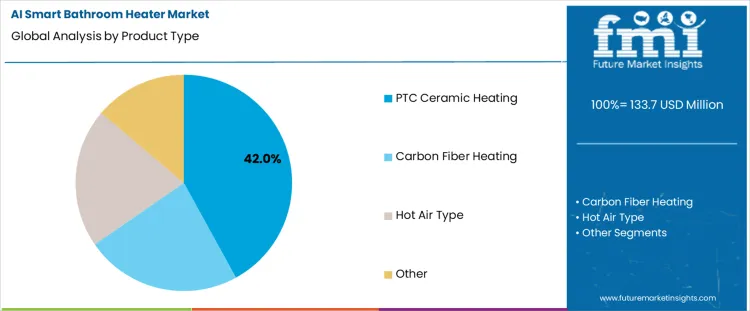
PTC ceramic heating holds 42% of the AI smart bathroom heater market due to its self-regulating temperature behavior, fast response time, and high safety profile. PTC elements automatically limit current draw as temperature rises, reducing overheating risk and improving energy efficiency. This makes them ideal for bathroom environments where moisture, limited space, and frequent on-off usage demand safe operation. PTC heaters integrate easily with AI-based controls, enabling features such as occupancy sensing, adaptive heating cycles, and energy optimization. Their compact form factor and long operational life further support adoption. As consumers and builders prioritize efficient, low-risk heating solutions compatible with smart home ecosystems, PTC ceramic heating remains the preferred technology.
How Do Apartments Drive Demand in the AI Smart Bathroom Heater Market?
Apartments represent 78% of end-use demand, making them the dominant segment in the AI smart bathroom heater market. High-density residential buildings require standardized, space-efficient heating solutions that can be deployed across multiple units with minimal maintenance. AI-enabled bathroom heaters support automated temperature control, scheduled operation, and energy usage optimization, which are valuable in apartment settings where energy management is critical. Property developers and facility managers favor smart heaters that enhance resident comfort while supporting centralized monitoring and efficiency targets. The growing trend toward smart apartments and urban housing further accelerates adoption. As apartment construction and retrofitting activity continues to expand, this segment remains the primary driver of market growth.
What Are the Key Dynamics for the AI Smart Bathroom Heater Market?
AI smart bathroom heaters use sensors, connectivity, and adaptive algorithms to regulate temperature, manage moisture, and improve comfort while ensuring safety. Key market dynamics include increasing adoption of smart home ecosystems, growing urban housing development, and heightened focus on energy optimization in residential buildings. Integration of AI enables features such as occupancy detection, predictive heating schedules, and humidity-responsive operation. As bathrooms require rapid, localized heating and condensation control, demand for application-specific smart heating systems continues to grow. The AI Smart Bathroom Heater Market benefits from consumer preference for automation, personalized comfort settings, and digitally managed home appliances.
Why Is the AI Smart Bathroom Heater Market Growing?
The AI smart bathroom heater market is growing due to increasing consumer investment in smart home upgrades and premium bathroom fittings. Homeowners are seeking heaters that provide fast warmth, prevent dampness, and operate efficiently without manual intervention. AI-driven controls allow heaters to learn usage patterns and optimize runtime, reducing unnecessary energy consumption. Growth in apartment construction, renovation activity, and luxury residential projects is expanding installation opportunities. Rising awareness of indoor air quality and moisture-related issues such as mold further supports adoption. In colder and temperate regions, demand for bathroom-specific heating solutions is strengthening as users prioritize comfort and safety.
How Are the Key Drivers Shaping the AI Smart Bathroom Heater Market?
Key drivers shaping the AI smart bathroom heater market include advances in artificial intelligence, sensor technology, and IoT connectivity that enhance heater responsiveness and control precision. AI-enabled heaters adjust output based on room size, humidity levels, and user behavior, improving performance compared to conventional bathroom heaters. Integration with voice assistants and mobile applications supports centralized home energy management. Energy efficiency standards and rising electricity costs are influencing adoption of intelligent heaters that minimize standby losses and overuse. Manufacturers are differentiating products through safety features such as overheat protection, water resistance ratings, and child-lock functions
What Is the Growth Outlook for the AI Smart Bathroom Heater Market by Country?
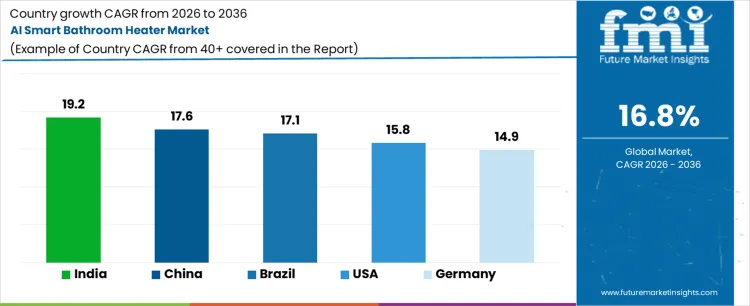
| Country | CAGR (%) |
|---|---|
| India | 19.2% |
| China | 17.6% |
| Brazil | 17.1% |
| USA | 15.8% |
| Germany | 14.9% |
The AI smart bathroom heater market is expanding rapidly as consumers adopt intelligent comfort solutions within connected homes. India leads with a 19.2% CAGR, driven by urban housing growth and smart appliance adoption. China follows at 17.6%, supported by strong domestic manufacturing and digital living trends. Brazil records 17.1% growth, reflecting rising comfort preferences and smart home awareness. The USA grows at 15.8%, supported by mature smart home ecosystems and renovation demand. Germany expands at 14.9%, driven by energy efficiency focus and indoor climate management. As AI-enabled appliances become mainstream, demand for smart bathroom heating solutions is expected to remain strong across regions.
Why Is the AI Smart Bathroom Heater Market Accelerating Rapidly in India?
The AI smart bathroom heater market in India is growing at a CAGR of 19.2%, driven by rapid urban housing growth and rising adoption of connected home appliances. Increasing penetration of smart home ecosystems is encouraging consumers to adopt AI-enabled bathroom heaters that offer temperature optimization, energy control, and usage analytics. Rising disposable income in urban households is supporting demand for premium comfort appliances. Seasonal temperature variations across northern and western regions increase usage frequency, strengthening replacement demand. Consumers are prioritizing safety features such as automatic shut-off, moisture detection, and overload protection, which supports AI-based systems. Expansion of e-commerce and direct-to-consumer appliance sales is improving product accessibility. Growth of smart electrical infrastructure in new residential projects is also supporting adoption. As digital lifestyles and home automation awareness expand, demand for AI smart bathroom heaters in India is expected to grow strongly.
What Is Driving AI Smart Bathroom Heater Market Growth in China?
The AI smart bathroom heater market in China is expanding at a CAGR of 17.6%, supported by strong smart appliance manufacturing capability and high consumer acceptance of AI-enabled products. Urban apartments increasingly integrate intelligent climate-control solutions that combine heating, ventilation, and humidity management. Consumers value features such as adaptive heating, voice control, and app-based monitoring. Rising focus on energy efficiency and indoor comfort is encouraging replacement of conventional heaters with intelligent systems. Domestic manufacturers are rapidly innovating and offering competitively priced AI-based bathroom heaters, accelerating adoption. Smart city development and digitally enabled residential complexes are further supporting demand. Strong retail and online distribution channels ensure rapid product penetration. As China continues to advance connected living standards, adoption of AI smart bathroom heaters is expected to rise steadily.
Why Is the AI Smart Bathroom Heater Market Expanding Quickly in Brazil?
The AI smart bathroom heater market in Brazil is growing at a CAGR of 17.1%, driven by rising demand for comfort-oriented home appliances and growing awareness of smart energy management. Cooler southern regions and seasonal temperature shifts increase bathroom heater usage, supporting adoption of intelligent heating solutions. Consumers are showing strong interest in products that offer precise temperature control and reduced electricity consumption. Growth of mid-income urban households is supporting demand for premium bathroom appliances. Smart home adoption is gaining momentum through bundled appliance offerings and residential modernization projects. Manufacturers are introducing localized products designed for Brazilian electrical standards and housing layouts. Increased availability through home improvement retailers and online platforms is supporting market reach. As smart living trends expand, demand for AI smart bathroom heaters in Brazil is expected to grow consistently.
What Factors Are Supporting AI Smart Bathroom Heater Market Growth in the USA?
The AI smart bathroom heater market in the USA is expanding at a CAGR of 15.8%, supported by widespread adoption of smart home technologies and energy-efficient appliances. Homeowners are integrating AI-enabled heaters into broader connected ecosystems that include thermostats, lighting, and voice assistants. Demand is driven by preference for comfort, safety, and programmable heating schedules. Energy cost awareness is encouraging adoption of heaters that optimize power usage based on occupancy patterns. Growth of home renovation and bathroom remodeling projects is strengthening replacement demand. Consumers also value predictive maintenance alerts and remote control features. Strong presence of premium appliance brands and advanced retail channels supports adoption. As smart home penetration deepens across residential segments, demand for AI smart bathroom heaters in the USA is expected to remain strong.
Why Is the AI Smart Bathroom Heater Market Developing Steadily in Germany?
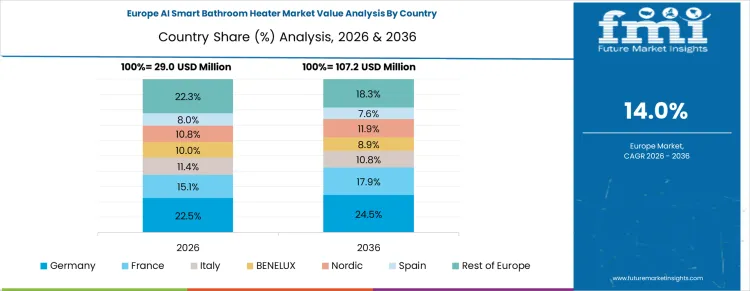
The AI smart bathroom heater market in Germany is growing at a CAGR of 14.9%, driven by strong focus on energy efficiency, safety, and indoor climate control. Consumers prioritize intelligent heating solutions that support precise temperature regulation and lower electricity consumption. Integration of AI heaters with home energy management systems is supporting adoption in modern apartments and renovated homes. Cold winters increase reliance on supplemental bathroom heating, reinforcing demand. German consumers value product reliability, certifications, and long service life, supporting adoption of advanced systems. Smart home penetration continues to rise through new housing developments and retrofits. Manufacturers emphasize efficient design and digital controls aligned with consumer expectations. As demand for intelligent energy-aware appliances grows, the market for AI smart bathroom heaters in Germany is expected to expand steadily.
How Are Companies Competing in the AI Smart Bathroom Heater Market?
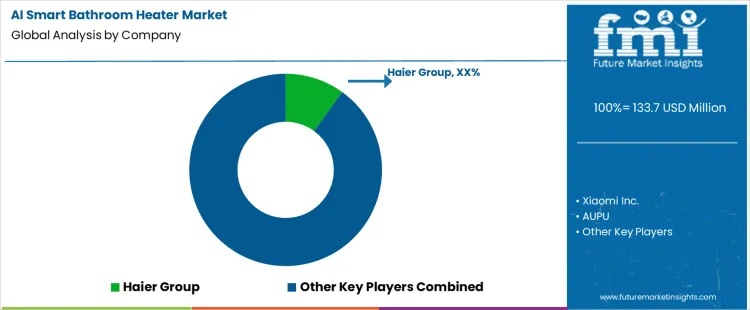
Competition in the AI smart bathroom heater market is driven by heating efficiency, intelligent control accuracy, safety assurance, and seamless integration with smart home ecosystems. These products combine rapid space heating with sensors, connectivity, and automation to deliver comfortable bathroom environments while managing energy use and moisture conditions. Companies compete on AI-based temperature regulation, occupancy detection, humidity sensing, and voice or app-based control. Differentiation increasingly centers on fast heat-up times, safety features such as overheat and waterproof protection, and the ability to personalize comfort settings through connected platforms rather than basic heating output alone.
Haier Group, Xiaomi, AUPU, Opple, Yeelight, Kohler, and Canpro lead competition through smart appliance integration, design focus, and strong consumer electronics ecosystems. Haier differentiates by embedding AI control into broader smart home platforms, enabling coordinated climate management. Xiaomi and Yeelight compete through app-centric control, ecosystem compatibility, and minimalist product design aimed at tech-savvy consumers. AUPU and Opple leverage established bathroom appliance expertise, focusing on ceiling-mounted heaters with integrated lighting and ventilation. Kohler positions its products around premium design, safety, and brand trust in bathroom environments.
Stiebel Eltron, Rheem Manufacturing, and Rinnai compete through thermal engineering expertise, safety reliability, and performance consistency. These companies emphasize heating efficiency, long product life, and compliance with electrical and safety standards. Stiebel Eltron differentiates with advanced electric heating technology, while Rheem and Rinnai leverage global water and space heating expertise. Across the market, competitive advantage is defined by intelligent comfort control, safety reliability, ecosystem connectivity, and the ability to deliver consistent heating performance in moisture-intensive bathroom settings.
Key Players in AI Smart Bathroom Heater Market
- Haier Group
- Xiaomi Inc.
- AUPU
- Canpro
- Yeelight
- Opple
- Kohler Co.
- Stiebel Eltron
- Rheem Manufacturing Company
- Rinnai Corporation
Scope of Report
| Attributes | Description |
|---|---|
| Quantitative Unit (2026) | USD Million |
| Product Type | PTC Ceramic Heating, Carbon Fiber Heating, Hot Air Type, Other |
| End Use | Residential, Apartment, Hotel, Others |
| Regions Covered | Asia Pacific, Europe, North America, Latin America, Middle East & Africa |
| Countries Covered | China, Japan, South Korea, India, Australia & New Zealand, ASEAN, Rest of Asia Pacific, Germany, United Kingdom, France, Italy, Spain, Nordic, BENELUX, Rest of Europe, United States, Canada, Mexico, Brazil, Chile, Rest of Latin America, Kingdom of Saudi Arabia, Other GCC Countries, Turkey, South Africa, Other African Union, Rest of Middle East & Africa |
| Key Companies Profiled | Haier Group, Xiaomi Inc., AUPU, Canpro, Yeelight, Opple, Kohler Co., Stiebel Eltron, Rheem Manufacturing Company, Rinnai Corporation |
| Additional Attributes | Dollar sales by product type and end use; regional market size and forecast analysis; growth outlook across major regions; adoption trends for AI-enabled bathroom heating solutions; assessment of smart control features, energy efficiency expectations, and demand patterns across residential, apartment, and hospitality installations. |
AI Smart Bathroom Heater Market by Key Segments
Product Type:
- PTC Ceramic Heating
- Carbon Fiber Heating
- Hot Air Type
- Other
End Use:
- Residential
- Apartment
- Hotel
- Others
Region:
- Asia Pacific
- China
- Japan
- South Korea
- India
- Australia & New Zealand
- ASEAN
- Rest of Asia Pacific
- Europe
- Germany
- United Kingdom
- France
- Italy
- Spain
- Nordic
- BENELUX
- Rest of Europe
- North America
- United States
- Canada
- Mexico
- Latin America
- Brazil
- Chile
- Rest of Latin America
- Middle East & Africa
- Kingdom of Saudi Arabia
- Other GCC Countries
- Turkey
- South Africa
- Other African Union
- Rest of Middle East & Africa
Bibliography
- Connectivity Standards Alliance. (2023, October 18). Matter 1.2 core specification. Connectivity Standards Alliance.
- International Electrotechnical Commission. (2013). IEC 60529:1989+AMD1:1999+AMD2:2013: Degrees of protection provided by enclosures (IP Code) (Consolidated version). IEC.
- European Telecommunications Standards Institute. (2024, September). ETSI EN 303 645 V3.1.3: Cyber security for consumer Internet of Things: Baseline requirements. ETSI.
Frequently Asked Questions
How big is the AI smart bathroom heater market in 2026?
The global AI smart bathroom heater market is estimated to be valued at USD 133.7 million in 2026.
What will be the size of AI smart bathroom heater market in 2036?
The market size for the AI smart bathroom heater market is projected to reach USD 631.8 million by 2036.
How much will be the AI smart bathroom heater market growth between 2026 and 2036?
The AI smart bathroom heater market is expected to grow at a 16.8% CAGR between 2026 and 2036.
What are the key product types in the AI smart bathroom heater market?
The key product types in AI smart bathroom heater market are ptc ceramic heating, carbon fiber heating, hot air type and other.
Which end use segment to contribute significant share in the AI smart bathroom heater market in 2026?
In terms of end use, apartments segment to command 78.0% share in the AI smart bathroom heater market in 2026.
Preview the report firsthand - request a free sample
Get SampleGet the brochure for pricing and purchase details.
Get PDFTable of Content
- Executive Summary
- Global Market Outlook
- Demand-side Trends
- Supply-side Trends
- Technology Roadmap Analysis
- Analysis and Recommendations
- Market Overview
- Market Coverage / Taxonomy
- Market Definition / Scope / Limitations
- Market Background
- Market Dynamics
- Drivers
- Restraints
- Opportunity
- Trends
- Scenario Forecast
- Demand in Optimistic Scenario
- Demand in Likely Scenario
- Demand in Conservative Scenario
- Opportunity Map Analysis
- Product Life Cycle Analysis
- Supply Chain Analysis
- Investment Feasibility Matrix
- Value Chain Analysis
- PESTLE and Porter’s Analysis
- Regulatory Landscape
- Regional Parent Market Outlook
- Production and Consumption Statistics
- Import and Export Statistics
- Market Dynamics
- Global Market Analysis 2021 to 2025 and Forecast, 2026 to 2036
- Historical Market Size Value (USD Million) Analysis, 2021 to 2025
- Current and Future Market Size Value (USD Million) Projections, 2026 to 2036
- Y-o-Y Growth Trend Analysis
- Absolute $ Opportunity Analysis
- Global Market Pricing Analysis 2021 to 2025 and Forecast 2026 to 2036
- Global Market Analysis 2021 to 2025 and Forecast 2026 to 2036, By Product Type
- Introduction / Key Findings
- Historical Market Size Value (USD Million) Analysis By Product Type, 2021 to 2025
- Current and Future Market Size Value (USD Million) Analysis and Forecast By Product Type, 2026 to 2036
- PTC Ceramic Heating
- Carbon Fiber Heating
- Hot Air Type
- Other
- PTC Ceramic Heating
- Y-o-Y Growth Trend Analysis By Product Type, 2021 to 2025
- Absolute $ Opportunity Analysis By Product Type, 2026 to 2036
- Global Market Analysis 2021 to 2025 and Forecast 2026 to 2036, By End Use
- Introduction / Key Findings
- Historical Market Size Value (USD Million) Analysis By End Use, 2021 to 2025
- Current and Future Market Size Value (USD Million) Analysis and Forecast By End Use, 2026 to 2036
- Residential
- Apartment
- Hotel
- Others
- Residential
- Y-o-Y Growth Trend Analysis By End Use, 2021 to 2025
- Absolute $ Opportunity Analysis By End Use, 2026 to 2036
- Global Market Analysis 2021 to 2025 and Forecast 2026 to 2036, By Region
- Introduction
- Historical Market Size Value (USD Million) Analysis By Region, 2021 to 2025
- Current Market Size Value (USD Million) Analysis and Forecast By Region, 2026 to 2036
- North America
- Latin America
- Western Europe
- Eastern Europe
- East Asia
- South Asia and Pacific
- Middle East & Africa
- Market Attractiveness Analysis By Region
- North America Market Analysis 2021 to 2025 and Forecast 2026 to 2036, By Country
- Historical Market Size Value (USD Million) Trend Analysis By Market Taxonomy, 2021 to 2025
- Market Size Value (USD Million) Forecast By Market Taxonomy, 2026 to 2036
- By Country
- USA
- Canada
- Mexico
- By Product Type
- By End Use
- By Country
- Market Attractiveness Analysis
- By Country
- By Product Type
- By End Use
- Key Takeaways
- Latin America Market Analysis 2021 to 2025 and Forecast 2026 to 2036, By Country
- Historical Market Size Value (USD Million) Trend Analysis By Market Taxonomy, 2021 to 2025
- Market Size Value (USD Million) Forecast By Market Taxonomy, 2026 to 2036
- By Country
- Brazil
- Chile
- Rest of Latin America
- By Product Type
- By End Use
- By Country
- Market Attractiveness Analysis
- By Country
- By Product Type
- By End Use
- Key Takeaways
- Western Europe Market Analysis 2021 to 2025 and Forecast 2026 to 2036, By Country
- Historical Market Size Value (USD Million) Trend Analysis By Market Taxonomy, 2021 to 2025
- Market Size Value (USD Million) Forecast By Market Taxonomy, 2026 to 2036
- By Country
- Germany
- UK
- Italy
- Spain
- France
- Nordic
- BENELUX
- Rest of Western Europe
- By Product Type
- By End Use
- By Country
- Market Attractiveness Analysis
- By Country
- By Product Type
- By End Use
- Key Takeaways
- Eastern Europe Market Analysis 2021 to 2025 and Forecast 2026 to 2036, By Country
- Historical Market Size Value (USD Million) Trend Analysis By Market Taxonomy, 2021 to 2025
- Market Size Value (USD Million) Forecast By Market Taxonomy, 2026 to 2036
- By Country
- Russia
- Poland
- Hungary
- Balkan & Baltic
- Rest of Eastern Europe
- By Product Type
- By End Use
- By Country
- Market Attractiveness Analysis
- By Country
- By Product Type
- By End Use
- Key Takeaways
- East Asia Market Analysis 2021 to 2025 and Forecast 2026 to 2036, By Country
- Historical Market Size Value (USD Million) Trend Analysis By Market Taxonomy, 2021 to 2025
- Market Size Value (USD Million) Forecast By Market Taxonomy, 2026 to 2036
- By Country
- China
- Japan
- South Korea
- By Product Type
- By End Use
- By Country
- Market Attractiveness Analysis
- By Country
- By Product Type
- By End Use
- Key Takeaways
- South Asia and Pacific Market Analysis 2021 to 2025 and Forecast 2026 to 2036, By Country
- Historical Market Size Value (USD Million) Trend Analysis By Market Taxonomy, 2021 to 2025
- Market Size Value (USD Million) Forecast By Market Taxonomy, 2026 to 2036
- By Country
- India
- ASEAN
- Australia & New Zealand
- Rest of South Asia and Pacific
- By Product Type
- By End Use
- By Country
- Market Attractiveness Analysis
- By Country
- By Product Type
- By End Use
- Key Takeaways
- Middle East & Africa Market Analysis 2021 to 2025 and Forecast 2026 to 2036, By Country
- Historical Market Size Value (USD Million) Trend Analysis By Market Taxonomy, 2021 to 2025
- Market Size Value (USD Million) Forecast By Market Taxonomy, 2026 to 2036
- By Country
- Kingdom of Saudi Arabia
- Other GCC Countries
- Turkiye
- South Africa
- Other African Union
- Rest of Middle East & Africa
- By Product Type
- By End Use
- By Country
- Market Attractiveness Analysis
- By Country
- By Product Type
- By End Use
- Key Takeaways
- Key Countries Market Analysis
- USA
- Pricing Analysis
- Market Share Analysis, 2025
- By Product Type
- By End Use
- Canada
- Pricing Analysis
- Market Share Analysis, 2025
- By Product Type
- By End Use
- Mexico
- Pricing Analysis
- Market Share Analysis, 2025
- By Product Type
- By End Use
- Brazil
- Pricing Analysis
- Market Share Analysis, 2025
- By Product Type
- By End Use
- Chile
- Pricing Analysis
- Market Share Analysis, 2025
- By Product Type
- By End Use
- Germany
- Pricing Analysis
- Market Share Analysis, 2025
- By Product Type
- By End Use
- UK
- Pricing Analysis
- Market Share Analysis, 2025
- By Product Type
- By End Use
- Italy
- Pricing Analysis
- Market Share Analysis, 2025
- By Product Type
- By End Use
- Spain
- Pricing Analysis
- Market Share Analysis, 2025
- By Product Type
- By End Use
- France
- Pricing Analysis
- Market Share Analysis, 2025
- By Product Type
- By End Use
- India
- Pricing Analysis
- Market Share Analysis, 2025
- By Product Type
- By End Use
- ASEAN
- Pricing Analysis
- Market Share Analysis, 2025
- By Product Type
- By End Use
- Australia & New Zealand
- Pricing Analysis
- Market Share Analysis, 2025
- By Product Type
- By End Use
- China
- Pricing Analysis
- Market Share Analysis, 2025
- By Product Type
- By End Use
- Japan
- Pricing Analysis
- Market Share Analysis, 2025
- By Product Type
- By End Use
- South Korea
- Pricing Analysis
- Market Share Analysis, 2025
- By Product Type
- By End Use
- Russia
- Pricing Analysis
- Market Share Analysis, 2025
- By Product Type
- By End Use
- Poland
- Pricing Analysis
- Market Share Analysis, 2025
- By Product Type
- By End Use
- Hungary
- Pricing Analysis
- Market Share Analysis, 2025
- By Product Type
- By End Use
- Kingdom of Saudi Arabia
- Pricing Analysis
- Market Share Analysis, 2025
- By Product Type
- By End Use
- Turkiye
- Pricing Analysis
- Market Share Analysis, 2025
- By Product Type
- By End Use
- South Africa
- Pricing Analysis
- Market Share Analysis, 2025
- By Product Type
- By End Use
- USA
- Market Structure Analysis
- Competition Dashboard
- Competition Benchmarking
- Market Share Analysis of Top Players
- By Regional
- By Product Type
- By End Use
- Competition Analysis
- Competition Deep Dive
- Haier Group
- Overview
- Product Portfolio
- Profitability by Market Segments (Product/Age /Sales Channel/Region)
- Sales Footprint
- Strategy Overview
- Marketing Strategy
- Product Strategy
- Channel Strategy
- Xiaomi Inc.
- AUPU
- Canpro
- Yeelight
- Opple
- Kohler Co.
- Stiebel Eltron
- Rheem Manufacturing Company
- Rinnai Corporation
- Haier Group
- Competition Deep Dive
- Assumptions & Acronyms Used
- Research Methodology


