

- Industry Size (2026)
- USD 204 Mn
- Forecast (2036)
- USD 375.8 Mn
- CAGR (2026 to 2036)
- 6.3%
Aircraft Curtains Market Forecast and Outlook 2026 to 2036
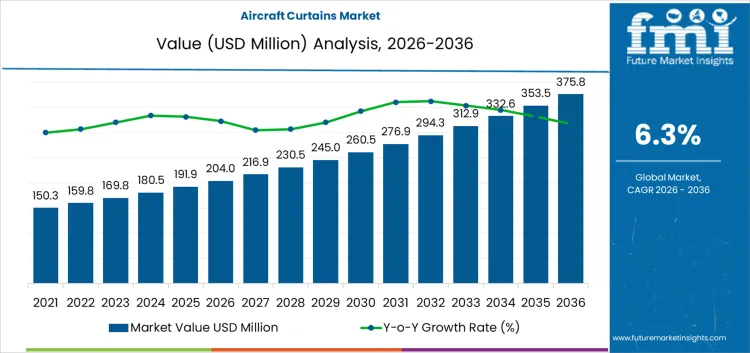
The aircraft curtains market is projected to grow from USD 204 million in 2026 to USD 375.8 million by 2036, reflecting a compound annual growth rate (CAGR) of 6.3%. Aircraft curtains, essential for maintaining privacy, comfort, and cabin aesthetics in both commercial and private aircraft, are gaining increased attention as airlines and manufacturers look for durable, lightweight, and visually appealing solutions for cabin interiors. The market’s growth is driven by the rising demand for enhanced passenger comfort and the increasing focus on luxury and customization in the aviation industry.
The market is expected to experience steady growth, with values rising from USD 204 million in 2026 to USD 217 million in 2027, followed by USD 231 million in 2028. In 2029, the market will grow to USD 246 million, continuing to rise to USD 262 million in 2030. By 2036, the market is projected to reach USD 375.8 million, driven by technological advancements in material design, increasing passenger expectations, and rising demand for high-quality, durable aircraft cabin interiors.
Quick Stats for the Aircraft Curtains Market
- Aircraft Curtains Market Value (2026): USD 204 million
- Aircraft Curtains Market Forecast Value (2036): USD 375.8 million
- Aircraft Curtains Market Global Forecast CAGR 2026 to 2036: 6.3%
- Aircraft Curtains Market Leading Segment: Commercial Aircraft (51%)
- Key Growth Regions in Aircraft Curtains Market: India
- Top Players in Aircraft Curtains Market: Tapis Corporation, Spirit AeroSystems, Lantal Textiles AG, Camber LLC, Dakar Technical Textiles, KTH Interiors Ltd.
What is the Contribution of Volume vs Price Growth for the Aircraft Curtains Market through 2036?
In the aircraft curtains market, both volume and price growth will contribute to overall market expansion, but their relative contributions will shift over time. In the early years of the forecast period (2026-2028), volume growth will be the primary driver. As airlines and aircraft manufacturers invest in updating cabin interiors and enhancing passenger experience, the demand for aircraft curtains will increase, leading to higher unit sales. During this phase, the market will grow from USD 204 million in 2026 to USD 231 million in 2028.
From 2029 onward, price growth is expected to play a more significant role as technological advancements in materials and design enhance the quality and aesthetic appeal of aircraft curtains. Manufacturers will introduce more sophisticated, lightweight, and durable fabrics, leading to higher-priced products with superior features. As a result, the contribution from price growth will rise, particularly as customization and luxury become more important in the competitive airline industry. By 2036, the market will reach USD 375.8 million, with a larger portion of growth driven by the increased demand for premium and customizable aircraft curtains.
Aircraft Curtains Market Key Takeaways
| Metric | Value |
|---|---|
| Industry Sales Value (2026) | USD 204 million |
| Industry Forecast Value (2036) | USD 375.8 million |
| Industry Forecast CAGR 2026 to 2036 | 6.3% |
What Is Driving the Aircraft Curtains Market?
Historically, the aircraft curtains market developed from the need to provide privacy, reduce cabin glare, and delineate service classes within passenger cabins. Early commercial aircraft cabins were largely open layouts, with curtains introduced as basic fabric panels hung between zones to separate cockpit access, galley areas, and passenger classes. Conventional materials were selected for light weight and basic flame resistance, with limited attention to acoustic performance or aesthetic integration. Adoption initially concentrated in long haul and premium service aircraft where differentiation of first and business class spaces was a priority. Airlines and interior designers refined curtain systems to include track mechanisms, improved fastening hardware, and flame retardant textiles that met evolving regulatory safety standards. This early phase clarified expectations for durability under repeated use, ease of service for cabin crews, and compliance with stringent aviation fire, smoke, and toxicity requirements, shaping the baseline for future product development.
Future demand for the aircraft curtains market is expected to be shaped by growth in global air travel, evolving cabin design trends, and heightened focus on passenger experience and operational efficiency. Growth factors include expansion of premium cabins in narrowbody and widebody fleets, where flexible partitioning can support dynamic seat configurations and tailored service experiences. Advancements in textile technology will drive demand for curtains that combine enhanced acoustic dampening, antimicrobial properties, and lighter weight without compromising safety performance. Integration with digital cabin management systems may introduce motorized or sensor assisted operation that improves crew efficiency and passenger comfort. Sustainability concerns will influence material selection, with preference for recyclable, low emission fabrics and modular curtain assemblies that reduce waste in maintenance cycles. Barriers include the need to meet tight certification processes that govern flammability and toxicity, variability in airline specifications, and competition from rigid or semi rigid partition alternatives. Long term market expansion will depend on how effectively suppliers balance regulatory compliance, aesthetics, durability, and integration with broader interior design trends that prioritize comfort, flexibility, and cost effective maintenance.
What are the Key Segments in the Aircraft Curtains Market?
The Aircraft Curtains market is segmented by aircraft type and installation type. Aircraft types include commercial aircraft, business & general aviation, regional aircraft, and helicopters & VTOL, with commercial aircraft leading the market at 51%. Installation types include new aircraft OEM fitments, aftermarket replacement, and retrofit & refurbishment, with new aircraft OEM fitments representing the largest share at 46%. The market is driven by the increasing demand for aircraft interior solutions that enhance privacy, comfort, and aesthetics in various types of aircraft. The growing trend toward passenger comfort and customization, along with the expansion of the aviation industry, is further fueling demand for aircraft curtains.
What is Driving Growth in the Commercial Aircraft Segment?
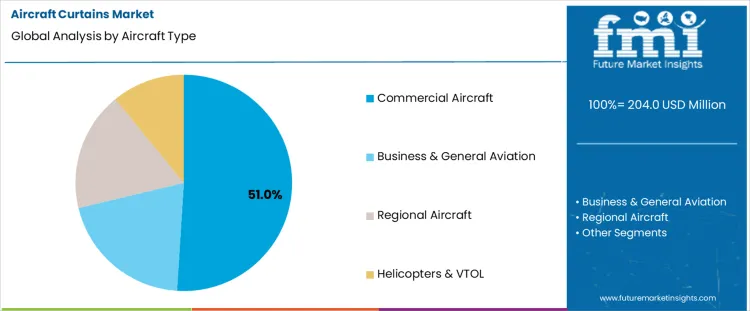
Commercial aircraft dominate the aircraft type segment in the Aircraft Curtains market, accounting for 51% of the market share. This growth is driven by the high volume of commercial flights worldwide and the need for interior solutions that provide privacy and comfort for passengers. Aircraft curtains are essential for separating different sections of the cabin, such as business class, economy class, and crew areas, ensuring passenger comfort and privacy during flights. As airlines continue to focus on improving the in-flight experience, the demand for high-quality, customizable curtains that match the overall cabin design is increasing. The rise in air travel, particularly in emerging markets, is further contributing to the growing demand for aircraft curtains in commercial aircraft. Additionally, airlines are investing in aircraft interior upgrades, including new curtains, to meet passenger expectations for enhanced comfort, luxury, and privacy, further driving the growth of the commercial aircraft segment.
What is Driving the Demand for New Aircraft OEM Fitments in the Installation Type Segment?
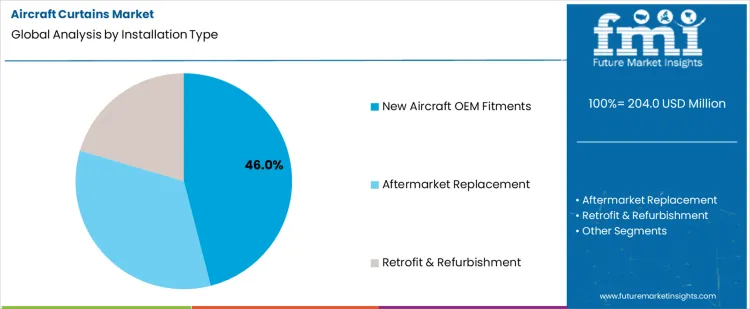
New aircraft OEM fitments represent the largest installation type segment in the Aircraft Curtains market, holding 46% of the market share. This growth is driven by the increasing number of new aircraft being delivered to airlines and other aviation operators. Aircraft manufacturers often include curtains as part of the original equipment during the production process to meet specific design and regulatory requirements for cabin interiors. New aircraft OEM fitments ensure that the curtains are integrated seamlessly into the cabin design and meet quality and safety standards. The demand for new aircraft OEM fitments is closely linked to the growth of the aviation industry, particularly with the increasing production of commercial aircraft to accommodate the rising number of air passengers globally. As airlines expand their fleets and modernize their interiors to enhance passenger comfort, the demand for new aircraft fitments, including curtains, is expected to continue growing. Additionally, the push for more eco-friendly and efficient aircraft interiors is influencing the design and material choices for new OEM curtain installations.
What are the Key Dynamics in the Aircraft Curtains Market?
The aircraft curtains market is experiencing steady growth due to the increasing demand for aircraft interior customization, enhanced passenger comfort, and improved privacy during flight. Aircraft curtains, used to divide cabins, provide privacy, and enhance the aesthetic appeal of aircraft interiors, are becoming an essential component of aircraft design. The market is driven by the rise in global air travel, particularly in the premium and business-class sectors, where comfort and luxury are highly valued. Additionally, the growing focus on aircraft interior design and passenger experience, as well as advancements in materials that offer greater durability, lighter weight, and improved fire resistance, are further contributing to the market's expansion.
What are the Key Drivers of Growth in the Aircraft Curtains Market?
The primary drivers of growth in the aircraft curtains market include the rise in air passenger traffic, particularly in the premium and business class segments, where aircraft interiors are designed for maximum comfort and privacy. Airlines are increasingly investing in improving the overall passenger experience, which includes providing privacy partitions using curtains to separate cabins or seating areas. Another key driver is the increasing demand for customized aircraft interiors, as airlines seek to differentiate themselves in a competitive market by offering more luxurious, comfortable, and aesthetically pleasing environments. Furthermore, the growing trend of long-haul flights, where passengers spend extended hours in aircraft, is contributing to the demand for better privacy and comfort features such as curtains. Additionally, advancements in materials technology, which provide lighter, more durable, and fire-resistant fabrics, are encouraging airlines to adopt modern aircraft curtains for safety, comfort, and aesthetic reasons.
What are the Key Restraints in the Aircraft Curtains Market?
Despite the market’s growth, several challenges exist. One major restraint is the high cost of materials and manufacturing for high-quality, durable, and lightweight aircraft curtains, which can be a significant expense for airlines, particularly in regions with budget constraints. Additionally, while customization is in demand, the need to comply with stringent aviation safety regulations related to fire resistance and material durability can add complexity and cost to the manufacturing process. Another challenge is the maintenance and cleaning requirements of aircraft curtains, which can be labor-intensive and costly, particularly in high-traffic aircraft or when curtains are made from delicate or hard-to-clean fabrics. Additionally, the preference for more advanced, automated cabin solutions, such as electronically controlled partitions or smart glass that can provide privacy on demand, could pose competition to traditional aircraft curtains, reducing their market share in the future.
What are the Key Trends in the Aircraft Curtains Market?
Several key trends are shaping the aircraft curtains market. One significant trend is the growing demand for eco-friendly and sustainable materials in aircraft interiors, including curtains. Airlines are increasingly looking for fabrics made from recycled or biodegradable materials that align with their sustainability goals. Another trend is the shift toward more lightweight and durable materials, as airlines seek to reduce the overall weight of aircraft to improve fuel efficiency. The integration of advanced textile technologies, such as flame-retardant and antimicrobial fabrics, is also becoming more common, ensuring safety and hygiene standards while enhancing passenger comfort. The increasing use of automation in cabin interiors is another trend, with some airlines exploring electronically controlled partitions and curtains that can be adjusted remotely, improving convenience and passenger experience. Additionally, there is a growing trend toward more aesthetically appealing aircraft interiors, where curtains are being designed to complement the overall cabin décor and create a luxurious and comfortable atmosphere, further boosting the demand for innovative curtain designs.
What is the Country-Wise Analysis of the Aircraft Curtains Market?
The aircraft curtains market is growing as airlines and aircraft manufacturers increasingly focus on passenger comfort and cabin aesthetics. Aircraft curtains play a crucial role in providing privacy, enhancing the visual appeal of the cabin, and contributing to the overall passenger experience. The market is driven by factors such as the rise in air travel, the growing demand for premium cabin experiences, and advancements in materials used for aircraft curtains. Countries like the USA, China, Germany, India, and Japan are seeing growth in this market, supported by the increasing number of air passengers, fleet expansion, and innovations in cabin interior design.
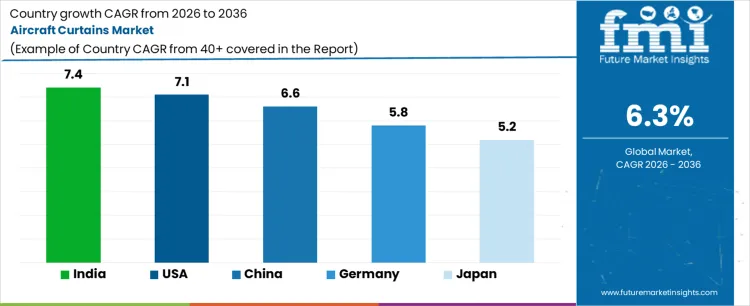
| Country | CAGR (%) |
|---|---|
| USA | 7.1 |
| China | 6.6 |
| Germany | 5.8 |
| India | 7.4 |
| Japan | 5.2 |
What is Driving the Growth of the Aircraft Curtains Market in India?
India’s aircraft curtains market is growing at a CAGR of 7.4%, the highest among the countries analyzed. The growth is largely driven by India’s expanding air travel sector, with an increasing number of airlines and passengers in both domestic and international markets. As the demand for premium and business class travel rises, airlines are investing in enhanced cabin interiors, including high-quality curtains, to improve passenger comfort and overall experience. Additionally, India’s growing aviation infrastructure, along with government initiatives to boost air travel, is contributing to the market’s growth. As the country’s aviation sector continues to expand, the demand for aircraft curtains is expected to increase steadily.
How is the Aircraft Curtains Market Performing in the USA?
The aircraft curtains market in the USA is growing at a CAGR of 7.1%. The USA, with its large domestic and international flight networks, is witnessing a steady demand for high-quality aircraft curtains. Airlines are increasingly focusing on passenger comfort and the overall aesthetic appeal of the cabin, leading to the adoption of premium curtains made from lightweight, durable, and visually appealing fabrics. The rising number of air travelers and the growing focus on enhancing the cabin experience in both economy and premium classes are supporting the demand for aircraft curtains. As the USA’s aviation industry continues to innovate and expand, the market for aircraft curtains is expected to grow steadily.
What Factors are Shaping the Aircraft Curtains Market in China?
China’s aircraft curtains market is growing at a CAGR of 6.6%. China’s booming aviation sector, fueled by both domestic and international air travel demand, is contributing to the rising need for improved cabin interiors, including aircraft curtains. With the increasing number of air passengers and the rapid growth of the airline industry, airlines in China are investing in enhancing passenger comfort and aesthetics. The country’s growing middle class and demand for premium and business class travel are further driving the adoption of high-quality aircraft curtains. As China continues to expand its aviation infrastructure and fleet size, the demand for aircraft curtains is expected to increase.
How is the Aircraft Curtains Market Evolving in Germany?
Germany’s aircraft curtains market is growing at a CAGR of 5.8%. Germany’s strong position in the European aviation market, along with its commitment to high standards in aviation services and passenger experience, is driving the demand for high-quality aircraft curtains. Airlines in Germany are increasingly adopting premium cabin features, including upgraded curtains, to enhance the travel experience for passengers. The country’s focus on sustainability and eco-friendly materials is also influencing the types of fabrics used in aircraft curtains. As Germany continues to invest in its aviation sector and passenger comfort, the demand for aircraft curtains is expected to grow steadily.
What is Contributing to the Growth of the Aircraft Curtains Market in Japan?
Japan’s aircraft curtains market is growing at a CAGR of 5.2%. Japan’s aviation industry, known for its high standards of passenger service and comfort, is contributing to the demand for high-quality aircraft curtains. Airlines in Japan are increasingly focusing on enhancing the passenger experience, particularly in premium cabins, which is driving the adoption of high-performance and aesthetically pleasing curtains. Japan’s growing number of international travelers and focus on improving overall service quality in its airline industry are supporting the market growth. As Japan continues to prioritize customer comfort and invest in its aviation sector, the demand for aircraft curtains is expected to remain stable.
What is the Competitive Landscape for the Aircraft Curtains Market?
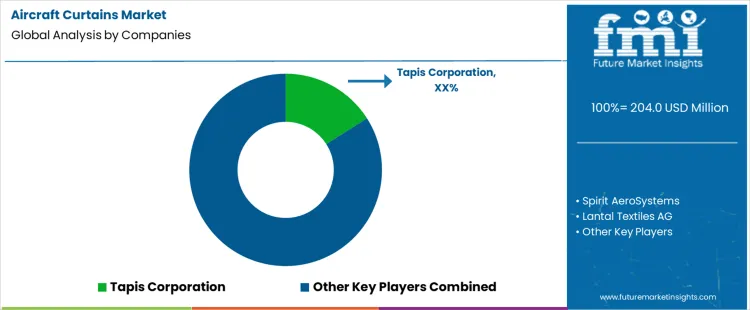
The aircraft curtains market is growing steadily as airlines and aircraft manufacturers place greater emphasis on lightweight materials, durability, safety compliance, and cabin aesthetics. Tapis Corporation leads the competitive landscape with high-quality, customizable aircraft curtains recognized for durability, ease of maintenance, and refined design, supported by its long-standing presence in the aviation interiors segment. Spirit AeroSystems is another important player, delivering innovative curtain solutions that meet strict aerospace standards while focusing on lightweight construction and long service life.
Lantal Textiles AG specializes in advanced textiles for aircraft interiors, offering curtain fabrics that combine functionality, visual appeal, and regulatory compliance for both airlines and aircraft OEMs. Camber LLC contributes high-performance fabrics designed to enhance passenger comfort, privacy, and cabin aesthetics. Dakar Technical Textiles focuses on durable, flame-resistant materials that meet aviation safety requirements without compromising design. KTH Interiors Ltd. serves both commercial and private aviation with custom interior solutions, including tailored aircraft curtains.
Across the competitive landscape, companies prioritize innovation, customization, and sustainability, with increasing use of eco-friendly materials, advanced fabric treatments, and bespoke designs. These strategies position leading suppliers to meet rising demand for stylish, high-performance, and regulation-compliant aircraft interior solutions.
Key Players of the Aircraft Curtains Market
- Tapis Corporation
- Spirit AeroSystems
- Lantal Textiles AG
- Camber LLC
- Dakar Technical Textiles
- KTH Interiors Ltd.
Scope of the Report
| Items | Values |
|---|---|
| Quantitative Units (2026) | USD Million |
| Aircraft Type | Commercial Aircraft, Business & General Aviation, Regional Aircraft, Helicopters & VTOL |
| Installation Type | New Aircraft OEM Fitments, Aftermarket Replacement, Retrofit & Refurbishment |
| Material Type | Fire-Retardant Fabrics, Lightweight Composite Curtains, Antimicrobial Treated Curtains |
| Companies | Tapis Corporation, Spirit AeroSystems, Lantal Textiles AG, Camber LLC, Dakar Technical Textiles, KTH Interiors Ltd. |
| Regions Covered | North America, Latin America, Western Europe, Eastern Europe, South Asia and Pacific, East Asia, Middle East & Africa |
| Countries Covered | United States, Canada, Mexico, Brazil, Argentina, Germany, France, United Kingdom, Italy, Spain, Netherlands, China, India, Japan, South Korea, ANZ, GCC Countries, South Africa |
| Additional Attributes | Dollar sales by aircraft type, installation type, material type, and region. Includes market trends towards safety, lightweight materials, and the role of aircraft curtains in enhancing passenger comfort and complying with industry standards. |
Aircraft Curtains Market Segmentation
Aircraft Type
- Commercial Aircraft
- Business & General Aviation
- Regional Aircraft
- Helicopters & VTOL
Installation Type
- New Aircraft OEM Fitments
- Aftermarket Replacement
- Retrofit & Refurbishment
- Other
Material Type
- Fire-Retardant Fabrics
- Lightweight Composite Curtains
- Antimicrobial Treated Curtains
- Other
Region
- Asia Pacific
- China
- Japan
- India
- Australia & New Zealand
- ASEAN
- Rest of Asia Pacific
- Europe
- Germany
- United Kingdom
- France
- Italy
- Spain
- Nordic
- BENELUX
- Rest of Europe
- North America
- United States
- Canada
- Mexico
- Latin America
- Brazil
- Argentina
- Rest of Latin America
- Middle East & Africa
- Kingdom of Saudi Arabia
- Other GCC Countries
- South Africa
- Rest of Middle East & Africa
Bibliography
- Federal Aviation Administration. (2023). Aircraft cabin interior safety materials and flammability standards. U.S. Department of Transportation.
- European Union Aviation Safety Agency. (2024). Cabin interior materials certification: Fire resistance, toxicity, and safety standards (CS-25 Amendment 29). European Union Aviation Safety Agency.
- International Air Transport Association. (2023). Passenger experience and cabin design outlook 2023–2035. International Air Transport Association.
Frequently Asked Questions
How big is the aircraft curtains market in 2026?
The global aircraft curtains market is estimated to be valued at USD 204.0 million in 2026.
What will be the size of aircraft curtains market in 2036?
The market size for the aircraft curtains market is projected to reach USD 375.8 million by 2036.
How much will be the aircraft curtains market growth between 2026 and 2036?
The aircraft curtains market is expected to grow at a 6.3% CAGR between 2026 and 2036.
What are the key product types in the aircraft curtains market?
The key product types in aircraft curtains market are commercial aircraft, business & general aviation, regional aircraft and helicopters & vtol.
Which installation type segment to contribute significant share in the aircraft curtains market in 2026?
In terms of installation type, new aircraft oem fitments segment to command 46.0% share in the aircraft curtains market in 2026.
Preview the report firsthand - request a free sample
Get SampleGet the brochure for pricing and purchase details.
Get PDFTable of Content
- Executive Summary
- Global Market Outlook
- Demand-side Trends
- Supply-side Trends
- Technology Roadmap Analysis
- Analysis and Recommendations
- Market Overview
- Market Coverage / Taxonomy
- Market Definition / Scope / Limitations
- Market Background
- Market Dynamics
- Drivers
- Restraints
- Opportunity
- Trends
- Scenario Forecast
- Demand in Optimistic Scenario
- Demand in Likely Scenario
- Demand in Conservative Scenario
- Opportunity Map Analysis
- Product Life Cycle Analysis
- Supply Chain Analysis
- Investment Feasibility Matrix
- Value Chain Analysis
- PESTLE and Porter’s Analysis
- Regulatory Landscape
- Regional Parent Market Outlook
- Production and Consumption Statistics
- Import and Export Statistics
- Market Dynamics
- Global Market Analysis 2021 to 2025 and Forecast, 2026 to 2036
- Historical Market Size Value (USD Million) Analysis, 2021 to 2025
- Current and Future Market Size Value (USD Million) Projections, 2026 to 2036
- Y-o-Y Growth Trend Analysis
- Absolute $ Opportunity Analysis
- Global Market Pricing Analysis 2021 to 2025 and Forecast 2026 to 2036
- Global Market Analysis 2021 to 2025 and Forecast 2026 to 2036, By Aircraft Type
- Introduction / Key Findings
- Historical Market Size Value (USD Million) Analysis By Aircraft Type, 2021 to 2025
- Current and Future Market Size Value (USD Million) Analysis and Forecast By Aircraft Type, 2026 to 2036
- Commercial Aircraft
- Business & General Aviation
- Regional Aircraft
- Helicopters & VTOL
- Commercial Aircraft
- Y-o-Y Growth Trend Analysis By Aircraft Type, 2021 to 2025
- Absolute $ Opportunity Analysis By Aircraft Type, 2026 to 2036
- Global Market Analysis 2021 to 2025 and Forecast 2026 to 2036, By Installation Type
- Introduction / Key Findings
- Historical Market Size Value (USD Million) Analysis By Installation Type, 2021 to 2025
- Current and Future Market Size Value (USD Million) Analysis and Forecast By Installation Type, 2026 to 2036
- New Aircraft OEM Fitments
- Aftermarket Replacement
- Retrofit & Refurbishment
- New Aircraft OEM Fitments
- Y-o-Y Growth Trend Analysis By Installation Type, 2021 to 2025
- Absolute $ Opportunity Analysis By Installation Type, 2026 to 2036
- Global Market Analysis 2021 to 2025 and Forecast 2026 to 2036, By Material Type
- Introduction / Key Findings
- Historical Market Size Value (USD Million) Analysis By Material Type, 2021 to 2025
- Current and Future Market Size Value (USD Million) Analysis and Forecast By Material Type, 2026 to 2036
- Fire-Retardant Fabrics
- Lightweight Composite Curtains
- Antimicrobial Treated Curtains
- Fire-Retardant Fabrics
- Y-o-Y Growth Trend Analysis By Material Type, 2021 to 2025
- Absolute $ Opportunity Analysis By Material Type, 2026 to 2036
- Global Market Analysis 2021 to 2025 and Forecast 2026 to 2036, By Region
- Introduction
- Historical Market Size Value (USD Million) Analysis By Region, 2021 to 2025
- Current Market Size Value (USD Million) Analysis and Forecast By Region, 2026 to 2036
- North America
- Latin America
- Western Europe
- Eastern Europe
- East Asia
- South Asia and Pacific
- Middle East & Africa
- Market Attractiveness Analysis By Region
- North America Market Analysis 2021 to 2025 and Forecast 2026 to 2036, By Country
- Historical Market Size Value (USD Million) Trend Analysis By Market Taxonomy, 2021 to 2025
- Market Size Value (USD Million) Forecast By Market Taxonomy, 2026 to 2036
- By Country
- USA
- Canada
- Mexico
- By Aircraft Type
- By Installation Type
- By Material Type
- By Country
- Market Attractiveness Analysis
- By Country
- By Aircraft Type
- By Installation Type
- By Material Type
- Key Takeaways
- Latin America Market Analysis 2021 to 2025 and Forecast 2026 to 2036, By Country
- Historical Market Size Value (USD Million) Trend Analysis By Market Taxonomy, 2021 to 2025
- Market Size Value (USD Million) Forecast By Market Taxonomy, 2026 to 2036
- By Country
- Brazil
- Chile
- Rest of Latin America
- By Aircraft Type
- By Installation Type
- By Material Type
- By Country
- Market Attractiveness Analysis
- By Country
- By Aircraft Type
- By Installation Type
- By Material Type
- Key Takeaways
- Western Europe Market Analysis 2021 to 2025 and Forecast 2026 to 2036, By Country
- Historical Market Size Value (USD Million) Trend Analysis By Market Taxonomy, 2021 to 2025
- Market Size Value (USD Million) Forecast By Market Taxonomy, 2026 to 2036
- By Country
- Germany
- UK
- Italy
- Spain
- France
- Nordic
- BENELUX
- Rest of Western Europe
- By Aircraft Type
- By Installation Type
- By Material Type
- By Country
- Market Attractiveness Analysis
- By Country
- By Aircraft Type
- By Installation Type
- By Material Type
- Key Takeaways
- Eastern Europe Market Analysis 2021 to 2025 and Forecast 2026 to 2036, By Country
- Historical Market Size Value (USD Million) Trend Analysis By Market Taxonomy, 2021 to 2025
- Market Size Value (USD Million) Forecast By Market Taxonomy, 2026 to 2036
- By Country
- Russia
- Poland
- Hungary
- Balkan & Baltic
- Rest of Eastern Europe
- By Aircraft Type
- By Installation Type
- By Material Type
- By Country
- Market Attractiveness Analysis
- By Country
- By Aircraft Type
- By Installation Type
- By Material Type
- Key Takeaways
- East Asia Market Analysis 2021 to 2025 and Forecast 2026 to 2036, By Country
- Historical Market Size Value (USD Million) Trend Analysis By Market Taxonomy, 2021 to 2025
- Market Size Value (USD Million) Forecast By Market Taxonomy, 2026 to 2036
- By Country
- China
- Japan
- South Korea
- By Aircraft Type
- By Installation Type
- By Material Type
- By Country
- Market Attractiveness Analysis
- By Country
- By Aircraft Type
- By Installation Type
- By Material Type
- Key Takeaways
- South Asia and Pacific Market Analysis 2021 to 2025 and Forecast 2026 to 2036, By Country
- Historical Market Size Value (USD Million) Trend Analysis By Market Taxonomy, 2021 to 2025
- Market Size Value (USD Million) Forecast By Market Taxonomy, 2026 to 2036
- By Country
- India
- ASEAN
- Australia & New Zealand
- Rest of South Asia and Pacific
- By Aircraft Type
- By Installation Type
- By Material Type
- By Country
- Market Attractiveness Analysis
- By Country
- By Aircraft Type
- By Installation Type
- By Material Type
- Key Takeaways
- Middle East & Africa Market Analysis 2021 to 2025 and Forecast 2026 to 2036, By Country
- Historical Market Size Value (USD Million) Trend Analysis By Market Taxonomy, 2021 to 2025
- Market Size Value (USD Million) Forecast By Market Taxonomy, 2026 to 2036
- By Country
- Kingdom of Saudi Arabia
- Other GCC Countries
- Turkiye
- South Africa
- Other African Union
- Rest of Middle East & Africa
- By Aircraft Type
- By Installation Type
- By Material Type
- By Country
- Market Attractiveness Analysis
- By Country
- By Aircraft Type
- By Installation Type
- By Material Type
- Key Takeaways
- Key Countries Market Analysis
- USA
- Pricing Analysis
- Market Share Analysis, 2025
- By Aircraft Type
- By Installation Type
- By Material Type
- Canada
- Pricing Analysis
- Market Share Analysis, 2025
- By Aircraft Type
- By Installation Type
- By Material Type
- Mexico
- Pricing Analysis
- Market Share Analysis, 2025
- By Aircraft Type
- By Installation Type
- By Material Type
- Brazil
- Pricing Analysis
- Market Share Analysis, 2025
- By Aircraft Type
- By Installation Type
- By Material Type
- Chile
- Pricing Analysis
- Market Share Analysis, 2025
- By Aircraft Type
- By Installation Type
- By Material Type
- Germany
- Pricing Analysis
- Market Share Analysis, 2025
- By Aircraft Type
- By Installation Type
- By Material Type
- UK
- Pricing Analysis
- Market Share Analysis, 2025
- By Aircraft Type
- By Installation Type
- By Material Type
- Italy
- Pricing Analysis
- Market Share Analysis, 2025
- By Aircraft Type
- By Installation Type
- By Material Type
- Spain
- Pricing Analysis
- Market Share Analysis, 2025
- By Aircraft Type
- By Installation Type
- By Material Type
- France
- Pricing Analysis
- Market Share Analysis, 2025
- By Aircraft Type
- By Installation Type
- By Material Type
- India
- Pricing Analysis
- Market Share Analysis, 2025
- By Aircraft Type
- By Installation Type
- By Material Type
- ASEAN
- Pricing Analysis
- Market Share Analysis, 2025
- By Aircraft Type
- By Installation Type
- By Material Type
- Australia & New Zealand
- Pricing Analysis
- Market Share Analysis, 2025
- By Aircraft Type
- By Installation Type
- By Material Type
- China
- Pricing Analysis
- Market Share Analysis, 2025
- By Aircraft Type
- By Installation Type
- By Material Type
- Japan
- Pricing Analysis
- Market Share Analysis, 2025
- By Aircraft Type
- By Installation Type
- By Material Type
- South Korea
- Pricing Analysis
- Market Share Analysis, 2025
- By Aircraft Type
- By Installation Type
- By Material Type
- Russia
- Pricing Analysis
- Market Share Analysis, 2025
- By Aircraft Type
- By Installation Type
- By Material Type
- Poland
- Pricing Analysis
- Market Share Analysis, 2025
- By Aircraft Type
- By Installation Type
- By Material Type
- Hungary
- Pricing Analysis
- Market Share Analysis, 2025
- By Aircraft Type
- By Installation Type
- By Material Type
- Kingdom of Saudi Arabia
- Pricing Analysis
- Market Share Analysis, 2025
- By Aircraft Type
- By Installation Type
- By Material Type
- Turkiye
- Pricing Analysis
- Market Share Analysis, 2025
- By Aircraft Type
- By Installation Type
- By Material Type
- South Africa
- Pricing Analysis
- Market Share Analysis, 2025
- By Aircraft Type
- By Installation Type
- By Material Type
- USA
- Market Structure Analysis
- Competition Dashboard
- Competition Benchmarking
- Market Share Analysis of Top Players
- By Regional
- By Aircraft Type
- By Installation Type
- By Material Type
- Competition Analysis
- Competition Deep Dive
- Tapis Corporation
- Overview
- Product Portfolio
- Profitability by Market Segments (Product/Age /Sales Channel/Region)
- Sales Footprint
- Strategy Overview
- Marketing Strategy
- Product Strategy
- Channel Strategy
- Spirit AeroSystems
- Lantal Textiles AG
- Camber LLC
- Dakar Technical Textiles
- KTH Interiors Ltd.
- Tapis Corporation
- Competition Deep Dive
- Assumptions & Acronyms Used
- Research Methodology


