

- Market Size (2026)
- USD 188.0 Mn
- Forecast (2036)
- USD 1751.0 Mn
- CAGR (2026 to 2036)
- 25.0%
How big is Autonomous Snow Removal & Airfield Ops Market in 2026?
USD 188.0 million in 2026 and USD 1,751.0 million by 2036 at a 25.0% CAGR.
Demand for autonomous snow removal and airfield operations equipment is projected to expand at 25.0% CAGR between 2026 and 2036. Market value is estimated to increase from USD 188.0 million in 2026 to USD 1,751.0 million by 2036. A runway closure can disrupt aircraft rotations and ground schedules across the operating day, making recovery speed a direct capacity issue. The Federal Aviation Administration reported in March 2025 that weather caused 74.26% of system-impacting delays longer than 15 minutes from June 2017 through May 2023. This operating record explains why winter plans assess automated clearing beside aircraft anti-ice systems and runway inspection tools.
United States airports work within one federal certification system and can repeat an approved equipment specification across several sites. European airports follow shared aviation rules, but national or local contracts can set different service terms and response times. This split changes how airports judge trial evidence and parts coverage, with long-term maintenance forming a separate commercial test. Airport teams use fleet health monitoring to confirm that every vehicle is ready for an approaching storm. A stopped unit can erase time saved elsewhere, so equipment earns wider use with reliable technical support near the winter fleet.
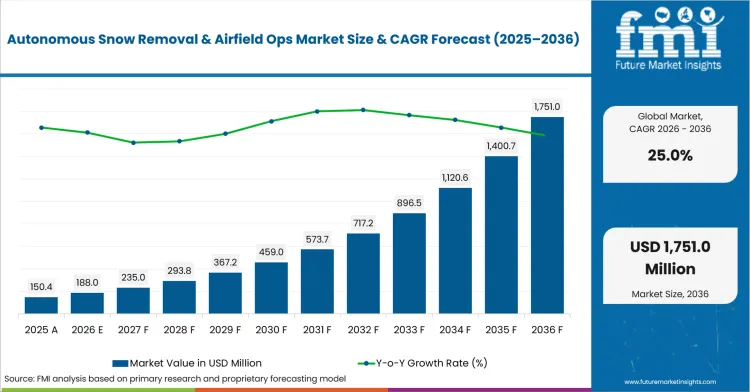
Key Takeaways of Autonomous Snow Removal & Airfield Ops Market
- Demand for autonomous snow removal and airfield operations is driven by the need to protect runway availability during short winter operating windows while reducing staff exposure near aircraft movement areas.
- By vehicle type, autonomous airfield plows are expected to lead with 40.0% share in 2026, driven by the clearer autonomy case on fixed runway routes compared with roadways carrying mixed traffic.
- Airfield clearing is the dominant application segment, projected to hold 48.0% share in 2026, as the closure of a single runway can cause cascading schedule disruptions across multiple airports.
- Vehicles are estimated to lead the component category with 58.0% share in 2026, reflecting the high upfront cost of specialized chassis and snow-clearing attachments in early-stage deployment programs.
- Remote supervision and fixed-route operation remain critical value drivers, giving vehicles repeatable tasks and creating operating records for safety review, while the handoff to inspection and runway release determines overall time savings.
- The United States and European Union are expected to track close to the global growth rate of 25.0%, advancing at 26.0% and 24.0% CAGR respectively through 2036, shaped by differing contracting practices and service coverage.
- Competition centers on Aurrigo International, Oshkosh AeroTech, ADB SAFEGATE, and Anlon Technology Solutions, with vendors differentiating through autonomous airside routes, ground equipment service networks, and integrated controller visibility systems.
Analyst Perspective
"Autonomous snow removal systems prove their value through dependable runway availability rather than vehicle automation alone. Airport operators are looking for equipment that maintains safe clearing operations in changing winter conditions, supports predictable recovery from operational interruptions, and integrates smoothly with existing airside procedures. Long-term adoption will favor manufacturers that demonstrate reliable field performance, strong service networks, and practical operational support that helps airports minimize weather-related disruptions throughout the winter season."
- Nikhil Kaitwade, Principal Analyst, Future Market Insights
Source: FMI's proprietary forecasting model and primary research
How is the Autonomous Snow Removal & Airfield Ops Market segmented?
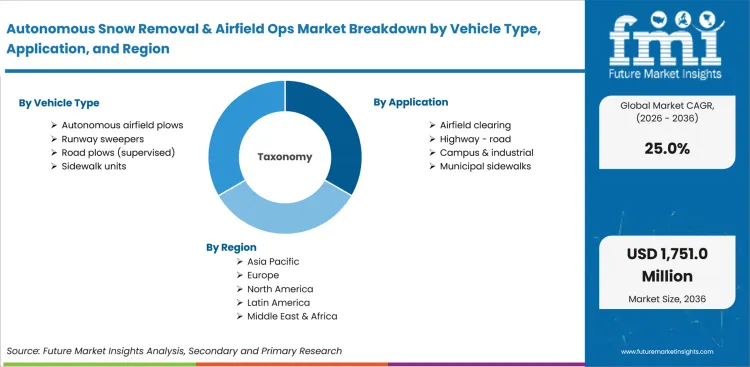
vehicle type, application, component, end-use, business model, and region
The segmentation framework distinguishes equipment design from the specific airfield tasks that generate demand at each operating site. By vehicle type, the market compares purpose-built airfield plows and sweepers, while the application segment differentiates runway clearance from roadways and secondary airside areas. Each operating environment is governed by distinct traffic management requirements and closure costs, which materially influence the economic case for automation. By component, the analysis separates vehicle hardware from control software and service support, and the end-use segment identifies the organization responsible for fleet ownership and operation. The business model segment contrasts direct equipment purchases with service-based contracts and retrofit programs, while regional analysis incorporates variations in winter severity and the availability of local maintenance infrastructure.
How does the autonomous airfield plow shape demand within the Vehicle Type category?
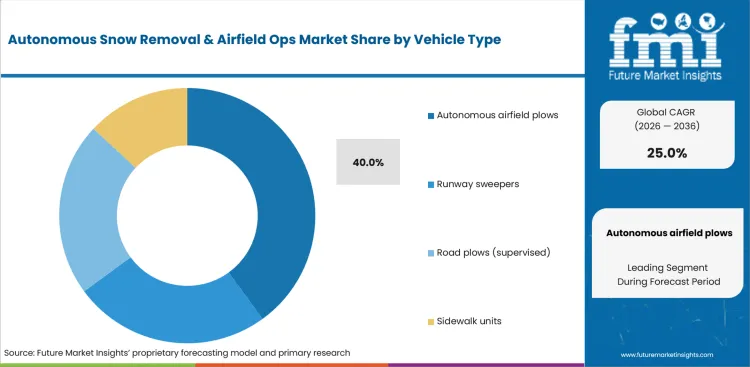
Purpose-built airfield plows must clear wide paved surfaces during the narrow period between snowfall and runway release. Controlled routes reduce traffic complexity and place more attention on safe stopping near lights or parked aircraft. Aurrigo announced in March 2026 that East Midlands Airport granted the company a ground-handling licence. The licence shows that autonomous airside work depends on operating approval and trained support in addition to vehicle movement.
- Autonomous airfield plows are projected to hold 40.0% share in 2026 owing to their fit with wide runways and fixed winter plans. Airport trials should record braking and route behavior beside aircraft safety data systems to create one operating history for incident reviews and route approval.
- Airports favor purpose-built plows for routes that cannot tolerate long closures during departure peaks at busy hubs. Roads with mixed traffic create more unpredictable movement and increase the need for human intervention. Runway programs can begin on a limited approved area and expand through local storm tests that confirm safe stopping plus reliable recovery.
What makes airfield clearing central to the Application category?
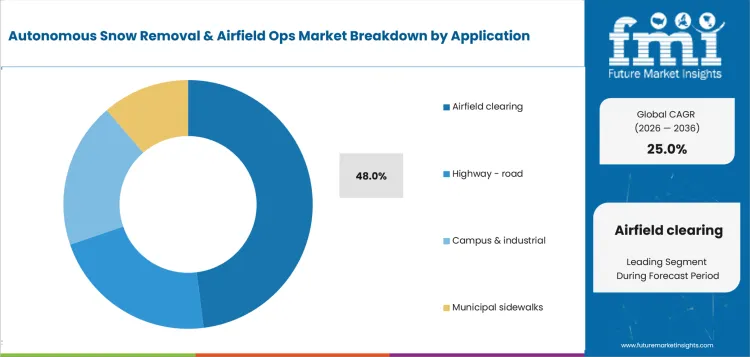
Runway release controls the next aircraft movement and gives airfield clearing a direct link to flight capacity. Noida International Airport reported in June 2026 that its final turnaround trial tested docking guidance and ground power alongside baggage work in one departure sequence. This operating sequence shows why clearing equipment must fit the systems that manage surface activity.
- By Application, airfield clearing is forecast to represent 48.0% share in 2026 across the modeled market. Runway access affects every flight assigned to the closed surface and creates a clear cost for delay. Airports can compare plow position and route completion through telematics control units during the inspector review for runway reopening.
- Airport schedules give airfield clearing a stronger business case than municipal work with more flexible traffic routes. The equipment must remove snow without blocking inspection vehicles or aircraft movement at the same time. Municipal sites can redirect traffic more easily, which usually lowers the financial cost of a short delay.
How are vehicles positioned within the Component category?
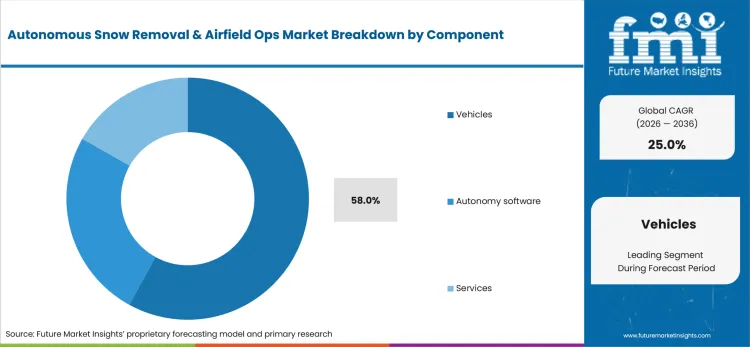
Vehicle hardware is dominant as each airport must purchase a chassis and clearing attachment suited to its operating area. Oshkosh AeroTech announced in June 2026 that its 300th ATLAS cargo loader brought the documented fleet to 300 units across 47 customers worldwide. This separate airfield vehicle milestone shows that long equipment life and dependable parts support shape airport fleet economics.
- Vehicles are projected to hold 58.0% share of component value in 2026 owing to the cost of the base machine and snow-removal attachment. Airport operators need a platform that can work beside aircraft lighting systems without damaging fixed airfield assets.
- Software and services gain value as the active fleet adds approved routes and more operating history. Route updates and remote checks can improve vehicle use across changing storm plans and approved operating areas. Hardware remains the first spending step as control software cannot offset weak traction or inadequate clearing capacity.
What are the drivers, restraints, and opportunities in the Autonomous Snow Removal & Airfield Ops Market?
Short runway‑reopening windows are expected to drive demand for autonomous snow‑clearing systems, while winter sensing challenges and safety approvals may extend trials.
- Driver: Airports need clearing equipment that restores a usable runway inside a short weather window and reduces staff exposure near active movement areas.
- Restraint: Snow and low contrast can reduce sensor quality and every automated route must remain inside the airport snow and ice control plan.
- Opportunity: Airports can begin with one supervised route and expand the fleet through local proof of safe stopping plus dependable service response.
Airports measure winter equipment through the time saved between snowfall and runway release during active flight schedules. Oshkosh AeroTech introduced the Tempest-si deicer in September 2025 with one hand-held nozzle for deicing and anti-icing work. The design shows how airport equipment makers simplify winter tasks without removing familiar operator control. Autonomous clearing programs face the same test and must remain easy to monitor or repair during a storm. Their operating records can connect with digital brake and antiskid systems during runway release reviews and later safety analysis.
Winter reliability remains the significant barrier as the airport retains every safety duty during automated work. The July 2026 edition of 14 CFR 139.313 requires prompt snow and ice control plus timely notice to air carriers. Automation adds a separate need to prove safe stopping and fault recovery under poor visibility. A dry-pavement trial cannot support a winter purchase without evidence from snow and slush during local operations.
A staged fleet program offers the notable commercial opening for airports that cannot replace an entire winter fleet in one purchase cycle. Aurrigo announced in April 2026 that its new manufacturing and engineering hub covers more than 130,615 square feet. The company stated that the site could produce over 500 autonomous vehicles each year at full capacity subject to demand. That capacity can support repeat orders from airports that expand successful route trials into wider fleet programs.
Which country CAGRs are profiled in the Autonomous Snow Removal & Airfield Ops Market?
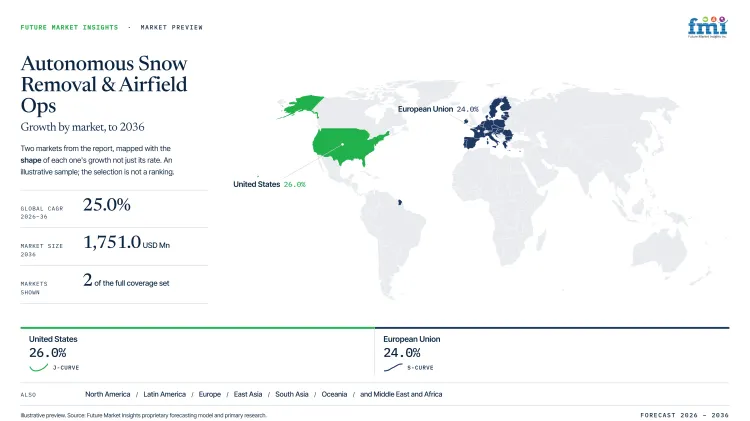
| Country/ Region | CAGR |
|---|---|
| European Union | 24.0% |
| United States | 26.0% |
Source: FMI's proprietary forecasting model and primary research
How do country-level CAGRs compare in the autonomous snow removal & airfield ops market?
The comparison covers a 2.0 percentage point range, indicating that both profiled markets are expected to expand at a similar pace in the autonomous snow removal & airfield ops market. The United States leads with a CAGR of 26.0%, while the European Union follows at 24.0%. Although the gap is modest, the underlying adoption drivers differ, reflecting variations in airport operations, winter maintenance requirements and investment in autonomous ground support technologies.
- The United States records the higher CAGR at 26.0%. Airport operators are increasingly evaluating autonomous snow removal equipment to maintain runway availability, reduce operational disruptions during severe winter weather and improve the efficiency of airfield maintenance activities. Interest is also growing in autonomous systems that support broader airfield operations beyond seasonal snow clearance.
- The European Union follows 2.0 percentage points behind the United States with a CAGR of 24.0%. Demand is linked to modernization of airport ground operations and the adoption of automated equipment for runway and taxiway maintenance across regions that experience regular winter weather. Deployment rates differ among member states because airport size, snowfall intensity and infrastructure investment priorities are not uniform throughout the region.
Comparable CAGRs do not necessarily indicate identical commercial opportunities. Differences in airport infrastructure, fleet replacement strategies, operational requirements and investment in autonomous ground support equipment influence purchasing decisions and long-term market development. The full report provides country-level CAGR analysis across North America, Latin America, Europe, East Asia, South Asia, Oceania and the Middle East and Africa.
Country-wise Analysis
United States programs can repeat one proven specification across airport groups operating under the same federal certification system. European programs follow shared aviation rules and often require separate contracts with local maintenance coverage. These purchasing differences shape service costs and the speed of fleet expansion across each national airport system. Both regions must place clearing routes beside taxiway guidance systems so vehicle movement remains separated from aircraft routing during winter work.
- Cold-weather exposure gives United States airports a clear reason to test automated clearing across large runway networks. The United States is projected to grow at 26.0% CAGR from 2026 to 2036 with airport programs focused on faster runway recovery and safer ground work. The FAA cold-temperature airport list for October 2025 through September 2026 identified 183 civilian airports and 10 military airfields that met its criteria. The count is not a measure of snow-plow demand but it shows the breadth of severe-cold operating conditions. Each airport proposal needs local snowfall evidence and a service plan capable of reaching remote sites during winter.
- European airports balance shared safety rules with national purchasing routes that set different contract and service terms. Demand in the European Union is forecast to rise at 24.0% CAGR during the forecast period. Airports Council International Europe reported in August 2025 that passenger traffic across its network increased 4.5% during the first half of 2025. Higher traffic raises the cost of delayed runway recovery at busy hubs and increases the value of dependable local support.
Who are the notable companies in the Autonomous Snow Removal & Airfield Ops Market?
Aurrigo International plc, Oshkosh AeroTech, ADB SAFEGATE and Anlon Technology Solutions are notable companies across autonomous airside vehicles, airport ground equipment, airfield control and runway maintenance.
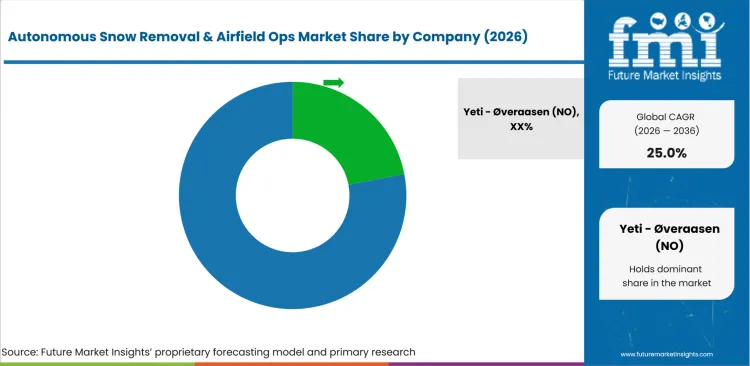
Competition divides between vehicle autonomy and physical airport equipment, with each company covering a different operating role. Aurrigo develops autonomous airside vehicles, and Oshkosh AeroTech supplies airport ground equipment through a broad service network. ADB SAFEGATE links surface activity with tower and apron control systems, and Anlon Technology Solutions provides runway maintenance machinery for Indian airports. Airport managers compare vehicle performance with airfield system fit and local support, then include aircraft maintenance and repair planning to protect the expected time savings during a storm. Local service reach determines how quickly a failed unit returns to work during a winter event.
- Aurrigo International plc manages autonomous vehicle routes and remote intervention across restricted airside areas at airports. ADB SAFEGATE links surface activity with controller-support systems, showing why vehicle control and airport coordination must share reliable status information during winter recovery on active runways.
- Oshkosh AeroTech and Anlon Technology Solutions compete through physical equipment and service support for winter surface recovery. Oshkosh brings a global airport-equipment base with established maintenance coverage, and Anlon offers locally built runway machinery that shortens the service path for Indian airports.
- These companies cover different operating tasks, so each role carries a separate proof requirement during airport review. Aurrigo and ADB SAFEGATE are more relevant as busy airports prepare operating systems for air taxi operations. Oshkosh AeroTech and Anlon depend more heavily on vehicle uptime and timely parts access during winter storms.
Competitive Benchmarking: Autonomous Snow Removal & Airfield Ops Market
| Company | Autonomous Vehicle Capability | Winter Equipment Range | Airfield System Integration | Service Reach |
|---|---|---|---|---|
| Aurrigo International plc | High | Low | High | Europe, Asia and North America |
| Oshkosh AeroTech | Low | High | Medium | Global |
| ADB SAFEGATE | Low | Low | High | Global |
| Anlon Technology Solutions | Low | Low | Medium | India |
Scoring basis: High indicates direct capability supported by documented airport products or operations, and Medium represents relevant but partial coverage. A Low rating identifies limited direct evidence for the stated capability within the assessed market and company portfolio.
Source: Future Market Insights competitive analysis, 2026. Ratings reflect documented portfolio fit and service reach.
Key Developments in the Autonomous Snow Removal & Airfield Ops Market
- May 2026, Aurrigo International plc introduced Auto-Sim as a simulation tool for autonomous airport vehicles. Airports can test routes and fleet behavior away from live traffic during the planning stage for active-surface operations. The system compares intervention points with route plans inside a controlled model of the airfield. This preparation gives airport managers a clearer safety case for later trials and fleet expansion.
- January 2026, Oshkosh AeroTech, announced delivery of its 7,000th LEKTRO electric towbarless aircraft tractor to Atlantic Aviation. The milestone shows the size of specialist vehicle fleets already supported across commercial airport operations worldwide. Long equipment life and established parts networks reduce the risk of adding another vehicle type. Autonomous clearing companies need the same service depth to protect runway recovery during winter storms at busy airports.
- February 2025, ADB SAFEGATE announced that Hamburg Airport had implemented the OneControl platform for tower and apron work. The system combined surface functions at one controller position and extended the airport’s earlier automation program. Autonomous clearing vehicles need to appear inside the same operating view used for aircraft movement. Shared status information can reduce coordination gaps during runway recovery and support a safer reopening decision.
- June 2025, Noida International Airport partnered with Anlon Technology Solutions for an Indian-built runway rubber removal machine. The airport stated that the unit could clean 800 to 1,100 square metres per hour with more than four hours of operating time and 8,000-litre tanks. The project shows why measurable surface recovery and local service access influence equipment approval during formal airport reviews. Those factors shape autonomous snow-removal decisions at airports that work under tight runway reopening targets during winter storms.
Key Players in the Autonomous Snow Removal & Airfield Ops Market
Autonomous airside vehicle specialists
- Aurrigo International plc
Airport ground equipment manufacturers
- Oshkosh AeroTech
Airfield control and integration providers
- ADB SAFEGATE
Runway maintenance equipment providers
- Anlon Technology Solutions
Autonomous Snow Removal & Airfield Ops Market - Report Scope
| Report Attribute | Coverage |
|---|---|
| Market Breakdown | Vehicle Type, Application, Component, End-use, Business Model, and Region |
| Market Definition | The market covers autonomous and remotely supervised vehicles plus control software and services used for snow removal or related airfield ground work. |
| Regions Covered | North America, Latin America, Europe, East Asia, South Asia, Oceania, and Middle East and Africa |
| Countries Covered | European Union and United States, with other countries included in the regional forecast model |
| Key Companies Profiled | Aurrigo International plc, Oshkosh AeroTech, ADB SAFEGATE, and Anlon Technology Solutions |
| Approach | Demand-side review of airport winter operations combined with company capability analysis and country forecast reconciliation |
Source: Future Market Insights analysis based on proprietary forecasting models and primary research
Autonomous Snow Removal & Airfield Ops Market - Research Methodology
| Method | Application |
|---|---|
| Primary Research | FMI analysts gathered input from manufacturers, service providers, technology developers, distributors, end users, sourcing teams, and subject-matter experts. Interviews examined purchasing decisions, product or service evaluation, adoption barriers, approval requirements, pricing considerations, and expectations for technical or commercial support. Respondents were also asked what evidence is required before a trial, pilot, or initial order develops into regular purchasing. |
| Desk Research | Desk research covered government statistics, regulatory publications, trade data, industry associations, technical literature, standards, company filings, product information, and official corporate announcements. Sources were reviewed for relevance, publication date, geographic coverage, and consistency with the defined market scope. Claims relating to performance, applications, approvals, capacity, investment, and commercial activity were retained only when supported by credible public evidence. |
| Market Sizing and Forecasting | The market model combined the baseline value with historical performance, segment structure, pricing and volume indicators, adoption levels, company participation, and country-level demand conditions. Forecast assumptions considered economic activity, investment trends, regulatory developments, technology adoption, purchasing cycles, supply availability, and barriers to wider market use. Segment and regional estimates were reconciled before the final market total was calculated. |
| Data Validation | Estimates were checked against multiple independent indicators, including public data, company activity, trade patterns, industry developments, and findings from primary interviews. Validation also tested whether products, services, applications, and company revenues fell within the defined market boundaries. Adjacent categories, unsupported claims, overlapping revenues, and activities without direct market relevance were excluded to reduce double counting and maintain consistency across segments and countries. |
Source: Future Market Insights analysis based on proprietary forecasting model and primary research
Autonomous Snow Removal & Airfield Ops Market by Segments
Autonomous Snow Removal & Airfield Ops Market segmented by Vehicle Type:
- Autonomous airfield plows
- Runway sweepers
- Road plows with remote supervision
- Sidewalk units
Autonomous Snow Removal & Airfield Ops Market segmented by Application:
- Airfield clearing
- Highway and road work
- Campus and industrial sites
- Municipal sidewalks
Autonomous Snow Removal & Airfield Ops Market segmented by Component:
- Vehicles
- Autonomy software
- Services
Autonomous Snow Removal & Airfield Ops Market segmented by End-use:
- Airports
- Road authorities
- Municipalities
- Industrial sites
Autonomous Snow Removal & Airfield Ops Market segmented by Business Model:
- Direct sales
- Service contracts
- Retrofit programs
- Pilot programs
Autonomous Snow Removal & Airfield Ops Market by Region:
- North America
- United States
- Canada
- Latin America
- Brazil
- Mexico
- Argentina
- Europe
- Germany
- United Kingdom
- France
- Italy
- Spain
- Nordic countries
- East Asia
- China
- Japan
- South Korea
- South Asia
- India
- Thailand
- Indonesia
- Oceania
- Australia
- New Zealand
- Middle East and Africa
- Gulf Cooperation Council countries
- South Africa
- Turkey
Research Sources and Bibliography
- Federal Aviation Administration. (2025, October). Cold Temperature Airports, 2 October 2025 to 3 September 2026. USA Department of Transportation.
- Electronic Code of Federal Regulations. (2026, July 10). 14 CFR 139.313 - Snow and ice control. USA Government Publishing Office.
- Airports Council International Europe. (2025, August 6). European airport traffic grew by 4.5% in H1 2025, with major performance gaps opening up across the industry. ACI EUROPE.
- Aurrigo International plc. (2026, March 3). Aurrigo granted licence to provide Ground Handling Services at East Midlands Airport. Aurrigo.
- Aurrigo International plc. (2026, April 22). Aurrigo announces major expansion with new advanced manufacturing and engineering hub. Aurrigo.
- Aurrigo International plc. (2026, May 16). Auto-Sim by Aurrigo. Aurrigo.
- Oshkosh AeroTech. (2026, January 14). Oshkosh AeroTech Celebrates 7,000th LEKTRO Electric Towbarless Aircraft Tractor as Atlantic Aviation Takes Delivery of Milestone Unit. Oshkosh AeroTech.
- Oshkosh AeroTech. (2026, June 4). Oshkosh AeroTech Celebrates Delivery of 300th ATLAS Cargo Loader. Oshkosh AeroTech.
- Oshkosh AeroTech. (2025, September 16). Oshkosh AeroTech Unveils New Tempest-si Deicer at International GSE Expo 2025. Oshkosh AeroTech.
- Noida International Airport. (2026, June 10). Noida International Airport conducts final ORAT turnaround trial with IndiGo. Noida International Airport.
- Noida International Airport. (2025, June 20). Noida International Airport partners with Anlon Technology Solutions for India’s first indigenously built runway rubber removal machine. Noida International Airport.
- ADB SAFEGATE. (2025, February 11). Hamburg Airport Successfully Implements OneControl by ADB SAFEGATE, Continuing a Legacy of Tower Automation Innovation. ADB SAFEGATE.
This bibliography is provided for reader reference and includes primary government sources plus standards bodies and official company announcements used in the operating analysis.
This Report Answers
- How large is the autonomous snow removal and airfield ops market in 2026 and 2036?
- Which CAGR is projected for the market from 2026 to 2036?
- Why do autonomous airfield plows lead the Vehicle Type category?
- What makes airfield clearing the leading Application category?
- Which winter operating limits slow autonomous vehicle approval?
- How do growth rates differ between the European Union and United States?
- Which companies cover vehicles, airfield control, and runway maintenance?
- How should airports compare direct purchase with service and retrofit models?
- Which evidence should an airport require before expanding an autonomous fleet?
Frequently Asked Questions
What is driving growth in the Autonomous Snow Removal & Airfield Ops Market?
Airport closure risk supports demand for equipment that restores runways within short winter operating windows. Autonomous vehicles can repeat approved routes and safely reduce staff exposure near active movement areas.
Who are the key players in the Autonomous Snow Removal & Airfield Ops Market?
Aurrigo and Oshkosh AeroTech bring different specialist strengths in autonomous airside vehicles and airport equipment. ADB SAFEGATE and Anlon provide separate capabilities in airfield control and runway maintenance for airport operators.
What is a notable restraint in the Autonomous Snow Removal & Airfield Ops Market?
Snow and low contrast can reduce sensor quality during the hardest operating conditions at active airports. Fleet expansion depends on winter tests that prove safe stopping and reliable recovery at each operating site.
Why should executives track the Autonomous Snow Removal & Airfield Ops Market?
Companies with proven winter-operations capabilities can benefit from both equipment sales and recurring service revenues across airport fleets. As airports increasingly adopt autonomous technologies to improve operational efficiency and runway availability during severe weather conditions, early market participants may gain a strong competitive advantage.
What business problem does the Autonomous Snow Removal & Airfield Ops Market address?
The market addresses time lost to snow-covered runways and taxiways during active flight schedules worldwide. Automated equipment can restore usable surfaces with fewer people working in hazardous areas at active airports.
What should procurement leaders evaluate before selecting suppliers?
Airport teams should review winter sensor performance and safe-stop behavior for each proposed site route. Local parts support must match the response plan used during storm recovery at the airport.
What limits return on investment for purchasers?
Returns weaken if a vehicle cannot operate under the snowfall used in the business case. Long trials and custom system work can delay expected savings across several winter operating seasons.
How do suppliers build long-term account confidence?
Equipment companies build long-term confidence through repeatable winter performance and clear operating records for each route. Fast parts support and timely route updates protect fleet value as the airport program expands over time.
Preview the report firsthand - request a free sample
Get SampleGet the brochure for pricing and purchase details.
Get PDFTable of Content
- Key Takeaways
- Market Size and CAGR
- Top Growth Driver
- Fastest Growing Segment
- Leading Region
- Key Companies
- Emerging Opportunities
- Executive Summary
- Global Market Outlook
- Demand-side Trends
- Supply-side Trends
- Technology Roadmap Analysis
- Analysis and Recommendations
- Analyst Perspective (What is happening? Why now? What should investors know?)
- Key Questions Answered
- How large is the market?
- What is the CAGR?
- What are key trends?
- Which region dominates?
- Who are the leaders?
- Market Overview
- Market Coverage / Taxonomy
- Market Definition / Scope / Limitations
- Research Methodology
- Chapter Orientation
- Analytical Lens and Working Hypotheses
- Market Structure, Signals, and Trend Drivers
- Benchmarking and Cross-market Comparability
- Market Sizing, Forecasting, and Opportunity Mapping
- Research Design and Evidence Framework
- Desk Research Programme (Secondary Evidence)
- Expert Input and Fieldwork (Primary Evidence)
- Tooling, Models, and Reference Databases
- Data Engineering and Model Build
- Quality Assurance and Audit Trail
- Market Background
- Market Dynamics (Drivers, Restraints, Opportunity, Trends)
- Scenario Forecast (Optimistic, Likely, Conservative)
- Impact Analysis
- AI Impact
- Sustainability Impact
- Regulatory Impact
- Technology Impact
- Consumer / Buyer Analysis
- Purchase Drivers
- Adoption Barriers
- Buyer Journey
- Opportunity Map Analysis
- Product Life Cycle Analysis
- Supply Chain Analysis
- Investment Feasibility Matrix
- Value Chain Analysis
- PESTLE and Porter's Analysis
- Regulatory Landscape
- Regional Parent Market Outlook
- Production and Consumption Statistics
- Import and Export Statistics
- Global Market Analysis and Forecast, 2021 to 2036
- Historical Market Size Value (USD Mn) Analysis, 2021 to 2025
- Current and Future Market Size Value (USD Mn) Projections, 2026 to 2036
- Y-o-Y Growth Trend Analysis
- Absolute $ Opportunity Analysis
- Global Market Pricing Analysis, 2021 to 2036
- Global Market Analysis and Forecast, By Vehicle Type, 2021 to 2036
- Introduction / Key Findings
- Historical Market Size Value (USD Mn) Analysis By Vehicle Type, 2021 to 2025
- Current and Future Market Size Value (USD Mn) Analysis and Forecast By Vehicle Type, 2026 to 2036
- Autonomous airfield plows
- Runway sweepers
- Road plows (supervised)
- Sidewalk units
- Autonomous airfield plows
- Y-o-Y Growth Trend Analysis By Vehicle Type, 2021 to 2025
- Absolute $ Opportunity Analysis By Vehicle Type, 2026 to 2036
- Global Market Analysis and Forecast, By Application, 2021 to 2036
- Introduction / Key Findings
- Historical Market Size Value (USD Mn) Analysis By Application, 2021 to 2025
- Current and Future Market Size Value (USD Mn) Analysis and Forecast By Application, 2026 to 2036
- Airfield clearing
- Highway - road
- Campus & industrial
- Municipal sidewalks
- Airfield clearing
- Y-o-Y Growth Trend Analysis By Application, 2021 to 2025
- Absolute $ Opportunity Analysis By Application, 2026 to 2036
- Global Market Analysis and Forecast, By Component, 2021 to 2036
- Introduction / Key Findings
- Historical Market Size Value (USD Mn) Analysis By Component, 2021 to 2025
- Current and Future Market Size Value (USD Mn) Analysis and Forecast By Component, 2026 to 2036
- Vehicles
- Autonomy software
- Services
- Vehicles
- Y-o-Y Growth Trend Analysis By Component, 2021 to 2025
- Absolute $ Opportunity Analysis By Component, 2026 to 2036
- Global Market Analysis and Forecast, By End-use, 2021 to 2036
- Introduction / Key Findings
- Historical Market Size Value (USD Mn) Analysis By End-use, 2021 to 2025
- Current and Future Market Size Value (USD Mn) Analysis and Forecast By End-use, 2026 to 2036
- Airports
- Road authorities
- Municipalities
- Industrial sites
- Airports
- Y-o-Y Growth Trend Analysis By End-use, 2021 to 2025
- Absolute $ Opportunity Analysis By End-use, 2026 to 2036
- Global Market Analysis and Forecast, By Business Model, 2021 to 2036
- Introduction / Key Findings
- Historical Market Size Value (USD Mn) Analysis By Business Model, 2021 to 2025
- Current and Future Market Size Value (USD Mn) Analysis and Forecast By Business Model, 2026 to 2036
- Direct
- Service contracts
- Retrofit
- Pilot programs
- Direct
- Y-o-Y Growth Trend Analysis By Business Model, 2021 to 2025
- Absolute $ Opportunity Analysis By Business Model, 2026 to 2036
- Global Market Analysis and Forecast, By Region, 2021 to 2036
- Introduction
- Historical Market Size Value (USD Mn) Analysis By Region, 2021 to 2025
- Current Market Size Value (USD Mn) Analysis and Forecast By Region, 2026 to 2036
- North America
- Latin America
- Western Europe
- Eastern Europe
- East Asia
- South Asia and Pacific
- Middle East & Africa
- Market Attractiveness Analysis By Region
- North America Market Analysis and Forecast, By Country, 2021 to 2036
- Historical Market Size Value (USD Mn) Trend Analysis By Market Taxonomy, 2021 to 2025
- Market Size Value (USD Mn) Forecast By Market Taxonomy, 2026 to 2036
- By Country
- USA
- Canada
- By Vehicle Type
- By Application
- By Component
- By End-use
- By Business Model
- By Country
- Market Attractiveness Analysis
- By Country
- By Vehicle Type
- By Application
- By Component
- By End-use
- By Business Model
- Key Takeaways
- Latin America Market Analysis and Forecast, By Country
- Historical Market Size Value (USD Mn) Trend Analysis By Market Taxonomy, 2021 to 2025
- Market Size Value (USD Mn) Forecast By Market Taxonomy, 2026 to 2036
- By Country
- Brazil
- Mexico
- Chile
- Rest of Latin America
- By Vehicle Type
- By Application
- By Component
- By End-use
- By Business Model
- By Country
- Market Attractiveness Analysis
- By Country
- By Vehicle Type
- By Application
- By Component
- By End-use
- By Business Model
- Key Takeaways
- Western Europe Market Analysis and Forecast, By Country
- Historical Market Size Value (USD Mn) Trend Analysis By Market Taxonomy, 2021 to 2025
- Market Size Value (USD Mn) Forecast By Market Taxonomy, 2026 to 2036
- By Country
- Germany
- UK
- Italy
- Spain
- France
- Nordic
- BENELUX
- Rest of Western Europe
- By Vehicle Type
- By Application
- By Component
- By End-use
- By Business Model
- By Country
- Market Attractiveness Analysis
- By Country
- By Vehicle Type
- By Application
- By Component
- By End-use
- By Business Model
- Key Takeaways
- Eastern Europe Market Analysis and Forecast, By Country
- Historical Market Size Value (USD Mn) Trend Analysis By Market Taxonomy, 2021 to 2025
- Market Size Value (USD Mn) Forecast By Market Taxonomy, 2026 to 2036
- By Country
- Russia
- Poland
- Hungary
- Balkan & Baltic
- Rest of Eastern Europe
- By Vehicle Type
- By Application
- By Component
- By End-use
- By Business Model
- By Country
- Market Attractiveness Analysis
- By Country
- By Vehicle Type
- By Application
- By Component
- By End-use
- By Business Model
- Key Takeaways
- East Asia Market Analysis and Forecast, By Country
- Historical Market Size Value (USD Mn) Trend Analysis By Market Taxonomy, 2021 to 2025
- Market Size Value (USD Mn) Forecast By Market Taxonomy, 2026 to 2036
- By Country
- China
- Japan
- South Korea
- By Vehicle Type
- By Application
- By Component
- By End-use
- By Business Model
- By Country
- Market Attractiveness Analysis
- By Country
- By Vehicle Type
- By Application
- By Component
- By End-use
- By Business Model
- Key Takeaways
- South Asia and Pacific Market Analysis and Forecast, By Country
- Historical Market Size Value (USD Mn) Trend Analysis By Market Taxonomy, 2021 to 2025
- Market Size Value (USD Mn) Forecast By Market Taxonomy, 2026 to 2036
- By Country
- India
- ASEAN
- Australia & New Zealand
- Rest of South Asia and Pacific
- By Vehicle Type
- By Application
- By Component
- By End-use
- By Business Model
- By Country
- Market Attractiveness Analysis
- By Country
- By Vehicle Type
- By Application
- By Component
- By End-use
- By Business Model
- Key Takeaways
- Middle East & Africa Market Analysis and Forecast, By Country
- Historical Market Size Value (USD Mn) Trend Analysis By Market Taxonomy, 2021 to 2025
- Market Size Value (USD Mn) Forecast By Market Taxonomy, 2026 to 2036
- By Country
- Kingdom of Saudi Arabia
- Other GCC Countries
- Türkiye
- South Africa
- Other African Union
- Rest of Middle East & Africa
- By Vehicle Type
- By Application
- By Component
- By End-use
- By Business Model
- By Country
- Market Attractiveness Analysis
- By Country
- By Vehicle Type
- By Application
- By Component
- By End-use
- By Business Model
- Key Takeaways
- Key Countries Market Analysis
- USA
- Pricing Analysis
- Market Share Analysis, 2025
- By Vehicle Type
- By Application
- By Component
- By End-use
- By Business Model
- Canada
- Pricing Analysis
- Market Share Analysis, 2025
- By Vehicle Type
- By Application
- By Component
- By End-use
- By Business Model
- Mexico
- Pricing Analysis
- Market Share Analysis, 2025
- By Vehicle Type
- By Application
- By Component
- By End-use
- By Business Model
- Brazil
- Pricing Analysis
- Market Share Analysis, 2025
- By Vehicle Type
- By Application
- By Component
- By End-use
- By Business Model
- Chile
- Pricing Analysis
- Market Share Analysis, 2025
- By Vehicle Type
- By Application
- By Component
- By End-use
- By Business Model
- Germany
- Pricing Analysis
- Market Share Analysis, 2025
- By Vehicle Type
- By Application
- By Component
- By End-use
- By Business Model
- UK
- Pricing Analysis
- Market Share Analysis, 2025
- By Vehicle Type
- By Application
- By Component
- By End-use
- By Business Model
- Italy
- Pricing Analysis
- Market Share Analysis, 2025
- By Vehicle Type
- By Application
- By Component
- By End-use
- By Business Model
- Spain
- Pricing Analysis
- Market Share Analysis, 2025
- By Vehicle Type
- By Application
- By Component
- By End-use
- By Business Model
- France
- Pricing Analysis
- Market Share Analysis, 2025
- By Vehicle Type
- By Application
- By Component
- By End-use
- By Business Model
- India
- Pricing Analysis
- Market Share Analysis, 2025
- By Vehicle Type
- By Application
- By Component
- By End-use
- By Business Model
- ASEAN
- Pricing Analysis
- Market Share Analysis, 2025
- By Vehicle Type
- By Application
- By Component
- By End-use
- By Business Model
- Australia & New Zealand
- Pricing Analysis
- Market Share Analysis, 2025
- By Vehicle Type
- By Application
- By Component
- By End-use
- By Business Model
- China
- Pricing Analysis
- Market Share Analysis, 2025
- By Vehicle Type
- By Application
- By Component
- By End-use
- By Business Model
- Japan
- Pricing Analysis
- Market Share Analysis, 2025
- By Vehicle Type
- By Application
- By Component
- By End-use
- By Business Model
- South Korea
- Pricing Analysis
- Market Share Analysis, 2025
- By Vehicle Type
- By Application
- By Component
- By End-use
- By Business Model
- Russia
- Pricing Analysis
- Market Share Analysis, 2025
- By Vehicle Type
- By Application
- By Component
- By End-use
- By Business Model
- Poland
- Pricing Analysis
- Market Share Analysis, 2025
- By Vehicle Type
- By Application
- By Component
- By End-use
- By Business Model
- Hungary
- Pricing Analysis
- Market Share Analysis, 2025
- By Vehicle Type
- By Application
- By Component
- By End-use
- By Business Model
- Kingdom of Saudi Arabia
- Pricing Analysis
- Market Share Analysis, 2025
- By Vehicle Type
- By Application
- By Component
- By End-use
- By Business Model
- Türkiye
- Pricing Analysis
- Market Share Analysis, 2025
- By Vehicle Type
- By Application
- By Component
- By End-use
- By Business Model
- South Africa
- Pricing Analysis
- Market Share Analysis, 2025
- By Vehicle Type
- By Application
- By Component
- By End-use
- By Business Model
- USA
- Market Structure Analysis
- Competition Dashboard
- Competition Benchmarking
- Market Share Analysis of Top Players
- By Regional
- By Vehicle Type
- By Application
- By Component
- By End-use
- By Business Model
- Emerging Startups
- Innovation Benchmarking
- Competition Analysis
- Competition Deep Dive
- Yeti - MOVE (NO)
- Overview
- Product Portfolio
- Profitability by Market Segments
- Sales Footprint
- Strategy Overview
- Marketing Strategy
- Product Strategy
- Channel Strategy
- Teleo retrofits (US)
- Yeti - MOVE (NO)
- Case Studies
- Success Stories
- Recent Developments
- Competition Deep Dive
- Assumptions & Acronyms Used


