

Cellulose Fiber Market Size and Share Analysis Forecast Outlook 2035
The global Cellulose Fiber industry is experiencing significant growth due to increasing demand for sustainable, biodegradable, and cost-effective fiber solutions across textiles, hygiene products, and industrial applications. Advances in fiber technology, sustainability initiatives, and the adoption of high-performance cellulose-based materials are reshaping the competitive landscape.
Market growth is driven by rising consumer preference for eco-friendly, renewable, and durable fiber solutions, regulatory support for sustainable production, and innovations in lightweight, high-strength, and moisture-resistant cellulose fiber materials. As cost-efficiency and environmental impact become priorities, manufacturers are investing in regenerated cellulose fibers, wood pulp-based textiles, and advanced fiber processing techniques.
Market Leaders and Competitive Landscape in the Cellulose Fiber Market
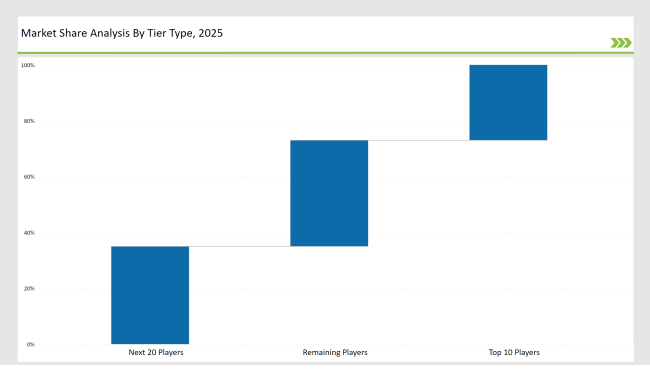
- Tier 1: Lenzing AG, Sateri, and Birla Cellulose hold a 27% market share, leading with advanced cellulose fiber production, global supply chains, and sustainability-focused innovations.
- Tier 2: Companies such as Aditya Birla Group, Eastman Chemical, and Fulida Group control 35% of the market, specializing in high-performance viscose, lyocell, and modal fiber solutions.
- Tier 3: Regional and niche manufacturers, comprising 38% of the market, focus on customized cellulose fiber solutions, including biodegradable, moisture-resistant, and high-tenacity fibers.
Vendor Performance
Global Market Share by Key Players (2025)
| Category | Market Share (%) |
|---|---|
| Top 3 (Lenzing AG, Sateri, Birla Cellulose) | 12% |
| Rest of Top 5 (Aditya Birla Group, Eastman Chemical) | 9% |
| Next 5 of Top 10 | 6% |
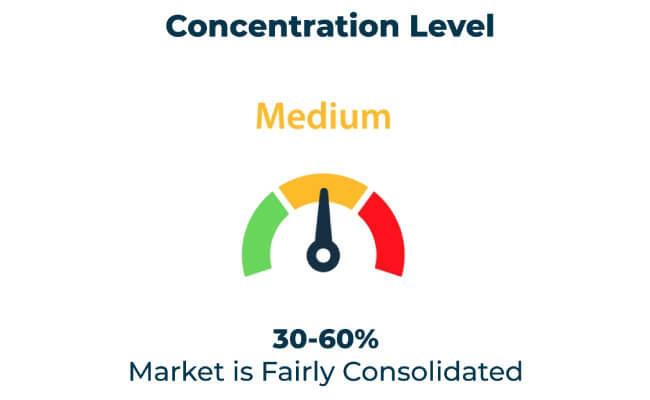
Market Concentration (2025E)
Segment Analysis
Key Industries Driving Demand
The demand for high-quality cellulose fibers is increasing across multiple industries:
- Textiles & Apparel: Ensuring sustainable and breathable fibers for clothing and fashion.
- Hygiene & Medical: Offering biodegradable fibers for wipes, diapers, and sanitary products.
- Industrial & Automotive: Providing high-strength, lightweight materials for composites and filters.
- Paper & Packaging: Delivering durable, recyclable fiber-based packaging solutions.
Vendor-Driven Product Categories
Manufacturers are focusing on innovative solutions to meet evolving market needs:
- Viscose & Modal Fibers: Addressing sustainability and textile softness.
- Lyocell & Tencel Fibers: Enhancing moisture absorption and durability.
- Regenerated Cellulose Fibers: Reducing environmental impact.
- Nano-Cellulose & Smart Fibers: Improving strength, flexibility, and performance.
Year-on-Year Leaders
- Lenzing AG: Launched high-performance biodegradable cellulose fibers.
- Sateri: Expanded sustainable viscose fiber production.
- Birla Cellulose: Innovated in lightweight and durable fiber solutions.
- Aditya Birla Group: Developed moisture-resistant, high-tenacity fibers.
- Eastman Chemical: Introduced cost-efficient, high-strength cellulose fibers.
Recommendations for Technology Suppliers
To stay competitive in the cellulose fiber industry, suppliers should focus on:
- Sustainability Focus: Development of biodegradable and recycled cellulose fiber materials.
- Smart Manufacturing Integration: Features like automated production lines and AI-driven quality control.
- Customization & Scalability: Adaptability to various industry needs and high-volume production.
- Global Expansion Strategy: Targeting high-growth markets in Asia-Pacific and North America.
Tier-Wise Vendor Classification (2025)
| Tier Type | Example of Key Players |
|---|---|
| Tier 1 | Lenzing AG, Sateri, Birla Cellulose |
| Tier 2 | Aditya Birla Group, Eastman Chemical, Fulida Group |
| Tier 3 | Grasim Industries, Kelheim Fibres, Tangshan Sanyou |
Key Company Initiatives
| Manufacturer | Latest Developments |
|---|---|
| Lenzing AG | Launched high-durability, biodegradable cellulose fibers (March 2024) |
| Sateri | Introduced high-performance viscose fiber (July 2023) |
| Birla Cellulose | Expanded sustainable and lightweight fiber production (October 2023) |
| Aditya Birla Group | Developed moisture-resistant cellulose fibers (February 2024) |
| Eastman Chemical | Innovated in cost-efficient, high-strength fiber solutions (May 2024) |
Vendor Insights
The Cellulose Fiber industry is transitioning toward sustainability, efficiency, and advanced fiber technology innovations. Key players are emphasizing:
- Lenzing AG: Leader in high-performance biodegradable cellulose fibers.
- Sateri: Specialist in viscose and sustainable textile fibers.
- Birla Cellulose: Innovator in lightweight and high-strength fiber production.
- Aditya Birla Group: Expert in moisture-resistant and high-tenacity fibers.
- Eastman Chemical: Pioneer in cost-efficient and sustainable fiber solutions.
Future Roadmap
The industry is expected to advance in:
- AI-Driven Manufacturing: Enhancing fiber production efficiency and material performance.
- Sustainable & Recyclable Materials: Expanding the use of biodegradable and regenerated cellulose fibers.
- Nano-Cellulose & Functional Fibers: Integrating antimicrobial, moisture-wicking, and flexible properties.
Top Segments Studied in the Cellulose Fiber Market Outlook
By Industry:
- Textiles & Apparel
- Hygiene & Medical
- Industrial & Automotive
- Paper & Packaging
By Product Category:
- Viscose & Modal Fibers
- Lyocell & Tencel Fibers
- Regenerated Cellulose Fibers
- Nano-Cellulose & Smart Fibers
Frequently Asked Questions
What are the key drivers of growth in the Cellulose Fiber industry?
Rising demand for sustainable, cost-effective, and high-performance fiber solutions.
Who are the leading players in the industry?
Lenzing AG, Sateri, Birla Cellulose, Aditya Birla Group, and Eastman Chemical.
What are the emerging trends in the industry?
Biodegradable fibers, nano-cellulose materials, and moisture-resistant textiles.
Which regions are experiencing the highest growth?
Asia-Pacific, North America, and Europe.
How is sustainability being addressed in cellulose fiber production?
Companies are investing in biodegradable materials, regenerative fiber solutions, and eco-friendly production technologies.
Preview the report firsthand - request a free sample
Get SampleGet the brochure for pricing and purchase details.
Get PDFTable of Content
- Executive Summary
- Market Overview
- Vendor Performance
- Market Concentration
- Segment Analysis
- Industry Innovations
- Year-on-Year Leaders
- Recommendations for Technology Suppliers
- Tier-Wise Vendor Classification
- Key Company Initiatives
- Vendor Insights
- Future Roadmap
- FAQs


