

- Industry Size (2026)
- USD 14040.1 Mn
- Forecast (2036)
- USD 29207.4 Mn
- CAGR (2026 to 2036)
- 7.6%
Compounding Pharmacies Market Size, Market Forecast and Outlook By FMI
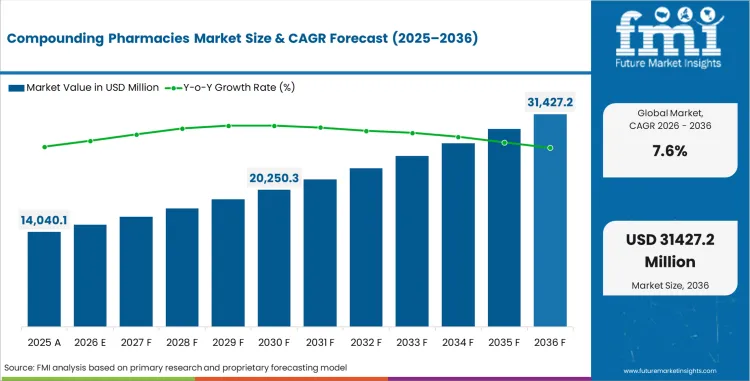
In 2026, the compounding pharmacies market was valued at USD 14,040.1 million. Based on Future Market Insights analysis, demand for compounding pharmacies is estimated to grow to USD 29,207.4 million by 2036. FMI projects a CAGR of 7.6% during the forecast period.
Absolute dollar growth of USD 15,167.3 million over the decade signals strong expansion rather than a demand reset. As per FMI, demand is expected to remain supported by rising need for personalized medicines, increasing use of patient-specific dosage forms, and broader physician reliance on compounded therapies where commercial products do not fully match treatment requirements. At the same time, quality oversight, regulatory scrutiny, and prescription-governed dispensing discipline are expected to keep market development structured across mature healthcare systems.
Summary of Compounding Pharmacies Market
- Compounding Pharmacies Market Definition
- The industry covers patient-specific customized medications prepared by pharmacies to address dosage, ingredient, and formulation needs not met by standard commercial products.
- Demand drivers in the market
- Demand is fulfilled by gaps in commercially available formulation with patient specific dosing for chronic care pathways .
- Physician reliance compounding pharmacies is increasing as treatment protocols require dosage precision and formulation flexibility over standard drug formulations.
- Patient-specific treatment and individualized therapy models are reinforcing growth approaches, where compounding pharmacies act as a clinical extension for prescribing which is raising demand for quality-led compounding support, as reported by FMI.
- Key Segments analyzed in the FMI report
- By Product: oral medication leads at 46.0% share in 2026.
- By Application: medication for adults leads at 56.7% share in 2026.
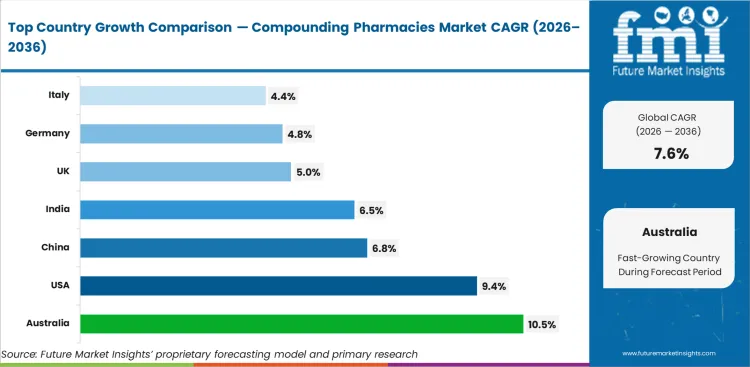
- Geography: Australia and the USA show the fastest growth at 10.5% and 9.4% CAGR, supported by stronger personalized treatment adoption and deeper specialty pharmacy integration.
- Analyst Opinion at FMI
- Sabyasachi Ghosh, Principal Consultant at Future Market Insights, opines, ‘Buyer preference is being shaped by formulation adaptability, turnaround reliability, and therapy-specific compounding capability, as prescribers place greater value on patient-fit dosing and quality-assured customization in routine care delivery.’
- Strategic Implications and Executive Takeaways
- Strengthen prescriber contracting with therapy-specific formulation support, documentation-ready quality systems, and dispensing reliability aligned to individualized care needs.
- Build growth plans around specialty treatment pathways where patient-specific medication requirements support recurring prescription demand.
- Protect approved supplier positions through formulation consistency and prescription responsiveness, since physician trust slows switching once compounding workflows are established.
- Methodology
- As per FMI, sizing and segment splits were reconciled using company primary disclosures and demand mapping by prescription category and therapeutic use setting.
- Product and application shares were validated by linking compounding demand patterns to personalized medication requirements across patient groups.
- Pricing sensitivity was stress tested under prescription mix and therapy customization scenarios to confirm revenue response under realistic dispensing conditions.
“Every action we take is focused on strengthening LifeMD’s ability to deliver higher-quality, more accessible care to our patients, by expanding our pharmacy with non-sterile compounding, we are not just adding capabilities, we’re building toward a future where every patient’s care is seamless, personalized, and accessible. This advancement complements our core service areas and brings us closer to delivering an unmatched healthcare experience, where convenience, continuity, and innovation come together to provide the kind of care that people want and deserve.” Said Justin Schreiber, Chairman and CEO of LifeMD. [1]
Based on FMI’s report, Australia (10.5% CAGR) and the USA (9.4%) are expected to lead growth due to stronger personalized medicine adoption and deeper integration of compounding into specialty care pathways. China (6.8%) and India (6.5%) are expected to maintain healthy expansion through broader treatment access and demand for patient-specific formulations. Mature markets such as Germany (4.8%), the UK (5.0%), France (4.3%), Italy (4.4%), and Spain (3.6%) are expected to contribute mainly through recurring prescription demand, with growth moderated by tighter quality frameworks and structured pharmacy regulation.
Compounding Pharmacies Market Definition
The market includes pharmacy-prepared customized medications formulated to meet individual patient needs where commercially available products are unsuitable in strength, dosage form, ingredient profile, or administration route. These products are dispensed through compounding pharmacies to support individualized treatment across multiple conditions where personalized formulation, allergen avoidance, dosage adjustment, or alternative administration is clinically required. The market includes oral medication, topical medication, mouthwashes, and suppositories prepared for routine patient-specific use. The market is driven by prescription volumes, therapeutic customization needs, prescriber confidence, and patient demand for tailored treatment options. The revenue stream is derived from compounded medication sales across personalized pharmacy care settings.
Compounding Pharmacies Market Inclusions
The report provides global and regional market sizing, as well as a 10-year forecast from 2026 to 2036. The report also provides market sizing by product, application, and therapeutic area, with country-level CAGR comparisons across key markets. The report also provides analysis on competitive positioning of key suppliers, prescription fulfillment dynamics, and the influence of customization capability, dispensing quality, and therapy-specific demand on supplier choice, as per FMI.
Compounding Pharmacies Market Exclusions
The scope does not include mass-manufactured pharmaceutical products, standard retail prescription dispensing without compounding, biologic manufacturing, and large-scale commercial drug production. Conventional packaged medicines, non-customized OTC products, and unrelated pharmacy distribution activities are also excluded. The scope also does not include non-prescription personalized wellness products outside regulated pharmacy compounding pathways, but only compounded medications prepared for patient-specific therapeutic use.
Compounding Pharmacies Market Research Methodology
- Primary Research: Interviews were carried out with compounding pharmacists, prescribing physicians, specialty care providers, and pharmacy procurement participants to confirm product demand patterns and dispensing behaviour.
- Desk Research: Public data from regulatory bodies, pharmacy associations, company materials, prescription care sources, and therapeutic practice publications were analyzed to compare product use trends and market positioning.
- Market Size and Forecasting: A mixed methodology was developed utilizing prescription-driven demand mapping, product format mix, and therapy area consumption trends; harmonization was done by triangulating volumes and prices.
- Data Validation and Updating: Data was screened for inconsistencies, validated internally, and peer reviewed systematically before release.
Segmental Analysis
Compounding Pharmacies Market Analysis by Product
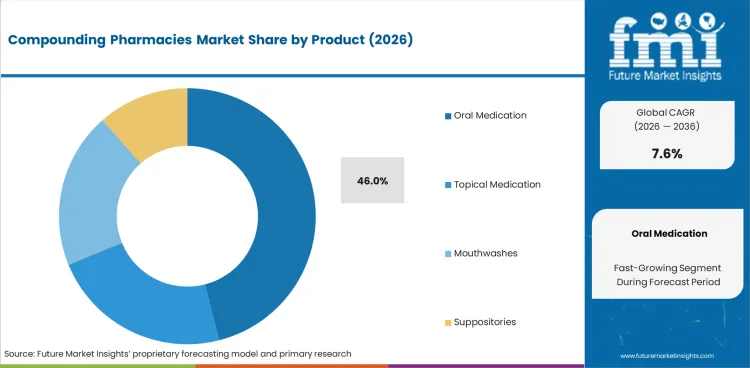
Based on FMI’s report, oral medication is estimated to hold 46.0% share in 2026. This lead position is supported by its wide compatibility with routine prescription workflows, broader patient familiarity, and strong suitability for dosage customization across multiple therapeutic needs. Its larger share is being reinforced by ease of administration, flexibility in strength adjustment, and continuing preference among prescribers for oral compounded formats where long-term treatment adherence and daily-use convenience remain important.
- Dose Customization Supports Demand: Oral compounded medications remain widely used because they allow patient-specific strength adjustment, flexible dosage form selection, and ingredient modification, which are central reasons compounding is used in chronic, pediatric, geriatric, and specialty therapy management. [2]
- Strong Compounding Workflow Familiarity: Oral formulations hold a leading share because capsules, suspensions, solutions, and related nonsterile oral preparations are deeply embedded in pharmacy compounding standards and day-to-day practice, reinforcing prescriber and pharmacist familiarity with this route. [3]
- Most Adaptable Dosage Format: Oral medication holds the highest share because it offers the broadest combination of daily-use convenience, patient familiarity, and dosage customization, making it the most practical compounded format across long-term, routine, and patient-specific treatment needs.
Compounding Pharmacies Market Analysis by Application
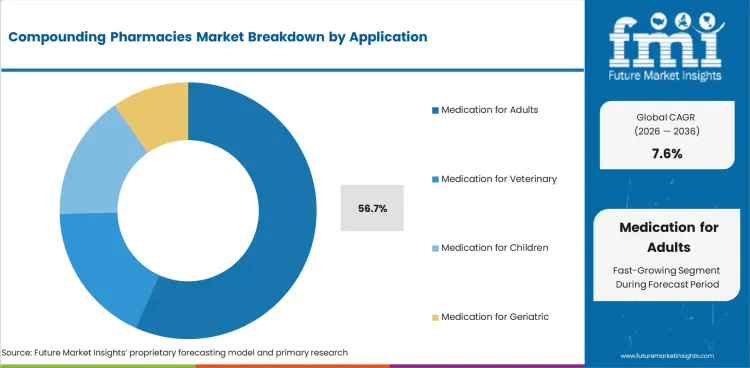
Medication for adults accounts for 56.7% share in 2026, based on FMI’s report, reflecting its role as the primary use segment within prescription compounding demand. This leading position is supported by the wider adult patient base, higher prevalence of chronic and specialty treatment requirements, and greater frequency of prescription customization across standard care pathways. Demand is therefore being concentrated in adult use where individualized dosing, ingredient adjustment, and alternative dosage forms are most commonly requested.
- Large Chronic Disease Burden: Adult patients account for the largest compounding demand because chronic diseases are concentrated in adult and older populations, creating sustained need for long-term pharmacotherapy, dose optimization, and alternative formulations when standard commercial products do not fully meet treatment needs. [4]
- Polypharmacy Increases Customization: Compounding use is reinforced in adults because polypharmacy is common in older and chronically ill patients, raising the need for strength modification, ingredient adjustment, and individualized medication management to improve tolerability, regimen fit, and safe long-term therapy use. [5]
- Largest Customization Demand Base: Medication for adults holds the highest share because adult patients account for the broadest base of long-term and specialty prescriptions, where individualized dosing, formulation changes, and therapy-specific adjustments are more frequently required in routine compounding practice.
Compounding Pharmacies Market Drivers, Restraints, and Opportunities
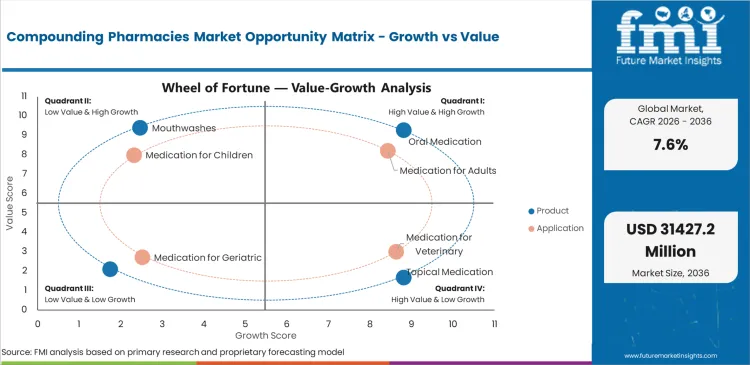
Future Market Insights analysis indicates that historical patterns point to a prescription-driven customized medicines category where demand is anchored in individualized dosing, ingredient adjustment, and therapy-specific formulation across specialty and chronic care pathways. Estimated valuation in 2026 is being supported by broader acceptance of personalized medicine, growing use of alternative dosage forms, and continued physician reliance on compounded products where standard commercial medicines do not fully address patient requirements, as per FMI.
While category demand is being restrained by tighter quality oversight, regulatory variability, and operational complexity in preparing patient-specific formulations, value is being supported by unmet dosing needs, broader therapeutic customization, and higher patient willingness to use tailored medications in long-term care. Based on FMI’s report, the forecast trajectory reflects a market where oral medication remains the leading product category, while suppliers are differentiated by quality systems, formulation breadth, and prescription turnaround capability.
- Personalization-Backed: Demand is being supported as prescribers continue to seek tailored medications for patients with specific dosage and formulation requirements.
- Compliance-Led: Growth is being moderated where quality oversight and regulatory expectations increase operating complexity across compounding workflows.
- Specialty-Care Expansion: Demand is being supported as more therapeutic niches rely on patient-specific medication preparation beyond standard commercial offerings.
Regional Analysis
Based on the regional analysis, compounding pharmacies market is segmented into North America, Latin America, East Asia, South Asia & Pacific, Western Europe, Eastern Europe, and Middle East & Africa across 40+ countries. Regional performance is assessed using country-level demand signals tied to personalized medicine adoption, pharmacy practice maturity, therapeutic customization needs, and regulatory oversight, as per FMI. The full report also offers market attractiveness analysis based on regional trends.
.webp "Top Country Growth Comparison Compounding Pharmacies Market Cagr (2026 2036)")
| Country | CAGR |
|---|---|
| Australia | 10.5% |
| United States | 9.4% |
| China | 6.8% |
| India | 6.5% |
| United Kingdom | 5.0% |
| Germany | 4.8% |
| Italy | 4.4% |
| France | 4.3% |
| Spain | 3.6% |
Source: Future Market Insights (FMI) analysis, based on proprietary forecasting model and primary research
North America Compounding Pharmacies Market Analysis
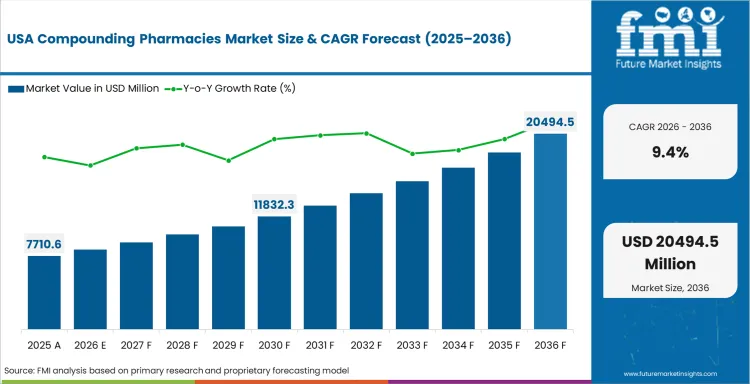
North America is shaped by advanced prescription customization practices and mature pharmacy service infrastructure, where product choice is influenced by quality assurance, prescription turnaround, and therapy-specific formulation capability. Fagron N.V. holds strong placement through broad compounding specialization, formulation support, and institutional presence across customized pharmacy channels. Fresenius Kabi and institutional pharmacy solution providers compete through product access, specialty care linkages, and dispensing support across complex medication environments. Based on FMI’s report, demand remains anchored in patient-specific prescribing and recurring customized therapy use.
- United States: The demand for compounding pharmacies in the United States is expected to grow at a CAGR of 9.4% during the forecast period of 2036. This is driven by strong personalized medicine adoption, wider use of specialty formulations, and established prescriber familiarity with customized dispensing, although this is tempered by strict quality oversight and structured pharmacy regulation.
FMI’s report includes a detailed analysis of the growth in the North American region, along with a country-wise assessment that includes the United States. Readers can also find regional trends, regulations, and market growth based on different segments and countries in the North America region.
East Asia Compounding Pharmacies Market Analysis
The East Asian region will continue to serve as a growth market for demand, owing to increased needs for customized prescription formulations, growing availability of specialist care services, and greater awareness of patient-specific formulae within pharmacy practices. The supplier’s position in the East Asian market will be determined by its formulation portfolio, quality of dispensation, and capability to address the varied needs of patients in a personalized manner. This is according to the FMI study findings.
- China: The compounding pharmacies market in China is estimated to expand at a CAGR of 6.8% during the forecast period of 2036. This is being driven by rising demand for customized therapies, broader healthcare access, and increasing patient-specific treatment needs, with market dynamics influenced by specialty care expansion and evolving pharmacy services.
The full report analyzes the compounding pharmacies market across East Asia from 2021 to 2036, covering pricing, trends, and growth drivers in China, Japan, South Korea, and related regional markets. The assessment highlights trends that dictate regional demand and procurement behaviour.
South Asia & Pacific Compounding Pharmacies Market Analysis
South Asia & Pacific is being shaped by expanding specialty care access, rising interest in personalized medications, and broader use of custom-prepared formulations across varied patient populations. Supplier positioning in the region is influenced by prescription responsiveness, therapy flexibility, and ability to support individualized treatment where standard products may not fit patient need. Based on FMI’s report, demand remains supported by growing therapeutic customization across both routine and specialist pharmacy settings.
- India: The compounding pharmacies market demand in India is expected to increase at a rate of 6.5% CAGR up to 2036. The demand growth in the region is due to increasing requirements for individualized dosages, availability of tailored treatment options, and increased involvement of physicians in exploring other dosing and ingredients options.
- Australia: The compounded pharmacy market in Australia will grow at a compound annual growth rate of 10.5% from 2021 through 2036. High personalization of prescriptions, presence of specialty pharmacies, and custom made medications have been highlighted as some of the key demand drivers for the market in this region.
This study will shed light on the compounding pharmacies market dynamics in South Asia & Pacific from 2021 through 2036. The study will include analysis of pricing, trends, and growth factors for the market in India, ASEAN Countries, Australia & New Zealand, and Rest of South Asia.
Western Europe Compounding Pharmacies Market Analysis
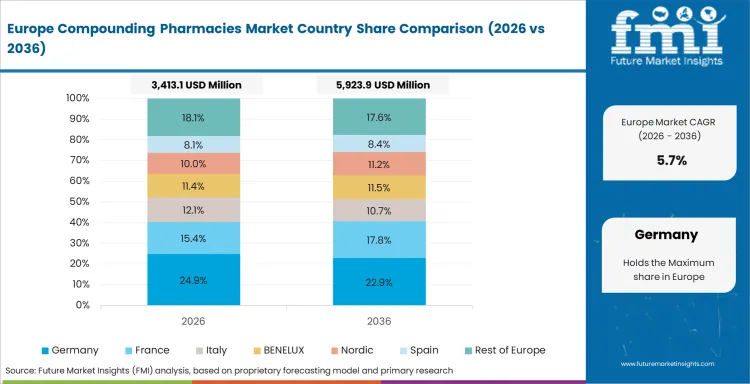
Western Europe is quality-led and regulation-aware, where demand is shaped by prescription discipline, therapy-specific medication needs, and reliance on professionally governed customized dispensing pathways. Fagron N.V., institutional pharmacy solution providers, and specialized regional compounding operators maintain relevance through formulation expertise, quality systems, and prescriber trust across customized care settings. Use continues to be influenced by treatment fit, dispensing reliability, and established pharmacy governance standards. As per FMI, recurring demand from patient-specific therapies and specialist prescription requirements continues to shape market activity across the region.
- Germany: Demand for compounding pharmacies in Germany is expected to rise at a CAGR of 4.8% till 2036. Factors fueling demand include regular demand for personalized medicines, defined pharmacy practice, and sustained demand for personalized medications for specialized applications.
- United Kingdom: The demand for compounding pharmacies in the United Kingdom is expected to grow at a CAGR of 5.0% from 2036. Factors fueling demand include rising demand for customized drug administration and the need for customizations prescribed by physicians while meeting high pharmacological industry standards.
- France: The demand for compounding pharmacies in France is estimated to grow at a CAGR of 4.3% during the forecast period from 2036. Rising demands for customized prescriptions, continued therapeutic flexibility, and the need for customized formulation in pharmaceutical settings are driving growth.
- Italy: The demand for compounding pharmacies in Italy is projected to grow at a CAGR of 4.4% during the forecast period from 2036. Factors fueling demand include growing demands for specialized healthcare services, patient-specific pharmaceutical services, and personalized preparations recommended by physicians.
- Spain: The demand for compounding pharmacies in Spain is expected to grow at a CAGR of 3.6% during the forecast period of 2036. This is driven by stable customized prescription demand and continuing use of tailored formulations, although this remains moderated by mature pharmacy practice and structured dispensing oversight.
FMI’s analysis of compounding pharmacies market in Western Europe consists of country-wise assessment that includes Germany, the UK, France, Italy, Spain, BENELUX, Nordic Countries, and Rest of Western Europe. Readers can know various regulations and latest trends in the regional market.
Competitive Aligners for Market Players
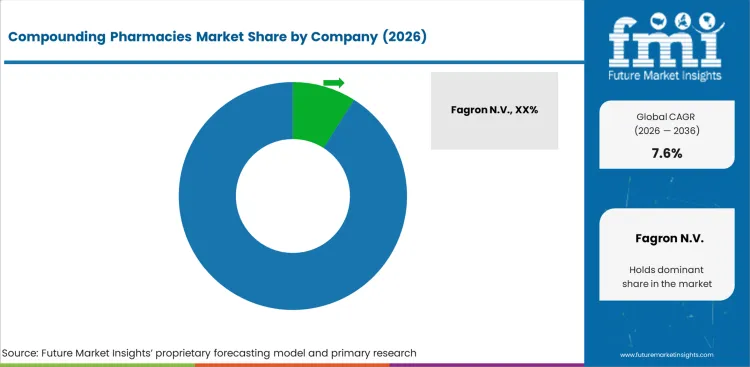
The market structure remains moderately concentrated, with effective competition centered on suppliers capable of supporting high-quality formulation customization, reliable prescription turnaround, and therapy-specific compounding breadth across regulated pharmacy environments. The data provided shows the presence of a leading participant in the market, with the rest of demand distributed across a focused set of specialized pharmacy and institutional solution providers. The key competitive factor is formulation adaptability aligned to prescription intent, as supplier qualification is filtered through dispensing quality, therapeutic flexibility, and trust in patient-specific preparation. The product portfolio also reflects this emphasis, as oral medication accounts for the leading share in the supplied segmentation, as indicated by FMI.
Companies with established compounding expertise, strong pharmacy compliance systems, and broad formulation capability carry structural advantages because buyer qualification is governed by prescriber trust, preparation consistency, and ability to support diverse therapeutic requirements under controlled dispensing standards. Scale leaders benefit from deeper prescription networks, wider formulation libraries, and the ability to serve multiple therapy areas under the same operational framework. Portfolio breadth across oral, topical, and specialty compounded formats helps protect account positions when providers standardize around known quality and dependable service. Suppliers with narrower operational reach tend to compete through selective geographies, niche therapeutic focus, or local prescription relationships, which can weaken their position during structured supplier evaluation.
Customer concentration reinforces buyer leverage. Prescription channels and institutional pharmacy users continue to shape a large part of recurring demand, while specialty treatment pathways form the next tier of customized medication use. Large provider networks commonly keep approved compounding partners active, prioritize suppliers that support rapid formulation response, and favor operators with dependable compliance discipline across recurring patient needs. Pricing power is therefore moderated for standard customization categories, with measured advantage retained only where formulation capability, dispensing trust, or therapeutic fit creates stronger prescribing preference, Future Market Insights analysis.
Recent Developments
- In January 2026, Pete Pharma, a leader in pharmaceutical innovation and pharmaceutical IP development, announced a strategic partnership with Curexa, a nationally recognized 503A pharmacy serving a growing network of telehealth providers. This collaboration is designed to Accelerate Innovation in Compounded Therapies for the Telehealth Market. [6]
- In February 2026, The proposed SAFE Drugs Act of 2025 signals a tightening regulatory landscape for compounded GLP-1 drugs, targeting high-volume “copy” formulations and interstate distribution. With enhanced FDA reporting and inspection mandates, alongside ongoing enforcement against misleading telehealth marketing, 2026 is emerging as a critical compliance inflection point for compounding pharmacies and outsourcing facilities.
- In April 2026, Noom has acquired 503A pharmacy Tailor Made Compounding to expand beyond weight loss into broader preventive and healthy aging solutions. The deal strengthens Noom’s ability to deliver prescription-grade therapies, including peptides and hormone treatments, while scaling through telehealth and clinic networks. The move signals a strategic shift toward integrated, platform-led chronic care and longevity-focused offerings.
- In February 2024, PDA announced a new four-year collaboration with the USA Food and Drug Administration's (FDA) Compounding Quality Center of Excellence, established to support outsourcing facilities and related stakeholders in their efforts to provide high-quality drugs for patients who need them. [7]
Key Players in Compounding Pharmacies Market
- Fagron N.V.
- Fresenius Kabi
- Empower Pharmacy
- Central Admixture Pharmacy Services (CAPS)
- Wedgewood Pharmacy
- Pine Pharmaceuticals
- Pavilion Compounding Pharmacy
- B. Braun SE
- Medisca Inc.
- Hoye's Pharmacy
- Vertisis Custom Pharmacy
- Smith Caldwell Drug Store
- Sixth Avenue Medical Pharmacy
- Cantrell Drug Company
- Clinigen Group
- Dougherty's Pharmacy
- Institutional Pharmacy Solutions
- Lorraine's Pharmacy
- McKesson Corporation
- Nephron Pharmaceuticals
- Pentec Health
- Premier Pharmacy Labs
- Wells Pharmacy Network
- RXQ Compounding Pharmacy
- Rx3 Compounding Pharmacy
- Amber Compounding Pharmacy Pte Ltd
- Pharmaprodia Compounding Pharmacy
- Valor Compounding Pharmacy, Inc
- Pentec Health
- Avella Specialty Pharmacy
Scope of the Report
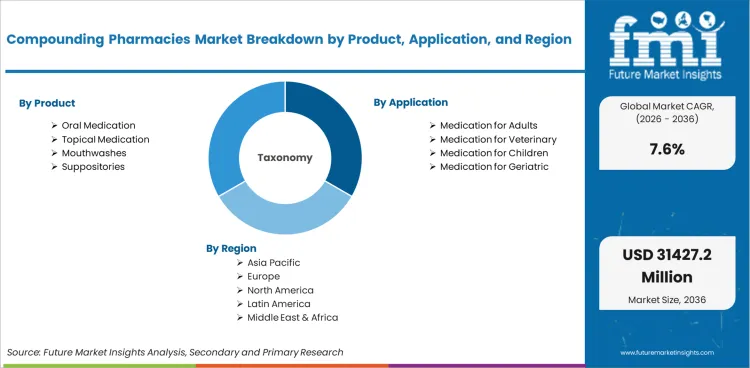
| Metric | Value |
|---|---|
| Quantitative Units | USD 14,040.1 million (2026) to USD 29,207.4 million (2036), at a CAGR of 7.6% |
| Market Definition | The compounding pharmacies market comprises patient-specific customized medications prepared to address dose, formulation, and ingredient needs not adequately met by standard commercial products, where demand is shaped by prescription-led personalization, therapeutic flexibility, and quality-governed dispensing across regulated pharmacy settings. |
| Product Segmentation | Oral Medication, Topical Medication, Mouthwashes, Suppositories |
| Application Segmentation | Medication For Adults, Medication For Veterinary, Medication For Children, Medication For Geriatric |
| Therapeutic Area Segmentation | Pain Management, Hormone Replacement Therapy, Others |
| Regions Covered | North America, Latin America, East Asia, South Asia & Pacific, Western Europe, Eastern Europe, and Middle East & Africa |
| Countries Covered | United States, Canada, United Kingdom, Germany, France, China, Japan, South Korea, Brazil, Australia, India, and 40+ countries |
| Key Companies Profiled | Fagron N.V., Fresenius Kabi, Empower Pharmacy, Central Admixture Pharmacy Services (CAPS), Wedgewood Pharmacy, Pine Pharmaceuticals, Pavilion Compounding Pharmacy, B. Braun SE, Medisca Inc., Hoye's Pharmacy, Vertisis Custom Pharmacy, Smith Caldwell Drug Store, Sixth Avenue Medical Pharmacy, Cantrell Drug Company, Clinigen Group Dougherty's Pharmacy, Institutional Pharmacy Solution, Lorraine's Pharmacy, McKesson Corporation, Nephron Pharmaceuticals, Pentec Health, Premier Pharmacy Labs, Wells Pharmacy Network, RXQ Compounding Pharmacy, Rx3 Compounding Pharmacy, Amber Compounding Pharmacy Pte Ltd, Pharmaprodia Compounding Pharmacy, Valor Compounding Pharmacy, Inc, Pentec Health, and Avella Specialty Pharmacy |
| Forecast Period | 2026 to 2036 |
| Approach | Hybrid top down and bottom up market modeling validated through primary interviews with pharmacy and prescribing stakeholders, supported by demand triangulation across prescription volumes, therapeutic customization needs, and product adoption patterns, as per FMI. |
Compounding Pharmacies Market Analysis by Segments
Product
- Oral Medication
- Topical Medication
- Mouthwashes
- Suppositories
Application
- Medication for Adults
- Medication for Veterinary
- Medication for Children
- Medication for Geriatric
Therapeutic Area
- Pain Management
- Hormone Replacement Therapy
- Others
Region
- North America
- USA
- Canada
- Mexico
- Latin America
- Brazil
- Argentina
- Rest of Latin America
- East Asia
- China
- Japan
- South Korea
- South Asia & Pacific
- India
- ASEAN Countries
- Australia & New Zealand
- Rest of South Asia
- Western Europe
- Germany
- UK
- France
- Italy
- Spain
- BENELUX
- Nordic Countries
- Rest of Western Europe
- Eastern Europe
- Russia
- Hungary
- Poland
- Rest of Eastern Europe
- Middle East & Africa
- Saudi Arabia
- Türkiye
- South Africa
- Other African Union
- Rest of Middle East & Africa
Bibliography
- [1] LifeMD, Inc. (2025), LifeMD Expands Pharmacy Services with Non-Sterile Compounding to Deliver Personalized, Cost-Efficient Therapies at Scale.
- [2] PubMed Central (2026), Extemporaneous Formulations for Pediatric Patients: Global Necessities, Challenges and Opportunities
- [3] The United States Pharmacopeial Convention (2020), PHARMACEUTICAL COMPOUNDING-NONSTERILE PREPARATIONS
- [4] PubMed Central (2025), Understanding Treatment Adherence in Chronic Diseases: Challenges, Consequences, and Strategies for Improvement
- [5] PubMed Central (2025), Challenges and Strategies in Medication Management for Patients with Multiple Comorbidities
- [6] Pete Pharma (2026), Pete Pharma and Curexa Enter Strategic Partnership to Accelerate Innovation in Compounded Therapies for the Telehealth Market
- [7] Parenteral Drug Association (PDA) (2024), PDA Announces Collaboration with the USA FDA Concerning Services for Pharma Compounders
This bibliography is provided for reader reference and is not exhaustive. The full report contains the complete reference list and detailed citations.
This Report Addresses
- Market intelligence to enable structured strategic decision making across personalized medicine expansion and compounding portfolio planning
- Market size estimation and 10-year revenue forecasts from 2026 to 2036 for compounding pharmacies demand
- Growth opportunity mapping across product classes and therapeutic treatment pools
- Segment and regional revenue forecasts aligned to the stated taxonomy and covered geographies
- Competition strategy assessment including supplier positioning, portfolio fit, and pharmacy channel coverage benchmarking
- Product and compliance tracking focused on formulation flexibility, dispensing standards, and prescription-led quality expectations
- Regulatory impact analysis covering compounding-led therapy selection and provider-level protocol adoption in regulated care settings
- Market report delivery in PDF, Excel, PPT, and interactive dashboard formats for executive and operational use
Frequently Asked Questions
How large is the demand for Compounding Pharmacies in the global market in 2026?
Demand for compounding pharmacies in the global market is estimated to be valued at USD 14,040.1 million in 2026, as per FMI.
What will be the market size of Compounding Pharmacies in the global market by 2036?
Market size for compounding pharmacies is projected to reach USD 29,207.4 million by 2036.
What is the expected demand growth for Compounding Pharmacies in the global market between 2026 and 2036?
Demand for compounding pharmacies in the global market is expected to grow at a CAGR of 7.6% between 2026 and 2036.
Which product is poised to lead global sales by 2026?
Oral medication is expected to be the dominant product, capturing 46.0% share in 2026.
How significant is the role of medication for adults in driving application demand in 2026?
Medication for adults is projected to hold 56.7% share of application demand in 2026.
Which country is expected to record the fastest growth during the forecast period?
Australia is projected to grow at a CAGR of 10.5% during 2026 to 2036 among the listed countries.
Preview the report firsthand - request a free sample
Get SampleGet the brochure for pricing and purchase details.
Get PDFTable of Content
- Executive Summary
- Global Market Outlook
- Demand-side Trends
- Supply-side Trends
- Technology Roadmap Analysis
- Analysis and Recommendations
- Market Overview
- Market Coverage / Taxonomy
- Market Definition / Scope / Limitations
- Research Methodology
- Chapter Orientation
- Analytical Lens and Working Hypotheses
- Market Structure, Signals, and Trend Drivers
- Benchmarking and Cross-market Comparability
- Market Sizing, Forecasting, and Opportunity Mapping
- Research Design and Evidence Framework
- Desk Research Programme (Secondary Evidence)
- Company Annual and Sustainability Reports
- Peer-reviewed Journals and Academic Literature
- Corporate Websites, Product Literature, and Technical Notes
- Earnings Decks and Investor Briefings
- Statutory Filings and Regulatory Disclosures
- Technical White Papers and Standards Notes
- Additional Desk Sources
- Expert Input and Fieldwork (Primary Evidence)
- Primary Modes
- Qualitative Interviews and Expert Elicitation
- Quantitative Surveys and Structured Data Capture
- Blended Approach
- Why Primary Evidence is Used
- Field Techniques
- Interviews
- Surveys
- Focus Groups
- Observational and In-context Research
- Social and Community Interactions
- Stakeholder Universe Engaged
- C-suite Leaders
- Board Members
- Presidents and Vice Presidents
- R&D and Innovation Heads
- Technical Specialists
- Domain Subject-matter Experts
- Scientists
- Physicians and Other Healthcare Professionals
- Governance, Ethics, and Data Stewardship
- Research Ethics
- Data Integrity and Handling
- Primary Modes
- Tooling, Models, and Reference Databases
- Desk Research Programme (Secondary Evidence)
- Data Engineering and Model Build
- Data Acquisition and Ingestion
- Cleaning, Normalisation, and Verification
- Synthesis, Triangulation, and Analysis
- Quality Assurance and Audit Trail
- Market Background
- Market Dynamics
- Drivers
- Restraints
- Opportunity
- Trends
- Scenario Forecast
- Demand in Optimistic Scenario
- Demand in Likely Scenario
- Demand in Conservative Scenario
- Opportunity Map Analysis
- Product Life Cycle Analysis
- Supply Chain Analysis
- Investment Feasibility Matrix
- Value Chain Analysis
- PESTLE and Porter’s Analysis
- Regulatory Landscape
- Regional Parent Market Outlook
- Production and Consumption Statistics
- Import and Export Statistics
- Market Dynamics
- Global Market Analysis 2021 to 2025 and Forecast, 2026 to 2036
- Historical Market Size Value (USD Million) Analysis, 2021 to 2025
- Current and Future Market Size Value (USD Million) Projections, 2026 to 2036
- Y-o-Y Growth Trend Analysis
- Absolute $ Opportunity Analysis
- Global Market Pricing Analysis 2021 to 2025 and Forecast 2026 to 2036
- Global Market Analysis 2021 to 2025 and Forecast 2026 to 2036, By Product
- Introduction / Key Findings
- Historical Market Size Value (USD Million) Analysis By Product , 2021 to 2025
- Current and Future Market Size Value (USD Million) Analysis and Forecast By Product , 2026 to 2036
- Oral Medication
- Topical Medication
- Mouthwashes
- Suppositories
- Oral Medication
- Y-o-Y Growth Trend Analysis By Product , 2021 to 2025
- Absolute $ Opportunity Analysis By Product , 2026 to 2036
- Global Market Analysis 2021 to 2025 and Forecast 2026 to 2036, By Application
- Introduction / Key Findings
- Historical Market Size Value (USD Million) Analysis By Application, 2021 to 2025
- Current and Future Market Size Value (USD Million) Analysis and Forecast By Application, 2026 to 2036
- Medication for Adults
- Medication for Veterinary
- Medication for Children
- Medication for Geriatric
- Medication for Adults
- Y-o-Y Growth Trend Analysis By Application, 2021 to 2025
- Absolute $ Opportunity Analysis By Application, 2026 to 2036
- Global Market Analysis 2021 to 2025 and Forecast 2026 to 2036, By Region
- Introduction
- Historical Market Size Value (USD Million) Analysis By Region, 2021 to 2025
- Current Market Size Value (USD Million) Analysis and Forecast By Region, 2026 to 2036
- North America
- Latin America
- Western Europe
- Eastern Europe
- East Asia
- South Asia and Pacific
- Middle East & Africa
- Market Attractiveness Analysis By Region
- North America Market Analysis 2021 to 2025 and Forecast 2026 to 2036, By Country
- Historical Market Size Value (USD Million) Trend Analysis By Market Taxonomy, 2021 to 2025
- Market Size Value (USD Million) Forecast By Market Taxonomy, 2026 to 2036
- By Country
- USA
- Canada
- Mexico
- By Product
- By Application
- By Country
- Market Attractiveness Analysis
- By Country
- By Product
- By Application
- Key Takeaways
- Latin America Market Analysis 2021 to 2025 and Forecast 2026 to 2036, By Country
- Historical Market Size Value (USD Million) Trend Analysis By Market Taxonomy, 2021 to 2025
- Market Size Value (USD Million) Forecast By Market Taxonomy, 2026 to 2036
- By Country
- Brazil
- Chile
- Rest of Latin America
- By Product
- By Application
- By Country
- Market Attractiveness Analysis
- By Country
- By Product
- By Application
- Key Takeaways
- Western Europe Market Analysis 2021 to 2025 and Forecast 2026 to 2036, By Country
- Historical Market Size Value (USD Million) Trend Analysis By Market Taxonomy, 2021 to 2025
- Market Size Value (USD Million) Forecast By Market Taxonomy, 2026 to 2036
- By Country
- Germany
- UK
- Italy
- Spain
- France
- Nordic
- BENELUX
- Rest of Western Europe
- By Product
- By Application
- By Country
- Market Attractiveness Analysis
- By Country
- By Product
- By Application
- Key Takeaways
- Eastern Europe Market Analysis 2021 to 2025 and Forecast 2026 to 2036, By Country
- Historical Market Size Value (USD Million) Trend Analysis By Market Taxonomy, 2021 to 2025
- Market Size Value (USD Million) Forecast By Market Taxonomy, 2026 to 2036
- By Country
- Russia
- Poland
- Hungary
- Balkan & Baltic
- Rest of Eastern Europe
- By Product
- By Application
- By Country
- Market Attractiveness Analysis
- By Country
- By Product
- By Application
- Key Takeaways
- East Asia Market Analysis 2021 to 2025 and Forecast 2026 to 2036, By Country
- Historical Market Size Value (USD Million) Trend Analysis By Market Taxonomy, 2021 to 2025
- Market Size Value (USD Million) Forecast By Market Taxonomy, 2026 to 2036
- By Country
- China
- Japan
- South Korea
- By Product
- By Application
- By Country
- Market Attractiveness Analysis
- By Country
- By Product
- By Application
- Key Takeaways
- South Asia and Pacific Market Analysis 2021 to 2025 and Forecast 2026 to 2036, By Country
- Historical Market Size Value (USD Million) Trend Analysis By Market Taxonomy, 2021 to 2025
- Market Size Value (USD Million) Forecast By Market Taxonomy, 2026 to 2036
- By Country
- India
- ASEAN
- Australia & New Zealand
- Rest of South Asia and Pacific
- By Product
- By Application
- By Country
- Market Attractiveness Analysis
- By Country
- By Product
- By Application
- Key Takeaways
- Middle East & Africa Market Analysis 2021 to 2025 and Forecast 2026 to 2036, By Country
- Historical Market Size Value (USD Million) Trend Analysis By Market Taxonomy, 2021 to 2025
- Market Size Value (USD Million) Forecast By Market Taxonomy, 2026 to 2036
- By Country
- Kingdom of Saudi Arabia
- Other GCC Countries
- Turkiye
- South Africa
- Other African Union
- Rest of Middle East & Africa
- By Product
- By Application
- By Country
- Market Attractiveness Analysis
- By Country
- By Product
- By Application
- Key Takeaways
- Key Countries Market Analysis
- USA
- Pricing Analysis
- Market Share Analysis, 2025
- By Product
- By Application
- Canada
- Pricing Analysis
- Market Share Analysis, 2025
- By Product
- By Application
- Mexico
- Pricing Analysis
- Market Share Analysis, 2025
- By Product
- By Application
- Brazil
- Pricing Analysis
- Market Share Analysis, 2025
- By Product
- By Application
- Chile
- Pricing Analysis
- Market Share Analysis, 2025
- By Product
- By Application
- Germany
- Pricing Analysis
- Market Share Analysis, 2025
- By Product
- By Application
- UK
- Pricing Analysis
- Market Share Analysis, 2025
- By Product
- By Application
- Italy
- Pricing Analysis
- Market Share Analysis, 2025
- By Product
- By Application
- Spain
- Pricing Analysis
- Market Share Analysis, 2025
- By Product
- By Application
- France
- Pricing Analysis
- Market Share Analysis, 2025
- By Product
- By Application
- India
- Pricing Analysis
- Market Share Analysis, 2025
- By Product
- By Application
- ASEAN
- Pricing Analysis
- Market Share Analysis, 2025
- By Product
- By Application
- Australia & New Zealand
- Pricing Analysis
- Market Share Analysis, 2025
- By Product
- By Application
- China
- Pricing Analysis
- Market Share Analysis, 2025
- By Product
- By Application
- Japan
- Pricing Analysis
- Market Share Analysis, 2025
- By Product
- By Application
- South Korea
- Pricing Analysis
- Market Share Analysis, 2025
- By Product
- By Application
- Russia
- Pricing Analysis
- Market Share Analysis, 2025
- By Product
- By Application
- Poland
- Pricing Analysis
- Market Share Analysis, 2025
- By Product
- By Application
- Hungary
- Pricing Analysis
- Market Share Analysis, 2025
- By Product
- By Application
- Kingdom of Saudi Arabia
- Pricing Analysis
- Market Share Analysis, 2025
- By Product
- By Application
- Turkiye
- Pricing Analysis
- Market Share Analysis, 2025
- By Product
- By Application
- South Africa
- Pricing Analysis
- Market Share Analysis, 2025
- By Product
- By Application
- USA
- Market Structure Analysis
- Competition Dashboard
- Competition Benchmarking
- Market Share Analysis of Top Players
- By Regional
- By Product
- By Application
- Competition Analysis
- Competition Deep Dive
- Fagron N.V.
- Overview
- Product Portfolio
- Profitability by Market Segments (Product/Age /Sales Channel/Region)
- Sales Footprint
- Strategy Overview
- Marketing Strategy
- Product Strategy
- Channel Strategy
- Fresenius Kabi
- Empower Pharmacy
- Central Admixture Pharmacy Services (CAPS)
- Wedgewood Pharmacy
- Pine Pharmaceuticals
- Pavilion Compounding Pharmacy
- B. Braun SE
- Medisca Inc.
- Hoye's Pharmacy
- Vertisis Custom Pharmacy
- Smith Caldwell Drug Store
- Sixth Avenue Medical Pharmacy
- Cantrell Drug Company
- Clinigen Group
- Dougherty's Pharmacy
- Institutional Pharmacy Solutions
- Lorraine's Pharmacy
- McKesson Corporation
- Nephron Pharmaceuticals
- Fagron N.V.
- Competition Deep Dive
- Assumptions & Acronyms Used


