

- Market Value (2026)
- USD 1152 Mn
- Market Forecast Value (2036)
- USD 1841 Mn
- Market Forecast CAGR (2026-2036)
- 4.8%
Drain Cleaning Chemicals Market Forecast and Outlook 2026 to 2036
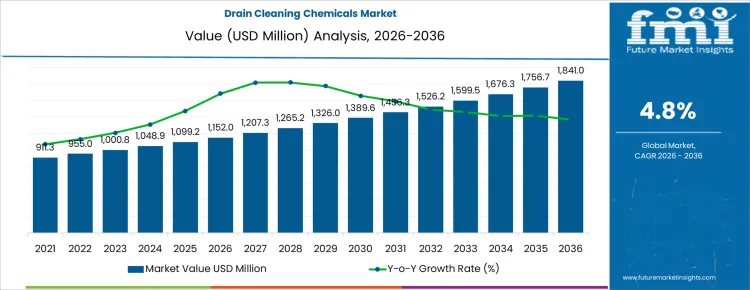
The Drain Cleaning Chemicals market is anticipated to grow from USD 1,152 million in 2026 to USD 1,841 million by 2036, reflecting a CAGR of 4.8%. Early growth is largely fueled by caustic alkaline cleaners, which account for over one-third of market share, primarily used in residential clog removal. Oxidizing and acidic formulations support commercial, hospitality, and industrial segments, with liquid, gel, and granular formats enabling targeted applications for grease, food waste, and preventive maintenance.
From 2030 onward, enzymatic and bio-based chemistries increasingly drive adoption, addressing hair, soap scum, and eco-conscious municipal requirements. Foaming and aerosol delivery formats expand market reach in industrial and commercial settings. Residential and hospitality demand remains strong, while institutional and municipal contracts push volume growth. Technological improvements in product safety, user-friendliness, and biodegradable formulations sustain steady expansion, supporting broad-based market penetration across North America, Europe, and Asia through 2036.
Quick Stats of the Drain Cleaning Chemicals Market:
- Drain Cleaning Chemicals Market Value (2026): USD 1,152 million
- Drain Cleaning Chemicals Market Forecast Value (2036): USD 1,841 million
- Drain Cleaning Chemicals Market Forecast CAGR (2026–2036): 4.8%
- Leading Chemistry in the Market: Caustic (Alkaline) Cleaners (36%)
- Key Growth Regions in the Market: China, Brazil, USA, UK, Germany
- Top Players in the Market: SC Johnson, Clorox, Reckitt, Church & Dwight, Ecolab, Zep, Spartan Chemical, Solenis (Diversey), Oatey Co., 3M
What is the Growth Forecast for the Drain Cleaning Chemicals Market through 2036?
From 2026 to 2031, the drain cleaning chemicals market grows from USD 1,152 million to approximately USD 1,456 million, reflecting the early-stage year-on-year growth phase. Annual value additions increase from USD 52 million in 2026 to USD 67 million in 2031, driven by demand in residential, commercial, and industrial cleaning operations. Growth is concentrated in North America and Europe, where regulatory compliance, hygiene standards, and infrastructure maintenance programs support adoption. Early uptake is focused on high-traffic commercial facilities, urban residential complexes, and foodservice operations, with incremental expansion in emerging regions.
Between 2031 and 2036, the market expands from roughly USD 1,456 million to USD 1,841 million, representing the late-stage year-on-year growth phase. Annual increments rise steadily to USD 89 million by 2036, supported by multi-site rollouts, repeat procurement, and broader adoption in industrial, institutional, and mass-market residential applications. Growth is reinforced by regulatory enforcement, rising awareness of hygiene and maintenance standards, and integration into facility management programs. Early growth relied on selective adoption, while later expansion reflects structural normalization and portfolio-wide deployment across global drain maintenance and sanitation programs.
Drain Cleaning Chemicals Market Key Takeaways
| Metric | Value |
|---|---|
| Market Value (2026) | USD 1,152 million |
| Forecast Value (2036) | USD 1,841 million |
| Forecast CAGR (2026–2036) | 4.8% |
Why Is Demand for Drain Cleaning Chemicals Evolving Across Facilities and Households?
Early demand for drain cleaning chemicals arose from persistent blockages caused by accumulated hair, grease, soap scum, and organic debris in residential and commercial plumbing. Traditional mechanical methods such as plungers and snakes often temporarily cleared obstructions but failed to address the root causes within pipe linings. Chemical drain cleaners based on strong alkalis or oxidisers dissolved or dislodged organic matter more effectively, reducing repeat stoppages in kitchens, bathrooms, and service drains. Historical demand tracked plumbing design limitations, rapid soil buildup in high-use locations, and absence of routine preventive maintenance practices. Use was reactive and situational, driven by immediate performance failure rather than formal sanitation planning or regulated specifications.
Future demand for drain cleaning chemicals will be shaped by a combination of environmental guidelines, material compatibility standards, and preventative maintenance frameworks rather than simple reactive blockage removal. Regulations in many regions are tightening on corrosive ingredients and effluent impact, prompting formulators to develop chemistries that balance cleaning power with pipe material preservation and wastewater treatment compatibility. Users are increasingly specifying products tested for effectiveness against a range of common obstructions while minimising acidic or caustic exposure to plumbing systems and septic infrastructure.
What Factors Are Affecting the Demand for Drain Cleaning Chemicals Market in Terms of Chemistry and Product Format?
Demand for drain cleaning chemicals is segmented by chemistry and product format across residential, commercial, and institutional maintenance uses. Caustic alkaline cleaners account for about 36% of total demand, making them the leading chemistry. Oxidizing formulations, acidic cleaners, and enzymatic or bio based products represent additional chemistries without disclosed share splits. These chemistries differ in reaction speed, material compatibility, and effectiveness against grease, hair, and scale. Product format segmentation reflects application control and user preference. Liquid formats account for about 32% of demand, followed by gels, granular or powder products, foaming or aerosol formats, and other formats. Together, these segments explain demand formation shaped by blockage severity, safety considerations, and ease of application rather than drain cleaning frequency alone.
What Drives Demand by Chemistry in the Drain Cleaning Chemicals Market?
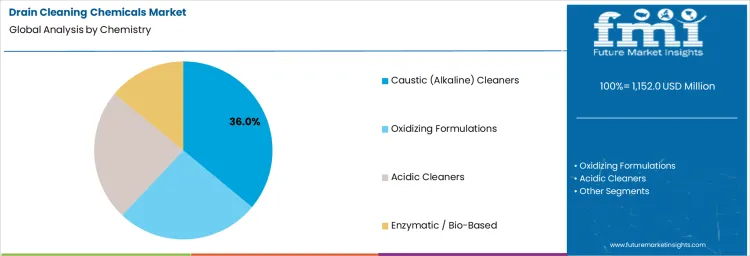
Caustic alkaline cleaners lead demand with a 36% share due to rapid dissolution of grease and organic blockages. These products generate heat and saponify fats, making them effective in heavily clogged drains. Oxidizing formulations are applied to break down organic matter and control odors. Acidic cleaners are used to dissolve mineral scale and soap buildup in specific conditions. Enzymatic and bio based products rely on biological action for gradual maintenance cleaning. Chemistry selection reflects immediacy of blockage removal and pipe material tolerance. Demand therefore aligns with functional effectiveness and response time rather than chemistry complexity.
Chemistry driven demand remains stable because users select products based on recurring blockage types. Caustic systems are embedded in emergency and maintenance routines. Oxidizing and acidic products are applied selectively. Enzymatic cleaners support preventive programs. These patterns limit rapid substitution across chemistries. Chemistry segmentation therefore highlights reliance on proven blockage removal mechanisms rather than short term shifts in consumer preference.
How Does Product Format Shape Demand for Drain Cleaning Chemicals Market?
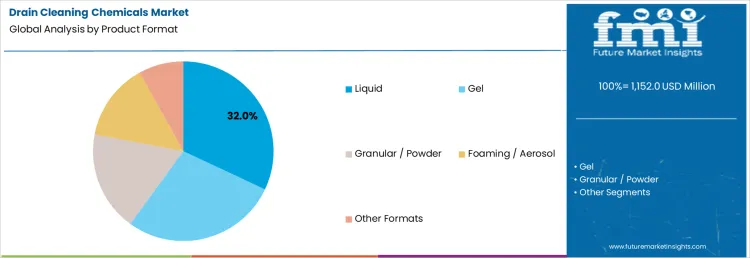
Liquid formats account for about 32% of total demand, making them the leading product format. Their dominance reflects ease of pouring, rapid dispersion, and compatibility with most drain configurations. Gel formats provide cling on vertical surfaces and slower release action. Granular and powder products are used where controlled dosing and shelf stability are required. Foaming and aerosol formats improve contact in complex pipe geometries. Other formats address niche applications. Format selection depends on ease of use, safety, and blockage location. Demand follows application practicality rather than chemistry strength alone.
Liquid products maintain leadership due to convenience and familiarity. Gels remain relevant for stubborn clogs. Granular formats persist in value oriented applications. Foaming systems remain specialized. Users avoid frequent format changes due to safety training and handling concerns. This stabilizes demand distribution. Product format segmentation therefore reinforces concentration in liquid drain cleaning solutions.
How Are Drain Cleaning Chemicals Being Applied Across Residential, Commercial, and Industrial Settings?
Use appears in environments where pipe blockages from grease, hair, food waste, and organic matter require rapid removal. Restaurants, hotels, and food processing facilities adopt chemical drain cleaners to maintain operational flow and prevent sanitary issues. Residential users apply them to sinks, showers, and toilets for clog prevention and odor control. Industrial facilities rely on specialized formulations for large diameter pipes and grease traps. These applications reflect operational and hygiene priorities rather than aesthetic or promotional objectives, with adoption driven by blockage removal efficiency, safety, and ease of use.
What Operational and Material Conditions Support Adoption of Drain Cleaning Chemicals?
Selection aligns with pipe materials, blockage type, and chemical compatibility. Acidic, alkaline, or enzyme-based formulations are tailored to dissolve hair, grease, or organic debris without damaging PVC, metal, or composite piping. Maintenance teams require fast-acting, safe-to-handle products that minimize downtime and protect personnel. Facilities prioritize chemicals compliant with local regulations on wastewater discharge and environmental impact. These conditions emerge from operational reliability, pipe integrity, and safety priorities within structured cleaning and maintenance workflows.
Which Practical Considerations Limit Wider Use of Drain Cleaning Chemicals?
Overuse or incorrect application can corrode pipes or fittings. Compatibility with existing plumbing and septic systems must be verified. Worker safety and protective equipment are essential for concentrated chemicals. Some blockages may require mechanical removal or specialized equipment. Regulatory restrictions on certain chemical classes can limit formulation options. These factors result in selective deployment where rapid blockage removal, operational continuity, and compliance justify careful chemical selection and handling protocols.
What is the Demand for Drain Cleaning Chemicals by Country?
| Country | CAGR (%) |
|---|---|
| USA | 4.6% |
| Germany | 3.9% |
| China | 6.0% |
| UK | 4.1% |
| Brazil | 5.8% |
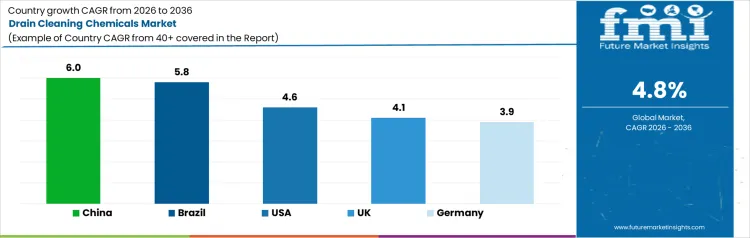
The demand for drain cleaning chemicals varies across countries, driven by residential and commercial plumbing maintenance, urban infrastructure, and industrial cleaning needs. China leads with a 6.0% CAGR, supported by rapid urbanization, expanding commercial properties, and increased adoption of chemical drain maintenance solutions. Brazil follows at 5.8%, driven by growing residential and industrial sectors requiring effective drain cleaning. The USA grows at 4.6%, reflecting steady demand in commercial and household applications. Germany records 3.9%, shaped by mature infrastructure and stable adoption. The UK posts 4.1%, supported by consistent residential and commercial maintenance requirements and hygiene standards.
How Is Drain Maintenance Driving Growth in the United States?
In the United States, revenue from the Drain Cleaning Chemicals Market is expanding at a CAGR of 4.6% through 2036, driven by adoption of chemical formulations designed to remove clogs, grease, hair, and organic residues from residential, commercial, and industrial drainage systems. Manufacturers are integrating drain cleaners in households, commercial kitchens, industrial facilities, and municipal applications. Demand is concentrated in plumbing services, foodservice, and industrial maintenance. Domestic suppliers provide high-performance chemicals compatible with PVC, metal, and composite piping. Hygiene standards, regulatory compliance, and recurring maintenance schedules are sustaining predictable procurement nationwide.
- Residential, commercial, and industrial drainage systems drive chemical adoption
- Additives remove clogs, grease, hair, and organic residues
- Domestic suppliers provide pipe-compatible, high-performance chemicals
- Recurring maintenance schedules sustain predictable procurement
How Are Sanitation and Infrastructure Standards Supporting Growth in Germany?
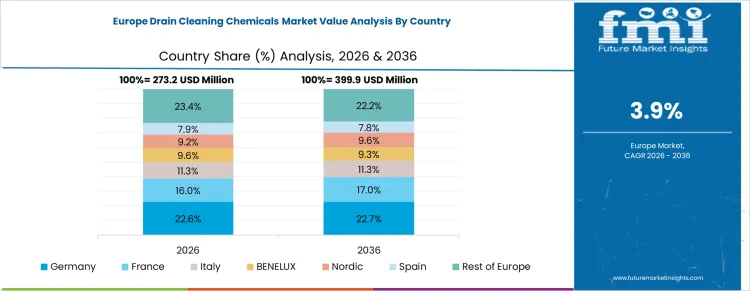
Germany continues to record steady growth in the Drain Cleaning Chemicals Market at a CAGR of 3.9% through 2036, supported by plumbing, hygiene, and industrial maintenance standards. Manufacturers are integrating chemical cleaners in household, commercial, and industrial drain systems to prevent blockages and maintain operational efficiency. Demand is concentrated in foodservice, municipal, and industrial applications. Domestic suppliers provide additives compatible with diverse piping materials and safe for repeated use. Compliance with infrastructure and sanitation standards, along with recurring maintenance cycles, is sustaining measured adoption nationwide.
- Household, commercial, and industrial drains anchor demand
- Chemicals prevent blockages and maintain operational efficiency
- Domestic suppliers provide pipe-compatible, safe additives
- Recurring maintenance cycles sustain steady adoption
How Is Industrial and Commercial Expansion Accelerating Adoption in China?
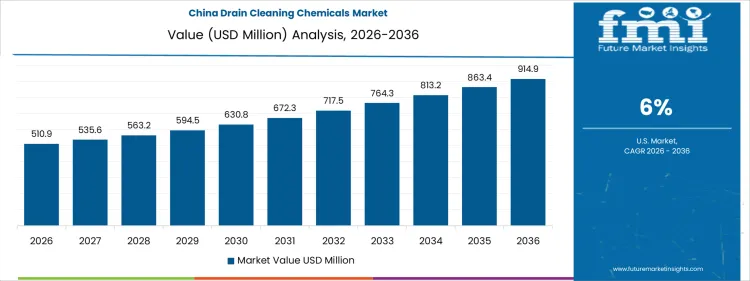
In China, revenue from the Drain Cleaning Chemicals Market is growing at a CAGR of 6.0% through 2036, driven by rapid growth in urban infrastructure, commercial kitchens, and industrial facilities. Manufacturers are adopting drain cleaning chemicals to efficiently remove grease, hair, and organic matter while ensuring proper drainage. Demand is strong across restaurants, hotels, industrial kitchens, and municipal systems. Domestic suppliers are scaling production of high-performance chemicals compatible with metal, PVC, and composite piping. High maintenance volumes and structured cleaning programs are sustaining rapid adoption nationwide.
- Restaurants, hotels, industrial kitchens, and municipal systems drive adoption
- Chemicals remove grease, hair, and organic matter
- Domestic suppliers scale high-performance, pipe-compatible chemicals
- Structured cleaning programs sustain consistent adoption
How Is Commercial Hygiene Supporting Growth in the United Kingdom?
In the United Kingdom, revenue from the Drain Cleaning Chemicals Market is expanding at a CAGR of 4.1% through 2036, supported by hygiene regulations and growing commercial and industrial facilities. Manufacturers are integrating chemical drain cleaners to remove blockages, maintain flow, and prevent odors in kitchens, hospitals, and industrial operations. Demand is concentrated in commercial kitchens, institutional facilities, and municipal plumbing systems. Domestic suppliers provide high-quality, pipe-compatible formulations suitable for repeated use. Recurring maintenance schedules, hygiene compliance, and infrastructure standards are sustaining predictable procurement nationwide.
- Commercial kitchens, institutional facilities, and municipal plumbing anchor demand
- Chemicals remove blockages, maintain flow, and prevent odors
- Domestic suppliers provide pipe-compatible, high-quality formulations
- Recurring maintenance schedules sustain predictable procurement
How Is Industrial and Foodservice Infrastructure Supporting Adoption in Brazil?
Brazil is seeing strong growth in the Drain Cleaning Chemicals Market at a CAGR of 5.8% through 2036, supported by expansion of commercial kitchens, industrial facilities, and municipal infrastructure. Manufacturers are adopting chemical cleaners to remove grease, hair, and organic blockages efficiently while maintaining proper drainage. Demand is concentrated in restaurants, hotels, hospitals, and industrial operations. Domestic suppliers are expanding production of high-performance, pipe-compatible chemicals suitable for repeated use. Growth in infrastructure, recurring maintenance cycles, and hygiene compliance are sustaining robust procurement nationwide.
- Restaurants, hotels, hospitals, and industrial facilities drive chemical adoption
- Chemicals remove grease, hair, and blockages efficiently
- Domestic suppliers expand high-performance, pipe-compatible formulations
- Recurring maintenance cycles sustain robust procurement
Which Companies Compete in The Drain Cleaning Chemicals Market Based On Usage Context and Risk Management Requirements?
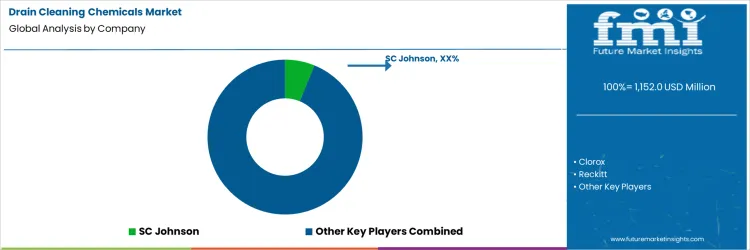
Drain cleaning chemicals are selected according to blockage severity, safety constraints, and the setting in which they are applied. In consumer and light commercial use, SC Johnson, Clorox, Reckitt, and Church and Dwight supply formulations intended for episodic treatment of kitchen and bathroom drains, where ease of use and controlled reactivity are priorities. These products are designed to address grease, hair, and organic buildup while limiting exposure risks for non-professional users. Performance acceptance is shaped by speed of action, compatibility with household plumbing materials, and clear usage instructions. Brand selection in this segment reflects trust, availability, and regulatory compliance rather than technical differentiation.
Professional and industrial environments follow a different competitive logic. Ecolab and Solenis, through the Diversey platform, position drain cleaners within broader hygiene and maintenance programs used in foodservice, hospitality, and institutional facilities. Zep and Spartan Chemical maintain relevance through distributor led solutions tailored to grease traps, floor drains, and high load systems. Oatey Co. supports plumbing focused applications through chemical and mechanical drain maintenance products aligned with contractor practices. 3M participates selectively through specialty maintenance solutions rather than core drain cleaning volume. Competitive positioning depends on safety protocols, training support, and reliability under repeated use rather than product aggressiveness alone.
Key Players in the Drain Cleaning Chemicals Market
- SC Johnson
- Clorox
- Reckitt
- Church & Dwight
- Ecolab
- Zep
- Spartan Chemical
- Solenis (Diversey)
- Oatey Co.
- 3M
Scope of the Report
| Items | Values |
|---|---|
| Quantitative Units (2026) | USD million |
| Chemistry | Caustic (Alkaline) Cleaners, Oxidizing Formulations, Acidic Cleaners, Enzymatic / Bio-Based |
| Product Format | Liquid, Gel, Granular / Powder, Foaming / Aerosol, Other Formats |
| Use Case | Clog Removal, Preventive Maintenance, Grease & Food Waste, Hair / Soap Scum |
| End-Use | Residential, Commercial Buildings, Hospitality, Industrial / Municipal |
| Region | Asia Pacific (China, Japan, South Korea, India, Australia & New Zealand, ASEAN, Rest of Asia Pacific), Europe (Germany, United Kingdom, France, Italy, Spain, Nordic, BENELUX, Rest of Europe), North America (United States, Canada, Mexico), Latin America (Brazil, Chile, Rest of Latin America), Middle East & Africa (KSA, Other GCC Countries, Turkey, South Africa, Other African Union, Rest of Middle East & Africa) |
| Key Companies Profiled | SC Johnson, Clorox, Reckitt, Church & Dwight, Ecolab, Zep, Spartan Chemical, Solenis (Diversey), Oatey Co., 3M |
| Additional Attributes | Dollar by sales product format and use case, adoption by chemistry and product format, use case segmentation, end-user deployment, regional penetration, safety and handling considerations, integration into facility maintenance programs, regulatory compliance, repeat procurement trends, structural adoption in commercial and municipal systems |
Drain Cleaning Chemicals Market Segmentation
Chemistry:
- Caustic (Alkaline) Cleaners
- Oxidizing Formulations
- Acidic Cleaners
- Enzymatic / Bio-Based
Product Format:
- Liquid
- Gel
- Granular / Powder
- Foaming / Aerosol
- Other Formats
Use Case:
- Clog Removal
- Preventive Maintenance
- Grease & Food Waste
- Hair / Soap Scum
End-Use:
- Residential
- Commercial Buildings
- Hospitality
- Industrial / Municipal
Region
- Asia Pacific
- China
- Japan
- South Korea
- India
- Australia & New Zealand
- ASEAN
- Rest of Asia Pacific
- Europe
- Germany
- United Kingdom
- France
- Italy
- Spain
- Nordic
- BENELUX
- Rest of Europe
- North America
- United States
- Canada
- Mexico
- Latin America
- Brazil
- Chile
- Rest of Latin America
- Middle East & Africa
- Kingdom of Saudi Arabia
- Other GCC Countries
- Turkey
- South Africa
- Other African Union
- Rest of Middle East & Africa
Frequently Asked Questions
How big is the drain cleaning chemicals market in 2026?
The global drain cleaning chemicals market is estimated to be valued at USD 1,152.0 million in 2026.
What will be the size of drain cleaning chemicals market in 2036?
The market size for the drain cleaning chemicals market is projected to reach USD 1,841.0 million by 2036.
How much will be the drain cleaning chemicals market growth between 2026 and 2036?
The drain cleaning chemicals market is expected to grow at a 4.8% CAGR between 2026 and 2036.
What are the key product types in the drain cleaning chemicals market?
The key product types in drain cleaning chemicals market are caustic (alkaline) cleaners, oxidizing formulations, acidic cleaners and enzymatic / bio-based.
Which product format segment to contribute significant share in the drain cleaning chemicals market in 2026?
In terms of product format, liquid segment to command 32.0% share in the drain cleaning chemicals market in 2026.
Preview the report firsthand - request a free sample
Get SampleGet the brochure for pricing and purchase details.
Get PDFTable of Content
- Executive Summary
- Global Market Outlook
- Demand-side Trends
- Supply-side Trends
- Technology Roadmap Analysis
- Analysis and Recommendations
- Market Overview
- Market Coverage / Taxonomy
- Market Definition / Scope / Limitations
- Market Background
- Market Dynamics
- Drivers
- Restraints
- Opportunity
- Trends
- Scenario Forecast
- Demand in Optimistic Scenario
- Demand in Likely Scenario
- Demand in Conservative Scenario
- Opportunity Map Analysis
- Product Life Cycle Analysis
- Supply Chain Analysis
- Investment Feasibility Matrix
- Value Chain Analysis
- PESTLE and Porter’s Analysis
- Regulatory Landscape
- Regional Parent Market Outlook
- Production and Consumption Statistics
- Import and Export Statistics
- Market Dynamics
- Global Market Analysis 2021 to 2025 and Forecast, 2026 to 2036
- Historical Market Size Value (USD Million) Analysis, 2021 to 2025
- Current and Future Market Size Value (USD Million) Projections, 2026 to 2036
- Y-o-Y Growth Trend Analysis
- Absolute $ Opportunity Analysis
- Global Market Pricing Analysis 2021 to 2025 and Forecast 2026 to 2036
- Global Market Analysis 2021 to 2025 and Forecast 2026 to 2036, By Chemistry
- Introduction / Key Findings
- Historical Market Size Value (USD Million) Analysis By Chemistry , 2021 to 2025
- Current and Future Market Size Value (USD Million) Analysis and Forecast By Chemistry , 2026 to 2036
- Caustic (Alkaline) Cleaners
- Oxidizing Formulations
- Acidic Cleaners
- Enzymatic / Bio-Based
- Y-o-Y Growth Trend Analysis By Chemistry , 2021 to 2025
- Absolute $ Opportunity Analysis By Chemistry , 2026 to 2036
- Global Market Analysis 2021 to 2025 and Forecast 2026 to 2036, By Product Format
- Introduction / Key Findings
- Historical Market Size Value (USD Million) Analysis By Product Format, 2021 to 2025
- Current and Future Market Size Value (USD Million) Analysis and Forecast By Product Format, 2026 to 2036
- Liquid
- Gel
- Granular / Powder
- Foaming / Aerosol
- Other Formats
- Y-o-Y Growth Trend Analysis By Product Format, 2021 to 2025
- Absolute $ Opportunity Analysis By Product Format, 2026 to 2036
- Global Market Analysis 2021 to 2025 and Forecast 2026 to 2036, By Use Case
- Introduction / Key Findings
- Historical Market Size Value (USD Million) Analysis By Use Case, 2021 to 2025
- Current and Future Market Size Value (USD Million) Analysis and Forecast By Use Case, 2026 to 2036
- Clog Removal
- Preventive Maintenance
- Grease & Food Waste
- Hair / Soap Scum
- Y-o-Y Growth Trend Analysis By Use Case, 2021 to 2025
- Absolute $ Opportunity Analysis By Use Case, 2026 to 2036
- Global Market Analysis 2021 to 2025 and Forecast 2026 to 2036, By End-Use
- Introduction / Key Findings
- Historical Market Size Value (USD Million) Analysis By End-Use, 2021 to 2025
- Current and Future Market Size Value (USD Million) Analysis and Forecast By End-Use, 2026 to 2036
- Residential
- Commercial Buildings
- Hospitality
- Industrial / Municipal
- Y-o-Y Growth Trend Analysis By End-Use, 2021 to 2025
- Absolute $ Opportunity Analysis By End-Use, 2026 to 2036
- Global Market Analysis 2021 to 2025 and Forecast 2026 to 2036, By Region
- Introduction
- Historical Market Size Value (USD Million) Analysis By Region, 2021 to 2025
- Current Market Size Value (USD Million) Analysis and Forecast By Region, 2026 to 2036
- North America
- Latin America
- Western Europe
- Eastern Europe
- East Asia
- South Asia and Pacific
- Middle East & Africa
- Market Attractiveness Analysis By Region
- North America Market Analysis 2021 to 2025 and Forecast 2026 to 2036, By Country
- Historical Market Size Value (USD Million) Trend Analysis By Market Taxonomy, 2021 to 2025
- Market Size Value (USD Million) Forecast By Market Taxonomy, 2026 to 2036
- By Country
- USA
- Canada
- Mexico
- By Chemistry
- By Product Format
- By Use Case
- By End-Use
- By Country
- Market Attractiveness Analysis
- By Country
- By Chemistry
- By Product Format
- By Use Case
- By End-Use
- Key Takeaways
- Latin America Market Analysis 2021 to 2025 and Forecast 2026 to 2036, By Country
- Historical Market Size Value (USD Million) Trend Analysis By Market Taxonomy, 2021 to 2025
- Market Size Value (USD Million) Forecast By Market Taxonomy, 2026 to 2036
- By Country
- Brazil
- Chile
- Rest of Latin America
- By Chemistry
- By Product Format
- By Use Case
- By End-Use
- By Country
- Market Attractiveness Analysis
- By Country
- By Chemistry
- By Product Format
- By Use Case
- By End-Use
- Key Takeaways
- Western Europe Market Analysis 2021 to 2025 and Forecast 2026 to 2036, By Country
- Historical Market Size Value (USD Million) Trend Analysis By Market Taxonomy, 2021 to 2025
- Market Size Value (USD Million) Forecast By Market Taxonomy, 2026 to 2036
- By Country
- Germany
- UK
- Italy
- Spain
- France
- Nordic
- BENELUX
- Rest of Western Europe
- By Chemistry
- By Product Format
- By Use Case
- By End-Use
- By Country
- Market Attractiveness Analysis
- By Country
- By Chemistry
- By Product Format
- By Use Case
- By End-Use
- Key Takeaways
- Eastern Europe Market Analysis 2021 to 2025 and Forecast 2026 to 2036, By Country
- Historical Market Size Value (USD Million) Trend Analysis By Market Taxonomy, 2021 to 2025
- Market Size Value (USD Million) Forecast By Market Taxonomy, 2026 to 2036
- By Country
- Russia
- Poland
- Hungary
- Balkan & Baltic
- Rest of Eastern Europe
- By Chemistry
- By Product Format
- By Use Case
- By End-Use
- By Country
- Market Attractiveness Analysis
- By Country
- By Chemistry
- By Product Format
- By Use Case
- By End-Use
- Key Takeaways
- East Asia Market Analysis 2021 to 2025 and Forecast 2026 to 2036, By Country
- Historical Market Size Value (USD Million) Trend Analysis By Market Taxonomy, 2021 to 2025
- Market Size Value (USD Million) Forecast By Market Taxonomy, 2026 to 2036
- By Country
- China
- Japan
- South Korea
- By Chemistry
- By Product Format
- By Use Case
- By End-Use
- By Country
- Market Attractiveness Analysis
- By Country
- By Chemistry
- By Product Format
- By Use Case
- By End-Use
- Key Takeaways
- South Asia and Pacific Market Analysis 2021 to 2025 and Forecast 2026 to 2036, By Country
- Historical Market Size Value (USD Million) Trend Analysis By Market Taxonomy, 2021 to 2025
- Market Size Value (USD Million) Forecast By Market Taxonomy, 2026 to 2036
- By Country
- India
- ASEAN
- Australia & New Zealand
- Rest of South Asia and Pacific
- By Chemistry
- By Product Format
- By Use Case
- By End-Use
- By Country
- Market Attractiveness Analysis
- By Country
- By Chemistry
- By Product Format
- By Use Case
- By End-Use
- Key Takeaways
- Middle East & Africa Market Analysis 2021 to 2025 and Forecast 2026 to 2036, By Country
- Historical Market Size Value (USD Million) Trend Analysis By Market Taxonomy, 2021 to 2025
- Market Size Value (USD Million) Forecast By Market Taxonomy, 2026 to 2036
- By Country
- Kingdom of Saudi Arabia
- Other GCC Countries
- Turkiye
- South Africa
- Other African Union
- Rest of Middle East & Africa
- By Chemistry
- By Product Format
- By Use Case
- By End-Use
- By Country
- Market Attractiveness Analysis
- By Country
- By Chemistry
- By Product Format
- By Use Case
- By End-Use
- Key Takeaways
- Key Countries Market Analysis
- USA
- Pricing Analysis
- Market Share Analysis, 2025
- By Chemistry
- By Product Format
- By Use Case
- By End-Use
- Canada
- Pricing Analysis
- Market Share Analysis, 2025
- By Chemistry
- By Product Format
- By Use Case
- By End-Use
- Mexico
- Pricing Analysis
- Market Share Analysis, 2025
- By Chemistry
- By Product Format
- By Use Case
- By End-Use
- Brazil
- Pricing Analysis
- Market Share Analysis, 2025
- By Chemistry
- By Product Format
- By Use Case
- By End-Use
- Chile
- Pricing Analysis
- Market Share Analysis, 2025
- By Chemistry
- By Product Format
- By Use Case
- By End-Use
- Germany
- Pricing Analysis
- Market Share Analysis, 2025
- By Chemistry
- By Product Format
- By Use Case
- By End-Use
- UK
- Pricing Analysis
- Market Share Analysis, 2025
- By Chemistry
- By Product Format
- By Use Case
- By End-Use
- Italy
- Pricing Analysis
- Market Share Analysis, 2025
- By Chemistry
- By Product Format
- By Use Case
- By End-Use
- Spain
- Pricing Analysis
- Market Share Analysis, 2025
- By Chemistry
- By Product Format
- By Use Case
- By End-Use
- France
- Pricing Analysis
- Market Share Analysis, 2025
- By Chemistry
- By Product Format
- By Use Case
- By End-Use
- India
- Pricing Analysis
- Market Share Analysis, 2025
- By Chemistry
- By Product Format
- By Use Case
- By End-Use
- ASEAN
- Pricing Analysis
- Market Share Analysis, 2025
- By Chemistry
- By Product Format
- By Use Case
- By End-Use
- Australia & New Zealand
- Pricing Analysis
- Market Share Analysis, 2025
- By Chemistry
- By Product Format
- By Use Case
- By End-Use
- China
- Pricing Analysis
- Market Share Analysis, 2025
- By Chemistry
- By Product Format
- By Use Case
- By End-Use
- Japan
- Pricing Analysis
- Market Share Analysis, 2025
- By Chemistry
- By Product Format
- By Use Case
- By End-Use
- South Korea
- Pricing Analysis
- Market Share Analysis, 2025
- By Chemistry
- By Product Format
- By Use Case
- By End-Use
- Russia
- Pricing Analysis
- Market Share Analysis, 2025
- By Chemistry
- By Product Format
- By Use Case
- By End-Use
- Poland
- Pricing Analysis
- Market Share Analysis, 2025
- By Chemistry
- By Product Format
- By Use Case
- By End-Use
- Hungary
- Pricing Analysis
- Market Share Analysis, 2025
- By Chemistry
- By Product Format
- By Use Case
- By End-Use
- Kingdom of Saudi Arabia
- Pricing Analysis
- Market Share Analysis, 2025
- By Chemistry
- By Product Format
- By Use Case
- By End-Use
- Turkiye
- Pricing Analysis
- Market Share Analysis, 2025
- By Chemistry
- By Product Format
- By Use Case
- By End-Use
- South Africa
- Pricing Analysis
- Market Share Analysis, 2025
- By Chemistry
- By Product Format
- By Use Case
- By End-Use
- USA
- Market Structure Analysis
- Competition Dashboard
- Competition Benchmarking
- Market Share Analysis of Top Players
- By Regional
- By Chemistry
- By Product Format
- By Use Case
- By End-Use
- Competition Analysis
- Competition Deep Dive
- SC Johnson
- Overview
- Product Portfolio
- Profitability by Market Segments (Product/Age /Sales Channel/Region)
- Sales Footprint
- Strategy Overview
- Marketing Strategy
- Product Strategy
- Channel Strategy
- Clorox
- Reckitt
- Church & Dwight
- Ecolab
- Zep
- Spartan Chemical
- Solenis (Diversey)
- Oatey Co.
- 3M
- SC Johnson
- Competition Deep Dive
- Assumptions & Acronyms Used
- Research Methodology


