

- Industry Size (2026)
- USD 3.6 Bn
- Forecast (2036)
- USD 6.0 Bn
- CAGR (2026 to 2036)
- 5.20%
Edema Management Devices Market Forecast and Outlook 2026 to 2036
The edema management devices market is valued at USD 3.6 billion in 2026 and is projected to reach USD 6.0 billion by 2036, reflecting a CAGR of 5.20%. Regulatory oversight plays a critical role in shaping the market dynamics, as devices must meet strict safety and efficacy standards before reaching consumers. Compliance costs are often high, with manufacturers required to invest in research, testing, and certification processes to meet regional healthcare regulations.
These factors impact the pace at which new technologies are adopted, with longer approval timelines potentially delaying market penetration. The complexity of certifications also influences vendor positioning, as companies with established regulatory expertise and robust clinical evidence are often better positioned to secure market share. Ongoing regulatory updates can force continuous investment in compliance, which may create barriers for smaller players, leading to a concentration of market leadership among well-capitalized firms.
Quick Stats for Edema Management Devices Market
- Edema Management Devices Market Value (2026): USD 3.6 Billion
- Edema Management Devices Market Forecast Value (2036): USD 6.0 Billion
- Edema Management Devices Market Forecast CAGR 2026 to 2036: 5.20%
- Leading Product Type in Edema Management Devices Market: Compression Garments
- Leading Application in Edema Management Devices Market: Lymphedema
- Key Growth Regions in Edema Management Devices Market: North America, Asia Pacific, Europe
- Top Key Players in Edema Management Devices Market: Tactile Medical, Essity, 3M, BSN Medical, Lohmann & Rauscher
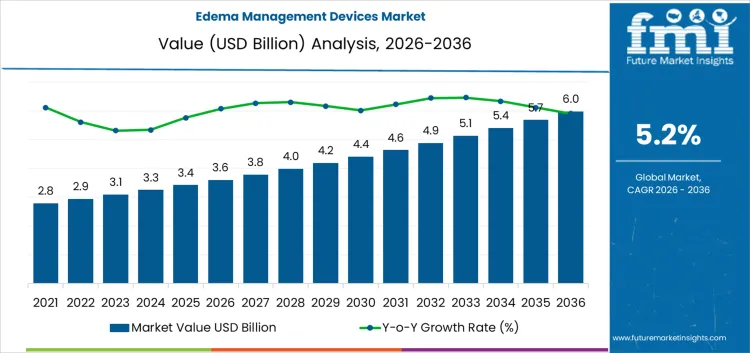
Edema Management Devices Market Key Takeaways
| Metric | Value |
|---|---|
| Edema Management Devices Market Value (2026) | USD 3.6 Billion |
| Edema Management Devices Market Forecast Value (2036) | USD 6.0 Billion |
| Edema Management Devices Market Forecast CAGR 2026 to 2036 | 5.20% |
Why Is the Edema Management Devices Market Growing?
The edema management devices market is growing due to the increasing prevalence of conditions such as heart failure, kidney disease, and diabetes, which often result in edema (fluid retention). As the global population ages, the demand for effective treatments to manage edema-related complications is rising. Edema management devices, including compression therapy devices, pneumatic pumps, and wearable devices, help alleviate symptoms by promoting fluid movement and reducing swelling, making them essential for patients seeking long-term relief.
Technological advancements in the development of more effective and comfortable edema management devices are driving growth in the edema management devices market. Innovations in wearable technology, including smart devices that monitor fluid levels and provide real-time feedback, are improving patient compliance and treatment outcomes. These advancements make it easier for patients to manage their condition independently, which is encouraging the adoption of edema management devices.
Increasing awareness of the risks associated with untreated edema and the benefits of timely management is also contributing to the market’s expansion. Healthcare professionals are more frequently recommending these devices as part of comprehensive treatment plans, enhancing their role in both hospital and home care settings. With ongoing improvements in product efficacy and patient convenience, the edema management devices market is expected to continue growing at a steady pace over the forecast period.
What Does The Segment Overview Indicate About The Edema Management Devices Market?
The edema management devices market is segmented by product type and application, reflecting the range of therapeutic tools used to manage fluid retention and reduce swelling. Compression garments lead the product segment with 34% share, offering consistent pressure to improve circulation and lymphatic drainage. Other devices, including pneumatic compression, manual lymphatic drainage, and negative pressure systems, serve more targeted therapeutic needs. On the application side, lymphedema accounts for 42% share, as edema management is critical for this condition, especially post-surgery and in chronic cases. Chronic venous insufficiency, post-surgical edema, and other applications also show growing demand for effective edema treatment solutions.
Why Do Compression Garments Hold The Leading Product Share In The Edema Management Devices Market?
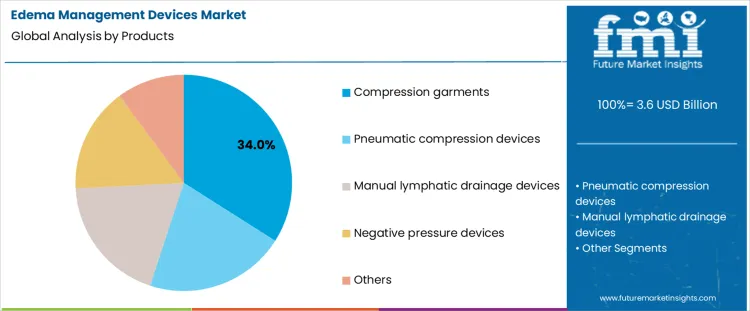
Compression garments hold the largest 34% share in the edema management devices market due to their non-invasive, effective treatment for conditions like lymphedema and chronic venous insufficiency. These garments apply consistent, controlled pressure to affected areas, improving blood circulation and reducing fluid accumulation. They are commonly used in both inpatient and outpatient settings, as they provide a simple and comfortable solution for edema management. The growing adoption of compression garments is driven by their ease of use, affordability, and proven efficacy in managing edema. As awareness of their therapeutic benefits increases, the demand for compression garments continues to grow, particularly in the management of lymphedema and post-surgical recovery.
How Does Lymphedema Drive Application Demand In The Edema Management Devices Market?
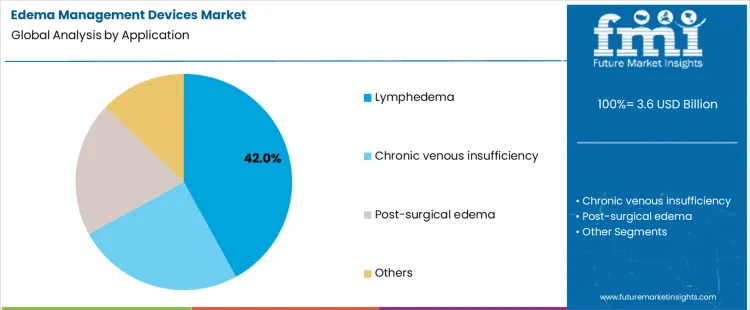
Lymphedema represents the largest application segment in the edema management devices market, accounting for 42% share, as effective edema management is critical for controlling this chronic condition. Lymphedema occurs when the lymphatic system is unable to drain lymph fluid, leading to swelling, particularly in the arms or legs. Compression garments and pneumatic compression devices are essential for managing this condition, helping to reduce swelling and improve the mobility of affected limbs. As the global prevalence of lymphedema rises due to factors such as cancer treatment and obesity, the demand for specialized edema management devices continues to grow, particularly in clinical and home care settings.
What Are the Key Dynamics for the Edema Management Devices Market?
The edema management devices market is driven by the rising prevalence of chronic conditions such as heart failure, diabetes, and chronic kidney disease, which frequently lead to edema. The shift towards home healthcare and non-invasive treatments is also contributing to the growing demand for at-home edema management devices. Technological advancements, including wearable devices and digital health integration, are improving the patient experience and increasing adoption rates. Challenges such as high device costs, patient adherence, and the need for robust clinical evidence remain obstacles to broader market acceptance. As healthcare systems evolve and patients seek more accessible solutions, the market is expected to continue expanding, particularly in regions with growing healthcare infrastructure.
What Challenges Are Hindering the Growth of the Edema Management Devices Market?
The edema management devices market faces challenges related to product affordability, patient adherence, and clinical acceptance. High-cost devices, particularly advanced pneumatic compression systems and negative pressure pumps, may not be accessible for all patients, particularly in resource-limited settings. Additionally, while many patients benefit from edema management devices, ensuring consistent usage can be difficult, as devices require regular operation and monitoring. Compliance can be an issue for long-term management of chronic conditions. Furthermore, some healthcare providers may be hesitant to adopt newer devices if they lack clinical evidence or are not part of standard treatment protocols, hindering broader market penetration.
How Are Technological Innovations Shaping the Edema Management Devices Market?
Technological advancements are significantly shaping the edema management devices market by improving device effectiveness, portability, and ease of use. Innovations in wearable devices, such as smart compression garments, allow patients to manage their condition more conveniently at home while also monitoring their progress through connected apps. Improvements in device comfort and customization, such as adjustable compression levels and better-fitting designs, are increasing patient compliance. Additionally, advancements in negative pressure wound therapy are contributing to more effective management of edema-related complications. The integration of AI and remote monitoring features is also enhancing personalized treatment plans, allowing healthcare providers to optimize care and improve patient outcomes.
What Is the Country-Wise Growth Outlook for the Edema Management Devices Market?
The edema management devices market is growing steadily as demand for innovative solutions to treat swelling, water retention, and related conditions rises. India leads with a CAGR of 7.8%, driven by increasing healthcare access, the rise of chronic conditions, and expanding awareness of advanced treatment options. China follows closely with a CAGR of 7.6%, supported by its rapidly developing healthcare infrastructure and growing prevalence of cardiovascular and kidney diseases. Brazil shows a CAGR of 7.2%, with growing demand for edema management solutions in both public and private healthcare sectors. The USA records a CAGR of 6%, with increasing adoption of home healthcare solutions and rising awareness of edema management devices. France shows a CAGR of 5.9%, benefiting from advanced healthcare systems, the growing elderly population, and the increasing adoption of medical devices for managing swelling and fluid retention.
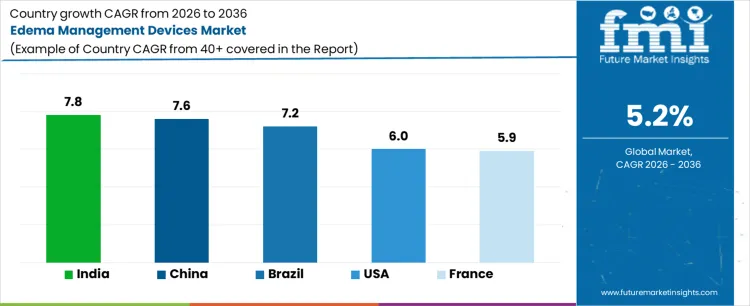
| Country | CAGR |
|---|---|
| India | 7.8% |
| China | 7.6% |
| Brazil | 7.2% |
| USA | 6% |
| France | 5.9% |
Why Is India Leading in the Edema Management Devices Market?
Demand for edema management devices in India is growing at a CAGR of 7.8%, driven by the country’s expanding healthcare infrastructure, rising chronic disease rates, and increasing awareness of advanced medical treatments. As India’s population continues to grow, so does the prevalence of conditions like heart failure, kidney disease, and diabetes, all of which contribute to edema and the need for effective management solutions. The government’s focus on improving healthcare access, particularly in rural areas, is contributing to the rising demand for medical devices, including those for edema management. Additionally, the growing adoption of home healthcare solutions in India is supporting market growth. As healthcare facilities continue to expand and more people seek at-home treatments, the demand for devices such as compression garments and pneumatic pumps is expected to rise. The increasing focus on healthcare education and patient awareness about the benefits of edema management devices further supports India’s leadership in the global market.
What Is Contributing to the Growth of the Edema Management Devices Market in China?
Sales for edema management devices in China are growing at a CAGR of 7.6%, supported by the rapid development of the country’s healthcare system, increasing disease burden, and rising demand for medical technologies. China’s aging population and the increasing incidence of chronic diseases such as cardiovascular disease, kidney failure, and diabetes are major drivers of the edema management devices market. As more patients require advanced treatment options for managing swelling and fluid retention, there is growing demand for devices that offer effective solutions. China’s government is also focusing on expanding access to healthcare services, with an emphasis on improving medical facilities and offering modern treatment options. The country’s strong manufacturing capabilities allow for the widespread availability and affordability of edema management devices, further boosting their adoption. As China continues to invest in healthcare advancements and raise awareness about chronic disease management, the market for edema management devices is expected to expand.
What Is Supporting Growth in the Edema Management Devices Market in Brazil?
Demand for edema management devices in Brazil is growing at a CAGR of 7.2%, driven by the country’s expanding healthcare sector, increasing awareness of chronic diseases, and the growing adoption of medical technologies. Brazil’s aging population and the rising prevalence of conditions such as heart disease, diabetes, and kidney disorders are contributing to the increasing need for effective edema management solutions. The country’s healthcare system is also becoming more accessible, particularly in urban areas, which is helping to drive the demand for advanced medical devices. As the healthcare system continues to modernize, the use of home healthcare devices is growing, as patients seek convenient, at-home treatments for managing fluid retention and swelling. The government’s healthcare initiatives, combined with private-sector investments in medical technology, are further contributing to market growth. As Brazil’s population continues to age and the burden of chronic diseases increases, the demand for effective edema management devices will continue to rise.
Why Is the USA a Key Market for Edema Management Devices?
Sales for edema management devices in the USA are growing at a CAGR of 6%, driven by increasing adoption of home healthcare solutions, rising awareness of chronic disease management, and advancements in medical technologies. The USA has a well-established healthcare infrastructure and a high prevalence of conditions that contribute to edema, such as heart failure, diabetes, and kidney disease. The demand for advanced medical devices for managing swelling and fluid retention is increasing, particularly as more patients seek at-home treatments to improve their quality of life. The country’s strong focus on patient-centered care and home-based therapies is further supporting the growth of the edema management devices market. The USA’s growing aging population and the increased incidence of chronic diseases ensure continued demand for medical devices that address these conditions. With significant investments in medical research and healthcare innovation, the USA is positioned as a leading market for edema management devices.
What Is Contributing to the Growth of the Edema Management Devices Market in France?
Demand for edema management devices in France is growing at a CAGR of 5.9%, supported by the country’s advanced healthcare system, aging population, and increasing awareness of the importance of managing chronic conditions. France’s focus on improving healthcare services, particularly for elderly patients with cardiovascular diseases and diabetes, is contributing to the growing demand for edema management devices. The French healthcare system has increasingly adopted advanced medical devices for managing swelling and fluid retention, particularly in hospital settings and outpatient care. As the country’s population continues to age, the demand for effective treatments for chronic conditions that cause edema is rising. France’s strong emphasis on preventive care and its growing focus on managing chronic diseases through early detection and intervention are further driving the market for edema management devices. With a high level of healthcare innovation and a strong patient care infrastructure, France continues to see steady growth in the demand for these medical devices.
What Is the Competitive Landscape for the Edema Management Devices Market?
Product depth, distribution networks, and brand recognition define competition in the edema management devices market. Tactile Medical is positioned as an innovator. Its Flexitouch system brochures are widely circulated. Specialized compression therapy solutions are highlighted. Patient comfort features are emphasized. Clinical evidence is showcased. Essity’s offerings are presented through Actimove and Comprilan collateral. Compression bandages and wraps are detailed with sizing guides and use cases. Brochures are crafted for clinicians and buyers. 3M’s DVT and edema management range is outlined in technical sheets. Emphasis is placed on material science and performance metrics. BSN Medical is represented with JOBST and Comprilan product literature. Segmentation by limb, application, and pressure class is detailed. Lohmann & Rauscher’s Rosidal and Setopress brochures underscore fabric innovation. Patient compliance features are displayed.
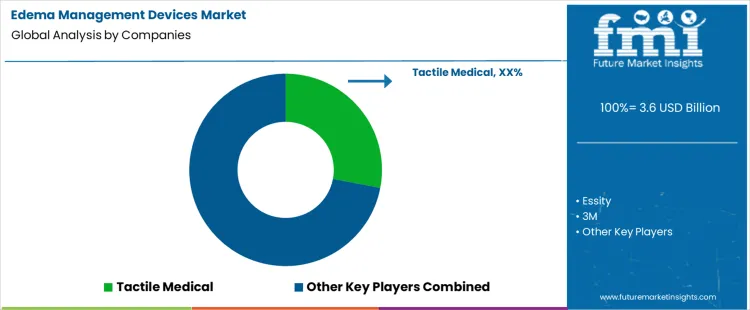
Strategic positioning is shaped by value articulation and market reach. Tactile Medical’s strategy is grounded in device-led therapy, supported by digital content and clinician education. Brochures stress ease of use. Essity’s approach is portfolio breadth. Technical brochures include bandage systems, foam, and advanced wraps. Educational inserts are included in Essity materials. 3M’s strategy is scientific credibility. Literature is technical and data-rich. BSN Medical pursues customization and fit. Patient charts and sizing guides are embedded in product sheets. Lohmann & Rauscher deploys innovation claims. High-performance textiles are featured in visuals.
Market presence is reinforced by product brochures tailored for specific audiences. Tactile Medical’s brochures are concise and benefit oriented. Essity’s materials are modular and visually structured. 3M’s literature is dense with specifications. BSN Medical’s sheets are application focused. Lohmann & Rauscher’s collateral is design driven. Information density varies. Distribution via digital catalogs and sales kits is common. Product positioning is clearly communicated in all brochures. Competitive differences are easily traced in feature lists and clinical indications. Market segmentation is reflected in collateral language and imagery.
Key Players in Edema Management Devices Market
- Tactile Medical
- Essity
- 3M
- BSN Medical
- Lohmann & Rauscher
- Others
Scope of Report
| Attributes | Description |
|---|---|
| Quantitative Unit | USD Billion |
| Base Year | 2026 |
| Forecast Period | 2026-2036 |
| Product Types | Compression garments, Pneumatic compression devices, Manual lymphatic drainage devices, Negative pressure devices |
| Applications | Lymphedema, Chronic venous insufficiency, Post-surgical edema, Others |
| Regions Covered | Asia Pacific, Europe, North America, Latin America, Middle East & Africa |
| Countries Covered | China, Japan, South Korea, India, Australia & New Zealand, ASEAN, Rest of Asia Pacific, Germany, United Kingdom, France, Italy, Spain, Nordic, BENELUX, Rest of Europe, United States, Canada, Mexico, Brazil, Chile, Rest of Latin America, Kingdom of Saudi Arabia, Other GCC Countries, Turkey, South Africa, Other African Union, Rest of Middle East & Africa |
| Key Companies Profiled | Tactile Medical, Essity, 3M, BSN Medical, Lohmann & Rauscher |
| Additional Attributes | Market revenue by product type and application; regional adoption trends; projected market size and CAGR for 2026-2036; technological advancements in edema management devices; competitive landscape with strategy and portfolio analysis of leading players; emerging applications in lymphedema, venous insufficiency, and post-surgical edema management. |
Edema Management Devices Market by Key Segments
Products
- Compression garments
- Pneumatic compression devices
- Manual lymphatic drainage devices
- Negative pressure devices
- Others
Application
- Lymphedema
- Chronic venous insufficiency
- Post-surgical edema
- Others
Region
- Asia Pacific
- China
- Japan
- South Korea
- India
- Australia & New Zealand
- ASEAN
- Rest of Asia Pacific
- Europe
- Germany
- United Kingdom
- France
- Italy
- Spain
- Nordic
- BENELUX
- Rest of Europe
- North America
- United States
- Canada
- Mexico
- Latin America
- Brazil
- Chile
- Rest of Latin America
- Middle East & Africa
- Kingdom of Saudi Arabia
- Other GCC Countries
- Turkey
- South Africa
- Other African Union
- Rest of Middle East & Africa
Bibliography
- National Institutes of Health. (2024). Compression therapy and device‑based interventions for edema and venous disorders.
- USA Food and Drug Administration. (2024). Medical device regulatory considerations for compression and pneumatic therapy systems.
- National Institute for Health and Care Excellence. (2024). Compression therapy and device use for lymphedema and chronic edema (NICE guideline NG202).
- European Medicines Agency. (2024). Medical device classification and clinical evaluation of compression and edema management devices.
Frequently Asked Questions
How big is the edema management devices market in 2026?
The global edema management devices market is estimated to be valued at USD 3.6 billion in 2026.
What will be the size of edema management devices market in 2036?
The market size for the edema management devices market is projected to reach USD 6.0 billion by 2036.
How much will be the edema management devices market growth between 2026 and 2036?
The edema management devices market is expected to grow at a 5.2% CAGR between 2026 and 2036.
What are the key product types in the edema management devices market?
The key product types in edema management devices market are compression garments, pneumatic compression devices, manual lymphatic drainage devices, negative pressure devices and others.
Which application segment to contribute significant share in the edema management devices market in 2026?
In terms of application , lymphedema segment to command 42.0% share in the edema management devices market in 2026.
Preview the report firsthand - request a free sample
Get SampleGet the brochure for pricing and purchase details.
Get PDFTable of Content
- Executive Summary
- Global Market Outlook
- Demand-side Trends
- Supply-side Trends
- Technology Roadmap Analysis
- Analysis and Recommendations
- Market Overview
- Market Coverage / Taxonomy
- Market Definition / Scope / Limitations
- Market Background
- Market Dynamics
- Drivers
- Restraints
- Opportunity
- Trends
- Scenario Forecast
- Demand in Optimistic Scenario
- Demand in Likely Scenario
- Demand in Conservative Scenario
- Opportunity Map Analysis
- Product Life Cycle Analysis
- Supply Chain Analysis
- Investment Feasibility Matrix
- Value Chain Analysis
- PESTLE and Porter’s Analysis
- Regulatory Landscape
- Regional Parent Market Outlook
- Production and Consumption Statistics
- Import and Export Statistics
- Market Dynamics
- Global Market Analysis 2021 to 2025 and Forecast, 2026 to 2036
- Historical Market Size Value (USD Million) Analysis, 2021 to 2025
- Current and Future Market Size Value (USD Million) Projections, 2026 to 2036
- Y-o-Y Growth Trend Analysis
- Absolute $ Opportunity Analysis
- Global Market Pricing Analysis 2021 to 2025 and Forecast 2026 to 2036
- Global Market Analysis 2021 to 2025 and Forecast 2026 to 2036, By Products
- Introduction / Key Findings
- Historical Market Size Value (USD Million) Analysis By Products, 2021 to 2025
- Current and Future Market Size Value (USD Million) Analysis and Forecast By Products, 2026 to 2036
- Compression garments
- Pneumatic compression devices
- Manual lymphatic drainage devices
- Negative pressure devices
- Others
- Compression garments
- Y-o-Y Growth Trend Analysis By Products, 2021 to 2025
- Absolute $ Opportunity Analysis By Products, 2026 to 2036
- Global Market Analysis 2021 to 2025 and Forecast 2026 to 2036, By Application
- Introduction / Key Findings
- Historical Market Size Value (USD Million) Analysis By Application, 2021 to 2025
- Current and Future Market Size Value (USD Million) Analysis and Forecast By Application, 2026 to 2036
- Lymphedema
- Chronic venous insufficiency
- Post-surgical edema
- Others
- Lymphedema
- Y-o-Y Growth Trend Analysis By Application, 2021 to 2025
- Absolute $ Opportunity Analysis By Application, 2026 to 2036
- Global Market Analysis 2021 to 2025 and Forecast 2026 to 2036, By Region
- Introduction
- Historical Market Size Value (USD Million) Analysis By Region, 2021 to 2025
- Current Market Size Value (USD Million) Analysis and Forecast By Region, 2026 to 2036
- North America
- Latin America
- Western Europe
- Eastern Europe
- East Asia
- South Asia and Pacific
- Middle East & Africa
- Market Attractiveness Analysis By Region
- North America Market Analysis 2021 to 2025 and Forecast 2026 to 2036, By Country
- Historical Market Size Value (USD Million) Trend Analysis By Market Taxonomy, 2021 to 2025
- Market Size Value (USD Million) Forecast By Market Taxonomy, 2026 to 2036
- By Country
- USA
- Canada
- Mexico
- By Products
- By Application
- By Country
- Market Attractiveness Analysis
- By Country
- By Products
- By Application
- Key Takeaways
- Latin America Market Analysis 2021 to 2025 and Forecast 2026 to 2036, By Country
- Historical Market Size Value (USD Million) Trend Analysis By Market Taxonomy, 2021 to 2025
- Market Size Value (USD Million) Forecast By Market Taxonomy, 2026 to 2036
- By Country
- Brazil
- Chile
- Rest of Latin America
- By Products
- By Application
- By Country
- Market Attractiveness Analysis
- By Country
- By Products
- By Application
- Key Takeaways
- Western Europe Market Analysis 2021 to 2025 and Forecast 2026 to 2036, By Country
- Historical Market Size Value (USD Million) Trend Analysis By Market Taxonomy, 2021 to 2025
- Market Size Value (USD Million) Forecast By Market Taxonomy, 2026 to 2036
- By Country
- Germany
- UK
- Italy
- Spain
- France
- Nordic
- BENELUX
- Rest of Western Europe
- By Products
- By Application
- By Country
- Market Attractiveness Analysis
- By Country
- By Products
- By Application
- Key Takeaways
- Eastern Europe Market Analysis 2021 to 2025 and Forecast 2026 to 2036, By Country
- Historical Market Size Value (USD Million) Trend Analysis By Market Taxonomy, 2021 to 2025
- Market Size Value (USD Million) Forecast By Market Taxonomy, 2026 to 2036
- By Country
- Russia
- Poland
- Hungary
- Balkan & Baltic
- Rest of Eastern Europe
- By Products
- By Application
- By Country
- Market Attractiveness Analysis
- By Country
- By Products
- By Application
- Key Takeaways
- East Asia Market Analysis 2021 to 2025 and Forecast 2026 to 2036, By Country
- Historical Market Size Value (USD Million) Trend Analysis By Market Taxonomy, 2021 to 2025
- Market Size Value (USD Million) Forecast By Market Taxonomy, 2026 to 2036
- By Country
- China
- Japan
- South Korea
- By Products
- By Application
- By Country
- Market Attractiveness Analysis
- By Country
- By Products
- By Application
- Key Takeaways
- South Asia and Pacific Market Analysis 2021 to 2025 and Forecast 2026 to 2036, By Country
- Historical Market Size Value (USD Million) Trend Analysis By Market Taxonomy, 2021 to 2025
- Market Size Value (USD Million) Forecast By Market Taxonomy, 2026 to 2036
- By Country
- India
- ASEAN
- Australia & New Zealand
- Rest of South Asia and Pacific
- By Products
- By Application
- By Country
- Market Attractiveness Analysis
- By Country
- By Products
- By Application
- Key Takeaways
- Middle East & Africa Market Analysis 2021 to 2025 and Forecast 2026 to 2036, By Country
- Historical Market Size Value (USD Million) Trend Analysis By Market Taxonomy, 2021 to 2025
- Market Size Value (USD Million) Forecast By Market Taxonomy, 2026 to 2036
- By Country
- Kingdom of Saudi Arabia
- Other GCC Countries
- Turkiye
- South Africa
- Other African Union
- Rest of Middle East & Africa
- By Products
- By Application
- By Country
- Market Attractiveness Analysis
- By Country
- By Products
- By Application
- Key Takeaways
- Key Countries Market Analysis
- USA
- Pricing Analysis
- Market Share Analysis, 2025
- By Products
- By Application
- Canada
- Pricing Analysis
- Market Share Analysis, 2025
- By Products
- By Application
- Mexico
- Pricing Analysis
- Market Share Analysis, 2025
- By Products
- By Application
- Brazil
- Pricing Analysis
- Market Share Analysis, 2025
- By Products
- By Application
- Chile
- Pricing Analysis
- Market Share Analysis, 2025
- By Products
- By Application
- Germany
- Pricing Analysis
- Market Share Analysis, 2025
- By Products
- By Application
- UK
- Pricing Analysis
- Market Share Analysis, 2025
- By Products
- By Application
- Italy
- Pricing Analysis
- Market Share Analysis, 2025
- By Products
- By Application
- Spain
- Pricing Analysis
- Market Share Analysis, 2025
- By Products
- By Application
- France
- Pricing Analysis
- Market Share Analysis, 2025
- By Products
- By Application
- India
- Pricing Analysis
- Market Share Analysis, 2025
- By Products
- By Application
- ASEAN
- Pricing Analysis
- Market Share Analysis, 2025
- By Products
- By Application
- Australia & New Zealand
- Pricing Analysis
- Market Share Analysis, 2025
- By Products
- By Application
- China
- Pricing Analysis
- Market Share Analysis, 2025
- By Products
- By Application
- Japan
- Pricing Analysis
- Market Share Analysis, 2025
- By Products
- By Application
- South Korea
- Pricing Analysis
- Market Share Analysis, 2025
- By Products
- By Application
- Russia
- Pricing Analysis
- Market Share Analysis, 2025
- By Products
- By Application
- Poland
- Pricing Analysis
- Market Share Analysis, 2025
- By Products
- By Application
- Hungary
- Pricing Analysis
- Market Share Analysis, 2025
- By Products
- By Application
- Kingdom of Saudi Arabia
- Pricing Analysis
- Market Share Analysis, 2025
- By Products
- By Application
- Turkiye
- Pricing Analysis
- Market Share Analysis, 2025
- By Products
- By Application
- South Africa
- Pricing Analysis
- Market Share Analysis, 2025
- By Products
- By Application
- USA
- Market Structure Analysis
- Competition Dashboard
- Competition Benchmarking
- Market Share Analysis of Top Players
- By Regional
- By Products
- By Application
- Competition Analysis
- Competition Deep Dive
- Tactile Medical
- Overview
- Product Portfolio
- Profitability by Market Segments (Product/Age /Sales Channel/Region)
- Sales Footprint
- Strategy Overview
- Marketing Strategy
- Product Strategy
- Channel Strategy
- Essity
- 3M
- BSN Medical
- Lohmann & Rauscher
- Others
- Tactile Medical
- Competition Deep Dive
- Assumptions & Acronyms Used
- Research Methodology


