

- Market Size (2026)
- USD 8.4 Bn
- Forecast (2036)
- USD 11.2 Bn
- CAGR (2026 to 2036)
- 2.9%
Engine Oil Filters Market Forecast and Outlook 2026 to 2036
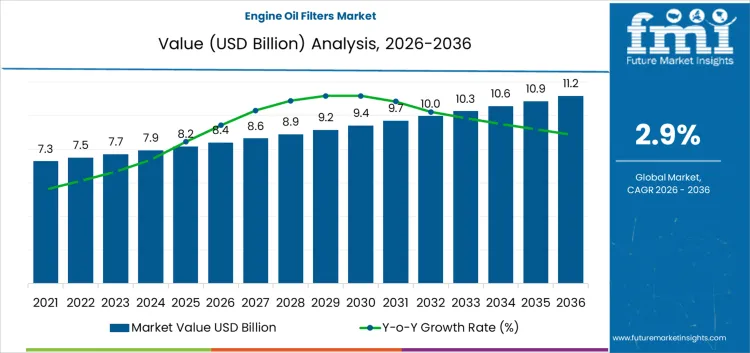
The engine oil filters market is likely to reach USD 8.4 billion in 2026 and is projected to reach USD 11.2 billion by 2036, reflecting a CAGR of 2.90%. Early period demand is governed less by new vehicle sales and more by the size and usage patterns of the global vehicle fleet. Service intervals, average mileage, and maintenance compliance rates set the replacement rhythm. Commercial fleets and high mileage passenger vehicles account for a large share of volume. Price competition remains firm because product differentiation is limited. Distribution strength and installer relationships shape market access more than branding or packaging changes.
Over the later years, demand growth stays steady but restrained by longer drain intervals and gradual improvements in engine durability. Fleet age profiles in large automotive regions become the main stabilizing factor for volume. Original equipment fitment plays a smaller role than aftermarket replacement cycles. Manufacturers focus on manufacturing efficiency, supply reliability, and filter media cost control. Capacity additions remain conservative and tied to regional service demand trends. The market shows a mature profile, where predictable replacement needs support stable revenue streams without sharp shifts in pricing power or consumption patterns.
Quick Stats of the Engine Oil Filters Market
- Engine Oil Filters Market Value (2026): USD 8.4 billion
- Engine Oil Filters Forecast Value (2036): USD 11.2 billion
- Engine Oil Filters Forecast CAGR 2026 to 2036: 2.9%
- Leading Filter Type in Engine Oil Filters Market: Spin-On Filters (44 % share)
- Leading Media in Engine Oil Filters Market: Cellulose Media (46 % share)
- Key Growth Regions in Engine Oil Filters Market: India, Indonesia, China, Brazil, Mexico
- Top Players in Engine Oil Filters Market: MANN+HUMMEL, MAHLE, Bosch, Denso, Donaldson, Hengst, UFI Filters, Sogefi, Parker Hannifin, First Brands Group (FRAM)
What is the Growth Forecast for Engine Oil Filters Market through 2036?
Between 2026 and 2031, the engine oil filters market is expected to grow from USD 8.4 billion along a restrained trajectory consistent with a 2.9% CAGR, reflecting the mature and replacement-driven nature of this category. Demand is governed less by new vehicle sales and more by the size and usage intensity of the existing vehicle fleet. Passenger cars remain the core volume base, with spin-on and cartridge formats sustaining high turnover through routine service intervals. Media selection stays dominated by cellulose and blended structures because cost, availability, and proven filtration performance matter more than incremental efficiency gains in most service contexts. The aftermarket accounts for the majority of volumes, making distribution reach, brand recognition, and service network penetration central to competitive positioning.
From 2031 to 2036, the market is projected to reach USD 11.2 billion, with growth continuing to track vehicle parc expansion and average vehicle age rather than shifts in engine technology. Synthetic and longer-life filters gain share in selective segments, though they do not alter the overall replacement cadence that defines category economics. Fleet operators and high-mileage users increasingly standardize service intervals, reinforcing predictable demand patterns. OEM fitment remains important for brand positioning but contributes less to total volume than service channels. Competitive advantage centers on manufacturing scale, logistics efficiency, and consistent quality across large product ranges, favoring established suppliers such as MANN+HUMMEL, MAHLE, Bosch, Denso, Donaldson, Hengst, UFI Filters, Sogefi, Parker Hannifin, and First Brands Group (FRAM).
Engine Oil Filters Market Key Takeaways
| Metric | Value |
|---|---|
| Market Value (2026) | USD 8.4 billion |
| Forecast Value (2036) | USD 11.2 billion |
| Forecast CAGR 2026 to 2036 | 2.9% |
How Are Engine Oil Filters Ensuring Vehicle Performance and Longevity?
Engine oil filters are increasingly adopted to maintain lubricant cleanliness, reduce engine wear, and enhance vehicle performance across passenger, commercial, and industrial engines. Historically, engines relied on basic or infrequently replaced filters, which allowed contaminants to circulate, accelerating component degradation and reducing efficiency. Modern oil filters use advanced filtration media, high-capacity housings, and bypass valves to remove fine particulates, maintain consistent oil flow, and extend service intervals. Automotive OEMs, engine manufacturers, and aftermarket suppliers prioritize filtration efficiency, pressure tolerance, and compatibility with synthetic and conventional lubricants. Early adoption focused on high-performance engines, while current demand spans mainstream passenger cars, trucks, and heavy-duty vehicles, driven by stricter emission standards, extended service intervals, and engine longevity requirements. Media efficiency, housing durability, and flow capacity influence supplier selection.
Increasing engine complexity, emission regulations, and performance expectations are shaping market growth. Compared with conventional filters, modern oil filters emphasize fine particulate capture, thermal stability, and resistance to oil degradation. Cost structures depend on media material, manufacturing precision, and testing, concentrating margins among suppliers capable of delivering reliable, high-performance components. Vehicle manufacturers and fleet operators adopt advanced oil filters to protect engine components, maintain optimal lubrication, and comply with service and emission standards. By 2036, high-efficiency engine oil filters are expected to become standard across passenger, commercial, and industrial vehicles, supporting engine reliability, fuel efficiency, and reduced maintenance.
What Factors Are Shaping the Demand for Engine Oil Filters by Filter Architecture and Media Choice in 2026?
The engine oil filters market in 2026 is segmented by filter type and media selection. By filter type, demand is divided into spin on, cartridge, eco or serviceable, and other formats that differ in housing design, replacement method, and service workflow. By media, demand is organized around cellulose, synthetic, blended, and other materials that define filtration efficiency, service interval, and pressure drop behavior. These segments reflect how vehicle makers and service networks balance manufacturing cost, maintenance practices, waste handling, and engine protection targets while managing large installed vehicle populations and long term aftermarket supply obligations across passenger and commercial fleets.
Why Do Spin On Filters Continue to Dominate the Installed Base?
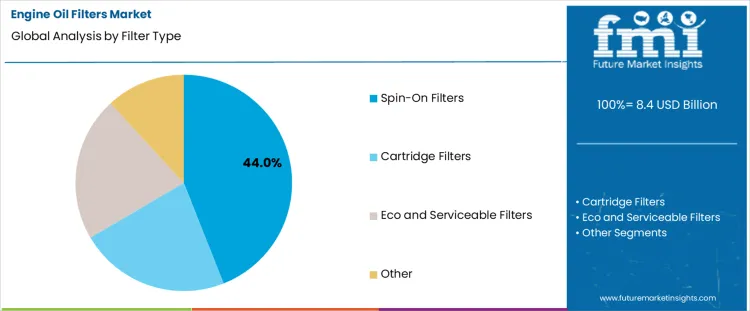
Spin on filters account for about 44% of demand in 2026, reflecting their long standing role as the simplest and most error tolerant service solution. These units combine housing and media into a single sealed part, which reduces installation mistakes in high volume service environments. Their design supports rapid replacement without special tools, which suits both dealer workshops and independent garages. From a supply perspective, standardized thread and gasket formats allow broad cross application use, which simplifies inventory management across large vehicle fleets. Leakage risk is easier to control because the sealing interface is integral to the unit. This combination of service speed, low training requirements, and predictable performance sustains their dominant share across global vehicle populations.
Cartridge and eco serviceable filters shift responsibility for correct assembly to the technician, which changes the service risk profile. These designs reduce metal waste and can lower part cost, yet they introduce potential for incorrect seating, housing damage, or seal reuse errors. Their adoption is strongest where manufacturers control service procedures through dealer networks or where regulations encourage waste reduction. They also require engine designs that integrate permanent housings, which limits retrofit potential across older fleets. As a result, these formats grow through new vehicle platforms rather than replacing the existing installed base quickly. Their volumes remain secondary to spin on filters because service simplicity and error tolerance still outweigh disposal efficiency in most markets.
Why Does Cellulose Media Retain the Largest Share in Filtration Materials?
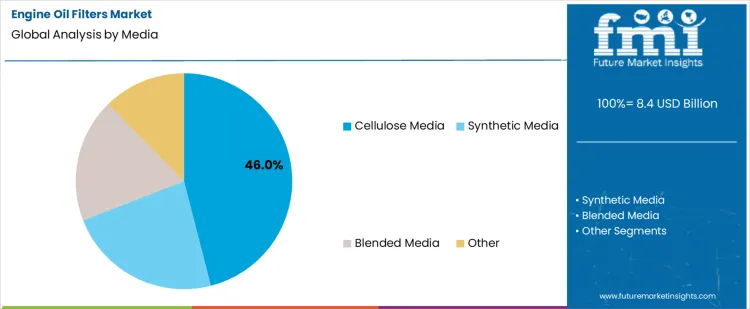
Cellulose media represents about 46% of demand in 2026 because it offers a cost effective balance between filtration performance and replacement frequency. This material performs well within standard oil change intervals used across most passenger vehicles and light commercial fleets. Manufacturing processes for cellulose elements are mature and highly scalable, which keeps unit costs stable even at large volumes. Pressure drop characteristics remain predictable, which simplifies engine lubrication system calibration. From an aftermarket perspective, cellulose filters support frequent replacement cycles that fit established service habits. Their performance envelope matches the needs of a large installed engine base, which sustains high demand even as longer life media options become more widely available in newer vehicle designs.
Synthetic and blended media serve engines with extended service intervals or higher thermal and contamination loads. These materials maintain filtration efficiency over longer mileage, which suits modern engines with higher oil stress and longer maintenance schedules. Their higher material and processing costs limit use in price sensitive segments and older vehicles. Blended media attempts to balance cost and durability, yet still requires tighter quality control during production. Adoption depends on engine specification, oil life monitoring strategies, and warranty conditions rather than simple consumer preference. As a result, these media types grow alongside newer vehicle platforms but do not displace cellulose as the dominant material across the full vehicle population in the near term.
Why Does Fleet Utilization and Service Interval Policy Still Drive the Engine Oil Filters Market More Than Vehicle Production Volumes?
Demand is tied more closely to how vehicles are used than to how many are built. High mileage commercial fleets, ride hailing vehicles, and long distance logistics operations consume filters at a steady, predictable rate regardless of new vehicle cycles. Service interval policies set by OEMs and fleet managers determine replacement frequency and directly shape volume. In regions with aging vehicle populations, maintenance activity supports stable throughput even when new sales soften. Distribution power sits with service networks and parts retailers rather than vehicle manufacturers. This keeps the category anchored to operational intensity, not platform launches or powertrain transition schedules.
What Structural and Commercial Limits Are Constraining Value Growth in a High Volume Consumables Category?
The category is constrained by pricing power rather than by demand. Oil filters are widely specified, technically mature, and easily comparable, which encourages substitution and private label penetration. OEM branded parts face pressure from independent aftermarket suppliers offering acceptable performance at lower prices. Raw material cost swings are difficult to pass through because service customers are price sensitive. Inventory is also fragmented across wholesalers and workshops, increasing working capital burden. Counterfeit and low quality imports erode trust and compress margins in some regions. These forces keep unit volumes high but prevent proportional value expansion across most major automotive markets.
How Are Powertrain Mix, Service Channel Shifts, and Logistics Models Reshaping This Category?
Change comes from usage patterns and channel structure, not from the product itself. Hybrid fleets still require oil filters, though with different service timing, while full electric vehicles remove part of the long term volume base. Quick service chains and organized workshops are gaining share from informal garages, which shifts purchasing toward centralized contracts. E commerce is altering replenishment cycles and inventory placement. Some OEMs extend service intervals, reducing units per vehicle year but increasing filter performance requirements. The category is moving toward fewer stock keeping units, tighter logistics control, and greater reliance on large distribution platforms.
What is the Demand for Engine Oil Filters by Country?
| Country | CAGR (%) |
|---|---|
| India | 4.1% |
| China | 3.6% |
| Indonesia | 3.9% |
| Mexico | 3.2% |
| Brazil | 3.4% |
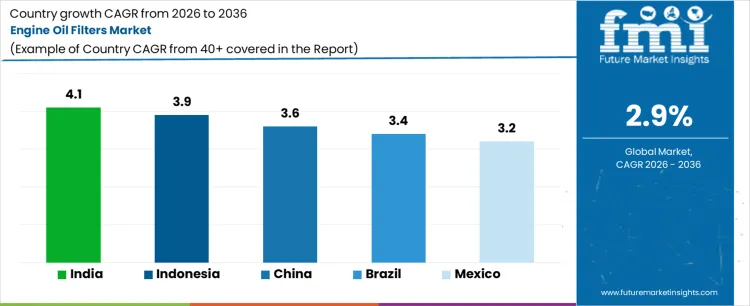
Demand for engine oil filters is rising as vehicle manufacturers and service providers focus on engine longevity, performance optimization, and emission compliance. India leads with a 4.1% CAGR, driven by growing vehicle production, rising passenger car ownership, and increased demand for maintenance services. Indonesia follows at 3.9%, supported by expanding automotive fleet and replacement demand. China records 3.6% growth, shaped by steady automotive manufacturing and vehicle maintenance adoption. Brazil grows at 3.4%, influenced by fleet modernization and regulatory standards for engine performance. Mexico shows 3.2% CAGR, reflecting moderate adoption of quality engine oil filtration systems and replacement demand in passenger and commercial vehicles.
How is India experiencing growth in the engine oil filters market?
India is experiencing growth at a CAGR of 4.1%, supported by adoption of engine oil filters market solutions to enhance engine longevity, performance, and protection against contaminants. Manufacturers and suppliers are producing filters optimized for high filtration efficiency, durability, and compatibility with various automotive engines. Demand is concentrated in automotive production hubs, service centers, and aftermarket facilities. Investments focus on material quality, filtration performance, and compliance with automotive standards rather than large-scale deployment. Growth reflects rising vehicle production, industrial adoption of high-quality filters, and increasing focus on engine performance and maintenance efficiency.
- Engine protection drives adoption.
- Filters optimize filtration efficiency and durability.
- Automotive hubs and service centers concentrate demand.
- Material quality and standards compliance guide investment.
How is China witnessing growth in the engine oil filters market?
China is witnessing growth at a CAGR of 3.6%, fueled by adoption of engine oil filters market solutions to improve engine performance, reliability, and contamination control. Manufacturers and suppliers are deploying filters optimized for durability, high filtration capacity, and compatibility with automotive engines. Demand is concentrated in automotive manufacturing hubs, service centers, and aftermarket distribution facilities. Investments prioritize material performance, filtration efficiency, and adherence to automotive standards rather than fleet-scale deployment. Growth reflects industrial adoption of high-quality filters, rising vehicle production, and regulatory focus on engine protection and efficiency.
- Engine performance drives adoption.
- Filters enhance durability and filtration capacity.
- Production hubs and service centers concentrate demand.
- Material quality and compliance guide investment.
How is Indonesia experiencing growth in the engine oil filters market?
Indonesia is experiencing growth at a CAGR of 3.9%, supported by adoption of engine oil filters market solutions to improve engine durability, contamination control, and operational efficiency. Manufacturers and suppliers are producing filters optimized for high filtration efficiency, material reliability, and compatibility with automotive engines. Demand is concentrated in automotive manufacturing hubs, service centers, and aftermarket facilities. Investments focus on material performance, filtration quality, and compliance with automotive standards rather than large-scale deployment. Growth reflects moderate vehicle production, industrial adoption of high-quality filters, and increasing focus on engine maintenance and protection.
- Engine durability drives adoption.
- Filters optimize filtration efficiency and material reliability.
- Automotive hubs and service centers concentrate demand.
- Material performance and compliance guide investment.
How is Mexico witnessing growth in the engine oil filters market?
Mexico is witnessing growth at a CAGR of 3.2%, fueled by adoption of engine oil filters market solutions to enhance engine performance, reliability, and contamination protection. Manufacturers and suppliers are deploying filters optimized for filtration efficiency, durability, and compatibility with automotive engines. Demand is concentrated in automotive production hubs, service centers, and aftermarket facilities. Investments prioritize material quality, system reliability, and adherence to automotive standards rather than fleet-scale deployment. Growth reflects moderate vehicle production, industrial adoption of high-quality filters, and regulatory focus on engine protection and maintenance efficiency.
- Engine reliability drives adoption.
- Filters enhance filtration efficiency and durability.
- Production hubs and service centers concentrate demand.
- Material quality and compliance guide investment.
How is Brazil experiencing growth in the engine oil filters market?
Brazil is experiencing growth at a CAGR of 3.4%, supported by adoption of engine oil filters market solutions to improve engine performance, durability, and contamination protection. Manufacturers and suppliers are producing filters optimized for high filtration efficiency, material reliability, and compatibility with automotive engines. Demand is concentrated in automotive manufacturing hubs, service centers, and aftermarket facilities. Investments focus on material quality, filtration performance, and compliance with automotive standards rather than large-scale deployment. Growth reflects industrial adoption of reliable filters, moderate vehicle production, and increasing attention to engine maintenance and protection.
- Engine performance drives adoption.
- Filters optimize filtration efficiency and material reliability.
- Automotive hubs and service centers concentrate demand.
- Material quality and standards compliance guide investment.
Who Competes in the Engine Oil Filters Market and What Defines Their Capabilities?
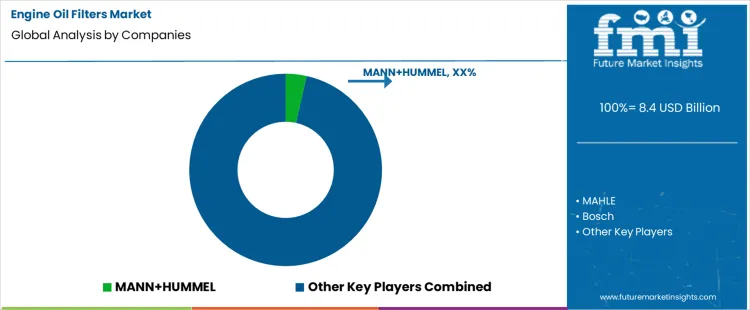
Competition in the engine oil filters market is defined by filtration efficiency, thermal stability, and compatibility with diverse engine types. MANN+HUMMEL supplies oil filters engineered for high dirt-holding capacity, consistent flow, and thermal resilience suitable for passenger and commercial vehicles. MAHLE develops filters optimized for fine particulate capture, long service intervals, and integration with engine oil circuits. Bosch provides oil filters with high filtration efficiency, durability, and compatibility with conventional and modern engine designs. Denso delivers filters engineered for reliability under varying oil pressures and temperatures. Donaldson supplies heavy-duty and passenger vehicle filters with high contaminant retention.
Hengst provides oil filters with advanced media and structural integrity for extended performance. UFI Filters develops compact, high-efficiency filters for modern engines. Sogefi delivers filters optimized for fuel economy and reduced pressure drop. Parker Hannifin provides high-performance filters for commercial applications. First Brands Group (FRAM) supplies mass-market oil filters emphasizing durability and widespread compatibility. Other regional and specialty suppliers focus on high-performance filtration, lightweight designs, and OEM-specific applications. Competitive differentiation arises from filtration efficiency, contaminant capacity, pressure tolerance, thermal stability, and integration with modern engine lubrication systems.
Key Players in the Engine Oil Filters Market
- MANN+HUMMEL
- MAHLE
- Bosch
- Denso
- Donaldson
- Hengst
- UFI Filters
- Sogefi
- Parker Hannifin
- First Brands Group (FRAM)
Scope of the Report
| Items | Values |
|---|---|
| Quantitative Units (2026) | USD billion |
| Filter Type | Spin-On Filters, Cartridge Filters, Eco/Serviceable Filters, Other |
| Media | Cellulose Media, Synthetic Media, Blended Media, Other |
| Vehicle Type | Passenger Cars, Light Commercial Vehicles, Medium & Heavy Commercial Vehicles, Other |
| Sales Channel | Aftermarket, OEM Fitment, Fleet Service, Other |
| Regions Covered | Asia Pacific, Europe, North America, Latin America, Middle East & Africa |
| Countries Covered | China, Japan, South Korea, India, Australia & New Zealand, ASEAN, Germany, United Kingdom, France, Italy, Spain, Nordic, BENELUX, United States, Canada, Mexico, Brazil, Chile, Saudi Arabia, Turkey, South Africa, and other regional markets |
| Key Companies Profiled | MANN+HUMMEL, MAHLE, Bosch, Denso, Donaldson, Hengst, UFI Filters, Sogefi, Parker Hannifin, First Brands Group (FRAM) |
| Additional Attributes | Dollar sales by filter type, media, vehicle type, and sales channel, replacement-driven demand patterns tied to vehicle parc size and service intervals, dominance of aftermarket distribution over OEM fitment, cost and logistics driven competition in a mature consumables category, filtration media cost and manufacturing scale shaping margins, and regional service network density influencing volume distribution. |
Engine Oil Filters Market Segmentation
Filter Type:
- Spin-On Filters
- Cartridge Filters
- Eco/Serviceable Filters
- Other
Media:
- Cellulose Media
- Synthetic Media
- Blended Media
- Other
Vehicle Type:
- Passenger Cars
- Light Commercial Vehicles
- Medium & Heavy Commercial Vehicles
- Other
Sales Channel:
- Aftermarket
- OEM Fitment
- Fleet Service
- Other
Region:
- Asia Pacific
- China
- Japan
- South Korea
- India
- Australia & New Zealand
- ASEAN
- Rest of Asia Pacific
- Europe
- Germany
- United Kingdom
- France
- Italy
- Spain
- Nordic
- BENELUX
- Rest of Europe
- North America
- United States
- Canada
- Mexico
- Latin America
- Brazil
- Chile
- Rest of Latin America
- Middle East & Africa
- Kingdom of Saudi Arabia
- Other GCC Countries
- Turkey
- South Africa
- Other African Union
- Rest of Middle East & Africa
Bibliography
- United States Environmental Protection Agency. (2025). Regulations for emissions from vehicles and engines. USA Environmental Protection Agency.
- Office of the Federal Register. (2023). Control of air pollution from new motor vehicles: Heavy-duty engine and vehicle standards (40 CFR Parts 86 and related standards). USA Government Publishing Office.
- Office of the Federal Register. (2025). 40 CFR § 86.1834-01: Allowable maintenance related to emissions durability testing. USA Government Publishing Office.
- European Union. (2024). European emission standards for vehicles and engines.
Frequently Asked Questions
How big is the engine oil filters market in 2026?
The global engine oil filters market is estimated to be valued at USD 8.4 billion in 2026.
What will be the size of engine oil filters market in 2036?
The market size for the engine oil filters market is projected to reach USD 11.2 billion by 2036.
How much will be the engine oil filters market growth between 2026 and 2036?
The engine oil filters market is expected to grow at a 2.9% CAGR between 2026 and 2036.
What are the key product types in the engine oil filters market?
The key product types in engine oil filters market are spin-on filters, cartridge filters, eco and serviceable filters and other.
Which media segment to contribute significant share in the engine oil filters market in 2026?
In terms of media, cellulose media segment to command 46.0% share in the engine oil filters market in 2026.
Preview the report firsthand - request a free sample
Get SampleGet the brochure for pricing and purchase details.
Get PDFTable of Content
- Executive Summary
- Global Market Outlook
- Demand-side Trends
- Supply-side Trends
- Technology Roadmap Analysis
- Analysis and Recommendations
- Market Overview
- Market Coverage / Taxonomy
- Market Definition / Scope / Limitations
- Market Background
- Market Dynamics
- Drivers
- Restraints
- Opportunity
- Trends
- Scenario Forecast
- Demand in Optimistic Scenario
- Demand in Likely Scenario
- Demand in Conservative Scenario
- Opportunity Map Analysis
- Product Life Cycle Analysis
- Supply Chain Analysis
- Investment Feasibility Matrix
- Value Chain Analysis
- PESTLE and Porter’s Analysis
- Regulatory Landscape
- Regional Parent Market Outlook
- Production and Consumption Statistics
- Import and Export Statistics
- Market Dynamics
- Global Market Analysis 2021 to 2025 and Forecast, 2026 to 2036
- Historical Market Size Value (USD Million) Analysis, 2021 to 2025
- Current and Future Market Size Value (USD Million) Projections, 2026 to 2036
- Y-o-Y Growth Trend Analysis
- Absolute $ Opportunity Analysis
- Global Market Pricing Analysis 2021 to 2025 and Forecast 2026 to 2036
- Global Market Analysis 2021 to 2025 and Forecast 2026 to 2036, By Filter Type
- Introduction / Key Findings
- Historical Market Size Value (USD Million) Analysis By Filter Type , 2021 to 2025
- Current and Future Market Size Value (USD Million) Analysis and Forecast By Filter Type , 2026 to 2036
- Spin-On Filters
- Cartridge Filters
- Eco and Serviceable Filters
- Other
- Spin-On Filters
- Y-o-Y Growth Trend Analysis By Filter Type , 2021 to 2025
- Absolute $ Opportunity Analysis By Filter Type , 2026 to 2036
- Global Market Analysis 2021 to 2025 and Forecast 2026 to 2036, By Media
- Introduction / Key Findings
- Historical Market Size Value (USD Million) Analysis By Media, 2021 to 2025
- Current and Future Market Size Value (USD Million) Analysis and Forecast By Media, 2026 to 2036
- Cellulose Media
- Synthetic Media
- Blended Media
- Other
- Cellulose Media
- Y-o-Y Growth Trend Analysis By Media, 2021 to 2025
- Absolute $ Opportunity Analysis By Media, 2026 to 2036
- Global Market Analysis 2021 to 2025 and Forecast 2026 to 2036, By Vehicle Type
- Introduction / Key Findings
- Historical Market Size Value (USD Million) Analysis By Vehicle Type, 2021 to 2025
- Current and Future Market Size Value (USD Million) Analysis and Forecast By Vehicle Type, 2026 to 2036
- Passenger Cars
- Light Commercial Vehicles
- Medium & Heavy Commercial Vehicles
- Other
- Passenger Cars
- Y-o-Y Growth Trend Analysis By Vehicle Type, 2021 to 2025
- Absolute $ Opportunity Analysis By Vehicle Type, 2026 to 2036
- Global Market Analysis 2021 to 2025 and Forecast 2026 to 2036, By Sales Channel
- Introduction / Key Findings
- Historical Market Size Value (USD Million) Analysis By Sales Channel, 2021 to 2025
- Current and Future Market Size Value (USD Million) Analysis and Forecast By Sales Channel, 2026 to 2036
- Aftermarket
- OEM Fitment
- Fleet Service
- Other
- Aftermarket
- Y-o-Y Growth Trend Analysis By Sales Channel, 2021 to 2025
- Absolute $ Opportunity Analysis By Sales Channel, 2026 to 2036
- Global Market Analysis 2021 to 2025 and Forecast 2026 to 2036, By Region
- Introduction
- Historical Market Size Value (USD Million) Analysis By Region, 2021 to 2025
- Current Market Size Value (USD Million) Analysis and Forecast By Region, 2026 to 2036
- North America
- Latin America
- Western Europe
- Eastern Europe
- East Asia
- South Asia and Pacific
- Middle East & Africa
- Market Attractiveness Analysis By Region
- North America Market Analysis 2021 to 2025 and Forecast 2026 to 2036, By Country
- Historical Market Size Value (USD Million) Trend Analysis By Market Taxonomy, 2021 to 2025
- Market Size Value (USD Million) Forecast By Market Taxonomy, 2026 to 2036
- By Country
- USA
- Canada
- Mexico
- By Filter Type
- By Media
- By Vehicle Type
- By Sales Channel
- By Country
- Market Attractiveness Analysis
- By Country
- By Filter Type
- By Media
- By Vehicle Type
- By Sales Channel
- Key Takeaways
- Latin America Market Analysis 2021 to 2025 and Forecast 2026 to 2036, By Country
- Historical Market Size Value (USD Million) Trend Analysis By Market Taxonomy, 2021 to 2025
- Market Size Value (USD Million) Forecast By Market Taxonomy, 2026 to 2036
- By Country
- Brazil
- Chile
- Rest of Latin America
- By Filter Type
- By Media
- By Vehicle Type
- By Sales Channel
- By Country
- Market Attractiveness Analysis
- By Country
- By Filter Type
- By Media
- By Vehicle Type
- By Sales Channel
- Key Takeaways
- Western Europe Market Analysis 2021 to 2025 and Forecast 2026 to 2036, By Country
- Historical Market Size Value (USD Million) Trend Analysis By Market Taxonomy, 2021 to 2025
- Market Size Value (USD Million) Forecast By Market Taxonomy, 2026 to 2036
- By Country
- Germany
- UK
- Italy
- Spain
- France
- Nordic
- BENELUX
- Rest of Western Europe
- By Filter Type
- By Media
- By Vehicle Type
- By Sales Channel
- By Country
- Market Attractiveness Analysis
- By Country
- By Filter Type
- By Media
- By Vehicle Type
- By Sales Channel
- Key Takeaways
- Eastern Europe Market Analysis 2021 to 2025 and Forecast 2026 to 2036, By Country
- Historical Market Size Value (USD Million) Trend Analysis By Market Taxonomy, 2021 to 2025
- Market Size Value (USD Million) Forecast By Market Taxonomy, 2026 to 2036
- By Country
- Russia
- Poland
- Hungary
- Balkan & Baltic
- Rest of Eastern Europe
- By Filter Type
- By Media
- By Vehicle Type
- By Sales Channel
- By Country
- Market Attractiveness Analysis
- By Country
- By Filter Type
- By Media
- By Vehicle Type
- By Sales Channel
- Key Takeaways
- East Asia Market Analysis 2021 to 2025 and Forecast 2026 to 2036, By Country
- Historical Market Size Value (USD Million) Trend Analysis By Market Taxonomy, 2021 to 2025
- Market Size Value (USD Million) Forecast By Market Taxonomy, 2026 to 2036
- By Country
- China
- Japan
- South Korea
- By Filter Type
- By Media
- By Vehicle Type
- By Sales Channel
- By Country
- Market Attractiveness Analysis
- By Country
- By Filter Type
- By Media
- By Vehicle Type
- By Sales Channel
- Key Takeaways
- South Asia and Pacific Market Analysis 2021 to 2025 and Forecast 2026 to 2036, By Country
- Historical Market Size Value (USD Million) Trend Analysis By Market Taxonomy, 2021 to 2025
- Market Size Value (USD Million) Forecast By Market Taxonomy, 2026 to 2036
- By Country
- India
- ASEAN
- Australia & New Zealand
- Rest of South Asia and Pacific
- By Filter Type
- By Media
- By Vehicle Type
- By Sales Channel
- By Country
- Market Attractiveness Analysis
- By Country
- By Filter Type
- By Media
- By Vehicle Type
- By Sales Channel
- Key Takeaways
- Middle East & Africa Market Analysis 2021 to 2025 and Forecast 2026 to 2036, By Country
- Historical Market Size Value (USD Million) Trend Analysis By Market Taxonomy, 2021 to 2025
- Market Size Value (USD Million) Forecast By Market Taxonomy, 2026 to 2036
- By Country
- Kingdom of Saudi Arabia
- Other GCC Countries
- Turkiye
- South Africa
- Other African Union
- Rest of Middle East & Africa
- By Filter Type
- By Media
- By Vehicle Type
- By Sales Channel
- By Country
- Market Attractiveness Analysis
- By Country
- By Filter Type
- By Media
- By Vehicle Type
- By Sales Channel
- Key Takeaways
- Key Countries Market Analysis
- USA
- Pricing Analysis
- Market Share Analysis, 2025
- By Filter Type
- By Media
- By Vehicle Type
- By Sales Channel
- Canada
- Pricing Analysis
- Market Share Analysis, 2025
- By Filter Type
- By Media
- By Vehicle Type
- By Sales Channel
- Mexico
- Pricing Analysis
- Market Share Analysis, 2025
- By Filter Type
- By Media
- By Vehicle Type
- By Sales Channel
- Brazil
- Pricing Analysis
- Market Share Analysis, 2025
- By Filter Type
- By Media
- By Vehicle Type
- By Sales Channel
- Chile
- Pricing Analysis
- Market Share Analysis, 2025
- By Filter Type
- By Media
- By Vehicle Type
- By Sales Channel
- Germany
- Pricing Analysis
- Market Share Analysis, 2025
- By Filter Type
- By Media
- By Vehicle Type
- By Sales Channel
- UK
- Pricing Analysis
- Market Share Analysis, 2025
- By Filter Type
- By Media
- By Vehicle Type
- By Sales Channel
- Italy
- Pricing Analysis
- Market Share Analysis, 2025
- By Filter Type
- By Media
- By Vehicle Type
- By Sales Channel
- Spain
- Pricing Analysis
- Market Share Analysis, 2025
- By Filter Type
- By Media
- By Vehicle Type
- By Sales Channel
- France
- Pricing Analysis
- Market Share Analysis, 2025
- By Filter Type
- By Media
- By Vehicle Type
- By Sales Channel
- India
- Pricing Analysis
- Market Share Analysis, 2025
- By Filter Type
- By Media
- By Vehicle Type
- By Sales Channel
- ASEAN
- Pricing Analysis
- Market Share Analysis, 2025
- By Filter Type
- By Media
- By Vehicle Type
- By Sales Channel
- Australia & New Zealand
- Pricing Analysis
- Market Share Analysis, 2025
- By Filter Type
- By Media
- By Vehicle Type
- By Sales Channel
- China
- Pricing Analysis
- Market Share Analysis, 2025
- By Filter Type
- By Media
- By Vehicle Type
- By Sales Channel
- Japan
- Pricing Analysis
- Market Share Analysis, 2025
- By Filter Type
- By Media
- By Vehicle Type
- By Sales Channel
- South Korea
- Pricing Analysis
- Market Share Analysis, 2025
- By Filter Type
- By Media
- By Vehicle Type
- By Sales Channel
- Russia
- Pricing Analysis
- Market Share Analysis, 2025
- By Filter Type
- By Media
- By Vehicle Type
- By Sales Channel
- Poland
- Pricing Analysis
- Market Share Analysis, 2025
- By Filter Type
- By Media
- By Vehicle Type
- By Sales Channel
- Hungary
- Pricing Analysis
- Market Share Analysis, 2025
- By Filter Type
- By Media
- By Vehicle Type
- By Sales Channel
- Kingdom of Saudi Arabia
- Pricing Analysis
- Market Share Analysis, 2025
- By Filter Type
- By Media
- By Vehicle Type
- By Sales Channel
- Turkiye
- Pricing Analysis
- Market Share Analysis, 2025
- By Filter Type
- By Media
- By Vehicle Type
- By Sales Channel
- South Africa
- Pricing Analysis
- Market Share Analysis, 2025
- By Filter Type
- By Media
- By Vehicle Type
- By Sales Channel
- USA
- Market Structure Analysis
- Competition Dashboard
- Competition Benchmarking
- Market Share Analysis of Top Players
- By Regional
- By Filter Type
- By Media
- By Vehicle Type
- By Sales Channel
- Competition Analysis
- Competition Deep Dive
- MANN+HUMMEL
- Overview
- Product Portfolio
- Profitability by Market Segments (Product/Age /Sales Channel/Region)
- Sales Footprint
- Strategy Overview
- Marketing Strategy
- Product Strategy
- Channel Strategy
- MAHLE
- Bosch
- Denso
- Donaldson
- Hengst
- UFI Filters
- Sogefi
- Parker Hannifin
- First Brands Group (FRAM)
- MANN+HUMMEL
- Competition Deep Dive
- Assumptions & Acronyms Used
- Research Methodology


