

- Industry Size (2026)
- USD 3.86 Bn
- Forecast (2036)
- USD 7.6 Bn
- CAGR (2026 to 2036)
- 7.1%
Eye Testing Equipment Market Size, Market Forecast and Outlook By FMI
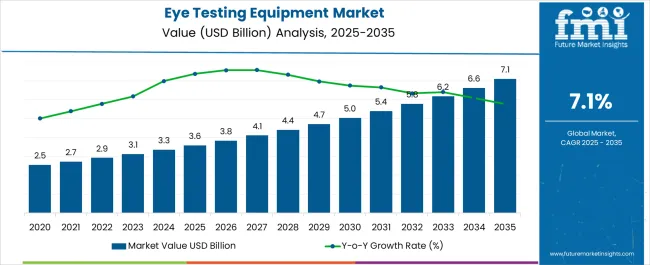
In 2025, the eye testing equipment market was valued at USD 3.6 billion. Based on Future Market Insights' analysis, demand for eye testing equipment is estimated to grow to USD 3.86 billion in 2026 and USD 7.6 billion by 2036. FMI projects a CAGR of 7.1% during the forecast period .
An absolute dollar growth of USD 3.74 billion between 2026 and 2036 reflects structural advancements in diagnostic precision and workflow integration rather than volume-only expansion of basic examination tools. Growth depends on increased adoption of multimodal imaging platforms that combine optical coherence tomography, fundus imaging, and automated perimetry into single systems, improving diagnostic accuracy for conditions such as glaucoma, diabetic retinopathy, and age-related macular degeneration. As per FMI, equipment suppliers are capturing value not from incremental unit counts alone, but from software integration, artificial intelligence analytics, and connectivity solutions embedded in hospital and clinic diagnostic networks.
Summary of the Eye Testing Equipment Market
- Market Definition
- The market comprises precision diagnostic devices designed for comprehensive eye examination, disease detection, and vision function assessment across clinical and institutional settings.
- Demand Drivers
- Rising prevalence of visual impairments and eye diseases, with approximately 2.2 billion people globally experiencing vision impairment according to WHO data .
- Aging population demographics increasing susceptibility to age-related macular degeneration, cataracts, and glaucoma.
- Technological advancements in optical coherence tomography, fundus imaging, and automated perimetry enabling earlier and more accurate diagnosis.
- Key Segments Analyzed
- Equipment Type: Slit Lamp leads, accounting for 20.0% share in 2025 due to its versatility and clinical indispensability.
- Application Type: General Examination dominates with 40.0% share, reflecting the foundational role of routine vision screening.
- End Use: Hospitals represent the largest consumer segment at 50.0% share, driven by high patient volumes and comprehensive diagnostic requirements.
- Geography: Asia-Pacific leads volume growth, while North America and Europe drive value through advanced technology adoption.
- Analyst Opinion at FMI
- Nikhil Kaitwade, Head of Industrial Automation at Future Market Insights, opines, 'In this updated edition of the Eye Testing Equipment Market report, industry stakeholders will observe that value creation is shifting from individual diagnostic instruments toward integrated, multi-modal platforms that combine imaging, data analytics, and connectivity. Suppliers that invest in artificial intelligence algorithms, cloud-based workflow solutions, and interoperability with electronic health records will capture margin expansion beyond hardware sales alone. The convergence of diagnostic accuracy with operational efficiency defines the competitive frontier through 2036.'
- Strategic Implications/Executive Takeaways
- Invest in multi-modal platform development that combines multiple diagnostic functions into single integrated systems.
- Prioritize software and artificial intelligence capabilities that enhance diagnostic accuracy and clinical workflow efficiency.
- Develop connectivity solutions that enable telemedicine and remote diagnostics for expanding access in underserved markets.
- Align product portfolios with the specific needs of hospital systems versus ambulatory clinics versus educational institutions.
- Methodology
- Built on primary interviews with eye testing equipment manufacturers and clinical procurement leaders.
- Benchmarked against ophthalmic procedure volumes and diagnostic equipment installation data.
- Validated using trade data and internal peer review as per FMI modeling standards.
In its FY 2024/25 annual results (released December 2025), Carl Zeiss Meditec AG reported that its Ophthalmology Strategic Business Unit grew by 8.5%, supported by a recovery in equipment sales and continued volume growth in intraocular lenses, particularly in the premium segment. The company also recorded a strong acceleration in order intake, which reached EUR 2,288 million, representing an 18.2% year-on-year increase, with growth observed across all major regions. Management attributed this performance to rising global demand for advanced diagnostic and surgical technologies in both mature and emerging healthcare markets.
Francesco Milleri, Chairman and CEO of EssilorLuxottica, commented in the company's February 2026 results announcement, "This is a historic year for EssilorLuxottica: for the first time since the Group's origin, our revenue recorded double-digit growth at constant exchange rates. Our advances in medtech, myopia management and audiology strengthen our position as a pioneer at the intersection of multiple universes. The myopia management solutions portfolio recorded a +22% increase in revenue worldwide, with the United States well positioned for a solid start" .
China (9.5% CAGR) leads global expansion, supported by large-scale healthcare infrastructure investment, increasing prevalence of myopia and diabetic retinopathy, and rising adoption of advanced diagnostic platforms in urban hospitals . India (8.8% CAGR) follows, driven by expanding eye care networks, government initiatives for blindness prevention, and growing medical tourism for ophthalmic services. Germany (8.1% CAGR) grows on the back of its strong medical technology export base and integration of digital diagnostics into statutory health insurance frameworks. Brazil (7.4% CAGR) benefits from modernization of ophthalmology clinics and expanding access to eye care services in urban centers.
Mature markets such as the United States (6.7% CAGR), the United Kingdom (6.0% CAGR), and Japan (5.3% CAGR) generate comparatively slower expansion, where demand is shaped more by replacement cycles and upgrades to AI-enabled platforms than by new unit growth, with workforce shortages acting as a structural constraint on equipment utilization rates.
Eye Testing Equipment Market Definition
The eye testing equipment market covers the global production and supply of diagnostic devices used to detect, measure, and monitor ocular conditions and visual function. Manufactured using precision optics, advanced imaging sensors, and software-driven analytics, these instruments enable clinicians to assess eye health, diagnose diseases, and plan treatments. They are widely used in hospitals, ophthalmology clinics, optometry practices, and educational institutions where comprehensive eye examinations and disease management are required.
Market Inclusions
The report includes global and regional market size estimates in value terms, with a forecast period from 2026 to 2036. It provides segmentation by Equipment Type, Application Type, End Use, and Region. The analysis incorporates manufacturing technology trends, imaging resolution advancements, artificial intelligence integration, and workflow connectivity developments. Regional demand dynamics, country-level growth rates, and competitive positioning are also evaluated as per FMI methodology.
Market Exclusions
The scope excludes surgical equipment used in ophthalmic procedures, consumables such as diagnostic lenses and probes, and vision correction products like spectacles and contact lenses. It also excludes revenues from eye care services and focuses strictly on diagnostic equipment manufacturing. Custom laboratory prototypes and non-commercial research instruments are not considered due to negligible market contribution.
Research Methodology
- Primary Research: Interviews were conducted with eye testing equipment manufacturers, optical component suppliers, ophthalmology department heads, hospital procurement managers, and clinical technology advisors.
- Desk Research: Public company filings, medical device statistics, trade data under relevant HS codes, ophthalmology association publications, and regulatory documentation were reviewed.
- Market-Sizing and Forecasting: A hybrid top-down and bottom-up model was constructed, reconstructing demand from ophthalmic procedure volumes, equipment replacement cycles, and diagnostic unit-per-facility ratios across end-use settings.
- Data Validation and Update Cycle: Outputs were subjected to variance testing against production capacity data, trade flow benchmarking, and structured internal review prior to publication.
Eye Testing Equipment Market Drivers, Restraints, and Opportunities
Future Market Insights analysis indicates the market has historically existed as a specialized diagnostic category serving ophthalmology and optometry practices. Its baseline scale is anchored in the essential nature of eye examinations for vision health and the clinical necessity of accurate disease detection. As per FMI, the market's valuation is increasingly linked to demographic trends and healthcare system investments, where diagnostic equipment becomes critical infrastructure for managing chronic eye disease burdens.
FMI analysts observe a clear evolution from standalone analog instruments toward digital, connected platforms that generate, store, and analyze clinical data. Traditional devices optimized for single-purpose examination face pressure where clinics demand workflow efficiency, while growth is concentrated in multi-functional systems that justify higher prices through improved diagnostic confidence, reduced examination time, and integration with practice management software. This shift nets out as higher value growth because digital transformation adds imaging sensors, computing hardware, software development, and regulatory compliance costs that support margin expansion.
- Rising global burden of eye disease: The World Health Organization estimates that approximately 2.2 billion people have vision impairment or blindness, with at least 1 billion cases being preventable or unaddressed . This creates sustained demand for diagnostic equipment across screening programs, primary care, and specialty ophthalmology services. The increasing prevalence of diabetes, a major risk factor for diabetic retinopathy, further amplifies diagnostic requirements.
- Aging population demographics: Global population aging drives higher incidence of age-related eye conditions including cataracts, glaucoma, and macular degeneration. Older adults require more frequent eye examinations and monitoring, creating recurring demand for diagnostic services and equipment replacement cycles. Countries with rapidly aging populations such as Japan, Germany, and Italy demonstrate particular sensitivity to this demographic driver.
- Technology-enabled diagnostic advancement: Continuous innovation in imaging resolution, scanning speed, and artificial intelligence analytics creates upgrade incentives for established practices and adoption rationales for new facilities. Optical coherence tomography has evolved from time-domain to spectral-domain to swept-source technologies, each offering improved visualization. AI algorithms now assist in detecting diabetic retinopathy and macular degeneration, enhancing diagnostic consistency and reducing specialist workload.
- Workforce shortage constraints: The shortage of trained ophthalmologists and optometrists in many regions limits equipment utilization and adoption of advanced technologies . In the United States, fewer than 60,000 ophthalmic technicians support over 19,000 practicing ophthalmologists, creating a significant skills gap. This constraint drives demand for automated and AI-assisted devices that reduce dependence on specialized operator expertise.
- Regulatory and reimbursement complexity: Medical device regulations in major markets require substantial documentation, clinical evidence, and quality system investments for market approval. Reimbursement policies influence adoption decisions, as healthcare providers prioritize equipment with clear payment pathways for associated procedures. These factors create barriers to entry but also protect established players with regulatory expertise.
Segmental Analysis
Eye Testing Equipment Market Analysis by Equipment Type
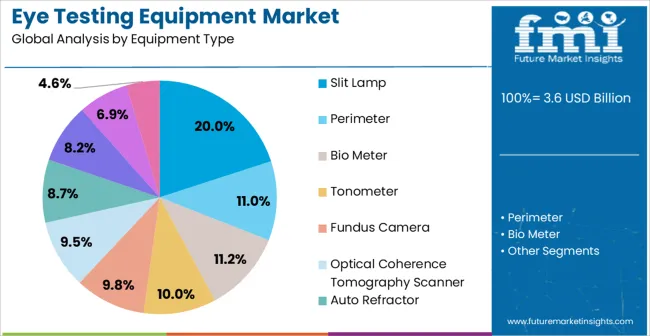
Based on FMI's eye testing equipment market report, demand for slit lamps is estimated to remain the leading equipment type, capturing 20.0% of the market share. Its clinical versatility in examining both anterior and posterior eye segments, combined with advancements in optics and digital imaging integration, supports sustained adoption across hospital ophthalmology departments and specialty clinics. Slit lamps serve as foundational diagnostic tools that enable detection of cataracts, corneal conditions, and retinal abnormalities with high precision .
Optical Coherence Tomography scanners represent the fastest-growing segment, driven by their ability to provide cross-sectional imaging of retinal structure essential for managing macular degeneration, diabetic retinopathy, and glaucoma. The evolution from time-domain to spectral-domain to swept-source OCT technologies has progressively improved image resolution and scanning speed, justifying equipment upgrades in developed markets and adoption in expanding clinical settings.
Fundus cameras maintain strong demand for retinal documentation and disease monitoring, with non-mydriatic variants gaining popularity for screening programs where pupil dilation is impractical. Auto refractors and tonometers serve essential roles in routine vision testing and glaucoma screening, with automated features reducing operator skill requirements and examination time.
- Technology convergence: Manufacturers are increasingly integrating multiple diagnostic functions into single platforms. Combined OCT and fundus camera systems allow simultaneous structural and photographic documentation. Automated refractors with built-in keratometry streamline cataract and refractive surgery evaluations.
- Portable device expansion: Handheld and portable variants of traditional diagnostic instruments are expanding access in outpatient settings, nursing homes, and community screening programs. These devices trade some functionality for mobility but enable eye care delivery beyond traditional clinical settings.
- AI integration acceleration: Artificial intelligence algorithms for automated disease detection are being embedded into diagnostic devices, particularly for diabetic retinopathy screening and glaucoma progression analysis. This capability addresses workforce shortages and improves diagnostic consistency across different operator skill levels.
Eye Testing Equipment Market Analysis by Application Type
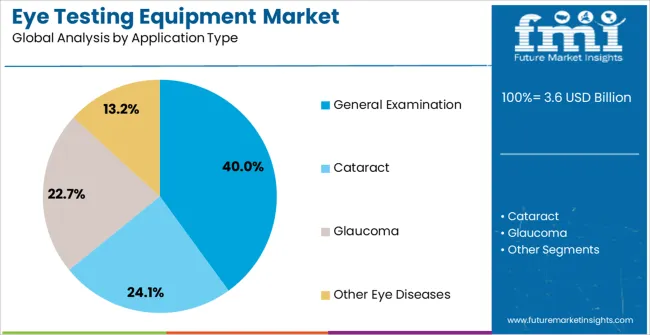
General Examination applications generate maximum demand at 40.0% share for eye testing equipment, because routine vision screening and comprehensive eye examinations serve as the entry point for eye care delivery across all populations . General examination equipment including auto refractors, phoropters, and slit lamps provides clinicians with fundamental tools to assess visual acuity, refractive errors, and basic ocular health. This segment's leadership reflects the preventive care emphasis in modern healthcare and the recognition that early detection reduces long-term treatment costs.
Cataract applications represent a significant and growing segment, driven by the high global volume of cataract surgeries and the essential role of pre-operative biometry and post-operative assessment. Bio meters and keratometers are specifically critical for calculating intraocular lens power, directly impacting surgical outcomes. As populations age and cataract surgery rates increase in developing markets, demand for cataract-specific diagnostic equipment accelerates.
Glaucoma applications continue expanding as awareness of this silent, progressive disease grows and screening programs become more widespread. Perimeters for visual field testing, tonometers for intraocular pressure measurement, and OCT for nerve fiber layer analysis constitute essential equipment for glaucoma diagnosis and monitoring. The chronic nature of glaucoma creates recurring demand for follow-up examinations and equipment capable of detecting subtle progression.
Other Eye Diseases including diabetic retinopathy, macular degeneration, and dry eye disease drive specialized equipment adoption. Diabetic retinopathy screening programs increasingly utilize fundus cameras and OCT scanners, while dry eye diagnostics including tear film analysis and meibography are emerging as practice-building capabilities in optometry.
- Screening program expansion: Government and non-governmental organization initiatives for blindness prevention are establishing large-scale screening programs, particularly in Asia and Africa. These programs require durable, portable, and easy-to-operate diagnostic equipment suitable for field deployment.
- Chronic disease monitoring: The shift toward value-based care emphasizes long-term disease management rather than episodic treatment. This trend creates sustained demand for monitoring-capable equipment that can track disease progression and treatment response over time.
- Integrated diagnostic pathways: Healthcare providers increasingly prefer equipment that supports standardized diagnostic pathways for specific conditions. Cataract pathways require biometry, keratometry, and endothelial cell counting. Glaucoma pathways require perimetry, tonometry, and OCT. Equipment that seamlessly supports these pathways gains procurement preference.
Eye Testing Equipment Market Analysis by End Use
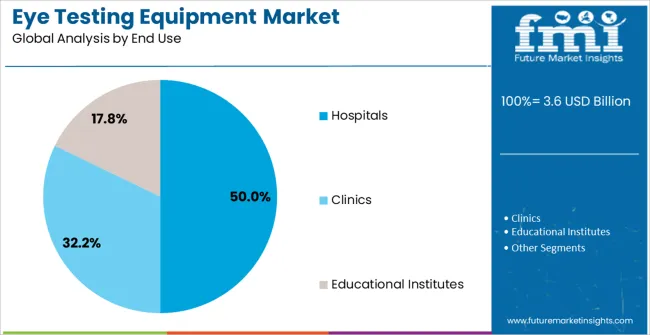
Hospitals represent the largest end-use segment, projected to hold 50.0% of the eye testing equipment market revenue share in 2025. The high volume of patients requiring both routine and specialized eye care services in hospital settings drives this dominance. Hospitals typically maintain comprehensive ophthalmology departments with multiple diagnostic devices to support full-service eye care, from general examinations through complex disease management. The integration of eye care with electronic medical records and hospital information systems further reinforces hospital preference for compatible diagnostic equipment.
Clinics constitute the second major end-use segment, encompassing both ophthalmology specialty practices and optometry offices. These settings often feature more focused equipment portfolios aligned with practice specialization. Glaucoma specialty clinics emphasize perimeters and OCT, while refractive surgery centers prioritize corneal topographers and wavefront analyzers. The trend toward consolidated eye care groups and multi-location practices is creating centralized procurement decisions and standardized equipment specifications across clinic networks.
Educational Institutes including universities with optometry and ophthalmology training programs represent a smaller but strategically important segment. These institutions require comprehensive equipment inventories for teaching purposes and often serve as early adopters of emerging technologies. Their purchasing decisions influence future practitioner preferences and create demonstration effects for equipment manufacturers.
- Hospital consolidation trends: Health system mergers and acquisitions are creating centralized procurement processes and standardized equipment formularies. Equipment suppliers must navigate increasingly complex buying groups and demonstrate compatibility with system-wide technology architectures.
- Ambulatory surgery center growth: The shift of cataract and other ophthalmic surgeries to ambulatory surgery centers is creating new equipment demand patterns. These facilities require diagnostic equipment that integrates with surgical planning systems and supports efficient patient throughput.
- Telemedicine integration: The expansion of teleophthalmology is creating demand for equipment with remote diagnostic capabilities and image transmission functionality. Store-and-forward models for diabetic retinopathy screening require fundus cameras that produce standardized, transmissible images for remote interpretation.
Regional Analysis
The eye testing equipment market is segmented geographically across North America, Europe, Asia-Pacific, Latin America, and Middle East & Africa. Growth dynamics differ based on healthcare infrastructure maturity, disease prevalence patterns, and reimbursement system structures. The full report also provides market attractiveness analysis across regions.
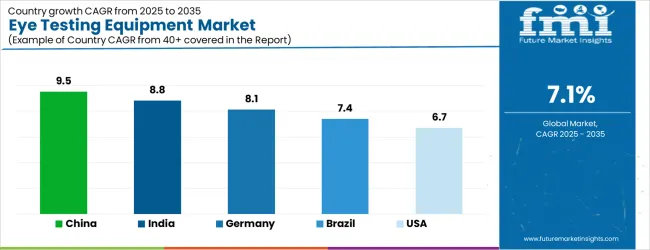
| Country | CAGR |
|---|---|
| China | 9.5% |
| India | 8.8% |
| Germany | 8.1% |
| Brazil | 7.4% |
| USA | 6.7% |
| UK | 6.0% |
| Japan | 5.3% |
Source: Future Market Insights (FMI) analysis, based on proprietary forecasting model and primary research
North America Market Analysis
North America functions as a technology-adoption leader and premium pricing zone for eye testing equipment, where clinical preference for advanced imaging and software-integrated platforms shapes procurement decisions. Major players including Carl Zeiss Meditec, Alcon, and Topcon maintain strong regional presence with extensive installed bases and service networks serving hospital systems and large ophthalmology groups.
- United States: Demand for eye testing equipment in the United States is forecasted to advance at 6.7% CAGR through 2036. Market dynamics are shaped by the consolidation of ophthalmology practices into larger groups, which creates centralized purchasing and standardized equipment specifications. The shift toward value-based care emphasizes early detection and chronic disease management, supporting investment in advanced diagnostic capabilities. The United States market was estimated at USD 1.3 billion in 2025 .
- Reimbursement structures influence equipment adoption, with procedures generating higher payments encouraging investment in associated diagnostic technologies. Medicare coverage for diabetic retinopathy screening and glaucoma testing provides predictable revenue streams that support equipment purchases. Private payer policies increasingly require documented diagnostic evidence for surgical procedure authorization, reinforcing the clinical and administrative importance of comprehensive diagnostic equipment.
- Unlike Asia, where growth is volume-led, U.S. growth is driven by technology upgrades and replacement cycles. Practices replace equipment not only for functional obsolescence but to access improved imaging resolution, faster examination times, and artificial intelligence capabilities that enhance clinical differentiation and patient experience.
FMI's analysis of eye testing equipment market in North America consists of country-wise assessment that includes the United States and Canada. Readers can find reimbursement mapping, group practice consolidation trends, and technology adoption patterns.
Europe Market Analysis
Europe acts as a quality and safety-intensive market where Medical Device Regulation compliance, health technology assessment requirements, and national reimbursement frameworks shape equipment selection. Regional players including Carl Zeiss Meditec, EssilorLuxottica, and HEINE Optotechnik maintain strong engineering and manufacturing presence aligned with European clinical preferences and regulatory standards.
- Germany: Demand for eye testing equipment in Germany is projected to rise at 8.1% CAGR through 2036. Growth is influenced by Germany's strong medical technology export orientation, dense network of ophthalmology practices, and integration of digital diagnostics into statutory health insurance frameworks. In 2024, Germany held dominant revenue share in the Western Europe market .
- Germany's ambulatory care structure, with ophthalmologists practicing in office-based settings, creates distinct equipment requirements including space-efficient designs, practice management software integration, and reliable service support. The country's aging population drives cataract and glaucoma diagnostic demand, while its strong position in medical technology exports creates a sophisticated domestic user base that influences product development.
- The Central Agency for Digital Healthcare (gematik) initiatives promoting interoperability and electronic patient records create requirements for diagnostic equipment with standardized data output and connectivity capabilities. Suppliers that provide seamless integration with practice management and electronic health record systems gain competitive advantage.
FMI's analysis of eye testing equipment market in Europe consists of country-wise assessment that includes Germany, United Kingdom, France, Italy, and Spain. Readers can find regulatory impact assessment, health technology evaluation frameworks, and reimbursement system analysis.
Asia-Pacific Market Analysis
Asia-Pacific represents the most dynamic growth region for eye testing equipment, driven by large populations with rising eye disease burden, expanding healthcare infrastructure, and increasing government commitment to blindness prevention. The region encompasses both mature markets like Japan and rapidly developing markets like China and India, each with distinct growth drivers and competitive dynamics.
- China: Eye testing equipment sales in China are projected to rise at 9.5% CAGR through 2036, the highest among major markets . Growth is supported by massive healthcare infrastructure investment under the "Healthy China 2030" initiative, which includes expanding eye care services and screening programs . The high prevalence of myopia, particularly among school-aged children, drives demand for refractive error assessment equipment. Increasing diabetes rates create corresponding demand for diabetic retinopathy screening capabilities.
- China's hospital-centric healthcare system concentrates diagnostic equipment in hospital ophthalmology departments, which serve as referral centers for large populations. County-level hospital modernization programs are creating significant equipment procurement opportunities. Domestic manufacturers compete strongly in mid-tier segments, while international brands dominate premium hospital segments with advanced imaging platforms.
- Canon Inc. reported in January 2026 that its medical business, including ophthalmology equipment, grew 2.1% to reach 580.6 billion yen in 2025, reflecting steady demand across diagnostic categories.
FMI's analysis of eye testing equipment market in Asia-Pacific consists of country-wise assessment that includes China, India, Japan, and South Korea. Readers can find hospital capacity expansion tracking, screening program implementation status, and domestic manufacturing ecosystem analysis.
- India: Demand for eye testing equipment in India is projected to rise at 8.8% CAGR through 2036 . Growth is supported by expanding eye care networks, both within government programs like the National Programme for Control of Blindness and through private hospital chains and non-governmental organizations. India's large young population creates sustained demand for refractive error correction, while its aging population and high diabetes prevalence drive cataract and diabetic retinopathy diagnostic requirements.
- The unique Indian eye care model, featuring high-volume, low-cost cataract surgery centers, creates demand for durable, efficient diagnostic equipment optimized for throughput. Equipment must withstand intensive daily use and require minimal maintenance. Cost sensitivity is significant, creating opportunities for value-positioned products and refurbished equipment programs.
- Teleophthalmology initiatives, particularly for diabetic retinopathy screening in rural areas, are driving demand for fundus cameras with reliable image quality and transmission capabilities. The Aravind Eye Care System model of comprehensive, community-connected eye care continues to influence equipment requirements across the subcontinent.
FMI's analysis of eye testing equipment market in Asia-Pacific consists of country-wise assessment that includes China, India, Japan, and South Korea. Readers can find public health program analysis, private provider network expansion tracking, and equipment localization trends.
Competitive Aligners for Market Players
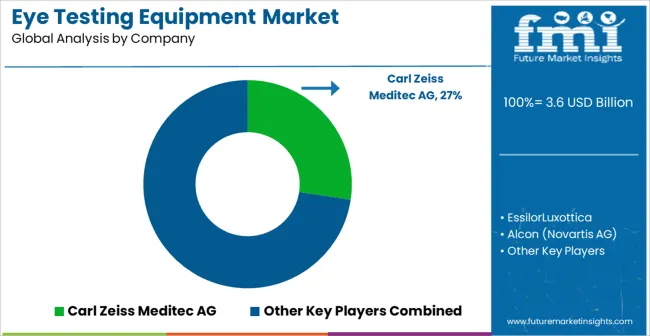
The eye testing equipment market is moderately consolidated at the global level, with multinational diagnostic and ophthalmic technology specialists accounting for significant value share, while regional manufacturers compete effectively in mid-tier and price-sensitive segments. As per FMI estimates, the top eight global players collectively control substantial market value, particularly in advanced imaging and premium hospital segments. The primary competitive variable is not hardware manufacturing cost alone but imaging performance, software capabilities, regulatory certification, and clinical evidence supporting diagnostic accuracy.
Large integrated players such as Carl Zeiss Meditec AG, Topcon Corporation, and NIDEK Co., Ltd. benefit from scale advantages in optical engineering, software development, and global regulatory compliance. Companies with comprehensive product portfolios spanning diagnostic, surgical, and vision care categories can offer integrated solutions to hospital systems and large ophthalmology groups. Structural advantage also comes from established distribution networks, service infrastructure, and relationships with key opinion leaders who influence equipment selection.
Buyer behavior in this market reflects professional procurement processes in hospital systems and group practices. Purchasing decisions involve clinicians who specify technical requirements, administrators who evaluate total cost of ownership, and sometimes external consultants who advise on technology strategy. Framework agreements with large health systems may include multi-year commitments with volume-based pricing and service level agreements.
Topcon Corporation underwent significant corporate transformation in 2025, with the company delisting from the Tokyo Stock Exchange in December 2025 following a management buyout backed by KKR and JIC Capital . This privatization enables longer-term investment focus without quarterly earnings pressure, potentially accelerating product development initiatives.
HEINE Optotechnik received the Good Design Award 2025 for its BETA X Otoscope, featuring integrated examination light and modular expandability for anterior eye examination beyond traditional otoscopy applications . This recognition highlights ongoing innovation in diagnostic instrument design and functionality.
Recent Developments
- Carl Zeiss Meditec AG - Financial Performance (December 2025): Carl Zeiss Meditec reported fiscal year 2024/25 revenue of EUR 2,228 million, an increase of +7.8%, with ophthalmology strategic business unit growing +8.5%. Order intake reached EUR 2,288 million, up +18.2% with growth across all regions .
- EssilorLuxottica - Annual Results (February 2026): EssilorLuxottica announced full-year 2025 revenue of EUR 28,491 million, +11.2% at constant exchange rates, with myopia management solutions portfolio recording +22% revenue growth worldwide. The company confirmed strong progress in medtech transformation and wearable technology integration .
- Bausch + Lomb - Product Pipeline Update (October 2025): Bausch + Lomb reported third-quarter 2025 results with revenue of USD 1.281 billion, up 7%, driven by pharmaceuticals and vision care segments. The company advanced its R&D pipeline with next-generation LUMIFY Phase 3 study meeting endpoints and initiated enrollment for multiple clinical studies including bioactive lens development .
- Canon Inc. - Business Performance (January 2026): Canon reported 2025 fiscal year results with medical business revenue reaching 580.6 billion yen, a 2.1% increase, contributing to overall record revenue of 4,624.7 billion yen .
Key Players in the Eye Testing Equipment Market
- Carl Zeiss Meditec AG
- EssilorLuxottica
- Alcon (Novartis AG)
- Topcon Corporation
- NIDEK Co., Ltd.
- Canon Inc.
- Bausch + Lomb (Bausch Health Companies Inc.)
- HEINE Optotechnik GmbH & Co. KG
Scope of Report
| Metric | Value |
|---|---|
| Quantitative Units | USD 3.86 billion (2026) to USD 7.6 billion (2036), at a CAGR of 7.1% |
| Market Definition | The eye testing equipment market comprises the global production and supply of diagnostic devices for ocular examination, disease detection, and vision function assessment used across hospitals, clinics, and educational institutions. |
| Equipment Type Segmentation | Slit Lamp, Perimeter, Bio Meter, Tonometer, Fundus Camera, Optical Coherence Tomography Scanner, Auto Refractor, Keratometer, Ophthalmoscope, Corneal Topography |
| Application Type Segmentation | General Examination, Cataract, Glaucoma, Other Eye Diseases |
| End Use Segmentation | Hospitals, Clinics, Educational Institutes |
| Region Segmentation | North America, Europe, Asia-Pacific, Latin America, Middle East & Africa |
| Countries Covered | United States, Canada, Germany, United Kingdom, France, Italy, Spain, China, India, Japan, South Korea, Brazil and 40+ countries |
| Key Companies Profiled | Carl Zeiss Meditec AG, EssilorLuxottica, Alcon (Novartis AG), Topcon Corporation, NIDEK Co., Ltd., Canon Inc., Bausch + Lomb (Bausch Health Companies Inc.), HEINE Optotechnik GmbH & Co. KG |
| Forecast Period | 2026 to 2036 |
| Approach | Hybrid top-down and bottom-up market modeling validated through primary interviews with eye testing equipment manufacturers, optical component suppliers, and clinical procurement leaders, supported by trade benchmarking and installation base analysis |
Eye Testing Equipment Market Analysis by Segments
Equipment Type:
- Slit Lamp
- Perimeter
- Bio Meter
- Tonometer
- Fundus Camera
- Optical Coherence Tomography Scanner
- Auto Refractor
- Keratometer
- Ophthalmoscope
- Corneal Topography
Application Type:
- General Examination
- Cataract
- Glaucoma
- Other Eye Diseases
End Use:
- Hospitals
- Clinics
- Educational Institutes
Region:
- North America (United States, Canada, Mexico)
- Latin America (Brazil, Chile, Rest of Latin America)
- Western Europe (Germany, United Kingdom, Italy, Spain, France, Nordic, BENELUX, Rest of Western Europe)
- Eastern Europe (Russia, Poland, Hungary, Balkan & Baltic, Rest of Eastern Europe)
- East Asia (China, Japan, South Korea)
- South Asia and Pacific (India, ASEAN, Australia & New Zealand, Rest of South Asia and Pacific)
- Middle East & Africa (Kingdom of Saudi Arabia, Other GCC Countries, Turkiye, South Africa, Other African Union, Rest of Middle East & Africa)
Bibliography
- Carl Zeiss Meditec AG. (2025, December 11). Carl Zeiss Meditec closes fiscal year 2024/25 with solid growth in revenue and slight increase in EBITA. Company Press Release.
- Bausch + Lomb Corporation. (2025, October 29). Bausch + Lomb Announces Third-Quarter 2025 Results. Business Wire.
- Topcon Corporation. (2025, December 1). (Notice of Delisting of Company Shares). Topcon Investor Relations.
- Canon Inc. (2026, January 30). 2025 Fiscal Year Results Announcement. ZOL News.
- HEINE Optotechnik GmbH & Co. KG. (2025). BETA X Otoscope | 2025. Good Design Award Winner.
- World Health Organization. (2023). Blindness and vision impairment report.
This bibliography is provided for reader reference and is not exhaustive. The full report contains the complete reference list and detailed citations.
This Report Addresses
- Market intelligence to enable structured strategic decision-making across eye testing equipment manufacturers, optical component suppliers, hospital procurement departments, and clinical technology advisors, focusing on the shift from stand-alone diagnostic devices toward integrated, multi-modal imaging platforms and software-enabled workflows.
- Market size estimation and 10-year revenue forecasts, including validated CAGR and absolute dollar opportunity sizing.
- Growth opportunity mapping across Equipment Type, Application Type, and End Use, with emphasis on multi-modal imaging platforms, artificial intelligence-driven diagnostics, and telemedicine connectivity solutions.
- Segment and regional forecasting covering the eye testing equipment landscape, alongside demand trajectories driven by aging populations, rising prevalence of eye diseases, and healthcare infrastructure expansion in emerging markets.
- Competition strategy assessment, including analysis of multi-modal platform development, artificial intelligence algorithm integration, and connectivity solutions enabling telemedicine and electronic health record interoperability.
- Product and technology tracking focused on imaging resolution advancement, scanning speed optimization, automated examination features, and portable device expansion serving screening programs and distributed care models.
- Regulatory policy analysis covering medical device registration requirements, health technology assessment frameworks, and reimbursement structures influencing equipment adoption across hospital and clinical settings.
- Report delivery in PDF, Excel, and presentation-ready formats to support executive planning, product development alignment, and competitive benchmarking across mature and high-growth markets including the United States, Germany, China, and India.
Frequently Asked Questions
How large is the eye testing equipment market in 2026?
Demand for eye testing equipment is estimated to be valued at USD 3.86 billion in 2026.
What will be the market size of eye testing equipment by 2036?
Market size for eye testing equipment is projected to reach USD 7.6 billion by 2036.
What is the expected demand growth for eye testing equipment between 2026 and 2036?
Demand for eye testing equipment is expected to grow at a 7.1% CAGR between 2026 and 2036.
Which equipment type is poised to lead global sales?
Slit Lamp is expected to remain the leading equipment type, accounting for 20.0% share in 2025 due to its clinical versatility and diagnostic indispensability.
Which application type segment contributes the largest share?
General Examination commands 40.0% share, reflecting its foundational role in routine vision screening and comprehensive eye examinations.
Which end-use segment is the largest consumer of eye testing equipment?
Hospitals represent the largest end-use segment with 50.0% share, driven by high patient volumes and comprehensive diagnostic requirements.
How significant is the role of aging population in driving market growth?
Aging population is a primary demand driver, as older adults experience higher incidence of cataracts, glaucoma, and macular degeneration requiring diagnostic services.
What is driving demand in the United States?
Practice consolidation, value-based care emphasis on early detection, and technology replacement cycles supporting advanced imaging adoption.
What is the United States growth outlook?
The United States is projected to expand at a 6.7% CAGR during 2026 to 2036.
Why is Europe characterized as a quality-intensive market?
European demand is shaped by Medical Device Regulation compliance, health technology assessment requirements, and national reimbursement frameworks.
What is Germany growth outlook?
Germany is projected to expand at an 8.1% CAGR during 2026 to 2036.
Does the report cover the United Kingdom?
Yes, the United Kingdom is included within Europe under the regional coverage framework.
What is the United Kingdom growth outlook?
The United Kingdom is projected to expand at a 6.0% CAGR during 2026 to 2036.
Does the report cover China?
Yes, China is included within Asia-Pacific and is a high-growth country market covered in the report.
What is the China growth outlook?
China is projected to expand at a 9.5% CAGR during 2026 to 2036.
Does the report cover India?
Yes, India is included within Asia-Pacific and is covered in the country-wise assessment.
What is the India growth outlook?
India is projected to expand at an 8.8% CAGR during 2026 to 2036.
Does the report cover Japan?
Yes, Japan is included within Asia-Pacific under the regional scope of analysis.
What is the Japan growth outlook?
Japan is projected to expand at a 5.3% CAGR during 2026 to 2036.
Does the report cover Brazil?
Yes, Brazil is included within Latin America and is covered in the country-wise assessment.
What is the Brazil growth outlook?
Brazil is projected to expand at a 7.4% CAGR during 2026 to 2036.
What is eye testing equipment and what is it mainly used for?
Eye testing equipment comprises diagnostic devices used to detect, measure, and monitor ocular conditions and visual function, including slit lamps for eye structure examination, OCT for retinal imaging, and auto refractors for vision assessment.
What does the eye testing equipment market mean in this report?
It refers to the global manufacturing and supply of diagnostic devices for eye examination by equipment type, application, end use, and region, measured in value terms.
What is included in the scope of this report?
Scope includes market sizing and forecasting for 2026 to 2036, segmentation by equipment type, application type, end use, and region, along with competitive assessment and country-wise outlook.
What is excluded from the scope of this report?
The scope excludes surgical equipment, consumables, vision correction products like spectacles and contact lenses, and revenues from eye care services, focusing strictly on diagnostic equipment manufacturing.
Preview the report firsthand - request a free sample
Get SampleGet the brochure for pricing and purchase details.
Get PDFTable of Content
- Executive Summary
- Global Market Outlook
- Demand-side Trends
- Supply-side Trends
- Technology Roadmap Analysis
- Analysis and Recommendations
- Market Overview
- Market Coverage / Taxonomy
- Market Definition / Scope / Limitations
- Research Methodology
- Chapter Orientation
- Analytical Lens and Working Hypotheses
- Market Structure, Signals, and Trend Drivers
- Benchmarking and Cross-market Comparability
- Market Sizing, Forecasting, and Opportunity Mapping
- Research Design and Evidence Framework
- Desk Research Programme (Secondary Evidence)
- Company Annual and Sustainability Reports
- Peer-reviewed Journals and Academic Literature
- Corporate Websites, Product Literature, and Technical Notes
- Earnings Decks and Investor Briefings
- Statutory Filings and Regulatory Disclosures
- Technical White Papers and Standards Notes
- Trade Journals, Industry Magazines, and Analyst Briefs
- Conference Proceedings, Webinars, and Seminar Materials
- Government Statistics Portals and Public Data Releases
- Press Releases and Reputable Media Coverage
- Specialist Newsletters and Curated Briefings
- Sector Databases and Reference Repositories
- FMI Internal Proprietary Databases and Historical Market Datasets
- Subscription Datasets and Paid Sources
- Social Channels, Communities, and Digital Listening Inputs
- Additional Desk Sources
- Expert Input and Fieldwork (Primary Evidence)
- Primary Modes
- Qualitative Interviews and Expert Elicitation
- Quantitative Surveys and Structured Data Capture
- Blended Approach
- Why Primary Evidence is Used
- Field Techniques
- Interviews
- Surveys
- Focus Groups
- Observational and In-context Research
- Social and Community Interactions
- Stakeholder Universe Engaged
- C-suite Leaders
- Board Members
- Presidents and Vice Presidents
- R&D and Innovation Heads
- Technical Specialists
- Domain Subject-matter Experts
- Scientists
- Physicians and Other Healthcare Professionals
- Governance, Ethics, and Data Stewardship
- Research Ethics
- Data Integrity and Handling
- Primary Modes
- Tooling, Models, and Reference Databases
- Desk Research Programme (Secondary Evidence)
- Data Engineering and Model Build
- Data Acquisition and Ingestion
- Cleaning, Normalisation, and Verification
- Synthesis, Triangulation, and Analysis
- Quality Assurance and Audit Trail
- Market Background
- Market Dynamics
- Drivers
- Restraints
- Opportunity
- Trends
- Scenario Forecast
- Demand in Optimistic Scenario
- Demand in Likely Scenario
- Demand in Conservative Scenario
- Opportunity Map Analysis
- Product Life Cycle Analysis
- Supply Chain Analysis
- Investment Feasibility Matrix
- Value Chain Analysis
- PESTLE and Porter’s Analysis
- Regulatory Landscape
- Regional Parent Market Outlook
- Production and Consumption Statistics
- Import and Export Statistics
- Market Dynamics
- Global Market Analysis 2021 to 2025 and Forecast, 2026 to 2036
- Historical Market Size Value (USD Million) Analysis, 2021 to 2025
- Current and Future Market Size Value (USD Million) Projections, 2026 to 2036
- Y-o-Y Growth Trend Analysis
- Absolute $ Opportunity Analysis
- Global Market Pricing Analysis 2021 to 2025 and Forecast 2026 to 2036
- Global Market Analysis 2021 to 2025 and Forecast 2026 to 2036, By Equipment Type
- Introduction / Key Findings
- Historical Market Size Value (USD Million) Analysis By Equipment Type , 2021 to 2025
- Current and Future Market Size Value (USD Million) Analysis and Forecast By Equipment Type , 2026 to 2036
- Slit Lamp
- Perimeter
- Bio Meter
- Tonometer
- Slit Lamp
- Y-o-Y Growth Trend Analysis By Equipment Type , 2021 to 2025
- Absolute $ Opportunity Analysis By Equipment Type , 2026 to 2036
- Global Market Analysis 2021 to 2025 and Forecast 2026 to 2036, By Application Type
- Introduction / Key Findings
- Historical Market Size Value (USD Million) Analysis By Application Type, 2021 to 2025
- Current and Future Market Size Value (USD Million) Analysis and Forecast By Application Type, 2026 to 2036
- General Examination
- Cataract
- Glaucoma
- Other Eye Diseases
- General Examination
- Y-o-Y Growth Trend Analysis By Application Type, 2021 to 2025
- Absolute $ Opportunity Analysis By Application Type, 2026 to 2036
- Global Market Analysis 2021 to 2025 and Forecast 2026 to 2036, By End Use
- Introduction / Key Findings
- Historical Market Size Value (USD Million) Analysis By End Use, 2021 to 2025
- Current and Future Market Size Value (USD Million) Analysis and Forecast By End Use, 2026 to 2036
- Hospitals
- Clinics
- Educational Institutes
- Hospitals
- Y-o-Y Growth Trend Analysis By End Use, 2021 to 2025
- Absolute $ Opportunity Analysis By End Use, 2026 to 2036
- Global Market Analysis 2021 to 2025 and Forecast 2026 to 2036, By Region
- Introduction
- Historical Market Size Value (USD Million) Analysis By Region, 2021 to 2025
- Current Market Size Value (USD Million) Analysis and Forecast By Region, 2026 to 2036
- North America
- Latin America
- Western Europe
- Eastern Europe
- East Asia
- South Asia and Pacific
- Middle East & Africa
- Market Attractiveness Analysis By Region
- North America Market Analysis 2021 to 2025 and Forecast 2026 to 2036, By Country
- Historical Market Size Value (USD Million) Trend Analysis By Market Taxonomy, 2021 to 2025
- Market Size Value (USD Million) Forecast By Market Taxonomy, 2026 to 2036
- By Country
- USA
- Canada
- Mexico
- By Equipment Type
- By Application Type
- By End Use
- By Country
- Market Attractiveness Analysis
- By Country
- By Equipment Type
- By Application Type
- By End Use
- Key Takeaways
- Latin America Market Analysis 2021 to 2025 and Forecast 2026 to 2036, By Country
- Historical Market Size Value (USD Million) Trend Analysis By Market Taxonomy, 2021 to 2025
- Market Size Value (USD Million) Forecast By Market Taxonomy, 2026 to 2036
- By Country
- Brazil
- Chile
- Rest of Latin America
- By Equipment Type
- By Application Type
- By End Use
- By Country
- Market Attractiveness Analysis
- By Country
- By Equipment Type
- By Application Type
- By End Use
- Key Takeaways
- Western Europe Market Analysis 2021 to 2025 and Forecast 2026 to 2036, By Country
- Historical Market Size Value (USD Million) Trend Analysis By Market Taxonomy, 2021 to 2025
- Market Size Value (USD Million) Forecast By Market Taxonomy, 2026 to 2036
- By Country
- Germany
- UK
- Italy
- Spain
- France
- Nordic
- BENELUX
- Rest of Western Europe
- By Equipment Type
- By Application Type
- By End Use
- By Country
- Market Attractiveness Analysis
- By Country
- By Equipment Type
- By Application Type
- By End Use
- Key Takeaways
- Eastern Europe Market Analysis 2021 to 2025 and Forecast 2026 to 2036, By Country
- Historical Market Size Value (USD Million) Trend Analysis By Market Taxonomy, 2021 to 2025
- Market Size Value (USD Million) Forecast By Market Taxonomy, 2026 to 2036
- By Country
- Russia
- Poland
- Hungary
- Balkan & Baltic
- Rest of Eastern Europe
- By Equipment Type
- By Application Type
- By End Use
- By Country
- Market Attractiveness Analysis
- By Country
- By Equipment Type
- By Application Type
- By End Use
- Key Takeaways
- East Asia Market Analysis 2021 to 2025 and Forecast 2026 to 2036, By Country
- Historical Market Size Value (USD Million) Trend Analysis By Market Taxonomy, 2021 to 2025
- Market Size Value (USD Million) Forecast By Market Taxonomy, 2026 to 2036
- By Country
- China
- Japan
- South Korea
- By Equipment Type
- By Application Type
- By End Use
- By Country
- Market Attractiveness Analysis
- By Country
- By Equipment Type
- By Application Type
- By End Use
- Key Takeaways
- South Asia and Pacific Market Analysis 2021 to 2025 and Forecast 2026 to 2036, By Country
- Historical Market Size Value (USD Million) Trend Analysis By Market Taxonomy, 2021 to 2025
- Market Size Value (USD Million) Forecast By Market Taxonomy, 2026 to 2036
- By Country
- India
- ASEAN
- Australia & New Zealand
- Rest of South Asia and Pacific
- By Equipment Type
- By Application Type
- By End Use
- By Country
- Market Attractiveness Analysis
- By Country
- By Equipment Type
- By Application Type
- By End Use
- Key Takeaways
- Middle East & Africa Market Analysis 2021 to 2025 and Forecast 2026 to 2036, By Country
- Historical Market Size Value (USD Million) Trend Analysis By Market Taxonomy, 2021 to 2025
- Market Size Value (USD Million) Forecast By Market Taxonomy, 2026 to 2036
- By Country
- Kingdom of Saudi Arabia
- Other GCC Countries
- Turkiye
- South Africa
- Other African Union
- Rest of Middle East & Africa
- By Equipment Type
- By Application Type
- By End Use
- By Country
- Market Attractiveness Analysis
- By Country
- By Equipment Type
- By Application Type
- By End Use
- Key Takeaways
- Key Countries Market Analysis
- USA
- Pricing Analysis
- Market Share Analysis, 2025
- By Equipment Type
- By Application Type
- By End Use
- Canada
- Pricing Analysis
- Market Share Analysis, 2025
- By Equipment Type
- By Application Type
- By End Use
- Mexico
- Pricing Analysis
- Market Share Analysis, 2025
- By Equipment Type
- By Application Type
- By End Use
- Brazil
- Pricing Analysis
- Market Share Analysis, 2025
- By Equipment Type
- By Application Type
- By End Use
- Chile
- Pricing Analysis
- Market Share Analysis, 2025
- By Equipment Type
- By Application Type
- By End Use
- Germany
- Pricing Analysis
- Market Share Analysis, 2025
- By Equipment Type
- By Application Type
- By End Use
- UK
- Pricing Analysis
- Market Share Analysis, 2025
- By Equipment Type
- By Application Type
- By End Use
- Italy
- Pricing Analysis
- Market Share Analysis, 2025
- By Equipment Type
- By Application Type
- By End Use
- Spain
- Pricing Analysis
- Market Share Analysis, 2025
- By Equipment Type
- By Application Type
- By End Use
- France
- Pricing Analysis
- Market Share Analysis, 2025
- By Equipment Type
- By Application Type
- By End Use
- India
- Pricing Analysis
- Market Share Analysis, 2025
- By Equipment Type
- By Application Type
- By End Use
- ASEAN
- Pricing Analysis
- Market Share Analysis, 2025
- By Equipment Type
- By Application Type
- By End Use
- Australia & New Zealand
- Pricing Analysis
- Market Share Analysis, 2025
- By Equipment Type
- By Application Type
- By End Use
- China
- Pricing Analysis
- Market Share Analysis, 2025
- By Equipment Type
- By Application Type
- By End Use
- Japan
- Pricing Analysis
- Market Share Analysis, 2025
- By Equipment Type
- By Application Type
- By End Use
- South Korea
- Pricing Analysis
- Market Share Analysis, 2025
- By Equipment Type
- By Application Type
- By End Use
- Russia
- Pricing Analysis
- Market Share Analysis, 2025
- By Equipment Type
- By Application Type
- By End Use
- Poland
- Pricing Analysis
- Market Share Analysis, 2025
- By Equipment Type
- By Application Type
- By End Use
- Hungary
- Pricing Analysis
- Market Share Analysis, 2025
- By Equipment Type
- By Application Type
- By End Use
- Kingdom of Saudi Arabia
- Pricing Analysis
- Market Share Analysis, 2025
- By Equipment Type
- By Application Type
- By End Use
- Turkiye
- Pricing Analysis
- Market Share Analysis, 2025
- By Equipment Type
- By Application Type
- By End Use
- South Africa
- Pricing Analysis
- Market Share Analysis, 2025
- By Equipment Type
- By Application Type
- By End Use
- USA
- Market Structure Analysis
- Competition Dashboard
- Competition Benchmarking
- Market Share Analysis of Top Players
- By Regional
- By Equipment Type
- By Application Type
- By End Use
- Competition Analysis
- Competition Deep Dive
- Carl Zeiss Meditec AG
- Overview
- Product Portfolio
- Profitability by Market Segments (Product/Age /Sales Channel/Region)
- Sales Footprint
- Strategy Overview
- Marketing Strategy
- Product Strategy
- Channel Strategy
- EssilorLuxottica
- Alcon (Novartis AG)
- Topcon Corporation
- NIDEK Co., Ltd.
- Canon Inc.
- Bausch + Lomb (Bausch Health Companies Inc.)
- Carl Zeiss Meditec AG
- Competition Deep Dive
- Assumptions & Acronyms Used


