

- Market Size (2026)
- USD 1.9 Bn
- Forecast (2036)
- USD 5.6 Bn
- CAGR (2026 to 2036)
- 11.4%
How big is the Fragment-Based Drug Discovery Market in 2026?
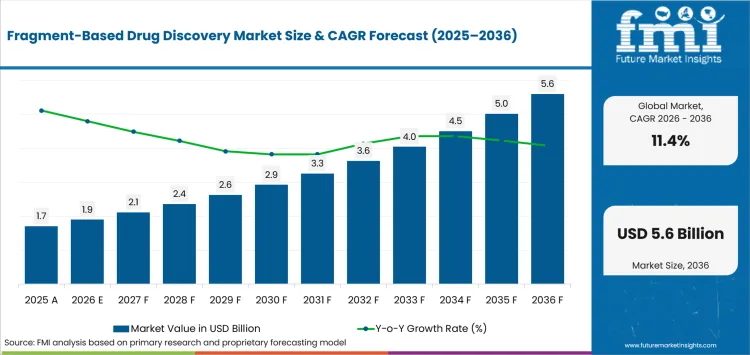
USD 1.9 billion in 2026 and USD 5.6 billion by 2036 at an 11.4% CAGR.
Demand for fragment-based drug discovery is projected to expand at 11.4% CAGR between 2026 and 2036, raising valuation from USD 1.9 billion to USD 5.6 billion. Growth is being supported by the rising scale of fragment-screening programs, which require specialized capabilities for hit identification and lead optimization. Diamond Light Source reported in September 2025 that a dengue polymerase screening campaign evaluated 1,108 fragments and identified 60 structural hits, highlighting the large screening volumes needed to generate viable development candidates. Drug developers rely on service providers that can integrate structural biology and medicinal chemistry within a single workflow.
The United Kingdom continues to strengthen its position in fragment-based drug discovery through investments in high-throughput structural screening infrastructure and translational research partnerships. In February 2025, Cancer Research Horizons and Diamond Light Source established a partnership to build a world-leading fragment-based drug discovery program, expanding the use of XChem fragment screening and improving experimental throughput and analysis capabilities. The collaboration reflects growing demand for scalable fragment-screening platforms capable of supporting both academic and commercial drug discovery projects.
Key Takeaways of Fragment-Based Drug Discovery Market
- Discovery teams use compact fragments to address difficult pockets that conventional libraries cannot reach efficiently.
- Fragment screening platforms are projected to account for 39.0% by product in 2026 due to controlled starting-point quality.
- Nuclear magnetic resonance screening is estimated to hold 31.0% by technology in 2026 owing to flexible solution-phase confirmation.
- Oncology is expected to capture 37.0% by application in 2026 because mutation-specific programs require precise structural guidance.
- Weak affinity restricts adoption as unstable proteins and assay interference produce misleading signals without orthogonal confirmation.
- Charles River Laboratories International, Inc., Evotec SE, WuXi AppTec Co., Ltd., Domainex Ltd., Sygnature Discovery Ltd., Astex Pharmaceuticals, Sprint Bioscience AB and Cresset serve distinct fragment-based discovery roles.
Analyst Perspective
"Fragment screening earns commercial value when weak hits survive orthogonal confirmation and receive practical chemistry plans. Project sponsors should compare protein readiness with structural evidence before assigning difficult targets to outsourced FBDD programs."
- Anurag Sharma, Principal Consultant, Future Market Insights
How is the Fragment-Based Drug Discovery Market segmented?
The fragment-based drug discovery industry is segmented by product, technology, application, end user, workflow and region.
Product coverage includes screening platforms and fragment libraries alongside software and specialist services for commercial discovery programs. Technology includes nuclear magnetic resonance screening, X-ray crystallography, surface plasmon resonance and computational screening while applications cover oncology, neurological disorders, infectious diseases and metabolic or rare diseases. End users include pharmaceutical companies, biotechnology companies, contract research organizations and academic or research institutes. Workflow analysis follows hit identification, lead optimization and preclinical candidate selection across connected evidence and chemistry decisions.
What makes oncology central to the application category?
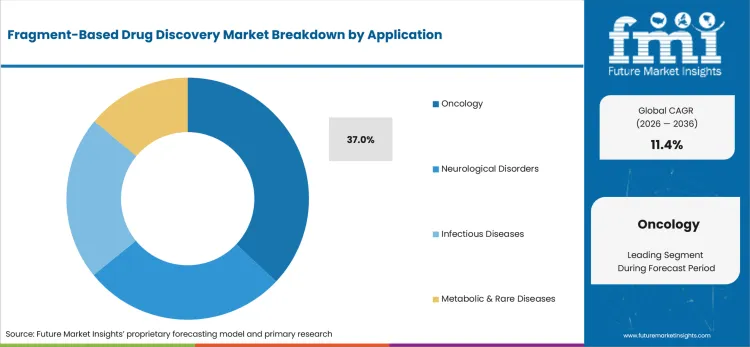
Oncology programs frequently pursue mutation-defined pockets and protein interfaces that resist conventional screening across heterogeneous tumor biology. Fragment-derived compounds need target-engagement evidence and molecular diagnostics context to secure broader preclinical investment across commercial programs.
- Based on application, oncology is projected to account for 37.0% share in 2026 due to mutation-specific programs that require compact starting molecules and structural guidance.
- Astex presented April 2026 MYC inhibitor results that applied fragment-based discovery to direct small-molecule inhibition of a difficult cancer regulator. Structural evidence helps oncology teams judge selectivity ahead of committing commercial resources to longer optimization campaigns across validated target programs.
What supports fragment screening platforms within the product category?
Fragment screening platforms organize library selection and assay controls around a defined route toward orthogonal confirmation across varied target classes. Consistent protein expression prevents weak signals from consuming medicinal chemistry capacity during expensive fragment expansion decisions that govern project continuity.
- By product, fragment screening platforms are estimated to hold 39.0% share in 2026 owing to their control over starting-point quality and downstream chemistry efficiency.
- Protein readiness determines whether screening signals survive transfer into structural and high-content screening assays across partner workflows.
How does nuclear magnetic resonance screening shape technology selection?
Nuclear magnetic resonance screening detects weak interactions in solution with ligand-observed and protein-observed measurements across varied targets. The method preserves binding evidence in solution before structural teams commit limited crystallography capacity.
- In 2026, nuclear magnetic resonance screening is expected to lead technology demand with 31.0% share because complementary observation modes support primary screening and confirmation.
- Surface plasmon resonance measures kinetics across prioritized fragments as X-ray crystallography resolves binding geometry for structural design. Integrated bioinformatics tools preserve experimental records so teams can compare evidence across successive chemistry cycles.
What role do pharmaceutical companies play within the end-user category?
Pharmaceutical companies coordinate target biology with structural analysis and medicinal chemistry under governed portfolio decisions and multiyear budgets. Specialist clinical research organizations add capacity without separating confirmation from later optimization and candidate-selection decisions.
- Pharmaceutical companies are set to lead the end-user category with 43.0% share in 2026 due to coordinated funding and accountable ownership across long discovery programs.
- Biotechnology companies and academic institutes use modular partners as internal capacity remains narrow or project timing requires specialist methods. Integrated providers reduce handoff risk by preserving assay records and chemistry rationale across organizational boundaries and portfolio governance.
What are the drivers, restraints and opportunities in the Fragment-Based Drug Discovery Market?
Difficult-target programs support fragment-led discovery as weak affinity raises confirmation costs and automated structural workflows expand usable hit capacity.
- Driver: Commercial validation directs compact libraries toward pockets that larger screening compounds cannot address efficiently.
- Restraint: Weak fragment affinity requires stable proteins and sensitive assays before medicinal chemistry teams commit further resources.
- Opportunity: Automated crystallography and covalent libraries increase actionable starting points as computational ranking directs limited experimental capacity.
Fragment-derived assets gain commercial credibility through transactions that reward early discovery quality. Sprint Bioscience completed the TREX1 sale to Gilead in November 2025 with USD 14 million upfront and potential payments reaching USD 400 million. The agreement rewards clear target biology and transferable chemistry plans.
Protein instability or assay interference can generate false signals across repeated experiments. Qualified analytical testing services establish reproducibility across assay transfers and protect chemistry capacity. Written stop criteria prevent recurring synthesis work from absorbing limited specialist budgets.
Covalent fragments stabilize weak target engagement and reveal binding sites that reversible libraries miss. Automated crystallography and AI-enabled design rank those hits before wider synthesis campaigns. Providers capture revenue by connecting validated binding with rapid analogue production and medicinal chemistry.
Which country CAGRs are profiled in the Fragment-Based Drug Discovery Market?
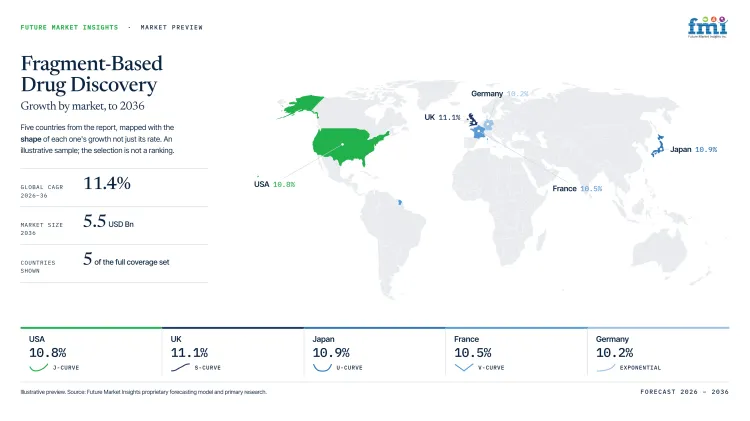
| Country | CAGR |
|---|---|
| United Kingdom | 11.1% |
| Japan | 10.9% |
| United States | 10.8% |
| France | 10.5% |
| Germany | 10.2% |
How do country-level CAGRs compare in the Fragment-Based Drug Discovery Market?
The country forecasts are tightly grouped across the Fragment-Based Drug Discovery (FBDD) market, with only 0.9 percentage points separating the UK and Germany. The limited spread suggests that FBDD is becoming an established component of early-stage drug discovery across major pharmaceutical research hubs. Growth differences are influenced more by R&D intensity, drug discovery infrastructure and integration of computational and biophysical screening technologies than by fundamental differences in market adoption.
- The United Kingdom benefits from a strong biotechnology ecosystem and deep expertise in structure-based drug discovery and translational research.
- Japan supports market growth through continued investment in innovative drug development and advanced screening platforms.
- The United States reflects strong demand from pharmaceutical companies and CROs seeking to improve lead identification and optimization efficiency.
- France continues to expand through increasing collaboration between academic research institutes and biopharmaceutical developers.
- Germany maintains steady momentum through its established life sciences sector and ongoing investment in precision drug discovery technologies.
Comparable CAGRs may still reflect different market conditions because research funding, pharmaceutical pipelines, collaboration networks and access to screening infrastructure vary across countries. The full report provides country-level CAGR analysis across North America, Latin America, Europe, East Asia, South Asia, Oceania and the Middle East and Africa.
Country-wise Analysis
- United Kingdom programs combine Diamond XChem access with Oxford and Cambridge discovery companies that connect structural screening to protein science and medicinal chemistry for confidential projects. The United Kingdom's fragment-based drug discovery outlook is anticipated to advance at 11.1% CAGR over the assessment period as specialist teams shorten transfers between screening evidence and analogue design. In May 2025, the UK government reported BioNTech's planned investment of up to £1 billion across ten years including a Cambridge research center focused on oncology and structural biology, although smaller sponsors still face beamtime competition and follow-up chemistry costs.
- Japan’s metropolitan laboratories combine public screening programs with pharmaceutical medicinal chemistry and computational research across concentrated urban networks that serve domestic companies and external discovery projects against difficult therapeutic targets with coordinated assay development. Fragment-based drug discovery sales in Japan are forecast to expand at 10.9% CAGR by 2036, influenced by established screening access and experienced chemistry teams around major research centers and domestic technology providers. AMED reported in May 2026 that its industry-academic consortium used company compound libraries for high-throughput screening and returned results to participating firms, although FBDD projects need separate biophysical confirmation and regional specialist outsourcing capacity.
- United States programs use pharmaceutical campuses and contract research networks to protect proprietary fragment campaigns across distributed discovery clusters with extensive structural biology and medicinal chemistry capacity under formal confidentiality and data-control procedures. Adoption of fragment-based drug discovery in the United States is estimated to expand at 10.8% CAGR through 2036, aided by outsourcing routes and experienced project teams across large coastal and Midwest research clusters. The Advanced Photon Source listed mail-in access and robotic capacity for 672 samples in January 2025, although project teams must supply stable crystals and maintain disciplined shipping records across crowded facility schedules nationwide.
- France combines biotechnology clusters with ESRF access in Grenoble to provide shared structural facilities for academic groups and commercial discovery programs that pursue difficult targets across European research networks and specialist regional service routes. By 2036, France is projected to grow at 10.5% CAGR, reinforced by infrastructure that connects structural biology with medicinal chemistry and computational workflows across collaborative programs and major European research centers. The European Commission reported in May 2026 that Fragment-Screen included seven industry partners, although smaller organizations retain crystal-readiness responsibilities and depend on external chemistry capacity to progress confirmed hits within facility schedules and budgets.
- Germany links pharmaceutical discovery expertise with DESY infrastructure and integrated service capacity across established research regions that support experimental confirmation and medicinal chemistry for difficult-target programs in national pharmaceutical hubs and university networks. The German fragment-based drug discovery sector is projected to record 10.2% CAGR during the assessment period, shaped by structural biology depth and chemistry networks with specialist service routes across major German research centers. DESY reported in October 2025 that HiPhaX uses twelve-compartment holders and collects data from thousands of microcrystals, yet target tractability and assay transfer delay partner-led programs lacking coordinated downstream chemistry across external collaborations.
Who are the notable companies in the Fragment-Based Drug Discovery Market?
Charles River Laboratories International, Inc., Evotec SE, WuXi AppTec Co., Ltd., Domainex Ltd., Sygnature Discovery Ltd., Astex Pharmaceuticals, Sprint Bioscience AB and Cresset are the notable companies serving this market.
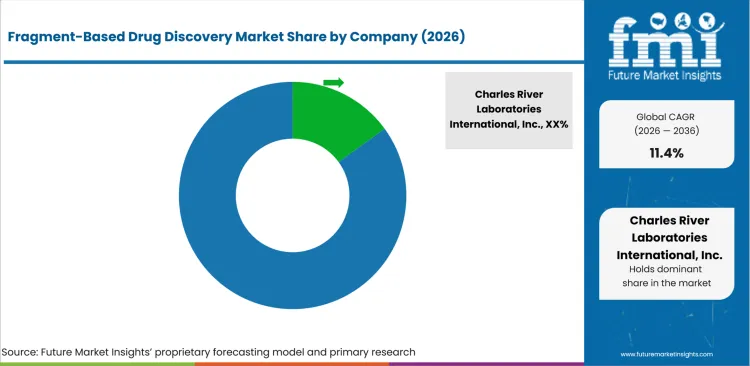
Integrated discovery organizations compete with focused FBDD developers and computational platforms across different workflow handoffs. Entry depends on credible protein science with orthogonal screening and commercial chemistry integration.
- Evotec and WuXi AppTec combine broad screening routes with structural biology and fragment-to-lead integration across international programs.
- Domainex and Sygnature Discovery combine specialist screening with biophysical confirmation and chemistry support. Astex Pharmaceuticals and Sprint Bioscience advance proprietary fragment-led assets.
- Charles River connects fragment screening with global discovery services. Cresset concentrates on virtual screening and molecular design for experimental teams.
Competitive Benchmarking: Fragment-Based Drug Discovery Market
| Company | Screening Modality Breadth | Structural Biology Integration | Fragment-to-Lead Integration | Geographic Reach |
|---|---|---|---|---|
| Charles River Laboratories International, Inc. | High | High | High | Global |
| Evotec SE | High | High | High | Global |
| WuXi AppTec Co., Ltd. | High | High | High | Global |
| Domainex Ltd. | High | High | High | United Kingdom and international |
| Sygnature Discovery Ltd. | High | High | High | United Kingdom and North America |
| Astex Pharmaceuticals | Medium | High | High | United Kingdom and partner markets |
| Sprint Bioscience AB | Medium | Medium | High | Sweden and partner markets |
| Cresset | Medium | Medium | Medium | United Kingdom and international |
Key Developments in the Fragment-Based Drug Discovery Market
- In July 2026, Astex Pharmaceuticals entered a worldwide Genentech collaboration that applies fragment-based discovery to a breast-cancer regulator. Astex received USD 25 million upfront and can receive further payments totaling more than USD 490 million.
- In June 2026, Cresset released Flare V12 with a simulation engine that cuts FEP calculation times by more than 50% from the previous version. Faster ranking helps discovery teams reduce unnecessary synthesis and testing.
- In January 2026, WuXi AppTec detailed an integrated covalent discovery platform combining cFBDD with DNA-encoded libraries and high-throughput screening. Its curated cFBDD library contains more than 2,600 structurally diverse fragments.
Key Players in the Fragment-Based Drug Discovery Market
Integrated Discovery Platforms
- Charles River Laboratories International, Inc.
- Evotec SE
- WuXi AppTec Co., Ltd.
- Sygnature Discovery Ltd.
Fragment and Structure-Based Specialists
- Domainex Ltd.
- Astex Pharmaceuticals
- Sprint Bioscience AB
Computational Discovery Platforms
- Cresset
Fragment-Based Drug Discovery Market - Report Scope
| Coverage field | Report scope |
|---|---|
| Market breakdown | By product, technology, application, end user, workflow and region. |
| Quantitative Units | Reveue in USD billion and CAGR in %. |
| Market Definition | Commercial products and services used to identify, validate and optimize low-molecular-weight fragment hits across drug discovery workflows. |
| Regions Covered | North America, Latin America, Europe, East Asia, South Asia and Pacific, and Middle East and Africa. |
| Countries Covered | United Kingdom, Japan, United States, France, Germany, and 20+ countries included in the full report. |
| Key Companies Profiled | Charles River Laboratories International, Inc., Evotec SE, WuXi AppTec Co., Ltd., Domainex Ltd., Sygnature Discovery Ltd., Astex Pharmaceuticals, Sprint Bioscience AB and Cresset. |
| Forecast Period | 2026 to 2036. |
| Approach | Primary and secondary research with market triangulation. |
Fragment-Based Drug Discovery Market - Research Methodology
| Method | Approach |
|---|---|
| Primary Research | FMI analysts gathered input from manufacturers, service providers, technology developers, distributors, end users, procurement teams, and subject-matter experts. Interviews examined purchasing decisions, product or service evaluation, adoption barriers, approval requirements, pricing considerations, and expectations for technical or commercial support. Respondents were also asked what evidence is required before a trial, pilot, or initial order develops into regular purchasing. |
| Desk Research | Desk research covered government statistics, regulatory publications, trade data, industry associations, technical literature, standards, company filings, product information, and official corporate announcements. Sources were reviewed for relevance, publication date, geographic coverage, and consistency with the defined market scope. Claims relating to performance, applications, approvals, capacity, investment, and commercial activity were retained only when supported by credible public evidence. |
| Market Sizing and Forecasting | The market model combined the baseline value with historical performance, segment structure, pricing and volume indicators, adoption levels, company participation, and country-level demand conditions. Forecast assumptions considered economic activity, investment trends, regulatory developments, technology adoption, purchasing cycles, supply availability, and barriers to wider market use. Segment and regional estimates were reconciled before the final market total was calculated. |
| Data Validation | Estimates were checked against multiple independent indicators, including public data, company activity, trade patterns, industry developments, and findings from primary interviews. Validation also tested whether products, services, applications, and company revenues fell within the defined market boundaries. Adjacent categories, unsupported claims, overlapping revenues, and activities without direct market relevance were excluded to reduce double counting and maintain consistency across segments and countries. |
Fragment-Based Drug Discovery Market by Segments
Fragment-Based Drug Discovery Market segmented by Product:
- Fragment Screening Platforms
- Biophysical Screening Platforms
- Virtual Fragment Screening Platforms
- High-throughput Screening Systems
- Fragment Libraries
- General Fragment Libraries
- Target-focused Fragment Libraries
- Covalent Fragment Libraries
- Software & Informatics
- Molecular Modeling Software
- Fragment Optimization Software
- AI-assisted Drug Design Platforms
- Services
- Contract Research Services
- Fragment Optimization Services
- Structure-based Drug Design Services
Fragment-Based Drug Discovery Market segmented by Technology:
- Nuclear Magnetic Resonance Screening
- Ligand-observed NMR
- Protein-observed NMR
- Saturation Transfer Difference NMR
- X-ray Crystallography
- Co-crystallization
- Synchrotron-based Screening
- Structure-guided Fragment Analysis
- Surface Plasmon Resonance
- Binding Affinity Analysis
- Kinetic Screening
- Real-time Interaction Analysis
- Computational Fragment Screening
- AI-based Fragment Design
- Molecular Docking
- Virtual Screening
Fragment-Based Drug Discovery Market segmented by Application:
- Oncology
- Solid Tumors
- Hematological Malignancies
- Targeted Cancer Therapy
- Neurological Disorders
- Alzheimer's Disease
- Parkinson's Disease
- Neurodegenerative Disorders
- Infectious Diseases
- Antiviral Drug Discovery
- Antibacterial Drug Discovery
- Antifungal Drug Discovery
- Metabolic & Rare Diseases
- Diabetes
- Rare Genetic Disorders
- Cardiovascular Diseases
Fragment-Based Drug Discovery Market segmented by End User:
- Pharmaceutical Companies
- Large Pharmaceutical Companies
- Mid-sized Pharmaceutical Companies
- Specialty Pharma Companies
- Biotechnology Companies
- Early-stage Biotech Firms
- Drug Discovery Startups
- Precision Medicine Companies
- Contract Research Organizations
- Preclinical Research Services
- Discovery Biology Services
- Medicinal Chemistry Services
- Academic & Research Institutes
- Universities
- Government Research Institutes
- Non-profit Research Organizations
Fragment-Based Drug Discovery Market segmented by Workflow:
- Hit Identification
- Fragment Screening
- Hit Validation
- Target Confirmation
- Lead Optimization
- Fragment Growing
- Fragment Linking
- Fragment Merging
- Preclinical Candidate Selection
- ADME Optimization
- Toxicology Assessment
- Candidate Nomination
Fragment-Based Drug Discovery Market by Region:
- North America
- United States
- Canada
- Mexico
- Latin America
- Brazil
- Chile
- Rest of Latin America
- Western Europe
- Germany
- United Kingdom
- Italy
- Spain
- France
- Nordics
- Benelux
- Rest of Western Europe
- Eastern Europe
- Russia
- Poland
- Hungary
- Balkan and Baltic States
- Rest of Eastern Europe
- East Asia
- China
- Japan
- South Korea
- South Asia and Pacific
- India
- ASEAN
- Australia and New Zealand
- Rest of South Asia and Pacific
- Middle East and Africa
- Kingdom of Saudi Arabia
- Other GCC Countries
- Türkiye
- South Africa
- Other African Union Countries
- Rest of Middle East and Africa
Research Sources and Bibliography
- Diamond Light Source. (2025, September 3). Crystallographic fragment screening of the dengue virus polymerase reveals multiple binding sites for the development of non-nucleoside antiflavivirals.
- Diamond Light Source. (2025, June 10). Diamond will host a pioneering AI-driven drug discovery consortium.
- Sprint Bioscience AB. (2025, June 4). Strategic partnership strengthens Sprint Bioscience's capabilities.
- Astex Pharmaceuticals. (2026, April 29). 2026 AACR (poster): Enabling fragment-based drug discovery for direct small molecule inhibition of MYC.
- Sprint Bioscience AB. (2025, November 24). Sprint Bioscience sells the TREX1 program to Gilead.
- Department for Business and Trade. (2025, May 20). £1 billion BioNTech investment sets way for jobs, growth, breakthroughs.
- Japan Agency for Medical Research and Development. (2026, May 29).
- Advanced Photon Source. (2025, January 7). Beamline 17-ID-B: Sector 17 - Insertion Device.
- European Commission. (2026, May 18). From fragments to high affinity binders interfacing integrated structural biology, medicinal chemistry and artificial intelligence.
- DESY. (2025, October 15). Fighting antibiotic resistance: DESY scientists advance drug development with room-temperature X-ray screening.
- Astex Pharmaceuticals. (2026, July 6). Astex Announces Exclusive Research Collaboration and License Agreement with Genentech for Breast Cancer Therapy Program.
- Cresset. (2026, June 16). Cresset releases Flare V12 to cut synthesis and testing cycles with faster, more flexible FEP.
- WuXi AppTec Co., Ltd. (2026, January 19). Redefining the Undruggable: Covalent Therapies Driving a New Era for Small Molecules.
- Sygnature Discovery Ltd. (2026, February 19). Sygnature Discovery Unveils Strategic Rebrand to Cement Status as a Global Drug Discovery Partner.
- Nuclera Ltd. / Domainex. (2026, January 13). Domainex installs eProtein Discovery system — first CRO implementation of the platform, expanding membrane-protein workflow capabilities.
- Charles River Laboratories International, Inc. (2025, October 20). Charles River and X-Chem Announce Strategic Collaboration to Enhance Hit Identification Capabilities.
- WuXi AppTec Co., Ltd. (2026, March 23). WuXi AppTec Beat Full-Year Guidance and Achieved Record Performance in 2025.
This bibliography is provided for reader reference and is not exhaustive. The full report contains the complete reference list and detailed citations.
This Report Answers
- How large is the fragment-based drug discovery market in 2026 and 2036?
- Which operating conditions support demand for fragment-based drug discovery programs?
- Which product and technology categories account for significant 2026 shares?
- How does oncology shape application demand across structure-guided programs?
- How do country growth rates differ across established discovery systems?
- Which companies provide integrated discovery and specialist fragment capabilities?
- What currently limits fragment screening across experimental and chemistry workflows?
- Which commercial opportunities arise from automation and computational prioritization?
Frequently Asked Questions
How big is the Fragment-Based Drug Discovery Market in 2026?
In 2026, the fragment-based drug discovery market is valued at USD 1.9 billion across platforms and services. Commercial spending covers curated libraries, biophysical screening, structural confirmation and medicinal chemistry that convert weak-binding signals into practical starting points for optimization programs.
What is the CAGR of the Fragment-Based Drug Discovery Market from 2026 to 2036?
The fragment-based drug discovery market is projected to expand at 11.4% CAGR from 2026 to 2036. Difficult-target programs sustain the forecast as reliable proteins, orthogonal confirmation and integrated chemistry help project teams reject false signals before expensive analogue design consumes additional resources.
Which product category is projected to account for 39.0% of the Fragment-Based Drug Discovery Market?
Fragment screening platforms are projected to account for 39.0% of the fragment-based drug discovery market in 2026. Curated libraries and controlled assays shape initial hit quality before structural teams select binding sites for fragment growing, linking or merging across optimization workflows.
How much will the Fragment-Based Drug Discovery Market add between 2026 and 2036?
The fragment-based drug discovery market is expected to add USD 3.62 billion between 2026 and 2036. Connected screening and optimization workflows support the increase as pharmaceutical companies and specialist discovery providers coordinate structural evidence with medicinal chemistry across global programs.
Which companies are active in the Fragment-Based Drug Discovery Market?
Companies active across the fragment-based drug discovery market include Charles River Laboratories International, Evotec, WuXi AppTec, Domainex, Sygnature Discovery, Astex Pharmaceuticals, Sprint Bioscience and Cresset.
Preview the report firsthand - request a free sample
Get SampleGet the brochure for pricing and purchase details.
Get PDFTable of Content
- Key Takeaways
- Market Size and CAGR
- Top Growth Driver
- Fastest Growing Segment
- Leading Region
- Key Companies
- Emerging Opportunities
- Executive Summary
- Global Market Outlook
- Demand-side Trends
- Supply-side Trends
- Technology Roadmap Analysis
- Analysis and Recommendations
- Analyst Perspective (What is happening? Why now? What should investors know?)
- Key Questions Answered
- How large is the market?
- What is the CAGR?
- What are key trends?
- Which region dominates?
- Who are the leaders?
- Market Overview
- Market Coverage / Taxonomy
- Market Definition / Scope / Limitations
- Research Methodology
- Chapter Orientation
- Analytical Lens and Working Hypotheses
- Market Structure, Signals, and Trend Drivers
- Benchmarking and Cross-market Comparability
- Market Sizing, Forecasting, and Opportunity Mapping
- Research Design and Evidence Framework
- Desk Research Programme (Secondary Evidence)
- Expert Input and Fieldwork (Primary Evidence)
- Tooling, Models, and Reference Databases
- Data Engineering and Model Build
- Quality Assurance and Audit Trail
- Market Background
- Market Dynamics (Drivers, Restraints, Opportunity, Trends)
- Scenario Forecast (Optimistic, Likely, Conservative)
- Impact Analysis
- AI Impact
- Sustainability Impact
- Regulatory Impact
- Technology Impact
- Consumer / Buyer Analysis
- Purchase Drivers
- Adoption Barriers
- Buyer Journey
- Opportunity Map Analysis
- Product Life Cycle Analysis
- Supply Chain Analysis
- Investment Feasibility Matrix
- Value Chain Analysis
- PESTLE and Porter's Analysis
- Regulatory Landscape
- Regional Parent Market Outlook
- Production and Consumption Statistics
- Import and Export Statistics
- Global Market Analysis and Forecast, 2021 to 2036
- Historical Market Size Value (USD Billion) Analysis, 2021 to 2025
- Current and Future Market Size Value (USD Billion) Projections, 2026 to 2036
- Y-o-Y Growth Trend Analysis
- Absolute $ Opportunity Analysis
- Global Market Pricing Analysis, 2021 to 2036
- Global Market Analysis and Forecast, By Product, 2021 to 2036
- Introduction / Key Findings
- Historical Market Size Value (USD Billion) Analysis By Product, 2021 to 2025
- Current and Future Market Size Value (USD Billion) Analysis and Forecast By Product, 2026 to 2036
- Fragment Screening Platforms
- Biophysical Screening Platforms
- Virtual Fragment Screening Platforms
- High-throughput Screening Systems
- Fragment Libraries
- General Fragment Libraries
- Target-focused Fragment Libraries
- Covalent Fragment Libraries
- Software & Informatics
- Molecular Modeling Software
- Fragment Optimization Software
- AI-assisted Drug Design Platforms
- Services
- Contract Research Services
- Fragment Optimization Services
- Structure-based Drug Design Services
- Fragment Screening Platforms
- Y-o-Y Growth Trend Analysis By Product, 2021 to 2025
- Absolute $ Opportunity Analysis By Product, 2026 to 2036
- Global Market Analysis and Forecast, By Technology, 2021 to 2036
- Introduction / Key Findings
- Historical Market Size Value (USD Billion) Analysis By Technology, 2021 to 2025
- Current and Future Market Size Value (USD Billion) Analysis and Forecast By Technology, 2026 to 2036
- Nuclear Magnetic Resonance Screening
- Ligand-observed NMR
- Protein-observed NMR
- Saturation Transfer Difference NMR
- X-ray Crystallography
- Co-crystallization
- Synchrotron-based Screening
- Structure-guided Fragment Analysis
- Surface Plasmon Resonance
- Binding Affinity Analysis
- Kinetic Screening
- Real-time Interaction Analysis
- Computational Fragment Screening
- AI-based Fragment Design
- Molecular Docking
- Virtual Screening
- Nuclear Magnetic Resonance Screening
- Y-o-Y Growth Trend Analysis By Technology, 2021 to 2025
- Absolute $ Opportunity Analysis By Technology, 2026 to 2036
- Global Market Analysis and Forecast, By Application, 2021 to 2036
- Introduction / Key Findings
- Historical Market Size Value (USD Billion) Analysis By Application, 2021 to 2025
- Current and Future Market Size Value (USD Billion) Analysis and Forecast By Application, 2026 to 2036
- Oncology
- Solid Tumors
- Hematological Malignancies
- Targeted Cancer Therapy
- Neurological Disorders
- Alzheimer's Disease
- Parkinson's Disease
- Neurodegenerative Disorders
- Infectious Diseases
- Antiviral Drug Discovery
- Antibacterial Drug Discovery
- Antifungal Drug Discovery
- Metabolic & Rare Diseases
- Diabetes
- Rare Genetic Disorders
- Cardiovascular Diseases
- Oncology
- Y-o-Y Growth Trend Analysis By Application, 2021 to 2025
- Absolute $ Opportunity Analysis By Application, 2026 to 2036
- Global Market Analysis and Forecast, By End User, 2021 to 2036
- Introduction / Key Findings
- Historical Market Size Value (USD Billion) Analysis By End User, 2021 to 2025
- Current and Future Market Size Value (USD Billion) Analysis and Forecast By End User, 2026 to 2036
- Pharmaceutical Companies
- Large Pharmaceutical Companies
- Mid-sized Pharmaceutical Companies
- Specialty Pharma Companies
- Biotechnology Companies
- Early-stage Biotech Firms
- Drug Discovery Startups
- Precision Medicine Companies
- Contract Research Organizations
- Preclinical Research Services
- Discovery Biology Services
- Medicinal Chemistry Services
- Academic & Research Institutes
- Universities
- Government Research Institutes
- Non-profit Research Organizations
- Pharmaceutical Companies
- Y-o-Y Growth Trend Analysis By End User, 2021 to 2025
- Absolute $ Opportunity Analysis By End User, 2026 to 2036
- Global Market Analysis and Forecast, By Workflow, 2021 to 2036
- Introduction / Key Findings
- Historical Market Size Value (USD Billion) Analysis By Workflow, 2021 to 2025
- Current and Future Market Size Value (USD Billion) Analysis and Forecast By Workflow, 2026 to 2036
- Hit Identification
- Fragment Screening
- Hit Validation
- Target Confirmation
- Lead Optimization
- Fragment Growing
- Fragment Linking
- Fragment Merging
- Preclinical Candidate Selection
- ADME Optimization
- Toxicology Assessment
- Candidate Nomination
- Hit Identification
- Y-o-Y Growth Trend Analysis By Workflow, 2021 to 2025
- Absolute $ Opportunity Analysis By Workflow, 2026 to 2036
- Global Market Analysis and Forecast, By Region, 2021 to 2036
- Introduction
- Historical Market Size Value (USD Billion) Analysis By Region, 2021 to 2025
- Current Market Size Value (USD Billion) Analysis and Forecast By Region, 2026 to 2036
- North America
- Latin America
- Western Europe
- Eastern Europe
- East Asia
- South Asia and Pacific
- Middle East & Africa
- Market Attractiveness Analysis By Region
- North America Market Analysis and Forecast, By Country, 2021 to 2036
- Historical Market Size Value (USD Billion) Trend Analysis By Market Taxonomy, 2021 to 2025
- Market Size Value (USD Billion) Forecast By Market Taxonomy, 2026 to 2036
- By Country
- USA
- Canada
- By Product
- By Technology
- By Application
- By End User
- By Workflow
- By Country
- Market Attractiveness Analysis
- By Country
- By Product
- By Technology
- By Application
- By End User
- By Workflow
- Key Takeaways
- Latin America Market Analysis and Forecast, By Country
- Historical Market Size Value (USD Billion) Trend Analysis By Market Taxonomy, 2021 to 2025
- Market Size Value (USD Billion) Forecast By Market Taxonomy, 2026 to 2036
- By Country
- Brazil
- Mexico
- Chile
- Rest of Latin America
- By Product
- By Technology
- By Application
- By End User
- By Workflow
- By Country
- Market Attractiveness Analysis
- By Country
- By Product
- By Technology
- By Application
- By End User
- By Workflow
- Key Takeaways
- Western Europe Market Analysis and Forecast, By Country
- Historical Market Size Value (USD Billion) Trend Analysis By Market Taxonomy, 2021 to 2025
- Market Size Value (USD Billion) Forecast By Market Taxonomy, 2026 to 2036
- By Country
- Germany
- UK
- Italy
- Spain
- France
- Nordic
- BENELUX
- Rest of Western Europe
- By Product
- By Technology
- By Application
- By End User
- By Workflow
- By Country
- Market Attractiveness Analysis
- By Country
- By Product
- By Technology
- By Application
- By End User
- By Workflow
- Key Takeaways
- Eastern Europe Market Analysis and Forecast, By Country
- Historical Market Size Value (USD Billion) Trend Analysis By Market Taxonomy, 2021 to 2025
- Market Size Value (USD Billion) Forecast By Market Taxonomy, 2026 to 2036
- By Country
- Russia
- Poland
- Hungary
- Balkan & Baltic
- Rest of Eastern Europe
- By Product
- By Technology
- By Application
- By End User
- By Workflow
- By Country
- Market Attractiveness Analysis
- By Country
- By Product
- By Technology
- By Application
- By End User
- By Workflow
- Key Takeaways
- East Asia Market Analysis and Forecast, By Country
- Historical Market Size Value (USD Billion) Trend Analysis By Market Taxonomy, 2021 to 2025
- Market Size Value (USD Billion) Forecast By Market Taxonomy, 2026 to 2036
- By Country
- China
- Japan
- South Korea
- By Product
- By Technology
- By Application
- By End User
- By Workflow
- By Country
- Market Attractiveness Analysis
- By Country
- By Product
- By Technology
- By Application
- By End User
- By Workflow
- Key Takeaways
- South Asia and Pacific Market Analysis and Forecast, By Country
- Historical Market Size Value (USD Billion) Trend Analysis By Market Taxonomy, 2021 to 2025
- Market Size Value (USD Billion) Forecast By Market Taxonomy, 2026 to 2036
- By Country
- India
- ASEAN
- Australia & New Zealand
- Rest of South Asia and Pacific
- By Product
- By Technology
- By Application
- By End User
- By Workflow
- By Country
- Market Attractiveness Analysis
- By Country
- By Product
- By Technology
- By Application
- By End User
- By Workflow
- Key Takeaways
- Middle East & Africa Market Analysis and Forecast, By Country
- Historical Market Size Value (USD Billion) Trend Analysis By Market Taxonomy, 2021 to 2025
- Market Size Value (USD Billion) Forecast By Market Taxonomy, 2026 to 2036
- By Country
- Kingdom of Saudi Arabia
- Other GCC Countries
- Türkiye
- South Africa
- Other African Union
- Rest of Middle East & Africa
- By Product
- By Technology
- By Application
- By End User
- By Workflow
- By Country
- Market Attractiveness Analysis
- By Country
- By Product
- By Technology
- By Application
- By End User
- By Workflow
- Key Takeaways
- Key Countries Market Analysis
- USA
- Pricing Analysis
- Market Share Analysis, 2025
- By Product
- By Technology
- By Application
- By End User
- By Workflow
- Canada
- Pricing Analysis
- Market Share Analysis, 2025
- By Product
- By Technology
- By Application
- By End User
- By Workflow
- Mexico
- Pricing Analysis
- Market Share Analysis, 2025
- By Product
- By Technology
- By Application
- By End User
- By Workflow
- Brazil
- Pricing Analysis
- Market Share Analysis, 2025
- By Product
- By Technology
- By Application
- By End User
- By Workflow
- Chile
- Pricing Analysis
- Market Share Analysis, 2025
- By Product
- By Technology
- By Application
- By End User
- By Workflow
- Germany
- Pricing Analysis
- Market Share Analysis, 2025
- By Product
- By Technology
- By Application
- By End User
- By Workflow
- UK
- Pricing Analysis
- Market Share Analysis, 2025
- By Product
- By Technology
- By Application
- By End User
- By Workflow
- Italy
- Pricing Analysis
- Market Share Analysis, 2025
- By Product
- By Technology
- By Application
- By End User
- By Workflow
- Spain
- Pricing Analysis
- Market Share Analysis, 2025
- By Product
- By Technology
- By Application
- By End User
- By Workflow
- France
- Pricing Analysis
- Market Share Analysis, 2025
- By Product
- By Technology
- By Application
- By End User
- By Workflow
- India
- Pricing Analysis
- Market Share Analysis, 2025
- By Product
- By Technology
- By Application
- By End User
- By Workflow
- ASEAN
- Pricing Analysis
- Market Share Analysis, 2025
- By Product
- By Technology
- By Application
- By End User
- By Workflow
- Australia & New Zealand
- Pricing Analysis
- Market Share Analysis, 2025
- By Product
- By Technology
- By Application
- By End User
- By Workflow
- China
- Pricing Analysis
- Market Share Analysis, 2025
- By Product
- By Technology
- By Application
- By End User
- By Workflow
- Japan
- Pricing Analysis
- Market Share Analysis, 2025
- By Product
- By Technology
- By Application
- By End User
- By Workflow
- South Korea
- Pricing Analysis
- Market Share Analysis, 2025
- By Product
- By Technology
- By Application
- By End User
- By Workflow
- Russia
- Pricing Analysis
- Market Share Analysis, 2025
- By Product
- By Technology
- By Application
- By End User
- By Workflow
- Poland
- Pricing Analysis
- Market Share Analysis, 2025
- By Product
- By Technology
- By Application
- By End User
- By Workflow
- Hungary
- Pricing Analysis
- Market Share Analysis, 2025
- By Product
- By Technology
- By Application
- By End User
- By Workflow
- Kingdom of Saudi Arabia
- Pricing Analysis
- Market Share Analysis, 2025
- By Product
- By Technology
- By Application
- By End User
- By Workflow
- Türkiye
- Pricing Analysis
- Market Share Analysis, 2025
- By Product
- By Technology
- By Application
- By End User
- By Workflow
- South Africa
- Pricing Analysis
- Market Share Analysis, 2025
- By Product
- By Technology
- By Application
- By End User
- By Workflow
- USA
- Market Structure Analysis
- Competition Dashboard
- Competition Benchmarking
- Market Share Analysis of Top Players
- By Regional
- By Product
- By Technology
- By Application
- By End User
- By Workflow
- Emerging Startups
- Innovation Benchmarking
- Competition Analysis
- Competition Deep Dive
- Charles River Laboratories International, Inc.
- Overview
- Product Portfolio
- Profitability by Market Segments
- Sales Footprint
- Strategy Overview
- Marketing Strategy
- Product Strategy
- Channel Strategy
- Evotec SE
- WuXi AppTec Co., Ltd.
- Domainex Ltd.
- Sygnature Discovery Ltd.
- Astex Pharmaceuticals
- Sprint Bioscience AB
- Cresset Group
- Albany Molecular Research Inc.
- Thermo Fisher Scientific Inc.
- Charles River Laboratories International, Inc.
- Case Studies
- Success Stories
- Recent Developments
- Competition Deep Dive
- Assumptions & Acronyms Used


