

- Market Size (2026)
- USD 700.0 Mn
- Forecast (2036)
- USD 1403.0 Mn
- CAGR (2026 to 2036)
- 7.2%
Heavy-Duty Truck Load and Axle Weight Sensor Systems Market Size, Market Forecast and Outlook By FMI
Summary of the Heavy-Duty Truck Load and Axle Weight Sensor Systems
- Demand and Growth Drivers
- Fleets adopt onboard weight visibility to improve legal payload per trip.
- Overload control and connected truck data support wider product use.
- Demand is driven by the growing use of commercial vehicle telematics and fleet management tools.
- Product and Segment View
- Air-pressure sensing leads current fitment because installation is easier on air-suspension trucks.
- Retrofit demand leads because a wide truck park lacks factory-fit payload monitoring.
- Product design and functionality align with air suspension systems and associated suspension system components.
- Geography and Competitive Outlook
- China and India show faster expansion due to truck production depth and freight corridor growth.
- North America keeps a strong revenue base due to large retrofit demand and wider telematics use.
- Product relevance overlaps with weigh in motion system and automotive OEM telematics through shared use of load and compliance data.
- Analyst Opinion
- Principal Analyst at FMI, Nikhil Kaitwade states: “Sustainable supplier advantage is built on solutions that install easily, maintain calibration integrity over time, and deliver clear, real‑time axle load visibility to drivers operating across diverse truck fleets.”
- Heavy-Duty Truck Load and Axle Weight Sensor Systems Market Value Analysis
- Legal payload control across freight fleets drives market expansion.
- Retrofit demand across trucks already in service creates a broad revenue base.
- Connected fleet data raises the commercial value of live axle load monitoring.
- Safer loading practices and fewer rework trips support wider adoption.
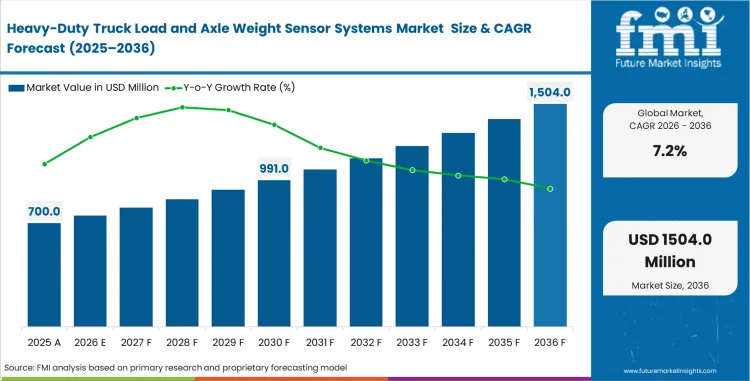
Key Takeaways
- The market was valued at USD 653.0 million in 2025.
- The market is projected to reach USD 1,403.0 million by 2036.
- Sales growth registers 7.2% CAGR across 2026 to 2036.
- Incremental opportunity from 2026 to 2036 is estimated at USD 703.0 million.
- Aftermarket retrofit leads the sales channel segment with 55.0% in 2026.
- China and India hold the steady expansion rates of 8.6% CAGR and 8.4% CAGR, respectively, through 2036.
Heavy-Duty Truck Load and Axle Weight Sensor Systems Market Definition
This market covers onboard sensor systems used to estimate axle load and gross vehicle weight across heavy trucks and related trailers. The product set covers sensors and control modules plus cab displays and warning tools used during loading and transport activity. Product relevance overlaps with the automotive sensors and the automotive pressure sensor.
Heavy-Duty Truck Load and Axle Weight Sensor Systems Market Inclusions
The market includes air-pressure based sensing, frame-strain sensing, deflection-based sensing, load-cell systems, in-cab displays, mobile visibility tools, and telematics-linked payload monitoring used across long-haul and vocational truck programs. OEM fitment and retrofit kits are both included.
Heavy-Duty Truck Load and Axle Weight Sensor Systems Market Exclusions
The market excludes fixed weighbridges and roadway weigh-in-motion systems alongside general telematics hardware sold without onboard weight measurement capability. Complete suspension assemblies sold without payload monitoring are excluded as well.
Heavy-Duty Truck Load and Axle Weight Sensor Systems Market Research Methodology
- Primary Research: Discussions with fleet service specialists and truck technology suppliers informed the market view.
- Desk Research: Review of truck production data and weight enforcement frameworks informed the evidence base.
- Market sizing and forecasting: A bottom-up build used truck parc relevance. New fitment potential and retrofit penetration shaped the forecast. Blended system pricing informed value estimates.
- Data validation: Supplier activity was cross-checked against country freight patterns. Adjacent vehicle health monitoring trends were reviewed for consistency.
Why is the Heavy-Duty Truck Load and Axle Weight Sensor Systems Market Growing?
- Payload visibility helps fleets leave loading points with a stronger legal weight position.
- Retrofit kits address a large base of trucks already in service.
- Connected fleet data raises the value of live axle load measurement.
Payload control matters most in long-haul and vocational operations using dense cargo and mixed backhaul assignments. The product helps reduce under-loading loss and lowers the chance of reload activity. Connected truck programs raise the value of onboard load data. Fleets using the fleet telematics control units and tracking devices and the smart fleet management gain a clearer route for dispatch and compliance use. Commercial value rises further in trucks using telematics-ready layouts and modern electronic systems.
Market Segmentation Analysis
The air-pressure sensors segment is estimated to account for 34.0% share in 2026 because air-suspension layouts support easier installation. The suspension-pressure category is expected to hold 38.0% share in 2026 because it fits practical axle load estimation across working truck fleets. Tractor axle groups are anticipated to capture 36.0% of the market in 2026 because drive and trailer load balance starts with core axle-group visibility. The in-cab displays segment is poised to garner 31.0% share in 2026 because drivers need immediate weight visibility during loading activity. Aftermarket retrofit is set to represent 55.0% of market share in 2026 because fleet renewal cycles are long. The long-haul tractors category is likely to account for 29.0% share in 2026 because payload control has a direct effect on trip economics. In 2026, freight carriers are expected to contribute 42.0% of total market share because line-haul fleets depend on legal load optimization.
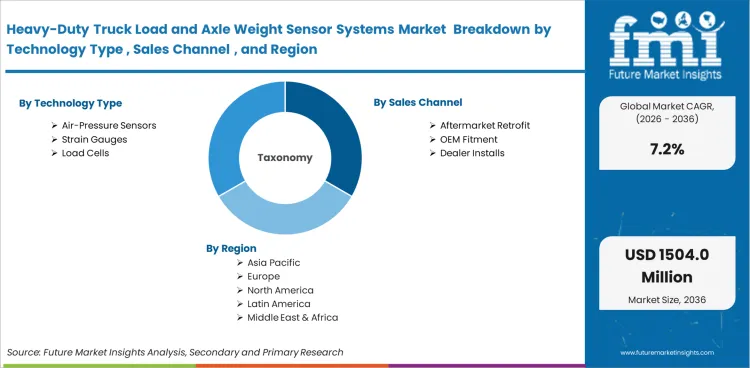
The market is divided into technology type, measurement method, installation point, output mode, sales channel, vehicle application, end use, and region. Technology covers air-pressure sensors, strain gauges, load cells, piezoelectric sensors, and MEMS modules. Measurement method includes suspension-pressure, axle-deflection, frame-strain, air-spring sensing, and hybrid sensing. Installation point covers tractor axle groups, trailer axle groups, steer axles, drive axles, and lift axles. Output mode includes in-cab displays, telematics feeds, mobile apps, gateway modules, and alarm indicators. Sales channel covers aftermarket retrofits, OEM fitment, dealer installs, fleet retrofits, and service kits. Vehicle applications include long-haul tractors, tipper trucks, refuse trucks, tanker trucks, logging trucks, and mixer trucks. End use uses freight carriers, construction fleets, mining fleets, waste fleets, municipal fleets, and agriculture fleets.
Insights into the Technology Type Segment
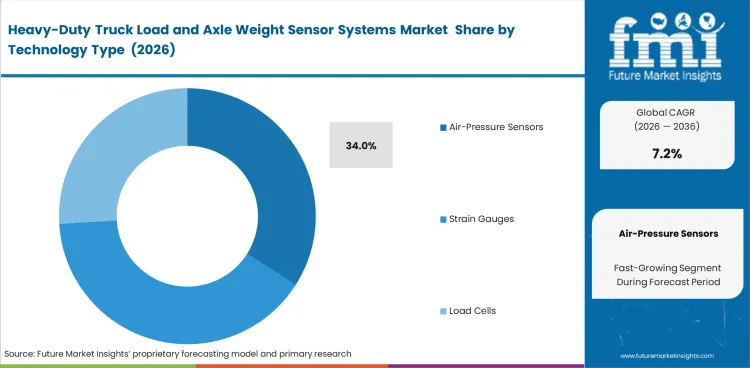
In 2026, air-pressure sensors are expected to account for 34.0% of the market. The lead comes from easier use across air-suspension truck and trailer layouts. Strain gauges and load cells support programs needing tighter structural load reading across heavier duty cycles.
Insights into the Sales Channel Segment
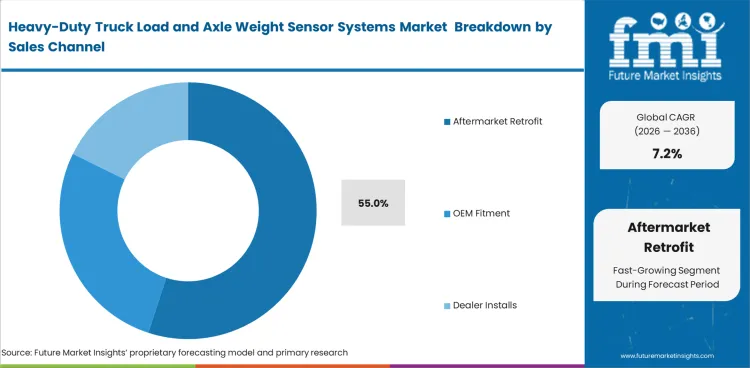
In 2026, aftermarket retrofit is projected to hold 55.0% OEM fitment expands in programs using factory integration and wider electronic control logic across the heavy commercial vehicle eps.
Insights into the Vehicle Application Segment
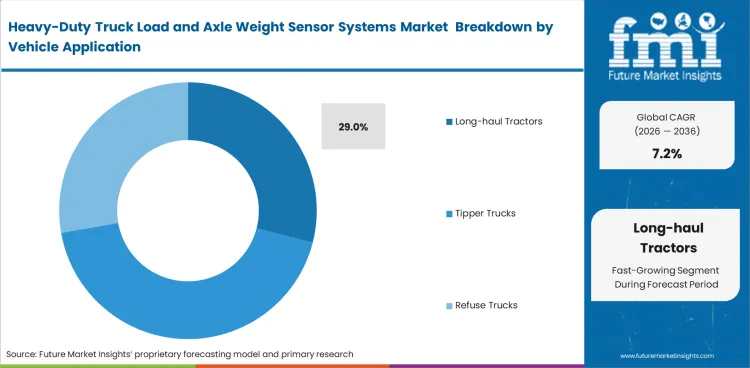
In 2026, long-haul tractors are estimated to capture 29.0% of the market. Legal payload control and route productivity keep product use high in freight corridors. Tipper trucks and refuse trucks create strong secondary demand due to variable load patterns and higher overload exposure.
Insights into the End Use Segment
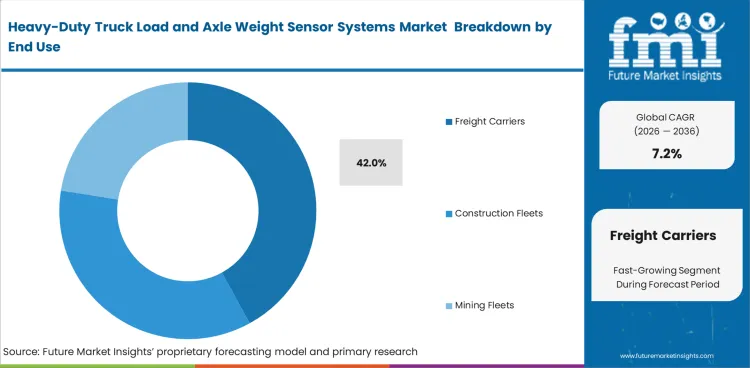
In 2026, freight carriers are projected to hold 42.0% of the market. High trip frequency and margin sensitivity increase the value of accurate onboard loading data. Construction fleets and waste fleets use the product for faster loading control and lower risk across variable material density programs.
Heavy-Duty Truck Load and Axle Weight Sensor Systems Market Drivers, Restraints, and Opportunities
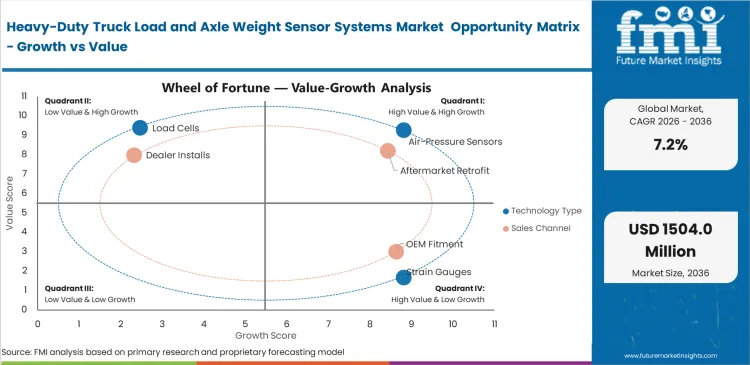
Legal payload optimization supports steady installation demand. Calibration quality and installation fit can limit output across mixed truck layouts. Connected payload data can feed broader fleet planning and compliance tools.
The market is driven by characteristics of these systems that offer practical cost savings. Adoption rises in fleets gaining from fewer scale stops and lower fine exposure and better trip yield. Compliance pressure and safety visibility weight control supports road safety and lowers the chance of loading errors before a trip starts. The Council of the European Union states that the revised heavy-duty vehicle rules keep the existing 15% target for 2025. The rules add a 45% emission reduction target from 2030 and a 65% target from 2035. A 90% target applies from 2040. Stronger enforcement and stricter standards raise the value of audit-ready fleet records and legal axle control. [1]
Payload Optimization Across Freight Networks
Freight operators use onboard weight visibility before trip start and during loading activity. Better load control supports legal gross weight and axle balance across mixed freight routes.
Retrofit Economics Across Aging Truck Fleets
Retrofit kits lead because onboard weighing capability is not universal across trucks already in service. This gap creates revenue room for suppliers offering faster installation and simple calibration support.
Analysis of Heavy-Duty Truck Load and Axle Weight Sensor Systems Market By Key Countries
.webp "Top Country Growth Comparison Heavy Duty Truck Load And Axle Weight Sensor Systems Market Cagr (2026 2036)")
| Country | CAGR |
|---|---|
| China | 8.6% |
| India | 8.4% |
| Brazil | 7.8% |
| United States | 7.1% |
| Germany | 6.8% |
| Japan | 5.9% |
Source: FMI analysis based on primary research and proprietary forecasting model
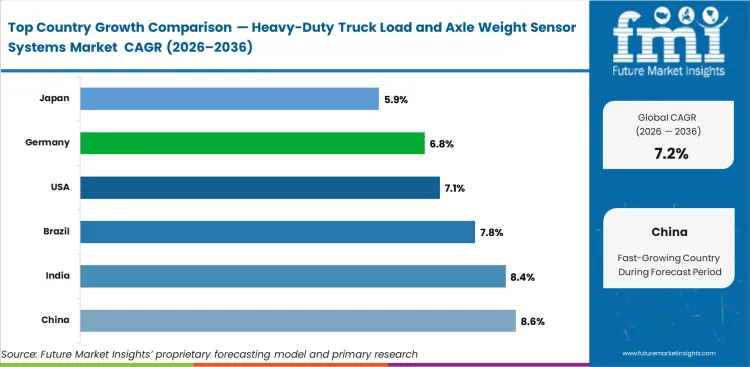
Heavy-Duty Truck Load and Axle Weight Sensor Systems Market CAGR Analysis By Country
- China is projected to advance at a CAGR of 8.6% as truck production depth and connected fleet spending support faster product uptake.
- India is projected to expand at a CAGR of 8.4% owing to rise in freight corridor growth and digital fleet tool adoption.
- Brazil is forecast to record a CAGR of 7.8% over the forecast, driven by agriculture haulage and mining traffic which promotes onboard load visibility.
- The United States is set to post a CAGR of 7.1% by 2036, propelled by a broad retrofit base and stronger telematics use.
The heavy‑duty truck load and axle weight sensor systems market shows differentiated growth patterns across key countries, shaped by freight intensity and digital adoption levels. While baseline demand exists across all major trucking markets, growth acceleration is most visible where payload optimization directly influences operating margins and compliance outcomes.
Demand Outlook for Heavy-Duty Truck Load and Axle Weight Sensor Systems in China
China has a large heavy truck manufacturing base and a broad freight operating network. Demand for heavy-duty truck load and axle weight sensor systems in China is anticipated to rise at a CAGR of 8.6% through 2036 due to truck production depth and connected fleet adoption. Supplier relevance is higher in programs using payload visibility for route efficiency and legal loading.
- Strong truck production supports OEM and retrofit demand.
- Large fleet populations improve scale for service networks.
- Product fit rises with wider digital fleet investment.
Future Outlook for Heavy-Duty Truck Load and Axle Weight Sensor Systems in India
India shows a strong case for onboard payload monitoring across logistics and vocational truck operations. Sales of heavy-duty truck load and axle weight sensor systems in India are expected to increase at a CAGR of 8.4% during the forecast period because overload control pressure and freight corridor expansion support demand. Supplier advantage depends on lower installation effort and durable field performance.
- Mixed fleet age creates retrofit room.
- Road freight growth supports payload control tools.
- Service reach matters across regional routes.
Opportunity Analysis of Heavy-Duty Truck Load and Axle Weight Sensor Systems in Brazil
Brazil carries broad road freight demand across mining and agriculture routes. The heavy-duty truck load and axle weight sensor systems market in Brazil is expected to expand at a CAGR of 7.8% through 2036 driven by payload sensitivity and long-haul operating needs. Commercial value is stronger in fleets seeking more tons per legal trip.
- Vocational truck use supports rugged system demand.
- Road freight dependence raises dispatch value.
- Mining and bulk haulage support secondary demand.
In-depth Analysis of Heavy-Duty Truck Load and Axle Weight Sensor Systems in the United States
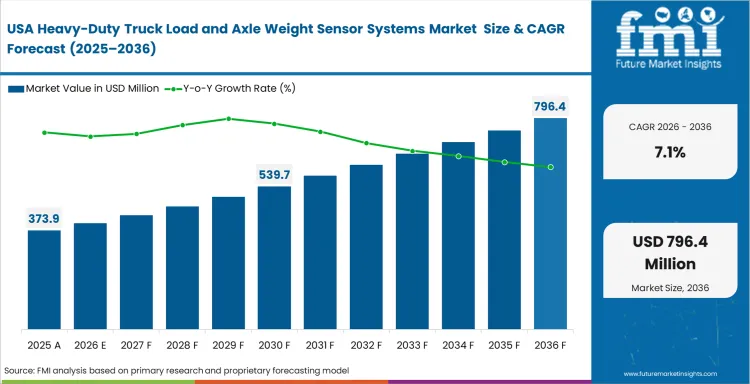
The United States combines a large installed truck base with strong retrofit potential. United States is set to record a CAGR of 7.1% in heavy-duty truck load and axle weight sensor systems during the assessment period supported by compliance focus and fleet digitization. Supplier positioning improves with OEM links and broad dealer coverage.
- Vocational fleets create durable retrofit demand.
- Weight control supports fewer reload events.
- Truck electronics depth improves system fit.
Sales Analysis of Heavy-Duty Truck Load and Axle Weight Sensor Systems in Germany
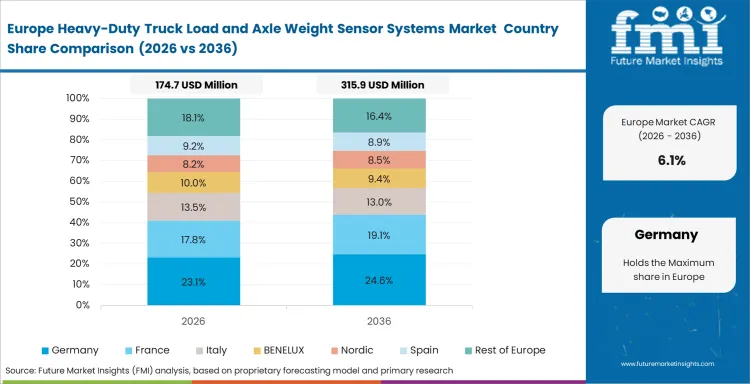
Germany benefits from mature truck engineering and export manufacturing. Heavy-duty truck load and axle weight sensor systems adoption in Germany is likely to advance at a CAGR of 6.8% by 2036 due to digital fleet control and premium truck specification levels. Supplier preference favors calibration quality and reliable data output.
- Premium truck platforms support higher fitment quality.
- Cross-border transport supports compliance-led investment.
- Data reliability matters in premium fleet programs.
Future Outlook for Heavy-Duty Truck Load and Axle Weight Sensor Systems in Japan
Japan has a stable heavy truck base and a replacement-led demand profile. Japan is projected to witness 5.9% CAGR in the heavy-duty truck load and axle weight sensor systems market through 2036 because fleet renewal stays steady and payload control still matters in regulated transport. Revenue quality is solid though volume expansion is slower than China and India.
- Mature truck fleets temper growth speed.
- Reliability expectations support premium positioning.
- Industrial freight sustains baseline demand.
Competitive Landscape and Strategic Positioning
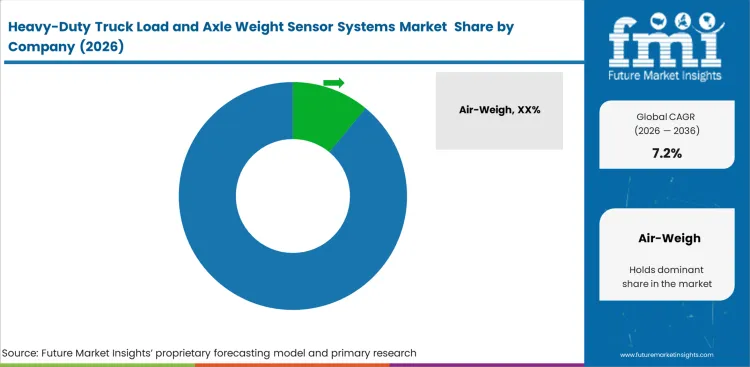
- Specialist onboard weighing firms lead in product focus and installation flexibility.
- Broader commercial vehicle suppliers bring stronger OEM access and wider system integration depth.
- Entry barriers come from calibration quality, field reliability, and channel support.
Competition in this market splits between specialists and platform players. Air‑Weigh and Right Weigh lead in purpose‑built onboard weighing through a narrow but highly effective focus on retrofit‑friendly systems. ZF and Continental leverage scale and integration, using broader vehicle system portfolios to embed load sensing into connected, where data interoperability and platform depth shape supplier preference.
Key Companies in the Heavy-Duty Truck Load and Axle Weight Sensor Systems Market
Key global companies leading the heavy-duty truck load and axle weight sensor systems market include:
- Air‑Weigh and Right Weigh hold strong positions in specialist onboard scale systems for trucks and trailers, supported by a narrow product focus and consistent alignment with aftermarket retrofit requirements.
- TruckWeight maintains a visible role in retrofit programs, benefiting from targeted solutions suited to fleets upgrading payload monitoring on in‑service vehicles.
- ZF Group and Continental bring broader commercial vehicle technology depth, integrating load monitoring with suspension, braking, and electronic control systems, strengthening relevance in OEM‑led and platform‑based truck programs.
- Technoton plays a role in enabling axle load data integration into remote fleet and telematics platforms, supporting analytics‑driven fleet management use cases.
VEI offers extended monitoring capabilities in selected fleet programs, adding value where broader vehicle data visibility is required beyond axle load measurement.
Competitive Benchmarking: Heavy-Duty Truck Load and Axle Weight Sensor Systems
| Company | Product Breadth | OEM Access | Data Connectivity | Geographic Footprint |
|---|---|---|---|---|
| Air-Weigh | High | Medium | Strong | North America |
| ZF Group | Medium | High | Medium | Multi-region |
| Continental | Medium | High | Medium | Multi-region |
| Right Weigh | Medium | Medium | Medium | North America |
| Technoton | Medium | Low | High | Europe and Asia |
Source: Future Market Insights competitive analysis, 2026. Ratings reflect relative positioning based on product breadth, OEM access, and data connectivity.
Key Developments in Heavy-Duty Truck Load and Axle Weight Sensor Systems
- In February 2024, Air-Weigh introduced iWeigh® at Geotab Connect 2024 in Las Vegas and highlighted integrated real-time weight data for trucks and trailers. [2]
- In April 2025, Continental presented "Safe, Exciting, Autonomous: Solutions for Automated Driving and Light Projection Debut at Auto Shanghai" and described automated driving and light projection solutions across vehicle systems. [3]
- In March 2026, ZF announced the "ZF 8-speed PowerLine Transmission Launches on Freightliner M2 106 Plus at Work Truck Week" release and expanded its reach across North America vocational truck applications. [4]
Key Players in the Heavy-Duty Truck Load and Axle Weight Sensor Systems:
Major Global Players:
- Air-Weigh
- ZF Group
Emerging Players/Startups
- Technoton
- TruckWeight
Report Scope and Coverage
| Parameter | Details |
|---|---|
| Quantitative Units | USD million for value and % CAGR for growth |
| Market Definition | Onboard truck and trailer systems used to estimate axle load and gross vehicle weight |
| Regions Covered | North America, Latin America, Europe, Asia Pacific, Middle East and Africa |
| Countries Covered | China, India, Brazil, United States, Germany, Japan |
| Key Companies Profiled | Air-Weigh, ZF Group, Continental, Right Weigh, Technoton, VEI, TruckWeight |
| Forecast Period | 2026 to 2036 |
| Approach | Primary interviews, public source review, bottom-up market sizing, and FMI forecasting model |
Heavy-Duty Truck Load and Axle Weight Sensor Systems Market by Segments
Heavy-Duty Truck Load and Axle Weight Sensor Systems Market Segmented by Technology Type:
- Air-pressure Sensors
- Strain Gauges
- Load Cells
- Piezoelectric Sensors
- MEMS Modules
Heavy-Duty Truck Load and Axle Weight Sensor Systems Market Segmented by Measurement Method:
- Suspension-pressure
- Axle-deflection
- Frame-strain
- Air-spring Sensing
- Hybrid Sensing
Heavy-Duty Truck Load and Axle Weight Sensor Systems Market Segmented by Installation Point:
- Tractor Axle Groups
- Trailer Axle Groups
- Steer Axles
- Drive Axles
- Lift Axles
Heavy-Duty Truck Load and Axle Weight Sensor Systems Market Segmented by Output Mode:
- In-cab Displays
- Telematics Feeds
- Mobile Apps
- Gateway Modules
- Alarm Indicators
Heavy-Duty Truck Load and Axle Weight Sensor Systems Market Segmented by Sales Channel:
- Aftermarket Retrofit
- OEM Fitment
- Dealer Installs
- Fleet Retrofits
- Service Kits
Heavy-Duty Truck Load and Axle Weight Sensor Systems Market Segmented by Vehicle Application:
- Long-haul Tractors
- Tipper Trucks
- Refuse Trucks
- Tanker Trucks
- Logging Trucks
- Mixer Trucks
Heavy-Duty Truck Load and Axle Weight Sensor Systems Market Segmented by End Use:
- Freight Carriers
- Construction Fleets
- Mining Fleets
- Waste Fleets
- Municipal Fleets
- Agriculture Fleets
Heavy-Duty Truck Load and Axle Weight Sensor Systems Market Segmented by Region:
North America
- USA
- Canada
- Mexico
- Latin America
- Brazil
- Chile
- Rest of Latin America
- Western Europe
- Germany
- UK
- Italy
- Spain
- France
- Nordic
- BENELUX
- Rest of Western Europe
- Eastern Europe
- Russia
- Poland
- Hungary
- Balkan & Baltic
- Rest of Eastern Europe
- East Asia
- China
- Japan
- South Korea
- South Asia and Pacific
- India
- ASEAN
- Australia & New Zealand
- Rest of South Asia and Pacific
- Middle East & Africa
- Kingdom of Saudi Arabia
- Other GCC Countries
- Turkiye
- South Africa
- Other African Union
- Rest of Middle East & Africa
Research Sources and Bibliography
- Federal Highway Administration. (2025, July). Truck Size and Weight - FHWA Freight Management and Operations.
- Air-Weigh. (2024, February). Air-Weigh Showcasing New On-Board Scale Solution, iWeigh®, at Geotab Connect 2024 in Las Vegas, Nevada.
- Continental AG. (2025, April). Safe, Exciting, Autonomous: Solutions for Automated Driving and Light Projection Debut at Auto Shanghai.
- ZF Friedrichshafen AG. (2026, March). ZF 8-speed PowerLine Transmission Launches on Freightliner M2 106 Plus at Work Truck Week.
- Council of the European Union. (2024, May). Heavy-duty vehicles: Council signs off on stricter CO2 emission standards.
- USA Department of Energy, & U.S. Environmental Protection Agency. (2025, January). A Report on Actions for Medium- and Heavy-Duty Vehicle Energy and Emissions Innovation.
- CSIR - Central Road Research Institute. (2026, April). Weigh -in-Motion System.
This Report Answers
- What is the current size of the heavy-duty truck load and axle weight sensor systems market?
- What valuation is expected by 2036?
- Which sales channel leads the market?
- Which technology type holds the top share?
- Which end use group creates the largest revenue pool?
- Which country records the fastest forecast growth?
- What supports retrofit demand?
- What limits wider product adoption?
- What role does telematics play in market value?
- Which firms hold strong visibility in this market?
- What use cases create the clearest return on investment?
- What adjacent FMI markets support future product fit?
Frequently Asked Questions
How large is the heavy-duty truck load and axle weight sensor systems market in 2025?
The market stands at USD 653.0 million in 2025.
What valuation is projected for 2036?
The market is projected to reach USD 1,403.0 million by 2036.
What is the forecast CAGR across 2026 to 2036?
Forecast growth stands at 7.2% CAGR.
Which sales channel leads the market?
Aftermarket retrofit leads with a 55.0% share.
Which end use segment holds the top share?
Freight carriers lead with a 42.0% share.
Which country grows fastest across the forecast period?
China leads with an 8.6% CAGR.
Which supplier capabilities matter most?
Product fit matters most in mixed fleets. Data visibility and calibration stability support reliable use. Channel support shapes field adoption.
Is the market fragmented or concentrated?
The market is fragmented with room for specialist firms and larger system suppliers.
Where does commercial upside look strongest?
Upside looks strongest in retrofit-heavy fleets and routes carrying dense freight with tight payload economics.
Preview the report firsthand - request a free sample
Get SampleGet the brochure for pricing and purchase details.
Get PDFTable of Content
- Executive Summary
- Global Market Outlook
- Demand-side Trends
- Supply-side Trends
- Technology Roadmap Analysis
- Market Coverage / Taxonomy
- Market Definition / Scope / Limitations
- Research Methodology
- Chapter Orientation
- Analytical Lens and Working Hypotheses
- Market Structure, Signals, and Trend Drivers
- Benchmarking and Cross-market Comparability
- Market Sizing, Forecasting, and Opportunity Mapping
- Desk Research Programme (Secondary Evidence)
- Company Annual and Sustainability Reports
- Peer-reviewed Journals and Academic Literature
- Corporate Websites, Product Literature, and Technical Notes
- Earnings Decks and Investor Briefings
- Statutory Filings and Regulatory Disclosures
- Technical White Papers and Standards Notes
- Trade Journals, Industry Magazines, and Analyst Briefs
- Conference Proceedings, Webinars, and Seminar Materials
- Government Statistics Portals and Public Data Releases
- Press Releases and Reputable Media Coverage
- Specialist Newsletters and Curated Briefings
- Sector Databases and Reference Repositories
- FMI Internal Proprietary Databases and Historical Market Datasets
- Subscription Datasets and Paid Sources
- Social Channels, Communities, and Digital Listening Inputs
- Additional Desk Sources
- Expert Input and Fieldwork (Primary Evidence)
- Primary Modes
- Field Techniques
- Interviews
- Surveys
- Focus Groups
- Observational and In-context Research
- Social and Community Interactions
- Stakeholder Universe Engaged
- C-suite Leaders
- Board Members
- Presidents and Vice Presidents
- R&D and Innovation Heads
- Technical Specialists
- Domain Subject-matter Experts
- Scientists
- Physicians and Other Healthcare Professionals
- Governance, Ethics, and Data Stewardship
- Research Ethics
- Data Integrity and Handling
- Field Techniques
- Tooling, Models, and Reference Databases
- Primary Modes
- Data Engineering and Model Build
- Data Acquisition and Ingestion
- Cleaning, Normalisation, and Verification
- Synthesis, Triangulation, and Analysis
- Quality Assurance and Audit Trail
- Market Background
- Market Dynamics
- Drivers
- Restraints
- Opportunity
- Trends
- Scenario Forecast
- Demand in Optimistic Scenario
- Demand in Likely Scenario
- Demand in Conservative Scenario
- Opportunity Map Analysis
- Product Life Cycle Analysis
- Supply Chain Analysis
- Investment Feasibility Matrix
- Value Chain Analysis
- PESTLE and Porter’s Analysis
- Regulatory Landscape
- Regional Parent Market Outlook
- Production and Consumption Statistics
- Import and Export Statistics
- Market Dynamics
- Global Market Analysis 2021 to 2025 and Forecast, 2026 to 2036
- Historical Market Size Value (USD Million) Analysis, 2021 to 2025
- Current and Future Market Size Value (USD Million) Projections, 2026 to 2036
- Y-o-Y Growth Trend Analysis
- Absolute $ Opportunity Analysis
- Global Market Pricing Analysis 2021 to 2025 and Forecast 2026 to 2036
- Global Market Analysis 2021 to 2025 and Forecast 2026 to 2036, By Technology Type
- Introduction / Key Findings
- Historical Market Size Value (USD Million) Analysis By Technology Type , 2021 to 2025
- Current and Future Market Size Value (USD Million) Analysis and Forecast By Technology Type , 2026 to 2036
- Air-Pressure Sensors
- Strain Gauges
- Load Cells
- Air-Pressure Sensors
- Y-o-Y Growth Trend Analysis By Technology Type , 2021 to 2025
- Absolute $ Opportunity Analysis By Technology Type , 2026 to 2036
- Global Market Analysis 2021 to 2025 and Forecast 2026 to 2036, By Sales Channel
- Introduction / Key Findings
- Historical Market Size Value (USD Million) Analysis By Sales Channel, 2021 to 2025
- Current and Future Market Size Value (USD Million) Analysis and Forecast By Sales Channel, 2026 to 2036
- Aftermarket Retrofit
- OEM Fitment
- Dealer Installs
- Aftermarket Retrofit
- Y-o-Y Growth Trend Analysis By Sales Channel, 2021 to 2025
- Absolute $ Opportunity Analysis By Sales Channel, 2026 to 2036
- Global Market Analysis 2021 to 2025 and Forecast 2026 to 2036, By Vehicle Application
- Introduction / Key Findings
- Historical Market Size Value (USD Million) Analysis By Vehicle Application, 2021 to 2025
- Current and Future Market Size Value (USD Million) Analysis and Forecast By Vehicle Application, 2026 to 2036
- Long-haul Tractors
- Tipper Trucks
- Refuse Trucks
- Long-haul Tractors
- Y-o-Y Growth Trend Analysis By Vehicle Application, 2021 to 2025
- Absolute $ Opportunity Analysis By Vehicle Application, 2026 to 2036
- Global Market Analysis 2021 to 2025 and Forecast 2026 to 2036, By End Use
- Introduction / Key Findings
- Historical Market Size Value (USD Million) Analysis By End Use, 2021 to 2025
- Current and Future Market Size Value (USD Million) Analysis and Forecast By End Use, 2026 to 2036
- Freight Carriers
- Construction Fleets
- Mining Fleets
- Freight Carriers
- Y-o-Y Growth Trend Analysis By End Use, 2021 to 2025
- Absolute $ Opportunity Analysis By End Use, 2026 to 2036
- Global Market Analysis 2021 to 2025 and Forecast 2026 to 2036, By Region
- Introduction
- Historical Market Size Value (USD Million) Analysis By Region, 2021 to 2025
- Current Market Size Value (USD Million) Analysis and Forecast By Region, 2026 to 2036
- North America
- Latin America
- Western Europe
- Eastern Europe
- East Asia
- South Asia and Pacific
- Middle East & Africa
- Market Attractiveness Analysis By Region
- North America Market Analysis 2021 to 2025 and Forecast 2026 to 2036, By Country
- Historical Market Size Value (USD Million) Trend Analysis By Market Taxonomy, 2021 to 2025
- Market Size Value (USD Million) Forecast By Market Taxonomy, 2026 to 2036
- By Country
- USA
- Canada
- Mexico
- By Technology Type
- By Sales Channel
- By Vehicle Application
- By End Use
- By Country
- Market Attractiveness Analysis
- By Country
- By Technology Type
- By Sales Channel
- By Vehicle Application
- By End Use
- Key Takeaways
- Latin America Market Analysis 2021 to 2025 and Forecast 2026 to 2036, By Country
- Historical Market Size Value (USD Million) Trend Analysis By Market Taxonomy, 2021 to 2025
- Market Size Value (USD Million) Forecast By Market Taxonomy, 2026 to 2036
- By Country
- Brazil
- Chile
- Rest of Latin America
- By Technology Type
- By Sales Channel
- By Vehicle Application
- By End Use
- By Country
- Market Attractiveness Analysis
- By Country
- By Technology Type
- By Sales Channel
- By Vehicle Application
- By End Use
- Key Takeaways
- Western Europe Market Analysis 2021 to 2025 and Forecast 2026 to 2036, By Country
- Historical Market Size Value (USD Million) Trend Analysis By Market Taxonomy, 2021 to 2025
- Market Size Value (USD Million) Forecast By Market Taxonomy, 2026 to 2036
- By Country
- Germany
- UK
- Italy
- Spain
- France
- Nordic
- BENELUX
- Rest of Western Europe
- By Technology Type
- By Sales Channel
- By Vehicle Application
- By End Use
- By Country
- Market Attractiveness Analysis
- By Country
- By Technology Type
- By Sales Channel
- By Vehicle Application
- By End Use
- Key Takeaways
- Eastern Europe Market Analysis 2021 to 2025 and Forecast 2026 to 2036, By Country
- Historical Market Size Value (USD Million) Trend Analysis By Market Taxonomy, 2021 to 2025
- Market Size Value (USD Million) Forecast By Market Taxonomy, 2026 to 2036
- By Country
- Russia
- Poland
- Hungary
- Balkan & Baltic
- Rest of Eastern Europe
- By Technology Type
- By Sales Channel
- By Vehicle Application
- By End Use
- By Country
- Market Attractiveness Analysis
- By Country
- By Technology Type
- By Sales Channel
- By Vehicle Application
- By End Use
- Key Takeaways
- East Asia Market Analysis 2021 to 2025 and Forecast 2026 to 2036, By Country
- Historical Market Size Value (USD Million) Trend Analysis By Market Taxonomy, 2021 to 2025
- Market Size Value (USD Million) Forecast By Market Taxonomy, 2026 to 2036
- By Country
- China
- Japan
- South Korea
- By Technology Type
- By Sales Channel
- By Vehicle Application
- By End Use
- By Country
- Market Attractiveness Analysis
- By Country
- By Technology Type
- By Sales Channel
- By Vehicle Application
- By End Use
- Key Takeaways
- South Asia and Pacific Market Analysis 2021 to 2025 and Forecast 2026 to 2036, By Country
- Historical Market Size Value (USD Million) Trend Analysis By Market Taxonomy, 2021 to 2025
- Market Size Value (USD Million) Forecast By Market Taxonomy, 2026 to 2036
- By Country
- India
- ASEAN
- Australia & New Zealand
- Rest of South Asia and Pacific
- By Technology Type
- By Sales Channel
- By Vehicle Application
- By End Use
- By Country
- Market Attractiveness Analysis
- By Country
- By Technology Type
- By Sales Channel
- By Vehicle Application
- By End Use
- Key Takeaways
- Middle East & Africa Market Analysis 2021 to 2025 and Forecast 2026 to 2036, By Country
- Historical Market Size Value (USD Million) Trend Analysis By Market Taxonomy, 2021 to 2025
- Market Size Value (USD Million) Forecast By Market Taxonomy, 2026 to 2036
- By Country
- Kingdom of Saudi Arabia
- Other GCC Countries
- Turkiye
- South Africa
- Other African Union
- Rest of Middle East & Africa
- By Technology Type
- By Sales Channel
- By Vehicle Application
- By End Use
- By Country
- Market Attractiveness Analysis
- By Country
- By Technology Type
- By Sales Channel
- By Vehicle Application
- By End Use
- Key Takeaways
- Key Countries Market Analysis
- USA
- Pricing Analysis
- Market Share Analysis, 2025
- By Technology Type
- By Sales Channel
- By Vehicle Application
- By End Use
- Canada
- Pricing Analysis
- Market Share Analysis, 2025
- By Technology Type
- By Sales Channel
- By Vehicle Application
- By End Use
- Mexico
- Pricing Analysis
- Market Share Analysis, 2025
- By Technology Type
- By Sales Channel
- By Vehicle Application
- By End Use
- Brazil
- Pricing Analysis
- Market Share Analysis, 2025
- By Technology Type
- By Sales Channel
- By Vehicle Application
- By End Use
- Chile
- Pricing Analysis
- Market Share Analysis, 2025
- By Technology Type
- By Sales Channel
- By Vehicle Application
- By End Use
- Germany
- Pricing Analysis
- Market Share Analysis, 2025
- By Technology Type
- By Sales Channel
- By Vehicle Application
- By End Use
- UK
- Pricing Analysis
- Market Share Analysis, 2025
- By Technology Type
- By Sales Channel
- By Vehicle Application
- By End Use
- Italy
- Pricing Analysis
- Market Share Analysis, 2025
- By Technology Type
- By Sales Channel
- By Vehicle Application
- By End Use
- Spain
- Pricing Analysis
- Market Share Analysis, 2025
- By Technology Type
- By Sales Channel
- By Vehicle Application
- By End Use
- France
- Pricing Analysis
- Market Share Analysis, 2025
- By Technology Type
- By Sales Channel
- By Vehicle Application
- By End Use
- India
- Pricing Analysis
- Market Share Analysis, 2025
- By Technology Type
- By Sales Channel
- By Vehicle Application
- By End Use
- ASEAN
- Pricing Analysis
- Market Share Analysis, 2025
- By Technology Type
- By Sales Channel
- By Vehicle Application
- By End Use
- Australia & New Zealand
- Pricing Analysis
- Market Share Analysis, 2025
- By Technology Type
- By Sales Channel
- By Vehicle Application
- By End Use
- China
- Pricing Analysis
- Market Share Analysis, 2025
- By Technology Type
- By Sales Channel
- By Vehicle Application
- By End Use
- Japan
- Pricing Analysis
- Market Share Analysis, 2025
- By Technology Type
- By Sales Channel
- By Vehicle Application
- By End Use
- South Korea
- Pricing Analysis
- Market Share Analysis, 2025
- By Technology Type
- By Sales Channel
- By Vehicle Application
- By End Use
- Russia
- Pricing Analysis
- Market Share Analysis, 2025
- By Technology Type
- By Sales Channel
- By Vehicle Application
- By End Use
- Poland
- Pricing Analysis
- Market Share Analysis, 2025
- By Technology Type
- By Sales Channel
- By Vehicle Application
- By End Use
- Hungary
- Pricing Analysis
- Market Share Analysis, 2025
- By Technology Type
- By Sales Channel
- By Vehicle Application
- By End Use
- Kingdom of Saudi Arabia
- Pricing Analysis
- Market Share Analysis, 2025
- By Technology Type
- By Sales Channel
- By Vehicle Application
- By End Use
- Turkiye
- Pricing Analysis
- Market Share Analysis, 2025
- By Technology Type
- By Sales Channel
- By Vehicle Application
- By End Use
- South Africa
- Pricing Analysis
- Market Share Analysis, 2025
- By Technology Type
- By Sales Channel
- By Vehicle Application
- By End Use
- USA
- Market Structure Analysis
- Competition Dashboard
- Competition Benchmarking
- Market Share Analysis of Top Players
- By Regional
- By Technology Type
- By Sales Channel
- By Vehicle Application
- By End Use
- Competition Analysis
- Competition Deep Dive
- Air-Weigh
- Overview
- Product Portfolio
- Profitability by Market Segments (Product/Age /Sales Channel/Region)
- Sales Footprint
- Strategy Overview
- Marketing Strategy
- Product Strategy
- Channel Strategy
- ZF Group
- Technoton
- TruckWeight
- Air-Weigh
- Competition Deep Dive
- Assumptions & Acronyms Used


