

- Industry Size (2026)
- USD 608.7 Mn
- Forecast (2036)
- USD 1401.9 Mn
- CAGR (2026 to 2036)
- 8.70%
High Channel Temperature Measurement System Market Forecast and Outlook 2026 to 2036
The high channel temperature measurement system market is valued at USD 608.7 million in 2026 and is projected to reach USD 1,401.9 million by 2036, growing at a CAGR of 8.70%. This growth is driven by the increasing demand for precision temperature monitoring across industries like aerospace, automotive, energy, and electronics, where real-time, high-accuracy measurements are critical. The cost structure is influenced by the complexity of these systems, with higher initial investments required for advanced solutions capable of measuring multiple temperature points simultaneously. While the upfront costs may be high, these systems offer significant long-term value, especially in mission-critical applications.
Quick Stats for High Channel Temperature Measurement System Market
- High Channel Temperature Measurement System Market Value (2026): USD 608.7 Million
- High Channel Temperature Measurement System Market Forecast Value (2036): USD 1,401.9 Million
- High Channel Temperature Measurement System Market Forecast CAGR (2026 to 2036): 8.70%
- Leading Sensor Type in High Channel Temperature Measurement System Market: Thermocouples & Multiplexers
- Key Growth Regions in High Channel Temperature Measurement System Market: Asia Pacific, Europe, North America
- Top Key Players in High Channel Temperature Measurement System Market: National Instruments (NI), HBK, Keysight, Yokogawa, Omega Engineering, Fluke, Hioki, Teledyne, Dewesoft, Chroma ATE
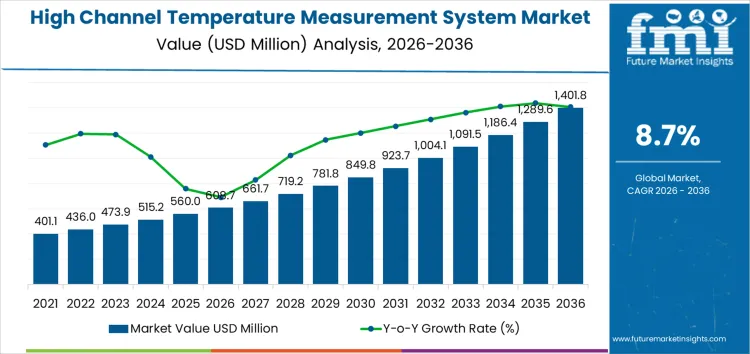
Pricing control in the market is concentrated among a few dominant players who have the technological expertise to deliver advanced, multi-sensor solutions. These companies leverage their established market presence and superior system capabilities to capture value, particularly in high-end applications where precision is essential. As technology advances, players with scalable architectures, integrated sensors, and cloud analytics are positioned to capture a larger share of the market, focusing not just on volume but on providing integrated, long-term solutions. This strategic focus allows them to secure higher margins and cater to evolving industry needs.
High Channel Temperature Measurement System Market Key Takeaways
| Metric | Value |
|---|---|
| Industry Value (2026) | USD 608.7 Million |
| Forecast Value (2036) | USD 1401.9 Million |
| Forecast CAGR (2026 to 2036) | 8.70% |
How is the Global High Channel Temperature Measurement System Market Advancing?
The global high channel temperature measurement system market is growing steadily as industries requiring precise temperature monitoring across multiple channels expand. These systems are integral in high-performance applications in sectors such as industrial manufacturing, aerospace, automotive, and energy. They allow for real-time, high-accuracy temperature measurements, ensuring optimal functioning of complex machinery and systems in environments where temperature control is critical for safety and performance.
The demand for high channel temperature measurement systems is driven by the increasing need for advanced monitoring in industries that operate in high-heat environments. In aerospace, for example, these systems are used to monitor the performance of engines and other critical components under extreme conditions. Similarly, in automotive manufacturing, temperature measurement is essential for ensuring the efficiency and safety of engines, batteries, and electronic systems. As technology advances and industries seek more complex systems that can handle multiple data channels simultaneously, the market for high channel temperature measurement systems is expected to grow.
Technological innovations, such as the integration of wireless sensors, IoT-enabled systems, and cloud-based analytics, are enhancing the functionality of temperature measurement systems. These advancements offer greater flexibility, remote monitoring capabilities, and more accurate real-time data analysis, which are becoming increasingly important in industrial operations. Despite challenges such as the high costs of advanced systems and the need for skilled personnel, the demand for precise, reliable temperature control is expected to drive significant growth in the high channel temperature measurement system market over the coming years.
What is the Segment-Wise Analysis for the High Channel Temperature Measurement System Market?
The high channel temperature measurement system market is segmented by sensor type and application. Thermocouples & Multiplexers lead the market with a 34% share, followed by RTD or Resistance Measurement, IR or Non-Contact Sensors, and Hybrid sensor types. These sensor types are essential for accurate temperature measurements in various high-channel applications. In terms of application, Aero or Defense Structures dominates with a 28% share, driven by the need for precise thermal management in aerospace and defense sectors.
How Do Thermocouples & Multiplexers Lead the High Channel Temperature Measurement System Market?
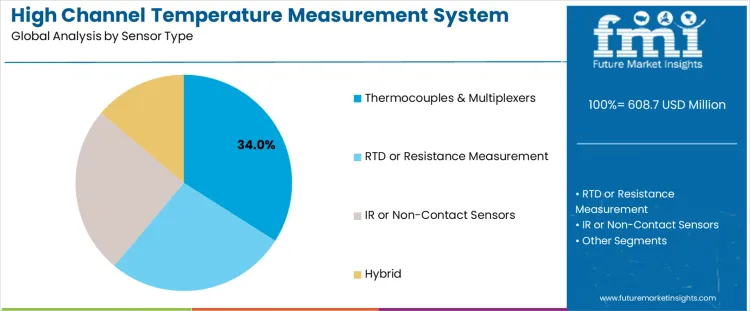
Thermocouples & Multiplexers hold a 34% share of the high channel temperature measurement system market, primarily due to their widespread use in applications that require multiple temperature readings across a wide range of channels. Thermocouples offer fast response times, wide temperature ranges, and cost-effective solutions, making them ideal for high-channel measurement systems in industries such as aerospace, automotive, and industrial processes. Multiplexers are often used in conjunction with thermocouples to manage and streamline the collection of data from multiple sensors, providing a scalable solution for temperature measurement. As industries continue to focus on precision and efficiency, the demand for thermocouples and multiplexers remains strong, driving their dominance in the market.
How Do Aero or Defense Structures Contribute to the High Channel Temperature Measurement System Market?
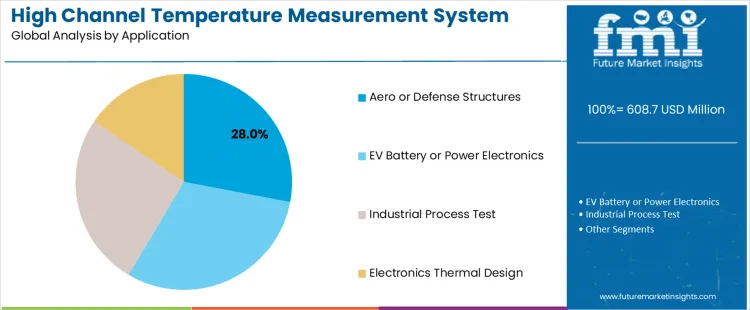
Aero or Defense Structures account for 28% of the high channel temperature measurement system market share, reflecting the critical need for thermal testing in aerospace and defense applications. These industries require precise temperature measurement systems to monitor the performance and integrity of structures under extreme conditions, such as high-speed flights or missile launches. Accurate temperature data is essential for ensuring the reliability and safety of components in these high-stakes environments. The growing demand for advanced aerospace technologies, defense systems, and military equipment contributes to the strong market presence of high channel temperature measurement systems in these sectors, supporting their ongoing growth.
What Are the Key Dynamics for the High Channel Temperature Measurement System Market?
The high channel temperature measurement system market is driven by the increasing demand for precise, multi-point temperature monitoring across various industries like aerospace, automotive, electronics, and energy. As systems become more complex, the need for high-channel systems that can monitor multiple temperature points simultaneously is growing. These systems are crucial for ensuring the safety, efficiency, and reliability of complex processes.
How Are the Key Drivers Shaping the High Channel Temperature Measurement System Market?
The demand is primarily driven by the need for real-time, high-accuracy temperature monitoring in industries where system reliability is critical, such as in semiconductor manufacturing, electric vehicle battery testing, and power generation. The growing reliance on predictive maintenance and condition monitoring has also contributed to the increased demand for high channel temperature measurement systems that offer comprehensive, real-time data. Advancements in sensor technology, integrated data acquisition systems, and analytics software are making high-channel systems more accessible, efficient, and cost-effective, further accelerating their adoption across diverse industries that require thermal profiling for complex processes.
Why Are There Restraints Impacting the High Channel Temperature Measurement System Market?
The main challenge in the high channel temperature measurement system market is the high initial cost associated with advanced systems capable of measuring numerous temperature points. This can be a significant barrier for smaller companies or those in emerging markets that may struggle with the upfront investment. Integrating high-channel systems into existing infrastructure often requires complex calibration and a highly skilled workforce. Compatibility issues with legacy systems and the management of large datasets generated by these systems also present challenges. These factors slow the adoption of such systems, especially in industries with tighter budgets or less mature technological infrastructure.
What is the Growth Outlook for the High Channel Temperature Measurement System Market by Country?
| Country | CAGR (%) |
|---|---|
| USA | 8.4% |
| South Korea | 8.1% |
| Germany | 8% |
| China | 9.8% |
| Brazil | 9.1% |
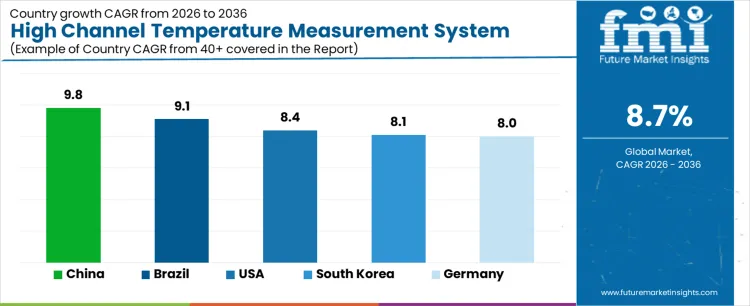
The high channel temperature measurement system market is experiencing steady growth, with China leading at a 9.8% CAGR, driven by rapid industrialization, electric vehicle adoption, and infrastructure development. Brazil follows with 9.1%, supported by expanding automotive, energy, and manufacturing sectors, as well as the growing use of renewable energy technologies. The USA’s market grows at 8.4%, fueled by advancements in aerospace, automotive, and smart manufacturing, where precise temperature measurement is critical. South Korea’s market grows at 8.1%, driven by its leadership in automotive, electronics, and semiconductor industries. Germany’s market grows at 8%, supported by its strong industrial base and focus on renewable energy and smart manufacturing.
What is Driving the Growth of the High Channel Temperature Measurement System Market in China?
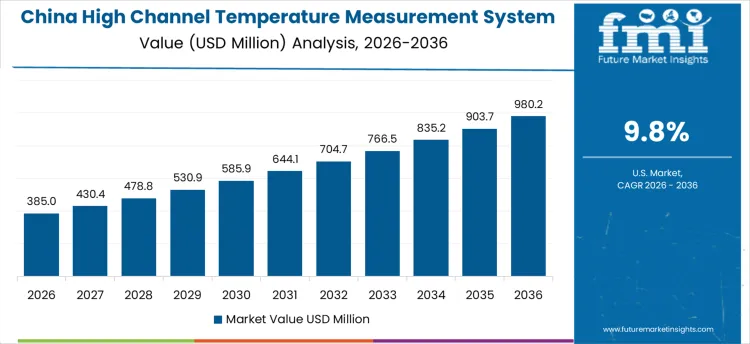
China’s high channel temperature measurement system market is growing at 9.8%, driven by the country’s expanding industrial base, including the automotive, manufacturing, and energy sectors. As China continues to advance its infrastructure and manufacturing capabilities, the need for precise temperature measurement systems in various industries increases. The rapid development of electric vehicles (EVs), smart manufacturing, and renewable energy projects further fuels the market, as these technologies require reliable temperature monitoring for performance and safety. China’s commitment to technological innovation, combined with its large-scale production capabilities, drives the demand for advanced temperature measurement systems. As the country leads in the global supply chain, the need for high channel temperature measurement systems is expected to remain strong.
What is Contributing to the Growth of the High Channel Temperature Measurement System Market in Brazil?
Brazil’s high channel temperature measurement system market is growing at 9.1%, supported by the country’s expanding industrial, automotive, and energy sectors. As Brazil continues to modernize its infrastructure and manufacturing industries, the need for accurate and efficient temperature measurement solutions is increasing. The automotive sector, in particular, is a key driver, as Brazilian manufacturers adopt advanced temperature measurement systems for electric vehicle production and quality control. Brazil’s efforts to diversify its energy mix, including investments in renewable energy sources like wind and solar, contribute to the demand for temperature monitoring systems. As the country improves its industrial automation and smart manufacturing technologies, the market for high channel temperature measurement systems is expected to grow steadily.
How is the High Channel Temperature Measurement System Market Expanding in the USA?
The USA’s high channel temperature measurement system market is growing at 8.4%, driven by advancements in industries such as automotive, aerospace, energy, and manufacturing. The increasing demand for electric vehicles, renewable energy, and industrial automation systems requires reliable temperature measurement solutions to ensure operational safety and efficiency. The aerospace and defense sectors, where temperature monitoring is critical for component testing and system validation, are also contributing to market growth. The USA’s focus on technological innovation, high-quality manufacturing, and the adoption of smart technologies further drives the need for advanced temperature measurement systems. As industries continue to innovate, the market for high channel temperature measurement systems in the USA is expected to maintain steady growth.
Why is the High Channel Temperature Measurement System Market Growing in South Korea?
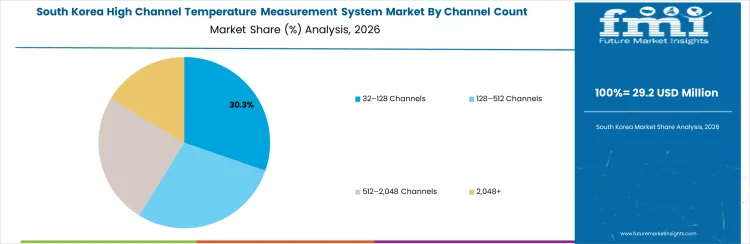
South Korea’s high channel temperature measurement system market is growing at 8.1%, driven by the country’s strong automotive, electronics, and semiconductor industries. As South Korea continues to advance its smart manufacturing technologies, the demand for accurate temperature measurement systems is increasing, especially in high-performance industries such as electronics, automotive, and battery production. The country’s leadership in electric vehicle manufacturing and advanced semiconductor production further fuels the market, where temperature monitoring is essential for ensuring the quality and safety of components. South Korea’s focus on energy efficiency and durability in industrial processes supports the growth of temperature measurement systems. As industries continue to modernize, the demand for these systems is expected to rise steadily.
What is Driving the Growth of the High Channel Temperature Measurement System Market in Germany?
Germany’s high channel temperature measurement system market is growing at 8%, supported by the country’s strong manufacturing and automotive sectors. As Germany continues to lead in industrial automation and smart manufacturing, the need for precise temperature measurement systems increases to ensure the quality and safety of components in sectors such as automotive, aerospace, and energy. With Germany’s focus on renewable energy and Industry 4.0, temperature measurement plays a critical role in ensuring the efficiency and safety of industrial processes. The growth of electric vehicle production and the adoption of advanced manufacturing technologies further contribute to the demand for high channel temperature measurement systems. As Germany continues to innovate in industrial processes, the market for temperature measurement systems will expand.
How Do Key Players Compete in the High Channel Temperature Measurement System Market?
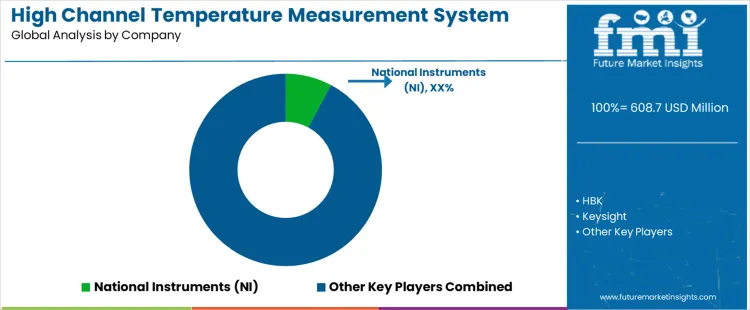
Competition in the high channel temperature measurement system market is anchored in accuracy, scalability, sensor integration, software flexibility, and system reliability. National Instruments (NI) leads with modular, high-channel data acquisition platforms that integrate seamlessly with diverse thermocouple and RTD inputs, paired with powerful software for synchronized logging and custom analysis. Its product materials highlight tight timing and scalable architectures that support demanding industrial and research environments. HBK differentiates through high-fidelity measurement hardware and advanced analytics software that deliver precise temperature profiling across dozens to hundreds of channels.
Keysight competes with robust measurement instruments that pair high resolution with broad temperature ranges, often marketed with intuitive interfaces and automated calibration support. Yokogawa and Omega Engineering focus on highly reliable temperature measurement systems with strong emphasis on sensor quality and durable hardware suited for continuous operation. Their brochures stress long-term stability and ease of deployment in manufacturing and test labs. Fluke and Hioki position themselves with portable yet high-channel solutions that appeal to field engineers needing rugged, handheld or rack-mounted systems with rapid setup.
Teledyne and Dewesoft bring flexible software-centric approaches that simplify configuration, visualization, and multi-channel data handling. Chroma ATE adds value with integrated system solutions that tie temperature measurement into broader test and automation frameworks, highlighting turnkey test station capabilities. Across the market, product literature is crafted to emphasize accuracy, channel density, real-time monitoring, and system integration that aligns with diverse application demands from automotive thermal profiling to industrial process control.
Key Players High Channel Temperature Measurement System Market
- National Instruments (NI)
- HBK
- Keysight
- Yokogawa
- Omega Engineering
- Fluke
- Hioki
- Teledyne
- Dewesoft
- Chroma ATE
Scope of Report
| Items | Values |
|---|---|
| Quantitative Unit (2026) | USD million |
| Sensor Type | Thermocouples & Multiplexers, RTD or Resistance Measurement, IR or Non-Contact Sensors, Hybrid |
| Channel Count | 32–128 Channels, 128–512 Channels, 512–2,048 Channels, 2,048+ |
| Application | Aero or Defense Structures, EV Battery or Power Electronics, Industrial Process Test, Electronics Thermal Design |
| Regions Covered | Asia Pacific, Europe, North America, Latin America, Middle East & Africa |
| Countries Covered | USA, China, Japan, South Korea, India, Australia & New Zealand, ASEAN, Germany, UK, France, Italy, Spain, Nordic, BENELUX, Brazil, Chile, Mexico, Saudi Arabia, Other GCC Countries, Turkey, South Africa, Other African Union |
| Key Companies Profiled | National Instruments (NI), HBK, Keysight, Yokogawa, Omega Engineering, Fluke, Hioki, Teledyne, Dewesoft, Chroma ATE |
| Additional Attributes | Dollar sales by sensor type, channel count, application, and region; regional CAGR and growth outlook. |
High Channel Temperature Measurement System Market by Segments
Sensor Type
- Thermocouples & Multiplexers
- RTD or Resistance Measurement
- IR or Non-Contact Sensors
- Hybrid
Channel Count
- 32-128 Channels
- 128-512 Channels
- 512-2,048 Channels
- 2,048+
Application
- Aero or Defense Structures
- EV Battery or Power Electronics
- Industrial Process Test
- Electronics Thermal Design
Region:
- Asia Pacific
- China
- Japan
- South Korea
- India
- Australia & New Zealand
- ASEAN
- Rest of Asia Pacific
- Europe
- Germany
- United Kingdom
- France
- Italy
- Spain
- Nordic
- BENELUX
- Rest of Europe
- North America
- United States
- Canada
- Mexico
- Latin America
- Brazil
- Chile
- Rest of Latin America
- Middle East & Africa
- Kingdom of Saudi Arabia
- Other GCC Countries
- Turkey
- South Africa
- Other African Union
- Rest of Middle East & Africa
Frequently Asked Questions
How big is the high channel temperature measurement system market in 2026?
The global high channel temperature measurement system market is estimated to be valued at USD 608.7 million in 2026.
What will be the size of high channel temperature measurement system market in 2036?
The market size for the high channel temperature measurement system market is projected to reach USD 1,401.8 million by 2036.
How much will be the high channel temperature measurement system market growth between 2026 and 2036?
The high channel temperature measurement system market is expected to grow at a 8.7% CAGR between 2026 and 2036.
What are the key product types in the high channel temperature measurement system market?
The key product types in high channel temperature measurement system market are thermocouples & multiplexers, rtd or resistance measurement, ir or non-contact sensors and hybrid.
Which channel count segment to contribute significant share in the high channel temperature measurement system market in 2026?
In terms of channel count, 32–128 channels segment to command 30.0% share in the high channel temperature measurement system market in 2026.
Preview the report firsthand - request a free sample
Get SampleGet the brochure for pricing and purchase details.
Get PDFTable of Content
- Executive Summary
- Global Market Outlook
- Demand-side Trends
- Supply-side Trends
- Technology Roadmap Analysis
- Analysis and Recommendations
- Market Overview
- Market Coverage / Taxonomy
- Market Definition / Scope / Limitations
- Market Background
- Market Dynamics
- Drivers
- Restraints
- Opportunity
- Trends
- Scenario Forecast
- Demand in Optimistic Scenario
- Demand in Likely Scenario
- Demand in Conservative Scenario
- Opportunity Map Analysis
- Product Life Cycle Analysis
- Supply Chain Analysis
- Investment Feasibility Matrix
- Value Chain Analysis
- PESTLE and Porter’s Analysis
- Regulatory Landscape
- Regional Parent Market Outlook
- Production and Consumption Statistics
- Import and Export Statistics
- Market Dynamics
- Global Market Analysis 2021 to 2025 and Forecast, 2026 to 2036
- Historical Market Size Value (USD Million) Analysis, 2021 to 2025
- Current and Future Market Size Value (USD Million) Projections, 2026 to 2036
- Y-o-Y Growth Trend Analysis
- Absolute $ Opportunity Analysis
- Global Market Pricing Analysis 2021 to 2025 and Forecast 2026 to 2036
- Global Market Analysis 2021 to 2025 and Forecast 2026 to 2036, By Sensor Type
- Introduction / Key Findings
- Historical Market Size Value (USD Million) Analysis By Sensor Type , 2021 to 2025
- Current and Future Market Size Value (USD Million) Analysis and Forecast By Sensor Type , 2026 to 2036
- Thermocouples & Multiplexers
- RTD or Resistance Measurement
- IR or Non-Contact Sensors
- Hybrid
- Thermocouples & Multiplexers
- Y-o-Y Growth Trend Analysis By Sensor Type , 2021 to 2025
- Absolute $ Opportunity Analysis By Sensor Type , 2026 to 2036
- Global Market Analysis 2021 to 2025 and Forecast 2026 to 2036, By Channel Count
- Introduction / Key Findings
- Historical Market Size Value (USD Million) Analysis By Channel Count, 2021 to 2025
- Current and Future Market Size Value (USD Million) Analysis and Forecast By Channel Count, 2026 to 2036
- 32–128 Channels
- 128–512 Channels
- 512–2,048 Channels
- 2,048+
- 32–128 Channels
- Y-o-Y Growth Trend Analysis By Channel Count, 2021 to 2025
- Absolute $ Opportunity Analysis By Channel Count, 2026 to 2036
- Global Market Analysis 2021 to 2025 and Forecast 2026 to 2036, By Application
- Introduction / Key Findings
- Historical Market Size Value (USD Million) Analysis By Application, 2021 to 2025
- Current and Future Market Size Value (USD Million) Analysis and Forecast By Application, 2026 to 2036
- Aero or Defense Structures
- EV Battery or Power Electronics
- Industrial Process Test
- Electronics Thermal Design
- Aero or Defense Structures
- Y-o-Y Growth Trend Analysis By Application, 2021 to 2025
- Absolute $ Opportunity Analysis By Application, 2026 to 2036
- Global Market Analysis 2021 to 2025 and Forecast 2026 to 2036, By Region
- Introduction
- Historical Market Size Value (USD Million) Analysis By Region, 2021 to 2025
- Current Market Size Value (USD Million) Analysis and Forecast By Region, 2026 to 2036
- North America
- Latin America
- Western Europe
- Eastern Europe
- East Asia
- South Asia and Pacific
- Middle East & Africa
- Market Attractiveness Analysis By Region
- North America Market Analysis 2021 to 2025 and Forecast 2026 to 2036, By Country
- Historical Market Size Value (USD Million) Trend Analysis By Market Taxonomy, 2021 to 2025
- Market Size Value (USD Million) Forecast By Market Taxonomy, 2026 to 2036
- By Country
- USA
- Canada
- Mexico
- By Sensor Type
- By Channel Count
- By Application
- By Country
- Market Attractiveness Analysis
- By Country
- By Sensor Type
- By Channel Count
- By Application
- Key Takeaways
- Latin America Market Analysis 2021 to 2025 and Forecast 2026 to 2036, By Country
- Historical Market Size Value (USD Million) Trend Analysis By Market Taxonomy, 2021 to 2025
- Market Size Value (USD Million) Forecast By Market Taxonomy, 2026 to 2036
- By Country
- Brazil
- Chile
- Rest of Latin America
- By Sensor Type
- By Channel Count
- By Application
- By Country
- Market Attractiveness Analysis
- By Country
- By Sensor Type
- By Channel Count
- By Application
- Key Takeaways
- Western Europe Market Analysis 2021 to 2025 and Forecast 2026 to 2036, By Country
- Historical Market Size Value (USD Million) Trend Analysis By Market Taxonomy, 2021 to 2025
- Market Size Value (USD Million) Forecast By Market Taxonomy, 2026 to 2036
- By Country
- Germany
- UK
- Italy
- Spain
- France
- Nordic
- BENELUX
- Rest of Western Europe
- By Sensor Type
- By Channel Count
- By Application
- By Country
- Market Attractiveness Analysis
- By Country
- By Sensor Type
- By Channel Count
- By Application
- Key Takeaways
- Eastern Europe Market Analysis 2021 to 2025 and Forecast 2026 to 2036, By Country
- Historical Market Size Value (USD Million) Trend Analysis By Market Taxonomy, 2021 to 2025
- Market Size Value (USD Million) Forecast By Market Taxonomy, 2026 to 2036
- By Country
- Russia
- Poland
- Hungary
- Balkan & Baltic
- Rest of Eastern Europe
- By Sensor Type
- By Channel Count
- By Application
- By Country
- Market Attractiveness Analysis
- By Country
- By Sensor Type
- By Channel Count
- By Application
- Key Takeaways
- East Asia Market Analysis 2021 to 2025 and Forecast 2026 to 2036, By Country
- Historical Market Size Value (USD Million) Trend Analysis By Market Taxonomy, 2021 to 2025
- Market Size Value (USD Million) Forecast By Market Taxonomy, 2026 to 2036
- By Country
- China
- Japan
- South Korea
- By Sensor Type
- By Channel Count
- By Application
- By Country
- Market Attractiveness Analysis
- By Country
- By Sensor Type
- By Channel Count
- By Application
- Key Takeaways
- South Asia and Pacific Market Analysis 2021 to 2025 and Forecast 2026 to 2036, By Country
- Historical Market Size Value (USD Million) Trend Analysis By Market Taxonomy, 2021 to 2025
- Market Size Value (USD Million) Forecast By Market Taxonomy, 2026 to 2036
- By Country
- India
- ASEAN
- Australia & New Zealand
- Rest of South Asia and Pacific
- By Sensor Type
- By Channel Count
- By Application
- By Country
- Market Attractiveness Analysis
- By Country
- By Sensor Type
- By Channel Count
- By Application
- Key Takeaways
- Middle East & Africa Market Analysis 2021 to 2025 and Forecast 2026 to 2036, By Country
- Historical Market Size Value (USD Million) Trend Analysis By Market Taxonomy, 2021 to 2025
- Market Size Value (USD Million) Forecast By Market Taxonomy, 2026 to 2036
- By Country
- Kingdom of Saudi Arabia
- Other GCC Countries
- Turkiye
- South Africa
- Other African Union
- Rest of Middle East & Africa
- By Sensor Type
- By Channel Count
- By Application
- By Country
- Market Attractiveness Analysis
- By Country
- By Sensor Type
- By Channel Count
- By Application
- Key Takeaways
- Key Countries Market Analysis
- USA
- Pricing Analysis
- Market Share Analysis, 2025
- By Sensor Type
- By Channel Count
- By Application
- Canada
- Pricing Analysis
- Market Share Analysis, 2025
- By Sensor Type
- By Channel Count
- By Application
- Mexico
- Pricing Analysis
- Market Share Analysis, 2025
- By Sensor Type
- By Channel Count
- By Application
- Brazil
- Pricing Analysis
- Market Share Analysis, 2025
- By Sensor Type
- By Channel Count
- By Application
- Chile
- Pricing Analysis
- Market Share Analysis, 2025
- By Sensor Type
- By Channel Count
- By Application
- Germany
- Pricing Analysis
- Market Share Analysis, 2025
- By Sensor Type
- By Channel Count
- By Application
- UK
- Pricing Analysis
- Market Share Analysis, 2025
- By Sensor Type
- By Channel Count
- By Application
- Italy
- Pricing Analysis
- Market Share Analysis, 2025
- By Sensor Type
- By Channel Count
- By Application
- Spain
- Pricing Analysis
- Market Share Analysis, 2025
- By Sensor Type
- By Channel Count
- By Application
- France
- Pricing Analysis
- Market Share Analysis, 2025
- By Sensor Type
- By Channel Count
- By Application
- India
- Pricing Analysis
- Market Share Analysis, 2025
- By Sensor Type
- By Channel Count
- By Application
- ASEAN
- Pricing Analysis
- Market Share Analysis, 2025
- By Sensor Type
- By Channel Count
- By Application
- Australia & New Zealand
- Pricing Analysis
- Market Share Analysis, 2025
- By Sensor Type
- By Channel Count
- By Application
- China
- Pricing Analysis
- Market Share Analysis, 2025
- By Sensor Type
- By Channel Count
- By Application
- Japan
- Pricing Analysis
- Market Share Analysis, 2025
- By Sensor Type
- By Channel Count
- By Application
- South Korea
- Pricing Analysis
- Market Share Analysis, 2025
- By Sensor Type
- By Channel Count
- By Application
- Russia
- Pricing Analysis
- Market Share Analysis, 2025
- By Sensor Type
- By Channel Count
- By Application
- Poland
- Pricing Analysis
- Market Share Analysis, 2025
- By Sensor Type
- By Channel Count
- By Application
- Hungary
- Pricing Analysis
- Market Share Analysis, 2025
- By Sensor Type
- By Channel Count
- By Application
- Kingdom of Saudi Arabia
- Pricing Analysis
- Market Share Analysis, 2025
- By Sensor Type
- By Channel Count
- By Application
- Turkiye
- Pricing Analysis
- Market Share Analysis, 2025
- By Sensor Type
- By Channel Count
- By Application
- South Africa
- Pricing Analysis
- Market Share Analysis, 2025
- By Sensor Type
- By Channel Count
- By Application
- USA
- Market Structure Analysis
- Competition Dashboard
- Competition Benchmarking
- Market Share Analysis of Top Players
- By Regional
- By Sensor Type
- By Channel Count
- By Application
- Competition Analysis
- Competition Deep Dive
- National Instruments (NI)
- Overview
- Product Portfolio
- Profitability by Market Segments (Product/Age /Sales Channel/Region)
- Sales Footprint
- Strategy Overview
- Marketing Strategy
- Product Strategy
- Channel Strategy
- HBK
- Keysight
- Yokogawa
- Omega Engineering
- Fluke
- Hioki
- Teledyne
- Dewesoft
- Chroma ATE
- National Instruments (NI)
- Competition Deep Dive
- Assumptions & Acronyms Used
- Research Methodology


