

- Industry Size (2025)
- USD 31.4 Bn
- Forecast (2035)
- USD 46.0 Bn
- CAGR (2025 to 2035)
- 3.9%
Intimate Wash Care Product Market Size and Share Forecast Outlook 2025 to 2035
The Intimate Wash Care Product Market is estimated to be valued at USD 31.4 billion in 2025 and is projected to reach USD 46.0 billion by 2035, registering a compound annual growth rate (CAGR) of 3.9% over the forecast period.
The Intimate Wash Care Product market is experiencing steady growth driven by increasing awareness of personal hygiene and wellness across diverse consumer demographics. The future outlook of this market is shaped by rising health consciousness, evolving grooming habits, and the growing preference for specialized personal care products among women. Product innovation, including the development of formulations tailored for sensitive skin and pH-balanced solutions, has significantly influenced market expansion.
The rising penetration of e-commerce channels has enhanced accessibility and convenience, enabling consumers to explore a wider range of intimate wash care products. Additionally, marketing initiatives emphasizing health benefits and natural ingredients are contributing to greater consumer adoption. Growing urbanization, rising disposable incomes, and lifestyle changes further reinforce the demand for intimate wash products.
With consumers increasingly seeking safe, effective, and aesthetically appealing products, the market is poised for sustained growth Regulatory compliance and product safety standards are also enhancing consumer confidence, which supports market stability and long-term adoption across key target segments.
Quick Stats for Intimate Wash Care Product Market
- Intimate Wash Care Product Market Industry Value (2025): USD 31.4 billion
- Intimate Wash Care Product Market Forecast Value (2035): USD 46.0 billion
- Intimate Wash Care Product Market Forecast CAGR: 3.9%
- Leading Segment in Intimate Wash Care Product Market in 2025: Creams (30.0%)
- Key Growth Region in Intimate Wash Care Product Market: North America, Asia-Pacific, Europe
- Top Key Players in Intimate Wash Care Product Market: Kao Corporation, Kimberly-Clark Corporation, Organic Glide Company, The Honey Pot Company, LLC, Prestige Consumer Healthcare Company, Imbue, Glenmark Pharmaceuticals Company, Combe Incorporated, Lemisol Corporation, Skin Elements Company, WOW Freedom Company, The Himalaya Drug Company, Makhai
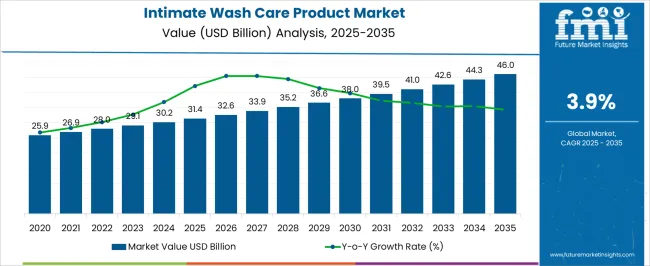
| Metric | Value |
|---|---|
| Intimate Wash Care Product Market Estimated Value in (2025 E) | USD 31.4 billion |
| Intimate Wash Care Product Market Forecast Value in (2035 F) | USD 46.0 billion |
| Forecast CAGR (2025 to 2035) | 3.9% |
Segmental Analysis
The market is segmented by Form Type, Price Range, End User, Nature, and Sales Channel and region. By Form Type, the market is divided into Creams, Moisturizers, Oils/Gels, Foams, and Other Forms. In terms of Price Range, the market is classified into Mid-Range Products, Economy Products, and Premium Products. Based on End User, the market is segmented into Women and Men. By Nature, the market is divided into Organic and Conventional. By Sales Channel, the market is segmented into Supermarkets/Hypermarkets, Pharmacies And Drug Stores, Specialty Outlets, Independent Small Stores, E-Retailers, and Other Sales Channels. Regionally, the market is classified into North America, Latin America, Western Europe, Eastern Europe, Balkan & Baltic Countries, Russia & Belarus, Central Asia, East Asia, South Asia & Pacific, and the Middle East & Africa.
Insights into the Creams Form Type Segment
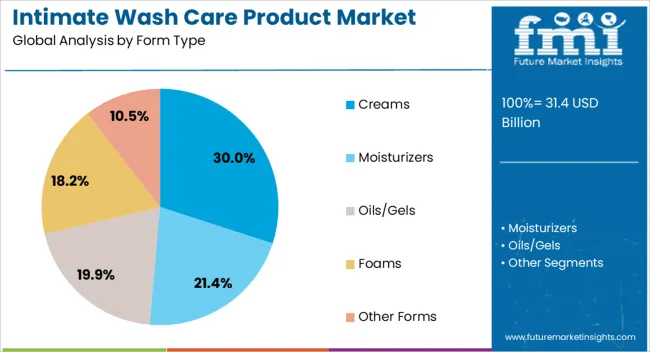
The creams form type segment is projected to hold 30.00% of the Intimate Wash Care Product market revenue share in 2025, making it a leading product form. This segment has been driven by the rich and nourishing texture of creams, which provides enhanced comfort and hydration for sensitive skin areas.
The ability to offer targeted care through added moisturizers, botanical extracts, and soothing agents has made creams a preferred choice among consumers seeking gentle yet effective solutions. Ease of application and prolonged skin benefits further support the growth of this segment.
Additionally, the segment has been reinforced by rising consumer demand for premium formulations that combine cleansing with skincare benefits Product innovation and differentiation, along with strong branding and packaging appeal, continue to drive the adoption of cream-based intimate wash products, maintaining their strong position in the market.
Insights into the Mid-Range Products Price Segment
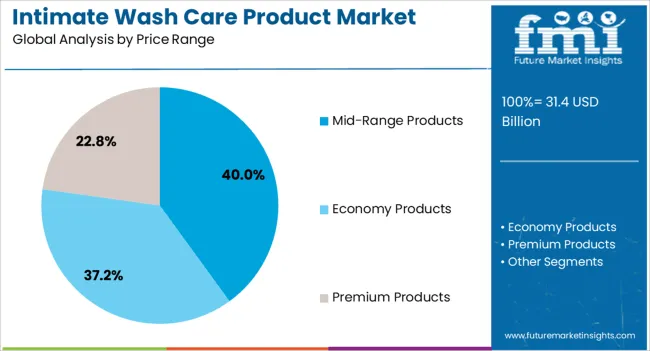
The mid-range products segment is expected to capture 40.00% of the Intimate Wash Care Product market revenue share in 2025, establishing it as the dominant price category. The growth of this segment has been influenced by its balance of affordability and quality, which appeals to a wide consumer base seeking effective personal care solutions without premium pricing.
Mid-range products offer reliable efficacy, safe formulations, and attractive packaging that align with consumer expectations. The segment has also benefited from increasing retail penetration, both offline and online, providing easy accessibility and visibility.
Marketing strategies highlighting product value, benefits, and safety further reinforce consumer trust The segment’s dominance is supported by the expanding middle-class population and rising disposable incomes, which drive consumption of personal care products that are perceived as both accessible and reliable.
Insights into the Women End User Segment
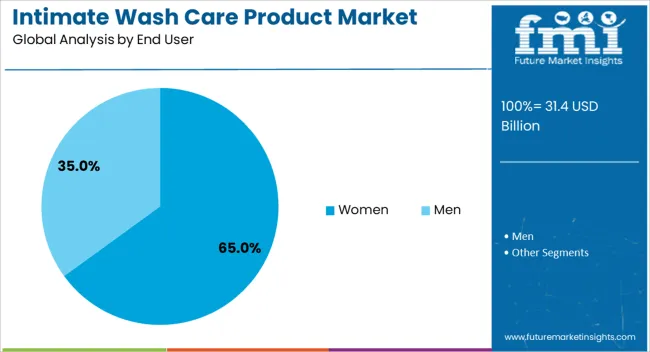
The women end user segment is anticipated to account for 65.00% of the Intimate Wash Care Product market revenue in 2025, making it the leading consumer category. The growth of this segment is driven by heightened awareness of female hygiene needs and increased focus on health and wellness. Women increasingly prefer specialized formulations that provide cleansing, pH balance, and soothing properties, contributing to higher adoption rates.
Marketing initiatives and educational campaigns emphasizing the importance of intimate care have strengthened product acceptance. Additionally, the segment benefits from lifestyle changes, growing purchasing power, and evolving grooming habits among women.
The focus on personalized care and tailored product offerings has reinforced the dominance of women as the primary end users Rising e-commerce adoption and targeted promotional strategies continue to support growth, ensuring sustained demand in this key consumer segment.
Intimate Wash Care Product Market Dynamics
- The market is experiencing substantial growth due to growing consumer demand for organic and natural feminine hygiene products.
- The anticipated increase in demand for intimate wash care products is owing to booming availability through eCommerce platforms, pharmacies, specialty outlets, and others across the global level.
- The surge in awareness is a major factor accelerating market growth, especially among female consumers in developing countries.
- Government initiatives and local non-government organizations are increasing awareness among women about intimate wash care products, driving market growth.
- The industry is collaborating to invest in formulating a variety of products, and the adoption of personal care hygiene accelerates market growth.
Category-wise Outlook
The gel-based product is the leading segment of the intimate wash care product market, offering various benefits. Conventional natural intimate care products are also driving market growth on the other hand.
Manufacturers Drive Market Growth with Gel-based Intimate Care Products
The gel-based product is projected to acquire a market share of 48.60% in 2025. Reasons influencing this segment’s growth are:
- The variety of gel intimate wash care products is easily available in stores and online websites, and consumers are more likely to prefer and be impressed by gel products because of their exceptional benefits. The growing demand for gel intimate products upsurges the growth of the market.
- Manufacturers are focusing on experimenting with gel-based intimate wash care products to gain consumer popularity among the new inventory of hygiene products, driving the growth rate of the market and helping to increase segment shares.
| Attributes | Details |
|---|---|
| Product Type | Gel |
| Market Share (2025) | 48.60% |
Natural Intimate Wash Care Industry Expands amid Chemical Concerns
Conventional intimate wash care products are influencing the market's growth, holding a market share of 75.10% in 2025. Factors accounting for the growth of this segment are:
- The natural intimate wash care product market is projected to continue growing as consumers become more educated about the potential risks associated with traditional chemical-based products. This growth presents opportunities for both established brands and new entrants to capitalize on the demand for natural alternatives.
- The increased demand for natural conventional products in the market is characterized by growing consumer awareness and a focus on sustainability. Brands that meet regulatory standards are highly positioned to succeed in this segment and enhance market growth.
| Attributes | Details |
|---|---|
| Natural | Conventional |
| Market Share (2025) | 75.10% |
Country-wise Analysis
The explosive upsurge in demand for intimate wash care products in multiple regions such as North America, Europe, and Asia Pacific can be attributed to several factors. The increasing awareness of personal hygiene and health is prompting individuals to seek specialized products for intimate care.
The rising development of gentler and safer intimate wash products is attracting consumers toward natural and organic ingredients, leading the market of personal hygiene. Increasing disposable income and urbanization contribute to the growing demand for such products, especially in emerging markets like Asia Pacific. Cultural factors and changing lifestyles also play a significant role in the market expansion across different regions.
| Countries | CAGR (2025 to 2035) |
|---|---|
| United State | 3.00% |
| Germany | 3.50% |
| China | 6.30% |
| India | 6.10% |
| Australia | 5.20% |
Health Concerns and Product Availability Drive the United States Intimate Wash Market
The forecasted CAGR for the United States intimate wash care product market is 3.00%, with various factors affecting its growth.
- The growing availability of a wide range of products catering to different preferences and needs drives consumer choice, demonstrating the growth of the market.
- The increased concern about hygiene health issues such as infection and irritation is fueling the market's growth.
- The enhancement of disposable income allows the target audience to spend more on premium products.
Sustainable Wellness Trends Boost the Intimate Care Market Growth in Germany
The market in Germany is expected to see a CAGR of 3.50%, with various factors influencing this growth.
- The emphasis on eco-friendly and sustainable ingredients in intimate care products aligns with consumer choices. The growing trend toward environmental protection is boosting market growth.
- Strong distribution networks and access to premium products support market growth.
- Increasing acceptance of intimate care as part of the overall wellness regimen fuels demand.
Urbanization and Western Influences Drive China’s Intimate Wash Market Growth
The market in China is expected to see 6.30% CAGR growth through 2035, influenced by various factors.
- Rapid urbanization and changing lifestyles lead to increased focus on personal hygiene. With the influence of Western beauty standards and trends encouraging the adoption of intimate care products, growing sales are driven by market growth.
- Rising availability of intimate wash care products online and offline helps facilitate easy access to a wide variety of products, contributing to market growth.
Cost-efficient Herbal Concepts Fuel Growth in India’s Intimate Wash Market
The market in India is expected to see a 6.10% CAGR from 2025 to 2035, with various factors influencing its growth.
- India’s culture moving toward openness about intimate health issues is boosting the growth of the market.
- The herbal concept has highly impacted India’s healthcare industry, promoting several varieties of products in different sectors and driving market growth.
- Cost-effective and sustainable hygiene care product development has enhanced the growth rate of the market.
Premium Product Innovation Drives the Intimate Wash Market in Australia
The market in Australia is expected to see a CAGR of 5.20% during the forecast period, with various factors influencing its growth.
- Preference for premium and high-quality products supports the expansion of the market. The influence of a multicultural population leads to demand for diverse product offerings. Growing innovation penetration provides a wide range of products, driving market growth.
- Government organizations and manufacturers are concentrating on research and development to formulate safer and higher-standard products to gain consumer trust and satisfaction, driving market growth.
Competitive Landscape
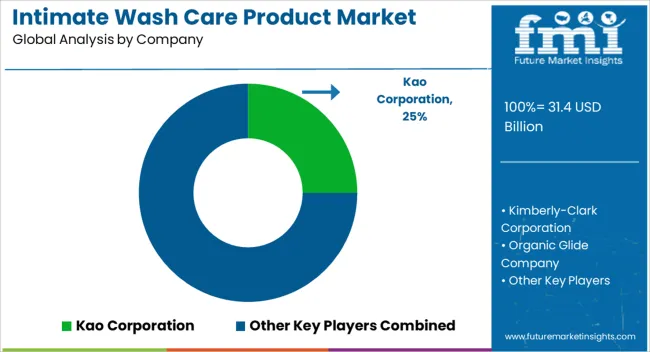
The intimate wash care product market is experiencing continuous and steady growth due to growing awareness about personal hygiene among both categories of consumers. The factors encouraging the growth of the market include rising disposable income, changing lifestyles, and growing concerns about intimate health, driving the market forward. The global move toward organic and natural products is leading to the introduction of innovation and premium offerings in the market.
Various market players are contributing to the growth of the market, and the names of the industries such as Procter & Gamble, Johnson & Johnson, The Himalaya Drug Company, Glenmark Pharmaceuticals, and Cipla are among the prominent players. These companies have established strong distribution networks, brand recognition, and diverse product portfolios, catering to various consumer needs and preferences. Additionally, new entrants and smaller players are entering the market with niche offerings, targeting specific segments such as organic, hypoallergenic, or fragrance-free products.
Recent developments among key players in the market showcase a focus on product innovation, expansion into new markets, and strategic partnerships.
- Procter & Gamble introduced new formulations with enhanced benefits such as pH-balanced formulas and natural ingredients.
- Johnson & Johnson expanded its product line to include variants targeting specific concerns such as sensitive skin or odor control.
- The Himalaya Drug Company strengthened its presence in emerging markets through aggressive marketing campaigns and collaborations with local retailers.
- Glenmark Pharmaceuticals and Cipla focused on leveraging their pharmaceutical expertise to develop intimate wash products with therapeutic properties, catering to consumers seeking medical-grade solutions for intimate health issues.
Recent Developments
- In 2025, Ohhema Products, a Ghanaian brand, launched eco-friendly sanitary napkins in the United States, aiming to change period shaming and empower women with control over their menstrual health.
- In 2025, Femi9, a company founded by actor Nayanthara, director Vignesh Shivan, and Dr. Gomathi, offered high-quality, ultra-thin daily wear pads for women, providing period protection.
- In 2025, VinzBerry launched a range of intimate care and wellness products for women, attracting guests including actors, models, lifestyle bloggers, and celebrity stylists.
Key Companies
- Kao Corporation
- Kimberly-Clark Corporation
- Organic Glide Company
- The Honey Pot Company, LLC
- Prestige Consumer Healthcare Company
- Imbue
- Glenmark Pharmaceuticals Company
- Combe Incorporated
- Lemisol Corporation
- Skin Elements Company
- WOW Freedom Company
- The Himalaya Drug Company
- Makhai
- Sirona Hygiene Private Limited
Key Coverage in the Intimate Wash Care Product Market Report
- Personal Care Industry Analysis
- Market Segmentation of personal hygiene products
- Industry Growth Factors for Intimate Wash Care Products
- Market Share of Intimate Wash Care Product Manufacturers
- Emerging Opportunities in the Intimate Wash Care Sector
- Intimate Wash Care Products Demand Analysis
Key Segmentation
By Form Type:
- Creams
- Moisturizers
- Oils/Gels
- Foams
- Other Forms
By Price Range:
- Economy Products
- Mid-Range Products
- Premium Products
By End User:
- Men
- Women
By Nature:
- Organic
- Conventional
By Sales Channel:
- Supermarkets/Hypermarkets
- Pharmacies and Drug Stores
- Specialty Outlets
- Independent Small Stores
- E-retailers
- Other Sales Channels
By Region:
- North America
- Latin America
- Europe
- South Asia
- East Asia
- Oceania
- Middle East and Africa (MEA)
Frequently Asked Questions
How big is the intimate wash care product market in 2025?
The global intimate wash care product market is estimated to be valued at USD 31.4 billion in 2025.
What will be the size of intimate wash care product market in 2035?
The market size for the intimate wash care product market is projected to reach USD 46.0 billion by 2035.
How much will be the intimate wash care product market growth between 2025 and 2035?
The intimate wash care product market is expected to grow at a 3.9% CAGR between 2025 and 2035.
What are the key product types in the intimate wash care product market?
The key product types in intimate wash care product market are creams, moisturizers, oils/gels, foams and other forms.
Which price range segment to contribute significant share in the intimate wash care product market in 2025?
In terms of price range, mid-range products segment to command 40.0% share in the intimate wash care product market in 2025.
Preview the report firsthand - request a free sample
Get SampleGet the brochure for pricing and purchase details.
Get PDFTable of Content
- Executive Summary
- Global Market Outlook
- Demand-side Trends
- Supply-side Trends
- Technology Roadmap Analysis
- Analysis and Recommendations
- Market Overview
- Market Coverage / Taxonomy
- Market Definition / Scope / Limitations
- Market Background
- Market Dynamics
- Drivers
- Restraints
- Opportunity
- Trends
- Scenario Forecast
- Demand in Optimistic Scenario
- Demand in Likely Scenario
- Demand in Conservative Scenario
- Opportunity Map Analysis
- Product Life Cycle Analysis
- Supply Chain Analysis
- Investment Feasibility Matrix
- Value Chain Analysis
- PESTLE and Porter’s Analysis
- Regulatory Landscape
- Regional Parent Market Outlook
- Production and Consumption Statistics
- Import and Export Statistics
- Market Dynamics
- Global Market Analysis 2020 to 2024 and Forecast, 2025 to 2035
- Historical Market Size Value (USD Million) Analysis, 2020 to 2024
- Current and Future Market Size Value (USD Million) Projections, 2025 to 2035
- Y-o-Y Growth Trend Analysis
- Absolute $ Opportunity Analysis
- Global Market Pricing Analysis 2020 to 2024 and Forecast 2025 to 2035
- Global Market Analysis 2020 to 2024 and Forecast 2025 to 2035, By Form Type
- Introduction / Key Findings
- Historical Market Size Value (USD Million) Analysis By Form Type , 2020 to 2024
- Current and Future Market Size Value (USD Million) Analysis and Forecast By Form Type , 2025 to 2035
- Creams
- Moisturizers
- Oils/Gels
- Foams
- Other Forms
- Y-o-Y Growth Trend Analysis By Form Type , 2020 to 2024
- Absolute $ Opportunity Analysis By Form Type , 2025 to 2035
- Global Market Analysis 2020 to 2024 and Forecast 2025 to 2035, By Price Range
- Introduction / Key Findings
- Historical Market Size Value (USD Million) Analysis By Price Range, 2020 to 2024
- Current and Future Market Size Value (USD Million) Analysis and Forecast By Price Range, 2025 to 2035
- Mid-Range Products
- Economy Products
- Premium Products
- Y-o-Y Growth Trend Analysis By Price Range, 2020 to 2024
- Absolute $ Opportunity Analysis By Price Range, 2025 to 2035
- Global Market Analysis 2020 to 2024 and Forecast 2025 to 2035, By End User
- Introduction / Key Findings
- Historical Market Size Value (USD Million) Analysis By End User, 2020 to 2024
- Current and Future Market Size Value (USD Million) Analysis and Forecast By End User, 2025 to 2035
- Women
- Men
- Y-o-Y Growth Trend Analysis By End User, 2020 to 2024
- Absolute $ Opportunity Analysis By End User, 2025 to 2035
- Global Market Analysis 2020 to 2024 and Forecast 2025 to 2035, By Nature
- Introduction / Key Findings
- Historical Market Size Value (USD Million) Analysis By Nature, 2020 to 2024
- Current and Future Market Size Value (USD Million) Analysis and Forecast By Nature, 2025 to 2035
- Organic
- Conventional
- Y-o-Y Growth Trend Analysis By Nature, 2020 to 2024
- Absolute $ Opportunity Analysis By Nature, 2025 to 2035
- Global Market Analysis 2020 to 2024 and Forecast 2025 to 2035, By Sales Channel
- Introduction / Key Findings
- Historical Market Size Value (USD Million) Analysis By Sales Channel, 2020 to 2024
- Current and Future Market Size Value (USD Million) Analysis and Forecast By Sales Channel, 2025 to 2035
- Supermarkets/Hypermarkets
- Pharmacies And Drug Stores
- Specialty Outlets
- Independent Small Stores
- E-Retailers
- Other Sales Channels
- Y-o-Y Growth Trend Analysis By Sales Channel, 2020 to 2024
- Absolute $ Opportunity Analysis By Sales Channel, 2025 to 2035
- Global Market Analysis 2020 to 2024 and Forecast 2025 to 2035, By Region
- Introduction
- Historical Market Size Value (USD Million) Analysis By Region, 2020 to 2024
- Current Market Size Value (USD Million) Analysis and Forecast By Region, 2025 to 2035
- North America
- Latin America
- Western Europe
- Eastern Europe
- East Asia
- South Asia and Pacific
- Middle East & Africa
- Market Attractiveness Analysis By Region
- North America Market Analysis 2020 to 2024 and Forecast 2025 to 2035, By Country
- Historical Market Size Value (USD Million) Trend Analysis By Market Taxonomy, 2020 to 2024
- Market Size Value (USD Million) Forecast By Market Taxonomy, 2025 to 2035
- By Country
- USA
- Canada
- Mexico
- By Form Type
- By Price Range
- By End User
- By Nature
- By Sales Channel
- By Country
- Market Attractiveness Analysis
- By Country
- By Form Type
- By Price Range
- By End User
- By Nature
- By Sales Channel
- Key Takeaways
- Latin America Market Analysis 2020 to 2024 and Forecast 2025 to 2035, By Country
- Historical Market Size Value (USD Million) Trend Analysis By Market Taxonomy, 2020 to 2024
- Market Size Value (USD Million) Forecast By Market Taxonomy, 2025 to 2035
- By Country
- Brazil
- Chile
- Rest of Latin America
- By Form Type
- By Price Range
- By End User
- By Nature
- By Sales Channel
- By Country
- Market Attractiveness Analysis
- By Country
- By Form Type
- By Price Range
- By End User
- By Nature
- By Sales Channel
- Key Takeaways
- Western Europe Market Analysis 2020 to 2024 and Forecast 2025 to 2035, By Country
- Historical Market Size Value (USD Million) Trend Analysis By Market Taxonomy, 2020 to 2024
- Market Size Value (USD Million) Forecast By Market Taxonomy, 2025 to 2035
- By Country
- Germany
- UK
- Italy
- Spain
- France
- Nordic
- BENELUX
- Rest of Western Europe
- By Form Type
- By Price Range
- By End User
- By Nature
- By Sales Channel
- By Country
- Market Attractiveness Analysis
- By Country
- By Form Type
- By Price Range
- By End User
- By Nature
- By Sales Channel
- Key Takeaways
- Eastern Europe Market Analysis 2020 to 2024 and Forecast 2025 to 2035, By Country
- Historical Market Size Value (USD Million) Trend Analysis By Market Taxonomy, 2020 to 2024
- Market Size Value (USD Million) Forecast By Market Taxonomy, 2025 to 2035
- By Country
- Russia
- Poland
- Hungary
- Balkan & Baltic
- Rest of Eastern Europe
- By Form Type
- By Price Range
- By End User
- By Nature
- By Sales Channel
- By Country
- Market Attractiveness Analysis
- By Country
- By Form Type
- By Price Range
- By End User
- By Nature
- By Sales Channel
- Key Takeaways
- East Asia Market Analysis 2020 to 2024 and Forecast 2025 to 2035, By Country
- Historical Market Size Value (USD Million) Trend Analysis By Market Taxonomy, 2020 to 2024
- Market Size Value (USD Million) Forecast By Market Taxonomy, 2025 to 2035
- By Country
- China
- Japan
- South Korea
- By Form Type
- By Price Range
- By End User
- By Nature
- By Sales Channel
- By Country
- Market Attractiveness Analysis
- By Country
- By Form Type
- By Price Range
- By End User
- By Nature
- By Sales Channel
- Key Takeaways
- South Asia and Pacific Market Analysis 2020 to 2024 and Forecast 2025 to 2035, By Country
- Historical Market Size Value (USD Million) Trend Analysis By Market Taxonomy, 2020 to 2024
- Market Size Value (USD Million) Forecast By Market Taxonomy, 2025 to 2035
- By Country
- India
- ASEAN
- Australia & New Zealand
- Rest of South Asia and Pacific
- By Form Type
- By Price Range
- By End User
- By Nature
- By Sales Channel
- By Country
- Market Attractiveness Analysis
- By Country
- By Form Type
- By Price Range
- By End User
- By Nature
- By Sales Channel
- Key Takeaways
- Middle East & Africa Market Analysis 2020 to 2024 and Forecast 2025 to 2035, By Country
- Historical Market Size Value (USD Million) Trend Analysis By Market Taxonomy, 2020 to 2024
- Market Size Value (USD Million) Forecast By Market Taxonomy, 2025 to 2035
- By Country
- Kingdom of Saudi Arabia
- Other GCC Countries
- Turkiye
- South Africa
- Other African Union
- Rest of Middle East & Africa
- By Form Type
- By Price Range
- By End User
- By Nature
- By Sales Channel
- By Country
- Market Attractiveness Analysis
- By Country
- By Form Type
- By Price Range
- By End User
- By Nature
- By Sales Channel
- Key Takeaways
- Key Countries Market Analysis
- USA
- Pricing Analysis
- Market Share Analysis, 2024
- By Form Type
- By Price Range
- By End User
- By Nature
- By Sales Channel
- Canada
- Pricing Analysis
- Market Share Analysis, 2024
- By Form Type
- By Price Range
- By End User
- By Nature
- By Sales Channel
- Mexico
- Pricing Analysis
- Market Share Analysis, 2024
- By Form Type
- By Price Range
- By End User
- By Nature
- By Sales Channel
- Brazil
- Pricing Analysis
- Market Share Analysis, 2024
- By Form Type
- By Price Range
- By End User
- By Nature
- By Sales Channel
- Chile
- Pricing Analysis
- Market Share Analysis, 2024
- By Form Type
- By Price Range
- By End User
- By Nature
- By Sales Channel
- Germany
- Pricing Analysis
- Market Share Analysis, 2024
- By Form Type
- By Price Range
- By End User
- By Nature
- By Sales Channel
- UK
- Pricing Analysis
- Market Share Analysis, 2024
- By Form Type
- By Price Range
- By End User
- By Nature
- By Sales Channel
- Italy
- Pricing Analysis
- Market Share Analysis, 2024
- By Form Type
- By Price Range
- By End User
- By Nature
- By Sales Channel
- Spain
- Pricing Analysis
- Market Share Analysis, 2024
- By Form Type
- By Price Range
- By End User
- By Nature
- By Sales Channel
- France
- Pricing Analysis
- Market Share Analysis, 2024
- By Form Type
- By Price Range
- By End User
- By Nature
- By Sales Channel
- India
- Pricing Analysis
- Market Share Analysis, 2024
- By Form Type
- By Price Range
- By End User
- By Nature
- By Sales Channel
- ASEAN
- Pricing Analysis
- Market Share Analysis, 2024
- By Form Type
- By Price Range
- By End User
- By Nature
- By Sales Channel
- Australia & New Zealand
- Pricing Analysis
- Market Share Analysis, 2024
- By Form Type
- By Price Range
- By End User
- By Nature
- By Sales Channel
- China
- Pricing Analysis
- Market Share Analysis, 2024
- By Form Type
- By Price Range
- By End User
- By Nature
- By Sales Channel
- Japan
- Pricing Analysis
- Market Share Analysis, 2024
- By Form Type
- By Price Range
- By End User
- By Nature
- By Sales Channel
- South Korea
- Pricing Analysis
- Market Share Analysis, 2024
- By Form Type
- By Price Range
- By End User
- By Nature
- By Sales Channel
- Russia
- Pricing Analysis
- Market Share Analysis, 2024
- By Form Type
- By Price Range
- By End User
- By Nature
- By Sales Channel
- Poland
- Pricing Analysis
- Market Share Analysis, 2024
- By Form Type
- By Price Range
- By End User
- By Nature
- By Sales Channel
- Hungary
- Pricing Analysis
- Market Share Analysis, 2024
- By Form Type
- By Price Range
- By End User
- By Nature
- By Sales Channel
- Kingdom of Saudi Arabia
- Pricing Analysis
- Market Share Analysis, 2024
- By Form Type
- By Price Range
- By End User
- By Nature
- By Sales Channel
- Turkiye
- Pricing Analysis
- Market Share Analysis, 2024
- By Form Type
- By Price Range
- By End User
- By Nature
- By Sales Channel
- South Africa
- Pricing Analysis
- Market Share Analysis, 2024
- By Form Type
- By Price Range
- By End User
- By Nature
- By Sales Channel
- USA
- Market Structure Analysis
- Competition Dashboard
- Competition Benchmarking
- Market Share Analysis of Top Players
- By Regional
- By Form Type
- By Price Range
- By End User
- By Nature
- By Sales Channel
- Competition Analysis
- Competition Deep Dive
- Kao Corporation
- Overview
- Product Portfolio
- Profitability by Market Segments (Product/Age /Sales Channel/Region)
- Sales Footprint
- Strategy Overview
- Marketing Strategy
- Product Strategy
- Channel Strategy
- Kimberly-Clark Corporation
- Organic Glide Company
- The Honey Pot Company, LLC
- Prestige Consumer Healthcare Company
- Imbue
- Glenmark Pharmaceuticals Company
- Combe Incorporated
- Lemisol Corporation
- Skin Elements Company
- WOW Freedom Company
- The Himalaya Drug Company
- Makhai
- Kao Corporation
- Competition Deep Dive
- Assumptions & Acronyms Used
- Research Methodology


