

- Industry Size (2025)
- USD 215.8 Mn
- Forecast (2035)
- USD 292.1 Mn
- CAGR (2025 to 2035)
- 3.1%
Demand for Acrylamide in Japan Forecast and Outlook 2025 to 2035
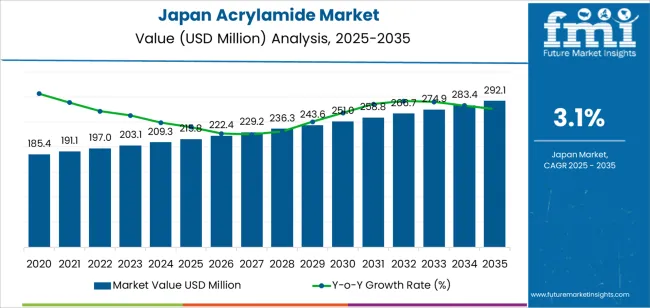
The demand for acrylamide in Japan is projected to grow from USD 215.8 million in 2025 to USD 292.1 million by 2035, reflecting a compound annual growth rate (CAGR) of 3.1%. Acrylamide is used in a variety of industrial applications, including water treatment, food processing, and in the production of polymers and chemicals. As industries continue to expand their use of acrylamide for these purposes, the demand is expected to increase steadily. The growing need for effective wastewater treatment and the continued demand for polyacrylamide in various sectors, including agriculture and oil extraction, will drive market growth over the forecast period.
Year-over-year (Y-o-Y) growth will be steady, with the market increasing from USD 215.8 million in 2025 to USD 222.4 million in 2026, and USD 229.2 million in 2027. By 2029, demand will reach USD 243.6 million, with continued growth expected through 2030, reaching USD 251.0 million. By 2035, the demand for acrylamide is forecasted to reach USD 292.1 million, reflecting long-term, steady growth across the key industries that rely on this chemical.
Quick Stats of the Demand for Acrylamide in Japan
- Demand for Acrylamide in Japan Value (2025): USD 215.8 million
- Demand for Acrylamide in Japan Forecast Value (2035): USD 292.1 million
- Demand for Acrylamide in Japan Forecast CAGR (2025-2035): 3.1%
- Demand for Acrylamide in Japan Formulation: 60% Liquid Form
- Demand for Acrylamide in Japan Key Growth Regions: Kyushu & Okinawa, Kanto, Kinki, Chubu, Tohoku, Rest of Japan
- Demand for Acrylamide in Japan Key Players: Mitsui Chemicals, Inc., Mitsubishi Chemical Corporation, Nippon Shokubai Co., Ltd., Dia-Nitrix Co., Ltd., Showa Denko K.K.
What is the Growth Forecast for the Acrylamide Industry in Japan through 2035?
The acrylamide industry in Japan is expected to grow steadily over the next decade. Starting at USD 215.8 million in 2025, the market will gradually increase, reaching USD 222.4 million in 2026 and USD 229.2 million in 2027. By 2029, the demand for acrylamide will grow to USD 243.6 million, continuing upward to USD 258.8 million by 2030. By 2035, the market is forecasted to reach USD 292.1 million, driven by increasing demand in water treatment, industrial applications, and food processing.
The half-decade weighted growth analysis highlights steady and consistent growth over the next five years. From 2025 to 2030, the market will experience gradual increases in demand, with the compound weighted growth reflecting an overall steady market expansion. The growth rate will remain relatively consistent, with demand rising incrementally year by year. By the end of this period, the weighted growth will reflect the continued application of acrylamide in various sectors, contributing to a stable and predictable market trajectory over the next half-decade.
Key Takeaways of Acrylamide Industry in Japan
| Metric | Value |
|---|---|
| Industry Sales Value (2025) | USD 215.8 million |
| Industry Forecast Value (2035) | USD 292.1 million |
| Industry Forecast CAGR (2025-2035) | 3.1% |
Why is the Demand for Acrylamide in Japan Growing?
Demand for acrylamide in Japan is rising due to its crucial role as a raw material for polyacrylamide (PAM), which is widely used in water and wastewater treatment, paper and pulp processing, and oil and gas applications. Japan's increasing water treatment needs, driven by stringent regulatory standards and environmental concerns, contribute to the rising demand for acrylamide. Polyacrylamide, derived from acrylamide, is essential for treating municipal and industrial wastewater, helping to remove suspended solids and improve water quality.
Similarly, in the pulp and paper industry, acrylamide-based polymers are used to enhance paper strength, improve the efficiency of the production process, and boost overall yield. These industrial applications remain key drivers of acrylamide demand in Japan, particularly as industries focus on meeting environmental standards and improving operational efficiency.
The demand for acrylamide in Japan is also supported by broader global trends. As industries around the world continue to expand, the need for water treatment, paper production, and oil extraction processes requiring acrylamide-based products continues to grow. Additionally, the increasing focus on cleaner water, wastewater management, and efficient industrial processes is further boosting the demand for acrylamide in Japan. With strong applications across various sectors and the growing need for environmental management, the market for acrylamide is expected to see continued growth in Japan over the coming years.
What Is the Current State of the Demand for Acrylamide in Japan in Terms of Formulation and End-Use Industry?
The demand for acrylamide in Japan is primarily driven by formulation and end-use industry. The leading formulation is liquid form, accounting for 60% of the market share, while water treatment is the dominant end-use industry, capturing 45% of the demand. Acrylamide is widely used in various industrial applications, particularly in water treatment, paper production, and oil recovery, where its properties as a flocculant and polymerization agent are highly valued. As industries continue to focus on sustainability and process optimization, the demand for acrylamide in Japan is expected to grow.
How Is Liquid Form Leading the Demand for Acrylamide in Japan?
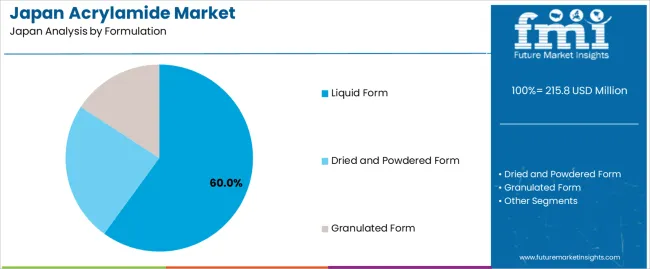
Liquid form acrylamide leads the demand in Japan, holding 60% of the market share. The liquid formulation of acrylamide is preferred for its ease of use and efficient application in various industrial processes. In its liquid state, acrylamide is commonly utilized in water treatment, where it is used as a coagulant and flocculant to remove impurities and improve water quality. Liquid acrylamide is also used in oil and gas recovery, paper production, and the creation of polyacrylamide, which has applications in wastewater treatment and soil conditioning.
The demand for liquid form acrylamide is driven by its convenience and versatility in industrial applications. The liquid form allows for easier handling, quicker dissolution in water, and more precise dosing, which enhances its effectiveness in large-scale operations. With increasing emphasis on efficient water treatment and industrial process optimization in Japan, the liquid form of acrylamide remains the preferred choice in various industries, ensuring its continued dominance in the market.
How Is Water Treatment Leading the End-Use Industry Demand for Acrylamide in Japan?
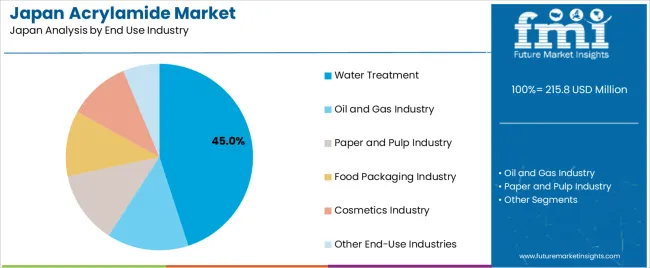
Water treatment is the leading end-use industry for acrylamide in Japan, accounting for 45% of the demand. Acrylamide is crucial in water treatment applications, particularly as a key ingredient in polyacrylamide-based flocculants, which are used to remove suspended solids, organic material, and other contaminants from water. The compound plays a critical role in both municipal water treatment and industrial wastewater treatment processes, where it helps improve water clarity and quality.
The demand for acrylamide in water treatment is driven by the growing need for effective and sustainable solutions to manage water resources. As environmental regulations become more stringent and industries continue to seek ways to reduce their environmental impact, the demand for acrylamide-based flocculants is expected to rise. This trend is especially evident in Japan, where water treatment processes are a priority in maintaining clean water sources and ensuring efficient wastewater management. As Japan focuses on improving water quality and sustainability, the demand for acrylamide in water treatment will continue to grow.
What is the Summary of Demand for Acrylamide in Japan?
Demand for Acrylamide in Japan is shaped primarily by its role as a precursor to Polyacrylamide (PAM), which is extensively used in water treatment, pulp and paper production, and industrial wastewater handling. Water treatment and paper sectors remain the principal users of PAM, generating consistent baseline demand for acrylamide. As wastewater management standards and industrial effluent treatment requirements evolve, need for effective flocculants and coagulants persists, supporting steady consumption of acrylamide.
At the same time existing industrial processes relying on resin or polymer intermediates maintain demand for acrylamide supply. Overall demand appears stable rather than rapidly expanding, driven by ongoing maintenance, replacement and steady industrial activity rather than large scale new industrial buildouts.
What are the Drivers of Demand for Acrylamide in Japan?
A key driver is the demand for effective water and wastewater treatment. Polyacrylamide derived from acrylamide serves as a flocculant and coagulant, enabling efficient removal of suspended solids, sludge dewatering, and separation of contaminants. As industrial plants and municipal facilities seek reliable treatment chemicals, acrylamide remains essential in supplying PAM. Another driver is the pulp and paper industry, which uses acrylamide based resins or binding agents to strengthen paper and improve quality during pulp processing.
This provides a stable industrial stream of demand. Additionally, industrial processes in sectors such as mining, minerals processing, and possibly oil field chemical applications support demand for acrylamide as an intermediate. Domestic production capability in Japan helps ensure supply reliability for these industrial users, which supports continued consumption.
What are the Restraints on Demand for Acrylamide in Japan?
Use of acrylamide faces constraints related to health and regulatory scrutiny. Acrylamide is known to be reactive and potentially hazardous; concerns about toxicity and safety may limit applications, especially where human exposure or environmental discharge is possible. This can discourage some industries from using acrylamide derived polymers or prompt shifts toward alternative chemicals or treatment methods.
Another restraint arises from availability of alternate flocculants or treatment chemicals that may reduce reliance on acrylamide based PAM. Where those alternatives offer comparable performance with fewer regulatory hassles, users might switch. Additionally, fluctuations in feedstock costs or raw material availability (for example, precursors needed to produce acrylamide) can raise production cost of acrylamide, making it less attractive. Finally, sectors with declining output for example a shrinking paper industry can erode base demand.
What are the Key Trends Influencing Demand for Acrylamide in Japan?
A continuing trend is sustained reliance on acrylamide based polymers for water treatment and wastewater management, given stricter effluent standards and rising demand for clean water treatment. As industrial and municipal wastewater handling remains important, acrylamide remains a core chemical input. In pulp and paper processing, demand persists for binding resins and retention aids derived from acrylamide, though overall paper demand may shape volume.
Another trend involves cautious re evaluation of chemical safety and regulatory compliance; this may push manufacturers toward higher purity acrylamide grades or alternate polymer chemistries in sensitive applications. In industrial sectors such as minerals or chemical processing, acrylamide may continue to serve as an intermediate where performance and cost align with requirements. As supply chains evolve, domestic production and quality control may support stable supply, which influences demand maintenance rather than growth.
What is the Demand Outlook for Acrylamide in Japan?
The demand for acrylamide in Japan shows steady growth across regions. Kyushu & Okinawa lead with a CAGR of 3.8%, driven by the region’s focus on industrial growth and sustainable water management. Kanto follows closely with a CAGR of 3.5%, supported by strong industrial and chemical production. The Kinki region’s CAGR is projected at 3.1%, reflecting stable growth driven by its manufacturing sector. Chubu, Tohoku, and the Rest of Japan show more moderate growth, with CAGRs of 2.7%, 2.4%, and 2.3% respectively. These variations reflect differing industrial demands, water treatment requirements, and regional environmental regulations.
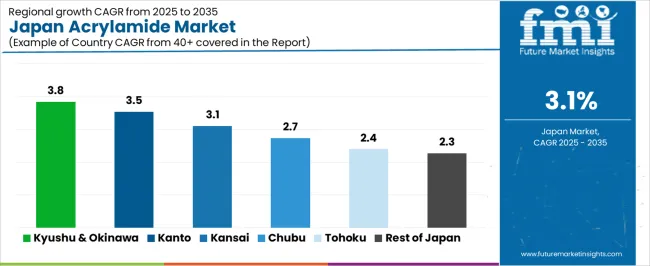
| Region | CAGR (%) |
|---|---|
| Kyushu & Okinawa | 3.8 |
| Kanto | 3.5 |
| Kinki | 3.1 |
| Chubu | 2.7 |
| Tohoku | 2.4 |
| Rest of Japan | 2.3 |
What factors are driving the demand for acrylamide in Kyushu & Okinawa?
In Kyushu & Okinawa, the demand for acrylamide is expected to grow at a CAGR of 3.8%. The region’s diverse industrial base, which includes agriculture, manufacturing, and water treatment, is a key driver. Acrylamide is primarily used in polyacrylamide production, which serves as a flocculant in wastewater treatment and industrial processes. As environmental regulations become more stringent, industries are increasingly turning to acrylamide-based solutions for more efficient water purification.
The growing demand for clean water and sustainable practices, particularly in the agricultural and industrial sectors of Kyushu & Okinawa, is further contributing to the demand for acrylamide. The region’s focus on improving infrastructure and its strong emphasis on environmental preservation ensure steady growth in demand for acrylamide.
Why is the demand for acrylamide increasing in Kanto?
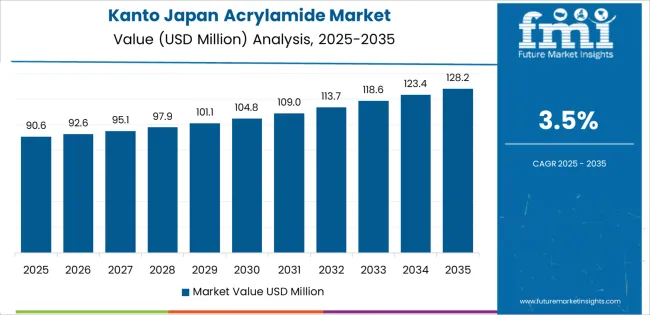
In Kanto, the demand for acrylamide is projected to grow at a CAGR of 3.5%. Kanto’s strong industrial presence, particularly in chemical production, electronics, and automotive manufacturing, is a primary driver for acrylamide use. Polyacrylamide, derived from acrylamide, is widely used in these sectors for water treatment, wastewater management, and as a thickening agent in various industrial processes.
The region’s ongoing efforts to meet environmental regulations and improve waste management systems further boost demand for acrylamide. Additionally, Kanto’s large urban population increases the need for wastewater treatment and water purification systems, which rely on acrylamide-based compounds for effective treatment. As industrial production scales up and regulations continue to tighten, Kanto’s demand for acrylamide will likely remain strong.
How is acrylamide demand growing in Kinki?
The demand for acrylamide in Kinki is expected to grow at a CAGR of 3.1%, supported by the region’s well-established industrial base. Kinki, home to cities like Osaka and Kyoto, has a strong manufacturing sector, particularly in the chemical, textile, and food industries, which are major users of acrylamide-based products. Polyacrylamide is used extensively in water treatment applications to manage industrial wastewater and improve water quality.
The growing focus on sustainability and stricter environmental standards in Kinki is contributing to the increased use of acrylamide in both industrial and agricultural sectors. Additionally, Kinki’s emphasis on improving manufacturing efficiency and reducing pollution further supports the demand for acrylamide-based water treatment solutions. While the growth rate is more moderate than in other regions, Kinki’s industrial diversification ensures steady demand for acrylamide.
What factors influence the demand for acrylamide in Chubu?
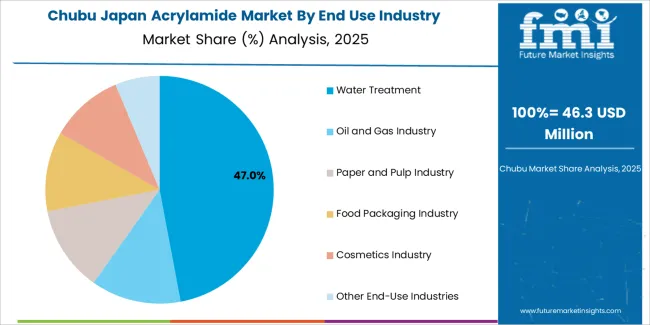
In Chubu, the demand for acrylamide is expected to grow at a CAGR of 2.7%, driven by the region’s diverse industrial activities. Chubu is home to Nagoya, a major industrial hub, where acrylamide is primarily used in manufacturing processes such as water treatment, paper production, and textile processing. As industries in Chubu continue to adopt environmentally sustainable practices, the demand for acrylamide in water treatment and wastewater management is increasing.
The region’s focus on improving industrial processes and reducing chemical waste contributes to this trend. While Chubu’s demand for acrylamide is growing, it is relatively slower compared to regions like Kyushu & Okinawa and Kanto due to the more traditional nature of some industries. Nonetheless, as industrial modernization continues, the adoption of acrylamide in Chubu’s manufacturing sector is expected to rise gradually.
What influences the demand for acrylamide in Tohoku?
In Tohoku, the demand for acrylamide is projected to grow at a CAGR of 2.4%, reflecting slower growth compared to other regions. Tohoku’s industrial base is smaller, and its manufacturing and agricultural sectors have historically been less reliant on acrylamide-based products. However, as environmental concerns grow and the region’s agricultural practices evolve, there is increasing demand for acrylamide in water treatment and soil conditioning applications. Additionally, Tohoku’s focus on sustainable agricultural practices and improving water quality in rural areas is contributing to the gradual rise in acrylamide use. While Tohoku lags behind more industrialized regions, the increasing adoption of eco-friendly farming techniques and water treatment solutions ensures steady growth in demand for acrylamide.
How is acrylamide demand evolving in the Rest of Japan?
In the Rest of Japan, the demand for acrylamide is expected to grow at a CAGR of 2.3%. This region, which encompasses less industrialized and more rural areas, shows slower growth in acrylamide demand. However, the adoption of acrylamide-based products is increasing in agriculture, wastewater treatment, and small-scale manufacturing. As environmental sustainability becomes a key focus nationwide, the Rest of Japan is gradually shifting towards more efficient water treatment solutions, which include acrylamide-based flocculants. While the demand is growing slowly, the push for cleaner and more efficient industrial processes and water management is expected to contribute to steady, if modest, growth in the region’s acrylamide demand over the coming years.
How Are Companies Competing in the Acrylamide Industry in Japan?
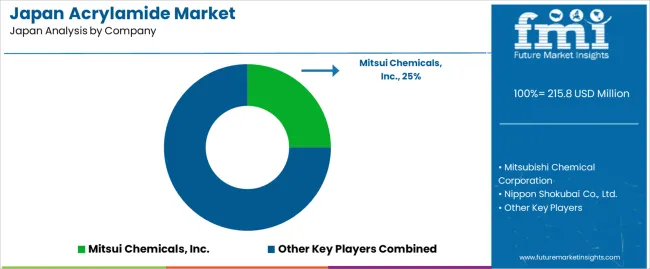
Demand for acrylamide in Japan remains significant due to its use in water treatment chemicals, wastewater treatment, paper processing, and industrial polymer production. Leading suppliers in the Japanese market include Mitsui Chemicals, Inc. (estimated 25% share), Mitsubishi Chemical Corporation, Nippon Shokubai Co., Ltd., Dia Nitrix Co., Ltd., and Showa Denko K.K. These companies supply monomer grade acrylamide and polymer grade derivatives used in flocculants, soil conditioning agents, and specialty polymers. The demand is supported by industrial growth in sectors such as construction, water management, and manufacturing.
Competition in this industry is primarily based on product purity, quality control, and supply reliability. Firms emphasize high purity acrylamide suitable for sensitive water treatment and polymer synthesis processes, ensuring minimal contaminant levels and consistent batch quality. Another important factor is regulatory compliance and safety standards, since acrylamide is a hazardous chemical. Companies offering comprehensive safety documentation, secure transport, and handling support gain preference with industrial buyers.
Supply chain stability also matters because many applications depend on consistent imports or domestic production to avoid production interruptions. Marketing and technical documentation typically highlight monomer purity, residual monomer levels in polymers, batch traceability, and compliance with Japanese industrial regulations. Providers that meet these technical and compliance requirements maintain stronger positions in Japan’s acrylamide market.
Key Players of the Acrylamide Industry in Japan
- Mitsui Chemicals, Inc.
- Mitsubishi Chemical Corporation
- Nippon Shokubai Co., Ltd.
- Dia-Nitrix Co., Ltd.
- Showa Denko K.K.
Scope of the Report
| Items | Details |
|---|---|
| Quantitative Units | USD Million |
| Regions Covered | Japan |
| Formulation | Liquid Form, Dried and Powdered Form, Granulated Form |
| End-Use Industry | Water Treatment, Oil and Gas Industry, Paper and Pulp Industry, Food Packaging Industry, Cosmetics Industry, Other End-Use Industries |
| Key Companies Profiled | Mitsui Chemicals, Inc., Mitsubishi Chemical Corporation, Nippon Shokubai Co., Ltd., Dia-Nitrix Co., Ltd., Showa Denko K.K. |
| Additional Attributes | The market analysis includes dollar sales by formulation, end-use industry, and company categories. It also covers regional demand trends in Japan, driven by the increasing use of acrylamide in water treatment, oil and gas, paper and pulp, and food packaging industries. The competitive landscape highlights key manufacturers focusing on innovations in acrylamide formulations for various industrial applications. Trends in the growing demand for acrylamide in cosmetics and other specialized industries are explored, along with advancements in the production and safety standards related to its use in manufacturing processes. |
Key Segments of the Demand for Acrylamide in Japan
Formulation
- Liquid Form
- Dried and Powdered Form
- Granulated Form
End Use Industry
- Water Treatment
- Oil and Gas Industry
- Paper and Pulp Industry
- Food Packaging Industry
- Cosmetics Industry
- Other End-Use Industries
Region
- Kyushu & Okinawa
- Kanto
- Kinki
- Chubu
- Tohoku
- Rest of Japan
Frequently Asked Questions
How big is the demand for acrylamide in Japan in 2025?
The demand for acrylamide in Japan is estimated to be valued at USD 215.8 million in 2025.
What will be the size of acrylamide in Japan in 2035?
The market size for the acrylamide in Japan is projected to reach USD 292.1 million by 2035.
How much will be the demand for acrylamide in Japan growth between 2025 and 2035?
The demand for acrylamide in Japan is expected to grow at a 3.1% CAGR between 2025 and 2035.
What are the key product types in the acrylamide in Japan?
The key product types in acrylamide in Japan are liquid form, dried and powdered form and granulated form.
Which end use industry segment is expected to contribute significant share in the acrylamide in Japan in 2025?
In terms of end use industry, water treatment segment is expected to command 45.0% share in the acrylamide in Japan in 2025.
Preview the report firsthand - request a free sample
Get SampleGet the brochure for pricing and purchase details.
Get PDFTable of Content
- Executive Summary
- Japan Market Outlook
- Demand-side Trends
- Supply-side Trends
- Technology Roadmap Analysis
- Analysis and Recommendations
- Market Overview
- Market Coverage / Taxonomy
- Market Definition / Scope / Limitations
- Market Background
- Market Dynamics
- Drivers
- Restraints
- Opportunity
- Trends
- Scenario Forecast
- Demand in Optimistic Scenario
- Demand in Likely Scenario
- Demand in Conservative Scenario
- Opportunity Map Analysis
- Product Life Cycle Analysis
- Supply Chain Analysis
- Investment Feasibility Matrix
- Value Chain Analysis
- PESTLE and Porter’s Analysis
- Regulatory Landscape
- Regional Parent Market Outlook
- Production and Consumption Statistics
- Import and Export Statistics
- Market Dynamics
- Japan Market Analysis 2020 to 2024 and Forecast, 2025 to 2035
- Historical Market Size Value (USD Million) Analysis, 2020 to 2024
- Current and Future Market Size Value (USD Million) Projections, 2025 to 2035
- Y-o-Y Growth Trend Analysis
- Absolute $ Opportunity Analysis
- Japan Market Pricing Analysis 2020 to 2024 and Forecast 2025 to 2035
- Japan Market Analysis 2020 to 2024 and Forecast 2025 to 2035, By Formulation
- Introduction / Key Findings
- Historical Market Size Value (USD Million) Analysis By Formulation , 2020 to 2024
- Current and Future Market Size Value (USD Million) Analysis and Forecast By Formulation , 2025 to 2035
- Liquid Form
- Dried and Powdered Form
- Granulated Form
- Y-o-Y Growth Trend Analysis By Formulation , 2020 to 2024
- Absolute $ Opportunity Analysis By Formulation , 2025 to 2035
- Japan Market Analysis 2020 to 2024 and Forecast 2025 to 2035, By End Use Industry
- Introduction / Key Findings
- Historical Market Size Value (USD Million) Analysis By End Use Industry, 2020 to 2024
- Current and Future Market Size Value (USD Million) Analysis and Forecast By End Use Industry, 2025 to 2035
- Water Treatment
- Oil and Gas Industry
- Paper and Pulp Industry
- Food Packaging Industry
- Cosmetics Industry
- Other End-Use Industries
- Y-o-Y Growth Trend Analysis By End Use Industry, 2020 to 2024
- Absolute $ Opportunity Analysis By End Use Industry, 2025 to 2035
- Market Structure Analysis
- Competition Dashboard
- Competition Benchmarking
- Market Share Analysis of Top Players
- By Regional
- By Formulation
- By End Use Industry
- Competition Analysis
- Competition Deep Dive
- Mitsui Chemicals, Inc.
- Overview
- Product Portfolio
- Profitability by Market Segments (Product/Age /Sales Channel/Region)
- Sales Footprint
- Strategy Overview
- Marketing Strategy
- Product Strategy
- Channel Strategy
- Mitsubishi Chemical Corporation
- Nippon Shokubai Co., Ltd.
- Dia-Nitrix Co., Ltd.
- Showa Denko K.K.
- Mitsui Chemicals, Inc.
- Competition Deep Dive
- Assumptions & Acronyms Used
- Research Methodology


