

- Industry Size (2025)
- USD 23.9 Mn
- Forecast (2035)
- USD 39.2 Mn
- CAGR (2025 to 2035)
- 4.6%
Demand for Dystrophic Epidermolysis Bullosa Management in Japan Forecast and Outlook 2026 to 2036
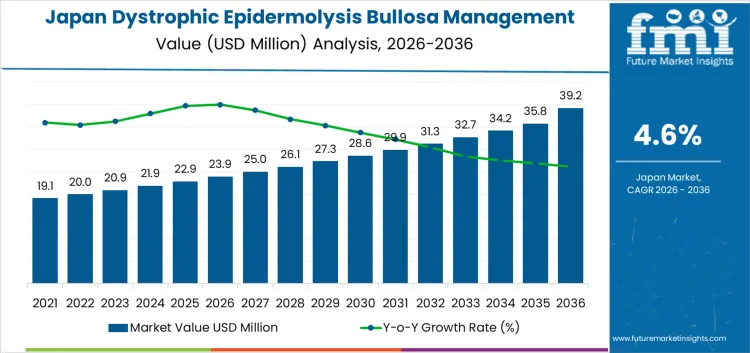
The demand for dystrophic epidermolysis bullosa (DEB) management in Japan is expected to grow from USD 23.9 million in 2026 to USD 39.2 million by 2036, reflecting a 4.6% CAGR. This growth is driven by increasing awareness of DEB, advancements in diagnostic techniques, and the development of targeted therapies, including gene and cell-based treatments. Recessive dystrophic epidermolysis bullosa (RDEB) leads the demand for DEB management, accounting for 60% of the industry due to the severity and chronic nature of the condition. Antibiotics play a critical role, comprising 30% of the demand, as they help prevent and treat infections in patients with fragile skin prone to blisters and wounds.
Quick Stats of the Demand for Dystrophic Epidermolysis Bullosa Management in Japan
- Demand for Dystrophic Epidermolysis Bullosa Management in Japan Value (2026): USD 23.9 million
- Demand for Dystrophic Epidermolysis Bullosa Management in Japan Forecast Value (2036): USD 39.2 million
- Demand for Dystrophic Epidermolysis Bullosa Management in Japan Forecast CAGR (2026-2036): 4.6%
- Demand for Dystrophic Epidermolysis Bullosa Management in Japan Leading Disease Type: Recessive Dystrophic Epidermolysis Bullosa (RDEB)
- Demand for Dystrophic Epidermolysis Bullosa Management in Japan Key Growth Regions: Kyushu & Okinawa, Kanto, Kansai, Chubu, Tohoku, Rest of Japan
- Demand for Dystrophic Epidermolysis Bullosa Management in Japan Top Players: Fibrocell Science, Novartis AG, ProQR Therapeutics, MediWound Ltd., Chiesi Farmaceutici S.p.A.
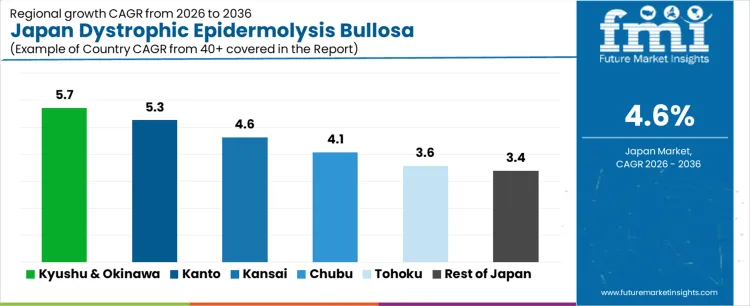
Kyushu & Okinawa is leading the demand with a 5.7% CAGR, driven by expanding healthcare services and a focus on rare diseases. Kanto follows with a 5.3% CAGR, benefiting from its advanced medical infrastructure and increased awareness of DEB. Kansai, Chubu, and other regions also show steady growth as healthcare providers focus more on rare disease treatments and personalized care. Technological innovations, such as genetic analysis and advanced wound care products, are improving the quality of life for patients, contributing to the ongoing demand for DEB management across Japan.
Demand for Dystrophic Epidermolysis Bullosa Management in Japan Key Takeaways
| Metric | Value |
|---|---|
| Demand for Dystrophic Epidermolysis Bullosa Management in Japan Value (2026) | USD 23.9 million |
| Demand for Dystrophic Epidermolysis Bullosa Management in Japan Forecast Value (2036) | USD 39.2 million |
| Demand for Dystrophic Epidermolysis Bullosa Management in Japan Forecast CAGR (2026-2036) | 4.6% |
Why is the Demand for Dystrophic Epidermolysis Bullosa Management in Japan Growing?
The demand for dystrophic epidermolysis bullosa (DEB) management in Japan is growing due to the increasing awareness of this rare, genetic skin disorder and advancements in its diagnosis and treatment options. DEB is characterized by extremely fragile skin that blisters easily, often leading to chronic wounds and significant health complications. As medical professionals and researchers develop better understanding and treatment options for DEB, including gene therapies, biologics, and wound care innovations, the demand for specialized management and care solutions is rising.
Key drivers for this growth include improvements in diagnostic techniques, enabling earlier identification of DEB, and the expanding availability of targeted therapies that aim to address the underlying causes of the disease. Japan’s healthcare system, which provides strong support for rare diseases, including access to specialized care, is contributing to the increased demand for DEB management. The ongoing investment in research and the development of more effective treatments for genetic disorders is also driving industry expansion.
The rising number of diagnosed cases and the country’s aging population, which is more prone to genetic conditions, are contributing factors to the growing need for DEB treatments. Despite challenges such as the complexity and cost of advanced therapies, the focus on improving quality of life for patients and the growing support for rare disease treatments in Japan are expected to support steady growth in the demand for DEB management through 2036.
What is the Segment-Wise Analysis of Demand for Dystrophic Epidermolysis Bullosa Management in Japan?
Demand for dystrophic epidermolysis bullosa (DBE) management in Japan is segmented by disease type, drug class, and region. By disease type, recessive dystrophic epidermolysis bullosa (RDEB) leads with 60% of the demand, followed by dominant dystrophic epidermolysis bullosa (DDEB). In terms of drug class, antibiotics account for 30% of the demand, with corticosteroids, opioid analgesics, and anticonvulsants making up the remainder. Regionally, demand is spread across Kyushu & Okinawa, Kanto, Kansai, Chubu, Tohoku, and the rest of Japan.
Why Does Recessive Dystrophic Epidermolysis Bullosa (RDEB) Lead the Demand for DBE Management in Japan?
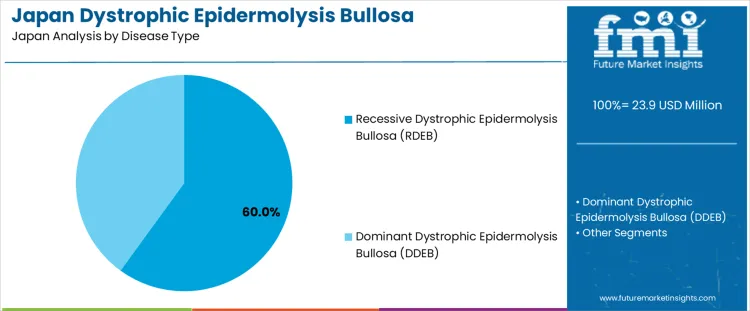
Recessive dystrophic epidermolysis bullosa (RDEB) accounts for 60% of the demand for DBE management in Japan, driven by the severity and chronic nature of the disease. RDEB is characterized by fragile skin and frequent blistering, which requires ongoing treatment to manage symptoms and prevent complications like infections and scarring. The higher prevalence of RDEB compared to dominant forms of the condition drives the greater demand for treatments, such as antibiotics, wound care, and corticosteroids, to manage the disease. As the need for specialized care continues to grow, RDEB remains the primary focus for DBE management in Japan.
How Do Antibiotics Drive the Demand for DBE Management in Japan?
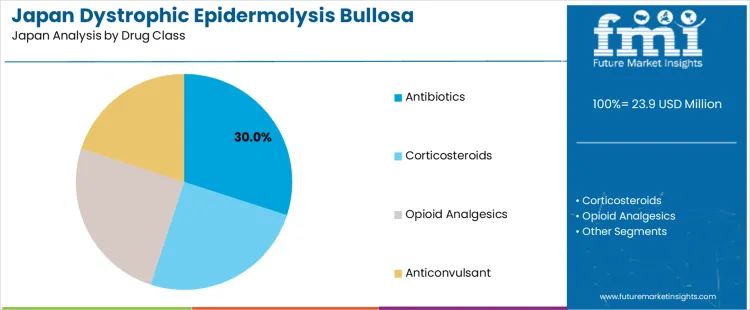
Antibiotics account for 30% of the demand for dystrophic epidermolysis bullosa (DBE) management in Japan, driven by their critical role in preventing and treating infections in patients with fragile skin. Due to the constant formation of blisters and wounds, individuals with DBE are highly susceptible to bacterial infections, which can lead to serious complications if left untreated. Antibiotics are essential for managing these infections, ensuring that patients maintain their skin integrity and avoid further health issues. The growing focus on infection control and effective wound management continues to drive the demand for antibiotics in DBE treatments, supporting their vital role in disease management.
What are the Key Trends, Drivers and Restraints in Demand for DEB Management in Japan?
Demand for DEB management in Japan is increasing as awareness and diagnostic capabilities grow. DEB is a rare genetic blistering disorder requiring lifelong wound care, pain management, infection prevention, and nutritional support. Key trends include specialized multidisciplinary care teams and more clinics offering comprehensive skin and wound services. Drivers include improved genetic testing identifying more cases and a focus on quality of life improvements for chronic conditions.
Why is Demand for Dystrophic Epidermolysis Bullosa Management Growing in Japan?
Demand for DEB management in Japan is growing because more individuals are being diagnosed earlier through better screening and genetic testing. As patients live longer with better supportive care, long‑term management needs increase, including regular wound dressings, pain control, and monitoring for complications. Patient advocacy and education have encouraged families and clinicians to pursue comprehensive care plans. The aging patient cohort and improvements in supportive treatments contribute to increased service utilization. Greater healthcare focus on rare diseases and inclusion of DEB care in treatment protocols further expand the need for consistent, long‑term management.
How are Technological and Industry Innovations Driving DEB Management Demand in Japan?
Technological and clinical innovations are expanding DEB management demand in Japan. Advances in genetic analysis allow accurate subtyping and personalized care planning. Improved wound care products, such as advanced dressings and infection‑resistant materials, enhance healing and reduce complications. Telemedicine and remote monitoring help patients in rural or underserved areas access specialist advice without frequent travel. Research into novel treatments, including gene therapy and targeted molecules, increases interest in clinical trials and potential new options. These innovations improve outcomes and quality of life, encouraging patients and providers to seek more proactive and comprehensive management strategies.
What is the Regional Demand Outlook for Dystrophic Epidermolysis Bullosa Management in Japan?
| Region | CAGR (%) |
|---|---|
| Kyushu & Okinawa | 5.7% |
| Kanto | 5.3% |
| Kansai | 4.6% |
| Chubu | 4.1% |
| Tohoku | 3.6% |
| Rest of Japan | 3.4% |
Demand for dystrophic epidermolysis bullosa (DEB) management in Japan is growing steadily, with Kyushu & Okinawa leading at a 5.7% CAGR, driven by the region’s expanding healthcare services and focus on rare diseases. Kanto follows with a 5.3% CAGR, supported by its advanced healthcare infrastructure and increasing awareness of DEB. Kansai shows a 4.6% CAGR, fueled by its growing focus on rare disease treatment and personalized medicine. Chubu experiences a 4.1% CAGR, with steady growth driven by the region’s expanding medical research and healthcare services. Tohoku and the rest of Japan see moderate growth at 3.6% and 3.4% CAGR, respectively.
How is Demand for Dystrophic Epidermolysis Bullosa Management Growing in Kyushu & Okinawa?
Kyushu & Okinawa leads the demand for dystrophic epidermolysis bullosa (DEB) management in Japan, growing at a 5.7% CAGR. The region’s healthcare sector, particularly in cities like Fukuoka, is becoming increasingly focused on rare genetic disorders such as DEB, driving the demand for specialized treatments and management solutions. With the region’s aging population and the increasing number of patients diagnosed with DEB, the need for targeted medical care and therapies is growing. Okinawa’s healthcare infrastructure, though smaller, is focusing more on rare disease treatment, increasing the availability of DEB management solutions. As awareness of DEB continues to rise, both in the healthcare community and the general public, demand for DEB management services is expected to rise steadily, particularly as more patients seek personalized and innovative therapies for this genetic condition.
Why is Demand for Dystrophic Epidermolysis Bullosa Management Rising in Kanto?
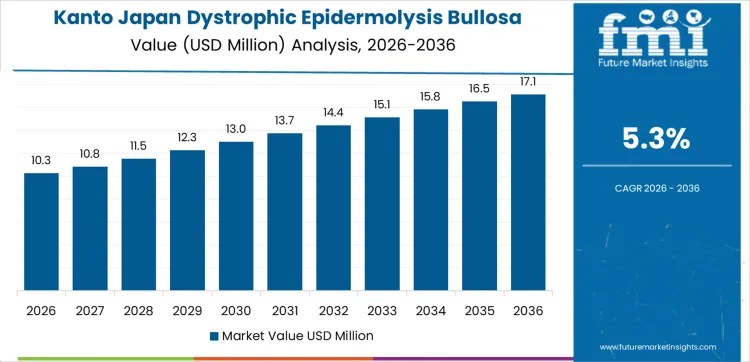
Kanto is experiencing steady demand for dystrophic epidermolysis bullosa (DEB) management, with a 5.3% CAGR. The region’s advanced healthcare infrastructure, particularly in Tokyo, plays a significant role in the growing adoption of specialized treatments for rare genetic conditions like DEB. Kanto is home to many of Japan’s leading medical institutions and research centers, making it a hub for the development of innovative therapies. As awareness of DEB rises among healthcare professionals, the region is seeing more early diagnoses and a higher demand for management options. Kanto’s urban population and increasing focus on rare disease treatment ensure that DEB management solutions are more widely available. The demand for these therapies is expected to continue growing as both the medical community and the public become more informed about the condition, leading to increased diagnosis and access to effective management solutions in the region.
How is Demand for Dystrophic Epidermolysis Bullosa Management Expanding in Kansai?
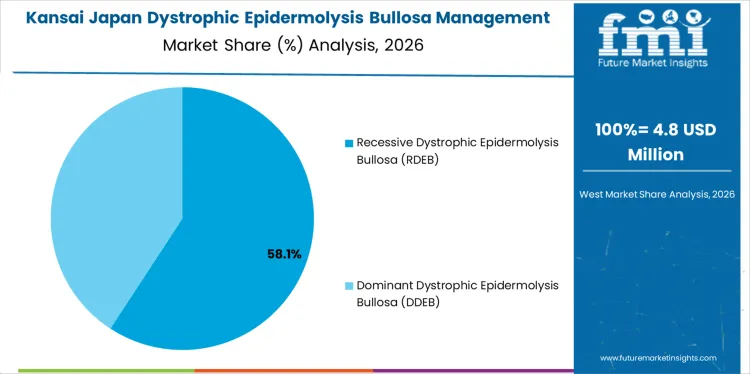
Kansai is seeing moderate demand for dystrophic epidermolysis bullosa (DEB) management, growing at a 4.6% CAGR. The region’s well-established healthcare system and focus on improving rare disease management are contributing to the rising demand for DEB therapies. Major cities like Osaka are home to numerous hospitals and research centers that are improving the diagnosis and treatment of genetic disorders like DEB. Kansai’s aging population, along with a growing focus on personalized medicine, is also contributing to the increasing need for DEB management. As medical professionals in Kansai become more attuned to the challenges of managing rare diseases, the demand for DEB treatment options will continue to rise. The region’s commitment to improving patient care and expanding access to specialized therapies is expected to sustain steady growth in DEB management demand in the coming years.
How is Demand for Dystrophic Epidermolysis Bullosa Management Growing in Chubu?
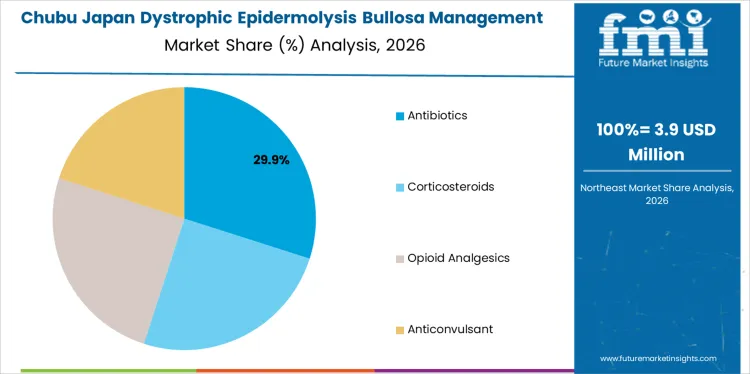
Chubu is experiencing moderate demand for dystrophic epidermolysis bullosa (DEB) management, with a 4.1% CAGR. The region’s healthcare sector, particularly in Nagoya, is becoming more involved in the treatment of rare genetic disorders, including DEB. As awareness of DEB rises, medical centers in Chubu are increasingly offering specialized care and management options for affected individuals. While Chubu’s overall patient population for DEB is smaller than in major urban regions like Tokyo and Osaka, the demand for DEB management solutions is growing steadily as more patients are diagnosed and seek appropriate care. The region’s growing focus on genetic research and personalized medicine, as well as its expanding medical infrastructure, is driving the availability of advanced treatment options. As Chubu continues to improve its healthcare services and increase access to DEB management, the demand for specialized therapies is expected to rise.
How is Demand for Dystrophic Epidermolysis Bullosa Management Growing in Tohoku?
Tohoku is seeing moderate demand for dystrophic epidermolysis bullosa (DEB) management, growing at a 3.6% CAGR. While Tohoku's healthcare system is less concentrated than in other major regions, there is an increasing focus on improving the treatment and management of rare diseases like DEB. As the region’s medical infrastructure grows, more healthcare providers are gaining the knowledge and resources to offer specialized therapies for DEB. Tohoku’s aging population is a key driver of this demand, as older individuals are more likely to suffer from chronic conditions, including genetic disorders like DEB. Although the pace of growth is slower than in more urbanized regions, the steady increase in DEB diagnoses and treatment options will contribute to rising demand for specialized management solutions in Tohoku. As the region continues to expand its rare disease treatment capabilities, DEB management services will grow gradually.
How is Demand for Dystrophic Epidermolysis Bullosa Management Growing in Rest of Japan?
The rest of Japan is experiencing moderate demand for dystrophic epidermolysis bullosa (DEB) management, growing at a 3.4% CAGR. While the demand is not as concentrated in major urban areas, there is an increasing need for specialized DEB treatments in smaller cities and rural regions. As awareness of rare diseases like DEB spreads across Japan, more patients in these areas are seeking management solutions. Healthcare providers in rural regions are gradually adopting specialized therapies to address the needs of individuals with DEB, driven by the growing focus on rare disease management. As Japan’s healthcare system works to ensure that all regions have access to effective therapies, demand for DEB management services will continue to rise steadily in the rest of Japan. With the expansion of healthcare services in these areas, more individuals with DEB will be able to receive the care and treatment they need.
What is the Competitive Landscape of Dystrophic Epidermolysis Bullosa Management in Japan?
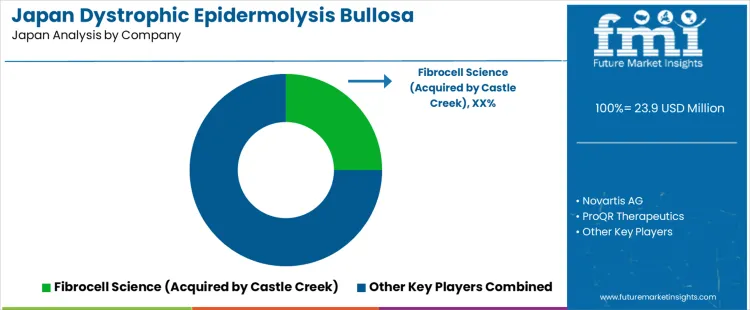
Demand for dystrophic epidermolysis bullosa (DBE) management in Japan is rising as the need for effective treatments for this rare genetic disorder becomes more critical. DBE, characterized by fragile skin that blisters and tears easily, requires specialized care and advanced therapeutic solutions. With Japan’s strong healthcare infrastructure and increasing focus on rare diseases, the demand for therapies to manage DBE is growing, particularly for those that target the underlying genetic causes and improve patients' quality of life.
Fibrocell Science (acquired by Castle Creek) is a prominent player in the DBE treatment industry, focusing on innovative gene and cell-based therapies to address the root causes of the disease. The company’s strategy is centered on developing cutting-edge, personalized treatments for DBE patients, with a focus on improving skin integrity and reducing the need for frequent wound care.
Novartis AG is investing in genetic therapies and biologics for the treatment of rare diseases like DBE, offering novel approaches for managing the disease. ProQR Therapeutics focuses on RNA-based therapies, aiming to address the genetic defects that cause DBE. MediWound Ltd. provides advanced wound care solutions, focusing on promoting skin healing and minimizing complications. Chiesi Farmaceutici S.p.A. offers pharmaceutical treatments to improve the management of symptoms associated with DBE. As competition grows, these companies are advancing research and developing innovative therapies to meet the unique needs of DBE patients in Japan.
Key Players in Japan Dystrophic Epidermolysis Bullosa Management Demand
- Fibrocell Science (Acquired by Castle Creek)
- Novartis AG
- ProQR Therapeutics
- MediWound Ltd.
- Chiesi Farmaceutici S.p.A.
Scope of Report
| Items | Values |
|---|---|
| Quantitative Units (2026) | USD million |
| Disease Type | Recessive Dystrophic Epidermolysis Bullosa (RDEB), Dominant Dystrophic Epidermolysis Bullosa (DDEB) |
| Drug Class | Antibiotics, Corticosteroids, Opioid Analgesics, Anticonvulsant |
| Distribution Channel | Hospital Pharmacies, Retail Pharmacies, Online Pharmacies |
| Key Country | Japan |
| Region | Kyushu & Okinawa, Kanto, Kansai, Chubu, Tohoku, Rest of Japan |
| Key Players Profiled | Fibrocell Science (Acquired by Castle Creek), Novartis AG, ProQR Therapeutics, MediWound Ltd., Chiesi Farmaceutici S.p.A. |
| Additional Attributes | Dollar sales by disease type, drug class, and distribution channel; regional CAGR and growth trends in Dystrophic Epidermolysis Bullosa management demand in Japan |
Japan Dystrophic Epidermolysis Bullosa Management Demand by Key Segments
Disease Type:
- Recessive Dystrophic Epidermolysis Bullosa (RDEB)
- Dominant Dystrophic Epidermolysis Bullosa (DDEB)
Drug Class:
- Antibiotics
- Corticosteroids
- Opioid Analgesics
- Anticonvulsant
Distribution Channel:
- Hospital Pharmacies
- Retail Pharmacies
- Online Pharmacies
Region:
- Kyushu & Okinawa
- Kanto
- Kansai
- Chubu
- Tohoku
- Rest of Japan
Frequently Asked Questions
How big is the demand for dystrophic epidermolysis bullosa management in Japan in 2026?
The demand for dystrophic epidermolysis bullosa management in Japan is estimated to be valued at USD 23.9 million in 2026.
What will be the size of dystrophic epidermolysis bullosa management in Japan in 2036?
The market size for the dystrophic epidermolysis bullosa management in Japan is projected to reach USD 39.2 million by 2036.
How much will be the demand for dystrophic epidermolysis bullosa management in Japan growth between 2026 and 2036?
The demand for dystrophic epidermolysis bullosa management in Japan is expected to grow at a 4.6% CAGR between 2026 and 2036.
What are the key product types in the dystrophic epidermolysis bullosa management in Japan?
The key product types in dystrophic epidermolysis bullosa management in Japan are recessive dystrophic epidermolysis bullosa (rdeb) and dominant dystrophic epidermolysis bullosa (ddeb).
Which drug class segment is expected to contribute significant share in the dystrophic epidermolysis bullosa management in Japan in 2026?
In terms of drug class, antibiotics segment is expected to command 30.0% share in the dystrophic epidermolysis bullosa management in Japan in 2026.
Preview the report firsthand - request a free sample
Get SampleGet the brochure for pricing and purchase details.
Get PDFTable of Content
- Executive Summary
- Japan Market Outlook
- Demand-side Trends
- Supply-side Trends
- Technology Roadmap Analysis
- Analysis and Recommendations
- Market Overview
- Market Coverage / Taxonomy
- Market Definition / Scope / Limitations
- Market Background
- Market Dynamics
- Drivers
- Restraints
- Opportunity
- Trends
- Scenario Forecast
- Demand in Optimistic Scenario
- Demand in Likely Scenario
- Demand in Conservative Scenario
- Opportunity Map Analysis
- Product Life Cycle Analysis
- Supply Chain Analysis
- Investment Feasibility Matrix
- Value Chain Analysis
- PESTLE and Porter’s Analysis
- Regulatory Landscape
- Regional Parent Market Outlook
- Production and Consumption Statistics
- Import and Export Statistics
- Market Dynamics
- Japan Market Analysis 2021 to 2025 and Forecast, 2026 to 2036
- Historical Market Size Value (USD Million) Analysis, 2021 to 2025
- Current and Future Market Size Value (USD Million) Projections, 2026 to 2036
- Y-o-Y Growth Trend Analysis
- Absolute $ Opportunity Analysis
- Japan Market Pricing Analysis 2021 to 2025 and Forecast 2026 to 2036
- Japan Market Analysis 2021 to 2025 and Forecast 2026 to 2036, By Disease Type
- Introduction / Key Findings
- Historical Market Size Value (USD Million) Analysis By Disease Type , 2021 to 2025
- Current and Future Market Size Value (USD Million) Analysis and Forecast By Disease Type , 2026 to 2036
- Recessive Dystrophic Epidermolysis Bullosa (RDEB)
- Dominant Dystrophic Epidermolysis Bullosa (DDEB)
- Y-o-Y Growth Trend Analysis By Disease Type , 2021 to 2025
- Absolute $ Opportunity Analysis By Disease Type , 2026 to 2036
- Japan Market Analysis 2021 to 2025 and Forecast 2026 to 2036, By Drug Class
- Introduction / Key Findings
- Historical Market Size Value (USD Million) Analysis By Drug Class, 2021 to 2025
- Current and Future Market Size Value (USD Million) Analysis and Forecast By Drug Class, 2026 to 2036
- Antibiotics
- Corticosteroids
- Opioid Analgesics
- Anticonvulsant
- Y-o-Y Growth Trend Analysis By Drug Class, 2021 to 2025
- Absolute $ Opportunity Analysis By Drug Class, 2026 to 2036
- Japan Market Analysis 2021 to 2025 and Forecast 2026 to 2036, By Distribution Channel
- Introduction / Key Findings
- Historical Market Size Value (USD Million) Analysis By Distribution Channel, 2021 to 2025
- Current and Future Market Size Value (USD Million) Analysis and Forecast By Distribution Channel, 2026 to 2036
- Hospital Pharmacies
- Retail Pharmacies
- Online Pharmacies
- Y-o-Y Growth Trend Analysis By Distribution Channel, 2021 to 2025
- Absolute $ Opportunity Analysis By Distribution Channel, 2026 to 2036
- Market Structure Analysis
- Competition Dashboard
- Competition Benchmarking
- Market Share Analysis of Top Players
- By Regional
- By Disease Type
- By Drug Class
- By Distribution Channel
- Competition Analysis
- Competition Deep Dive
- Fibrocell Science (Acquired by Castle Creek)
- Overview
- Product Portfolio
- Profitability by Market Segments (Product/Age /Sales Channel/Region)
- Sales Footprint
- Strategy Overview
- Marketing Strategy
- Product Strategy
- Channel Strategy
- Novartis AG
- ProQR Therapeutics
- MediWound Ltd.
- Chiesi Farmaceutici S.p.A.
- Fibrocell Science (Acquired by Castle Creek)
- Competition Deep Dive
- Assumptions & Acronyms Used
- Research Methodology


