

- Industry Size (2026)
- USD 176.4 Mn
- Forecast (2036)
- USD 328 Mn
- CAGR (2026 to 2036)
- 5.8%
Demand for Dystrophic Epidermolysis Bullosa Management in USA Forecast and Outlook 2026 to 2036
The demand for dystrophic epidermolysis bullosa (DEB) management in the USA is expected to grow steadily from USD 176.4 million in 2026 to USD 328 million in 2036, reflecting a 5.8% CAGR. Analyzing the saturation point, the demand increases gradually through the forecast period, from USD 140.8 million in 2026 to USD 149.0 million in 2027, with a modest growth rate of 5.8%. This growth is primarily driven by increased awareness, early diagnosis, and advancements in treatment options for DEB, which is a rare genetic condition causing fragile skin and frequent blistering. As new therapies and treatment options become available, the demand continues to rise steadily. By 2029, the demand reaches USD 221.0 million, showing a steady increase, but growth starts to slow down slightly after this point.
Quick Stats of the Demand for Dystrophic Epidermolysis Bullosa Management in USA
- Demand for Dystrophic Epidermolysis Bullosa Management in USA Value (2026): USD 176.4 million
- Demand for Dystrophic Epidermolysis Bullosa Management in USA Forecast Value (2036): USD 328 million
- Demand for Dystrophic Epidermolysis Bullosa Management in USA Forecast CAGR (2026-2036): 5.8%
- Demand for Dystrophic Epidermolysis Bullosa Management in USA Leading Disease Type: Recessive Dystrophic Epidermolysis Bullosa (RDEB)
- Demand for Dystrophic Epidermolysis Bullosa Management in USA Key Growth Regions: West USA, South USA, Northeast USA, Midwest USA
- Demand for Dystrophic Epidermolysis Bullosa Management in USA Top Players: Fibrocell Science (Acquired by Castle Creek), Novartis AG, ProQR Therapeutics, MediWound Ltd., Chiesi Farmaceutici S.p.A.
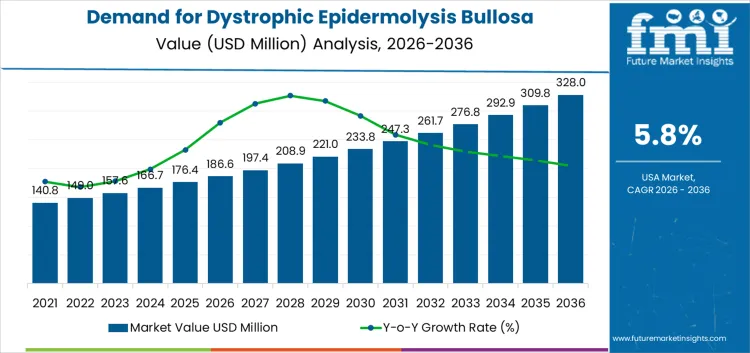
By 2031, demand reaches USD 247.3 million and rises to USD 261.7 million by 2032, with continued growth in the 5-6% range. Rate of increase begins to plateau around 2033, where it reaches USD 276.8 million, and demand starts to stabilize at a slower pace. By 2035, demand is expected to rise to USD 309.8 million before peaking at USD 328 million in 2036. This slowdown suggests that as treatment options improve and more patients are effectively managed, the overall demand for new treatments and management options will level off, approaching the saturation point. Despite this, steady growth is expected due to the ongoing need for specialized care and therapeutic advancements.
Demand for Dystrophic Epidermolysis Bullosa Management in USA Key Takeaways
| Metric | Value |
|---|---|
| Demand for Dystrophic Epidermolysis Bullosa Management in USA Value (2026) | USD 176.4 million |
| Demand for Dystrophic Epidermolysis Bullosa Management in USA Forecast Value (2036) | USD 328 million |
| Demand for Dystrophic Epidermolysis Bullosa Management in USA Forecast CAGR (2026-2036) | 5.8% |
Why is the Demand for Dystrophic Epidermolysis Bullosa Management in USA Growing?
The demand for dystrophic epidermolysis bullosa (DEB) management in the USA is growing due to increasing awareness of this rare, genetic skin disorder and advancements in treatment options. DEB, a condition characterized by fragile skin that blisters easily, often leads to significant health complications and requires specialized care. The growing recognition of DEB by healthcare professionals, coupled with the development of novel therapies, is driving the demand for effective management solutions. Advances in gene therapy, wound care, and systemic treatments for DEB are helping to improve patient outcomes, leading to higher demand for specialized care.
Key drivers for this growth include the rise in genetic testing, which allows for earlier and more accurate diagnoses of DEB, leading to timely interventions. The availability of new biologic treatments and innovations in wound healing, which aim to reduce pain and improve the quality of life for patients, are contributing to the increased demand for DEB management. The growing focus on rare diseases and the increasing investment in research for genetic conditions like DEB are driving the development of more targeted treatments, further fueling demand.
While the progress in treatment options is encouraging, challenges such as the high cost of innovative therapies, limited healthcare access in some areas, and the need for specialized care may hinder broader adoption of DEB management. The growing emphasis on personalized medicine and the development of improved treatments are expected to support continued growth in the demand for DEB management in the USA through 2036.
What is the Segment-Wise Analysis of Demand for Dystrophic Epidermolysis Bullosa Management in USA?
Demand for dystrophic epidermolysis bullosa (DEB) management in the USA is segmented by disease type, distribution channel, drug class, and region. By disease type, recessive dystrophic epidermolysis bullosa (RDEB) leads with 60% of the demand, followed by dominant dystrophic epidermolysis bullosa (DDEB). In terms of distribution channels, hospital pharmacies account for 45% of the demand, with retail pharmacies and online pharmacies making up the rest. Regarding drug class, antibiotics, corticosteroids, opioid analgesics, and anticonvulsants are commonly used in treatment. Regionally, demand is distributed across West USA, South USA, Northeast USA, and Midwest USA.
How Does Recessive Dystrophic Epidermolysis Bullosa (RDEB) Lead the Demand for DEB Management in USA?
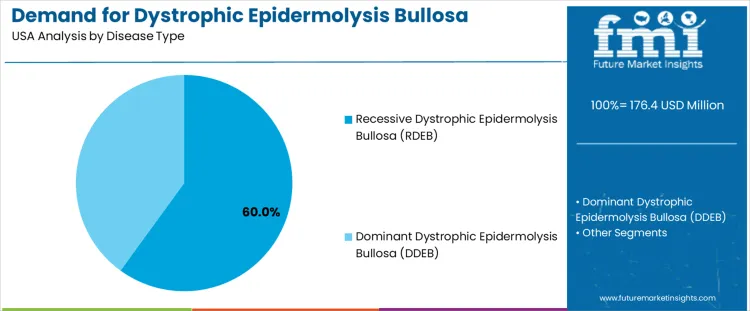
Recessive dystrophic epidermolysis bullosa (RDEB) accounts for 60% of the demand for DEB management in the USA, driven by the severity and complexity of the condition. RDEB is characterized by more extensive skin blistering and scarring, leading to a higher demand for specialized treatments and management. The condition’s chronic nature and the need for ongoing care, including pain management, wound care, and infection control, contribute to the significant demand for medical treatments such as antibiotics, corticosteroids, and opioid analgesics. The need for more advanced care in managing the complications of RDEB further drives demand for hospital pharmacies, which are critical in providing specialized medications and treatments. As awareness and diagnosis of RDEB increase, the demand for comprehensive and long-term management solutions will continue to grow, reinforcing RDEB’s dominance in the DEB management industry.
How Does Hospital Pharmacies Lead the Demand for DEB Management in USA?
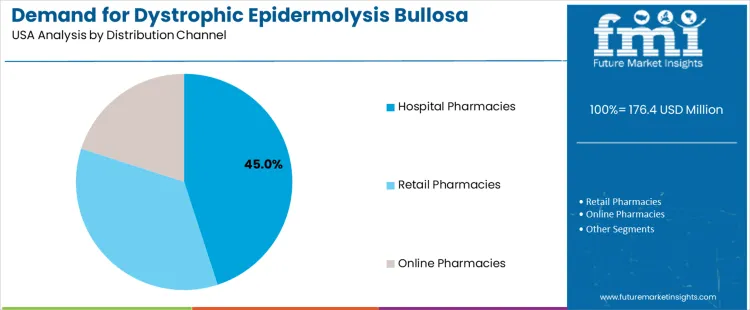
Hospital pharmacies account for 45% of the demand for DEB management in the USA, driven by their role in providing specialized care for severe forms of DEB, such as RDEB. Hospitals are equipped with the necessary resources, including specialized medical staff, to treat patients with complex conditions like DEB. These pharmacies are the primary source for medications required for pain management, wound care, infection prevention, and managing the complications of DEB. As DEB patients often require a combination of treatments, including antibiotics, corticosteroids, and opioid analgesics, hospital pharmacies play a key role in ensuring these therapies are administered effectively. The increasing prevalence of DEB and the need for personalized care in hospitals further boost the demand for hospital-based pharmaceutical services. As more patients seek advanced care for DEB, the demand for hospital pharmacies in managing this rare and complex condition is expected to continue growing.
What are the Key Trends, Drivers and Restraints in Demand for Dystrophic Epidermolysis Bullosa Management in USA?
DEB, a rare genetic disorder, requires specialized care including wound management, pain control, and infection prevention. Trends include the rise of specialized EB care centers and telehealth support. Key drivers include advances in genetic testing, growing patient registries, and quality of life interventions. Restraints include limited access to specialists, high care costs, insurance variability, and the rarity of the condition, limiting broad availability of comprehensive care and support services.
Why is Demand for Dystrophic Epidermolysis Bullosa Management Growing in USA?
Demand for DEB management is growing as diagnoses increase due to better genetic testing and disease awareness. DEB requires extensive long‑term care, including wound treatment, pain management, and nutritional support, from infancy through adulthood. Multidisciplinary care teams involving dermatologists, geneticists, and pain specialists are becoming the standard. Patient advocacy groups are educating families and clinicians, prompting early diagnosis and more frequent care. Improved supportive treatments are extending patient lifespans, increasing the demand for ongoing management. The rising number of diagnosed patients and the complexity of DEB management fuel demand for specialized healthcare services.
How are Technological and Industry Innovations Driving Dystrophic Epidermolysis Bullosa Management Demand in USA?
Technological innovations are transforming DEB management in the USA. Advances in genetic testing, including next‑generation sequencing, enable accurate identification and tailored care plans. Improved wound care products, such as advanced dressings and infection‑resistant materials, accelerate healing and reduce complications. Telemedicine facilitates remote monitoring and consultations, improving access for underserved patients. Research into gene therapy and protein replacement shows promise, increasing demand for clinical trials and specialized treatments. These advancements not only improve patient outcomes but also expand the need for comprehensive DEB care, driving demand for specialized management services across the country.
What are the Key Challenges and Risks That Could Limit Dystrophic Epidermolysis Bullosa Management in USA?
Challenges to DEB management include the rarity of the condition, resulting in limited expertise and specialized care centers in certain regions. The high cost of long‑term care, wound management, and advanced dressings can create financial burdens, and insurance coverage can be inconsistent. Access to specialists is also restricted in rural areas, delaying diagnosis and treatment. Limited awareness among general healthcare providers can lead to late diagnoses and missed opportunities for early intervention. Focus on supportive care rather than curative treatments, due to ongoing research, may impact demand for advanced management options.
What is the Regional Demand Outlook for Dystrophic Epidermolysis Bullosa Management in USA?
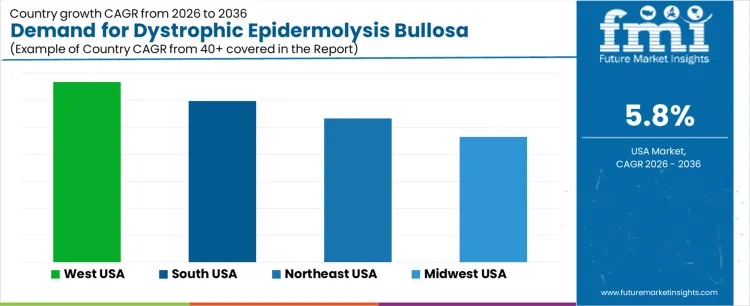
| Region | CAGR (%) |
|---|---|
| West USA | 6.7% |
| South USA | 6.0% |
| Northeast USA | 5.3% |
| Midwest USA | 4.6% |
Demand for dystrophic epidermolysis bullosa (DEB) management in the USA is growing steadily, with West USA leading at a 6.7% CAGR, driven by the region’s strong healthcare infrastructure and focus on specialized dermatological care. South USA follows with a 6.0% CAGR, supported by expanding healthcare access and increasing awareness of rare genetic disorders. Northeast USA shows a 5.3% CAGR, fueled by the region’s research centers and advanced treatment options for DEB. Midwest USA experiences a 4.6% CAGR, with steady growth driven by the region’s healthcare focus on rare diseases and specialized care services.
How is Demand for Dystrophic Epidermolysis Bullosa Management Growing in West USA?
West USA leads the demand for dystrophic epidermolysis bullosa (DEB) management, growing at a 6.7% CAGR. The region’s advanced healthcare infrastructure, particularly in states like California, Washington, and Oregon, is a significant driver of growth. With a strong focus on specialized care, the West has numerous centers that provide advanced treatments and therapies for rare skin conditions like DEB. The region’s growing awareness of rare diseases and increasing access to genetic therapies are also contributing to the rising demand for DEB management. West’s emphasis on cutting-edge research and development in dermatology is fueling innovation in DEB treatments, offering patients more options. As the population ages and healthcare advances, the demand for specialized management of DEB, including wound care, gene therapies, and other supportive treatments, is expected to continue to rise, especially as new treatments and therapeutic options become more widely available.
Why is Demand for Dystrophic Epidermolysis Bullosa Management Rising in South USA?
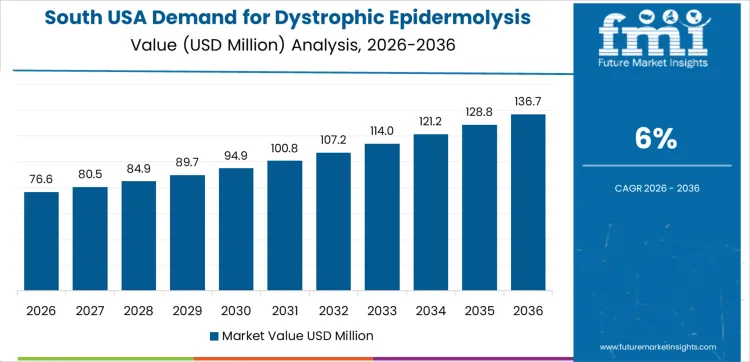
South USA is experiencing steady demand for dystrophic epidermolysis bullosa (DEB) management, with a 6.0% CAGR. The region’s expanding healthcare sector and growing focus on rare disease treatments are key drivers of this trend. States like Texas, Florida, and Georgia are seeing a rise in the number of specialized treatment centers offering care for rare genetic disorders, including DEB. With the increasing availability of genetic testing and personalized treatment plans, more patients are being diagnosed and treated earlier. The South’s large population, including a significant number of people with genetic conditions, also contributes to the growing need for DEB management. As healthcare systems in the South improve and the focus on treating rare diseases intensifies, demand for specialized DEB care, including wound management and genetic therapies, will continue to rise. With a growing number of healthcare professionals trained in rare skin disorders, the demand for DEB management services in the South will continue to grow steadily.
How is Demand for Dystrophic Epidermolysis Bullosa Management Expanding in Northeast USA?
Northeast USA is seeing steady demand for dystrophic epidermolysis bullosa (DEB) management, with a 5.3% CAGR. The region’s well-established healthcare system, particularly in cities like New York and Boston, is a significant factor driving the growth in demand for DEB care. As awareness of rare genetic disorders like DEB increases, patients are being diagnosed and treated more effectively. The Northeast’s high concentration of research centers and specialized dermatology clinics is supporting the growth of advanced DEB treatments, including gene therapy, wound care, and symptom management. The region’s strong focus on personalized medicine and healthcare accessibility is helping improve the quality of care for DEB patients. With more specialized care options becoming available and research into new therapies advancing, the demand for DEB management services in the Northeast will continue to grow steadily, ensuring better outcomes for patients.
Why is Demand for Dystrophic Epidermolysis Bullosa Management Growing in Midwest USA?
Midwest USA is experiencing moderate demand for dystrophic epidermolysis bullosa (DEB) management, with a 4.6% CAGR. The region’s healthcare systems, particularly in states like Michigan, Ohio, and Illinois, are increasingly focused on rare disease management, including DEB. As more specialized clinics and dermatology centers offer care for patients with DEB, access to treatments like wound care, pain management, and gene therapies is improving. The Midwest’s emphasis on research and clinical trials is also contributing to the growing demand for DEB management, with ongoing studies exploring new treatments and therapies. The region’s large population and high number of patients with chronic conditions drive the need for more focused care for rare diseases like DEB. As awareness of DEB increases and specialized treatment options expand, demand for DEB management in the Midwest will continue to rise, with both professional and home-based care solutions becoming more accessible to those affected.
What is the Competitive Landscape of Dystrophic Epidermolysis Bullosa Management in USA?
Demand for dystrophic epidermolysis bullosa (DEB) management in the USA is increasing as awareness of this rare and severe genetic skin disorder grows. DEB, characterized by fragile skin and frequent blistering, requires specialized care and long-term treatment strategies. As researchers and healthcare providers work toward better therapies and potential cures, the demand for effective DEB management solutions rises, especially in light of the growing focus on rare diseases and genetic therapies.
Fibrocell Science, now acquired by Castle Creek, is a key player in the industry, focusing on gene and cell-based therapies to address the underlying genetic causes of DEB. Their strategy centers around innovative, cutting-edge treatments aimed at providing long-term relief for patients with severe forms of the disease. Fibrocell’s expertise in gene therapy positions it as a leader in DEB management, with its focus on providing transformative therapies for affected individuals.
Other significant players in the industry include Novartis AG, ProQR Therapeutics, MediWound Ltd., and Chiesi Farmaceutici S.p.A. Novartis AG focuses on developing therapeutic solutions for a variety of rare diseases, including DEB, leveraging its extensive research capabilities to create innovative treatments. ProQR Therapeutics specializes in RNA-based therapies for genetic disorders like DEB, with an emphasis on providing targeted, cutting-edge treatments for genetic skin diseases. MediWound Ltd. is focused on wound care, including for patients with DEB, with a goal to improve healing and reduce complications. Chiesi Farmaceutici S.p.A. brings its expertise in the pharmaceutical sector, developing treatments for rare diseases, including DEB.
Key Players in USA Dystrophic Epidermolysis Bullosa Management Demand
- Fibrocell Science (Acquired by Castle Creek)
- Novartis AG
- ProQR Therapeutics
- MediWound Ltd.
- Chiesi Farmaceutici S.p.A.
Scope of Report
| Items | Values |
|---|---|
| Quantitative Units (2026) | USD million |
| Key Segments | Recessive Dystrophic Epidermolysis Bullosa (RDEB), Dominant Dystrophic Epidermolysis Bullosa (DDEB) |
| Distribution Channel | Hospital Pharmacies, Retail Pharmacies, Online Pharmacies |
| Drug Class | Antibiotics, Corticosteroids, Opioid Analgesics, Anticonvulsant |
| Region | West USA, South USA, Northeast USA, Midwest USA |
| Key Players Profiled | Fibrocell Science (Acquired by Castle Creek), Novartis AG, ProQR Therapeutics, MediWound Ltd., Chiesi Farmaceutici S.p.A. |
| Additional Attributes | Dollar sales by disease type, distribution channel, and drug class; regional CAGR and growth trends in Dystrophic Epidermolysis Bullosa management in the USA |
USA Dystrophic Epidermolysis Bullosa Management Demand by Key Segments
Disease Type
- Recessive Dystrophic Epidermolysis Bullosa (RDEB)
- Dominant Dystrophic Epidermolysis Bullosa (DDEB)
Distribution Channel
- Hospital Pharmacies
- Retail Pharmacies
- Online Pharmacies
Drug Class
- Antibiotics
- Corticosteroids
- Opioid Analgesics
- Anticonvulsant
Region
- West USA
- South USA
- Northeast USA
- Midwest USA
Frequently Asked Questions
How big is the demand for dystrophic epidermolysis bullosa management in USA in 2026?
The demand for dystrophic epidermolysis bullosa management in USA is estimated to be valued at USD 176.4 million in 2026.
What will be the size of dystrophic epidermolysis bullosa management in USA in 2036?
The market size for the dystrophic epidermolysis bullosa management in USA is projected to reach USD 328.0 million by 2036.
How much will be the demand for dystrophic epidermolysis bullosa management in USA growth between 2026 and 2036?
The demand for dystrophic epidermolysis bullosa management in USA is expected to grow at a 5.8% CAGR between 2026 and 2036.
What are the key product types in the dystrophic epidermolysis bullosa management in USA?
The key product types in dystrophic epidermolysis bullosa management in USA are recessive dystrophic epidermolysis bullosa (rdeb) and dominant dystrophic epidermolysis bullosa (ddeb).
Which drug class segment is expected to contribute significant share in the dystrophic epidermolysis bullosa management in USA in 2026?
In terms of drug class, antibiotics segment is expected to command 30.0% share in the dystrophic epidermolysis bullosa management in USA in 2026.
Preview the report firsthand - request a free sample
Get SampleGet the brochure for pricing and purchase details.
Get PDFTable of Content
- Executive Summary
- USA Market Outlook
- Demand-side Trends
- Supply-side Trends
- Technology Roadmap Analysis
- Analysis and Recommendations
- Market Overview
- Market Coverage / Taxonomy
- Market Definition / Scope / Limitations
- Market Background
- Market Dynamics
- Drivers
- Restraints
- Opportunity
- Trends
- Scenario Forecast
- Demand in Optimistic Scenario
- Demand in Likely Scenario
- Demand in Conservative Scenario
- Opportunity Map Analysis
- Product Life Cycle Analysis
- Supply Chain Analysis
- Investment Feasibility Matrix
- Value Chain Analysis
- PESTLE and Porter’s Analysis
- Regulatory Landscape
- Regional Parent Market Outlook
- Production and Consumption Statistics
- Import and Export Statistics
- Market Dynamics
- USA Market Analysis 2020 to 2024 and Forecast, 2025 to 2035
- Historical Market Size Value (USD Million) Analysis, 2020 to 2024
- Current and Future Market Size Value (USD Million) Projections, 2025 to 2035
- Y-o-Y Growth Trend Analysis
- Absolute $ Opportunity Analysis
- USA Market Pricing Analysis 2020 to 2024 and Forecast 2025 to 2035
- USA Market Analysis 2020 to 2024 and Forecast 2025 to 2035, By Disease Type
- Introduction / Key Findings
- Historical Market Size Value (USD Million) Analysis By Disease Type , 2020 to 2024
- Current and Future Market Size Value (USD Million) Analysis and Forecast By Disease Type , 2025 to 2035
- Recessive Dystrophic Epidermolysis Bullosa (RDEB)
- Dominant Dystrophic Epidermolysis Bullosa (DDEB)
- Y-o-Y Growth Trend Analysis By Disease Type , 2020 to 2024
- Absolute $ Opportunity Analysis By Disease Type , 2025 to 2035
- USA Market Analysis 2020 to 2024 and Forecast 2025 to 2035, By Drug Class
- Introduction / Key Findings
- Historical Market Size Value (USD Million) Analysis By Drug Class, 2020 to 2024
- Current and Future Market Size Value (USD Million) Analysis and Forecast By Drug Class, 2025 to 2035
- Antibiotics
- Corticosteroids
- Opioid Analgesics
- Anticonvulsant
- Y-o-Y Growth Trend Analysis By Drug Class, 2020 to 2024
- Absolute $ Opportunity Analysis By Drug Class, 2025 to 2035
- USA Market Analysis 2020 to 2024 and Forecast 2025 to 2035, By Distribution Channel
- Introduction / Key Findings
- Historical Market Size Value (USD Million) Analysis By Distribution Channel, 2020 to 2024
- Current and Future Market Size Value (USD Million) Analysis and Forecast By Distribution Channel, 2025 to 2035
- Hospital Pharmacies
- Retail Pharmacies
- Online Pharmacies
- Y-o-Y Growth Trend Analysis By Distribution Channel, 2020 to 2024
- Absolute $ Opportunity Analysis By Distribution Channel, 2025 to 2035
- Market Structure Analysis
- Competition Dashboard
- Competition Benchmarking
- Market Share Analysis of Top Players
- By Regional
- By Disease Type
- By Drug Class
- By Distribution Channel
- Competition Analysis
- Competition Deep Dive
- Fibrocell Science (Acquired by Castle Creek)
- Overview
- Product Portfolio
- Profitability by Market Segments (Product/Age /Sales Channel/Region)
- Sales Footprint
- Strategy Overview
- Marketing Strategy
- Product Strategy
- Channel Strategy
- Novartis AG
- ProQR Therapeutics
- MediWound Ltd.
- Chiesi Farmaceutici S.p.A.
- Fibrocell Science (Acquired by Castle Creek)
- Competition Deep Dive
- Assumptions & Acronyms Used
- Research Methodology


