

- Market Size (2026)
- USD 493 Mn
- Forecast (2036)
- USD 818.4 Mn
- CAGR (2026 to 2036)
- 5.2%
How big is the lidocaine HCL market in 2026?
USD 493 million in 2026 and USD 818.4 million by 2036 at a 5.2% CAGR.
The lidocaine HCL market was valued at USD 483 million in 2025. It is expected to grow from USD 493 million in 2026 to USD 818.4 million in 2036 at a CAGR of 5.2%. Powder is forecast to hold 68.0% share in 2026 due to formulation handling and assay control requirements. Direct sales are projected to secure 54.0% share in 2026.
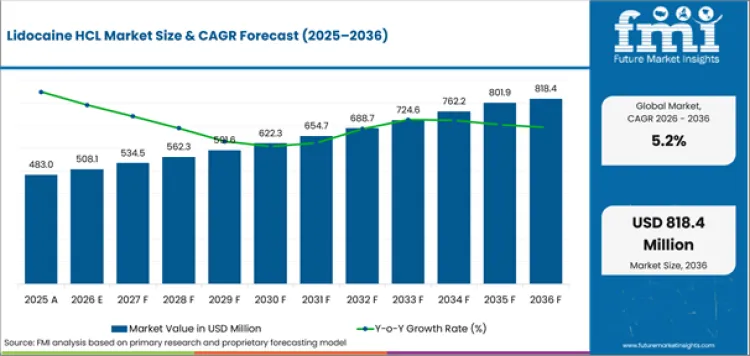
| Metric | Value |
|---|---|
| 2026 Market Size | USD 493 million |
| 2036 Market Size | USD 818.4 million |
| Forecast CAGR (2026-2036) | 5.2% |
| Leading Form | Powder |
| Powder Share (2026) | 68.0% |
| Leading Application | Local Anesthesia |
| Local Anesthesia Share (2026) | 72.0% |
| Fastest-growing Country | China |
| China CAGR by 2036 | 4.8% |
Summary of the Lidocaine HCL Market
| Market Signal | Commercial Impact |
|---|---|
| Demand and Growth Drivers | Demand for lidocaine HCL continues to grow steadily, supported by its widespread use in local anesthesia, topical pain management, and regulated pharmaceutical formulations.
|
| Product and Segment View | Powder formulations, high-purity grades, local anesthesia applications, and direct sales channels continue to dominate their respective market segments.
|
| Geography and Growth Outlook | North America and East Asia remain key regional markets, supported by regulated pharmaceutical manufacturing and strong healthcare demand.
|
| Competitive Landscape | Competition increasingly centers on regulatory documentation, manufacturing quality, and reliable pharmaceutical supply.
|
| Analyst Perspective | Lidocaine HCL remains a quality-sensitive API market where regulatory compliance, supply continuity, and manufacturing consistency outweigh price-based competition.
- Anurag Sharma, Principal Analyst at Future Market Insights |
Clinical labeling gives the molecule a durable use case in procedure settings. DailyMed identifies lidocaine hydrochloride injection for infiltration and peripheral nerve block procedures. USA shortage listings also show a discontinued 2% lidocaine vial presentation. Procurement teams therefore treat supplier qualification as a continuity decision. The same screening behavior is visible across small molecule API sourcing. Documentation depth carries more importance as compared to spot availability. Manufacturing controls also make pharmaceutical solvents relevant to impurity and release documentation.
Which factors support expansion in the lidocaine HCL market?
Regulated clinical use and documented API supply support market value across qualified buyer channels.
- Market value gains support from local anesthesia use before topical formulations add secondary demand.
- Supplier pricing reflects pharmacopoeial grade and documentation depth before buyer teams compare freight or spot availability.
- Revenue improves due to repeat formulation demand from injectable and topical manufacturers.
- Buyer trust improves from supplier files that show consistent quality control and batch release discipline.
Why is the lidocaine HCL market growing?
Demand for Lidocaine HCL remains connected to routine clinical care.
Lidocaine HCL market growth is supported by routine anesthesia use across surgery and obstetrical care. DailyMed’s June 2026 label update states that Lidocaine Hydrochloride Injection is indicated for local or regional anesthesia and analgesia in adult and pediatric patients. This gives finished-dose manufacturers a steady clinical demand base rather than a wellness-led volume story. Supply reliability is now a second growth influence because ASHP lists lidocaine injection shortages tied to increased demand, manufacturing delays, and discontinued syringe presentations. This matters because hospitals and drug makers are qualifying API sources earlier to protect sterile injectable supply. Suppliers with clean batch records, release documents, and dependable continuity can defend repeat accounts.
How is the lidocaine HCL market segmented?
The lidocaine HCL industry is segmented by form, purity grade, application, and sales channel.
- Powder is projected to secure 68.0% share in 2026 owing to easier handling for injectable and topical formulation teams.
- The ≥99.5% purity grade is forecast to account for 57.0% share in 2026 due to buyer preference for tighter impurity control.
- Local Anesthesia is expected to hold 72.0% share in 2026 driven by procedure-based injectable use.
- Direct sales are projected to represent 54.0% share in 2026 supported by regulated buyers prioritizing supplier files.
What keeps powder in a notable position in the lidocaine HCL market?
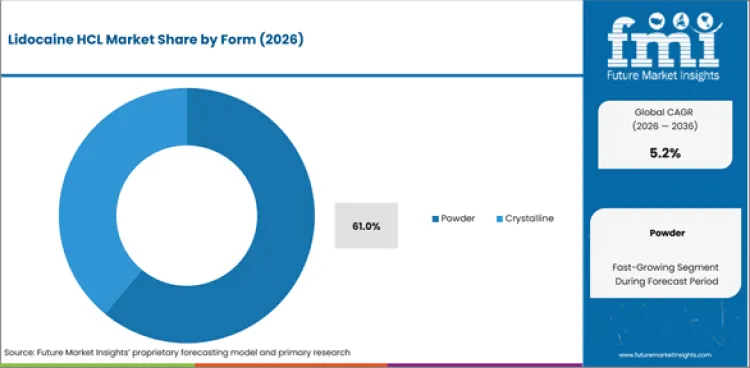
- Powder is projected to secure 68.0% share in 2026 due to easier handling for injectable and topical formulation teams.
- Crystalline material keeps a role in controlled specification work for selected regulated buyers.
How are buyers selecting across purity grade options in the lidocaine HCL market?
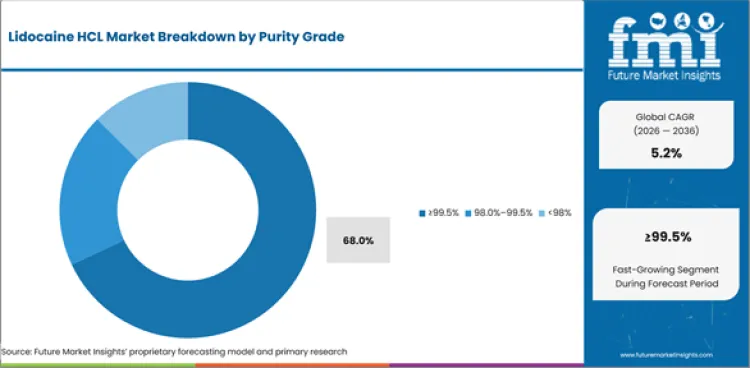
- The ≥99.5% grade is forecast to hold 57.0% share in 2026 owing to impurity files needed for regulated submissions.
- Lower-purity material serves narrow price-led opportunities after buyers compare dossier risk and savings.
Which application category holds a notable share in the lidocaine HCL market?
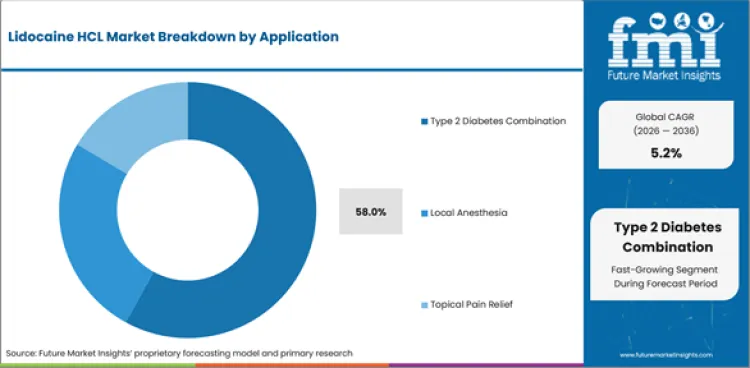
- Local Anesthesia is anticipated to account for 72.0% share in 2026 supported by procedure-based injectable use.
- Topical pain relief remains relevant for patches and gels, while antiarrhythmic use creates a narrower hospital-linked demand base.
How does the sales channel segment perform in the lidocaine HCL market?
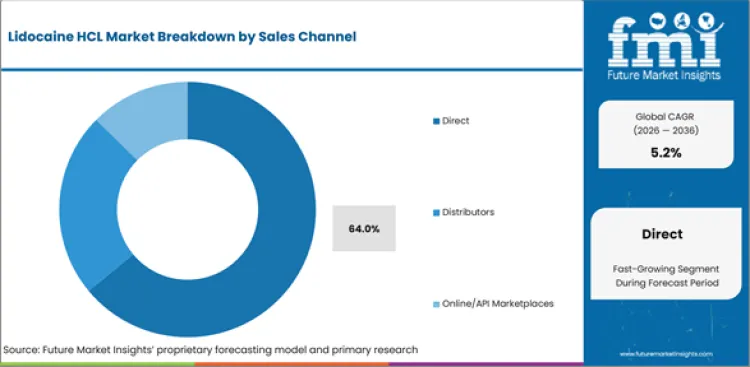
- Direct sales are estimated to represent 54.0% share in 2026 attributable to audit responses and change-control communication.
- Distributors serve smaller accounts and spot requirements after the technical file has been accepted.
What are the driver, restraints, and opportunities in the lidocaine HCL market?
Procedure-based demand supports growth while shortage pressure and qualification steps limit rapid switching.
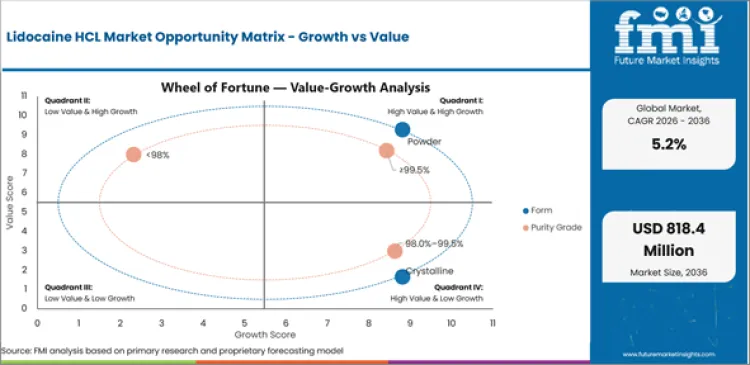
- Driver: Local anesthesia labeling supports repeat demand in infiltration and peripheral nerve block workflows.
- Restraint: Injectable shortages can disrupt finished-dose availability and slow supplier switching.
- Opportunity: Clean pharmacopoeial files can improve supplier preference among direct regulated buyers.
Procedure Use Keeps the API Commercially Relevant
Local anesthesia gives lidocaine HCL its clearest demand anchor. DailyMed identifies lidocaine hydrochloride injection for infiltration and peripheral nerve block. This proof point supports steady API demand in hospital and dental settings. Suppliers with release-quality evidence can defend accounts before price negotiations begin. Related dental anaesthetic demand reinforces the role of reliable anesthetic inputs.
Shortage Signals Raise Buyer Risk Checks
Shortage listings change procurement behavior even with stable clinical need. ASHP records Pfizer lidocaine presentations on shortage due to manufacturing delays and increased demand. This creates allocation risk for manufacturers and hospital buyers. API suppliers that can provide continuity and documentation become more valuable. The same continuity need affects drug formulation programs that depend on validated input sources.
Topical Formats Add a Controlled Second Route
Topical pain relief keeps a secondary pathway open for lidocaine HCL demand. Patches and gels need stable active content and packaging that protects labeled strength. Suppliers serving these customers must support assay control and consistent release. Adjacent non-opioid pain patches use gives buyers a clearer reason to compare active quality before channel expansion.
Country-Level Outlook in the Lidocaine HCL Market
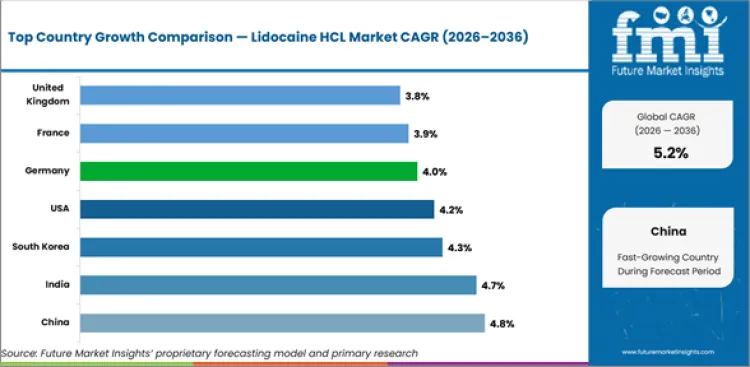
China records the most notable growth profile. Japan shows the most cautious expansion outlook among profiled countries.
.webp "Top Country Growth Comparison Lidocaine Hcl Market Cagr (2026 2036)")
| Country | CAGR 2026 to 2036 |
|---|---|
| China | 4.8% |
| India | 4.7% |
| South Korea | 4.3% |
| United States | 4.2% |
| Germany | 4.0% |
| France | 3.9% |
| United Kingdom | 3.8% |
| Japan | 3.7% |
Source: Future Market Insights, 2026.
How fast is the lidocaine HCL market growing in China?
China is forecast to record a 4.8% CAGR through 2036. Growth is supported by API capacity and export qualification work.
Country Market Snapshot
| Parameter | Value |
|---|---|
| Market Size in 2025 | USD 88.0 million |
| Market Size in 2026 | USD 90.0 million |
| Market Forecast in 2036 | USD 143.8 million |
| CAGR 2026 to 2036 | 4.8% |
| Years Considered | 2021 to 2036 |
| Base Year | 2025 |
| Forecast Period | 2026 to 2036 |
| Units Considered | Value in USD million |
| Leading Sub-Region | Yangtze River Delta and export-oriented API clusters |
China Lidocaine HCL Market Outlook
China has a supplier-side role in the lidocaine HCL market. Local finished-dose evidence and API manufacturing capacity support buyer interest.
Domestic formulation use is expected to support steady demand. Overseas customers are likely to screen inspection history and quality files before approving China-based sources.
Key Growth Drivers
- API capacity supports China’s supplier role in lidocaine HCL, driven by NMPA drug database resources that support 2026 product verification.
- Export qualification is strengthening buyer confidence, supported by Shandong Chenghui reporting Lidocaine Hydrochloride API CEP approval in November 2025.
- Broad API manufacturing capability supports domestic sourcing and export customer development.
- Direct factory relationships can shorten document review for experienced buyers.
Key Restraints
- Supplier screening remains intensive, attributable to uneven public product records across Chinese suppliers.
- Public company-level Lidocaine HCL evidence remains uneven across supplier claims.
- Export customers often require deeper audits before commercial source approval.
What makes China unique?
China is unique for its supplier-side role across API capacity and export qualification work.
Key Companies
- Viwit Pharmaceuticals
- SSY Group
- KELUNPHARM
- Shandong Chenghui Shuangda Pharmaceutical
Sales & Marketing Channels
- Direct API manufacturer sales
- Export trading channels
- Domestic formulation partnerships
- Hospital injectable chains
- Online API discovery
Country Segment Breakdown
| Segment | Sub-Segments |
|---|---|
| By Form | Powder · Crystalline |
| By Purity Grade | ≥99.5% · 98.0% to 99.5% · <98% |
| By Application | Local Anesthesia · Antiarrhythmic · Topical Pain Relief |
| By Sales Channel | Direct · Distributors · Online/API Marketplaces |
| Key Sub-Regions Covered | Yangtze River Delta and export-oriented API clusters |
Frequently Asked Questions
How fast is China lidocaine HCL market growing?
China is projected to expand at a 4.8% CAGR from 2026 to 2036.
Who leads China lidocaine HCL market?
Viwit Pharmaceuticals and SSY Group are visible regional suppliers. KELUNPHARM and Shandong Chenghui Shuangda Pharmaceutical add further supplier evidence.
What is driving adoption in China lidocaine HCL market?
Adoption is supported by API capacity and approved finished-dose evidence in China.
What is the lidocaine HCL market outlook in India?
India is forecast to record a 4.7% CAGR through 2036. Growth is supported by API documentation and domestic formulation demand.
Country Market Snapshot
| Parameter | Value |
|---|---|
| Market Size in 2025 | USD 46.0 million |
| Market Size in 2026 | USD 47.0 million |
| Market Forecast in 2036 | USD 74.4 million |
| CAGR 2026 to 2036 | 4.7% |
| Years Considered | 2021 to 2036 |
| Base Year | 2025 |
| Forecast Period | 2026 to 2036 |
| Units Considered | Value in USD million |
| Leading Sub-Region | Maharashtra and Gujarat API manufacturing corridors |
India Lidocaine HCL Market Outlook
India has visible API-side evidence in lidocaine HCL. CDSCO written confirmation records support buyer review of manufacturing and packing scope.
Hospital formulations and export-facing customers are expected to sustain demand. Buyers are likely to compare release reliability and documentation depth before selecting local suppliers.
Key Growth Drivers
- Documented API manufacturing supports India’s supplier role, driven by CDSCO written confirmation for Harman Finochem in 2025.
- Finished API handling is supported by the CDSCO confirmation covering manufacturing and packing for one listed active substance.
- Domestic hospital and dental use creates steady finished-dose demand.
- Local API suppliers can serve direct buyers and formulation customers.
Key Restraints
- Public evidence depth remains limited, attributable to CDSCO confirmation covering one visible supplier.
- Price competition can weaken margins for suppliers without differentiated documentation.
- Buyer qualification remains slow for new sources serving regulated export products.
What makes India unique?
India is unique for public evidence supporting direct lidocaine HCL API manufacturing and packing.
Key Companies
- Harman Finochem
- Neon Laboratories
- Themis Medicare
- Cipla
- Glenmark Generics
- Aarti Drugs
Sales & Marketing Channels
- Direct API sales
- Export documentation routes
- Distributor channels
- Hospital and dental finished-dose routes
- Online API marketplaces
Country Segment Breakdown
| Segment | Sub-Segments |
|---|---|
| By Form | Powder · Crystalline |
| By Purity Grade | ≥99.5% · 98.0% to 99.5% · <98% |
| By Application | Local Anesthesia · Antiarrhythmic · Topical Pain Relief |
| By Sales Channel | Direct · Distributors · Online/API Marketplaces |
| Key Sub-Regions Covered | Maharashtra and Gujarat API manufacturing corridors |
Frequently Asked Questions
How fast is India lidocaine HCL market growing?
India is projected to expand at a 4.7% CAGR from 2026 to 2036.
Who leads India lidocaine HCL market?
Harman Finochem and Neon Laboratories are visible regional suppliers. Themis Medicare and Cipla add formulation-side presence.
What is driving adoption in India lidocaine HCL market?
Adoption is attributable to documented API manufacturing and hospital formulation demand in India.
What supports the lidocaine HCL market in South Korea?
South Korea is forecast to record a 4.3% CAGR through 2036. Growth is supported by finished-dose export visibility.
Country Market Snapshot
| Parameter | Value |
|---|---|
| Market Size in 2025 | USD 21.0 million |
| Market Size in 2026 | USD 21.0 million |
| Market Forecast in 2036 | USD 32.0 million |
| CAGR 2026 to 2036 | 4.3% |
| Years Considered | 2021 to 2036 |
| Base Year | 2025 |
| Forecast Period | 2026 to 2036 |
| Units Considered | Value in USD million |
| Leading Sub-Region | Seoul area injectable manufacturers and export routes |
South Korea Lidocaine HCL Market Outlook
South Korea shows more finished-dose evidence than bulk API evidence. Hospital use and export-linked finished-dose programs are expected to sustain demand.
API sellers need clear manufacturer data before customers accept source changes. This keeps qualification focused on documentation and product evidence.
Key Growth Drivers
- Export-capable finished-dose supply supports South Korea’s market position, driven by Huons reporting seven FDA-approved products in 2025.
- Lidocaine vial activity strengthens finished-dose visibility, supported by Huons announcing two additional lidocaine multi-dose vial approvals.
- Export-oriented finished-dose suppliers create demand for qualified inputs.
- Hospital and dental use sustains local anesthetic consumption.
Key Restraints
- Supplier concentration remains a restraint, attributable to Huons reporting seven FDA-approved products in 2025.
- Smaller domestic scale limits standalone API volume upside.
- Buyers need clear regulatory data before switching ingredient suppliers.
What makes South Korea unique?
South Korea is unique for combining smaller domestic demand with export-capable finished-dose suppliers.
Key Companies
- Huons
- Daihan Pharm
- Jeil Pharmaceutical
Sales & Marketing Channels
- Direct finished-dose supply
- Hospital injectable distribution
- Dental product channels
- Export manufacturer partnerships
- Regulatory documentation routes
Country Segment Breakdown
| Segment | Sub-Segments |
|---|---|
| By Form | Powder · Crystalline |
| By Purity Grade | ≥99.5% · 98.0% to 99.5% · <98% |
| By Application | Local Anesthesia · Antiarrhythmic · Topical Pain Relief |
| By Sales Channel | Direct · Distributors · Online/API Marketplaces |
| Key Sub-Regions Covered | Seoul area injectable manufacturers and export routes |
Frequently Asked Questions
How fast is South Korea lidocaine HCL market growing?
South Korea is projected to expand at a 4.3% CAGR from 2026 to 2036.
Who leads South Korea lidocaine HCL market?
Huons and Daihan Pharm are visible regional suppliers. Jeil Pharmaceutical adds further domestic product visibility.
What is driving adoption in South Korea lidocaine HCL market?
Adoption is supported by Huons vial evidence and export-linked finished-dose activity.
What is the lidocaine HCL market outlook in the United States?
The United States is forecast to record a 4.2% CAGR through 2036. Growth is supported by injectable procurement and shortage visibility.
Country Market Snapshot
| Parameter | Value |
|---|---|
| Market Size in 2025 | USD 117.0 million |
| Market Size in 2026 | USD 120.0 million |
| Market Forecast in 2036 | USD 181.1 million |
| CAGR 2026 to 2036 | 4.2% |
| Years Considered | 2021 to 2036 |
| Base Year | 2025 |
| Forecast Period | 2026 to 2036 |
| Units Considered | Value in USD million |
| Leading Sub-Region | Hospital networks and dental surgery corridors |
United States Lidocaine HCL Market Outlook
The United States is shaped by hospital injectable procurement and shortage visibility. DailyMed labeling connects lidocaine HCL injection with infiltration and peripheral nerve block procedures.
ASHP shortage detail keeps backup-source reviews active across buyers. FDA DMF tracking is expected to remain central to API supplier screening.
Key Growth Drivers
- Procedure-linked demand supports repeat injectable use, driven by DailyMed labeling for 1% lidocaine hydrochloride injection presentations.
- Regulated buyer screening is supported by FDA DMF tracking under DMF 044003.
- Finished-dose channel visibility improved after Avenacy’s initial lidocaine injection launch.
- Hospital and dental buyers sustain repeat demand for local anesthetic products.
Key Restraints
- Procurement flexibility remains exposed to product changes, with ASHP listing a discontinued 2% lidocaine vial presentation.
- Supplier switching remains slow because validation and audit requirements are strict.
- Finished-dose shortages can reduce buyer flexibility during procurement cycles.
What makes United States unique?
The United States is unique for combining regulated injectable demand with visible shortage signals and formal DMF tracking.
Key Companies
- Cambrex
- Avenacy
- Fresenius Kabi USA
- Amphastar Pharmaceuticals
- Pfizer
- B. Braun Medical
- Baxter Healthcare
Sales & Marketing Channels
- Direct API sales
- Hospital wholesalers
- Dental distributors
- Drug-shortage procurement routes
- Online API discovery
Country Segment Breakdown
| Segment | Sub-Segments |
|---|---|
| By Form | Powder · Crystalline |
| By Purity Grade | ≥99.5% · 98.0% to 99.5% · <98% |
| By Application | Local Anesthesia · Antiarrhythmic · Topical Pain Relief |
| By Sales Channel | Direct · Distributors · Online/API Marketplaces |
| Key Sub-Regions Covered | Hospital networks and dental surgery corridors |
Frequently Asked Questions
How fast is United States lidocaine HCL market growing?
The United States is projected to expand at a 4.2% CAGR from 2026 to 2036.
Who leads United States lidocaine HCL market?
Cambrex and Avenacy are visible regional suppliers. Fresenius Kabi USA and Amphastar add finished-dose access.
What is driving adoption in United States lidocaine HCL market?
Adoption is driven by labeled procedure use and shortage-aware hospital procurement.
What is driving the lidocaine HCL market in Germany?
Germany is forecast to record a 4.0% CAGR through 2036. Growth is supported by traceability-led medicine supply.
Country Market Snapshot
| Parameter | Value |
|---|---|
| Market Size in 2025 | USD 44.0 million |
| Market Size in 2026 | USD 45.0 million |
| Market Forecast in 2036 | USD 66.6 million |
| CAGR 2026 to 2036 | 4.0% |
| Years Considered | 2021 to 2036 |
| Base Year | 2025 |
| Forecast Period | 2026 to 2036 |
| Units Considered | Value in USD million |
| Leading Sub-Region | North Rhine-Westphalia and southern hospital clusters |
Germany Lidocaine HCL Market Outlook
Germany is a specification-led market inside European medicine supply. BfArM AMIce contains authorization data for German medicinal products and supports product verification.
Hospital buyers are expected to prioritize traceability and pharmacopoeial alignment. PharmNet’s free public authorization data gives buyers easier access to medicine records.
Key Growth Drivers
- Regulatory traceability supports buyer verification, driven by BfArM AMIce authorization data dating back to 1990.
- Public medicine-data access improved in 2025, supported by PharmNet making authorization data free of charge.
- Hospital local anesthesia use supports steady demand for finished-dose products.
- European pharmacopoeial discipline supports high-purity API preference.
Key Restraints
- Product verification demands remain high, attributable to AMIce date-of-approval fields that require traceable product data.
- Strict documentation requirements increase the cost of supplier qualification.
- Indirect API access limits visibility for smaller ingredient sellers.
What makes Germany unique?
Germany is unique for regulatory traceability and strict hospital supply expectations.
Key Companies
- B. Braun Melsungen
- Fresenius Kabi Deutschland
- Solupharm Pharmazeutische Erzeugnisse
- Siegfried Hameln
Sales & Marketing Channels
- Direct EU formulation supply
- Hospital pharmacy procurement
- Licensed wholesalers
- Regulatory dossier support channels
- Distributor networks
Country Segment Breakdown
| Segment | Sub-Segments |
|---|---|
| By Form | Powder · Crystalline |
| By Purity Grade | ≥99.5% · 98.0% to 99.5% · <98% |
| By Application | Local Anesthesia · Antiarrhythmic · Topical Pain Relief |
| By Sales Channel | Direct · Distributors · Online/API Marketplaces |
| Key Sub-Regions Covered | North Rhine-Westphalia and southern hospital clusters |
Frequently Asked Questions
How fast is Germany lidocaine HCL market growing?
Germany is projected to expand at a 4.0% CAGR from 2026 to 2036.
Who leads Germany lidocaine HCL market?
B. Braun Melsungen and Fresenius Kabi Deutschland are visible regional suppliers. Solupharm and Siegfried Hameln add local product evidence.
What is driving adoption in Germany lidocaine HCL market?
Adoption is reinforced by AMIce medicine records and hospital traceability expectations.
How is France positioned in the lidocaine HCL market?
France is forecast to record a 3.9% CAGR through 2036. Growth is supported by hospital injectable visibility.
Country Market Snapshot
| Parameter | Value |
|---|---|
| Market Size in 2025 | USD 36.0 million |
| Market Size in 2026 | USD 37.0 million |
| Market Forecast in 2036 | USD 54.2 million |
| CAGR 2026 to 2036 | 3.9% |
| Years Considered | 2021 to 2036 |
| Base Year | 2025 |
| Forecast Period | 2026 to 2036 |
| Units Considered | Value in USD million |
| Leading Sub-Region | Paris hospital networks and regional pharmacy wholesalers |
France Lidocaine HCL Market Outlook
France is shaped by hospital injectable products and public medicine records. The public medicines database lists Lidocaine Aguettant 10 mg/ml without preservative for anesthesia and pain relief use.
Hospital procurement is expected to favor licensed products with clear instructions. HAS review of 10 mg/ml and 20 mg/ml Lidocaine Aguettant supports product-level visibility for buyers.
Key Growth Drivers
- Hospital product visibility supports buyer confidence, driven by France’s public medicines database listing a 10 mg/ml Lidocaine Aguettant product.
- Product-level review supports hospital use, with HAS reviewing the 20 mg/ml Lidocaine Aguettant strength.
- Hospital injectable use supports repeat local anesthetic demand.
- Preservative-free formulations support clinical settings that require controlled product selection.
Key Restraints
- Route restrictions can limit substitution options, attributable to public records showing a 5 mg/ml Lidocaine Aguettant product with route limits.
- National pricing pressure limits supplier margin expansion.
- API suppliers usually need finished-dose partnerships to reach hospital demand.
What makes France unique?
France is unique for public finished-dose medicine visibility in preservative-free hospital formulations.
Key Companies
- Aguettant
- Accord Healthcare France
- Laboratoire Renaudin
- Panpharma
Sales & Marketing Channels
- Hospital procurement channels
- Licensed injectable suppliers
- Pharmacy wholesalers
- Direct formulation partnerships
- Public medicine verification routes
Country Segment Breakdown
| Segment | Sub-Segments |
|---|---|
| By Form | Powder · Crystalline |
| By Purity Grade | ≥99.5% · 98.0% to 99.5% · <98% |
| By Application | Local Anesthesia · Antiarrhythmic · Topical Pain Relief |
| By Sales Channel | Direct · Distributors · Online/API Marketplaces |
| Key Sub-Regions Covered | Paris hospital networks and regional pharmacy wholesalers |
Frequently Asked Questions
How fast is France lidocaine HCL market growing?
France is projected to expand at a 3.9% CAGR from 2026 to 2036.
Who leads France lidocaine HCL market?
Aguettant and Accord Healthcare France are visible regional suppliers. Laboratoire Renaudin and Panpharma add hospital-channel presence.
What is driving adoption in France lidocaine HCL market?
Adoption is supported by public medicine records and licensed preservative-free injectable products.
How is the lidocaine HCL market performing in the United Kingdom?
The United Kingdom is forecast to record a 3.8% CAGR through 2036. Growth is supported by licensed medicine access and NHS-linked purchasing.
Country Market Snapshot
| Parameter | Value |
|---|---|
| Market Size in 2025 | USD 34.0 million |
| Market Size in 2026 | USD 35.0 million |
| Market Forecast in 2036 | USD 50.8 million |
| CAGR 2026 to 2036 | 3.8% |
| Years Considered | 2021 to 2036 |
| Base Year | 2025 |
| Forecast Period | 2026 to 2036 |
| Units Considered | Value in USD million |
| Leading Sub-Region | NHS hospital pharmacy and dental wholesaler routes |
United Kingdom Lidocaine HCL Market Outlook
The United Kingdom is shaped by licensed medicine access and NHS-linked purchasing. eMC records show Lidocaine Hydrochloride Injection BP 2% w/v with defined active content.
Hospital pharmacy and dental channels are expected to keep demand steady. API suppliers need licensed manufacturer relationships before they can reach recurring clinical demand.
Key Growth Drivers
- Licensed injectable visibility supports market demand, driven by eMC records listing 20.0 mg lidocaine hydrochloride content per milliliter.
- Regulated SmPC access in 2026 supports supplier screening for public medicine information.
- Dental and hospital use sustains demand for licensed local anesthetic products.
- NHS procurement discipline favors suppliers that maintain reliable documentation.
Key Restraints
- Concentration control limits casual substitution, attributable to the 2% w/v eMC product record.
- Tender and reimbursement pressure limit room for premium pricing.
- API suppliers face indirect access without licensed manufacturer relationships.
What makes United Kingdom unique?
The United Kingdom is unique for licensed medicine discipline and NHS-led purchasing routes.
Key Companies
- Aspen
- Aguettant Ltd
- Accord Healthcare
- B. Braun Medical
- Fresenius Kabi Ltd
Sales & Marketing Channels
- Licensed medicine supply routes
- NHS hospital pharmacy channels
- Dental wholesaler networks
- Direct formulation sales
- Tender routes
Country Segment Breakdown
| Segment | Sub-Segments |
|---|---|
| By Form | Powder · Crystalline |
| By Purity Grade | ≥99.5% · 98.0% to 99.5% · <98% |
| By Application | Local Anesthesia · Antiarrhythmic · Topical Pain Relief |
| By Sales Channel | Direct · Distributors · Online/API Marketplaces |
| Key Sub-Regions Covered | NHS hospital pharmacy and dental wholesaler routes |
Frequently Asked Questions
How fast is United Kingdom lidocaine HCL market growing?
The United Kingdom is projected to expand at a 3.8% CAGR from 2026 to 2036.
Who leads United Kingdom lidocaine HCL market?
Aspen and Aguettant Ltd are visible regional suppliers. Accord Healthcare and B. Braun Medical add hospital-channel access.
What is driving adoption in United Kingdom lidocaine HCL market?
Adoption is led by licensed medicine access and NHS-linked hospital pharmacy buying.
What is the lidocaine HCL market forecast for Japan?
Japan is forecast to record a 3.7% CAGR through 2036. Growth is supported by approved-product discipline and cautious supplier switching.
Country Market Snapshot
| Parameter | Value |
|---|---|
| Market Size in 2025 | USD 47.0 million |
| Market Size in 2026 | USD 48.0 million |
| Market Forecast in 2036 | USD 69.0 million |
| CAGR 2026 to 2036 | 3.7% |
| Years Considered | 2021 to 2036 |
| Base Year | 2025 |
| Forecast Period | 2026 to 2036 |
| Units Considered | Value in USD million |
| Leading Sub-Region | Tokyo and Osaka hospital procurement corridors |
Japan Lidocaine HCL Market Outlook
Japan is a documentation-sensitive market using official package insert records. PMDA lists Nissin lidocaine hydrochloride injection presentations with package insert information dated January 2024.
Demand is expected to remain steady in hospital procurement. Supplier gains depend on local authorization support and package insert clarity more than broad promotion.
Key Growth Drivers
- Approved injectable visibility supports hospital demand, driven by PMDA product information listing a 0.5% Nissin lidocaine hydrochloride injection presentation.
- Broader presentation coverage supports repeat use, supported by PMDA product information listing a 2% Nissin presentation.
- Approved injectable presentations support repeat hospital use.
- Established medical channels favor suppliers that maintain dependable quality records.
Key Restraints
- Buyer verification remains documentation-heavy, attributable to PMDA product records using a 2024 package insert date.
- Slow clinical volume growth limits upside in the forecast.
- Supplier entry is difficult without local authorization support and partner trust.
What makes Japan unique?
Japan is unique for documentation-sensitive purchasing through PMDA product information and approved presentations.
Key Companies
- Nissin Pharmaceutical
- Viatris Japan
- Nipro Pharma
- Shionogi Pharma
Sales & Marketing Channels
- Direct licensed manufacturer supply
- Hospital pharmacy procurement
- Approved medicine distributors
- Local regulatory partners
- Specialist injectable suppliers
Country Segment Breakdown
| Segment | Sub-Segments |
|---|---|
| By Form | Powder · Crystalline |
| By Purity Grade | ≥99.5% · 98.0% to 99.5% · <98% |
| By Application | Local Anesthesia · Antiarrhythmic · Topical Pain Relief |
| By Sales Channel | Direct · Distributors · Online/API Marketplaces |
| Key Sub-Regions Covered | Tokyo and Osaka hospital procurement corridors |
Frequently Asked Questions
How fast is Japan lidocaine HCL market growing?
Japan is projected to expand at a 3.7% CAGR from 2026 to 2036.
Who leads Japan lidocaine HCL market?
Nissin Pharmaceutical and Viatris Japan are visible regional suppliers. Nipro Pharma and Shionogi Pharma add local product evidence.
What is driving adoption in Japan lidocaine HCL market?
Adoption is attributable to PMDA package insert records and approved injectable presentations.
Who are the leading companies in the lidocaine HCL market?
The profiled group includes Cambrex and Moehs Group. Harman Finochem and Siegfried add API-side evidence. Dishman Carbogen Amcis adds dossier readiness. Avenacy and Fresenius Kabi add hospital channel visibility. Aspen adds European finished-dose visibility. Nissin Pharmaceutical and Huons add regional finished-dose evidence.
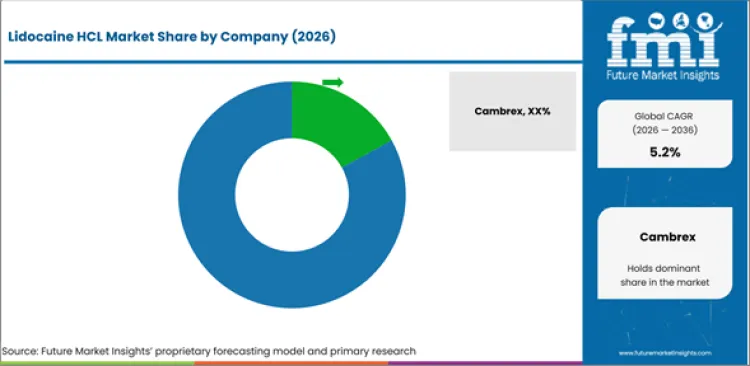
- API producers compete on pharmacopoeial control and quality files. Finished product evidence helps prove commercial relevance.
- Finished-dose suppliers influence API demand due to injectable launches and shortage-sensitive procurement timing.
- Regional suppliers gain preference from verifiable manufacturing and packing documentation.
- Distribution partners support smaller buyers by improving access to qualified product information.
Competition in the lidocaine HCL market is defined by proof of use and documentation depth. Cambrex publishes a dedicated Lidocaine HCl API page, while Moehs provides current medicinal API safety documentation. Harman Finochem adds India-specific proof through product listing and CDSCO written confirmation. These suppliers compete on documentation and audit readiness. Repeat supply matters more than broad chemical capacity. The same buyer screening pattern appears across specialty active pharmaceutical ingredients that require regulated customer qualification.
Manufacturing and channel reach also influence supplier position. Avenacy launched Lidocaine Hydrochloride Injection in the United States in August 2025, which added a finished-dose signal for wholesalers. Huons reported USA FDA approval for additional 1% and 2% multi-dose vials in May 2025. These downstream signals can shift API purchase timing. Inputs for sterile products also need suitable pharmaceutical packaging decisions that protect labeled strength and supply continuity.
Companies with direct product evidence are better placed than sellers using generic capability claims. Regulated buyers need supplier files before they approve any source change. Suppliers serving topical pain products must also support consistent active content. This gives verified API producers and finished-dose partners a clearer commercial pathway. Adjacent topical pain relief activity supports the second demand route for the molecule.
How do top lidocaine HCL companies compare?
| Company | Relevance to Market Title | Regulatory Dossier Depth | API Product Evidence | Hospital Channel Access | Channel Reach | Geographic Footprint |
|---|---|---|---|---|---|---|
| Cambrex | Very High | Strong | High | Moderate | Strong | Global |
| Moehs Group | High | Strong | High | Moderate | Moderate | Europe and export markets |
| Harman Finochem | Very High | Strong | High | Moderate | Strong | India and export markets |
| Dishman Carbogen Amcis | Moderate | Moderate | Medium | Moderate | Strong | Global |
| Siegfried | Moderate | Strong | Medium | Moderate | Strong | Global |
| Avenacy | High | Moderate | Finished-dose evidence | Strong | Strong | United States |
| Fresenius Kabi | Moderate | Strong | Finished-dose evidence | Strong | Strong | Global |
| Aspen | Moderate | Moderate | Finished-dose evidence | Strong | Moderate | Europe and global markets |
| Huons | High | Moderate | Finished-dose evidence | Strong | Moderate | South Korea and export markets |
Source: Future Market Insights competitive analysis, 2026.
Who are the key players in the lidocaine HCL market?
API producers and finished-dose suppliers are listed together due to their combined role in regulated demand.
Key global companies leading the lidocaine HCL market include:
- Cambrex
- Moehs Group
- Harman Finochem
- Dishman Carbogen Amcis
- Siegfried
- Avenacy
- Fresenius Kabi
- Aspen
- Aguettant
- Nissin Pharmaceutical
- Huons
- B. Braun Medical
- Baxter Healthcare
- Viwit Pharmaceuticals
- Neon Laboratories
Key Developments in Lidocaine HCL Market
- In January 2026, Moehs revised its Lidocaine Hydrochloride Monohydrate safety data sheet. The update supports current technical documentation for medicinal API buyers.
- In August 2025, Avenacy launched Lidocaine Hydrochloride Injection in the United States. The launch added a finished-dose channel signal for wholesale supply.
Key Players in the Lidocaine HCL Market
API Producers and Regulatory Dossier Holders
- Cambrex
- Moehs Group
- Harman Finochem
- Dishman Carbogen Amcis
- Siegfried
- Viwit Pharmaceuticals
- Shandong Chenghui Shuangda Pharmaceutical
Finished-Dose and Injectable Suppliers
- Avenacy
- Fresenius Kabi
- Amphastar
- Pfizer
- B. Braun Medical
- Baxter Healthcare
- Aspen
- Aguettant
- Accord
- Nissin Pharmaceutical
- Huons
- Neon Laboratories
- Daihan Pharm
Regional and Local Suppliers
- SSY Group
- KELUNPHARM
- Themis Medicare
- Cipla
- Glenmark Generics
- Aarti Drugs
- Solupharm Pharmazeutische Erzeugnisse
- Laboratoire Renaudin
- Panpharma
- Viatris Japan
- Nipro Pharma
- Shionogi Pharma
Lidocaine HCL Market - Report Scope
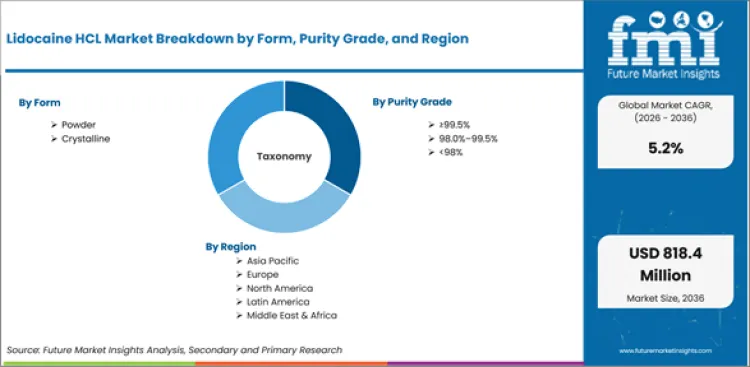
| Parameter | Details |
|---|---|
| Forecast period | 2026 to 2036 |
| Historical period | 2021 to 2025 |
| Quantitative unit | Revenue in USD million |
| By form | Powder, crystalline |
| By purity grade | ≥99.5%, 98.0%-99.5%, <98% |
| By application | Local anesthesia, antiarrhythmic, topical pain relief |
| By sales channel | Direct, distributors, online/API marketplaces |
| Regions covered | North America, Latin America, Europe, East Asia, South Asia and Pacific, Middle East and Africa |
| Countries covered | United States, United Kingdom, Germany, France, Japan, China, South Korea, India |
| Key companies profiled | Cambrex, Moehs Group, Harman Finochem, Dishman Carbogen Amcis, Siegfried, Avenacy, Fresenius Kabi, Aspen, Huons |
| Approach | Bottom-up product-boundary approach using API evidence, supplier qualification behavior, application mix, and country-level signals |
Source: Future Market Insights, 2026.
Lidocaine HCL Market - Scope & Definition
| Attribute | Detail |
|---|---|
| Market Definition | Commercially traded lidocaine hydrochloride active pharmaceutical ingredient used in regulated medicinal products. |
| Functions Covered | Local anesthetic action, regional anesthesia support, antiarrhythmic hospital use, and topical pain control. |
| Applications Covered | Local anesthesia, antiarrhythmic therapy, topical pain relief products, injectable formulations, gels, creams, and medicated patches. |
| End-Use Industries | Pharmaceutical manufacturing, hospital injectable supply, dental anesthesia supply, and topical pain product manufacturing. |
| Grades Covered | ≥99.5%, 98.0%-99.5%, and <98% purity grades. |
| Inclusions | Powder and crystalline Lidocaine HCL API sold through direct, distributor, and online/API marketplace channels. |
| Exclusions | Lidocaine base, unrelated anesthetic APIs, veterinary-only preparations, finished branded drug revenue, and non-pharmaceutical chemical sales. |
Lidocaine HCL Market - Research Methodology
| Method | Description |
|---|---|
| Primary Research | FMI analyst interviews with API buyers, formulation teams, injectable suppliers, distributor contacts, and quality managers across key markets. |
| Desk Research | Review of labels, medicine databases, regulatory documents, drug shortage listings, supplier product pages, and official company disclosures. |
| Market Sizing & Forecasting | Bottom-up product-boundary approach using supplied anchors, application mix, purity-grade use, channel behavior, and country-level demand signals. |
| Forecast Basis | Cross-verification using public labels, supplier files, shortage data, official medicine records, and company product evidence. |
Lidocaine HCL Market Breakdown by Form, Purity Grade, Application, Sales Channel, and Region
Lidocaine HCL Market Segmented by Form
- Powder
- Crystalline
Lidocaine HCL Market Segmented by Purity Grade
- ≥99.5%
- 98.0%-99.5%
- <98%
Lidocaine HCL Market Segmented by Application
- Local Anesthesia
- Antiarrhythmic
- Topical Pain Relief
Lidocaine HCL Market Segmented by Sales Channel
- Direct
- Distributors
- Online/API Marketplaces
Lidocaine HCL Market by Region
- North America
- Latin America
- Europe
- East Asia
- South Asia and Pacific
- Middle East and Africa
Research Sources and Bibliography
- National Library of Medicine. (2026). Lidocaine Hydrochloride Injection, USP. DailyMed.
- American Society of Health-System Pharmacists. (2026). Drug shortage detail: Lidocaine injection. ASHP.
- USA Food and Drug Administration. (2026, April 22). List of Drug Master Files (DMFs).
- Avenacy. (2025, August 25). Avenacy announces launch of Lidocaine Hydrochloride Injection, USP in the USA market.
- Cambrex. (2026). Lidocaine HCl. API products.
- Moehs Ibérica. (2026, January 30). Lidocaine Hydrochloride Monohydrate safety data sheet.
- Harman Finochem Ltd. (2026). Lidocaine HCl. Products archive.
- Central Drugs Standard Control Organisation. (2025, November 12). Written confirmation of M/s Harman Finochem Limited.
- Electronic Medicines Compendium. (2026). Lidocaine Hydrochloride Injection BP 2% w/v: Summary of Product Characteristics.
- Bundesinstitut für Arzneimittel und Medizinprodukte. (2026). Medicinal Products Information System AMIce.
- Base de Données Publique des Médicaments. (2026). LIDOCAINE AGUETTANT 10 mg/ml SANS CONSERVATEUR, solution injectable.
- Haute Autorité de Santé. (2025, March 12). LIDOCAINE AGUETTANT 10 et 20 mg/mL: Avis CT21046.
- National Medical Products Administration. (2026). Drug database.
- Huons Global. (2025, May 7). Huons obtains FDA approval for 1% and 2% lidocaine hydrochloride multi-dose vials.
- Viwit Pharmaceuticals. (2023, December 19). Viwit Pharmaceuticals' Lidocaine Injection receives official approval by China NMPA.
- Central Drugs Standard Control Organisation. (2025, November 12). Written confirmation for Harman Finochem Limited covering Lidocaine Hydrochloride USP/Ph.Eur.
- Huons Global. (2025, May 7). Huons announces two USA FDA approvals for multiple-dose lidocaine hydrochloride injection.
- DailyMed. (2024, December). Lidocaine HCl Injection, USP manufactured by Huons Co., Ltd.
- DailyMed. (2019, August). Lidocaine HCl Injection, USP manufactured by Solupharm for B. Braun Medical Inc.
- Electronic Medicines Compendium. (2026). All medicines for Aguettant Ltd.
- Electronic Medicines Compendium. (2026). All medicines for Aspen.
- Pharmaceuticals and Medical Devices Agency. (2024, January 15). Lidocaine Hydrochloride Injection 0.5%, 1%, and 2% Nissin product information.
- Pharmaceuticals and Medical Devices Agency. (2024, March 1). Nipro lidocaine tape product information.
- Base de Données Publique des Médicaments. (2026, June 1). CHLORHYDRATE DE LIDOCAINE RENAUDIN 10 mg/mL, solution injectable.
- Shandong Chenghui Pharmaceutical Group. (2025, November 19). Lidocaine Hydrochloride API receives CEP approval.
This bibliography is provided for reader reference and is not exhaustive. The full report contains the complete reference list and detailed citations.
This Report Answers
- The report explains the projected size of the Lidocaine HCL Market in 2026 and 2036.
- The report identifies the forecast CAGR for the Lidocaine HCL Market during 2026 to 2036.
- The report explains why powder leads the form segment in Lidocaine HCL API demand.
- The report identifies which purity grade is expected to lead Lidocaine HCL demand in 2026.
- The report explains which application creates the main demand anchor for Lidocaine HCL.
- The report assesses how shortage signals influence sourcing and supplier qualification decisions.
- The report compares country-level growth profiles across eight selected countries.
- The report identifies companies that have direct or meaningful evidence in the Lidocaine HCL value chain.
- The report defines which products and applications are included in the Lidocaine HCL Market scope.
Frequently Asked Questions
How large is the Lidocaine HCL Market expected to be in the near term?
The market is expanding steadily as lidocaine hydrochloride remains a routine input for regulated anesthesia and pain management products.
What is the long term outlook for the Lidocaine HCL Market?
The outlook remains stable as clinical procedure demand and hospital procurement support consistent use across injectable and topical formats.
How fast is the Lidocaine HCL Market expected to grow?
Growth is driven by repeat clinical use, regulated sourcing behavior, and continuity planning for essential anesthetic medicines.
What is the main driver of lidocaine HCL demand?
Demand is driven by local anesthesia use in infiltration and nerve block procedures across hospital and dental settings.
Which form dominates the lidocaine HCL market?
Powder dominates because it offers easier handling and assay consistency for pharmaceutical formulators.
Which application is expected to lead Lidocaine HCL demand?
Local Anesthesia is projected to lead application demand with 72.0% share in 2026 due to nerve block and infiltration use.
Which country is expected to grow fastest in the Lidocaine HCL Market?
China is forecast to grow at 4.8% CAGR by 2036 due to API capacity and formulation activity.
What does the Lidocaine HCL Market include?
The market includes lidocaine hydrochloride API sold for local anesthesia and antiarrhythmic therapy. Topical pain relief formulations are also included.
How is the Lidocaine HCL Market forecast developed?
The forecast combines supplied value anchors and application mix. Country signals and supplier evidence support channel assumptions.
Which Lidocaine HCL form is preferred for formulation use?
Powder is usually preferred for formulation work due to easier weighing and blending. Assay control also supports use in injectable and topical manufacturing.
What is the difference between Lidocaine HCL and lidocaine base?
Lidocaine HCL is the hydrochloride salt used in many regulated formulations, while lidocaine base remains outside this report scope.
Why do buyers qualify Lidocaine HCL suppliers carefully?
Buyers qualify suppliers carefully due to regulated medicine use and batch documentation needs. Purity control and release reliability add further scrutiny.
Which countries use Lidocaine HCL most visibly in this report?
The United States and Europe show visible medicine-record relevance. Japan and South Korea add product evidence. China and India add supplier evidence.
What are the main disadvantages of sourcing Lidocaine HCL?
The main disadvantages are slow supplier qualification and shortage-related finished-dose disruption. Strict purity expectations and uneven public supplier evidence add further friction.
Preview the report firsthand - request a free sample
Get SampleGet the brochure for pricing and purchase details.
Get PDFTable of Content
- Key Takeaways
- Market Size and CAGR
- Top Growth Driver
- Fastest Growing Segment
- Leading Region
- Key Companies
- Emerging Opportunities
- Executive Summary
- Global Market Outlook
- Demand-side Trends
- Supply-side Trends
- Technology Roadmap Analysis
- Analysis and Recommendations
- Analyst Perspective (What is happening? Why now? What should investors know?)
- Key Questions Answered
- How large is the market?
- What is the CAGR?
- What are key trends?
- Which region dominates?
- Who are the leaders?
- Market Overview
- Market Coverage / Taxonomy
- Market Definition / Scope / Limitations
- Research Methodology
- Chapter Orientation
- Analytical Lens and Working Hypotheses
- Market Structure, Signals, and Trend Drivers
- Benchmarking and Cross-market Comparability
- Market Sizing, Forecasting, and Opportunity Mapping
- Research Design and Evidence Framework
- Desk Research Programme (Secondary Evidence)
- Expert Input and Fieldwork (Primary Evidence)
- Tooling, Models, and Reference Databases
- Data Engineering and Model Build
- Quality Assurance and Audit Trail
- Market Background
- Market Dynamics (Drivers, Restraints, Opportunity, Trends)
- Scenario Forecast (Optimistic, Likely, Conservative)
- Impact Analysis
- AI Impact
- Sustainability Impact
- Regulatory Impact
- Technology Impact
- Consumer / Buyer Analysis
- Purchase Drivers
- Adoption Barriers
- Buyer Journey
- Opportunity Map Analysis
- Product Life Cycle Analysis
- Supply Chain Analysis
- Investment Feasibility Matrix
- Value Chain Analysis
- PESTLE and Porter's Analysis
- Regulatory Landscape
- Regional Parent Market Outlook
- Production and Consumption Statistics
- Import and Export Statistics
- Global Market Analysis and Forecast, 2021 to 2036
- Historical Market Size Value (USD Million) & Volume (Unit) Analysis, 2021 to 2025
- Current and Future Market Size Value (USD Million) & Volume (Unit) Projections, 2026 to 2036
- Y-o-Y Growth Trend Analysis
- Absolute $ Opportunity Analysis
- Global Market Pricing Analysis, 2021 to 2036
- Global Market Analysis and Forecast, By Form, 2021 to 2036
- Introduction / Key Findings
- Historical Market Size Value (USD Million) & Volume (Unit) Analysis By Form, 2021 to 2025
- Current and Future Market Size Value (USD Million) & Volume (Unit) Analysis and Forecast By Form, 2026 to 2036
- Powder
- Crystalline
- Powder
- Y-o-Y Growth Trend Analysis By Form, 2021 to 2025
- Absolute $ Opportunity Analysis By Form, 2026 to 2036
- Global Market Analysis and Forecast, By Purity Grade, 2021 to 2036
- Introduction / Key Findings
- Historical Market Size Value (USD Million) & Volume (Unit) Analysis By Purity Grade, 2021 to 2025
- Current and Future Market Size Value (USD Million) & Volume (Unit) Analysis and Forecast By Purity Grade, 2026 to 2036
- ≥99.5%
- 98.0%-99.5%
- <98%
- ≥99.5%
- Y-o-Y Growth Trend Analysis By Purity Grade, 2021 to 2025
- Absolute $ Opportunity Analysis By Purity Grade, 2026 to 2036
- Global Market Analysis and Forecast, By Application, 2021 to 2036
- Introduction / Key Findings
- Historical Market Size Value (USD Million) & Volume (Unit) Analysis By Application, 2021 to 2025
- Current and Future Market Size Value (USD Million) & Volume (Unit) Analysis and Forecast By Application, 2026 to 2036
- Antiarrhythmic
- Local Anesthesia
- Topical Pain Relief
- Antiarrhythmic
- Y-o-Y Growth Trend Analysis By Application, 2021 to 2025
- Absolute $ Opportunity Analysis By Application, 2026 to 2036
- Global Market Analysis and Forecast, By Sales Channel, 2021 to 2036
- Introduction / Key Findings
- Historical Market Size Value (USD Million) & Volume (Unit) Analysis By Sales Channel, 2021 to 2025
- Current and Future Market Size Value (USD Million) & Volume (Unit) Analysis and Forecast By Sales Channel, 2026 to 2036
- Direct
- Distributors
- Online/API Marketplaces
- Direct
- Y-o-Y Growth Trend Analysis By Sales Channel, 2021 to 2025
- Absolute $ Opportunity Analysis By Sales Channel, 2026 to 2036
- Global Market Analysis and Forecast, By Region, 2021 to 2036
- Introduction
- Historical Market Size Value (USD Million) & Volume (Unit) Analysis By Region, 2021 to 2025
- Current Market Size Value (USD Million) & Volume (Unit) Analysis and Forecast By Region, 2026 to 2036
- North America
- Latin America
- Western Europe
- Eastern Europe
- East Asia
- South Asia and Pacific
- Middle East & Africa
- Market Attractiveness Analysis By Region
- North America Market Analysis and Forecast, By Country, 2021 to 2036
- Historical Market Size Value (USD Million) & Volume (Unit) Trend Analysis By Market Taxonomy, 2021 to 2025
- Market Size Value (USD Million) & Volume (Unit) Forecast By Market Taxonomy, 2026 to 2036
- By Country
- USA
- Canada
- Mexico
- By Form
- By Purity Grade
- By Application
- By Sales Channel
- By Country
- Market Attractiveness Analysis
- By Country
- By Form
- By Purity Grade
- By Application
- By Sales Channel
- Key Takeaways
- Latin America Market Analysis and Forecast, By Country
- Historical Market Size Value (USD Million) & Volume (Unit) Trend Analysis By Market Taxonomy, 2021 to 2025
- Market Size Value (USD Million) & Volume (Unit) Forecast By Market Taxonomy, 2026 to 2036
- By Country
- Brazil
- Chile
- Rest of Latin America
- By Form
- By Purity Grade
- By Application
- By Sales Channel
- By Country
- Market Attractiveness Analysis
- By Country
- By Form
- By Purity Grade
- By Application
- By Sales Channel
- Key Takeaways
- Western Europe Market Analysis and Forecast, By Country
- Historical Market Size Value (USD Million) & Volume (Unit) Trend Analysis By Market Taxonomy, 2021 to 2025
- Market Size Value (USD Million) & Volume (Unit) Forecast By Market Taxonomy, 2026 to 2036
- By Country
- Germany
- UK
- Italy
- Spain
- France
- Nordic
- BENELUX
- Rest of Western Europe
- By Form
- By Purity Grade
- By Application
- By Sales Channel
- By Country
- Market Attractiveness Analysis
- By Country
- By Form
- By Purity Grade
- By Application
- By Sales Channel
- Key Takeaways
- Eastern Europe Market Analysis and Forecast, By Country
- Historical Market Size Value (USD Million) & Volume (Unit) Trend Analysis By Market Taxonomy, 2021 to 2025
- Market Size Value (USD Million) & Volume (Unit) Forecast By Market Taxonomy, 2026 to 2036
- By Country
- Russia
- Poland
- Hungary
- Balkan & Baltic
- Rest of Eastern Europe
- By Form
- By Purity Grade
- By Application
- By Sales Channel
- By Country
- Market Attractiveness Analysis
- By Country
- By Form
- By Purity Grade
- By Application
- By Sales Channel
- Key Takeaways
- East Asia Market Analysis and Forecast, By Country
- Historical Market Size Value (USD Million) & Volume (Unit) Trend Analysis By Market Taxonomy, 2021 to 2025
- Market Size Value (USD Million) & Volume (Unit) Forecast By Market Taxonomy, 2026 to 2036
- By Country
- China
- Japan
- South Korea
- By Form
- By Purity Grade
- By Application
- By Sales Channel
- By Country
- Market Attractiveness Analysis
- By Country
- By Form
- By Purity Grade
- By Application
- By Sales Channel
- Key Takeaways
- South Asia and Pacific Market Analysis and Forecast, By Country
- Historical Market Size Value (USD Million) & Volume (Unit) Trend Analysis By Market Taxonomy, 2021 to 2025
- Market Size Value (USD Million) & Volume (Unit) Forecast By Market Taxonomy, 2026 to 2036
- By Country
- India
- ASEAN
- Australia & New Zealand
- Rest of South Asia and Pacific
- By Form
- By Purity Grade
- By Application
- By Sales Channel
- By Country
- Market Attractiveness Analysis
- By Country
- By Form
- By Purity Grade
- By Application
- By Sales Channel
- Key Takeaways
- Middle East & Africa Market Analysis and Forecast, By Country
- Historical Market Size Value (USD Million) & Volume (Unit) Trend Analysis By Market Taxonomy, 2021 to 2025
- Market Size Value (USD Million) & Volume (Unit) Forecast By Market Taxonomy, 2026 to 2036
- By Country
- Kingdom of Saudi Arabia
- Other GCC Countries
- Türkiye
- South Africa
- Other African Union
- Rest of Middle East & Africa
- By Form
- By Purity Grade
- By Application
- By Sales Channel
- By Country
- Market Attractiveness Analysis
- By Country
- By Form
- By Purity Grade
- By Application
- By Sales Channel
- Key Takeaways
- Key Countries Market Analysis
- USA
- Pricing Analysis
- Market Share Analysis, 2025
- By Form
- By Purity Grade
- By Application
- By Sales Channel
- Canada
- Pricing Analysis
- Market Share Analysis, 2025
- By Form
- By Purity Grade
- By Application
- By Sales Channel
- Mexico
- Pricing Analysis
- Market Share Analysis, 2025
- By Form
- By Purity Grade
- By Application
- By Sales Channel
- Brazil
- Pricing Analysis
- Market Share Analysis, 2025
- By Form
- By Purity Grade
- By Application
- By Sales Channel
- Chile
- Pricing Analysis
- Market Share Analysis, 2025
- By Form
- By Purity Grade
- By Application
- By Sales Channel
- Germany
- Pricing Analysis
- Market Share Analysis, 2025
- By Form
- By Purity Grade
- By Application
- By Sales Channel
- UK
- Pricing Analysis
- Market Share Analysis, 2025
- By Form
- By Purity Grade
- By Application
- By Sales Channel
- Italy
- Pricing Analysis
- Market Share Analysis, 2025
- By Form
- By Purity Grade
- By Application
- By Sales Channel
- Spain
- Pricing Analysis
- Market Share Analysis, 2025
- By Form
- By Purity Grade
- By Application
- By Sales Channel
- France
- Pricing Analysis
- Market Share Analysis, 2025
- By Form
- By Purity Grade
- By Application
- By Sales Channel
- India
- Pricing Analysis
- Market Share Analysis, 2025
- By Form
- By Purity Grade
- By Application
- By Sales Channel
- ASEAN
- Pricing Analysis
- Market Share Analysis, 2025
- By Form
- By Purity Grade
- By Application
- By Sales Channel
- Australia & New Zealand
- Pricing Analysis
- Market Share Analysis, 2025
- By Form
- By Purity Grade
- By Application
- By Sales Channel
- China
- Pricing Analysis
- Market Share Analysis, 2025
- By Form
- By Purity Grade
- By Application
- By Sales Channel
- Japan
- Pricing Analysis
- Market Share Analysis, 2025
- By Form
- By Purity Grade
- By Application
- By Sales Channel
- South Korea
- Pricing Analysis
- Market Share Analysis, 2025
- By Form
- By Purity Grade
- By Application
- By Sales Channel
- Russia
- Pricing Analysis
- Market Share Analysis, 2025
- By Form
- By Purity Grade
- By Application
- By Sales Channel
- Poland
- Pricing Analysis
- Market Share Analysis, 2025
- By Form
- By Purity Grade
- By Application
- By Sales Channel
- Hungary
- Pricing Analysis
- Market Share Analysis, 2025
- By Form
- By Purity Grade
- By Application
- By Sales Channel
- Kingdom of Saudi Arabia
- Pricing Analysis
- Market Share Analysis, 2025
- By Form
- By Purity Grade
- By Application
- By Sales Channel
- Türkiye
- Pricing Analysis
- Market Share Analysis, 2025
- By Form
- By Purity Grade
- By Application
- By Sales Channel
- South Africa
- Pricing Analysis
- Market Share Analysis, 2025
- By Form
- By Purity Grade
- By Application
- By Sales Channel
- USA
- Market Structure Analysis
- Competition Dashboard
- Competition Benchmarking
- Market Share Analysis of Top Players
- By Regional
- By Form
- By Purity Grade
- By Application
- By Sales Channel
- Emerging Startups
- Innovation Benchmarking
- Competition Analysis
- Competition Deep Dive
- Cambrex
- Overview
- Product Portfolio
- Profitability by Market Segments (Product/Region/Sales Channel)
- Sales Footprint
- Strategy Overview
- Marketing Strategy
- Product Strategy
- Channel Strategy
- Moehs Group
- Harman Finochem
- Dishman Carbogen Amcis
- Siegfried
- Avenacy
- Fresenius Kabi
- Aspen
- Aguettant
- Cambrex
- Case Studies
- Success Stories
- Recent Developments
- Competition Deep Dive
- Assumptions & Acronyms Used


