

Mobile Fuel Delivery Market Size, Share, and Forecast Analysis Outlook From 2025 to 2035
Mobile fuel delivery has transformed the approach to accessing fuels for consumers and businesses alike; it offers convenience, safety, and efficiency to refuel anytime. Companies are using app-based platforms, AI-driven logistics, and solutions related to eco-friendly fuel to keep up with the rising demand for hassle-free fueling as a result of growing urbanization and accelerating digital transformation.
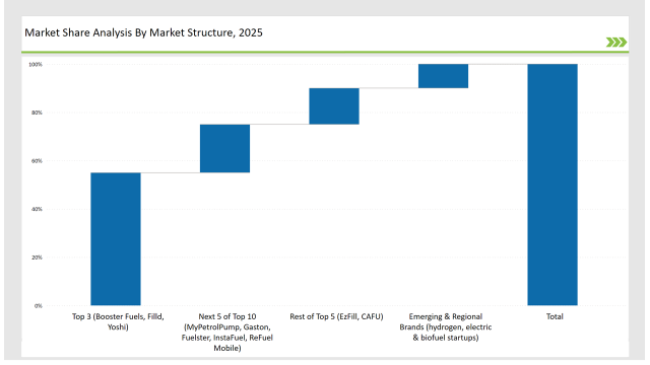
Top players, which include Booster Fuels, Filld, and Yoshi, hold 55% market share owing to their strong technological infrastructure, vast service networks, and high customer retention. The share of regional fuel delivery startups and fleet management solutions is 30%, while that of emerging sustainable and hydrogen fuel delivery companies amounts to 15%.
Leading Mobile Fuel Delivery Providers by Market Share
| Market Segment | Industry Share (%) |
|---|---|
| Top 3 (Booster Fuels, Filld, Yoshi) | 55% |
| Rest of Top 5 (EzFill, CAFU) | 15% |
| Next 5 of Top 10 (MyPetrolPump, Gaston, Fuelster, InstaFuel, ReFuel Mobile) | 20% |
| Emerging & Regional Brands (hydrogen, electric & biofuel startups) | 10% |
Market Concentration 2025
The mobile fuel delivery market in 2025 is moderately concentrated, with the top players accounting for 50% to 60% of the total market share. Leading companies such as Booster Fuels, Filld, and Yoshi dominate the segment, while regional startups and specialized B2B fuel solutions add competitive diversity.
This market structure reflects strong brand influence while allowing space for on-demand fuel innovations and eco-friendly fuel alternatives.
Segment Analysis
Sales Channels
There are various sales channels for mobile fuel delivery. App-based services lead the way with 60% of market share since ordering fuel through an app is most convenient for a consumer. Solutions for fleet fueling contribute to 25%, targeting business sectors with large vehicle fleets, wherein refueling would be done with efficiency and as per schedule.
Commercial and industrial fuel delivery stands at 10%, which focuses on construction sites, factories, and maritime operations. Sustainable fuel delivery solutions make up the remaining 5%, with hydrogen and electric vehicle (EV) refueling growing in importance.
Product Type
The mobile fuel delivery market is segmented into gasoline, diesel, biofuels, and alternative energy refueling. Gasoline delivery leads with 45% of the market, as passenger vehicles remain the primary consumers. Diesel accounts for 30%, catering to commercial fleets, heavy equipment, and long-haul trucking.
Biofuels contribute 15%, as sustainability-conscious businesses opt for greener alternatives. Hydrogen and EV charging services hold 10%, gaining momentum with the rise of clean energy initiatives and regulatory incentives.
Who Shaped the Year
The mobile fuel delivery market has made major strides in 2024 with technological innovation, sustainability efforts, and the growth of service networks. Major players include:
- Booster Fuels: Its fleet fueling services to corporate clients increased as it rolled out AI-driven scheduling for optimizing deliveries.
- Filld: Reinforced its alliances with auto majors to deliver integrated fuel services within the dashboards of connected vehicles.
- Yoshi: Subscription-based refueling services targeting the customers on vehicle maintenance through add-on packages.
- EzFill: Increased urban centres footprint and operated on-demand refueling services in rideshare and delivery vehicle fleets.
- CAFU: Global footprint expanded its Middle East business with both gas and diesel offerings.
- Emerging Brands: Hydrogen and EV charging startups like ReFuel Mobile and InstaFuel are pioneering mobile refueling solutions for electric vehicles and green energy adoption.
Key Highlights from the Forecast
- AI & Route Optimization: AI-driven logistics are enhancing delivery efficiency, reducing fuel waste, and optimizing real-time refueling schedules.
- Sustainability & Alternative Fuels: Biofuels, hydrogen, and electric vehicle charging services are expanding the scope of mobile fuel delivery.
- Fleet Management Integration: Mobile fueling is being used by businesses as a cost-effective measure to reduce downtime and increase efficiency.
- Subscription-Based Fueling: Companies are offering flexible membership plans with scheduled fuel deliveries and vehicle maintenance add-ons.
- Smart Vehicle Connectivity: Mobile fuel delivery platforms are integrating with connected cars to offer seamless, automated refueling options.
Tier-Wise Brand Classification 2025
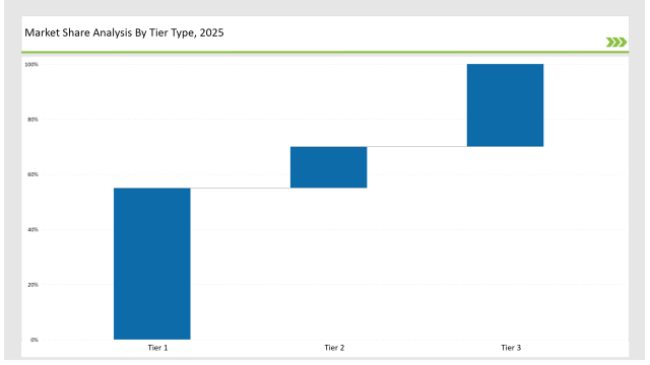
| Tier Type | Tier 1 |
|---|---|
| Example of Key Players | Booster Fuels, Filld, Yoshi |
| Market Share (%) | 55% |
| Tier Type | Tier 2 |
|---|---|
| Example of Key Players | EzFill, CAFU |
| Market Share (%) | 15% |
| Tier Type | Tier 3 |
|---|---|
| Example of Key Players | Regional brands, alternative energy startups |
| Market Share (%) | 30% |
Key Brand Initiatives
| Brand | Key Focus Areas |
|---|---|
| Booster Fuels | AI-powered fleet fueling & corporate partnerships |
| Filld | Connected vehicle fuel delivery integrations |
| Yoshi | Subscription-based fueling with maintenance add-ons |
| EzFill | Urban expansion & rideshare fleet fueling solutions |
| CAFU | International expansion in emerging markets |
| Emerging Brands | Hydrogen & EV mobile charging solutions |
Recommendations for Brands
- Growing AI-Powered Logistics: Harness Predictive Analytics to better schedule fuel deliveries, reducing inefficiencies.
- Alternative Fuel Solution Adoption: Invest in hydrogen and EV charging infrastructure to tap into the clean energy market, which would grow as a result of regulation.
- Strengthen B2B Partnerships: Customized fleet fueling solutions for logistics companies, ride-hailing platforms, and corporate fleets.
- Better Customer Experience: Make subscription-based models with flexible refueling plans and vehicle maintenance perks.
- Smart Connectivity: Integrate mobile fuel delivery services into connected vehicle ecosystems for automatic refueling.
Future Roadmap
Mobile fuel delivery is going to grow with sustainable momentum in the coming years due to smart logistics, adoption of alternative energy, and the demand for convenience-based refueling. Brands will invest in growing sustainable fuel solutions, AI-driven route optimization, and connected vehicle integration to improve the customer experience.
As the scenario of urban congestion and environmental regulations evolves, mobile fuel delivery is going to be a vital element in the reduction of emissions, improvement in fleet efficiency, and greener transportation solutions. The future of fuel delivery revolves around technological innovation, digital connectivity, and a commitment to sustainability.
Top Segments Studied in the Mobile Fuel Delivery Market Report
By Fuel Type:
- Diesel
- Diesel Exhaust Fluid
- Red Diesel
- Gasoline
- Bulk Fuel
By Equipment:
- Truck
- Generators
- Construction Equipment
- Landscaping Equipment
- Reefers
- Bulk Tanks
By End Use:
- Residential
- Commercial
- Agriculture
By Region:
- North America
- Latin America
- Europe
- East Asia
- South Asia Pacific
- Middle East and Africa
Frequently Asked Questions
Which companies hold the largest market share in the mobile fuel delivery industry?
Leading players such as Booster Fuels, Filld, and Yoshi collectively hold around 55% of the market.
What is the market share of regional mobile fuel delivery providers?
Regional fuel delivery companies and fleet-focused services contribute approximately 30% of the market by offering localized and industry-specific solutions.
How much market share do startups focusing on alternative fuels hold?
Startups specializing in hydrogen fuel, EV charging, and biofuel-based mobile delivery hold about 10% of the market.
What percentage of the market is controlled by private labels in the mobile fuel delivery sector?
Private labels from fleet management companies and corporate fuel solutions providers hold around 5% of the market.
How is market concentration assessed in the mobile fuel delivery industry for the year 2025?
High for companies controlling 55%+, medium for 40-55%, and low for those under 30%.
Preview the report firsthand - request a free sample
Get SampleGet the brochure for pricing and purchase details.
Get PDFTable of Content
- Executive Summary
- Market Overview
- Competitive Analysis Outlook for 2025
- Segment Analysis
- Who Shaped the Year
- Key Highlights from the Forecast
- Tier-Wise Brand Classification
- Key Brand Initiatives
- Recommendations for Brands
- Future Roadmap
- FAQs


