

- Industry Size (2026)
- USD 604.2 Mn
- Forecast (2036)
- USD 1292.4 Mn
- CAGR (2026 to 2036)
- 7.9%
Dual Fuel Diesel Gas Fuel Delivery Market Forecast and Outlook 2026 to 2036
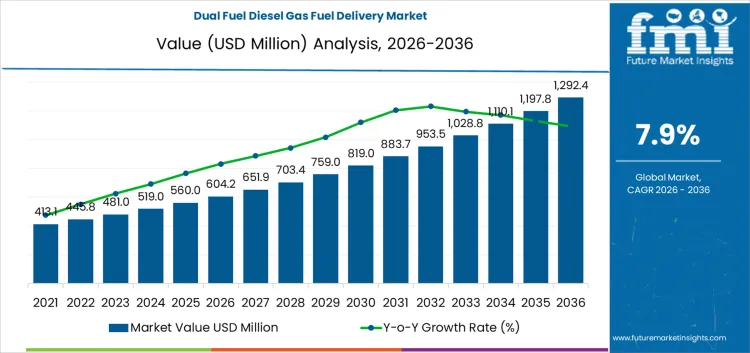
The dual fuel diesel gas fuel delivery market is valued at USD 604.2 million in 2026 and is projected to reach USD 1,292.4 million by 2036, reflecting a CAGR of 7.9%. Market outcomes are shaped by concentration in diesel-gas engine programs and fleet reliance on dual fuel operation for emissions reduction and efficiency gains. End-use dependency on commercial vehicles and industrial fleets drives production priorities. Volume stability is affected by fuel availability, OEM adoption schedules, and regulatory compliance. Suppliers providing validated, high-precision delivery systems capture predictable revenue streams, whereas smaller operators face variability and constrained bargaining power.
Revenue concentration is determined by integration with high-volume vehicle programs and verified performance across multiple platforms. Adoption varies regionally according to fleet composition, fuel infrastructure, and regulatory mandates. Margin strength favors operators supplying certified, multi-platform systems with technical support and long-term service agreements. Fragmentation persists in aftermarket and regional supply, while leading providers maintain concentrated value through production reliability, platform standardization, and alignment with OEM programs rather than output volume alone.
Quick Stats of the Dual Fuel Diesel Gas Fuel Delivery Market
- Dual Fuel Diesel Gas Fuel Delivery Market Value (2026): USD 604.2 million
- Dual Fuel Diesel Gas Fuel Delivery Forecast Value (2036): USD 1,292.4 million
- Dual Fuel Diesel Gas Fuel Delivery Forecast CAGR 2026 to 2036: 7.9%
- Dual Fuel Diesel Gas Fuel Delivery Leading Application: Heavy-Duty Trucks
- Dual Fuel Diesel Gas Fuel Delivery Key Growth Regions: China, Brazil, USA, UK, Japan
- Dual Fuel Diesel Gas Fuel Delivery Top Players: Westport Fuel Systems, Cummins, Bosch, Denso, Hexagon Agility, BorgWarner, Continental, Eaton, Parker Hannifin, Weifu High-Technology
What is the Growth Forecast for Dual Fuel Diesel Gas Fuel Delivery Market through 2036?
Between 2026 and 2031, the dual fuel diesel gas fuel delivery market is projected to grow from USD 604.2 million to USD 819.1 million, generating an absolute increase of USD 214.9 million. Volume contributes approximately 68% of growth, driven by adoption of injectors, pumps, rails, and regulators across on-road, off-highway, and stationary diesel-gas applications. Price growth accounts for 32%, supported by advanced component materials, higher pressure compatibility, and OEM line-fit programs. Value capture favors suppliers providing validated, durable fuel delivery systems with technical support and integration into dual-fuel engine programs.
From 2031 to 2036, the market is expected to expand from USD 819.1 million to USD 1,292.4 million, adding USD 475.7 million. Volume remains the dominant driver, contributing roughly 66% of growth due to broader adoption of dual-fuel engines, fleet expansion, and retrofits. Price growth represents 34%, supported by premium materials, system calibration, and component differentiation. Competitive advantage favors suppliers with proven dual-fuel technology, OEM partnerships, and scalable manufacturing capabilities. Leading companies include Bosch, Denso, Continental, Delphi (BorgWarner), Cummins, Parker Hannifin, Mahle, Weifu High-Technology, and Rheinmetall.
Dual Fuel Diesel-Gas Fuel Delivery Market Key Takeaways
| Metric | Value |
|---|---|
| Market Value (2026) | USD 604.2 million |
| Forecast Value (2036) | USD 1,292.4 million |
| Forecast CAGR 2026 to 2036 | 7.90% |
What Is Driving Demand for Dual Fuel Diesel Gas Fuel Delivery Systems?
Dual fuel diesel gas fuel delivery systems are increasingly adopted to enable engines to operate on a combination of diesel and natural gas, reducing emissions and fuel costs. Historically, diesel engines operated solely on liquid fuel, limiting flexibility and emission reduction potential. Modern dual-fuel systems integrate high-pressure diesel injectors, gas injectors, and electronic control units to manage precise fuel ratios, optimize combustion, and maintain engine performance. OEMs, engine manufacturers, and fleet operators prioritize reliability, fuel flexibility, and regulatory compliance. Early adoption focused on stationary and heavy-duty industrial engines, while current demand extends to commercial trucks, buses, and marine vessels seeking operational efficiency, cost savings, and compliance with stringent emission standards.
Increasing environmental regulations, natural gas availability, and cost-efficiency targets are shaping market growth for dual-fuel systems. Compared with conventional diesel engines, contemporary designs emphasize synchronized fuel delivery, high-pressure durability, and integration with engine management systems for optimized combustion. Cost considerations include injector and control system complexity, calibration, and material selection, concentrating margins among suppliers capable of delivering certified, reliable solutions. Operators adopt dual-fuel systems to reduce greenhouse gas emissions, optimize fuel consumption, and maintain engine performance across diverse operating conditions. By 2036, dual-fuel diesel-gas fuel delivery systems are expected to become widely adopted in commercial and industrial engines, supporting sustainable energy use and regulatory compliance.
What Factors Are Shaping the Demand for Dual Fuel Diesel Gas Fuel Delivery Systems in Terms of Application and Fuel Type?
The demand for dual fuel diesel gas fuel delivery systems is segmented by application and fuel type. Applications include heavy-duty trucks, off-highway vehicles, marine engines, and other categories. Fuel types include diesel combined with CNG, LNG, biogas, and other alternative fuels. Segment adoption is influenced by engine performance, emissions regulations, and fuel flexibility requirements. Uptake is driven by operational efficiency, cost savings, and environmental compliance. Application and fuel type selection depend on vehicle design, operating environment, and system durability, ensuring precise fuel delivery, optimized combustion, and safe operation in commercial, industrial, and marine dual-fuel engines.
Why Are Heavy-Duty Trucks Leading the Application Segment in Dual Fuel Diesel Gas Delivery Systems?
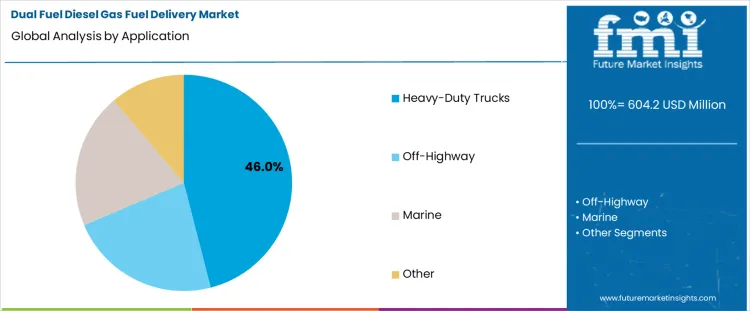
Heavy-duty trucks account for approximately 46% of total application segment demand, making them the leading category. Adoption is driven by long-haul operational requirements, emissions reduction mandates, and fuel cost optimization. Dual fuel systems in trucks provide controlled diesel and CNG or LNG delivery, enabling flexible fuel use while maintaining engine performance. Maintenance routines monitor fuel injection timing, pressure consistency, and component integrity to ensure reliable operation. Manufacturers adopt dual fuel delivery systems to support fleet efficiency, regulatory compliance, and operational reliability. The segment leads because heavy-duty trucks represent the largest operational fleet requiring dual fuel capability.
Operational factors further support adoption. Delivery systems must withstand high pressures, temperature fluctuations, and continuous engine operation. Integration with engine management ensures precise injection, combustion stability, and optimized fuel efficiency. The segment leads because heavy-duty trucks combine fleet size, operational load, and fuel flexibility requirements, providing measurable benefits in emissions reduction, cost efficiency, and system reliability.
Why Is Diesel + CNG Representing the Largest Fuel Type Segment in Dual Fuel Systems?
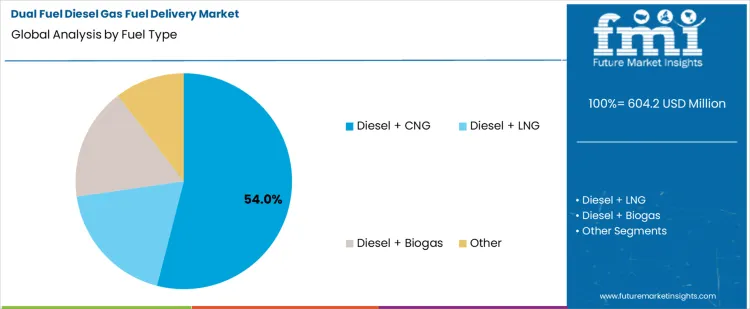
Diesel combined with CNG accounts for approximately 54% of total fuel type demand, making it the largest segment. This combination provides operational flexibility, improved fuel efficiency, and reduced greenhouse gas emissions. Manufacturers implement diesel+CNG delivery systems in trucks, off-highway machinery, and industrial vehicles to balance power output with environmental compliance. Adoption is reinforced by existing CNG infrastructure, engine compatibility, and reliability under variable load conditions. Maintenance includes monitoring fuel ratio, injector performance, and rail integrity to ensure precise fuel delivery and operational safety.
Operational considerations further influence adoption. Systems must tolerate temperature variation, high-pressure cycles, and vibration while maintaining fuel flow precision. Integration with engine controls ensures optimized combustion and emissions compliance. The segment leads because diesel + CNG provides measurable operational benefits, enhanced reliability, and reduced carbon footprint, establishing it as the primary choice for dual-fuel applications across commercial and industrial vehicles.
How Are Dual Fuel Diesel-Gas Systems Enhancing Engine Flexibility?
Dual fuel diesel-gas fuel delivery systems are increasingly adopted in heavy-duty trucks, marine vessels, and power generation engines to operate on a mixture of diesel and gaseous fuels, including natural gas or biogas. Adoption is strongest in regions with dual fuel infrastructure, stringent emission standards, and high diesel consumption. Systems are selected for injector precision, pressure stability, and compatibility with varying fuel compositions. Growth is driven by emission reduction requirements, fuel cost optimization, and operational efficiency. Investment focuses on durability, integration with engine management systems, and compliance with safety regulations. Operators prioritize systems that maintain performance and reliability under dual-fuel operation.
Why Are Regional Fuel Policies and Emission Regulations Driving Adoption?
Demand is shaped by incentives for alternative fuel use, emission reduction mandates, and availability of natural gas infrastructure. Manufacturers adopt dual fuel systems to comply with regulatory standards, reduce CO2 and NOx emissions, and optimize fuel consumption. Components capable of precise fuel metering, high-pressure operation, and material durability gain preference. Adoption is concentrated in regions with supportive legislation and infrastructure. Regulatory compliance and engine reliability drive procurement rather than cost. Suppliers providing validated, durable systems achieve a competitive edge among OEMs and industrial fleet operators.
What Operational Challenges Limit Broader Deployment of Dual Fuel Systems?
High production costs, precision engineering requirements, and fuel variability limit adoption. Differences in gas composition, pressure, and calorific value can impact injector performance and combustion stability. Integration with diesel engine control units and safety systems requires technical expertise. Certification and regional approval timelines can delay market entry. Smaller fleets or manufacturers may struggle with implementation due to infrastructure and cost constraints. These factors concentrate early adoption among well-funded OEMs, industrial fleets, and regions with robust dual fuel networks.
How Are Technological Innovation and Collaboration Shaping Market Growth?
Recent developments include high-pressure injectors, hybrid fuel rails, and adaptive control systems for precise diesel-gas ratio management. Collaboration between system manufacturers, OEMs, and fuel suppliers ensures performance validation, safety compliance, and regulatory alignment. Pilot testing evaluates durability, flow accuracy, and emissions under operational conditions before large-scale deployment. Quality monitoring, traceability, and standardized processes maintain reliability. Focus is on operational efficiency, emission reduction, and system durability rather than cost or throughput. Partnerships enable broader adoption of dual fuel diesel gas systems while supporting regional alternative fuel strategies and emission targets.
What is the Demand for Dual Fuel Diesel Gas Fuel Delivery by Country?
| Country | CAGR (%) |
|---|---|
| USA | 7.3% |
| Japan | 6.1% |
| China | 10.3% |
| UK | 7.1% |
| Brazil | 9.9% |
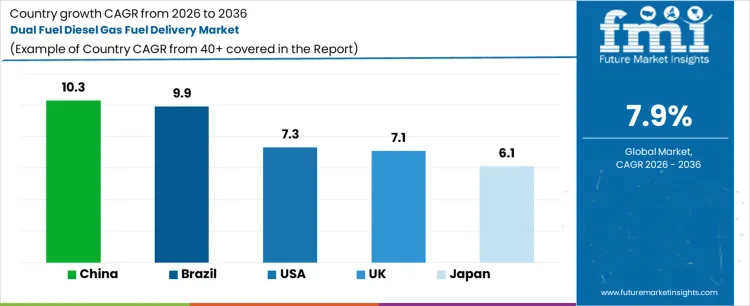
Demand for dual fuel diesel gas fuel delivery systems is rising as vehicle manufacturers and fleet operators seek to improve fuel efficiency, reduce emissions, and enable flexible fuel usage. China leads with a 10.3% CAGR, driven by growing adoption of dual-fuel commercial vehicles, government incentives for cleaner fuels, and expansion of natural gas infrastructure. Brazil follows at 9.9%, supported by extensive dual-fuel vehicle adoption and strong regulatory support for alternative fuels. The USA grows at 7.3%, shaped by pilot programs, fleet integration, and emission reduction initiatives. The UK records 7.1% growth, reflecting adoption in commercial and industrial vehicles. Japan shows 6.1% CAGR, driven by moderate uptake in dual-fuel heavy-duty and public transport vehicles.
How Is the United States Experiencing Growth in the Dual Fuel Diesel Gas Fuel Delivery Market?
United States is experiencing growth at a CAGR of 7.3%, supported by increasing adoption of dual fuel systems in commercial and heavy-duty vehicles to improve fuel efficiency, reduce emissions, and lower operating costs. Automotive OEMs and suppliers are producing fuel delivery components capable of precise diesel and gas injection, ensuring optimal combustion and engine performance. Demand is concentrated in automotive manufacturing hubs, engine assembly plants, and fleet service centers. Investments focus on material durability, injector precision, and system reliability rather than large-scale fleet deployment. Growth reflects regulatory incentives, rising adoption of dual fuel technologies, and efforts to optimize energy efficiency in commercial vehicle fleets.
- Dual fuel vehicle adoption drives growth.
- Fuel delivery components optimize diesel and gas combustion.
- Automotive hubs and assembly plants concentrate demand.
- Material durability and injector precision guide investment.
How Is Japan Witnessing Moderate Adoption Through Energy Efficiency Programs?
Japan is witnessing growth at a CAGR of 6.1%, supported by adoption of dual fuel diesel-gas systems in passenger and commercial vehicles to reduce fuel consumption and emissions. Automotive OEMs and suppliers are implementing fuel delivery components designed for precise dual fuel metering, reliable performance, and durability under variable operating conditions. Demand is concentrated in automotive manufacturing hubs, engine assembly centers, and pilot projects. Investments prioritize injector reliability, material compatibility, and operational precision rather than fleet expansion. Growth reflects regulatory focus, fleet efficiency initiatives, and gradual integration of alternative fuel technologies in domestic vehicles.
- Energy efficiency programs drive adoption.
- Fuel delivery components provide precise dual fuel control.
- Automotive hubs and assembly centers concentrate demand.
- Injector reliability and material compatibility guide investment.
How Is China Experiencing Rapid Growth With Dual Fuel Fleet Expansion?
China is experiencing rapid growth at a CAGR of 10.3%, fueled by adoption of dual fuel diesel-gas systems in commercial and passenger vehicles to reduce emissions and optimize fuel efficiency. Automotive OEMs and suppliers are deploying high-precision fuel delivery components capable of handling diesel and gas injection for stable combustion and engine performance. Demand is concentrated in automotive manufacturing hubs, engine assembly plants, and industrial vehicle centers. Investments focus on component durability, system precision, and material compatibility rather than fleet expansion. Growth reflects fleet modernization programs, regulatory support, and rising adoption of dual fuel technologies in large-scale automotive production.
- Fleet expansion drives adoption.
- Fuel delivery components optimize diesel and gas combustion.
- Automotive hubs and manufacturing centers concentrate demand.
- Component durability and system precision guide investment.
How Is the United Kingdom Growing With Alternative Fuel Adoption?
United Kingdom is growing at a CAGR of 7.1%, supported by adoption of dual fuel diesel-gas fuel delivery components in passenger and commercial vehicles to enhance fuel efficiency and reduce emissions. OEMs and suppliers are providing injectors, fuel rails, and pumps designed for precise dual fuel metering, durability, and reliable engine performance. Demand is concentrated in automotive manufacturing hubs, engine assembly plants, and pilot programs. Investments prioritize material quality, system reliability, and operational precision rather than fleet-scale expansion. Growth reflects adoption of alternative fuel technologies, emission regulation compliance, and optimization of diesel-gas combustion in commercial and passenger fleets.
- Alternative fuel adoption drives growth.
- Fuel delivery components ensure precise dual fuel combustion.
- Automotive hubs and assembly plants concentrate demand.
- Material quality and system reliability guide investment.
How Is Brazil Experiencing Rapid Growth With Dual Fuel Vehicle Integration?
Brazil is experiencing growth at a CAGR of 9.9%, fueled by adoption of dual fuel diesel-gas systems in commercial and passenger vehicles to improve operational efficiency, reduce fuel costs, and lower emissions. Automotive OEMs and suppliers are deploying fuel delivery components capable of precise diesel and gas injection for optimized combustion and long-term engine performance. Demand is concentrated in automotive manufacturing hubs, engine assembly plants, and fleet service centers. Investments focus on injector durability, system reliability, and material compatibility rather than fleet expansion. Growth reflects widespread adoption of alternative fuels, fleet modernization programs, and government incentives for low-emission vehicle technologies.
- Dual fuel vehicle adoption drives growth.
- Fuel delivery components optimize diesel-gas combustion.
- Automotive hubs and assembly plants concentrate demand.
- Injector durability and system reliability guide investment.
Who Competes in the Dual Fuel Diesel Gas Fuel Delivery Market and What Defines Their Capabilities?
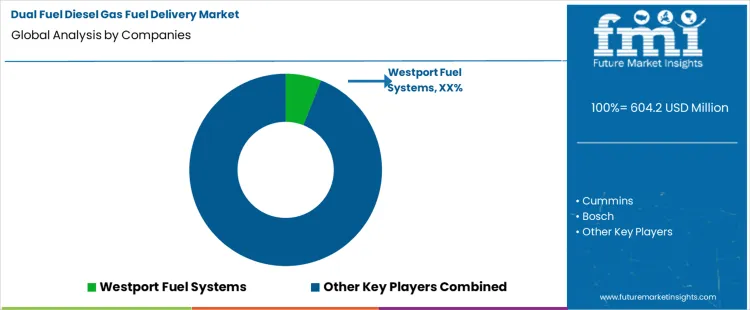
Competition in the dual fuel diesel gas fuel delivery market centers on fuel system architecture, control precision, and materials compatibility with high pressure gas and diesel blends. Westport Fuel Systems specializes in dual fuel modules engineered to manage gas to diesel substitution while maintaining fuel metering stability for heavy duty applications. Cummins integrates dual fuel delivery systems within its larger engine platforms, focusing on combustion control and emission targets. Bosch supplies high precision injectors and rails adapted for dual media operation with pressure control calibrated to engine management systems. Denso develops compact delivery components designed for thermal stability and durability under varied gas diesel conditions.
Hexagon Agility provides modular dual fuel systems aligned with compressed natural gas and renewable gas compatibility standards. BorgWarner focuses on gas diesel delivery modules integrated with emissions oriented control solutions. Continental delivers adaptable fuel rails and metering units that manage transition between gas and liquid fuels. Eaton supplies engineered delivery system components that balance pressure and flow rates in dual fuel applications. Parker Hannifin contributes fluid connectors and valves designed for high pressure gas and diesel interfaces. Weifu High Technology offers cost effective dual fuel delivery variants with regional manufacturing capabilities. Competitive differences arise from precision in managing fuel phase transitions, compatibility with engine control strategies, and resilience of materials under mixed fuel chemical exposure.
Key Players in the Dual Fuel Diesel Gas Fuel Delivery Market
- Westport Fuel Systems
- Cummins
- Bosch
- Denso
- Hexagon Agility
- BorgWarner
- Continental
- Eaton
- Parker Hannifin
- Weifu High-Technology
Scope of the Report
| Items | Values |
|---|---|
| Quantitative Units (2026) | USD million |
| Application | Heavy-Duty Trucks, Off-Highway, Marine, Other |
| Fuel Type | Diesel + CNG, Diesel + LNG, Diesel + Biogas, Other |
| System Component | Gas Metering & Injectors, Dual-Fuel ECUs and Controls, Rails, Lines and Valves, Other |
| Sales Channel | New Build OEM, Conversion,Retrofit, Aftermarket Service, Other |
| Region | Asia Pacific, Europe, North America, Latin America, Middle East & Africa |
| Key Countries Covered | China, Japan, South Korea, India, Australia & New Zealand, Germany, United Kingdom, France, Italy, Spain, Nordic, BENELUX, United States, Canada, Mexico, Brazil, Chile, Kingdom of Saudi Arabia, Other GCC Countries, Turkey, South Africa, Other African Union |
| Key Companies Profiled | Westport Fuel Systems, Cummins, Bosch, Denso, Hexagon Agility, BorgWarner, Continental, Eaton, Parker Hannifin, Weifu High-Technology |
| Additional Attributes | Dollar sales by application, fuel type, and system component; fleet adoption vs retrofit penetration; pressure and material performance for dual-fuel operation; regulatory compliance; regional CAGR and volume/value growth projections |
Dual Fuel Diesel Gas Fuel Delivery Market Segmentation
Application:
- Heavy-Duty Trucks
- Off-Highway
- Marine
- Other
Fuel Type:
- Diesel + CNG
- Diesel + LNG
- Diesel + Biogas
- Other
System Component:
- Gas Metering & Injectors
- Dual-Fuel ECUs and Controls
- Rails, Lines andValves
- Other
Sales Channel:
- New Build OEM
- Conversion, Retrofit
- Aftermarket Service
- Other
Region:
- Asia Pacific
- China
- Japan
- South Korea
- India
- Australia & New Zealand
- ASEAN
- Rest of Asia Pacific
- Europe
- Germany
- United Kingdom
- France
- Italy
- Spain
- Nordic
- BENELUX
- Rest of Europe
- North America
- United States
- Canada
- Mexico
- Latin America
- Brazil
- Chile
- Rest of Latin America
- Middle East & Africa
- Kingdom of Saudi Arabia
- Other GCC Countries
- Turkey
- South Africa
- Other African Union
- Rest of Middle East & Africa
Bibliography
- Tan, H., Othman, M. H. D., Ng, J.-H., Wong, K. Y., et al. (2025). Dual Fuel-Engine Interactions: Effects of Gaseous Fuels on Emissions and Performance. Comprehensive review of diesel + gas fuel combustion strategies and emissions impacts.
- S. Shamkuwar, A. Atmanli, D. Bandyopadhyay, et al. (2025). Experimental investigation on diesel-hydrogen and CNG dual-fuel engine performance and emissions. International Journal of Hydrogen Energy.
- J. Cao et al. (2025). A Review of Marine Dual-Fuel Engine Combustion and Technology. Energies, 18(15). Discusses dual-fuel combustion mechanisms and engine operation under alternative gaseous fuels.
- Marchitto, L., et al. (2024). Retrofit of a Marine Engine to Dual-Fuel Methane–Diesel. Energies. Evaluates retrofitting strategies and emissions reduction from methane-diesel dual-fuel operation.
- MostasharShahidi, S. M. (2024). Strategic optimization of dual-fuel diesel/gas engines for emissions and efficiency. Energy Conversion and Management.
Frequently Asked Questions
How big is the dual fuel diesel gas fuel delivery market in 2026?
The global dual fuel diesel gas fuel delivery market is estimated to be valued at USD 604.2 million in 2026.
What will be the size of dual fuel diesel gas fuel delivery market in 2036?
The market size for the dual fuel diesel gas fuel delivery market is projected to reach USD 1,292.4 million by 2036.
How much will be the dual fuel diesel gas fuel delivery market growth between 2026 and 2036?
The dual fuel diesel gas fuel delivery market is expected to grow at a 7.9% CAGR between 2026 and 2036.
What are the key product types in the dual fuel diesel gas fuel delivery market?
The key product types in dual fuel diesel gas fuel delivery market are heavy-duty trucks, off-highway, marine and other.
Which fuel type segment to contribute significant share in the dual fuel diesel gas fuel delivery market in 2026?
In terms of fuel type, diesel + cng segment to command 54.0% share in the dual fuel diesel gas fuel delivery market in 2026.
Preview the report firsthand - request a free sample
Get SampleGet the brochure for pricing and purchase details.
Get PDFTable of Content
- Executive Summary
- Global Market Outlook
- Demand-side Trends
- Supply-side Trends
- Technology Roadmap Analysis
- Analysis and Recommendations
- Market Overview
- Market Coverage / Taxonomy
- Market Definition / Scope / Limitations
- Market Background
- Market Dynamics
- Drivers
- Restraints
- Opportunity
- Trends
- Scenario Forecast
- Demand in Optimistic Scenario
- Demand in Likely Scenario
- Demand in Conservative Scenario
- Opportunity Map Analysis
- Product Life Cycle Analysis
- Supply Chain Analysis
- Investment Feasibility Matrix
- Value Chain Analysis
- PESTLE and Porter’s Analysis
- Regulatory Landscape
- Regional Parent Market Outlook
- Production and Consumption Statistics
- Import and Export Statistics
- Market Dynamics
- Global Market Analysis 2021 to 2025 and Forecast, 2026 to 2036
- Historical Market Size Value (USD Million) Analysis, 2021 to 2025
- Current and Future Market Size Value (USD Million) Projections, 2026 to 2036
- Y-o-Y Growth Trend Analysis
- Absolute $ Opportunity Analysis
- Global Market Pricing Analysis 2021 to 2025 and Forecast 2026 to 2036
- Global Market Analysis 2021 to 2025 and Forecast 2026 to 2036, By Application
- Introduction / Key Findings
- Historical Market Size Value (USD Million) Analysis By Application , 2021 to 2025
- Current and Future Market Size Value (USD Million) Analysis and Forecast By Application , 2026 to 2036
- Heavy-Duty Trucks
- Off-Highway
- Marine
- Other
- Heavy-Duty Trucks
- Y-o-Y Growth Trend Analysis By Application , 2021 to 2025
- Absolute $ Opportunity Analysis By Application , 2026 to 2036
- Global Market Analysis 2021 to 2025 and Forecast 2026 to 2036, By Fuel Type
- Introduction / Key Findings
- Historical Market Size Value (USD Million) Analysis By Fuel Type, 2021 to 2025
- Current and Future Market Size Value (USD Million) Analysis and Forecast By Fuel Type, 2026 to 2036
- Diesel + CNG
- Diesel + LNG
- Diesel + Biogas
- Other
- Diesel + CNG
- Y-o-Y Growth Trend Analysis By Fuel Type, 2021 to 2025
- Absolute $ Opportunity Analysis By Fuel Type, 2026 to 2036
- Global Market Analysis 2021 to 2025 and Forecast 2026 to 2036, By System Component
- Introduction / Key Findings
- Historical Market Size Value (USD Million) Analysis By System Component, 2021 to 2025
- Current and Future Market Size Value (USD Million) Analysis and Forecast By System Component, 2026 to 2036
- Gas Metering & Injectors
- Dual-Fuel ECUs and Controls
- Rails, Lines and Valves
- Other
- Gas Metering & Injectors
- Y-o-Y Growth Trend Analysis By System Component, 2021 to 2025
- Absolute $ Opportunity Analysis By System Component, 2026 to 2036
- Global Market Analysis 2021 to 2025 and Forecast 2026 to 2036, By Sales Channel
- Introduction / Key Findings
- Historical Market Size Value (USD Million) Analysis By Sales Channel, 2021 to 2025
- Current and Future Market Size Value (USD Million) Analysis and Forecast By Sales Channel, 2026 to 2036
- New Build OEM
- Conversion, Retrofit
- Aftermarket Service
- Other
- New Build OEM
- Y-o-Y Growth Trend Analysis By Sales Channel, 2021 to 2025
- Absolute $ Opportunity Analysis By Sales Channel, 2026 to 2036
- Global Market Analysis 2021 to 2025 and Forecast 2026 to 2036, By Region
- Introduction
- Historical Market Size Value (USD Million) Analysis By Region, 2021 to 2025
- Current Market Size Value (USD Million) Analysis and Forecast By Region, 2026 to 2036
- North America
- Latin America
- Western Europe
- Eastern Europe
- East Asia
- South Asia and Pacific
- Middle East & Africa
- Market Attractiveness Analysis By Region
- North America Market Analysis 2021 to 2025 and Forecast 2026 to 2036, By Country
- Historical Market Size Value (USD Million) Trend Analysis By Market Taxonomy, 2021 to 2025
- Market Size Value (USD Million) Forecast By Market Taxonomy, 2026 to 2036
- By Country
- USA
- Canada
- Mexico
- By Application
- By Fuel Type
- By System Component
- By Sales Channel
- By Country
- Market Attractiveness Analysis
- By Country
- By Application
- By Fuel Type
- By System Component
- By Sales Channel
- Key Takeaways
- Latin America Market Analysis 2021 to 2025 and Forecast 2026 to 2036, By Country
- Historical Market Size Value (USD Million) Trend Analysis By Market Taxonomy, 2021 to 2025
- Market Size Value (USD Million) Forecast By Market Taxonomy, 2026 to 2036
- By Country
- Brazil
- Chile
- Rest of Latin America
- By Application
- By Fuel Type
- By System Component
- By Sales Channel
- By Country
- Market Attractiveness Analysis
- By Country
- By Application
- By Fuel Type
- By System Component
- By Sales Channel
- Key Takeaways
- Western Europe Market Analysis 2021 to 2025 and Forecast 2026 to 2036, By Country
- Historical Market Size Value (USD Million) Trend Analysis By Market Taxonomy, 2021 to 2025
- Market Size Value (USD Million) Forecast By Market Taxonomy, 2026 to 2036
- By Country
- Germany
- UK
- Italy
- Spain
- France
- Nordic
- BENELUX
- Rest of Western Europe
- By Application
- By Fuel Type
- By System Component
- By Sales Channel
- By Country
- Market Attractiveness Analysis
- By Country
- By Application
- By Fuel Type
- By System Component
- By Sales Channel
- Key Takeaways
- Eastern Europe Market Analysis 2021 to 2025 and Forecast 2026 to 2036, By Country
- Historical Market Size Value (USD Million) Trend Analysis By Market Taxonomy, 2021 to 2025
- Market Size Value (USD Million) Forecast By Market Taxonomy, 2026 to 2036
- By Country
- Russia
- Poland
- Hungary
- Balkan & Baltic
- Rest of Eastern Europe
- By Application
- By Fuel Type
- By System Component
- By Sales Channel
- By Country
- Market Attractiveness Analysis
- By Country
- By Application
- By Fuel Type
- By System Component
- By Sales Channel
- Key Takeaways
- East Asia Market Analysis 2021 to 2025 and Forecast 2026 to 2036, By Country
- Historical Market Size Value (USD Million) Trend Analysis By Market Taxonomy, 2021 to 2025
- Market Size Value (USD Million) Forecast By Market Taxonomy, 2026 to 2036
- By Country
- China
- Japan
- South Korea
- By Application
- By Fuel Type
- By System Component
- By Sales Channel
- By Country
- Market Attractiveness Analysis
- By Country
- By Application
- By Fuel Type
- By System Component
- By Sales Channel
- Key Takeaways
- South Asia and Pacific Market Analysis 2021 to 2025 and Forecast 2026 to 2036, By Country
- Historical Market Size Value (USD Million) Trend Analysis By Market Taxonomy, 2021 to 2025
- Market Size Value (USD Million) Forecast By Market Taxonomy, 2026 to 2036
- By Country
- India
- ASEAN
- Australia & New Zealand
- Rest of South Asia and Pacific
- By Application
- By Fuel Type
- By System Component
- By Sales Channel
- By Country
- Market Attractiveness Analysis
- By Country
- By Application
- By Fuel Type
- By System Component
- By Sales Channel
- Key Takeaways
- Middle East & Africa Market Analysis 2021 to 2025 and Forecast 2026 to 2036, By Country
- Historical Market Size Value (USD Million) Trend Analysis By Market Taxonomy, 2021 to 2025
- Market Size Value (USD Million) Forecast By Market Taxonomy, 2026 to 2036
- By Country
- Kingdom of Saudi Arabia
- Other GCC Countries
- Turkiye
- South Africa
- Other African Union
- Rest of Middle East & Africa
- By Application
- By Fuel Type
- By System Component
- By Sales Channel
- By Country
- Market Attractiveness Analysis
- By Country
- By Application
- By Fuel Type
- By System Component
- By Sales Channel
- Key Takeaways
- Key Countries Market Analysis
- USA
- Pricing Analysis
- Market Share Analysis, 2025
- By Application
- By Fuel Type
- By System Component
- By Sales Channel
- Canada
- Pricing Analysis
- Market Share Analysis, 2025
- By Application
- By Fuel Type
- By System Component
- By Sales Channel
- Mexico
- Pricing Analysis
- Market Share Analysis, 2025
- By Application
- By Fuel Type
- By System Component
- By Sales Channel
- Brazil
- Pricing Analysis
- Market Share Analysis, 2025
- By Application
- By Fuel Type
- By System Component
- By Sales Channel
- Chile
- Pricing Analysis
- Market Share Analysis, 2025
- By Application
- By Fuel Type
- By System Component
- By Sales Channel
- Germany
- Pricing Analysis
- Market Share Analysis, 2025
- By Application
- By Fuel Type
- By System Component
- By Sales Channel
- UK
- Pricing Analysis
- Market Share Analysis, 2025
- By Application
- By Fuel Type
- By System Component
- By Sales Channel
- Italy
- Pricing Analysis
- Market Share Analysis, 2025
- By Application
- By Fuel Type
- By System Component
- By Sales Channel
- Spain
- Pricing Analysis
- Market Share Analysis, 2025
- By Application
- By Fuel Type
- By System Component
- By Sales Channel
- France
- Pricing Analysis
- Market Share Analysis, 2025
- By Application
- By Fuel Type
- By System Component
- By Sales Channel
- India
- Pricing Analysis
- Market Share Analysis, 2025
- By Application
- By Fuel Type
- By System Component
- By Sales Channel
- ASEAN
- Pricing Analysis
- Market Share Analysis, 2025
- By Application
- By Fuel Type
- By System Component
- By Sales Channel
- Australia & New Zealand
- Pricing Analysis
- Market Share Analysis, 2025
- By Application
- By Fuel Type
- By System Component
- By Sales Channel
- China
- Pricing Analysis
- Market Share Analysis, 2025
- By Application
- By Fuel Type
- By System Component
- By Sales Channel
- Japan
- Pricing Analysis
- Market Share Analysis, 2025
- By Application
- By Fuel Type
- By System Component
- By Sales Channel
- South Korea
- Pricing Analysis
- Market Share Analysis, 2025
- By Application
- By Fuel Type
- By System Component
- By Sales Channel
- Russia
- Pricing Analysis
- Market Share Analysis, 2025
- By Application
- By Fuel Type
- By System Component
- By Sales Channel
- Poland
- Pricing Analysis
- Market Share Analysis, 2025
- By Application
- By Fuel Type
- By System Component
- By Sales Channel
- Hungary
- Pricing Analysis
- Market Share Analysis, 2025
- By Application
- By Fuel Type
- By System Component
- By Sales Channel
- Kingdom of Saudi Arabia
- Pricing Analysis
- Market Share Analysis, 2025
- By Application
- By Fuel Type
- By System Component
- By Sales Channel
- Turkiye
- Pricing Analysis
- Market Share Analysis, 2025
- By Application
- By Fuel Type
- By System Component
- By Sales Channel
- South Africa
- Pricing Analysis
- Market Share Analysis, 2025
- By Application
- By Fuel Type
- By System Component
- By Sales Channel
- USA
- Market Structure Analysis
- Competition Dashboard
- Competition Benchmarking
- Market Share Analysis of Top Players
- By Regional
- By Application
- By Fuel Type
- By System Component
- By Sales Channel
- Competition Analysis
- Competition Deep Dive
- Westport Fuel Systems
- Overview
- Product Portfolio
- Profitability by Market Segments (Product/Age /Sales Channel/Region)
- Sales Footprint
- Strategy Overview
- Marketing Strategy
- Product Strategy
- Channel Strategy
- Cummins
- Bosch
- Denso
- Hexagon Agility
- BorgWarner
- Continental
- Eaton
- Parker Hannifin
- Weifu High-Technology
- Westport Fuel Systems
- Competition Deep Dive
- Assumptions & Acronyms Used
- Research Methodology


