

- Industry Size (2026)
- USD 460.0 Mn
- Forecast (2036)
- USD 2100 Mn
- CAGR (2026 to 2036)
- 16.40%
Neuromodulation Closed-Loop Brain-Computer Interfaces Market Size, Market Forecast and Outlook By FMI
The neuromodulation closed-loop brain-computer interfaces market was valued at USD 390.0 million in 2025. The industry is set to cross USD 460.0 million in 2026 at a CAGR of 16.40% during the forecast period. Ongoing funding fuels the invasive BCI market size to USD 2,100 million through 2036 as real-time adaptive neurostimulation switches from clinical observation tools to real-time therapeutic triggers capable of autonomous modulation.
Neurology department heads and surgical directors are no longer evaluating hardware durability in isolation; they are being forced to assess longitudinal algorithm upgradeability. The decision leads to a transition from purchasing a static stimulation device to selecting a proprietary data ecosystem that can interpret biomarker telemetry over a patient's lifetime. Hospitals that lock into closed architectures risk stranding their surgical patients on legacy brain computer interface platforms that cannot integrate next-generation predictive AI updates. The cost of replacing an implanted hardware suite due to software obsolescence alters procurement math.
Summary of Neuromodulation Closed-Loop Brain-Computer Interfaces Market
- Neuromodulation Closed-Loop Brain-Computer Interfaces Market Definition:
- This market consists of bidirectional neural interface devices that sense physiological biomarkers, decode them algorithmically, and deliver autonomous, precisely timed electrical stimulation to manage neurological disorders or restore lost communication pathways.
- Demand Drivers in the Market:
- The limitations of continuous open-loop stimulation compel functional neurosurgeons to seek adaptive systems that prevent neural habituation and reduce off-target side effects.
- The accumulation of longitudinal patient neurodata forces clinical algorithm developers to deploy machine learning updates that refine stimulation parameters without requiring surgical hardware replacement.
- High rates of pharmaceutical failure in specific neurological cohorts obligate payer networks to authorize advanced implantable medical neurotechnology interventions to curb the total long-term cost of care.
- Key Segments Analyzed in the FMI Report:
- Implantable responsive neurostimulation systems: Implantable responsive neurostimulation systems are expected to hold 41.0% share in 2026, driven by their established clinical efficacy and primary integration into existing epilepsy treatment paradigms.
- Sensing + adaptive stimulation closed-loop systems: Sensing + adaptive stimulation closed-loop systems are projected to account for 46.0% in 2026, as hardware manufacturers transition legacy product lines to bidirectional architectures.
- Drug-resistant epilepsy: Drug-resistant epilepsy is estimated to grab 35.0% share in 2026, supported by robust clinical guidelines recommending surgical evaluation for medically refractory patients.
- Tertiary neurology and neurosurgery centers: Tertiary neurology and neurosurgery centers are poised to hold 52.0% share in 2026, owing to the concentration of specialized surgical expertise required for device placement.
- Commercial therapy platforms: Commercial therapy platforms are likely to record 57.0% share in 2026, representing the transition of first-generation adaptive technology out of clinical trials.
- India: 19.4% compound growth, propelled by the rapid expansion of specialized neurosurgical capacity from a previously constrained baseline.
- Analyst Opinion at FMI:
- Sabyasachi Ghosh, Principal Analyst, Healthcare, at FMI, estimates, "While the broader technology sector expects a rapid consumerization of the neuroprosthetics market, the clock runs entirely on the accumulation of longitudinal safety data, not engineering speed. Hospitals are implanting systems that generate gigabytes of neural telemetry daily, yet they lack the clinical workflow integration to utilize it. The competitive advantage belongs to manufacturers who can parse that data into actionable insights for the physician, rather than simply delivering smaller electrodes."
- Strategic Implications / Executive Takeaways:
- Product development directors must prioritize seamless cloud telemetry integration to ensure clinical data translates into algorithmic refinement without burdening physician workflows.
- Clinical trial managers should design early feasibility studies to capture health economic outcomes alongside safety data to accelerate downstream payer coverage decisions.
- Hospital procurement committees face the necessity of standardizing interoperable neurodata platforms to avoid fragmented, vendor-locked patient management ecosystems.
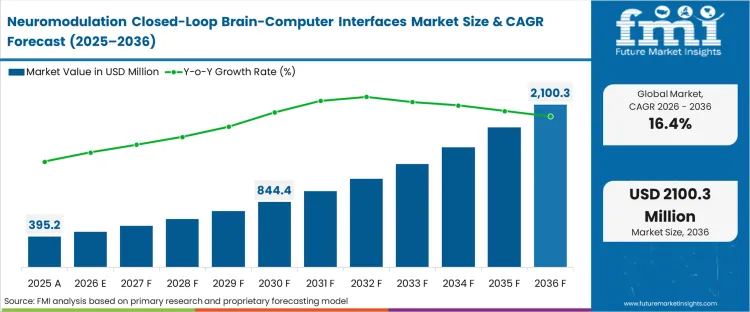
Before adoption scales beyond tertiary academic centers, the industry must clear a specific reimbursement threshold: the creation of discrete billing codes for algorithm-driven therapy adjustment. Currently, clinical programming sessions require intensive epileptologist or neurologist oversight. Once autonomous closed-loop neurostimulation market protocols achieve distinct payer coverage, the staffing bottleneck limiting patient throughput will dissolve, accelerating commercial volume.
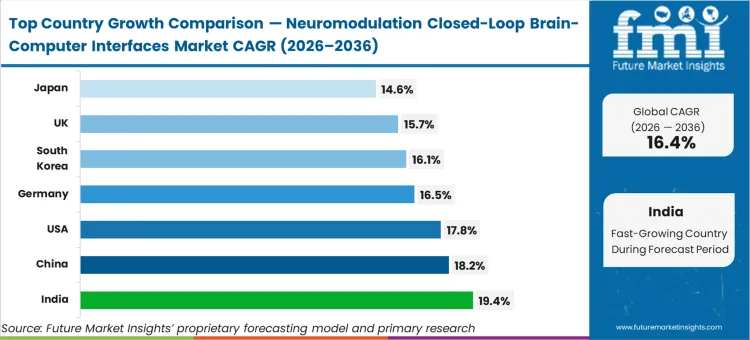
India and China are anticipated to expand at 19.4% and 18.2% respectively, driven by rapid capacity additions in neurosurgical infrastructure from a smaller installed base. The United States is poised to track at 17.8%, maintaining its position as the primary commercialisation anchor due to dominant domestic revenue concentrations for early adaptive systems. South Korea is estimated to advance at 16.1%, while Germany and the United Kingdom are set to record 16.5% and 15.7% respectively. Japan follows at 14.6%. The divergence across these markets reflects the varying speeds at which national healthcare systems convert early feasibility clinical trial sites into broad commercial therapy centers.
Neuromodulation Closed-Loop Brain-Computer Interfaces Market Key Takeaways
| Metric | Details |
|---|---|
| Industry Size (2026) | USD 460.0 million |
| Industry Value (2036) | USD 2,100 million |
| CAGR (2026-2036) | 16.40% |
Neuromodulation Closed-Loop Brain-Computer Interfaces Market Definition
The neuromodulation closed-loop BCI market encompasses active medical devices and associated software that continuously record neural activity, decode physiological biomarkers in real-time, and autonomously deliver targeted electrical stimulation to alter neurological function. Unlike traditional open-loop pacemakers, these sensing and stimulation neural interface systems form a bidirectional communication loop with the nervous system, adapting their therapeutic output dynamically based on the patient's immediate neurophysiological state.
Neuromodulation Closed-Loop Brain-Computer Interfaces Market Inclusions
Scope incorporates implantable responsive neurostimulation arrays, adaptive deep brain stimulation market hardware with sensing capabilities, endovascular brain-computer interface arrays, and high-density cortical interface implant market systems intended for therapeutic neuromodulation or severe motor impairment communication. Associated telemetry hardware, external patient programmers, physician control interfaces, and the recurring software licensing integral to brain computer interface implant functionality are included in the valuation.
Neuromodulation Closed-Loop Brain-Computer Interfaces Market Exclusions
The market explicitly excludes traditional open-loop deep brain stimulators, vagus nerve stimulators without concurrent biosignal recording, and purely diagnostic electroencephalography (EEG) mapping arrays. External devices are excluded when comparing an invasive vs non-invasive brain-computer interface because non-invasive options lack the high-fidelity, internal telemetry required for autonomous, microsecond-level closed-loop therapeutic adjustment. Furthermore, thought-controlled implants utilized strictly for non-medical consumer applications or cognitive enhancement fall outside the clinical scope of this analysis.
Neuromodulation Closed-Loop Brain-Computer Interfaces Market Research Methodology
- Primary Research: FMI conducted structured interviews with functional neurosurgeons, directors of level 4 epilepsy centers, and medical device procurement heads at tertiary neurorehabilitation institutes.
- Desk Research: Analysts aggregated data from premarket approval (PMA) summaries, investigational device exemption (IDE) trial registries, and reimbursement policy updates from major public and private payers.
- Market-Sizing and Forecasting: The baseline valuation anchors to the verified commercial placement volumes of early-generation responsive neurostimulation and adaptive DBS systems, scaled against eligible refractory patient populations to project the total brain-computer interface market size.
- Data Validation and Update Cycle: Forecasts were triangulated against the capital expenditure allocations of specialized neurology centers and the manufacturing scale-up timelines published by dominant neurotech original equipment manufacturers.
Segmental Analysis
Neuromodulation Closed-Loop Brain-Computer Interfaces Market Analysis by Device Modality
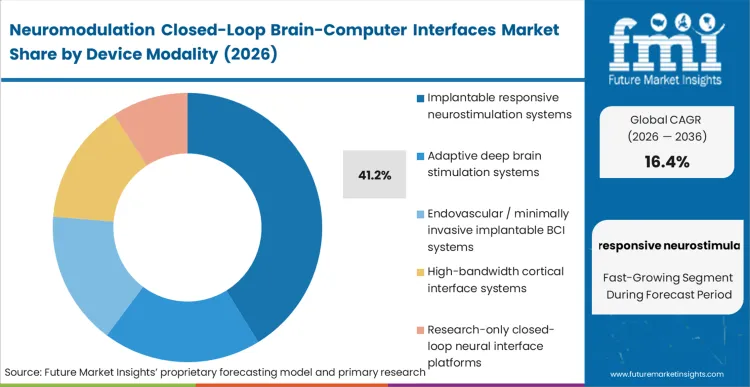
The reason implantable responsive neurostimulation systems hold 41.0% of this market is rooted in the physiological requirements of therapy triggering. External, non-invasive sensing cannot deliver the single-neuron or localised field potential resolution required to identify a pre-ictal state before clinical manifestation. According to FMI's estimates, functional neurosurgeons rely on these systems because they offer the only verified method for intervening at the microsecond timescale required to abort a focal seizure. The decision process for these buyers centers heavily on the longevity of the implantable power source and the density of the recording array. Hospitals that select systems with inferior battery chemistry force their patients into premature battery replacement surgeries, exposing the institution to increased surgical risk and patient dissatisfaction. By prioritizing high-density, low-power continuous recording, modern neurostimulation hardware reduces the necessity for invasive revision procedures.
- Trigger threshold: The precise identification of abnormal neural oscillations dictates the initial surgical specification for the responsive neurostimulation market. Surgeons who lack confidence in the device's sensing fidelity will revert to open-loop alternatives, sacrificing efficacy.
- Telemetry bandwidth: The capacity to transmit high-resolution neural data to an external programmer validates the initial hardware choice during the post-operative tuning phase. Insufficient bandwidth results in incomplete clinical pictures and delayed therapeutic optimization.
- Electrode durability: The material integrity of the microelectrode array over a decade of continuous stimulation drives hospital re-ordering and contract expansion. Systems that exhibit impedance drift or fibrous encapsulation fail to capture lifetime patient value.
Neuromodulation Closed-Loop Brain-Computer Interfaces Market Analysis by Signal and Control Architecture
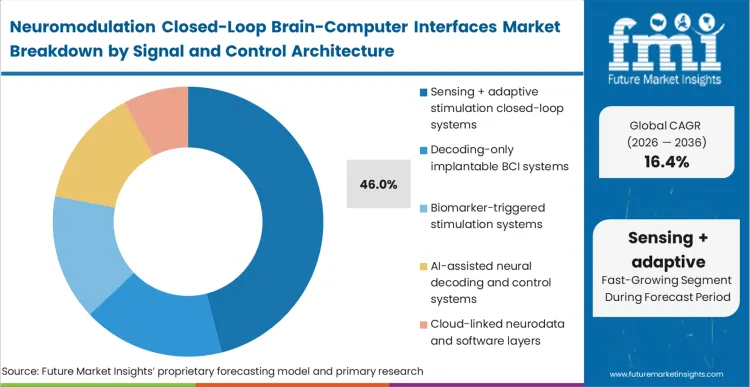
Sensing + adaptive stimulation closed-loop systems capture 46.0% share by changing what happens during the patient's daily life, switching therapy from a static prescription to a dynamic physiological response. Legacy continuous stimulation forces a compromise: deliver enough energy to suppress symptoms during peak severity, which inevitably causes dysarthria or battery drain during periods of low disease activity. Based on FMI's assessment, adaptive architectures solve this by throttling energy output based on real-time beta band activity or other specific neural markers. Movement disorder specialists mandate this architecture because it provides an objective, quantified measurement of disease state rather than relying on subjective patient diaries. If a clinical team delays transitioning to biomarker-triggered neurostimulation architectures, they commit their practice to high-frequency, manual programming adjustments that consume valuable outpatient clinic time.
- Biomarker decoding: Identifying distinct neural signatures, such as excessive beta oscillations in Parkinson's, provides the foundational mechanism for adaptive intervention. This reduces the cognitive and time burden on the programming clinician.
- Algorithmic latency: The speed at which the system processes a sensed biomarker and adjusts stimulation parameters must outpace the clinical manifestation of the symptom. High latency renders the closed-loop system functionally equivalent to an open-loop deep brain stimulator.
- Firmware upgradeability: The ability to push refined AI-assisted neural decoding market algorithms to the implanted device without surgical intervention determines the system's long-term lifecycle cost. Platforms lacking over-the-air refinement capabilities become rapidly obsolete.
Neuromodulation Closed-Loop Brain-Computer Interfaces Market Analysis by Indication
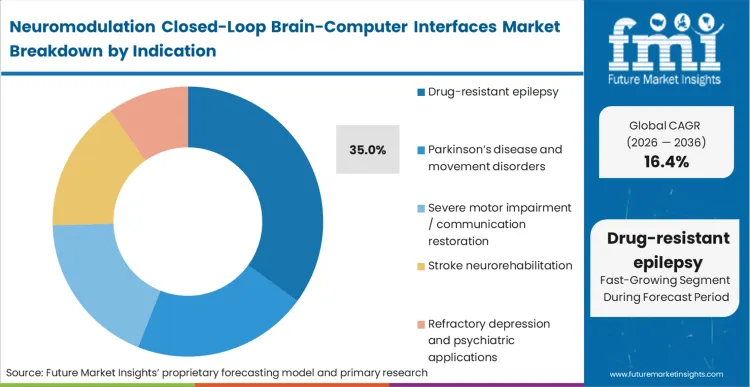
Drug-resistant epilepsy represents 35.0% of the market because it possesses the most established diagnostic pathway leading directly to a surgical intervention decision. When a patient fails two appropriately chosen and tolerated antiseizure medications, the clinical protocol definitively moves from pharmaceutical management to surgical evaluation. FMI analysts opine that this clear procedural trigger creates a predictable patient funnel that BCI for Parkinson’s symptom control and psychiatric indications have not yet fully replicated. Epileptologists utilize closed-loop systems not merely to stop seizures, but to map the epileptogenic zone chronically, gathering data that informs long-term care. Clinical centers that delay the integration of brain-computer interface for epilepsy therapies often lose referrals to comprehensive level 4 epilepsy centers that offer the complete spectrum of advanced interventions within the epilepsy device market.
- Refractory progression: The failure of conventional pharmacological management acts as the primary forcing function pushing patients toward surgical neuromodulation. This ensures a steady pipeline of eligible candidates for specialized centers targeting BCI for drug-resistant epilepsy.
- Surgical mapping: The chronic electrocorticography data provided by the implant reduces the need for repeated, invasive inpatient monitoring stays. This clears hospital bed bottlenecks and lowers the total cost of episodic care.
- Symptom abortion: The immediate delivery of abortive stimulation prior to the clinical onset of a seizure alters the patient's daily operational capability. Centers delivering this outcome command the highest regional referral volumes.
Neuromodulation Closed-Loop Brain-Computer Interfaces Market Analysis by End User
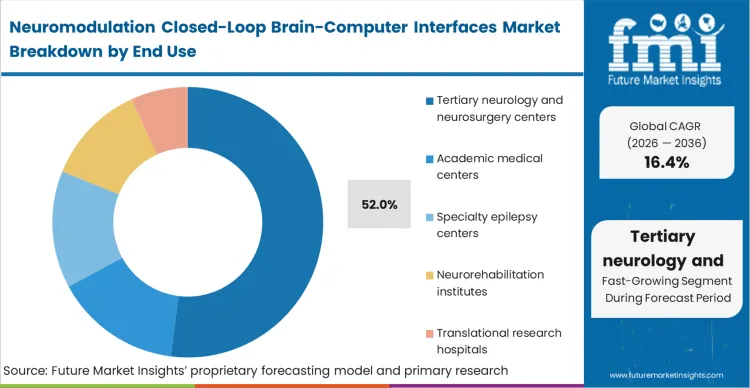
Tertiary neurology and neurosurgery centers hold 52.0% of the market because the deployment of closed-loop interfaces requires a multidisciplinary infrastructure that smaller hospitals cannot sustain. The placement of high-bandwidth cortical arrays or adaptive depth electrodes demands not only stereotactic surgical precision but also dedicated neurophysiologists capable of interpreting real-time data during the procedure. In FMI's view, the capital required to maintain functional neurosurgery suites, combined with the specialized clinical staff needed for post-operative algorithmic tuning, naturally concentrates adoption at the apex of the healthcare system. Community hospitals attempting to adopt these non-invasive brain stimulation system alternatives often lack the necessary follow-up infrastructure, leading to suboptimal patient outcomes. Institutions failing to centralize this expertise risk compromising their status as regional neurological hubs within the neurology device market.
- Surgical infrastructure: The availability of intraoperative MRI and robotic stereotactic guidance systems limits the pool of capable implanting facilities for the medical brain implants market. This centralizes vendor procurement power among a select group of high-volume buyers.
- Multidisciplinary staffing: The requirement for coordinated care between functional neurosurgeons, epileptologists, and dedicated device programmers creates a high barrier to entry. Centers that build these teams secure long-term patient retention.
- Referral consolidation: The complexity of managing chronic, algorithm-driven therapy forces community neurologists to refer complex cases to specialized tertiary centers. This dynamic ensures sustained patient volume for institutions investing in advanced neuromodulation capabilities.
Neuromodulation Closed-Loop Brain-Computer Interfaces Market Analysis by Commercialization Stage
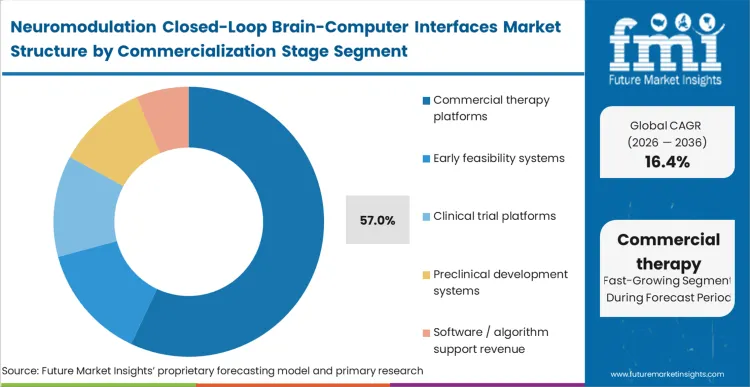
The dominance of commercial therapy platforms at 57.0% share underscores the transition of adaptive neurotechnology from experimental validation to standard-of-care implementation. As per FMI's projection, hospital procurement committees are prioritizing systems with established reimbursement codes and long-term safety profiles over early-stage, theoretical platforms. While early feasibility systems targeting BCI for paralysis communication garner significant attention, the reliable revenue streams are generated by platforms addressing prevalent conditions like Parkinson's and epilepsy through established surgical pathways. Vendors offering purely experimental platforms struggle to penetrate standard hospital purchasing cycles until they can demonstrate definitive health economic advantages over existing therapies. Delaying the transition from clinical trial status to full commercial deployment starves emerging manufacturers of the capital necessary to fund subsequent software iterations.
- Payer coverage: The establishment of discrete billing codes for device implantation and algorithmic programming dictates the speed of widespread adoption. Manufacturers must secure these codes to transition from clinical trial funding to recurring commercial revenue.
- Safety registries: The accumulation of real-world safety and efficacy data over thousands of implant months reduces the perceived risk for conservative surgical adoption. This data serves as the primary tool for expanding closed-loop BCI applications across implantable BCI clinical trials.
- Platform interoperability: The integration of proprietary device data into standard electronic health record (EHR) systems determines the platform's ultimate ceiling within a hospital network. Systems that create isolated data silos face significant resistance from hospital IT procurement.
Neuromodulation Closed-Loop Brain-Computer Interfaces Market Drivers, Restraints, and Opportunities
The accumulation of chronic neural data forces clinical algorithm developers and medical device manufacturers to deploy machine learning updates that refine stimulation parameters without requiring surgical hardware replacement. This pressure requires software engineering teams to design implantable platforms with significant excess processing capacity and secure, bidirectional telemetry. Hospitals investing in these systems are essentially purchasing a forward-compatible therapy platform, moving their capital expenditure from static hardware to dynamic, evolving algorithms. Institutions that fail to secure upgradable systems face the commercial penalty of performing costly, invasive revision surgeries to deliver next-generation therapeutic benefits to their patients.
The single biggest operational friction slowing adoption is the clinical workflow burden of reviewing and acting upon massive volumes of raw neural telemetry. The sheer density of data generated by continuous, high-bandwidth implantable neurostimulator electrode arrays overwhelms the standard 15-minute outpatient neurology consult. This is a barrier because physician reimbursement models are currently built around episodic evaluation, not continuous data monitoring. While manufacturers are introducing AI-assisted summary dashboards, these tools remain rudimentary and often lack the specific diagnostic validation required to entirely replace physician review, creating a persistent bottleneck in clinical scaling.
Opportunities in the Neuromodulation Closed-Loop Brain-Computer Interfaces Market
- Cloud-based neurodata analytics: The necessity to process gigabytes of patient telemetry off-board creates an opening for secure cloud infrastructure. Health IT vendors who build compliant platforms enable neurologists to manage larger patient panels efficiently.
- Ambulatory biomarker monitoring: The ability to track disease progression continuously outside the clinic allows for earlier intervention in degenerative conditions. Contract research organizations capture this value by utilizing brain monitoring data to streamline pharmaceutical clinical trials.
- Indication expansion: The modularity of adaptive stimulation algorithms permits manufacturers to apply existing hardware to new psychiatric or cognitive indications. Device OEMs capture significant market share by securing supplemental approvals for BCI for depression treatment or BCI for stroke rehabilitation within the broader neurorehabilitation technology market without re-engineering their core hardware.
Regional Analysis
Regional evaluation places the Neuromodulation Closed-Loop Brain-Computer Interfaces market into four key areas, North America, Europe, Asia Pacific, and the rest of the world, encompassing more than 40 countries.
.webp "Top Country Growth Comparison Neuromodulation Closed Loop Brain Computer Interfaces Market Cagr (2026 2036)")
| Country | CAGR (2026 to 2036) |
|---|---|
| India | 19.4% |
| China | 18.2% |
| United States | 17.8% |
| Germany | 16.5% |
| South Korea | 16.1% |
| United Kingdom | 15.7% |
| Japan | 14.6% |
North America Neuromodulation Closed-Loop Brain-Computer Interfaces Market Analysis
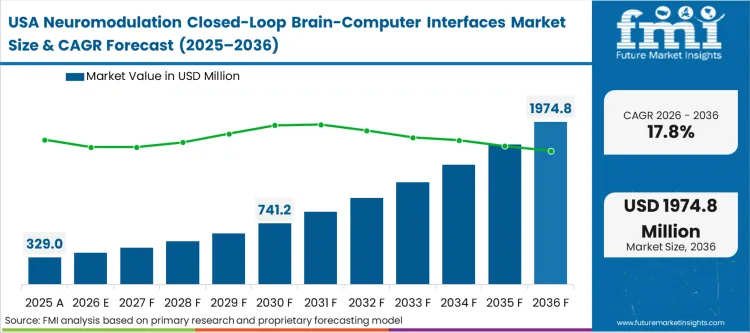
The regulatory environment in North America, specifically the established pathways for breakthrough device designation and premarket approval, defines the commercial trajectory of closed-loop systems. According to FMI's estimates, the presence of dominant domestic manufacturers ensures that the region serves as the primary launchpad for early adaptive technologies. The ecosystem is characterized by a strong alignment between venture capital funding, translational academic research, and clear, albeit complex, reimbursement frameworks. This alignment allows brain monitoring system innovations to transition from academic laboratories to commercial surgical suites more rapidly than in regions requiring extensive, parallel national health technology assessments.
- United States: FMI estimates the United States market to expand at an annual growth rate of 17.8%. The concentration of high-volume level 4 epilepsy centers defines the trajectory for the United States closed-loop BCI market. This concentration forces major manufacturers to design their initial commercialization strategies explicitly around the workflow and reimbursement realities of American tertiary hospitals. By capturing the initial wave of adaptive DBS and responsive neurostimulation placements, US-based institutions dictate the global standard for clinical outcome assessments and long-term care protocols.
Europe Neuromodulation Closed-Loop Brain-Computer Interfaces Market Analysis
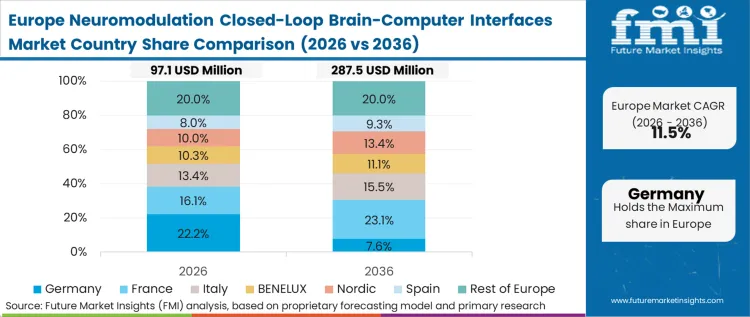
Cost structures and national health technology assessments dominate the adoption logic in the European market. Unlike systems that rapidly adopt new technologies based solely on clinical efficacy, European procurement bodies require robust health economic data proving long-term cost savings. As per FMI's projection, this forces neurotech manufacturers to design extensive post-market clinical follow-up studies to maintain their CE mark and secure national funding. The stringent requirements of the Medical Device Regulation (MDR) have slowed the introduction of novel neurotech devices, inadvertently extending the lifecycle of legacy systems while hospitals wait for next-generation platforms to navigate the certification process.
- Germany: Germany's robust clinical trial infrastructure and strong network of university hospitals enable the rapid execution of early feasibility studies for severe motor impairment interfaces. Researchers operating within the Germany implantable BCI market hold a distinct advantage when validating complex decoding algorithms in highly controlled inpatient settings. Over the forecast period, Germany is set for a CAGR of 16.5%. The clinical data generated within this highly structured environment serves as the benchmark for subsequent pan-European regulatory submissions, positioning German academic centers at the forefront of the continent's neuroprosthetic research.
- United Kingdom: The government guidelines dictate the rigid procurement pathways within the UK, requiring unambiguous evidence of cost-effectiveness before widespread NHS funding is granted. The United Kingdom is poised to track a CAGR of 15.7%. This dynamic forces medical device companies to negotiate complex risk-sharing agreements with the national health service to access the United Kingdom brain-computer interface market. While adoption of premium adaptive systems may trail markets with private insurance models, achieving NICE endorsement unlocks a highly centralized, guaranteed patient volume that stabilizes long-term regional revenue.
Asia Pacific Neuromodulation Closed-Loop Brain-Computer Interfaces Market Analysis
Infrastructure readiness and the rapid expansion of specialized neurosurgical capacity shape the adoption pattern across the Asia Pacific region. Historically reliant on imported technologies, the region is experiencing a surge in domestic investment aimed at establishing sovereign capabilities in neural engineering and advanced bioelectronics. In FMI's view, the vast patient populations suffering from neurological disorders outpace the available clinical specialist capacity, creating an acute need for highly autonomous systems within the neuroprosthetics market that require minimal ongoing physician intervention. The challenge lies in building the stereotactic surgical infrastructure necessary to safely deploy these complex implants outside of a few major metropolitan hubs.
- India: India's rapid expansion of private tertiary healthcare infrastructure forces hospital networks to acquire advanced surgical technologies to differentiate themselves and attract medical tourism. India is expected to see its sector grow at a compound annual rate of 19.4%. The influx of capital into specialised neurology centres allows surgeons to bypass legacy open-loop systems and immediately adopt advanced sensing architectures within the India closed-loop neurotechnology market. The aggressive modernization of these surgical suites establishes India as a critical high-growth node for manufacturers willing to navigate complex local distribution and pricing dynamics.
- China: The push for domestic technological self-reliance under national strategic initiatives accelerates the development and clinical translation of indigenous neural interface platforms in the China brain implant market. Academic and commercial entities collaborate aggressively to build proprietary decoding algorithms tailored to local clinical datasets. A CAGR of 18.2% is expected for China over the forecast period. The rapid scaling of domestic manufacturing capabilities positions Chinese firms to transition from serving local demand to aggressively competing in the broader international neuromodulation arena within the next decade.
- South Korea: South Korea's highly integrated digital health infrastructure and strong domestic semiconductor manufacturing base provide a unique environment for the development of sophisticated telemetry and wireless brain sensors. The South Korean market is likely to post a CAGR of 16.1%. Neurologists leverage this digital maturity to seamlessly integrate continuous neural data streams into patient management workflows across the South Korea implantable neurotech market. This deep integration between consumer-grade digital health ecosystems and clinical-grade neurotechnology creates operational efficiencies that streamline chronic patient monitoring.
- Japan: The Japanese adaptive neurostimulation market is forecast to register a CAGR of 14.6%. Japan's rapidly aging population creates a distinct demographic pressure that mandates the adoption of technologies capable of autonomously managing age-related movement disorders across the Parkinson’s neurotechnology market. The healthcare system prioritizes interventions that reduce the long-term care burden on nursing staff and specialized facilities. The adoption curve here is less about rapid technological experimentation and more about securing reliable, low-maintenance therapeutic solutions that align with the country's stringent safety and quality standards.
FMI's report includes extensive analysis of emerging clinical trial hubs across Latin America and the Middle East, capturing 40 plus countries. The expansion of regulatory harmonization across these regions is gradually lowering the barrier for entry, allowing manufacturers to deploy mature commercial platforms without replicating extensive local clinical trials.
Competitive Aligners for Market Players
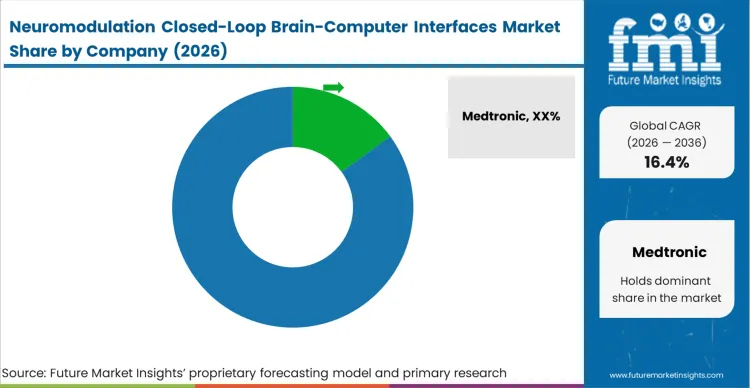
The concentrated nature of the closed-loop neuromodulation market stems from the immense capital requirements and specialized engineering expertise required to cross the regulatory threshold for Class III active implantable devices. Buyers, specifically hospital procurement committees and surgical directors, do not differentiate brain implant companies based on minor hardware specifications; they evaluate based on the maturity and clinical validation of the decoding algorithms. Medtronic and NeuroPace dominate because they possess the largest proprietary datasets of chronic neural recordings, giving them an insurmountable lead in training the machine learning models that dictate therapeutic efficacy.
For challenger implantable BCI manufacturers like Synchron or Precision Neuroscience to replicate this advantage, they must build capabilities in ultra-high-density recording and minimally invasive deployment. It is not sufficient to simply manufacture a functioning electrode array; a challenger must engineer a complete, secure data pipeline that handles the massive telemetry output of smart implants while meeting stringent cybersecurity standards. They must develop novel surgical delivery mechanisms to fundamentally alter the risk-benefit calculation for the implanting neurosurgeon evaluating the best implantable BCI companies.
As the market approaches 2036, the tension lies between large hospital networks seeking interoperable data standards and dominant closed-loop neurotechnology vendors fighting to maintain closed, proprietary ecosystems. Hospitals are increasingly resistant to vendor lock-in that traps patient data within specific proprietary portals, complicating longitudinal research and population health management. However, the market is likely to remain highly concentrated, as the immense regulatory burden of proving safety for next-generation, AI-driven autonomous stimulation will force smaller brain-computer interface technology partners to seek acquisition by established incumbents rather than attempting independent commercialization as standalone closed-loop BCI suppliers.
Key Players in Neuromodulation Closed-Loop Brain-Computer Interfaces Market
- Medtronic
- NeuroPace
- Synchron
- Paradromics
- Precision Neuroscience
- Blackrock Neurotech
- CorTec
Scope of the Report
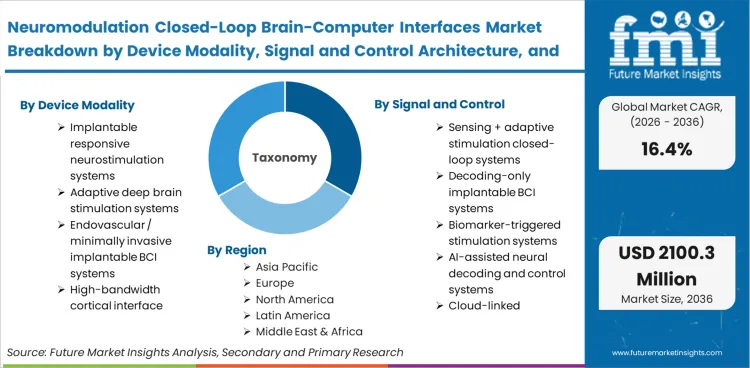
| Metric | Value |
|---|---|
| Quantitative Units | USD 460.0 million to USD 2,100 million, at a CAGR of 16.40% |
| Market Definition | This market encompasses active medical devices and associated software that continuously record neural activity, decode physiological biomarkers in real-time, and autonomously deliver targeted electrical stimulation to alter neurological function. |
| Device Modality Segmentation | Implantable responsive neurostimulation systems, Adaptive deep brain stimulation systems, Endovascular / minimally invasive implantable BCI systems, High-bandwidth cortical interface systems, Research-only closed-loop neural interface platforms |
| Signal and Control Architecture Segmentation | Sensing + adaptive stimulation closed-loop systems, Decoding-only implantable BCI systems, Biomarker-triggered stimulation systems, AI-assisted neural decoding and control systems, Cloud-linked neurodata and software layers |
| Indication Segmentation | Drug-resistant epilepsy, Parkinson’s disease and movement disorders, Severe motor impairment / communication restoration, Stroke neurorehabilitation, Refractory depression and psychiatric applications |
| End User Segmentation | Tertiary neurology and neurosurgery centers, Academic medical centers, Specialty epilepsy centers, Neurorehabilitation institutes, Translational research hospitals |
| Regions Covered | North America, Europe, Asia Pacific, Rest of the World |
| Countries Covered | United States, Germany, United Kingdom, Japan, China, India, South Korea, and 40 plus countries |
| Key Companies Profiled | Medtronic, NeuroPace, Synchron, Paradromics, Precision Neuroscience, Blackrock Neurotech, CorTec |
| Forecast Period | 2026 to 2036 |
| Approach | FMI engaged functional neurosurgeons and clinical trial directors to understand the shift toward adaptive therapies. The baseline sizing anchors to the verified commercial placement volumes and average selling prices of current FDA-approved responsive systems. Forecasts are validated against the scale-up capacities of major neurotech manufacturers and the anticipated expansion of specific payer reimbursement codes. |
Neuromodulation Closed-Loop Brain-Computer Interfaces Market Analysis by Segments
Device Modality:
- Implantable responsive neurostimulation systems
- Adaptive deep brain stimulation systems
- Endovascular / minimally invasive implantable BCI systems
- High-bandwidth cortical interface systems
- Research-only closed-loop neural interface platforms
Signal and Control Architecture:
- Sensing + adaptive stimulation closed-loop systems
- Decoding-only implantable BCI systems
- Biomarker-triggered stimulation systems
- AI-assisted neural decoding and control systems
- Cloud-linked neurodata and software layers
Indication:
- Drug-resistant epilepsy
- Parkinson’s disease and movement disorders
- Severe motor impairment / communication restoration
- Stroke neurorehabilitation
- Refractory depression and psychiatric applications
End User:
- Tertiary neurology and neurosurgery centers
- Academic medical centers
- Specialty epilepsy centers
- Neurorehabilitation institutes
- Translational research hospitals
Commercialization Stage:
- Commercial therapy platforms
- Early feasibility systems
- Clinical trial platforms
- Preclinical development systems
- Software / algorithm support revenue
Region:
- North America
- United States
- Canada
- Europe
- Germany
- United Kingdom
- France
- Italy
- Spain
- Asia Pacific
- China
- India
- South Korea
- Japan
- Singapore
- Taiwan
- Middle East & Africa
- GCC Countries
- South Africa
- Latin America
- Brazil
- Argentina
- Mexico
Bibliography
- NeuroPace, Inc. (2026). Annual report for the fiscal year ended December 31, 2025. U.S. Securities and Exchange Commission.
- U.S. Food and Drug Administration. (2025). Summary of safety and effectiveness data (SSED) for P960009/S478.
- National Institute of Neurological Disorders and Stroke. (2024, September 20). FDA/NIH joint workshop: Developing implanted brain-computer interface clinical outcome assessments to demonstrate benefit.
- ClinicalTrials.gov. (2024). Precise Robotically IMplanted Brain-Computer InterfacE (PRIME) (NCT06429735).
- Gordon, E. C., et al. (2024). Ethical considerations for the use of brain-computer interfaces for cognitive enhancement. Nature Reviews Bioengineering.
- Williams, C., et al. (2025). Advancing brain-computer interface closed-loop systems for health care and wellness monitoring. JMIR Biomedical Engineering.
- Korean Society of Critical Care Medicine. (2024). Brain-computer interface in critical care and rehabilitation. Acute and Critical Care.
- CorTec GmbH. (2024, May 23). FDA approves investigational device exemption for early feasibility study for rehabilitation of stroke patients using CorTec’s closed-loop Brain Interchange implant system.
This bibliography is provided for reader reference. The full FMI report contains the complete reference list with primary source documentation.
This Report Addresses
- Market intelligence to support strategic decision making across implantable responsive neurostimulation and adaptive deep brain stimulation hardware
- Market size estimation and 10-year revenue forecasts from 2026 to 2036, supported by commercial placement volumes and average selling prices of current-generation adaptive systems
- Growth opportunity mapping across signal and control architectures with emphasis on the creation of discrete billing codes for algorithm-driven therapy adjustment
- Segment and regional revenue forecasts covering tertiary neurology centers across heavily regulated European and North American hospital procurement networks
- Competition strategy assessment including telemetry bandwidth capabilities, electrode durability, and proprietary dataset maturity
- Algorithm development tracking including AI-assisted neural decoding, biomarker-triggered stimulation, and cloud-linked telemetry frameworks
- Market access analysis covering FDA breakthrough device pathways, CE mark Medical Device Regulation (MDR) requirements, and NICE procurement standards
- Market report delivery in PDF, Excel, PPT, and interactive dashboard formats for executive strategy, hospital IT infrastructure planning, and operational benchmarking use
Frequently Asked Questions
What is a closed-loop brain computer interface
A closed-loop interface is a bidirectional system that continuously records neural activity, decodes physiological biomarkers, and autonomously delivers targeted electrical stimulation. It signals the transition of neurotechnology from passive stimulation devices to active, physiological response systems.
What is the growth outlook for implantable BCIs through 2036
The valuation reaches USD 2,100 million by 2036. This expansion signals the point where closed-loop decoding algorithms switch from being premium add-ons to mandatory requirements for functional neurosurgery departments managing chronic movement and psychiatric disorders.
Explain the closed-loop BCI market for investors
The market tracks a 16.40% CAGR through the forecast period. This rate is constrained not by technological innovation, but by the speed at which specialized surgical centers can train multidisciplinary teams to manage complex post-operative data ecosystems and secure discrete payer billing codes.
Which device modality segment leads?
Implantable responsive neurostimulation systems lead the market. Their dominance stems from their entrenched position in the established surgical pathway for drug-resistant epilepsy, where localized field potential resolution is critical for intervening at the microsecond timescale required to abort a focal seizure.
Which signal and control architecture leads?
Sensing and adaptive stimulation closed-loop systems capture the largest share. Movement disorder specialists dictate this procurement choice because it provides objective, quantified disease measurements that eliminate the reliance on subjective patient symptom diaries.
What diseases can closed-loop BCIs treat
Drug-resistant epilepsy leads the clinical indications. The definitive failure of dual-pharmaceutical management acts as a rigid, predictable forcing function that pushes patients predictably toward surgical evaluation, ensuring a steady funnel for specialized centers. Other applications include brain-computer interface for Parkinson’s disease, severe motor impairment, and emerging psychiatric conditions.
What drives rapid growth?
Growth is driven by the clinical need to prevent neural habituation. The continuous delivery of open-loop energy causes off-target side effects; adaptive systems solve this by throttling energy output dynamically based on real-time neural signatures, forcing hospitals to upgrade their surgical hardware.
What is the primary restraint?
The sheer volume of raw neural telemetry overwhelms current clinical workflows. Because physician reimbursement is largely tied to episodic evaluation rather than continuous data monitoring, the lack of automated, validated diagnostic dashboards creates a bottleneck in scaling patient capacity.
Which country grows fastest?
India expands at 19.4%, outpacing China's 18.2%. The difference lies in India's rapid, private-capital-driven modernization of tertiary surgical suites, allowing institutions to leapfrog legacy technologies directly to advanced sensing architectures to attract medical tourism.
How does adaptive DBS work, and how is it different from conventional DBS?
Legacy continuous DBS delivers a static prescription, which can cause dysarthria or battery drain when symptoms are naturally low. Adaptive DBS solves this by actively sensing real-time beta band activity and throttling energy output based on the immediate physiological need, reducing the cognitive burden on programming clinicians.
Are closed-loop BCIs FDA approved, and summarize FDA progress in implanted brain computer interfaces?
Yes, specific platforms are commercially approved. The FDA has granted premarket approval (PMA) for early-generation responsive systems and adaptive deep brain stimulators for epilepsy and Parkinson's. Investigational device exemptions (IDEs) are currently accelerating for more advanced BCI for speech restoration and severe motor impairment applications.
Which companies make implantable BCIs, and which closed-loop BCI companies are commercially active?
Dominant incumbents hold massive, proprietary datasets of chronic neural recordings. Medtronic and NeuroPace lead the commercial therapy spaces. Smaller innovators and neuromodulation BCI companies like Synchron, CorTec, and Precision Neuroscience are advancing through clinical trial phases, engineering novel delivery mechanisms like endovascular navigation.
What is responsive neurostimulation and why is it the most established segment?
The localized field potential resolution provided by direct cortical arrays is critical for identifying a pre-ictal state before clinical manifestation. This established capability cannot currently be replicated by external sensing, making it the only verified method for arresting focal seizures at the necessary microsecond timescale.
How much does a brain implant system cost?
The capital expenditure for these systems moves the focus from static hardware to dynamic, evolving software platforms. While the upfront hardware procurement cost remains high, hospital procurement committees evaluate the total lifecycle cost, factoring in the avoidance of invasive battery replacement surgeries and the value of over-the-air firmware upgrades.
Cortical implant vs endovascular BCI: what dictates the choice?
While endovascular approaches bypass craniotomy risks, they face challenges in achieving the single-neuron spatial resolution possible with direct cortical arrays. Their adoption is gated by the necessity to prove long-term signal fidelity through the vessel wall without causing thrombosis, primarily targeting BCI for paralysis communication and severe motor impairment.
Why is cloud telemetry integration critical for scalability?
The gigabytes of neural data generated daily cannot be efficiently stored or processed on local hospital servers. Secure, compliant cloud infrastructure allows off-board algorithm refinement, which is essential for neurologists attempting to manage expanding panels of chronically implanted patients.
How does South Korea's digital health infrastructure impact its market?
South Korea leverages its deep domestic digital maturity to integrate continuous neural data streams seamlessly into standard electronic health records. This efficiency reduces the friction of chronic monitoring, streamlining patient management compared to regions with fragmented IT ecosystems.
What forces the transition to AI-assisted neural decoding?
The clinical reality that a physician cannot manually review months of high-density continuous electrocorticography data. AI summarization is necessary to parse the telemetry into actionable insights, bridging the gap between hardware capabilities and human cognitive limits in the clinic.
Compare adaptive DBS and responsive neurostimulation: what drives the transition?
Legacy continuous stimulation often induces dysarthria or rapidly drains implant batteries during periods of low symptom severity. By explicitly tracking beta band oscillations and delivering energy only when that biomarker crosses a specific threshold, adaptive systems preserve battery life and minimize side effects.
How close are BCIs to mainstream clinical use?
Preclinical platforms and early feasibility trials supply the foundational hardware for BCI platform for clinical trials testing novel algorithmic approaches. While broad mainstream consumer use remains restricted, implantable medical neurotechnology has already crossed into standard commercial procurement for specific drug-resistant neurological conditions.
How do reimbursement codes specifically restrict market expansion?
Currently, clinical programming sessions demand intensive epileptologist oversight without corresponding autonomous therapy management codes. Until payers establish distinct billing pathways that compensate for algorithmic, off-board therapy adjustment, hospitals cannot financially justify expanding their implant volumes.
Alternatives to closed-loop neurostimulation: what are the limitations?
Unlike the distinct electrophysiological signatures of a focal seizure or a Parkinsonian tremor, the biomarkers for refractory depression are diffuse and less definitively mapped. The market remains constrained until large-scale feasibility studies can validate reliable, patient-specific neural triggers over traditional pharmaceutical management or open-loop alternatives.
Preview the report firsthand - request a free sample
Get SampleGet the brochure for pricing and purchase details.
Get PDFTable of Content
- Executive Summary
- Global Market Outlook
- Demand-side Trends
- Supply-side Trends
- Technology Roadmap Analysis
- Analysis and Recommendations
- Market Overview
- Market Coverage / Taxonomy
- Market Definition / Scope / Limitations
- Research Methodology
- Chapter Orientation
- Analytical Lens and Working Hypotheses
- Market Structure, Signals, and Trend Drivers
- Benchmarking and Cross-market Comparability
- Market Sizing, Forecasting, and Opportunity Mapping
- Research Design and Evidence Framework
- Desk Research Programme (Secondary Evidence)
- Company Annual and Sustainability Reports
- Peer-reviewed Journals and Academic Literature
- Corporate Websites, Product Literature, and Technical Notes
- Earnings Decks and Investor Briefings
- Statutory Filings and Regulatory Disclosures
- Technical White Papers and Standards Notes
- Trade Journals, Industry Magazines, and Analyst Briefs
- Conference Proceedings, Webinars, and Seminar Materials
- Government Statistics Portals and Public Data Releases
- Press Releases and Reputable Media Coverage
- Specialist Newsletters and Curated Briefings
- Sector Databases and Reference Repositories
- FMI Internal Proprietary Databases and Historical Market Datasets
- Subscription Datasets and Paid Sources
- Social Channels, Communities, and Digital Listening Inputs
- Additional Desk Sources
- Expert Input and Fieldwork (Primary Evidence)
- Primary Modes
- Qualitative Interviews and Expert Elicitation
- Quantitative Surveys and Structured Data Capture
- Blended Approach
- Why Primary Evidence is Used
- Field Techniques
- Interviews
- Surveys
- Focus Groups
- Observational and In-context Research
- Social and Community Interactions
- Stakeholder Universe Engaged
- C-suite Leaders
- Board Members
- Presidents and Vice Presidents
- R&D and Innovation Heads
- Technical Specialists
- Domain Subject-matter Experts
- Scientists
- Physicians and Other Healthcare Professionals
- Governance, Ethics, and Data Stewardship
- Research Ethics
- Data Integrity and Handling
- Primary Modes
- Tooling, Models, and Reference Databases
- Desk Research Programme (Secondary Evidence)
- Data Engineering and Model Build
- Data Acquisition and Ingestion
- Cleaning, Normalisation, and Verification
- Synthesis, Triangulation, and Analysis
- Quality Assurance and Audit Trail
- Market Background
- Market Dynamics
- Drivers
- Restraints
- Opportunity
- Trends
- Scenario Forecast
- Demand in Optimistic Scenario
- Demand in Likely Scenario
- Demand in Conservative Scenario
- Opportunity Map Analysis
- Product Life Cycle Analysis
- Supply Chain Analysis
- Investment Feasibility Matrix
- Value Chain Analysis
- PESTLE and Porter’s Analysis
- Regulatory Landscape
- Regional Parent Market Outlook
- Production and Consumption Statistics
- Import and Export Statistics
- Market Dynamics
- Global Market Analysis 2021 to 2025 and Forecast, 2026 to 2036
- Historical Market Size Value (USD Million) Analysis, 2021 to 2025
- Current and Future Market Size Value (USD Million) Projections, 2026 to 2036
- Y-o-Y Growth Trend Analysis
- Absolute $ Opportunity Analysis
- Global Market Pricing Analysis 2021 to 2025 and Forecast 2026 to 2036
- Global Market Analysis 2021 to 2025 and Forecast 2026 to 2036, By Device Modality
- Introduction / Key Findings
- Historical Market Size Value (USD Million) Analysis By Device Modality , 2021 to 2025
- Current and Future Market Size Value (USD Million) Analysis and Forecast By Device Modality , 2026 to 2036
- Implantable responsive neurostimulation systems
- Adaptive deep brain stimulation systems
- Endovascular / minimally invasive implantable BCI systems
- High-bandwidth cortical interface systems
- Research-only closed-loop neural interface platforms
- Implantable responsive neurostimulation systems
- Y-o-Y Growth Trend Analysis By Device Modality , 2021 to 2025
- Absolute $ Opportunity Analysis By Device Modality , 2026 to 2036
- Global Market Analysis 2021 to 2025 and Forecast 2026 to 2036, By Signal and Control Architecture
- Introduction / Key Findings
- Historical Market Size Value (USD Million) Analysis By Signal and Control Architecture, 2021 to 2025
- Current and Future Market Size Value (USD Million) Analysis and Forecast By Signal and Control Architecture, 2026 to 2036
- Sensing + adaptive stimulation closed-loop systems
- Decoding-only implantable BCI systems
- Biomarker-triggered stimulation systems
- AI-assisted neural decoding and control systems
- Cloud-linked neurodata and software layers
- Sensing + adaptive stimulation closed-loop systems
- Y-o-Y Growth Trend Analysis By Signal and Control Architecture, 2021 to 2025
- Absolute $ Opportunity Analysis By Signal and Control Architecture, 2026 to 2036
- Global Market Analysis 2021 to 2025 and Forecast 2026 to 2036, By Indication
- Introduction / Key Findings
- Historical Market Size Value (USD Million) Analysis By Indication, 2021 to 2025
- Current and Future Market Size Value (USD Million) Analysis and Forecast By Indication, 2026 to 2036
- Drug-resistant epilepsy
- Parkinson’s disease and movement disorders
- Severe motor impairment / communication restoration
- Stroke neurorehabilitation
- Refractory depression and psychiatric applications
- Drug-resistant epilepsy
- Y-o-Y Growth Trend Analysis By Indication, 2021 to 2025
- Absolute $ Opportunity Analysis By Indication, 2026 to 2036
- Global Market Analysis 2021 to 2025 and Forecast 2026 to 2036, By End Use
- Introduction / Key Findings
- Historical Market Size Value (USD Million) Analysis By End Use, 2021 to 2025
- Current and Future Market Size Value (USD Million) Analysis and Forecast By End Use, 2026 to 2036
- Tertiary neurology and neurosurgery centers
- Academic medical centers
- Specialty epilepsy centers
- Neurorehabilitation institutes
- Translational research hospitals
- Tertiary neurology and neurosurgery centers
- Y-o-Y Growth Trend Analysis By End Use, 2021 to 2025
- Absolute $ Opportunity Analysis By End Use, 2026 to 2036
- Global Market Analysis 2021 to 2025 and Forecast 2026 to 2036, By Commercialization Stage
- Introduction / Key Findings
- Historical Market Size Value (USD Million) Analysis By Commercialization Stage, 2021 to 2025
- Current and Future Market Size Value (USD Million) Analysis and Forecast By Commercialization Stage, 2026 to 2036
- Commercial therapy platforms
- Early feasibility systems
- Clinical trial platforms
- Preclinical development systems
- Software / algorithm support revenue
- Commercial therapy platforms
- Y-o-Y Growth Trend Analysis By Commercialization Stage, 2021 to 2025
- Absolute $ Opportunity Analysis By Commercialization Stage, 2026 to 2036
- Global Market Analysis 2021 to 2025 and Forecast 2026 to 2036, By Region
- Introduction
- Historical Market Size Value (USD Million) Analysis By Region, 2021 to 2025
- Current Market Size Value (USD Million) Analysis and Forecast By Region, 2026 to 2036
- North America
- Latin America
- Western Europe
- Eastern Europe
- East Asia
- South Asia and Pacific
- Middle East & Africa
- Market Attractiveness Analysis By Region
- North America Market Analysis 2021 to 2025 and Forecast 2026 to 2036, By Country
- Historical Market Size Value (USD Million) Trend Analysis By Market Taxonomy, 2021 to 2025
- Market Size Value (USD Million) Forecast By Market Taxonomy, 2026 to 2036
- By Country
- USA
- Canada
- Mexico
- By Device Modality
- By Signal and Control Architecture
- By Indication
- By End Use
- By Commercialization Stage
- By Country
- Market Attractiveness Analysis
- By Country
- By Device Modality
- By Signal and Control Architecture
- By Indication
- By End Use
- By Commercialization Stage
- Key Takeaways
- Latin America Market Analysis 2021 to 2025 and Forecast 2026 to 2036, By Country
- Historical Market Size Value (USD Million) Trend Analysis By Market Taxonomy, 2021 to 2025
- Market Size Value (USD Million) Forecast By Market Taxonomy, 2026 to 2036
- By Country
- Brazil
- Chile
- Rest of Latin America
- By Device Modality
- By Signal and Control Architecture
- By Indication
- By End Use
- By Commercialization Stage
- By Country
- Market Attractiveness Analysis
- By Country
- By Device Modality
- By Signal and Control Architecture
- By Indication
- By End Use
- By Commercialization Stage
- Key Takeaways
- Western Europe Market Analysis 2021 to 2025 and Forecast 2026 to 2036, By Country
- Historical Market Size Value (USD Million) Trend Analysis By Market Taxonomy, 2021 to 2025
- Market Size Value (USD Million) Forecast By Market Taxonomy, 2026 to 2036
- By Country
- Germany
- UK
- Italy
- Spain
- France
- Nordic
- BENELUX
- Rest of Western Europe
- By Device Modality
- By Signal and Control Architecture
- By Indication
- By End Use
- By Commercialization Stage
- By Country
- Market Attractiveness Analysis
- By Country
- By Device Modality
- By Signal and Control Architecture
- By Indication
- By End Use
- By Commercialization Stage
- Key Takeaways
- Eastern Europe Market Analysis 2021 to 2025 and Forecast 2026 to 2036, By Country
- Historical Market Size Value (USD Million) Trend Analysis By Market Taxonomy, 2021 to 2025
- Market Size Value (USD Million) Forecast By Market Taxonomy, 2026 to 2036
- By Country
- Russia
- Poland
- Hungary
- Balkan & Baltic
- Rest of Eastern Europe
- By Device Modality
- By Signal and Control Architecture
- By Indication
- By End Use
- By Commercialization Stage
- By Country
- Market Attractiveness Analysis
- By Country
- By Device Modality
- By Signal and Control Architecture
- By Indication
- By End Use
- By Commercialization Stage
- Key Takeaways
- East Asia Market Analysis 2021 to 2025 and Forecast 2026 to 2036, By Country
- Historical Market Size Value (USD Million) Trend Analysis By Market Taxonomy, 2021 to 2025
- Market Size Value (USD Million) Forecast By Market Taxonomy, 2026 to 2036
- By Country
- China
- Japan
- South Korea
- By Device Modality
- By Signal and Control Architecture
- By Indication
- By End Use
- By Commercialization Stage
- By Country
- Market Attractiveness Analysis
- By Country
- By Device Modality
- By Signal and Control Architecture
- By Indication
- By End Use
- By Commercialization Stage
- Key Takeaways
- South Asia and Pacific Market Analysis 2021 to 2025 and Forecast 2026 to 2036, By Country
- Historical Market Size Value (USD Million) Trend Analysis By Market Taxonomy, 2021 to 2025
- Market Size Value (USD Million) Forecast By Market Taxonomy, 2026 to 2036
- By Country
- India
- ASEAN
- Australia & New Zealand
- Rest of South Asia and Pacific
- By Device Modality
- By Signal and Control Architecture
- By Indication
- By End Use
- By Commercialization Stage
- By Country
- Market Attractiveness Analysis
- By Country
- By Device Modality
- By Signal and Control Architecture
- By Indication
- By End Use
- By Commercialization Stage
- Key Takeaways
- Middle East & Africa Market Analysis 2021 to 2025 and Forecast 2026 to 2036, By Country
- Historical Market Size Value (USD Million) Trend Analysis By Market Taxonomy, 2021 to 2025
- Market Size Value (USD Million) Forecast By Market Taxonomy, 2026 to 2036
- By Country
- Kingdom of Saudi Arabia
- Other GCC Countries
- Turkiye
- South Africa
- Other African Union
- Rest of Middle East & Africa
- By Device Modality
- By Signal and Control Architecture
- By Indication
- By End Use
- By Commercialization Stage
- By Country
- Market Attractiveness Analysis
- By Country
- By Device Modality
- By Signal and Control Architecture
- By Indication
- By End Use
- By Commercialization Stage
- Key Takeaways
- Key Countries Market Analysis
- USA
- Pricing Analysis
- Market Share Analysis, 2025
- By Device Modality
- By Signal and Control Architecture
- By Indication
- By End Use
- By Commercialization Stage
- Canada
- Pricing Analysis
- Market Share Analysis, 2025
- By Device Modality
- By Signal and Control Architecture
- By Indication
- By End Use
- By Commercialization Stage
- Mexico
- Pricing Analysis
- Market Share Analysis, 2025
- By Device Modality
- By Signal and Control Architecture
- By Indication
- By End Use
- By Commercialization Stage
- Brazil
- Pricing Analysis
- Market Share Analysis, 2025
- By Device Modality
- By Signal and Control Architecture
- By Indication
- By End Use
- By Commercialization Stage
- Chile
- Pricing Analysis
- Market Share Analysis, 2025
- By Device Modality
- By Signal and Control Architecture
- By Indication
- By End Use
- By Commercialization Stage
- Germany
- Pricing Analysis
- Market Share Analysis, 2025
- By Device Modality
- By Signal and Control Architecture
- By Indication
- By End Use
- By Commercialization Stage
- UK
- Pricing Analysis
- Market Share Analysis, 2025
- By Device Modality
- By Signal and Control Architecture
- By Indication
- By End Use
- By Commercialization Stage
- Italy
- Pricing Analysis
- Market Share Analysis, 2025
- By Device Modality
- By Signal and Control Architecture
- By Indication
- By End Use
- By Commercialization Stage
- Spain
- Pricing Analysis
- Market Share Analysis, 2025
- By Device Modality
- By Signal and Control Architecture
- By Indication
- By End Use
- By Commercialization Stage
- France
- Pricing Analysis
- Market Share Analysis, 2025
- By Device Modality
- By Signal and Control Architecture
- By Indication
- By End Use
- By Commercialization Stage
- India
- Pricing Analysis
- Market Share Analysis, 2025
- By Device Modality
- By Signal and Control Architecture
- By Indication
- By End Use
- By Commercialization Stage
- ASEAN
- Pricing Analysis
- Market Share Analysis, 2025
- By Device Modality
- By Signal and Control Architecture
- By Indication
- By End Use
- By Commercialization Stage
- Australia & New Zealand
- Pricing Analysis
- Market Share Analysis, 2025
- By Device Modality
- By Signal and Control Architecture
- By Indication
- By End Use
- By Commercialization Stage
- China
- Pricing Analysis
- Market Share Analysis, 2025
- By Device Modality
- By Signal and Control Architecture
- By Indication
- By End Use
- By Commercialization Stage
- Japan
- Pricing Analysis
- Market Share Analysis, 2025
- By Device Modality
- By Signal and Control Architecture
- By Indication
- By End Use
- By Commercialization Stage
- South Korea
- Pricing Analysis
- Market Share Analysis, 2025
- By Device Modality
- By Signal and Control Architecture
- By Indication
- By End Use
- By Commercialization Stage
- Russia
- Pricing Analysis
- Market Share Analysis, 2025
- By Device Modality
- By Signal and Control Architecture
- By Indication
- By End Use
- By Commercialization Stage
- Poland
- Pricing Analysis
- Market Share Analysis, 2025
- By Device Modality
- By Signal and Control Architecture
- By Indication
- By End Use
- By Commercialization Stage
- Hungary
- Pricing Analysis
- Market Share Analysis, 2025
- By Device Modality
- By Signal and Control Architecture
- By Indication
- By End Use
- By Commercialization Stage
- Kingdom of Saudi Arabia
- Pricing Analysis
- Market Share Analysis, 2025
- By Device Modality
- By Signal and Control Architecture
- By Indication
- By End Use
- By Commercialization Stage
- Turkiye
- Pricing Analysis
- Market Share Analysis, 2025
- By Device Modality
- By Signal and Control Architecture
- By Indication
- By End Use
- By Commercialization Stage
- South Africa
- Pricing Analysis
- Market Share Analysis, 2025
- By Device Modality
- By Signal and Control Architecture
- By Indication
- By End Use
- By Commercialization Stage
- USA
- Market Structure Analysis
- Competition Dashboard
- Competition Benchmarking
- Market Share Analysis of Top Players
- By Regional
- By Device Modality
- By Signal and Control Architecture
- By Indication
- By End Use
- By Commercialization Stage
- Competition Analysis
- Competition Deep Dive
- Medtronic
- Overview
- Product Portfolio
- Profitability by Market Segments (Product/Age /Sales Channel/Region)
- Sales Footprint
- Strategy Overview
- Marketing Strategy
- Product Strategy
- Channel Strategy
- NeuroPace
- Synchron
- Paradromics
- Precision Neuroscience
- Blackrock Neurotech
- CorTec
- Medtronic
- Competition Deep Dive
- Assumptions & Acronyms Used


