

Robotic Vacuum Cleaners Market Size and Share Analysis Forecast Outlook 2035
The robotic vacuum cleaner market is growing rapidly as consumers seek smart home solutions that are convenient, efficient, and hygienic. Robotic vacuum cleaners have evolved from luxury appliances to everyday essentials with the advancements in artificial intelligence, automation, and app-based controls. Busy lifestyles and increasing hygiene awareness are fueling demand for these products, coupled with the growing adoption of smart home ecosystems.
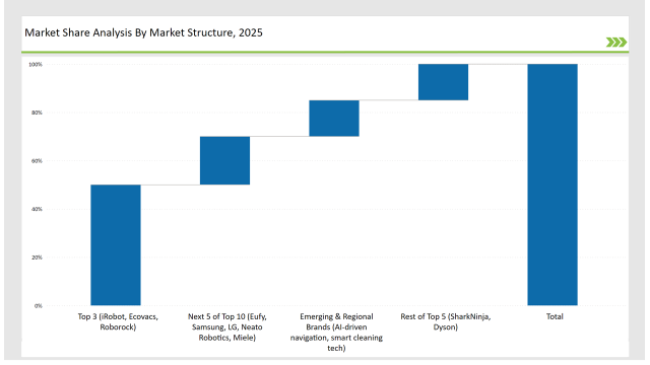
The three global leaders, iRobot, Ecovacs, and Roborock take home a formidable 50% market share due to innovations in technology, ease of usability, and wide retail presence.Independent players and regional brands make up 30% offering cost-effective options and specialized cleaners. The 20% is for the start-ups that are presently working on AI-based navigation with self-emptying technology and multi-surface adaptability.
Market Share by Key Players in the Robotic Vacuum Cleaners Market
| Market Segment | Industry Share (%) |
|---|---|
| Top 3 (iRobot, Ecovacs, Roborock) | 50% |
| Rest of Top 5 (SharkNinja, Dyson) | 15% |
| Next 5 of Top 10 (Eufy, Samsung, LG, Neato Robotics, Miele) | 20% |
| Emerging & Regional Brands (AI-driven navigation, smart cleaning tech) | 15% |
Market Concentration 2025
The robotic vacuum cleaner market in 2025 is highly concentrated, with the top players accounting for 50% to 65% of the total market share. Leading brands such as iRobot, Ecovacs, and Roborock dominate the segment, while AI-driven navigation and self-emptying features add competitive diversity. This market structure reflects strong brand influence while allowing space for affordable smart home integrations and multi-surface cleaning advancements.
Segment Analysis
Sales Channels
E-commerce Platforms & Direct-to-Consumer Sales leads the market with 55%, because of the convenience of online shopping, detailed product reviews, and price comparisons. Retail Chains & Electronics Stores account for 30%, as customers can experience demonstrations and in-store promotions. Smart Home Integrators & Subscription Services: 10% as users integrate robotic vacuum cleaners into their connected home environments. Last, B2B & Commercial Contracts take up 5%, which includes hospitality, healthcare, and office cleaning.
Product Type
Smart Mapping & AI-Powered Vacuums held at 40%. This product type held laser navigation, object recognition, and adaptive cleaning algorithms for high operational efficiency. Self-Emptying & Auto-Charging Models hold 30%, of which it will assure maximum convenience in minimal human intervention. Budget & Entry-Level Robotic Vacuums take up 20% where it targets first-time buyers and conscious consumers of spending who may have a need for robots to clean the area. Hybrid Robotic Vacuums with Mopping is 10% for doing multi-surface cleaning in any modern home.
Who Shaped the Year
With the kind of changing taste of the consumer, market rulers and new rivals took decisions quite drastically which saw a revolution into the market for robotic vacuum cleaner.
- IRobot: released AI-powered roomba models of real-time dust detection with itself adjusting suction settings
- Ecovacs: It expanded its market share with voice-controlled smart vacuums connected to Amazon Alexa and Google Assistant.
- Roborock: Introduced hybrid robotic vacuum cleaners that cleaned both by vacuuming and mopping simultaneously.
- Dyson: This was committed to high suction, deep cleaning robotic vacuum for high-end users.
- Emerging Brands: New comers such as Yeedi and Trifo offered low-priced AI-based vacuum cleaners with real-time mapping and app-controlled automation.
Key Highlights from the Forecast
- Rise of AI & Smart Navigation: Robotic vacuums with LiDAR sensors and AI-driven object recognition will make cleaning autonomous much more efficient.
- Increase in Self-Emptying Models: More firms will choose self-emptying bins to eradicate the time-consuming act of manual maintenance, thus enhancing hands-free working time.
- Voice & App Control Integration: Adoption will also rise if the product is compatible with Alexa, Google Assistant, and Apple HomeKit.
- Subscription-Based Robotic Cleaning Services: Companies will introduce renting and leasing plans with flexible tenure options
- Sustainable and energy-efficient designs for the product: Eco-friendly and lesser power consumption innovative designs for making robotic vacuums by manufacturing companies
Tier-Wise Brand Classification 2025
| Tier Type | Tier 1 |
|---|---|
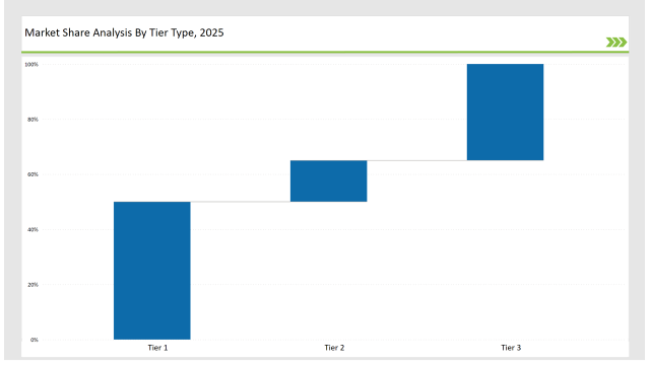
| Example of Key Players | iRobot, Ecovacs, Roborock |
| Market Share (%) | 50% |
| Tier Type | Tier 2 |
|---|---|
| Example of Key Players | SharkNinja, Dyson |
| Market Share (%) | 15% |
| Tier Type | Tier 3 |
|---|---|
| Example of Key Players | Eufy, Samsung, LG, Neato Robotics, Miele |
| Market Share (%) | 35% |
Key Brand Initiatives
| Brand | Key Focus Areas |
|---|---|
| iRobot | AI-powered dirt detection & self-adjusting suction |
| Ecovacs | Smart home integration & voice control features |
| Roborock | Hybrid vacuum & mop models for deep cleaning |
| Dyson | High-suction premium robotic vacuums |
| Emerging Brands | AI-driven navigation & cost-effective smart vacuums |
Recommendations for Brands
- Invest in AI-Powered Cleaning Technology: Expand autonomous features, real-time mapping, and adaptive cleaning algorithms.
- Enhance Smart Home Compatibility: Strengthen integrations with smart assistants and connected home platforms.
- Develop Subscription-Based Leasing Models: Offer flexible rental plans for consumers who prefer short-term usage.
- Extended Battery Life and Efficiency: This is longer performance from the batteries and energy used.
- More Green Concepts: The development of robot cleaners with recyclable parts and very energy-efficient machines.
Future Roadmap
The robotic vacuum cleaner market will keep growing as it takes off on wings of AI-driven automation, smart home integration, and changing consumer expectations. Firms that invest in technology-driven innovation, hands-free operation, and sustainability will dominate the industry going forward. Robotic vacuum cleaners of the future will be intelligent, eco-friendly, and fit well into a modern household.
Top Segments Studied in the Robotic Vacuum Cleaners Market Outlook
By Sales Channels:
- E-commerce Platforms & Direct-to-Consumer Sales
- Retail Chains & Electronics Stores
- Smart Home Integrators & Subscription Services
- B2B & Commercial Contracts
By Product Type:
- Smart Mapping & AI-Powered Vacuums
- Self-Emptying & Auto-Charging Models
- Budget & Entry-Level Robotic Vacuums
- Hybrid Robotic Vacuums with Mopping
Frequently Asked Questions
Which companies hold the largest market share in the robotic vacuum cleaner industry?
Leading players such as iRobot, Ecovacs, and Roborock collectively hold around 50% of the market.
What is the market share of regional robotic vacuum manufacturers?
Independent and regional brands contribute approximately 15% of the market, focusing on cost-effective and specialized cleaning solutions.
How much market share do AI-powered smart vacuum startups hold?
Startups specializing in advanced navigation and automation features hold about 10% of the market.
What percentage of the market is controlled by online sales and direct-to-consumer models?
E-commerce and direct sales represent around 55% of the market, as online shopping grows in popularity.
How is market concentration assessed in the robotic vacuum cleaner industry for 2025?
High for companies controlling 50%+, medium for 30-50%, and low for those under 30%.
Preview the report firsthand - request a free sample
Get SampleGet the brochure for pricing and purchase details.
Get PDFTable of Content
- Executive Summary
- Market Overview
- Competitive Analysis Outlook for 2025
- Segment Analysis
- Who Shaped the Year
- Key Highlights from the Forecast
- Tier-Wise Brand Classification
- Key Brand Initiatives
- Recommendations for Brands
- Future Roadmap
- FAQs


