

- Industry Size (2026)
- USD 278.7 Mn
- Forecast (2036)
- USD 558.6 Mn
- CAGR (2026 to 2036)
- 7.2%
Smart Card Module Test Cell Market Forecast and Outlook 2026 to 2036
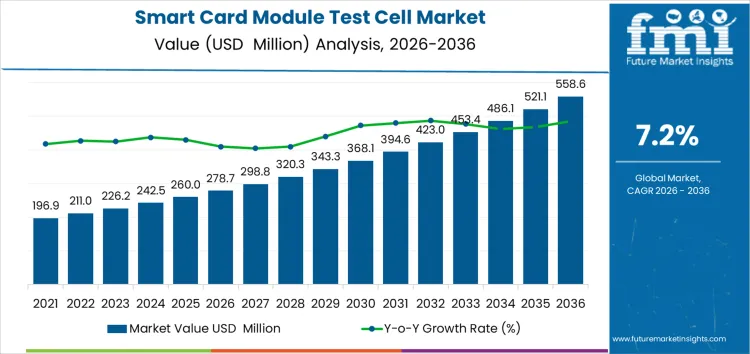
The global smart card module test cell market, valued at USD 278.7 million in 2026 and projected to reach USD 558.6 million by 2036, is expected to grow at a CAGR of 7.2% from 2026 to 2036. Companies like Micropross, Datacon (ASMPT), Cohu, Advantest, Teradyne, Chroma ATE, Keysight, NI (Emerson), Seica, and Rohde & Schwarz are leading the competition. These companies emphasize precision, flexibility, and high throughput manufacturing integration. Micropross is known for its dedicated test cells with support for protocols like RF/UART/ISO, providing engineers with comprehensive performance data and easy setup guidance. Datacon (ASMPT) offers modular test platforms that can scale with production needs, with clear charts indicating handler and interface compatibility.
Quick Stats for Smart Card Module Test Cell Market
- Smart Card Module Test Cell Market Value (2026): USD 278.7 million
- Smart Card Module Test Cell Market Forecast Value (2036): USD 558.6 million
- Smart Card Module Test Cell Market Forecast CAGR: 7.2%
- Leading Module Type in Smart Card Module Test Cell Market: SIM/UICC (34% share)
- Key Growth Region in Smart Card Module Test Cell Market: Asia Pacific
- Key Players in Smart Card Module Test Cell Market: Micropross, Datacon (ASMPT), Cohu, Advantest, Teradyne
Cohu stands out with its robust test cell designs and integration into automated lines, while Advantest offers broad protocol coverage and high throughput. Teradyne’s test cells cater to mixed-technology environments, featuring flexible interfaces and throughput expectations. Chroma ATE's test solutions are flexible, blending functional and environmental testing with clear application guidance. Keysight and NI (Emerson) provide top-tier instrumentation quality and software ecosystem support, ensuring efficient calibration and test workflows. Seica focuses on integrated test cells for both contact and contactless modes, while Rohde & Schwarz excels in RF test coverage and communication standards compliance.
Smart Card Module Test Cell Market Key Takeaways
| Metric | Value |
|---|---|
| Industry Value (2026) | USD 278.7 million |
| Forecast Value (2036) | USD 558.6 million |
| Forecast CAGR (2026-2036) | 7.2% |
How is the Global Smart Card Module Test Cell Market Progressing?
The global smart card module test cell market is experiencing steady growth as industries focus on enhancing digital security and authentication systems. Smart card modules are pivotal in various applications like payment processing, mobile communications, identity verification, and secure access control. These modules need to undergo rigorous testing during production to ensure they meet the required standards for security, functionality, and compliance. Smart card module test cells provide the necessary environment to evaluate their performance, ensure secure cryptographic functions, and verify their compatibility with communication protocols.
As the demand for smart cards continues to rise, driven by increased reliance on secure digital payments, identity systems, and mobile communication, the need for precise and efficient testing solutions has surged. Modern smart card test cells have evolved with advanced capabilities, including automated testing, multi protocol compatibility, and improved data reporting, making the testing process faster and more accurate. These developments are essential for manufacturers aiming to keep up with the rapid growth in the smart card industry while maintaining high standards of performance and security.
What Is the Segment-Wise Analysis for the Global Smart Card Module Test Cell Market?
The global smart card module test cell market is segmented by module type and end user. SIM or UICC leads the market with a 34% share, driven by the widespread use of SIM cards in mobile networks. Payment (EMV), eID or ePassport, and secure element modules follow, each catering to specific applications in payment systems, identity verification, and secure data storage. In terms of end users, card manufacturers dominate with a 40% share, as they require testing solutions for mass production of smart cards. Module makers, independent test labs, and government entities also play significant roles, utilizing smart card test cells for development, certification, and regulatory purposes.
How Do SIM or UICC Modules Lead the Global Smart Card Module Test Cell Market?
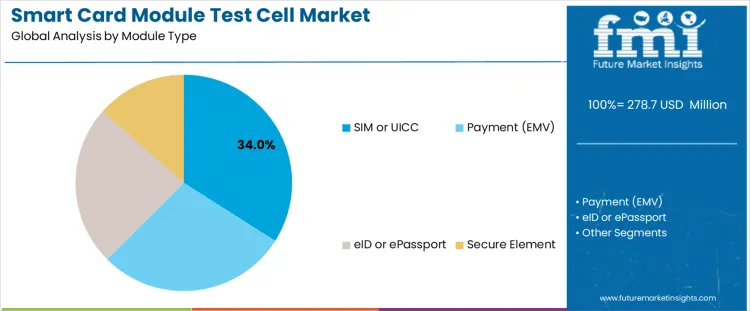
SIM or UICC modules hold a 34% share in the global smart card module test cell market due to their essential role in mobile communication systems. SIM or UICC modules modules enable secure mobile network connectivity and communication between devices. With the continued rise in mobile phone usage worldwide, the demand for reliable, secure SIM and UICC modules grows, driving the need for efficient testing solutions. Smart card module test cells ensure that these modules meet required standards for functionality, performance, and security. As the need for secure mobile connectivity increases, especially with the expansion of mobile networks and services, SIM or UICC modules remain dominant in the market, reinforcing the growth of smart card test cell demand.
How Do Card Manufacturers Contribute to the Global Smart Card Module Test Cell Market?

Card manufacturers account for 40% of the global smart card module test cell market share, driven by their role in the mass production of smart cards. Card manufacturers rely on smart card module test cells for quality control and to ensure the functionality and security of each module produced. As demand for smart cards rises, particularly in mobile, payment, and identity applications, the need for precise and efficient testing solutions grows. Smart card test cells enable manufacturers to meet high production standards and regulatory requirements, ensuring product reliability. This continued dependence on testing solutions from card manufacturers plays a significant role in the ongoing growth of the smart card module test cell market.
What are the Key Dynamics for Smart Card Module Test Cell Market?
The smart card module test cell market is expanding as demand for reliable, secure electronic authentication grows across payments, telecommunications, identification, and IoT devices. Test cells validate smart card modules’ electrical, functional, and security performance before deployment, ensuring interoperability, compliance, and quality. Growth in mobile payments, contactless transactions, national ID programs, and encrypted secure elements fuels adoption of advanced test solutions. Increasing regulatory standards for secure applications and the need to reduce field failures further drive investment in robust module testing.
What Are the Key Drivers for the Smart Card Module Test Cell Market?
The smart card module test cell market is driven by the proliferation of smart cards in financial services, government IDs, transit, and access control. As EMV, NFC, and SE (secure element) technologies are adopted globally, ensuring functionality, security, and interoperability is critical. Test cells help manufacturers and integrators validate electrical interfaces, protocol compliance, and cryptographic behavior under varied conditions. Regulatory and certification requirements push organizations to adopt rigorous testing solutions to meet industry standards. The rising importance of secure authentication for IoT and connected devices broadens the need for specialized module validation tools.
What Key Trends Are Shaping the Smart Card Module Test Cell Market?
Key trends include the integration of automated and AI assisted testing to accelerate throughput and reduce manual intervention, improving accuracy and repeatability. There is growing demand for multi protocol test cells capable of validating contact, contactless, and dual interface modules in a single platform. Cloud connected test systems that allow remote monitoring, data analytics, and cross site standardization are gaining traction. As smart cards converge with mobile wallets and IoT devices, test cells are evolving to accommodate hybrid interfaces and enhanced security features like biometric match on card. Modular and scalable test architectures support rapid customization for new standards and applications.
What is the Growth Outlook for the Smart Card Module Test Cell Market by Country?
| Country | CAGR (%) |
|---|---|
| USA | 7% |
| South Korea | 6.8% |
| Germany | 6.7% |
| China | 8.4% |
| Brazil | 7.9% |
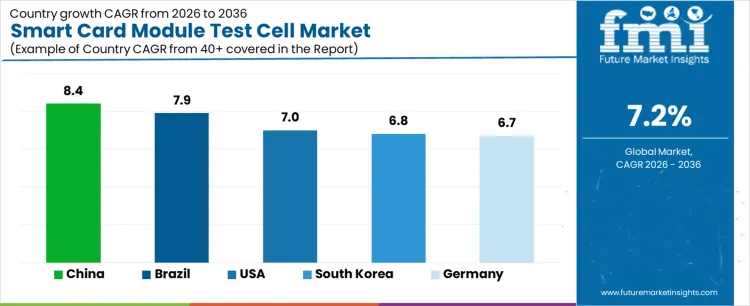
The smart card module test cell market is growing steadily, with China leading at an 8.4% CAGR, driven by its rapid adoption of digital payments, secure transactions, and increasing smart card usage across sectors. Brazil follows with 7.9%, supported by the rising demand for secure financial transactions and the expansion of the telecommunications and banking sectors. The USA’s market grows at 7%, driven by strong demand for test cells in the financial services and telecommunications industries. South Korea’s market grows at 6.8%, fueled by its advancements in mobile payments and telecommunications. Germany’s market grows at 6.7%, supported by the strong manufacturing base in the automotive and financial sectors.
Why is China Leading in the Smart Card Module Test Cell Market?
China’s smart card module test cell market is growing at 8.4%, driven by the rapid digital transformation in industries like banking, telecommunications, and security. As China continues to lead in mobile payments, e-commerce, and secure financial transactions, the demand for smart card technology is growing exponentially. Smart card modules are essential for ensuring the functionality, security, and performance of payment systems and identity verification. With the government’s initiatives to advance financial technology and improve secure transactions, China is heavily investing in smart card infrastructure. As digital adoption increases across sectors and the demand for secure systems rises, the smart card module test cell market in China is expected to continue growing rapidly, supported by the need for precise testing and quality control.
What is Driving the Growth of the Smart Card Module Test Cell Market in Brazil?
Brazil’s smart card module test cell market is growing at 7.9%, driven by the increasing adoption of digital payment systems and secure identification processes in banking, telecommunications, and government services. As Brazil moves towards greater financial inclusion, the demand for smart card technology to enable secure transactions is rising. With the expansion of mobile payments and contactless technologies, the need for reliable testing equipment to ensure smart card module functionality is growing. Brazil’s growing interest in secure digital identification for both public and private sectors is contributing to the demand for these systems. As Brazil continues to develop its digital infrastructure and financial systems, the smart card module test cell market is expected to expand, driven by the need for efficient, secure, and reliable testing solutions.
How is the Smart Card Module Test Cell Market Expanding in the USA?
The USA’s smart card module test cell market is growing at 7%, driven by the growing demand for secure payment systems and identification solutions. The increasing adoption of contactless payments, digital wallets, and biometric authentication systems across various industries is boosting the need for high-quality smart card technology. Smart card modules are crucial for ensuring secure, efficient, and seamless transactions, particularly in sectors like banking, telecommunications, and healthcare. The USA’s focus on enhancing cybersecurity, privacy protection, and digital transformation is contributing to the market’s growth. As industries continue to prioritize security and efficiency in digital systems, the demand for smart card module test cells to verify functionality and performance is expected to continue growing in the USA.
What is Contributing to the Growth of the Smart Card Module Test Cell Market in South Korea?
South Korea’s smart card module test cell market is growing at 6.8%, supported by the country’s strong technological advancements in mobile payments, telecommunications, and e-commerce. South Korea has been a leader in adopting digital payment systems and mobile wallets, driving the demand for smart card technology. With the increasing use of smart cards for contactless payments and identity verification, there is a rising need for accurate testing of smart card modules to ensure security, reliability, and functionality. South Korea’s strong focus on technological innovation and digital infrastructure development is fueling the adoption of smart card modules and their corresponding testing solutions. As the country continues to push for secure and efficient digital transactions, the market for smart card module test cells is expected to grow steadily, supported by increasing demand across multiple sectors.
What is Driving the Growth of the Smart Card Module Test Cell Market in Germany?
Germany’s smart card module test cell market is growing at 6.7%, driven by the country’s strong manufacturing and financial sectors, where secure payment systems and identity verification are increasingly important. Germany’s push toward digital transformation in banking, telecommunications, and government services is contributing to the growing adoption of smart card technology. With an increasing demand for contactless payments, secure transactions, and digital identities, the need for efficient and reliable testing of smart card modules is on the rise. As Germany leads in technological advancements and regulatory requirements for digital security, the market for smart card module test cells is expected to continue expanding steadily. The country’s focus on improving data privacy and secure transactions is fueling the growth of the market.
How Are Companies Competing in the Smart Card Module Test Cell Market?
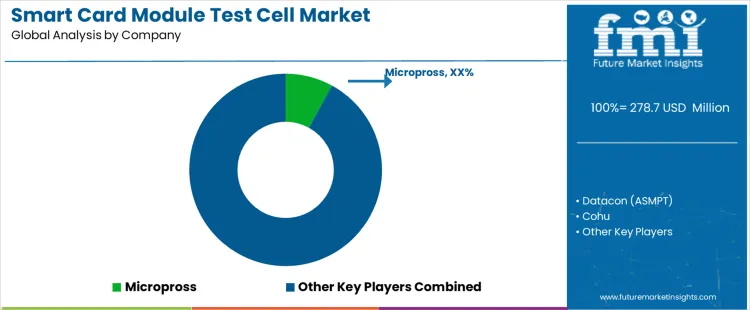
In the smart card module test cell market Micropross, Datacon (ASMPT), Cohu, Advantest, Teradyne, Chroma ATE, Keysight, NI (Emerson), Seica, and Rohde & Schwarz are positioned with product brochures that emphasize test coverage, flexibility, and integration with high throughput manufacturing and validation workflows. Micropross materials present dedicated smart card test cells with clear specs on protocol support and RF/UART/ISO interfaces. Brochures include performance data and concise setup guidance that help engineers match test cells to secure element and module variants. Datacon (ASMPT) collateral focuses on modular test cell platforms designed to scale with production, with configuration charts that show compatible handler and interface options.
Cohu brochures describe robust test cell designs with emphasis on mechanical precision and ease of integration into automated lines. Performance summaries and connectivity notes help test managers plan deployments. Advantest product briefs highlight smart card test solutions with broad protocol coverage and visual data on throughput. Teradyne materials focus on adaptable test cells designed for mixed technology environments, including clear interface diagrams and throughput expectations. Chroma ATE literature presents flexible platforms that blend functional and environmental testing capabilities with concise application guidance.
Keysight and NI (Emerson) collateral emphasize instrumentation quality and software ecosystem support, with diagrams and use cases that illustrate calibration and test workflows. Seica brochures describe integrated test cells with support for contact and contactless test modes, including brief performance overviews. Rohde & Schwarz materials focus on RF test coverage and compliance with communication standards. Across all firms product brochures stress accuracy, ease of integration, and documented performance. Competitive strategies are shaped by innovation in interface support, clarity of technical documentation, and support resources that help test engineers select and deploy solutions that reduce development and production cycle times.
Key Players of the Smart Card Module Test Cell Market
- Micropross
- Datacon (ASMPT)
- Cohu
- Advantest
- Teradyne
- Chroma ATE
- Keysight
- NI (Emerson)
- Seica
- Rohde & Schwarz
Scope of Report
| Items | Values |
|---|---|
| Quantitative Unit (2026) | USD million |
| Module Type | SIM/UICC, Payment (EMV), eID or ePassport, Secure Element |
| Test Focus | Electrical Parametrics, Functional & Protocol, Personalization Verification, Reliability or Aging |
| End User | Card Manufacturers, Module Makers, Independent Test Labs, Government |
| Regions Covered | Asia Pacific, Europe, North America, Latin America, Middle East & Africa |
| Countries Covered | USA, China, Japan, South Korea, India, Australia & New Zealand, ASEAN, Germany, UK, France, Italy, Spain, Nordic, BENELUX, Brazil, Chile, Mexico, Saudi Arabia, Other GCC Countries, Turkey, South Africa, Other African Union |
| Key Companies Profiled | Micropross, Datacon (ASMPT), Cohu, Advantest, Teradyne, Chroma ATE, Keysight, NI (Emerson), Seica, Rohde & Schwarz |
| Additional Attributes | Dollar sales by module type, test focus, end user, and region; regional CAGR and growth outlook. |
Smart Card Module Test Cell Market by Segments
Module
- Micropross
- Datacon (ASMPT)
- Cohu
- Advantest
- Teradyne
- Chroma ATE
- Keysight
- NI (Emerson)
- Seica
- Rohde & Schwarz
Type
- SIM/UICC
- Payment (EMV)
- eID or ePassport
- Secure Element
Test Focus
- Electrical Parametrics
- Functional & Protocol
- Personalization Verification
- Reliability or Aging
End User
- Card Manufacturers
- Module Makers
- Independent Test Labs
- Government
Region
- Asia Pacific
- China
- Japan
- South Korea
- India
- Australia & New Zealand
- ASEAN
- Rest of Asia Pacific
- Europe
- Germany
- United Kingdom
- France
- Italy
- Spain
- Nordic
- BENELUX
- Rest of Europe
- North America
- United States
- Canada
- Mexico
- Latin America
- Brazil
- Chile
- Rest of Latin America
- Middle East & Africa
- Kingdom of Saudi Arabia
- Other GCC Countries
- Turkey
- South Africa
- Other African Union
- Rest of Middle East & Africa
Frequently Asked Questions
How big is the smart card module test cell market in 2026?
The global smart card module test cell market is estimated to be valued at USD 278.7 million in 2026.
What will be the size of smart card module test cell market in 2036?
The market size for the smart card module test cell market is projected to reach USD 558.6 million by 2036.
How much will be the smart card module test cell market growth between 2026 and 2036?
The smart card module test cell market is expected to grow at a 7.2% CAGR between 2026 and 2036.
What are the key module types in the smart card module test cell market?
The key module types in smart card module test cell market are SIM or UICC, payment (EMV), EID or ePassport, and secure element.
Which end user segment to contribute significant share in the smart card module test cell market in 2026?
In terms of end user, card manufacturers segment to command 40% share in the smart card module test cell market in 2026.
Preview the report firsthand - request a free sample
Get SampleGet the brochure for pricing and purchase details.
Get PDFTable of Content
- Executive Summary
- Global Market Outlook
- Demand-side Trends
- Supply-side Trends
- Technology Roadmap Analysis
- Analysis and Recommendations
- Market Overview
- Market Coverage / Taxonomy
- Market Definition / Scope / Limitations
- Market Background
- Market Dynamics
- Drivers
- Restraints
- Opportunity
- Trends
- Scenario Forecast
- Demand in Optimistic Scenario
- Demand in Likely Scenario
- Demand in Conservative Scenario
- Opportunity Map Analysis
- Product Life Cycle Analysis
- Supply Chain Analysis
- Investment Feasibility Matrix
- Value Chain Analysis
- PESTLE and Porter’s Analysis
- Regulatory Landscape
- Regional Parent Market Outlook
- Production and Consumption Statistics
- Import and Export Statistics
- Market Dynamics
- Global Market Analysis 2021 to 2025 and Forecast, 2026 to 2036
- Historical Market Size Value (USD Million) Analysis, 2021 to 2025
- Current and Future Market Size Value (USD Million) Projections, 2026 to 2036
- Y-o-Y Growth Trend Analysis
- Absolute $ Opportunity Analysis
- Global Market Pricing Analysis 2021 to 2025 and Forecast 2026 to 2036
- Global Market Analysis 2021 to 2025 and Forecast 2026 to 2036, By Module Type
- Introduction / Key Findings
- Historical Market Size Value (USD Million) Analysis By Module Type , 2021 to 2025
- Current and Future Market Size Value (USD Million) Analysis and Forecast By Module Type , 2026 to 2036
- SIM or UICC
- Payment (EMV)
- eID or ePassport
- Secure Element
- SIM or UICC
- Y-o-Y Growth Trend Analysis By Module Type , 2021 to 2025
- Absolute $ Opportunity Analysis By Module Type , 2026 to 2036
- Global Market Analysis 2021 to 2025 and Forecast 2026 to 2036, By Test Focus
- Introduction / Key Findings
- Historical Market Size Value (USD Million) Analysis By Test Focus, 2021 to 2025
- Current and Future Market Size Value (USD Million) Analysis and Forecast By Test Focus, 2026 to 2036
- Electrical Parametrics
- Functional & Protocol
- Personalization Verification
- Reliability or Aging
- Electrical Parametrics
- Y-o-Y Growth Trend Analysis By Test Focus, 2021 to 2025
- Absolute $ Opportunity Analysis By Test Focus, 2026 to 2036
- Global Market Analysis 2021 to 2025 and Forecast 2026 to 2036, By End User
- Introduction / Key Findings
- Historical Market Size Value (USD Million) Analysis By End User, 2021 to 2025
- Current and Future Market Size Value (USD Million) Analysis and Forecast By End User, 2026 to 2036
- Card Manufacturers
- Module Makers
- Independent Test Labs
- Government
- Card Manufacturers
- Y-o-Y Growth Trend Analysis By End User, 2021 to 2025
- Absolute $ Opportunity Analysis By End User, 2026 to 2036
- Global Market Analysis 2021 to 2025 and Forecast 2026 to 2036, By Region
- Introduction
- Historical Market Size Value (USD Million) Analysis By Region, 2021 to 2025
- Current Market Size Value (USD Million) Analysis and Forecast By Region, 2026 to 2036
- North America
- Latin America
- Western Europe
- Eastern Europe
- East Asia
- South Asia and Pacific
- Middle East & Africa
- Market Attractiveness Analysis By Region
- North America Market Analysis 2021 to 2025 and Forecast 2026 to 2036, By Country
- Historical Market Size Value (USD Million) Trend Analysis By Market Taxonomy, 2021 to 2025
- Market Size Value (USD Million) Forecast By Market Taxonomy, 2026 to 2036
- By Country
- USA
- Canada
- Mexico
- By Module Type
- By Test Focus
- By End User
- By Country
- Market Attractiveness Analysis
- By Country
- By Module Type
- By Test Focus
- By End User
- Key Takeaways
- Latin America Market Analysis 2021 to 2025 and Forecast 2026 to 2036, By Country
- Historical Market Size Value (USD Million) Trend Analysis By Market Taxonomy, 2021 to 2025
- Market Size Value (USD Million) Forecast By Market Taxonomy, 2026 to 2036
- By Country
- Brazil
- Chile
- Rest of Latin America
- By Module Type
- By Test Focus
- By End User
- By Country
- Market Attractiveness Analysis
- By Country
- By Module Type
- By Test Focus
- By End User
- Key Takeaways
- Western Europe Market Analysis 2021 to 2025 and Forecast 2026 to 2036, By Country
- Historical Market Size Value (USD Million) Trend Analysis By Market Taxonomy, 2021 to 2025
- Market Size Value (USD Million) Forecast By Market Taxonomy, 2026 to 2036
- By Country
- Germany
- UK
- Italy
- Spain
- France
- Nordic
- BENELUX
- Rest of Western Europe
- By Module Type
- By Test Focus
- By End User
- By Country
- Market Attractiveness Analysis
- By Country
- By Module Type
- By Test Focus
- By End User
- Key Takeaways
- Eastern Europe Market Analysis 2021 to 2025 and Forecast 2026 to 2036, By Country
- Historical Market Size Value (USD Million) Trend Analysis By Market Taxonomy, 2021 to 2025
- Market Size Value (USD Million) Forecast By Market Taxonomy, 2026 to 2036
- By Country
- Russia
- Poland
- Hungary
- Balkan & Baltic
- Rest of Eastern Europe
- By Module Type
- By Test Focus
- By End User
- By Country
- Market Attractiveness Analysis
- By Country
- By Module Type
- By Test Focus
- By End User
- Key Takeaways
- East Asia Market Analysis 2021 to 2025 and Forecast 2026 to 2036, By Country
- Historical Market Size Value (USD Million) Trend Analysis By Market Taxonomy, 2021 to 2025
- Market Size Value (USD Million) Forecast By Market Taxonomy, 2026 to 2036
- By Country
- China
- Japan
- South Korea
- By Module Type
- By Test Focus
- By End User
- By Country
- Market Attractiveness Analysis
- By Country
- By Module Type
- By Test Focus
- By End User
- Key Takeaways
- South Asia and Pacific Market Analysis 2021 to 2025 and Forecast 2026 to 2036, By Country
- Historical Market Size Value (USD Million) Trend Analysis By Market Taxonomy, 2021 to 2025
- Market Size Value (USD Million) Forecast By Market Taxonomy, 2026 to 2036
- By Country
- India
- ASEAN
- Australia & New Zealand
- Rest of South Asia and Pacific
- By Module Type
- By Test Focus
- By End User
- By Country
- Market Attractiveness Analysis
- By Country
- By Module Type
- By Test Focus
- By End User
- Key Takeaways
- Middle East & Africa Market Analysis 2021 to 2025 and Forecast 2026 to 2036, By Country
- Historical Market Size Value (USD Million) Trend Analysis By Market Taxonomy, 2021 to 2025
- Market Size Value (USD Million) Forecast By Market Taxonomy, 2026 to 2036
- By Country
- Kingdom of Saudi Arabia
- Other GCC Countries
- Turkiye
- South Africa
- Other African Union
- Rest of Middle East & Africa
- By Module Type
- By Test Focus
- By End User
- By Country
- Market Attractiveness Analysis
- By Country
- By Module Type
- By Test Focus
- By End User
- Key Takeaways
- Key Countries Market Analysis
- USA
- Pricing Analysis
- Market Share Analysis, 2025
- By Module Type
- By Test Focus
- By End User
- Canada
- Pricing Analysis
- Market Share Analysis, 2025
- By Module Type
- By Test Focus
- By End User
- Mexico
- Pricing Analysis
- Market Share Analysis, 2025
- By Module Type
- By Test Focus
- By End User
- Brazil
- Pricing Analysis
- Market Share Analysis, 2025
- By Module Type
- By Test Focus
- By End User
- Chile
- Pricing Analysis
- Market Share Analysis, 2025
- By Module Type
- By Test Focus
- By End User
- Germany
- Pricing Analysis
- Market Share Analysis, 2025
- By Module Type
- By Test Focus
- By End User
- UK
- Pricing Analysis
- Market Share Analysis, 2025
- By Module Type
- By Test Focus
- By End User
- Italy
- Pricing Analysis
- Market Share Analysis, 2025
- By Module Type
- By Test Focus
- By End User
- Spain
- Pricing Analysis
- Market Share Analysis, 2025
- By Module Type
- By Test Focus
- By End User
- France
- Pricing Analysis
- Market Share Analysis, 2025
- By Module Type
- By Test Focus
- By End User
- India
- Pricing Analysis
- Market Share Analysis, 2025
- By Module Type
- By Test Focus
- By End User
- ASEAN
- Pricing Analysis
- Market Share Analysis, 2025
- By Module Type
- By Test Focus
- By End User
- Australia & New Zealand
- Pricing Analysis
- Market Share Analysis, 2025
- By Module Type
- By Test Focus
- By End User
- China
- Pricing Analysis
- Market Share Analysis, 2025
- By Module Type
- By Test Focus
- By End User
- Japan
- Pricing Analysis
- Market Share Analysis, 2025
- By Module Type
- By Test Focus
- By End User
- South Korea
- Pricing Analysis
- Market Share Analysis, 2025
- By Module Type
- By Test Focus
- By End User
- Russia
- Pricing Analysis
- Market Share Analysis, 2025
- By Module Type
- By Test Focus
- By End User
- Poland
- Pricing Analysis
- Market Share Analysis, 2025
- By Module Type
- By Test Focus
- By End User
- Hungary
- Pricing Analysis
- Market Share Analysis, 2025
- By Module Type
- By Test Focus
- By End User
- Kingdom of Saudi Arabia
- Pricing Analysis
- Market Share Analysis, 2025
- By Module Type
- By Test Focus
- By End User
- Turkiye
- Pricing Analysis
- Market Share Analysis, 2025
- By Module Type
- By Test Focus
- By End User
- South Africa
- Pricing Analysis
- Market Share Analysis, 2025
- By Module Type
- By Test Focus
- By End User
- USA
- Market Structure Analysis
- Competition Dashboard
- Competition Benchmarking
- Market Share Analysis of Top Players
- By Regional
- By Module Type
- By Test Focus
- By End User
- Competition Analysis
- Competition Deep Dive
- Micropross
- Overview
- Product Portfolio
- Profitability by Market Segments (Product/Age /Sales Channel/Region)
- Sales Footprint
- Strategy Overview
- Marketing Strategy
- Product Strategy
- Channel Strategy
- Datacon (ASMPT)
- Cohu
- Advantest
- Teradyne
- Chroma ATE
- Keysight
- NI (Emerson)
- Seica
- Rohde & Schwarz
- Micropross
- Competition Deep Dive
- Assumptions & Acronyms Used
- Research Methodology


