

- Industry Size (2026)
- USD 1.3 Bn
- Forecast (2036)
- USD 2.5 Bn
- CAGR (2026 to 2036)
- 7.0%
Call Center Industry Forecast and Outlook in South Korea 2026 to 2036
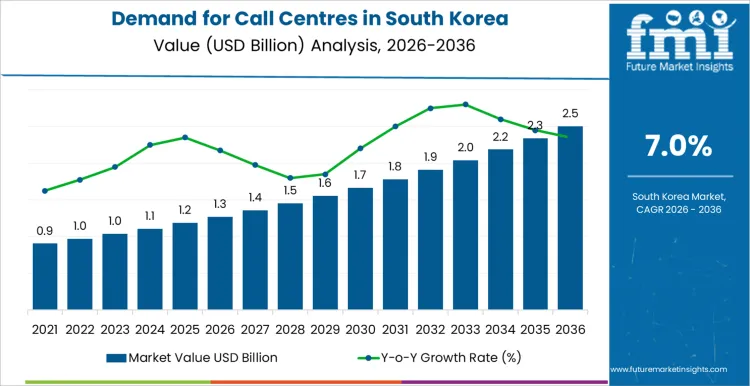
The customer contact and business process outsourcing landscape in South Korea is projected to achieve a valuation of USD 1.3 billion in 2026. This sector is anticipated to reach a size of USD 2.5 billion by 2036, advancing at a compound annual growth rate of 7.0%.This robust expansion is driven by the country’s relentless pursuit of service excellence, digital transformation across all economic verticals, and the strategic imperative to enhance customer lifetime value.
Demand is concentrated within sectors undergoing significant regulatory change and consumer digitization, where sophisticated customer interaction becomes a critical competitive differentiator. The evolution from cost-centric support functions to strategic revenue and retention hubs is reshaping investment priorities, with a pronounced focus on integrating artificial intelligence and omnichannel capabilities to meet the exceptionally high standards of South Korean consumers.
Quick Stats for the Call Centres Industry Analysis in South Korea
- Call Center Industry Valuation in South Korea (2026): USD 1.3 billion
- Call Center Industry Forecast Valuation in South Korea (2036): USD 2.5 billion
- Call Center Industry Forecast CAGR in South Korea: 7.0%
- Leading Regional Growth: Jeju (CAGR 8.4%)
- Leading Deployment Mode: Cloud-Based Solutions (25.5%)
- Leading Vertical: BFSI and Government (70.2%)
- Leading Component: Software Solutions (55.0%)
- Key Industry Participants in the Call Center Sector in South Korea: Teleperformance, Concentrix, TTEC, Foundever, Alorica
Why is South Korea Undergoing a Strategic Transformation in Customer Engagement?
The shift within the customer contact arena reflects a broader national transition towards a hyper-connected, service-led economy. South Korean consumers are among the world’s most digitally savvy, demanding seamless, immediate, and personalized interactions across every touchpoint. This expectation compels businesses to move beyond traditional telephony to integrated customer experience management platforms that unify voice, chat, social media, and messaging apps.
Stringent government regulations in sectors like finance and telecommunications mandate precise compliance logging and data security, making advanced, auditable contact solutions a operational necessity rather than an option. The need to operationalize vast amounts of customer data into actionable intelligence is turning contact centres into core analytics hubs for business strategy.
How is the Customer Contact Solutions Arena Segmented by Deployment, Industry, and Technology?
The sector is delineated by how solutions are deployed, the specific industry they serve, and their core technological components. This segmentation highlights the differing priorities between agile, scalability-focused businesses and those with legacy infrastructure or heightened data sovereignty requirements. The vertical segmentation underscores how regulatory pressure and customer service complexity drive adoption, while the component split reveals the industry's pivot towards intelligent software as the primary engine of value creation over pure human resource provision.
Which Deployment Mode is Gaining Paramount Strategic Importance?
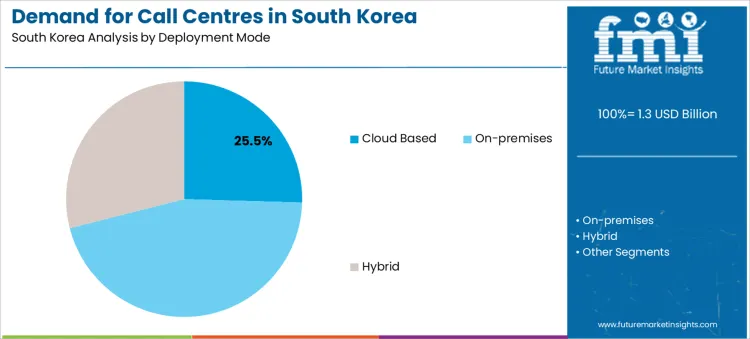
Cloud-based deployment, holding a 25.5% share, represents the fastest-growing and most strategic model. Its ascendancy is due to the imperative for operational agility, rapid scalability to handle peak volumes, and the facilitation of a distributed or work-from-home agent model. Cloud platforms enable seamless integration of advanced AI tools and analytics, allowing businesses to deploy enterprise-grade contact capabilities without the massive capital expenditure and inflexibility of traditional on-premises systems. This trend is intrinsically linked to the wider adoption of cloud communication solutions across the Asia-Pacific business landscape.
Which Industry Verticals Exert the Greatest Demand Pressure?
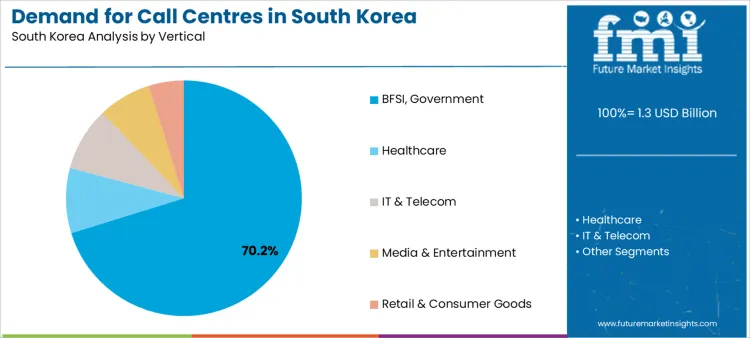
The BFSI and government verticals collectively dominate, commanding an estimated 70.2% share. The complex, compliance-heavy nature of customer interactions in these fields, requiring meticulous call recording, data protection, and process adherence, drives this. High customer inquiry volumes related to digital banking, policy management, and public services fuel the need for efficient, multi-channel contact solutions. Other sectors like Healthcare and IT & Telecom are significant growth areas, leveraging these centres for technical support, patient engagement, and subscription management, reflecting broader digital transformation in healthcare initiatives.
Which Component Serves as the Primary Engine of Innovation?
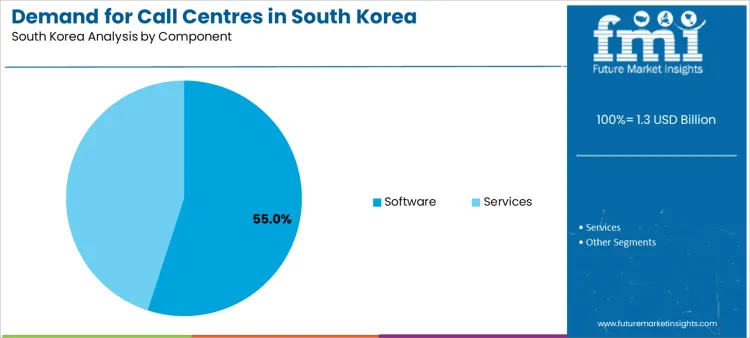
Software solutions constitute the leading component, with a 55.0% share. This dominance signifies the sector's evolution from a labor-intensive model to a technology-driven one. Investment is funneled into AI-powered chatbots, intelligent routing systems, workforce engagement management (WEM) software, and advanced analytics platforms. These tools are essential for automating routine queries, optimizing agent performance, predicting customer intent, and deriving actionable insights from interaction data, thereby elevating the entire function's strategic value. The surrounding services component remains critical for integration, consulting, and ongoing management of these complex software ecosystems.
What are the Dynamics, Restraints, Opportunities, and Threats Shaping the Sector?
How are Digital Adoption and CX Focus Driving Exponential Growth?
The primary growth catalyst is the wholesale digitalization of customer journeys across all industries, creating a surge in digital interactions that must be managed effectively. The strategic corporate focus on customer experience as the key brand differentiator is redirecting investment towards sophisticated engagement platforms. Rising labor costs and the challenge of retaining frontline staff are accelerating the adoption of automation and AI to augment human agents, improving both efficiency and job satisfaction by handling mundane tasks.
Do Integration Complexities and Talent Gaps Restrain Optimal Deployment?
A significant restraint involves the technical and operational complexity of integrating new cloud-based contact centre software with legacy backend systems, such as CRM and ERP platforms, which can be costly and disruptive.A growing talent gap exists for agents who can manage high-touch, complex inquiries that bypass automation, and for analysts who can interpret the data these systems generate. Concerns regarding data security and privacy, especially for cloud deployments handling sensitive financial or personal information, also necessitate rigorous and sometimes slow vendor qualification processes.
How is AI and Analytics Unlocking New Value Propositions?
Substantial opportunities are being created by the maturation of Generative AI and sentiment analysis technologies. These tools can provide real-time agent assistance, automatically summarize calls, and generate personalized follow-up actions, dramatically improving quality and efficiency.There is also significant potential in the burgeoning omnichannel retail support sector, where unifying customer interactions across online and offline channels is paramount. The Contact Centre as a Service (CCaaS) subscription model presents a major opportunity to capture small and medium-sized businesses previously priced out of advanced capabilities.
What External Factors Could Disrupt Sector Trajectory?
The sector faces threats from rapid technological obsolescence, where heavy investments in a specific platform may be undermined by a new wave of AI innovation. Economic downturns could lead to cost-cutting that first targets perceived non-essential CX enhancements or outsourcing contracts. Intense competition among global BPO giants and agile tech-native CCaaS providers could compress margins and force continuous, costly innovation. Additionally, evolving, stringent data sovereignty laws could complicate cloud deployment models for international service providers.
How is the Customer Contact Sector Evolving across Key Regions in South Korea?
Growth within South Korea is geographically asymmetric, influenced by regional economic specializations, infrastructure development, and labor market characteristics. The CAGR reflects how each province capitalizes on or drives demand for centralized and outsourced customer service operations.
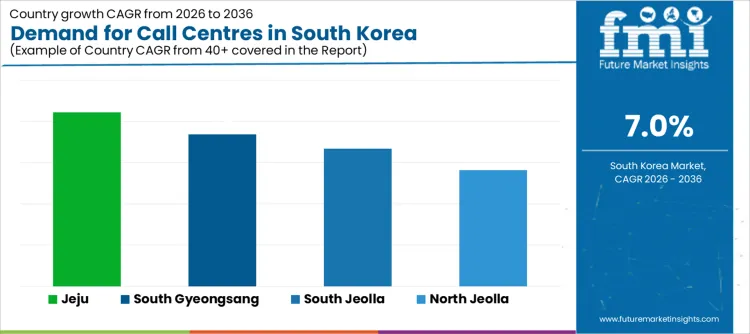
| Region | CAGR (2026 to 2036) |
|---|---|
| Jeju | 8.4% |
| South Gyeongsang | 7.4% |
| South Jeolla | 6.7% |
| North Jeolla | 5.6% |
What is Fuelling Accelerated Growth on Jeju Island?
Jeju Island is projected to experience the highest CAGR of 8.4%. This acceleration is directly tied to its successful development as a hub for IT, fintech, and data centre operations, supported by favorable tax policies and high-quality digital infrastructure. Major domestic and international corporations are establishing back-office and customer service centres on the island to leverage this ecosystem and a growing tech talent pool. Its appeal as a location for distributed work models also attracts skilled professionals, creating a virtuous cycle of talent and investment that supports the technology and innovation hub development model.
Why is South Gyeongsang a Core Growth Engine?
South Gyeongsang exhibits a robust CAGR of 7.4%. This strength stems from the region's dense concentration of heavy industry, manufacturing conglomerates, and the bustling port city of Busan. These industries require complex, often multilingual, customer support for logistics, B2B service, and technical product assistance. The presence of large enterprises with extensive customer bases drives demand for both in-house contact centre expansion and outsourced specialist services to manage scale and complexity efficiently.
What Factors Underpin Steady Development in the Jeolla Provinces?
The Jeolla provinces demonstrate solid, steady growth. South Jeolla, with a CAGR of 6.7%, benefits from investments in regional innovation cities and science parks, which are fostering growth in technology and service-oriented businesses that require customer support functions. North Jeolla, at 5.6% CAGR, shows more moderate growth driven by the modernization of local government services and the customer service needs of agricultural and renewable energy cooperatives expanding their direct-to-consumer channels. The growth here aligns with patterns seen in regional economic development and outsourcing trends, where public and cooperative sectors modernize service delivery.
What Defines the Competitive Landscape of the Customer Contact Industry?
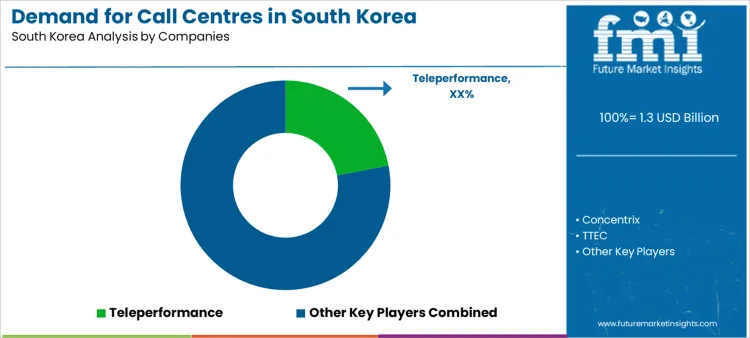
The competitive environment is characterized by a fierce race between global BPO giants and technology-focused CCaaS providers. Competition hinges on technological sophistication, particularly in AI and analytics integration, depth of vertical-specific expertise, especially in regulated sectors, and the ability to deliver tangible business outcomes like increased sales conversion or customer retention. Scale and global delivery capabilities remain advantages for large BPOs, while agility and innovation pace define the tech players.
Success increasingly depends on forming strategic partnerships with cloud infrastructure providers and CRM platforms to offer deeply embedded, seamless solutions. The ability to attract, train, and retain high-quality human talent for complex service delivery remains a critical, though challenging, differentiator.
Key Industry Participants
- Teleperformance
- Concentrix
- TTEC
- Foundever
- Alorica
Scope of Report
| Items | Values |
|---|---|
| Quantitative Units | USD Billion |
| Deployment Mode | Cloud-Based, On-premises, Hybrid |
| Vertical | BFSI & Government, Healthcare, IT & Telecom, Media & Entertainment, Retail & Consumer Goods |
| Component | Software, Services |
| Regions Covered | South Gyeongsang, North Jeolla, South Jeolla, Jeju |
| Key Companies Profiled | Teleperformance, Concentrix, TTEC, Foundever, Alorica |
Call Centres Sector in South Korea by Segment
By Deployment Mode
- Cloud-Based
- On-premises
- Hybrid
By Vertical
- BFSI & Government
- Healthcare
- IT & Telecom
- Media & Entertainment
- Retail & Consumer Goods
By Component
- Software
- Services
By Region
- Jeju
- South Gyeongsang
- South Jeolla
- North Jeolla
Bibliography
- Korea Communications Commission (KCC). (2023). Report on Digital Service Quality and Customer Protection Standards.
- National Information Society Agency (NIA), South Korea. (2024). White Paper on AI Adoption in Public and Private Sector Services.
- Korea Customer Service Center Association (KCSCA). (2023). Annual Industry Survey on Contact Centre Operations and Technology Investment.
Frequently Asked Questions
How big is the demand for call centres in south korea in 2026?
The demand for call centres in south korea is estimated to be valued at USD 1.3 billion in 2026.
What will be the size of call centres in south korea in 2036?
The market size for the call centres in south korea is projected to reach USD 2.5 billion by 2036.
How much will be the demand for call centres in south korea growth between 2026 and 2036?
The demand for call centres in south korea is expected to grow at a 7.0% CAGR between 2026 and 2036.
What are the key product types in the call centres in south korea?
The key product types in call centres in south korea are cloud based, on-premises and hybrid.
Which vertical segment is expected to contribute significant share in the call centres in south korea in 2026?
In terms of vertical, bfsi, government segment is expected to command 70.2% share in the call centres in south korea in 2026.
Preview the report firsthand - request a free sample
Get SampleGet the brochure for pricing and purchase details.
Get PDFTable of Content
- Executive Summary
- South Korea Market Outlook
- Demand-side Trends
- Supply-side Trends
- Technology Roadmap Analysis
- Analysis and Recommendations
- Market Overview
- Market Coverage / Taxonomy
- Market Definition / Scope / Limitations
- Market Background
- Market Dynamics
- Drivers
- Restraints
- Opportunity
- Trends
- Scenario Forecast
- Demand in Optimistic Scenario
- Demand in Likely Scenario
- Demand in Conservative Scenario
- Opportunity Map Analysis
- Product Life Cycle Analysis
- Supply Chain Analysis
- Investment Feasibility Matrix
- Value Chain Analysis
- PESTLE and Porter’s Analysis
- Regulatory Landscape
- Regional Parent Market Outlook
- Production and Consumption Statistics
- Import and Export Statistics
- Market Dynamics
- South Korea Market Analysis 2021 to 2025 and Forecast, 2026 to 2036
- Historical Market Size Value (USD Million) Analysis, 2021 to 2025
- Current and Future Market Size Value (USD Million) Projections, 2026 to 2036
- Y-o-Y Growth Trend Analysis
- Absolute $ Opportunity Analysis
- South Korea Market Pricing Analysis 2021 to 2025 and Forecast 2026 to 2036
- South Korea Market Analysis 2021 to 2025 and Forecast 2026 to 2036, By Deployment Mode
- Introduction / Key Findings
- Historical Market Size Value (USD Million) Analysis By Deployment Mode, 2021 to 2025
- Current and Future Market Size Value (USD Million) Analysis and Forecast By Deployment Mode, 2026 to 2036
- Cloud Based
- On-premises
- Hybrid
- Cloud Based
- Y-o-Y Growth Trend Analysis By Deployment Mode, 2021 to 2025
- Absolute $ Opportunity Analysis By Deployment Mode, 2026 to 2036
- South Korea Market Analysis 2021 to 2025 and Forecast 2026 to 2036, By Vertical
- Introduction / Key Findings
- Historical Market Size Value (USD Million) Analysis By Vertical, 2021 to 2025
- Current and Future Market Size Value (USD Million) Analysis and Forecast By Vertical, 2026 to 2036
- BFSI, Government
- Healthcare
- IT & Telecom
- Media & Entertainment
- Retail & Consumer Goods
- BFSI, Government
- Y-o-Y Growth Trend Analysis By Vertical, 2021 to 2025
- Absolute $ Opportunity Analysis By Vertical, 2026 to 2036
- South Korea Market Analysis 2021 to 2025 and Forecast 2026 to 2036, By Component
- Introduction / Key Findings
- Historical Market Size Value (USD Million) Analysis By Component, 2021 to 2025
- Current and Future Market Size Value (USD Million) Analysis and Forecast By Component, 2026 to 2036
- Software
- Services
- Software
- Y-o-Y Growth Trend Analysis By Component, 2021 to 2025
- Absolute $ Opportunity Analysis By Component, 2026 to 2036
- Market Structure Analysis
- Competition Dashboard
- Competition Benchmarking
- Market Share Analysis of Top Players
- By Regional
- By Deployment Mode
- By Vertical
- By Component
- Competition Analysis
- Competition Deep Dive
- Teleperformance
- Overview
- Product Portfolio
- Profitability by Market Segments (Product/Age /Sales Channel/Region)
- Sales Footprint
- Strategy Overview
- Marketing Strategy
- Product Strategy
- Channel Strategy
- Concentrix
- TTEC
- Foundever
- Alorica
- Teleperformance
- Competition Deep Dive
- Assumptions & Acronyms Used
- Research Methodology


