

- Industry Size (2026)
- USD 4.1 Bn
- Forecast (2036)
- USD 8.7 Bn
- CAGR (2026 to 2036)
- 7.8%
Call Centre Industry Forecast and Outlook in the UK 2026 to 2036
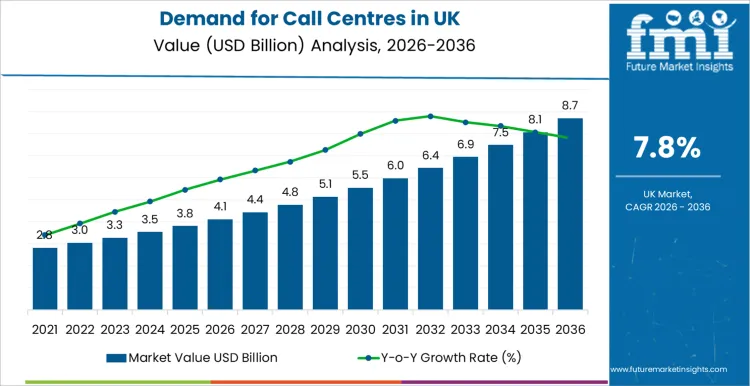
The demand for call centre services and solutions in the UK is projected to reach a valuation of USD 4.1 billion in 2026. This sector is anticipated to grow substantially, achieving a size of USD 8.7 billion by 2036, advancing at a compound annual growth rate of 7.8%.
This expansion is anchored in the UK's rapid digital transformation across all economic sectors, an unwavering consumer and citizen expectation for omnichannel support, and the strategic adoption of technology to enhance customer experience and operational efficiency.
The critical need for sophisticated customer engagement platforms is being driven by the digitisation of public services, the complex demands of hybrid financial products, and the relentless growth of e-commerce. This creates a concentrated demand for both outsourced contact centre services and the underlying technology that enables seamless, intelligent, and compliant interactions across voice, digital, and AI-driven channels.
Quick Stats for the Call Centre Industry in the UK
- Call Centre Industry Valuation in the UK (2026):USD 4.1 billion
- Call Centre Industry Forecast Valuation in the UK (2036):USD 8.7 billion
- Call Centre Industry in the UK Forecast CAGR (2026-2036):7.8%
- Leading Regional Growth England (CAGR 8.6%)
- Leading Deployment Mode Cloud-Based (24.0%)
- Leading Vertical BFSI & Government (66.7%)
- Leading Component Software (55.0%)
- Key Companies Profiled Teleperformance, Concentrix, TTEC, Foundever, Alorica
Why is the UK a Sophisticated Hub for Call Centre Demand?
The UK's demand for call centre services stems from its position as a global financial technology leader, a pioneer in digital government services, and a densely populated, highly connected consumer market.
The nation's regulatory landscape, including stringent consumer protection and data privacy laws, mandates high-quality, transparent, and secure customer interaction frameworks, elevating the need for professionalised solutions.
Beyond compliance, the UK's highly competitive business environment across retail, telecommunications, and utilities pushes customer experience to the forefront as a key differentiator. Public sector modernisation initiatives demand robust citizen engagement platforms that are accessible, efficient, and capable of handling high-volume inquiries, driving significant investment in both in-house and outsourced contact centre operations.
How is the Call Centre Landscape Segmented by Deployment, Vertical, and Component?
The technological infrastructure model, the industry it serves, and the core elements of the solution categorize this sector. This segmentation reveals a market in transition, where agility and scalability are prized alongside deep domain expertise, tailored to meet distinct challenges from handling sensitive financial queries to managing public health information campaigns.
Which Deployment Mode Offers Agility and Scalability?
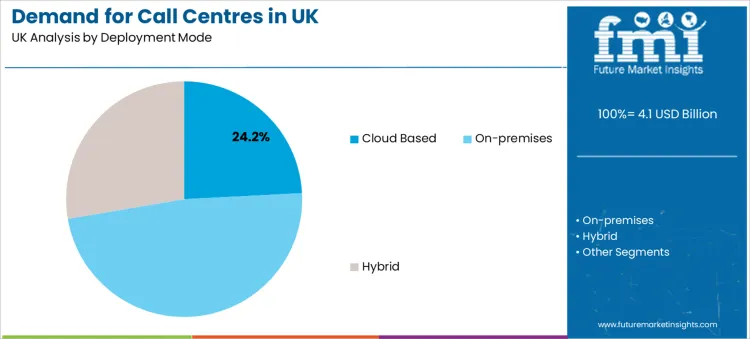
Cloud-based deployment models hold a significant 24.0% share, with their prominence driven by the need for rapid scalability, remote agent enablement, and reduced upfront capital expenditure.
Businesses and government entities require flexible solutions that can adapt to fluctuating demand, integrate with existing CRM platforms, and facilitate a distributed workforce, making cloud infrastructure a key operational asset for modern customer engagement.
Which Vertical is the Foremost Investor in this Ecosystem?
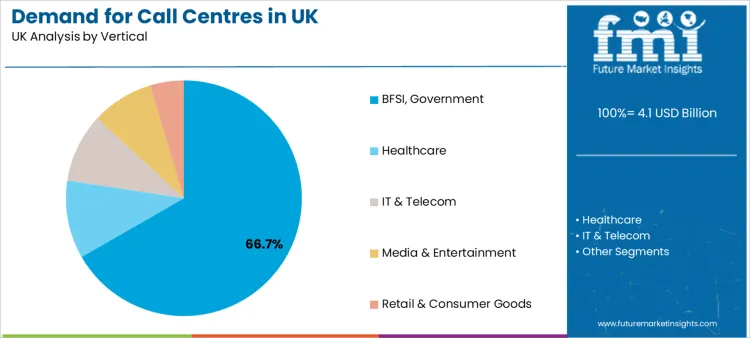
The combined BFSI and government vertical stands as the largest end-user, with an estimated 66.7% share. This is a direct result of complex, compliance-heavy customer and citizen interactions, massive digital transformation projects within public services, and the continuous need for trusted intermediaries in financial services. The healthcare sector is also a critical growth segment, utilizing contact centres for patient support and appointment management.
Which Component Forms the Core of Modern Solutions?
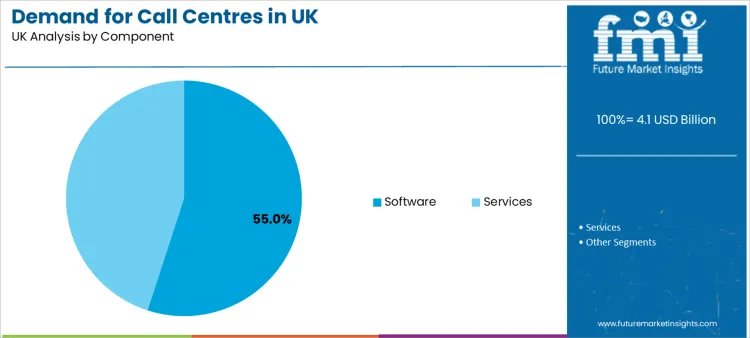
Software commands the leading share among components, estimated at 55.0%. This includes core contact centre platform software, AI-powered analytics, workforce engagement management, and omnichannel routing solutions. Its dominance underscores that intelligent software is the cornerstone for delivering personalised service, optimising agent performance, and deriving actionable insights from customer interactions. The services component, encompassing business process outsourcing (BPO) and professional services, remains vital for operational execution and system integration.
What are the Dynamics, Restraints, Opportunities, and Threats Shaping this Sector?
How are Digital Transformation and CX Focus Driving Consistent Demand?
The primary growth driver is the wholesale digital transformation of customer and citizen-facing operations across industries. This mandates the adoption of modern contact centre platforms capable of supporting omnichannel journeys. Concurrently, the recognition of customer experience as a primary competitive differentiator creates continuous investment in analytics, automation, and agent empowerment tools to improve satisfaction and loyalty.
Do High Implementation Costs and Talent Shortages Restrain Growth?
A significant restraint is the complexity and cost of integrating new contact centre technology with legacy enterprise systems, which can be prohibitive. A persistent industry challenge is the shortage and high turnover of skilled contact centre agents and supervisors, putting pressure on service quality and operational costs. Concerns regarding data security, especially in cloud models handling sensitive information, also necessitate robust and often expensive compliance measures.
How are AI and Automation Creating New Potential?
Substantial opportunities are emerging from the integration of advanced AI, including generative AI for agent assist and self-service, predictive analytics for customer routing, and sentiment analysis for real-time quality assurance.
The expansion of customer service into new digital channels like social messaging and video support presents a frontier for engagement. Furthermore, the growing model of contact-centre-as-a-service (CCaaS) lowers the barrier to entry for mid-sized enterprises, offering enterprise-grade capabilities without major capital outlay.
What External Factors Could Challenge Sector Growth?
The sector faces threats from economic downturns leading to reduced consumer spending and business cost-cutting, which can impact outsourced service volumes. Rapid technological evolution risks legacy BPO models becoming obsolete, requiring continuous investment in upskilling and technology. Geopolitical factors influencing data sovereignty regulations could complicate cloud service provisioning and operational models.
How is Call Centre Demand Evolving across Key Regions in the UK?
Growth is influenced by the concentration of corporate headquarters, government agencies, technology hubs, and regional economic development initiatives. The projected compound annual growth rates from 2026 to 2036 illustrate these geographic distinctions.
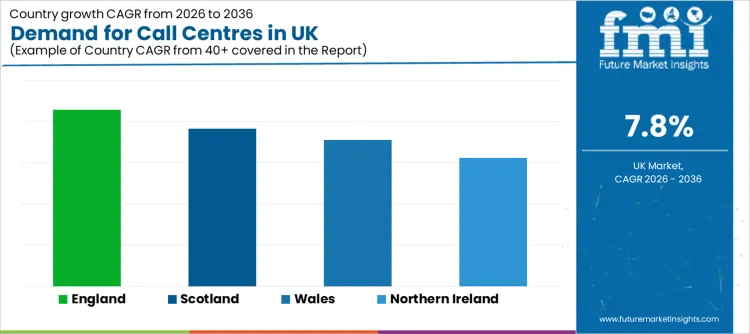
| Region | CAGR (2026-2036) |
|---|---|
| England | 8.6% |
| Scotland | 7.6% |
| Wales | 7.1% |
| Northern Ireland | 6.2% |
What is Fuelling Premier Growth in England?
England leads with a projected CAGR of 8.6%. This is driven by its concentration of corporate HQs in London and the Southeast, major government department headquarters, and a dense ecosystem of FinTech and technology firms.
It is the primary hub for both large-scale outsourced BPO contracts and the in-house contact centres of major national and international corporations, serving as the central nexus for the UK's customer experience sector.
Why is Scotland a Key Centre for Specialised Operations?
Scotland exhibits a strong CAGR of 7.6%, powered by major financial services back-office and contact centre operations in Edinburgh and Glasgow, a growing technology sector, and government-supported initiatives to develop regional service hubs. The presence of a skilled, often multilingual workforce and supportive development agencies creates demand for both domestic and internationally serving contact centre operations.
What Factors Underpin Steady Demand in Wales and Northern Ireland?
Wales and Northern Ireland show stable, positive growth. Wales, with a CAGR of 7.1%, benefits from significant investments in regional contact centre parks, a strong university talent pipeline, and cost-competitive operational environments that attract shared-service centres.
Northern Ireland, with a projected CAGR of 6.2%, reflects growth supported by its universities, a strong cybersecurity industry aligning with secure data handling, and successful foreign direct investment in the BPO sector, aligning with broader regional digital economy strategies.
What Defines the Competitive Landscape of the Call Centre Industry?

The competitive environment is intensely dynamic, characterised by rivalry on the basis of technological sophistication, domain expertise, geographic delivery footprint, and price. Global BPO giants compete with specialised niche providers and technology-focused platform vendors.
Differentiation is achieved through deep vertical specialisation such as healthcare compliance, investment in proprietary AI tools, or a reputation for exceptional service quality and cultural alignment.
Success depends not only on operational excellence but on a consultative partnership approach, co-investing in technology and transformation with clients. Forming strategic alliances with leading CRM and AI software providers is a critical tactic for maintaining technological currency. The ability to offer blended onshore, nearshore, and offshore delivery models provides flexibility in balancing cost, quality, and data sovereignty requirements for clients.
Key Industry Participants
- Teleperformance
- Concentrix
- TTEC
- Foundever
- Alorica
Scope of Report
| Items | Values |
|---|---|
| Quantitative Units | USD Billion |
| Deployment Mode | Cloud-Based, On-premises, Hybrid |
| Vertical | BFSI & Government, Healthcare, IT & Telecom, Media & Entertainment, Retail & Consumer Goods |
| Component | Software, Services |
| Regions Covered | England, Scotland, Wales, Northern Ireland |
| Key Companies Profiled | Teleperformance, Concentrix, TTEC, Foundever, Alorica |
Call Centre Industry Analysis in the UK by Segments
By Deployment Mode:
- Cloud-Based
- On-premises
- Hybrid
By Vertical:
- BFSI & Government
- Healthcare
- IT & Telecom
- Media & Entertainment
- Retail & Consumer Goods
By Component:
- Software
- Services
By Region:
- England
- Scotland
- Wales
- Northern Ireland
Bibliography
- UK Contact Centre Forum (UKCCF). (2023). The State of the UK Contact Centre Industry.
- Department for Digital, Culture, Media & Sport (DCMS). (2024). UK Digital Strategy and Skills Review.
- TechUK. (2023). Enabling Customer Experience and Service Transformation.
- The Institute of Customer Service (ICS). (2024). UK Customer Satisfaction Index and Trends Report.
Frequently Asked Questions
How big is the demand for call centres in uk in 2026?
The demand for call centres in uk is estimated to be valued at USD 4.1 billion in 2026.
What will be the size of call centres in uk in 2036?
The market size for the call centres in uk is projected to reach USD 8.7 billion by 2036.
How much will be the demand for call centres in uk growth between 2026 and 2036?
The demand for call centres in uk is expected to grow at a 7.8% CAGR between 2026 and 2036.
What are the key product types in the call centres in uk ?
The key product types in call centres in uk are cloud based, on-premises and hybrid.
Which vertical segment is expected to contribute significant share in the call centres in uk in 2026?
In terms of vertical, bfsi, government segment is expected to command 66.7% share in the call centres in uk in 2026.
Preview the report firsthand - request a free sample
Get SampleGet the brochure for pricing and purchase details.
Get PDFTable of Content
- Executive Summary
- UK Market Outlook
- Demand-side Trends
- Supply-side Trends
- Technology Roadmap Analysis
- Analysis and Recommendations
- Market Overview
- Market Coverage / Taxonomy
- Market Definition / Scope / Limitations
- Market Background
- Market Dynamics
- Drivers
- Restraints
- Opportunity
- Trends
- Scenario Forecast
- Demand in Optimistic Scenario
- Demand in Likely Scenario
- Demand in Conservative Scenario
- Opportunity Map Analysis
- Product Life Cycle Analysis
- Supply Chain Analysis
- Investment Feasibility Matrix
- Value Chain Analysis
- PESTLE and Porter’s Analysis
- Regulatory Landscape
- Regional Parent Market Outlook
- Production and Consumption Statistics
- Import and Export Statistics
- Market Dynamics
- UK Market Analysis 2021 to 2025 and Forecast, 2026 to 2036
- Historical Market Size Value (USD Million) Analysis, 2021 to 2025
- Current and Future Market Size Value (USD Million) Projections, 2026 to 2036
- Y-o-Y Growth Trend Analysis
- Absolute $ Opportunity Analysis
- UK Market Pricing Analysis 2021 to 2025 and Forecast 2026 to 2036
- UK Market Analysis 2021 to 2025 and Forecast 2026 to 2036, By Deployment Mode
- Introduction / Key Findings
- Historical Market Size Value (USD Million) Analysis By Deployment Mode , 2021 to 2025
- Current and Future Market Size Value (USD Million) Analysis and Forecast By Deployment Mode , 2026 to 2036
- Cloud Based
- On-premises
- Hybrid
- Cloud Based
- Y-o-Y Growth Trend Analysis By Deployment Mode , 2021 to 2025
- Absolute $ Opportunity Analysis By Deployment Mode , 2026 to 2036
- UK Market Analysis 2021 to 2025 and Forecast 2026 to 2036, By Vertical
- Introduction / Key Findings
- Historical Market Size Value (USD Million) Analysis By Vertical, 2021 to 2025
- Current and Future Market Size Value (USD Million) Analysis and Forecast By Vertical, 2026 to 2036
- BFSI, Government
- Healthcare
- IT & Telecom
- Media & Entertainment
- Retail & Consumer Goods
- BFSI, Government
- Y-o-Y Growth Trend Analysis By Vertical, 2021 to 2025
- Absolute $ Opportunity Analysis By Vertical, 2026 to 2036
- UK Market Analysis 2021 to 2025 and Forecast 2026 to 2036, By Component
- Introduction / Key Findings
- Historical Market Size Value (USD Million) Analysis By Component, 2021 to 2025
- Current and Future Market Size Value (USD Million) Analysis and Forecast By Component, 2026 to 2036
- Software
- Services
- Software
- Y-o-Y Growth Trend Analysis By Component, 2021 to 2025
- Absolute $ Opportunity Analysis By Component, 2026 to 2036
- Market Structure Analysis
- Competition Dashboard
- Competition Benchmarking
- Market Share Analysis of Top Players
- By Regional
- By Deployment Mode
- By Vertical
- By Component
- Competition Analysis
- Competition Deep Dive
- Teleperformance
- Overview
- Product Portfolio
- Profitability by Market Segments (Product/Age /Sales Channel/Region)
- Sales Footprint
- Strategy Overview
- Marketing Strategy
- Product Strategy
- Channel Strategy
- Concentrix
- TTEC
- Foundever
- Alorica
- Teleperformance
- Competition Deep Dive
- Assumptions & Acronyms Used
- Research Methodology


