

- Industry Size (2026)
- USD 193.6 Mn
- Forecast (2036)
- USD 271 Mn
- CAGR (2026 to 2036)
- 3.4%
Demand for Computer Keyboard in South Korea Forecast and Outlook 2026 to 2036
The demand for computer keyboards in South Korea is projected to reach USD 193.6 million in 2026 and grow to USD 271 million by 2036, expanding at a CAGR of 3.4%. Dominant players in the market defend pricing power through strong brand recognition and strategic partnerships with tech giants, which help secure long-term contracts and maintain premium pricing. Entry barriers remain high due to the significant capital investment required for R&D, manufacturing facilities, and the establishment of distribution networks. While fragmentation persists due to the variety of consumer preferences and specialized segments, it is expected to narrow as leading players consolidate market share by acquiring smaller competitors and streamlining supply chains. These established companies are also leveraging economies of scale, which enables them to lower costs and reinforce their competitive advantage. Smaller players will find it increasingly difficult to challenge the pricing dominance of the larger firms without innovative differentiation.
Quick Stats for the Demand for Computer Keyboard in South Korea
- Computer Keyboard in South Korea Value (2026): USD 193.6 million
- Computer Keyboard in South Korea Forecast Value (2036): USD 271 million
- Computer Keyboard in South Korea Forecast CAGR (2026 to 2036): 3.4%
- Computer Keyboard in South Korea Leading Segment: Standard Keyboards (52%)
- Key Growth Regions of Computer Keyboard in South Korea: Jeju (leading CAGR ~4.1%)
- Top Players of Computer Keyboard in South Korea: Logitech, Microsoft, LENOVO, CHICONY GLOBAL INC., Dell Inc.
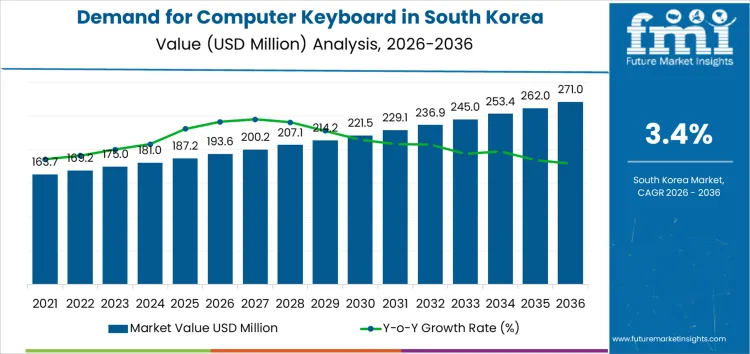
What is the Growth Forecast for the Demand for Computer Keyboards in South Korea through 2036?
The demand for computer keyboards in South Korea is forecasted to grow steadily, reaching USD 193.6 million by 2026, with a projected expansion at a 3.4% CAGR through 2036. The rise of digital workspaces, increased online education, and growth in gaming are expected to drive this upward trajectory. As the South Korean tech ecosystem continues to thrive, both general consumers and business users will continue to rely on high-performance keyboards for productivity and entertainment. The trend of integrating advanced features such as mechanical keys, customizable functions, and ergonomic designs will support demand across various market segments.
By 2036, the market is projected to reach USD 271 million, reflecting a significant dollar opportunity driven by technological advancements and growing consumer preference for enhanced user experiences. The ongoing demand for high-quality, durable, and feature-rich computer keyboards is expected to persist as South Korean consumers seek products that offer both performance and comfort. With continued technological innovation and a shift toward wireless and customizable options, the market for computer keyboards in South Korea is poised for continued growth.
Key Takeaways for Demand for Computer Keyboard in South Korea
| Metric | Value |
|---|---|
| Industry Sales Value (2026) | USD 193.6 million |
| Industry Forecast Value (2036) | USD 271 million |
| Industry Forecast CAGR (2026 to 2036) | 3.4% |
Why is the Demand for Computer Keyboards Growing in South Korea?
Demand for computer keyboards in South Korea reflects broader shifts in how people use computers for work, gaming, and daily activities. South Korea has a highly connected population with widespread access to personal computers, mobile devices, and high-speed internet. These conditions support ongoing purchases of peripherals such as keyboards as consumers and businesses replace older units or upgrade to newer models. Gaming plays a significant role in this demand, as South Korea has one of the world’s most active e-sports and gaming communities, with many users preferring mechanical and optical mechanical keyboards that offer enhanced responsiveness and durability. This preference supports demand for higher-performance keyboards among gamers and hobbyists alike. Domestic retailers and electronic markets also supply a broad range of keyboard types, from ergonomic models for office workers to premium gaming devices, reflecting diverse usage patterns within the country and reinforcing steady unit sales.
Looking ahead, the growth of demand for computer keyboards in South Korea is shaped by several intersecting factors. Continued adoption of remote work and online education increases reliance on personal computing setups and peripherals that promote comfort and productivity. Ergonomic keyboards are gaining attention among professionals and students who spend extended hours typing. Gaming culture and PC bangs remain influential, driving interest in advanced keyboard features and customization options that enhance the user experience. Technological trends such as wireless connectivity and programmable keys are also attracting consumers seeking modern features. Expansion of e-commerce channels facilitates easier access to a wider variety of products, allowing consumers to compare and purchase keyboards that suit specific needs. Taken together, these patterns point to sustained interest in keyboards across multiple user segments in South Korea.
What is the Demand for Computer Keyboards in South Korea?
The demand for computer keyboards in South Korea is influenced by two primary segments: the type of keyboard and the end-user demographic. Among the different types of keyboards, standard keyboards dominate the market, while individuals and consumers account for a significant portion of the demand. Standard keyboards represent 52% of the total market share, with individuals and consumers holding a 44.8% share in terms of end-users. These segments, in combination, play a crucial role in shaping the market’s growth trajectory, catering to both everyday users and specific professional sectors.
How Does the Standard Keyboard Segment Drive the Market?
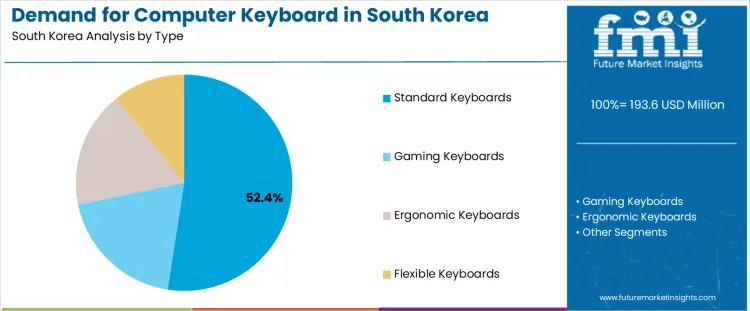
Standard keyboards account for 52% of the computer keyboard market in South Korea, making them the largest segment by type. This segment includes traditional wired and wireless keyboards that cater to the general consumer market. With the rise in remote work and increased use of computers in households, the demand for standard keyboards has surged. These keyboards are favored for their functionality, affordability, and wide availability, making them the go-to choice for personal and everyday use. Additionally, standard keyboards are commonly used in academic and office environments where comfort and reliability are key, but specialized features like gaming-specific controls or ergonomic designs are not necessary. The segment also benefits from the increasing penetration of smartphones and computers, with many consumers seeking simple and cost-effective input devices for their everyday computing needs. As more South Korean consumers embrace digital tools for work, education, and entertainment, the demand for standard keyboards is expected to continue its steady rise, driven by both individual and household usage.
How Do End-User Preferences Shape the Demand for Keyboards?
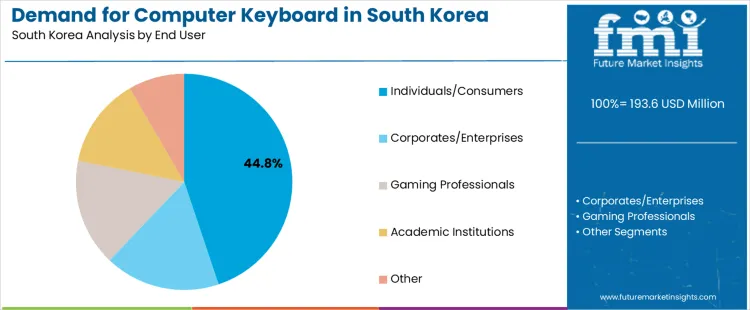
End-user preferences significantly influence the demand for various types of computer keyboards in South Korea, with individuals and consumers accounting for 44.8% of the market share. This demographic includes both casual and heavy computer users, such as gamers, students, and professionals who require keyboards for daily tasks. The individual consumer segment is particularly responsive to the convenience, style, and affordability of standard keyboards. As more people work from home and use personal computers for entertainment and social interaction, the need for reliable, cost-effective keyboards has increased. On the other hand, gaming keyboards, which are more specialized, cater to professional gamers and gaming enthusiasts, while ergonomic keyboards are targeted at individuals seeking better comfort and posture during long hours of use. The flexibility in choice allows South Korean consumers to opt for keyboards that suit their specific needs, whether for leisure, work, or gaming. As digital dependency grows, the demand across these end-user segments is likely to remain robust, supporting steady growth in the keyboard market in South Korea.
What Is the Current Demand for Computer Keyboards in South Korea?
The demand for computer keyboards in South Korea has been consistent, driven by the country’s strong position in technology and electronics manufacturing. As one of the leading markets for personal computing, the demand for keyboards remains high due to the growing use of desktop computers, laptops, and gaming consoles. The increased focus on gaming peripherals and ergonomic designs is pushing the demand in specific segments. The shift towards work-from-home setups and e-learning, accelerated by the pandemic, has also contributed to the steady demand for reliable, comfortable, and high-performance keyboards.
What Factors Are Driving Demand for Computer Keyboards in South Korea?
Several factors are driving the demand for computer keyboards in South Korea. The continued growth of e-commerce, particularly for gaming and office products, has significantly boosted the demand for specialized keyboards, such as mechanical, gaming, and ergonomic models. The surge in the gaming industry, supported by South Korea’s thriving esports ecosystem, has led to increased demand for high-end gaming keyboards with customized features, backlighting, and tactile feedback. Additionally, the remote working trend continues to fuel demand for office-oriented peripherals, including comfortable and efficient keyboards tailored to extended use. South Korea’s strong focus on innovation in consumer electronics has driven product upgrades, fostering demand for newer and more feature-rich keyboard designs.
What Are the Constraints on Demand for Computer Keyboards in South Korea?
While demand for computer keyboards in South Korea is stable, there are certain constraints. The high level of market saturation for basic models means that growth is concentrated in specific segments, such as gaming and ergonomic keyboards, which could limit overall growth potential. Additionally, competition from mobile devices, where virtual keyboards are increasingly used, may reduce demand for traditional keyboards, especially in younger consumer segments. Price sensitivity remains a factor, particularly for high-end mechanical or customizable models, which may deter some consumers from purchasing premium products. Supply chain issues, such as fluctuations in component costs or shipping delays, can also affect availability and pricing.
What Trends Are Emerging in South Korea’s Computer Keyboard Market?
Several key trends are emerging in South Korea’s computer keyboard market. The growth of gaming culture is a major trend, with a marked shift towards gaming-specific peripherals that offer specialized features like RGB lighting, programmable keys, and enhanced durability. Ergonomic keyboards are becoming increasingly popular, driven by the growing awareness of health and comfort, particularly for people who spend extended hours typing. Additionally, wireless technology is gaining traction, with a growing demand for Bluetooth-enabled keyboards that offer more flexibility and clutter-free setups. Manufacturers are also focusing on customization options, such as interchangeable keycaps and personalized layouts, catering to tech-savvy consumers who prefer a tailored typing experience.
What is the Regional Outlook for the Demand for Computer Keyboards in South Korea?
The demand for computer keyboards in South Korea shows regional variations, driven by technological advancements, industrial needs, and consumer behavior. Jeju, South Gyeongsang, and South Jeolla are projected to experience strong growth in keyboard demand, while North Jeolla is expected to see steady demand. The growing reliance on digital devices in both the consumer and business sectors, alongside the increasing use of specialized keyboards for gaming, office work, and industrial applications, plays a significant role in this growth. With the increasing focus on ergonomics, customization, and technology adoption, these regions are expected to see consistent growth in computer keyboard demand.
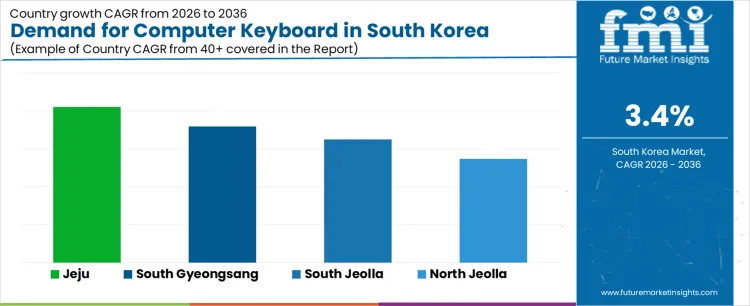
| Province | CAGR (2026 to 2036) |
|---|---|
| South Gyeongsang | 3.6% |
| North Jeolla | 2.7% |
| South Jeolla | 3.2% |
| Jeju | 4.1% |
What drives the demand for Computer Keyboards in South Gyeongsang?
South Gyeongsang is projected to experience a CAGR of 3.6% in the demand for computer keyboards from 2026 to 2036. The region’s strong industrial base, particularly in electronics, IT, and manufacturing, contributes significantly to the growing demand for computer peripherals, including keyboards. As businesses continue to adopt more advanced technologies, the need for ergonomic and high-performance keyboards rises. South Gyeongsang is also home to several large-scale electronics manufacturers, which further boosts the demand for specialized keyboards tailored to various sectors, from gaming to professional use. Additionally, the region’s strong export orientation supports the demand for computer keyboards, with a focus on both domestic consumption and international distribution. The increasing use of digital devices and the rise of e-commerce in the region are also significant factors fueling this demand.
What influences the growth of Computer Keyboard demand in North Jeolla?
North Jeolla is expected to see a steady CAGR of 2.7% in computer keyboard demand over the 2026 to 2036 period. The region’s growing electronics manufacturing sector, along with increasing consumer adoption of digital devices, is driving demand for keyboards. While North Jeolla’s technology sector is not as large as that of other regions, its focus on manufacturing and innovation has led to an increase in demand for computer peripherals. The region's expanding IT infrastructure, combined with the rising popularity of e-commerce, is contributing to the growing need for specialized keyboards, particularly in the gaming and professional sectors. North Jeolla's industrial sector also drives demand for durable and high-quality keyboards, as companies in the region prioritize performance and ergonomics in their workplace technologies. As more businesses invest in digital technologies, the demand for computer keyboards will continue to rise.
What drives the demand for Computer Keyboards in South Jeolla?
South Jeolla’s demand for computer keyboards is projected to grow at a CAGR of 3.2% from 2026 to 2036. The region’s expanding manufacturing and electronics sectors are key drivers of this demand. As South Jeolla continues to see growth in IT infrastructure and digital adoption, the need for computer peripherals, including keyboards, rises. South Jeolla’s growing emphasis on sustainable technology and the rise of smart factories also contribute to the demand for high-quality, ergonomic keyboards. Additionally, the increasing popularity of gaming and e-sports in the region, particularly among younger demographics, is driving the demand for specialized gaming keyboards. The growth of remote work and online education in South Jeolla further fuels the need for comfortable and efficient keyboards. As businesses and consumers alike prioritize productivity and performance, the demand for computer keyboards in the region will continue to expand.
Why is Jeju’s demand for Computer Keyboards the highest?
Jeju is expected to experience the highest growth in computer keyboard demand, with a CAGR of 4.1% from 2026 to 2036. As a major tourist destination, Jeju sees an influx of international visitors, which increases the demand for digital devices and peripherals, including keyboards. The growing focus on remote work, e-learning, and digital entertainment, particularly gaming, in Jeju's consumer market, is driving this demand. Jeju’s expanding role in the tech and tourism sectors contributes to the higher-than-average demand for computer keyboards. As more businesses and individuals rely on digital devices for everyday tasks, the need for comfortable, ergonomic, and customizable keyboards will continue to rise. The region’s growing investment in digital infrastructure, coupled with its tourism-driven retail market, positions Jeju as a key player in the rising demand for computer keyboards across South Korea.
How are Competitors Differentiating in the Computer Keyboard Market in South Korea?
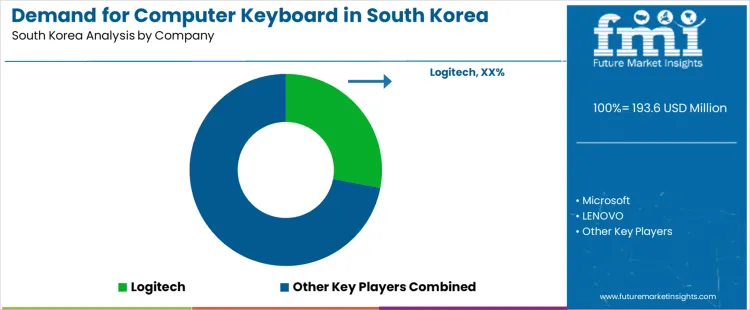
In the South Korean computer keyboard market, competition is driven by product innovation, ergonomic design, and brand loyalty. Logitech, as the leading player, focuses on advanced technology integration, offering mechanical and wireless keyboards with customizable features, appealing to both casual users and professionals.
The brand's strong presence in the gaming sector with its high-performance keyboards has solidified its market position. Microsoft competes by offering a range of ergonomic keyboards, emphasizing comfort and productivity, which is a key selling point for users who prioritize long hours of use. LENOVO and Dell Inc. also differentiate by offering business-oriented solutions, with durable and functional keyboards designed for office environments. These companies invest heavily in ergonomic designs, appealing to South Korean consumers who prioritize user comfort and productivity in both personal and professional settings.
As competition grows, companies like CHICONY GLOBAL INC. focus on providing cost-effective options while maintaining quality. Their keyboards cater to the budget-conscious segment, offering competitive pricing without compromising essential features. All players, from Logitech to Microsoft, use product brochures to showcase their technological advancements, unique selling points, and product benefits. These brochures play a key role in highlighting the ergonomic, wireless, and customizable aspects of their keyboards, allowing companies to capture a broad spectrum of users in the competitive South Korean market.
Key Players of the Demand for Computer Keyboard in South Korea
- Logitech
- Microsoft
- LENOVO
- CHICONY GLOBAL INC.
- Dell Inc.
Scope of the Report
| Items | Values |
|---|---|
| Quantitative Units (2026) | USD Million |
| Type | Standard Keyboards, Gaming Keyboards, Ergonomic Keyboards, Flexible Keyboards |
| End User | Individuals/Consumers, Corporates/Enterprises, Gaming Professionals, Academic Institutions, Other |
| Connectivity Type | Wired Keyboards, Wireless Keyboards |
| Companies | Logitech, Microsoft, LENOVO, CHICONY GLOBAL INC., Dell Inc. |
| Region Covered | South Korea |
| Provinces Covered | South Gyeongsang, North Jeolla, South Jeolla, Jeju |
| Additional Attributes | Dollar sales by type, end user, and connectivity type. The shift towards gaming and ergonomic keyboards drives market growth, with wired and wireless connectivity options catering to both individuals and enterprises. The increasing demand for comfort, flexibility, and enhanced performance for professional and personal use is boosting sales. |
Demand for Computer Keyboards in South Korea
Type:
- Standard Keyboards
- Gaming Keyboards
- Ergonomic Keyboards
- Flexible Keyboards
- Other
End-User:
- Individuals/Consumers
- Corporates/Enterprises
- Gaming Professionals
- Academic Institutions
- Other
Connectivity Type:
- Wired Keyboards
- Wireless Keyboards
Provinces:
- South Gyeongsang
- North Jeolla
- South Jeolla
- Jeju
Bibliography
- National Statistical Office (South Korea) / Ministry of Data and Statistics. (2025). Annual Information and Communication Technology statistics report: Computer ownership and peripheral adoption trends in South Korea. Government of South Korea.
- Organisation for Economic Co-operation and Development. (2023). Digital economy outlook 2023: ICT usage, hardware adoption, and productivity in OECD countries. OECD Publishing.
- International Telecommunication Union. (2024). Measuring digital development: ICT household and individual usage statistics 2024. ITU.
Frequently Asked Questions
How big is the demand for computer keyboard in south korea in 2026?
The demand for computer keyboard in south korea is estimated to be valued at USD 193.6 million in 2026.
What will be the size of computer keyboard in south korea in 2036?
The market size for the computer keyboard in south korea is projected to reach USD 271.0 million by 2036.
How much will be the demand for computer keyboard in south korea growth between 2026 and 2036?
The demand for computer keyboard in south korea is expected to grow at a 3.4% CAGR between 2026 and 2036.
What are the key product types in the computer keyboard in south korea?
The key product types in computer keyboard in south korea are standard keyboards, gaming keyboards, ergonomic keyboards and flexible keyboards.
Which end user segment is expected to contribute significant share in the computer keyboard in south korea in 2026?
In terms of end user, individuals/consumers segment is expected to command 44.8% share in the computer keyboard in south korea in 2026.
Preview the report firsthand - request a free sample
Get SampleGet the brochure for pricing and purchase details.
Get PDFTable of Content
- Executive Summary
- South Korea Market Outlook
- Demand-side Trends
- Supply-side Trends
- Technology Roadmap Analysis
- Analysis and Recommendations
- Market Overview
- Market Coverage / Taxonomy
- Market Definition / Scope / Limitations
- Market Background
- Market Dynamics
- Drivers
- Restraints
- Opportunity
- Trends
- Scenario Forecast
- Demand in Optimistic Scenario
- Demand in Likely Scenario
- Demand in Conservative Scenario
- Opportunity Map Analysis
- Product Life Cycle Analysis
- Supply Chain Analysis
- Investment Feasibility Matrix
- Value Chain Analysis
- PESTLE and Porter’s Analysis
- Regulatory Landscape
- Regional Parent Market Outlook
- Production and Consumption Statistics
- Import and Export Statistics
- Market Dynamics
- South Korea Market Analysis 2021 to 2025 and Forecast, 2026 to 2036
- Historical Market Size Value (USD Million) Analysis, 2021 to 2025
- Current and Future Market Size Value (USD Million) Projections, 2026 to 2036
- Y-o-Y Growth Trend Analysis
- Absolute $ Opportunity Analysis
- South Korea Market Pricing Analysis 2021 to 2025 and Forecast 2026 to 2036
- South Korea Market Analysis 2021 to 2025 and Forecast 2026 to 2036, By Type
- Introduction / Key Findings
- Historical Market Size Value (USD Million) Analysis By Type , 2021 to 2025
- Current and Future Market Size Value (USD Million) Analysis and Forecast By Type , 2026 to 2036
- Standard Keyboards
- Gaming Keyboards
- Ergonomic Keyboards
- Flexible Keyboards
- Standard Keyboards
- Y-o-Y Growth Trend Analysis By Type , 2021 to 2025
- Absolute $ Opportunity Analysis By Type , 2026 to 2036
- South Korea Market Analysis 2021 to 2025 and Forecast 2026 to 2036, By End User
- Introduction / Key Findings
- Historical Market Size Value (USD Million) Analysis By End User, 2021 to 2025
- Current and Future Market Size Value (USD Million) Analysis and Forecast By End User, 2026 to 2036
- Individuals/Consumers
- Corporates/Enterprises
- Gaming Professionals
- Academic Institutions
- Other
- Individuals/Consumers
- Y-o-Y Growth Trend Analysis By End User, 2021 to 2025
- Absolute $ Opportunity Analysis By End User, 2026 to 2036
- South Korea Market Analysis 2021 to 2025 and Forecast 2026 to 2036, By Connectivity Type
- Introduction / Key Findings
- Historical Market Size Value (USD Million) Analysis By Connectivity Type, 2021 to 2025
- Current and Future Market Size Value (USD Million) Analysis and Forecast By Connectivity Type, 2026 to 2036
- Wired Keyboards
- Wireless Keyboards
- Wired Keyboards
- Y-o-Y Growth Trend Analysis By Connectivity Type, 2021 to 2025
- Absolute $ Opportunity Analysis By Connectivity Type, 2026 to 2036
- Market Structure Analysis
- Competition Dashboard
- Competition Benchmarking
- Market Share Analysis of Top Players
- By Regional
- By Type
- By End User
- By Connectivity Type
- Competition Analysis
- Competition Deep Dive
- Logitech
- Overview
- Product Portfolio
- Profitability by Market Segments (Product/Age /Sales Channel/Region)
- Sales Footprint
- Strategy Overview
- Marketing Strategy
- Product Strategy
- Channel Strategy
- Microsoft
- LENOVO
- CHICONY GLOBAL INC.
- Dell Inc.
- Logitech
- Competition Deep Dive
- Assumptions & Acronyms Used
- Research Methodology


