

- Industry Size (2025)
- USD 2.3 Bn
- Forecast (2035)
- USD 3.2 Bn
- CAGR (2025 to 2035)
- 3.4%
Computer Keyboard Market in USA Forecast and Outlook 2025 to 2035
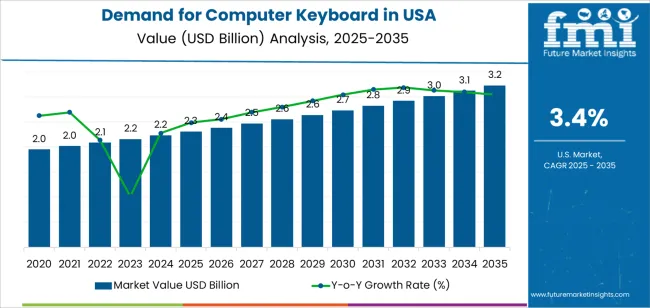
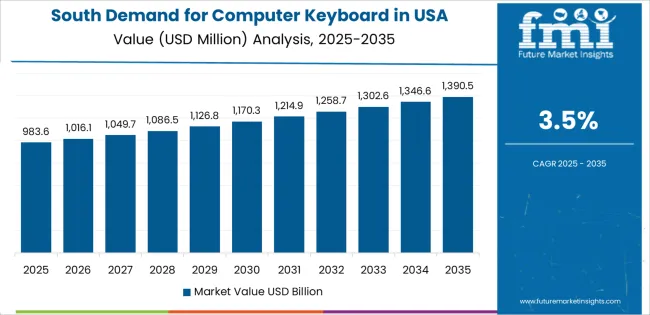
The demand for computer keyboards in the USA is expected to grow from USD 2.3 billion in 2025 to USD 3.2 billion by 2035, reflecting a CAGR of 3.4%. This growth is driven by several factors, including increasing reliance on computers, evolving work-from-home trends, and the continued demand for ergonomic, mechanical, and high-performance keyboards. The ongoing shift toward gaming peripherals, wireless technologies, and customized keyboard solutions also supports the market. As more consumers and businesses focus on productivity, comfort, and technology integration, keyboards remain a critical component of computing setups.
Additionally, the expanding e-commerce market and the increasing digitalization of industries will continue to drive keyboard sales. Keyboards are integral to personal computers, laptops, gaming consoles, and smart home devices, making them a staple in both consumer electronics and business environments. Furthermore, advances in keyboard technologies, such as silent keys, RGB backlighting, and multi-device connectivity, are expected to keep demand steady as new preferences for aesthetics and functionality evolve in the market.
Quick Stats of the Demand for Computer Keyboard in USA
- Demand for Computer Keyboard in USA Value (2025): USD 2.3 billion
- Demand for Computer Keyboard in USA Forecast Value (2035): USD 3.2 billion
- Demand for Computer Keyboard in USA Forecast CAGR (2025-2035): 3.4%
- Demand for Computer Keyboard in USA Leading Type: Standard Keyboards (55%)
- Demand for Computer Keyboard in USA Leading End User: Individuals/Consumers (42.6%)
- Demand for Computer Keyboard in USA Key Growth Regions: West, South, Northeast, Midwest
- Demand for Computer Keyboard in USA Top Players: Logitech, Microsoft, Lenovo, CHICONY GLOBAL INC., Dell Inc.
What is the Growth Forecast for the Demand for Computer Keyboard in USA through 2035?
The demand for computer keyboards in the USA is projected to grow from USD 2.3 billion in 2025 to USD 3.2 billion by 2035, reflecting an increase of USD 0.9 billion over the next decade. This 10-year growth comparison highlights steady, moderate growth driven by ongoing trends in consumer electronics and technology upgrades.
Between 2025 and 2030, the market will expand from USD 2.3 billion to USD 2.7 billion, adding USD 0.4 billion in value. The growth during this period will be driven by the increased adoption of ergonomic and mechanical keyboards as workers and consumers seek more comfortable and efficient input devices. Additionally, the surge in demand for gaming keyboards and wireless keyboards will continue to support growth.
From 2030 to 2035, the market will grow from USD 2.7 billion to USD 3.2 billion, contributing an additional USD 0.5 billion in value. This later period reflects a more stable, yet continued demand, fueled by advancements in keyboard technologies, such as AI integration, multi-functional keys, and smart keyboard solutions for business and personal use. By the end of the forecast period, the maturation of certain markets will result in slower growth compared to the earlier phase, but demand will remain consistent due to increased digitalization and consumer interest in high-quality input devices.
USA Computer Keyboard Industry Key Takeaways
| Metric | Value |
|---|---|
| USA Computer Keyboard Sales Value (2025) | USD 2.3 billion |
| USA Computer Keyboard Forecast Value (2035) | USD 3.2 billion |
| USA Computer Keyboard Forecast CAGR (2025-2035) | 3.4% |
What Is Driving the Demand for Computer Keyboards in the USA?
Demand for computer keyboards in the USA is being shaped by increasing remote work, home office setups, gaming growth, and specialized input device needs. As more individuals and organizations adopt flexible work arrangements and hybrid models, there is rising investment in peripheral equipment such as keyboards that provide comfort and productivity enhancements. Gaming continues to be a major driver of keyboard demand, especially as gamers seek mechanical switches, customizable lighting, macro functions, and ergonomic layouts. Meanwhile, niche segments such as content creators and programming professionals demand high precision, customizable keyboards with features like hot swappable keys, wireless connectivity, and custom firmware support.
A second driver is the replacement cycle and component upgrades tied to PC refreshes and ergonomic awareness. Many users now treat keyboards as distinct performance tools rather than generic input devices. This mindset leads to demand for wireless keyboards, ergonomic split designs, compact layouts (e.g., tenkeyless or 60% layouts), and keyboards optimized for specific use cases such as video editing or coding. At the same time, supply chain disruptions, semiconductor shortages, and competition from alternative input methods (touchscreens, voice input) present headwinds. Nonetheless, as work, gaming, and digital creation converge, demand for computer keyboards in the USA is expected to remain robust.
What Is the Current State of Demand for Computer Keyboards in the USA in Terms of Leading Type and End User Segments?
Demand for computer keyboards in the USA is segmented by type and end user. The leading type is standard keyboards, holding 55% of the market share, while the leading end user segment is individuals/consumers, accounting for 42.6% of demand. These segments shape the overall market as keyboard use remains essential across home computing, office tasks, and everyday digital activities.
How Are Standard Keyboards Leading the Demand for Computer Keyboards in the USA?
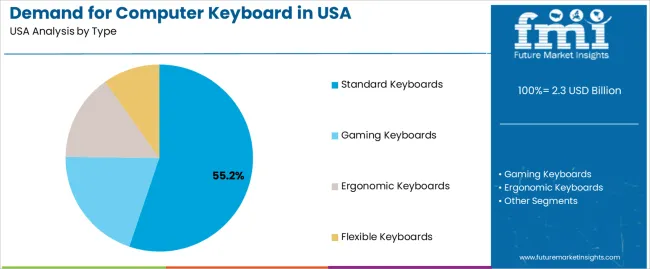
Standard keyboards lead the USA market with a 55% share. These models are widely used for general computing tasks such as typing, browsing, and office work. They remain popular due to their ease of use, broad compatibility with desktop and laptop systems, and availability across a wide range of price points. Their straightforward layout and dependable performance make them suitable for both home and office environments.
These keyboards sustain strong demand as they meet the functional needs of most users who do not require specialized features such as mechanical switches, customizable lighting, or ergonomic layouts. The expansion of remote work and hybrid work setups has further maintained demand for standard keyboards, as users continue to invest in reliable peripherals for routine computing tasks. This ongoing reliance on traditional layouts ensures that standard keyboards remain the leading type in the USA.
How Are Individuals/Consumers Leading the Demand for Computer Keyboards in the USA?
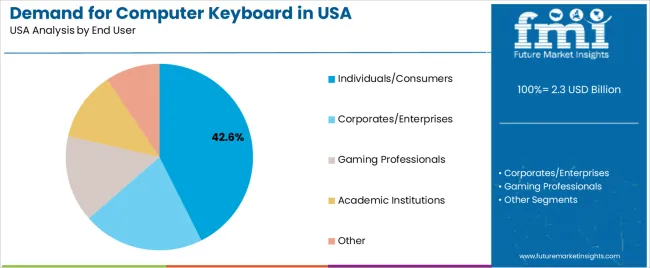
Individuals/consumers represent the largest end user segment with 42.6% of the market share. Household users rely on keyboards for a broad set of activities including personal computing, communication, online learning, and home-based work. The segment’s size is driven by the widespread ownership of personal computers, consistent replacement cycles, and the growing number of multi-device households.
Consumers also purchase keyboards to pair with tablets, smart TVs, and home office systems, increasing the variety of use cases compared with corporate environments. As digital literacy and device USA age continue to expand across age groups, consumer demand remains strong. The accessibility of keyboards through both retail and online channels supports steady purchasing activity. This broad and ongoing use ensures that individuals and consumers remain the leading contributors to keyboard demand in the USA.
What Are The Key Market Dynamics Influencing Demand for Computer Keyboards in the United States?
The demand for computer keyboards in the USA is influenced by the growing popularity of gaming, remote work, and multi device USA age. Increased e commerce and the need for more ergonomic and customizable options have led to a shift from standard keyboards to mechanical and wireless variants. The rise of cloud computing, remote collaboration tools, and gaming culture fuels the demand for specialized keyboards that enhance user experience. Additionally, advancements in key-switch technology, connectivity (Bluetooth, USB-C), and sustainability are further driving the adoption of modern keyboard systems.
What Are The Primary Growth Drivers For Computer Keyboard Demand in the United States?
Several factors are driving growth in the USA keyboard market. First, the rise of home offices and remote working has increased the need for ergonomic, wireless, and quiet keyboards for comfort and productivity. Second, the gaming industry's explosive growth is creating significant demand for mechanical keyboards with advanced switches, customizable RGB lighting, and additional functionality. Third, consumer demand for multi device connectivity and improved typing experiences is propelling adoption of wireless keyboards and those compatible with smartphones, tablets, and laptops. Finally, consumer interest in sustainable packaging and recyclable materials is leading to growth in eco friendly and energy efficient keyboard options.
What Are The Key Restraints Affecting Demand for Computer Keyboards in the United States?
Despite the growing demand, there are several constraints. First, the price point of premium keyboards, especially mechanical and gaming keyboards, can be high, limiting their adoption among budget-conscious consumers. Second, the shift to wireless options may face resistance from users who prefer the reliability and lower latency of wired keyboards. Third, many users still prefer traditional keyboard layouts, which can slow adoption of innovative designs or new technology. Additionally, technological advancements, such as the rise of voice recognition and gesture controls, may influence future keyboard demand and create competition from other input devices.
What Are The Key Trends Shaping Demand for Computer Keyboards in the United States?
Several key trends are shaping the demand for computer keyboards in the USA One significant trend is the shift toward wireless and multi device keyboards that enable seamless switching between laptops, tablets, and mobile devices. Another trend is the rise of gaming and mechanical keyboards, driven by the gaming community’s demand for customization, advanced switches, and enhanced durability. The demand for ergonomic and quiet keyboards is increasing due to remote work and the need for comfortable typing environments. Additionally, growing consumer awareness around sustainability is influencing the design and production of eco friendly, recyclable keyboard options.
What Is Driving the Demand for Computer Keyboards in the USA?
The demand for computer keyboards in the USA is growing as consumers and businesses continue to adopt digital devices for work, education, gaming, and personal use. Market growth is supported by rising remote work trends, expanding gaming communities, increased IT investments, and the need for peripheral upgrades across commercial and institutional environments. The USA has a diverse market for keyboards, ranging from basic membrane models to premium mechanical, wireless, and ergonomic designs.
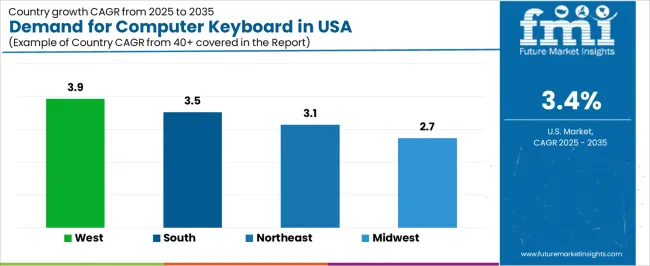
Regional demand varies based on workforce distribution, technology adoption, and consumer buying behavior. The West leads due to strong tech culture and gaming growth, while the South, Northeast, and Midwest show steady adoption supported by education, business expansion, and retail distribution. This analysis highlights the key factors influencing keyboard demand across the USA.
| Region | CAGR (2025-2035) |
|---|---|
| West | 3.9% |
| South | 3.5% |
| Northeast | 3.1% |
| Midwest | 2.7% |
Why Is the Demand for Computer Keyboards Highest in the West?
The West region leads the USA computer keyboard market with a CAGR of 3.9%. The West is home to major technology hubs, including Silicon Valley, Seattle, and Portland, where demand for high quality computer peripherals is consistently strong. Tech professionals, developers, and digital creators frequently upgrade their keyboards, particularly mechanical, ergonomic, and wireless models. The West also has one of the largest gaming communities in the USA, which significantly drives demand for gaming keyboards with RGB lighting, programmable keys, and high durability switches.
E commerce adoption is high, allowing consumers to access a wide range of brands and specialized keyboards. The strong remote work culture in the West further supports ongoing demand for reliable and comfortable keyboards that enhance productivity. As technology USAge continues to rise across personal, professional, and entertainment applications, the West will remain a leading region for keyboard demand.
What Factors Are Supporting the Growth of the Computer Keyboard Market in the South?
The South region records a solid CAGR of 3.5%. Population growth, business expansion, and increased digital infrastructure investment contribute to rising keyboard demand. The South has a large remote and hybrid workforce across industries such as finance, telecommunications, and customer service, where computer keyboards remain essential devices. Educational institutions across the region are also adopting more digital learning environments, increasing the need for durable and affordable keyboards for students and teachers.
The South’s growing gaming culture fuels demand for mechanical and wireless gaming keyboards. Retail expansion and the rise of e commerce distribution hubs in the South further improve product availability. As digital transformation accelerates and consumers seek both functional and high performance peripherals, the demand for computer keyboards in the South will continue to grow steadily.
Why Is the Northeast Seeing Stable Demand for Computer Keyboards?
The Northeast region shows a consistent CAGR of 3.1%. The region has a strong presence of corporate offices, academic institutions, and technology oriented businesses that require continuous upgrades to computing peripherals, including keyboards. The Northeast’s large student population across universities and schools contributes significantly to ongoing demand for keyboards, especially affordable and durable models.
The region also has a well developed retail ecosystem, providing consumers with access to a wide range of keyboard brands and features. Urban populations in the Northeast show growing interest in compact, wireless, and ergonomically designed keyboards that support home offices and productivity needs. As digital tools remain central to professional and academic activities, the region will maintain stable demand for computer keyboards.
What Is Driving Computer Keyboard Demand in the Midwest?
The Midwest region shows a moderate CAGR of 2.7%. The region’s strong educational and commercial sectors contribute to steady keyboard demand, particularly in schools, government offices, and corporate workplaces. While adoption of premium and specialized keyboards is slower compared to coastal regions, the Midwest continues to see rising demand for standard membrane and wireless models that support everyday computing tasks. Growth in remote work and digital learning is also influencing purchasing trends across households. The Midwest’s expanding logistics infrastructure improves access to a wider variety of computer peripherals, supporting gradual market growth. As digital adoption continues and organizations modernize their IT equipment, the Midwest will see stable, long term demand for computer keyboards.
How Is Demand for Computer Keyboards Evolving in the USA
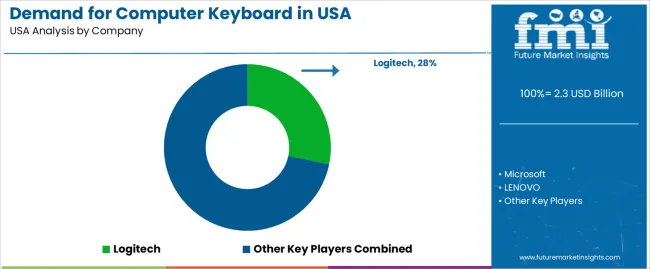
Demand for computer keyboards in the United States remains strong as households, businesses and institutions continue to replace aging peripherals and adopt new form factors for productivity and gaming. Companies such as Logitech with an estimated 28.2% share, Microsoft, Lenovo, Chicony Global Inc. and Dell supply a market influenced by hybrid work patterns, rising interest in mechanical and low profile switches, and expanded use of wireless devices. Growth is shaped by sustained demand from office environments, education systems and gaming communities. Buyers in the United States focus on reliability, typing feel, connectivity options and ergonomic support, which guide product-development priorities.
Competition is structured around design variety, technology integration and distribution reach. One strategic path emphasizes mechanical switch innovation, hot swap designs and enhanced durability for gaming and creator segments. Another path concentrates on low profile scissor switch or membrane style keyboards suited to office and portable use. Companies also invest in multi device wireless connectivity, backlighting control, battery efficiency and software customisation tools.
Brochures typically highlight switch type, key rollover, connectivity options such as Bluetooth or proprietary wireless, battery life, form factor, and compatibility with major operating systems. With continued demand for both premium and value oriented segments, companies aim to reinforce their market position by aligning product features with evolving user expectations for comfort, performance and versatility in the USA computer keyboard market.
Key Players in the Computer Keyboard Industry in USA
- Logitech
- Microsoft
- LENOVO
- CHICONY GLOBAL INC.
- Dell Inc.
Scope of the Report
| Items | Details |
|---|---|
| Quantitative Units | USD Billion |
| Regions Covered | North America |
| Type | Standard Keyboards, Gaming Keyboards, Ergonomic Keyboards, Flexible Keyboards |
| End User | Individuals/Consumers, Corporates/Enterprises, Gaming Professionals, Academic Institutions, Other |
| Key Companies Profiled | Logitech, Microsoft, LENOVO, CHICONY GLOBAL INC., Dell Inc. |
| Additional Attributes | The market analysis includes dollar sales by keyboard type and end user categories. It also examines demand trends in the United States driven by remote work adoption, gaming expansion, and ergonomic needs. The competitive landscape highlights leading manufacturers focusing on mechanical switches, wireless connectivity, RGB lighting, and device integration. Growth is also influenced by increasing enterprise procurement and continuous innovation in gaming and productivity peripherals. |
Key Segments of the Computer Keyboard Industry in USA
Type
- Standard Keyboards
- Gaming Keyboards
- Ergonomic Keyboards
- Flexible Keyboards
End User
- Individuals/Consumers
- Corporates/Enterprises
- Gaming Professionals
- Academic Institutions
- Other
Region
- Northeast
- West
- Midwest
- South
Frequently Asked Questions
How big is the demand for computer keyboard in USA in 2025?
The global demand for computer keyboard in USA is estimated to be valued at USD 2.3 billion in 2025.
What will be the size of demand for computer keyboard in USA in 2035?
The market size for the demand for computer keyboard in USA is projected to reach USD 3.2 billion by 2035.
How much will be the demand for computer keyboard in USA growth between 2025 and 2035?
The demand for computer keyboard in USA is expected to grow at a 3.4% CAGR between 2025 and 2035.
What are the key product types in the demand for computer keyboard in USA?
The key product types in demand for computer keyboard in USA are standard keyboards, gaming keyboards, ergonomic keyboards and flexible keyboards.
Which end user segment to contribute significant share in the demand for computer keyboard in USA in 2025?
In terms of end user, individuals/consumers segment to command 42.6% share in the demand for computer keyboard in USA in 2025.
Preview the report firsthand - request a free sample
Get SampleGet the brochure for pricing and purchase details.
Get PDFTable of Content
- Executive Summary
- USA Market Outlook
- Demand-side Trends
- Supply-side Trends
- Technology Roadmap Analysis
- Analysis and Recommendations
- Market Overview
- Market Coverage / Taxonomy
- Market Definition / Scope / Limitations
- Market Background
- Market Dynamics
- Drivers
- Restraints
- Opportunity
- Trends
- Scenario Forecast
- Demand in Optimistic Scenario
- Demand in Likely Scenario
- Demand in Conservative Scenario
- Opportunity Map Analysis
- Product Life Cycle Analysis
- Supply Chain Analysis
- Investment Feasibility Matrix
- Value Chain Analysis
- PESTLE and Porter’s Analysis
- Regulatory Landscape
- Regional Parent Market Outlook
- Production and Consumption Statistics
- Import and Export Statistics
- Market Dynamics
- USA Market Analysis 2020 to 2024 and Forecast, 2025 to 2035
- Historical Market Size Value (USD Million) Analysis, 2020 to 2024
- Current and Future Market Size Value (USD Million) Projections, 2025 to 2035
- Y-o-Y Growth Trend Analysis
- Absolute $ Opportunity Analysis
- USA Market Pricing Analysis 2020 to 2024 and Forecast 2025 to 2035
- USA Market Analysis 2020 to 2024 and Forecast 2025 to 2035, By Type
- Introduction / Key Findings
- Historical Market Size Value (USD Million) Analysis By Type , 2020 to 2024
- Current and Future Market Size Value (USD Million) Analysis and Forecast By Type , 2025 to 2035
- Standard Keyboards
- Gaming Keyboards
- Ergonomic Keyboards
- Flexible Keyboards
- Y-o-Y Growth Trend Analysis By Type , 2020 to 2024
- Absolute $ Opportunity Analysis By Type , 2025 to 2035
- USA Market Analysis 2020 to 2024 and Forecast 2025 to 2035, By End User
- Introduction / Key Findings
- Historical Market Size Value (USD Million) Analysis By End User, 2020 to 2024
- Current and Future Market Size Value (USD Million) Analysis and Forecast By End User, 2025 to 2035
- Individuals/Consumers
- Corporates/Enterprises
- Gaming Professionals
- Academic Institutions
- Other
- Y-o-Y Growth Trend Analysis By End User, 2020 to 2024
- Absolute $ Opportunity Analysis By End User, 2025 to 2035
- USA Market Analysis 2020 to 2024 and Forecast 2025 to 2035, By Connectivity Type
- Introduction / Key Findings
- Historical Market Size Value (USD Million) Analysis By Connectivity Type, 2020 to 2024
- Current and Future Market Size Value (USD Million) Analysis and Forecast By Connectivity Type, 2025 to 2035
- Wired Keyboards
- Wireless Keyboards
- Y-o-Y Growth Trend Analysis By Connectivity Type, 2020 to 2024
- Absolute $ Opportunity Analysis By Connectivity Type, 2025 to 2035
- Market Structure Analysis
- Competition Dashboard
- Competition Benchmarking
- Market Share Analysis of Top Players
- By Regional
- By Type
- By End User
- By Connectivity Type
- Competition Analysis
- Competition Deep Dive
- Logitech
- Overview
- Product Portfolio
- Profitability by Market Segments (Product/Age /Sales Channel/Region)
- Sales Footprint
- Strategy Overview
- Marketing Strategy
- Product Strategy
- Channel Strategy
- Microsoft
- LENOVO
- CHICONY GLOBAL INC.
- Dell Inc.
- Logitech
- Competition Deep Dive
- Assumptions & Acronyms Used
- Research Methodology


