

- Industry Size (2026):
- USD 169.4 Bn
- Forecast (2036):
- USD 283.9 Bn
- CAGR (2026 to 2036)
- 5.3%
Computer Engineering Market Forecast and Outlook 2026 to 2036
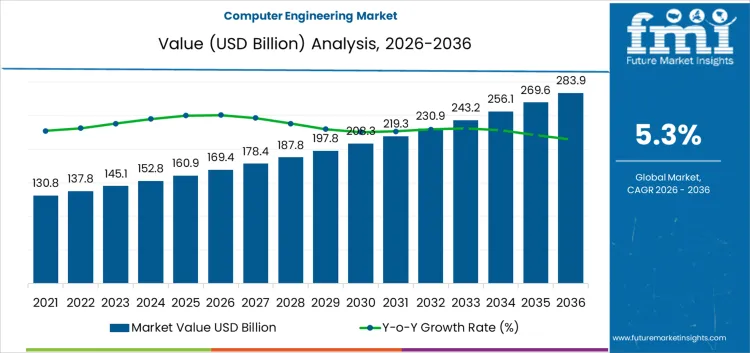
The computer engineering market is projected to reach USD 283.9 billion by 2036, growing at a CAGR of 5.3% from its 2026 value of USD 169.4 billion. This category holds strategic importance within the broader technology ecosystem as it underpins advancements in computing, AI, and automation across various industries. Control points in this market include the ability to innovate in hardware design, software integration, and system architecture, where companies with strong R&D capabilities can maintain competitive advantages. Dependency factors such as supply chain stability, access to skilled talent, and regulatory compliance will influence performance and growth. Strategic trade-offs will revolve around balancing cutting-edge development with cost-effectiveness, as companies must invest in emerging technologies while maintaining profitability. Vendors that can navigate these complexities-by staying ahead of technological trends, managing supply risks, and adapting to changing market demands-will be best positioned for long-term success in this critical sector.
Quick Stats for the Computer Engineering Market
- Computer Engineering Market Value (2026): USD 169.4 billion
- Computer Engineering Market Forecast Value (2036): USD 283.9 billion
- Computer Engineering Market Global Forecast CAGR 2026 to 2036: 5.3%
- Computer Engineering Market Leading Segment: Enterprise IT & Cloud Services (45%)
- Key Growth Regions in Computer Engineering Market: India
- Top Players in Computer Engineering Market: IBM, Microsoft, Google (Alphabet), Intel Corporation, NVIDIA, Amazon Web Services, Cisco Systems, Accenture plc, Tata Consultancy Services, SAP SE
What is the Breakpoint Analysis for the Computer Engineering Market through 2036?
The breakpoint analysis of the computer engineering market reveals distinct periods of accelerated growth driven by key technological advancements and shifting industry needs. From 2026 to 2028, the market will experience steady growth, rising from USD 169.4 billion in 2026 to USD 188.8 billion in 2028. This early phase reflects moderate growth, as industries continue to adopt more advanced computer engineering systems, particularly in consumer electronics and IT infrastructure.
A significant breakpoint is expected around 2029, when the market will experience a more noticeable acceleration, growing from USD 199.1 billion in 2029 to USD 220.9 billion by 2032. This acceleration will be driven by advancements in fields like artificial intelligence, cloud computing, and high-performance computing, which will significantly increase demand for advanced computer engineering solutions.
From 2032 to 2036, the market will continue to experience robust growth, reaching USD 283.9 billion by 2036. This final phase will reflect the market's maturation, with sustained demand for computing innovations, including automation, data processing, and the ongoing integration of computing systems into more industries. The breakpoint analysis highlights a steady, consistent upward trajectory in the computer engineering market, punctuated by periods of faster growth as new technologies become mainstream.
Computer Engineering Market Key Takeaways
| Metric | Value |
|---|---|
| Industry Sales Value (2026) | USD 169.4 billion |
| Industry Forecast Value (2036) | USD 283.9 billion |
| Industry Forecast CAGR 2026 to 2036 | 5.3% |
What Is Driving the Computer Engineering Market?
Historically, the computer engineering market grew from early efforts to design and build reliable computing systems that could automate calculation, data processing, and control functions across commercial, scientific, and industrial settings. Early computing machines were mechanical or vacuum tube based, with limited reliability and large form factors that confined use to research institutions and large enterprises. As transistor and integrated circuit technologies matured in the 1960s and 1970s, computer engineers shifted toward designing more compact, faster, and energy efficient systems. The discipline expanded to include hardware design, microarchitecture, embedded systems, and firmware development, enabling broader adoption of computers in manufacturing automation, telecommunications, and enterprise information systems. Demand for custom system design, performance optimization, and integration with peripherals drove investment in engineering talent and tools that could meet application specific requirements. This historical development established core competencies in digital logic, processor design, and system integration, shaping expectations for performance, cost, and reliability that defined early market standards.
Future demand for the computer engineering market is expected to be shaped by growth in artificial intelligence, edge computing, cybersecurity, and pervasive connectivity that drive demand for advanced hardware, optimized systems, and integration expertise. Growth factors include expansion of AI accelerators and custom silicon that deliver performance gains for machine learning workloads, proliferation of Internet of Things (IoT) devices requiring energy efficient embedded computing, and adoption of heterogeneous computing architectures that combine CPUs, GPUs, and specialized processors. Cloud to edge infrastructures will increase demand for engineers capable of designing systems that balance performance with power and thermal constraints. Rising importance of cybersecurity at the hardware and firmware levels will require new engineering approaches to secure boot, trusted execution environments, and resilience against physical and network borne threats. Barriers include rapid technology obsolescence and the need for continuous skill development to match evolving system requirements. Long term market expansion will depend on how effectively computer engineers innovate solutions that meet performance, sustainability, and security expectations across industries embracing digital transformation.
What are the Key Segments in the Computer Engineering Market?
The Computer Engineering market is segmented by solution type and end-use industry. Solution types include hardware & systems engineering, software & platform development, and IT consulting & integration services, with hardware & systems engineering leading the market at 42%. End-use industries include enterprise IT & cloud services, telecommunications & networking, automotive & mobility systems, industrial automation & IoT, healthcare & life sciences systems, and others, with enterprise IT & cloud services representing the largest share at 45%. The market is driven by the increasing demand for advanced computer engineering solutions in sectors that rely on high-performance computing, networking, automation, and integrated technology systems. As digital transformation continues to shape industries globally, the need for specialized computer engineering services and solutions is expected to grow.
What is Driving Growth in the Hardware & Systems Engineering Segment?
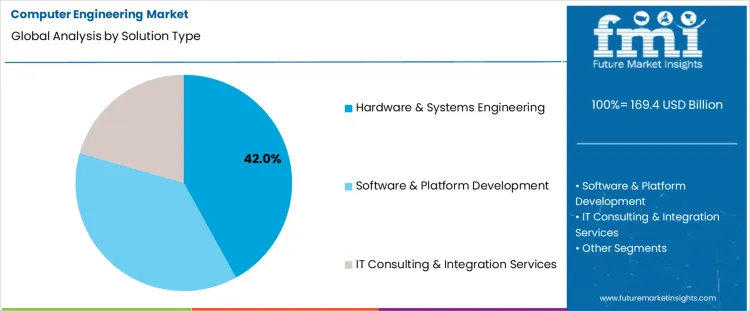
Hardware & systems engineering is the leading solution type in the Computer Engineering market, accounting for 42% of the market share. This growth is driven by the need for advanced computing hardware and integrated systems to support complex applications in sectors such as enterprise IT, telecommunications, automotive, and healthcare. Hardware & systems engineering involves designing, building, and optimizing the physical and virtual components that enable high-performance computing, networking, and connectivity. As industries continue to embrace digital transformation, the demand for robust hardware infrastructure, including servers, storage systems, networking devices, and integrated IoT solutions, is increasing. In particular, the rise of cloud computing, automation, and advanced data analytics is pushing organizations to invest in scalable, high-performance hardware systems. As these technologies continue to evolve, hardware & systems engineering is expected to remain a critical segment in the computer engineering market, with increased demand from industries like telecommunications, automotive, and industrial automation.
What is Driving the Demand for Enterprise IT & Cloud Services in the End-Use Industry Segment?

Enterprise IT & cloud services are the largest end-use industry segment in the Computer Engineering market, holding 45% of the market share. This growth is primarily driven by the widespread adoption of cloud computing, which offers businesses scalable, flexible, and cost-effective solutions for managing IT infrastructure, data storage, and application hosting. Cloud services enable companies to store, process, and access vast amounts of data remotely, improving operational efficiency and reducing the need for on-site hardware. Additionally, as organizations increasingly move toward digital-first strategies and adopt hybrid or multi-cloud environments, the demand for enterprise IT & cloud services continues to rise. These services are essential for supporting the growing needs of businesses in sectors such as finance, retail, healthcare, and manufacturing, where real-time data access, collaboration, and security are paramount. The continued expansion of cloud adoption, coupled with the shift to remote work and digital business models, is expected to drive further growth in the enterprise IT & cloud services segment. As cloud technology evolves and the demand for more specialized IT services increases, this segment is likely to maintain its dominance in the market.
What are the Key Dynamics in the Computer Engineering Market?
The computer engineering market is expanding as the demand for advanced computing systems, software, and technologies continues to grow across a wide range of industries, including telecommunications, healthcare, automotive, and manufacturing. Computer engineering combines elements of computer science and electrical engineering, focusing on designing and developing hardware and software systems. The market is driven by the increasing need for faster, more efficient, and scalable computing solutions to handle big data, artificial intelligence (AI), machine learning (ML), and the Internet of Things (IoT). Additionally, the rise of automation, smart devices, and cloud computing is further propelling market growth, as businesses and consumers seek integrated systems that can improve productivity, efficiency, and connectivity.
What are the Key Drivers of Growth in the Computer Engineering Market?
Several factors are driving the growth of the computer engineering market. One of the key drivers is the increasing demand for advanced computing technologies in industries such as artificial intelligence, data analytics, and machine learning. As businesses require powerful computing systems to process large datasets and perform complex calculations, the need for more efficient and high-performance hardware and software systems is growing. Additionally, the adoption of IoT devices and the expansion of smart technologies in sectors like healthcare, automotive, and smart homes are contributing to market growth. Another driver is the rise of cloud computing, which requires innovative computer engineering solutions for scalable, flexible, and secure infrastructure. Furthermore, the growing trend of automation and digital transformation in various industries is driving the demand for advanced computing systems that can optimize processes, improve decision-making, and support real-time data analysis. Finally, the increasing investment in research and development (R&D) for emerging technologies, such as quantum computing and edge computing, is fostering innovation in computer engineering.
What are the Key Restraints in the Computer Engineering Market?
Despite the market’s growth potential, several challenges exist. One major restraint is the high cost of developing and implementing advanced computer engineering solutions, particularly for small and medium-sized businesses that may have limited resources for research, development, and infrastructure. The complexity of designing custom computing systems and integrating them with existing IT infrastructure can also be a barrier. Additionally, the fast-paced nature of technological advancements means that companies must continuously innovate to stay competitive, which requires significant investment in R&D and workforce training. Another challenge is the shortage of skilled professionals in computer engineering fields, such as hardware design, software development, and cybersecurity, which can lead to difficulties in recruitment and retention. Furthermore, the rapid growth of digital technologies has increased concerns regarding data privacy and cybersecurity, as businesses and consumers demand more secure and reliable computing systems to protect sensitive information. Addressing these issues requires ongoing investments in security measures, compliance, and regulation.
What are the Key Trends in the Computer Engineering Market?
Several key trends are shaping the computer engineering market. One of the most significant trends is the increasing focus on artificial intelligence and machine learning, which require specialized hardware and software solutions for processing large datasets and enabling real-time decision-making. As AI and ML become more integrated into business processes, the demand for high-performance computing systems is growing. Another trend is the expansion of cloud computing, which is driving the development of scalable and flexible computing solutions that can handle the growing volume of data generated by businesses and consumers. The rise of edge computing, where data is processed closer to the source, is also gaining traction, particularly in industries such as IoT and autonomous vehicles, where low latency and real-time processing are critical. Additionally, the market is seeing increasing investment in quantum computing, which has the potential to revolutionize computing power and solve problems that are currently intractable for traditional computing systems. The growing emphasis on sustainability and energy efficiency is also influencing the design of computer engineering solutions, with manufacturers focusing on developing low-power, environmentally friendly systems to meet both consumer and regulatory demands. These trends are driving continued innovation in the computer engineering market, with an increasing emphasis on advanced technologies, scalability, and security.
What is the Country-Wise Analysis of the Computer Engineering Market?
The computer engineering market is growing as the demand for innovative hardware and software solutions continues to rise across industries such as telecommunications, automotive, consumer electronics, and information technology. Computer engineering, which involves the design, development, and integration of computer systems, is at the forefront of technological advancements, with a focus on improving processing power, efficiency, and connectivity. The market is driven by trends such as artificial intelligence (AI), machine learning, cloud computing, and the Internet of Things (IoT). Countries like the USA, China, India, Germany, and Japan are seeing growth in this market, influenced by their strong technological ecosystems, investments in R&D, and adoption of cutting-edge technologies.
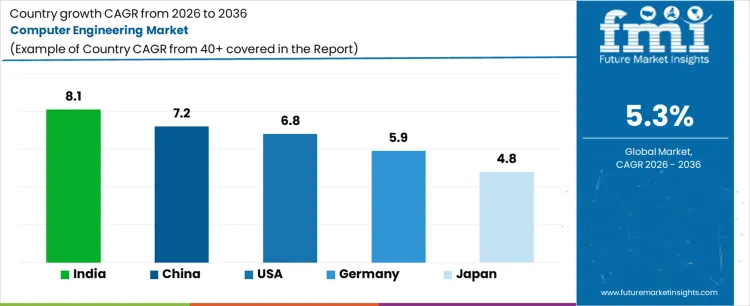
| Country | CAGR (%) |
|---|---|
| USA | 6.8 |
| China | 7.2 |
| India | 8.1 |
| Germany | 5.9 |
| Japan | 4.8 |
What is Driving the Growth of the Computer Engineering Market in India?
India’s computer engineering market is growing at a CAGR of 8.1%, the highest among the countries analyzed. The growth is driven by the country’s rapidly expanding IT and technology sectors, which are heavily reliant on computer engineering solutions. As India becomes a global leader in software development, the demand for advanced hardware, networking systems, and integrated solutions is increasing. Additionally, the growing adoption of AI, IoT, and machine learning in various industries such as manufacturing, healthcare, and finance is fueling the market’s growth. The government’s push for digitalization and initiatives like “Make in India” are further driving investments in computer engineering and technological innovations.
How is the Computer Engineering Market Performing in China?
China’s computer engineering market is growing at a CAGR of 7.2%. The growth in China is driven by the country’s strong focus on technological innovation, industrial automation, and digital transformation across various sectors. As China continues to invest in emerging technologies like AI, 5G, and cloud computing, the demand for advanced computer engineering solutions is on the rise. Additionally, China’s emphasis on becoming self-reliant in semiconductor manufacturing and improving its technological infrastructure is further supporting the growth of the computer engineering market. The country’s large-scale manufacturing and automation sectors are also contributing to the demand for integrated computer engineering systems.
What Factors are Shaping the Computer Engineering Market in the USA?
The computer engineering market in the USA is growing at a CAGR of 6.8%. The USA is a global leader in technology and innovation, with major investments in the development of AI, machine learning, and cloud computing. The demand for advanced computer engineering solutions in sectors like telecommunications, defense, and aerospace is driving market growth. The country’s strong tech ecosystem, which includes leading tech companies, research institutions, and venture capital, is contributing to the growth of the market. Additionally, the ongoing advancements in hardware engineering and the increasing adoption of IoT in various industries are fueling the demand for computer engineering solutions in the USA.
How is the Computer Engineering Market Evolving in Germany?
Germany’s computer engineering market is growing at a CAGR of 5.9%. The growth is driven by Germany’s focus on industrial automation, digitalization, and the increasing need for integrated computer systems in sectors like automotive, manufacturing, and telecommunications. Germany’s strong industrial base, particularly in automotive engineering, is contributing to the demand for advanced computer engineering solutions to improve manufacturing efficiency, connectivity, and automation. The country’s commitment to sustainability and the growing adoption of digital technologies in its industries are further boosting the demand for computer engineering products and services. As Germany continues to invest in Industry 4.0 initiatives, the market for computer engineering is expected to grow steadily.
What is Contributing to the Growth of the Computer Engineering Market in Japan?
Japan’s computer engineering market is growing at a CAGR of 4.8%. The market is supported by Japan’s strong technological infrastructure and its leading position in robotics, electronics, and semiconductor manufacturing. The demand for computer engineering solutions is driven by the growing adoption of AI, robotics, and IoT in industrial automation, consumer electronics, and automotive sectors. Japan’s focus on advanced manufacturing technologies and its role as a major player in the global electronics market are contributing to the market’s growth. Despite a slower growth rate compared to other regions, Japan’s ongoing investments in innovation and digital transformation are expected to sustain steady growth in the computer engineering market.
What is the Competitive Landscape for the Computer Engineering Market?
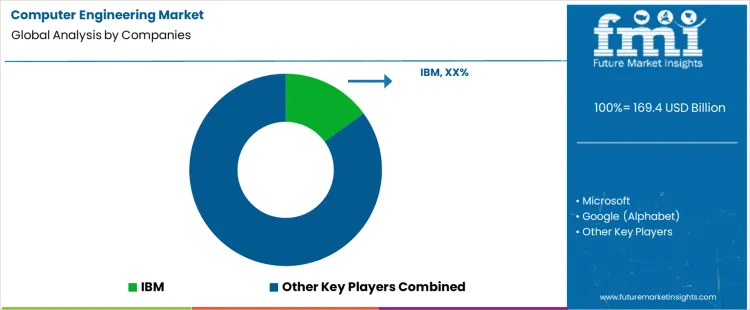
The computer engineering market is evolving rapidly as advances in cloud computing, artificial intelligence, data processing, and hardware design reshape digital infrastructure worldwide. IBM leads the competitive landscape with strong capabilities in enterprise computing, artificial intelligence, cloud platforms, and emerging quantum technologies, supported by long-term investment in research and innovation. Microsoft remains a major competitor through its Azure cloud ecosystem, enterprise software portfolio, and growing focus on AI-driven solutions that support scalable computing environments.
Google (Alphabet) competes through its leadership in AI research and cloud services, with platforms such as Google Cloud and TensorFlow enabling machine learning and data-driven applications. Intel Corporation continues to play a foundational role in computer engineering through its processors and semiconductor technologies that power data centers, personal computing, and industrial systems. NVIDIA drives innovation in high-performance computing with GPUs that support artificial intelligence, machine learning, gaming, and advanced data analytics.
Amazon Web Services (AWS) dominates cloud infrastructure by offering a broad range of scalable computing, storage, and AI services. Cisco Systems supports the market through networking and connectivity solutions that enable secure and efficient computing environments. Accenture, Tata Consultancy Services (TCS), and SAP SE strengthen the ecosystem by delivering enterprise software, consulting, and digital transformation services. Overall, competition is defined by innovation, scalability, and the integration of advanced technologies across hardware, software, and cloud platforms.
Key Players of the Computer Engineering Market
- IBM
- Microsoft
- Google (Alphabet)
- Intel Corporation
- NVIDIA
- Amazon Web Services
- Cisco Systems
- Accenture plc
- Tata Consultancy Services
- SAP SE
Scope of the Report
| Items | Values |
|---|---|
| Quantitative Units (2026) | USD Billion |
| Solution Type | Hardware & Systems Engineering, Software & Platform Development, IT Consulting & Integration Services |
| End-Use Industry | Enterprise IT & Cloud Services, Telecommunications & Networking, Automotive & Mobility Systems, Industrial Automation & IoT, Healthcare & Life Sciences Systems |
| Companies | IBM, Microsoft, Google (Alphabet), Intel Corporation, NVIDIA, Amazon Web Services, Cisco Systems, Accenture plc, Tata Consultancy Services, SAP SE |
| Regions Covered | North America, Latin America, Western Europe, Eastern Europe, South Asia and Pacific, East Asia, Middle East & Africa |
| Countries Covered | United States, Canada, Mexico, Brazil, Argentina, Germany, France, United Kingdom, Italy, Spain, Netherlands, China, India, Japan, South Korea, ANZ, GCC Countries, South Africa |
| Additional Attributes | Dollar by sales by solution type, end-use industry, and region. Includes market trends towards automation, digital transformation, cost-effectiveness, and the role of computer engineering in enhancing various industries and technological innovations. |
Computer Engineering Market Segmentation
Solution Type
- Hardware & Systems Engineering
- Software & Platform Development
- IT Consulting & Integration Services
End-Use Industry
- Enterprise IT & Cloud Services
- Telecommunications & Networking
- Automotive & Mobility Systems
- Industrial Automation & IoT
- Healthcare & Life Sciences Systems
Region
- Asia Pacific
- China
- Japan
- India
- Australia & New Zealand
- ASEAN
- Rest of Asia Pacific
- Europe
- Germany
- United Kingdom
- France
- Italy
- Spain
- Nordic
- BENELUX
- Rest of Europe
- North America
- United States
- Canada
- Mexico
- Latin America
- Brazil
- Argentina
- Rest of Latin America
- Middle East & Africa
- Kingdom of Saudi Arabia
- Other GCC Countries
- South Africa
- Rest of Middle East & Africa
Bibliography
- International Telecommunication Union. (2024). Measuring digital development: Facts and figures 2024. ITU Telecommunication Development Sector.
- Organization for Economic Co-operation and Development. (2024). OECD digital economy outlook 2024 (Volume 1): Embracing the technology frontier. OECD Publishing.
- National Institute of Standards and Technology. (2024). The NIST cybersecurity framework (CSF) 2.0 (NIST CSWP 29). U.S. Department of Commerce.
Frequently Asked Questions
How big is the computer engineering market in 2026?
The global computer engineering market is estimated to be valued at USD 169.4 billion in 2026.
What will be the size of computer engineering market in 2036?
The market size for the computer engineering market is projected to reach USD 283.9 billion by 2036.
How much will be the computer engineering market growth between 2026 and 2036?
The computer engineering market is expected to grow at a 5.3% CAGR between 2026 and 2036.
What are the key product types in the computer engineering market?
The key product types in computer engineering market are hardware & systems engineering, software & platform development and it consulting & integration services.
Which end-use industry segment to contribute significant share in the computer engineering market in 2026?
In terms of end-use industry, enterprise it & cloud services segment to command 45.0% share in the computer engineering market in 2026.
Preview the report firsthand - request a free sample
Get SampleGet the brochure for pricing and purchase details.
Get PDFTable of Content
- Executive Summary
- Global Market Outlook
- Demand-side Trends
- Supply-side Trends
- Technology Roadmap Analysis
- Analysis and Recommendations
- Market Overview
- Market Coverage / Taxonomy
- Market Definition / Scope / Limitations
- Market Background
- Market Dynamics
- Drivers
- Restraints
- Opportunity
- Trends
- Scenario Forecast
- Demand in Optimistic Scenario
- Demand in Likely Scenario
- Demand in Conservative Scenario
- Opportunity Map Analysis
- Product Life Cycle Analysis
- Supply Chain Analysis
- Investment Feasibility Matrix
- Value Chain Analysis
- PESTLE and Porter’s Analysis
- Regulatory Landscape
- Regional Parent Market Outlook
- Production and Consumption Statistics
- Import and Export Statistics
- Market Dynamics
- Global Market Analysis 2021 to 2025 and Forecast, 2026 to 2036
- Historical Market Size Value (USD Million) Analysis, 2021 to 2025
- Current and Future Market Size Value (USD Million) Projections, 2026 to 2036
- Y-o-Y Growth Trend Analysis
- Absolute $ Opportunity Analysis
- Global Market Pricing Analysis 2021 to 2025 and Forecast 2026 to 2036
- Global Market Analysis 2021 to 2025 and Forecast 2026 to 2036, By Solution Type
- Introduction / Key Findings
- Historical Market Size Value (USD Million) Analysis By Solution Type, 2021 to 2025
- Current and Future Market Size Value (USD Million) Analysis and Forecast By Solution Type, 2026 to 2036
- Hardware & Systems Engineering
- Software & Platform Development
- IT Consulting & Integration Services
- Hardware & Systems Engineering
- Y-o-Y Growth Trend Analysis By Solution Type, 2021 to 2025
- Absolute $ Opportunity Analysis By Solution Type, 2026 to 2036
- Global Market Analysis 2021 to 2025 and Forecast 2026 to 2036, By End-Use Industry
- Introduction / Key Findings
- Historical Market Size Value (USD Million) Analysis By End-Use Industry, 2021 to 2025
- Current and Future Market Size Value (USD Million) Analysis and Forecast By End-Use Industry, 2026 to 2036
- Enterprise IT & Cloud Services
- Telecommunications & Networking
- Automotive & Mobility Systems
- Industrial Automation & IoT
- Healthcare & Life Sciences Systems
- Enterprise IT & Cloud Services
- Y-o-Y Growth Trend Analysis By End-Use Industry, 2021 to 2025
- Absolute $ Opportunity Analysis By End-Use Industry, 2026 to 2036
- Global Market Analysis 2021 to 2025 and Forecast 2026 to 2036, By Region
- Introduction
- Historical Market Size Value (USD Million) Analysis By Region, 2021 to 2025
- Current Market Size Value (USD Million) Analysis and Forecast By Region, 2026 to 2036
- North America
- Latin America
- Western Europe
- Eastern Europe
- East Asia
- South Asia and Pacific
- Middle East & Africa
- Market Attractiveness Analysis By Region
- North America Market Analysis 2021 to 2025 and Forecast 2026 to 2036, By Country
- Historical Market Size Value (USD Million) Trend Analysis By Market Taxonomy, 2021 to 2025
- Market Size Value (USD Million) Forecast By Market Taxonomy, 2026 to 2036
- By Country
- USA
- Canada
- Mexico
- By Solution Type
- By End-Use Industry
- By Country
- Market Attractiveness Analysis
- By Country
- By Solution Type
- By End-Use Industry
- Key Takeaways
- Latin America Market Analysis 2021 to 2025 and Forecast 2026 to 2036, By Country
- Historical Market Size Value (USD Million) Trend Analysis By Market Taxonomy, 2021 to 2025
- Market Size Value (USD Million) Forecast By Market Taxonomy, 2026 to 2036
- By Country
- Brazil
- Chile
- Rest of Latin America
- By Solution Type
- By End-Use Industry
- By Country
- Market Attractiveness Analysis
- By Country
- By Solution Type
- By End-Use Industry
- Key Takeaways
- Western Europe Market Analysis 2021 to 2025 and Forecast 2026 to 2036, By Country
- Historical Market Size Value (USD Million) Trend Analysis By Market Taxonomy, 2021 to 2025
- Market Size Value (USD Million) Forecast By Market Taxonomy, 2026 to 2036
- By Country
- Germany
- UK
- Italy
- Spain
- France
- Nordic
- BENELUX
- Rest of Western Europe
- By Solution Type
- By End-Use Industry
- By Country
- Market Attractiveness Analysis
- By Country
- By Solution Type
- By End-Use Industry
- Key Takeaways
- Eastern Europe Market Analysis 2021 to 2025 and Forecast 2026 to 2036, By Country
- Historical Market Size Value (USD Million) Trend Analysis By Market Taxonomy, 2021 to 2025
- Market Size Value (USD Million) Forecast By Market Taxonomy, 2026 to 2036
- By Country
- Russia
- Poland
- Hungary
- Balkan & Baltic
- Rest of Eastern Europe
- By Solution Type
- By End-Use Industry
- By Country
- Market Attractiveness Analysis
- By Country
- By Solution Type
- By End-Use Industry
- Key Takeaways
- East Asia Market Analysis 2021 to 2025 and Forecast 2026 to 2036, By Country
- Historical Market Size Value (USD Million) Trend Analysis By Market Taxonomy, 2021 to 2025
- Market Size Value (USD Million) Forecast By Market Taxonomy, 2026 to 2036
- By Country
- China
- Japan
- South Korea
- By Solution Type
- By End-Use Industry
- By Country
- Market Attractiveness Analysis
- By Country
- By Solution Type
- By End-Use Industry
- Key Takeaways
- South Asia and Pacific Market Analysis 2021 to 2025 and Forecast 2026 to 2036, By Country
- Historical Market Size Value (USD Million) Trend Analysis By Market Taxonomy, 2021 to 2025
- Market Size Value (USD Million) Forecast By Market Taxonomy, 2026 to 2036
- By Country
- India
- ASEAN
- Australia & New Zealand
- Rest of South Asia and Pacific
- By Solution Type
- By End-Use Industry
- By Country
- Market Attractiveness Analysis
- By Country
- By Solution Type
- By End-Use Industry
- Key Takeaways
- Middle East & Africa Market Analysis 2021 to 2025 and Forecast 2026 to 2036, By Country
- Historical Market Size Value (USD Million) Trend Analysis By Market Taxonomy, 2021 to 2025
- Market Size Value (USD Million) Forecast By Market Taxonomy, 2026 to 2036
- By Country
- Kingdom of Saudi Arabia
- Other GCC Countries
- Turkiye
- South Africa
- Other African Union
- Rest of Middle East & Africa
- By Solution Type
- By End-Use Industry
- By Country
- Market Attractiveness Analysis
- By Country
- By Solution Type
- By End-Use Industry
- Key Takeaways
- Key Countries Market Analysis
- USA
- Pricing Analysis
- Market Share Analysis, 2025
- By Solution Type
- By End-Use Industry
- Canada
- Pricing Analysis
- Market Share Analysis, 2025
- By Solution Type
- By End-Use Industry
- Mexico
- Pricing Analysis
- Market Share Analysis, 2025
- By Solution Type
- By End-Use Industry
- Brazil
- Pricing Analysis
- Market Share Analysis, 2025
- By Solution Type
- By End-Use Industry
- Chile
- Pricing Analysis
- Market Share Analysis, 2025
- By Solution Type
- By End-Use Industry
- Germany
- Pricing Analysis
- Market Share Analysis, 2025
- By Solution Type
- By End-Use Industry
- UK
- Pricing Analysis
- Market Share Analysis, 2025
- By Solution Type
- By End-Use Industry
- Italy
- Pricing Analysis
- Market Share Analysis, 2025
- By Solution Type
- By End-Use Industry
- Spain
- Pricing Analysis
- Market Share Analysis, 2025
- By Solution Type
- By End-Use Industry
- France
- Pricing Analysis
- Market Share Analysis, 2025
- By Solution Type
- By End-Use Industry
- India
- Pricing Analysis
- Market Share Analysis, 2025
- By Solution Type
- By End-Use Industry
- ASEAN
- Pricing Analysis
- Market Share Analysis, 2025
- By Solution Type
- By End-Use Industry
- Australia & New Zealand
- Pricing Analysis
- Market Share Analysis, 2025
- By Solution Type
- By End-Use Industry
- China
- Pricing Analysis
- Market Share Analysis, 2025
- By Solution Type
- By End-Use Industry
- Japan
- Pricing Analysis
- Market Share Analysis, 2025
- By Solution Type
- By End-Use Industry
- South Korea
- Pricing Analysis
- Market Share Analysis, 2025
- By Solution Type
- By End-Use Industry
- Russia
- Pricing Analysis
- Market Share Analysis, 2025
- By Solution Type
- By End-Use Industry
- Poland
- Pricing Analysis
- Market Share Analysis, 2025
- By Solution Type
- By End-Use Industry
- Hungary
- Pricing Analysis
- Market Share Analysis, 2025
- By Solution Type
- By End-Use Industry
- Kingdom of Saudi Arabia
- Pricing Analysis
- Market Share Analysis, 2025
- By Solution Type
- By End-Use Industry
- Turkiye
- Pricing Analysis
- Market Share Analysis, 2025
- By Solution Type
- By End-Use Industry
- South Africa
- Pricing Analysis
- Market Share Analysis, 2025
- By Solution Type
- By End-Use Industry
- USA
- Market Structure Analysis
- Competition Dashboard
- Competition Benchmarking
- Market Share Analysis of Top Players
- By Regional
- By Solution Type
- By End-Use Industry
- Competition Analysis
- Competition Deep Dive
- IBM
- Overview
- Product Portfolio
- Profitability by Market Segments (Product/Age /Sales Channel/Region)
- Sales Footprint
- Strategy Overview
- Marketing Strategy
- Product Strategy
- Channel Strategy
- Microsoft
- Google (Alphabet)
- Intel Corporation
- NVIDIA
- Amazon Web Services
- Cisco Systems
- Accenture plc
- Tata Consultancy Services
- SAP SE
- IBM
- Competition Deep Dive
- Assumptions & Acronyms Used
- Research Methodology


