

- Industry Size (2026)
- USD 247.1 Mn
- Forecast (2036)
- USD 407.5 Mn
- CAGR (2026 to 2036)
- 5.1%
Demand for Jellies and Gummies in South Korea Forecast and Outlook 2026 to 2036
The demand for jellies and gummies in South Korea is projected to reach USD 247.1 million in 2026 and grow to USD 407.5 million by 2036, reflecting a 5.1% CAGR. This category holds strategic importance as it sits at the intersection of the growing demand for functional, convenient, and health-oriented confectionery products. With rising consumer preference for snackable health supplements, jellies and gummies are integral to both the wellness and indulgence sectors. Control points are driven by product innovation, including the integration of vitamins, minerals, and other functional ingredients.
Dependency factors include sourcing high-quality, cost-effective ingredients and meeting stringent food safety regulations. Strategic trade-offs arise between cost management and offering differentiated products with added health benefits, where margins may be compressed for more premium options. Suppliers must navigate these pressures carefully, balancing price competitiveness with product differentiation to maintain relevance and secure market share in a rapidly evolving space.
Quick Stats for the Demand for Jellies and Gummies in South Korea
- Jellies and Gummies in South Korea Value (2026): USD 247.1 million
- Jellies and Gummies in South Korea Forecast Value (2036): USD 407.5 million
- Jellies and Gummies in South Korea Forecast CAGR (2026 to 2036): 5.1%
- Jellies and Gummies in South Korea Leading Segment: Non-Store-Based (60%)
- Key Growth Regions of Jellies and Gummies in South Korea: Jeju (leading CAGR ~6.2%)
- Top Players of Jellies and Gummies in South Korea: HARIBO GmbH & Co. KG, Jelly Belly Candy Company, Mars Inc., Mondelz Global LLC, Perfetti Van Melle Group B.V.
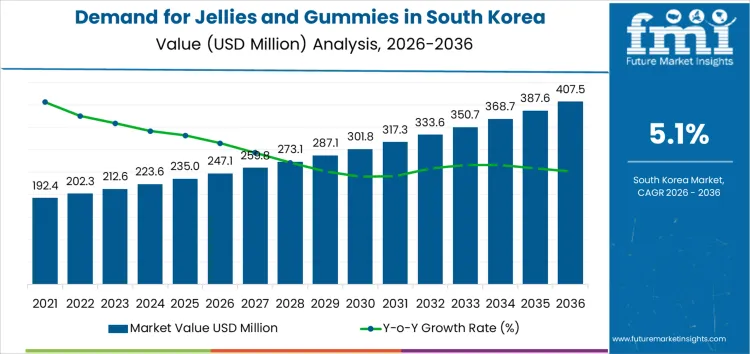
What is the Growth Forecast for the Demand for Jellies and Gummies in South Korea through 2036?
The elasticity of growth for jellies and gummies in South Korea shows a moderate correlation with macroeconomic indicators such as GDP growth, consumer spending, and disposable income levels. The early-stage growth from 2026 to 2030 is supported by the overall economic expansion, as rising incomes enable consumers to spend more on premium, functional snacks like gummies. During periods of economic growth, the elasticity of demand is expected to increase, particularly in segments such as health supplements and sugar-free options.
In times of economic expansion, the demand for these products will see a boost, as higher disposable incomes and consumer willingness to spend on health and indulgent snacks will drive growth. However, during economic slowdowns or periods of reduced consumer spending, the elasticity of growth will become more sensitive to price changes, leading to a slight deceleration in the growth rate. By 2036, the market is projected to reach USD 407.5 million, with a steady increase driven by the continued expansion of the health and wellness trend, supported by macroeconomic conditions that favor increased discretionary spending on food and confectionery products.
Key Takeaways for Demand for Jellies and Gummies in South Korea
| Metric | Value |
|---|---|
| Industry Sales Value (2026) | USD 247.1 million |
| Industry Forecast Value (2036) | USD 407.5 million |
| Industry Forecast CAGR (2026 to 2036) | 5.1% |
Why is the Demand for Jellies and Gummies Growing in South Korea?
Demand for jellies and gummies in South Korea is expanding as consumer preferences shift toward convenient, snackable, and fruit-flavored confectionery options. Retailers and food manufacturers note strong consumption among children, teens, and young adults, which sustains a broad base for these products in grocery, convenience, and online channels. Product developers use jellies and gummies to innovate around texture, flavour combinations, and packaging formats that suit on-the-go lifestyles.
Manufacturers select ingredients such as gelatin, pectin, starches, sweeteners, and flavours to achieve desired chewiness, shelf stability, and sensory appeal, and procurement teams prioritise raw material quality to ensure consistency across production lines. In addition to traditional fruit jellies, fortified gummies with added vitamins and minerals have emerged, attracting parents and health-oriented buyers who perceive added nutritional value in familiar snack categories. These formulation trends shape ongoing purchases and ingredient specifications for producers across the confectionery segment.
Looking ahead, several factors are likely to sustain and expand demand for jellies and gummies in South Korea. Urbanisation and increasing participation in out-of-home work and study routines drive demand for portable snacks that fit lunchboxes, backpacks, and brief breaks, and manufacturers respond with varied shapes, flavours, and sizes that appeal to diverse tastes. Growth in e-commerce and mobile ordering enhances availability across regions, making confectionery items more accessible year-round.
Health and wellness trends influence product development, with a rise in reduced-sugar and fortified confectionery options that attract consumers seeking perceived functional benefits alongside enjoyment. Seasonal and cultural occasions, such as festivals and holidays, also boost sales through themed packaging and limited-edition flavours, encouraging repeat purchases. Ingredient innovation, including alternative gelling agents that accommodate vegan preferences and novel flavour extracts, broadens the range of products available in the market. Taken together, these patterns support steady interest in jellies and gummies across age groups and retail formats throughout South Korea.
What Shapes the Demand for Jellies and Gummies in South Korea?
The demand for jellies and gummies in South Korea is primarily influenced by the distribution channel and product type. Non-store-based channels dominate the distribution segment with a 60% share, while functional jellies and gummies lead the product type segment at 55%. These two factors shape the market by reflecting changing consumer purchasing behaviors and an increasing interest in health-focused, functional confectionery options.
Why Do Non-Store-Based Channels Lead the Distribution?
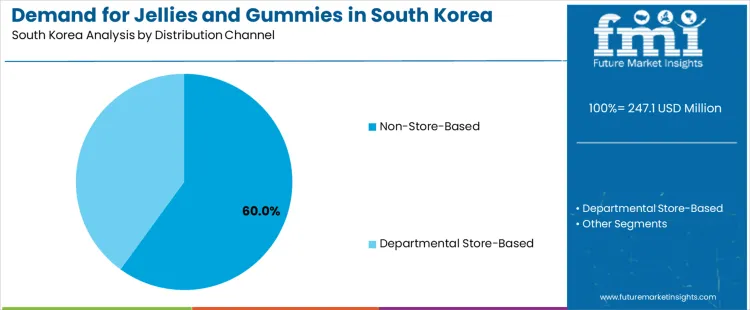
Non-store-based channels account for 60% of the demand for jellies and gummies in South Korea, reflecting the growing shift toward e-commerce and online shopping platforms. Consumers increasingly prefer the convenience of purchasing confectionery products, including jellies and gummies, from online platforms, which offer a wide range of options, competitive pricing, and direct-to-consumer delivery. The rise of e-commerce platforms and the integration of food delivery services in South Korea have accelerated this trend, as consumers can easily browse, compare, and purchase products from the comfort of their homes. Additionally, online channels often provide access to specialized or premium products, including health-conscious and functional variants, which further drives demand in the non-store-based segment. With the convenience, variety, and promotional offers available through non-store-based channels, this segment is expected to continue dominating the jellies and gummies market in South Korea.
Why Do Functional Jellies and Gummies Lead the Product Type Demand?
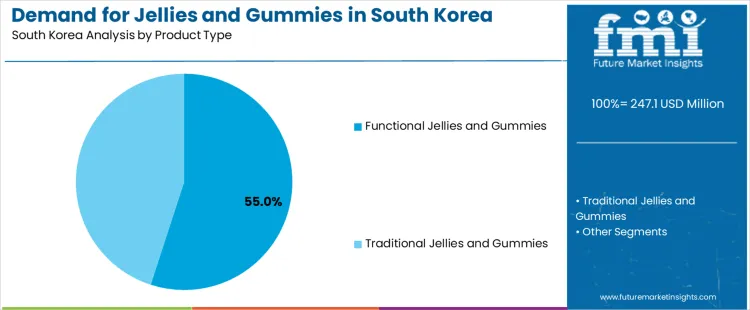
Functional jellies and gummies hold a 55% share of the product type segment due to increasing consumer interest in health and wellness. These products often contain added nutrients, vitamins, or functional ingredients like collagen, probiotics, or fiber, catering to consumers looking for a convenient, enjoyable way to supplement their diets. In South Korea, the demand for functional confectionery has grown in parallel with the country's focus on health-conscious living, as consumers seek products that offer both indulgence and functional benefits. Functional jellies and gummies appeal to a wide range of consumers, from those seeking beauty-related benefits such as skin health to those looking for digestive support or immunity boosters. The growing popularity of these health-oriented products, particularly among younger, more health-conscious demographics, is expected to drive the continued growth of the functional segment. As consumers increasingly prioritize functional foods, the demand for functional jellies and gummies in South Korea will continue to rise, positioning this product type as a dominant force in the market.
What Is the Current Demand for Jellies and Gummies in South Korea?
Demand for jellies and gummies in South Korea remains robust, supported by steady consumption of confectionery products and growing interest in functional and premium snacks. Retail channels, including convenience stores, supermarkets, and online platforms, regularly stock a wide range of jelly and gummy products targeting children, adolescents, and adult consumers. Procurement by food manufacturers and private-label brands reflects consistent sales in both traditional sweet snacks and variants positioned with added value, such as fruit content or functional ingredients. Consumption patterns are influenced by seasonal promotions, cultural preferences for bite-sized treats, and the broader popularity of snacking occasions throughout the day.
What Factors Are Driving Demand for Jellies and Gummies in South Korea?
Several drivers support demand for jellies and gummies in South Korea. Expansion of the snacks and confectionery sector contributes to volume uptake, as manufacturers introduce diverse flavour profiles and formats to attract a broad consumer base. Retail penetration of ready-to-eat snacks and convenience shopping habits reinforce frequent purchases, especially in urban areas. Younger consumers and families often select jellies and gummies for taste, portability, and variety, encouraging broader assortment on store shelves. Innovation in product formulation, including fruit-based, vitamin-enriched, or natural ingredient variants, aligns with evolving consumer interest in functional and perceived healthier options within indulgent categories. Marketing activities and seasonal product launches further stimulate trial and repeat purchases.
What Are the Constraints on Demand for Jellies and Gummies in South Korea?
Despite sustained interest, constraints affect demand for jellies and gummies in South Korea. Public health emphasis on sugar reduction and nutritional quality has influenced some consumers and manufacturers to reconsider high-sugar confections, leading to reformulation efforts or reduced portion sizes in some product lines. Price sensitivity among consumers may limit willingness to pay premiums for specialty or fortified variants when lower-cost alternatives are available. Competition from other snack categories, such as healthier bars, nuts, or baked goods positioned as better-for-you options, can draw share away from traditional jellies and gummies. Supply chain fluctuations for key ingredients, including pectin, gelatin alternatives, and flavourings, can also affect production costs and retail pricing decisions.
What Trends Are Emerging in South Korea’s Jellies and Gummies Market?
Emerging trends in South Korea’s jellies and gummies market reflect shifts in consumer preferences and product strategies. There is growing interest in functional gummies enriched with vitamins, collagen, or probiotics, appealing to adults seeking both enjoyment and perceived health benefits. Natural and fruit-derived flavour profiles are increasingly highlighted as part of clean-label positioning, with some brands reducing artificial colours and flavours. Premiumisation is evident in artisanal and imported offerings that emphasise unique textures, sophisticated tastes, or novel packaging. Sustainability considerations are shaping ingredient sourcing and packaging choices, encouraging use of recyclable materials and transparent supply chains. Finally, collaborations between confectionery brands and entertainment or cultural properties continue to drive limited-edition releases that stimulate consumer excitement and social media engagement.
What is the Regional Outlook for the Demand for Jellies and Gummies in South Korea?
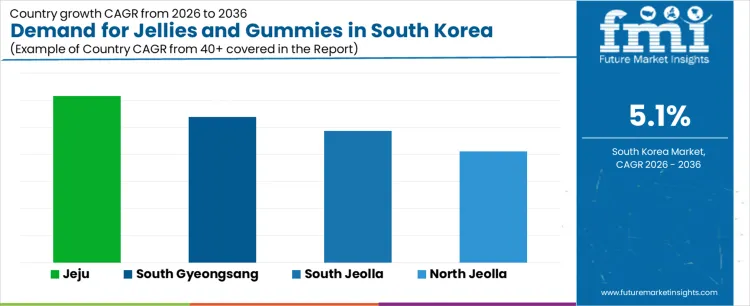
The demand for jellies and gummies in South Korea is driven by the growing popularity of convenient, sweet snacks and functional food products. Jeju leads in demand growth, driven by its vibrant tourism sector and increasing consumer interest in healthy, on-the-go snacks. South Gyeongsang and South Jeolla show solid demand, supported by their strong manufacturing and food processing bases. North Jeolla, while showing moderate growth, benefits from a growing focus on snack production and food innovation. As consumers seek healthier alternatives and functional benefits from food products, the demand for jellies and gummies, particularly those with added vitamins, minerals, and functional ingredients, is expected to rise steadily across all regions.
| Province | CAGR (2026–2036) |
|---|---|
| South Gyeongsang | 5.4% |
| North Jeolla | 4.1% |
| South Jeolla | 4.9% |
| Jeju | 6.2% |
What drives the demand for Jellies and Gummies in South Gyeongsang?
South Gyeongsang is projected to experience a CAGR of 5.4% in the demand for jellies and gummies from 2026 to 2036. The region’s strong food manufacturing and processing industries play a central role in driving this demand. As consumer preferences shift toward convenient, sweet, and healthier snacks, the demand for jellies and gummies, particularly those containing added vitamins and minerals, has risen. South Gyeongsang’s growing emphasis on product innovation in the food industry, alongside the increasing adoption of functional ingredients, ensures that demand for these products will continue to grow. Additionally, South Gyeongsang’s large-scale food production sector, which includes a significant presence of confectionery manufacturers, contributes to the steady rise in demand for jellies and gummies, particularly as the region explores new snack product formulations.
What influences the growth of Jellies and Gummies demand in North Jeolla?
North Jeolla is expected to see a moderate CAGR of 4.1% in jellies and gummies demand from 2026 to 2036. The region’s food and snack industries, which are increasingly focusing on innovative and healthier snack options, contribute to this steady demand growth. As consumer preferences shift toward plant-based, functional foods, North Jeolla’s food manufacturers are incorporating natural sweeteners, vitamins, and minerals into their jellies and gummies. Additionally, the region’s agricultural output, particularly in fruits and vegetables, provides a stable supply of raw materials used in the production of fruit-flavored gummies. The rising demand for sugar-free and functional gummies in North Jeolla, along with the growing trend of adding functional benefits to sweets, such as immune-boosting ingredients or fiber, ensures a consistent growth outlook for jellies and gummies.
What drives the demand for Jellies and Gummies in South Jeolla?
South Jeolla is projected to grow at a CAGR of 4.9% in the demand for jellies and gummies from 2026 to 2036. The region’s food and beverage industry, particularly in the production of snacks, confectionery, and health-focused foods, is a major driver of this demand. South Jeolla’s growing emphasis on producing functional foods, including jellies and gummies with added vitamins, minerals, and probiotics, further boosts this trend. The region’s strong agricultural base also supports the production of fruit-flavored gummies, as South Jeolla is a key producer of fruits used in snack manufacturing. As more consumers seek healthier snack alternatives, particularly those offering functional benefits such as digestive health or immunity support, the demand for jellies and gummies is expected to grow steadily. South Jeolla’s position in the broader food manufacturing landscape ensures that the region will continue to benefit from rising demand in the confectionery segment.
Why is Jeju projected to have the highest demand growth for Jellies and Gummies?
Jeju is projected to experience the highest demand growth for jellies and gummies, with a CAGR of 6.2% from 2026 to 2036. The region’s tourism sector, coupled with a growing health-conscious consumer base, drives this demand. As Jeju attracts both local and international visitors, the need for convenient, healthy, and indulgent snacks, such as jellies and gummies, rises. The island’s focus on natural ingredients and sustainable food production aligns with the growing demand for healthier and functional jellies and gummies. Additionally, Jeju’s expanding retail and hospitality sectors, which cater to a broad range of tourists, increasingly incorporate these snacks into their offerings. The region’s emphasis on wellness and eco-friendly food products further accelerates the adoption of nutritious and natural alternatives in confectionery, making Jeju the fastest-growing market for jellies and gummies in South Korea.
How are Competitors Differentiating in the Jellies and Gummies Market in South Korea?
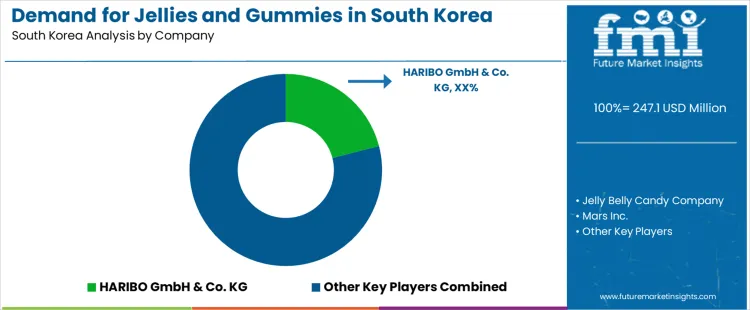
The demand for jellies and gummies in South Korea is increasing, driven by the rising popularity of convenient, snackable, and innovative confectionery products among consumers. HARIBO GmbH & Co. KG, the leading player, differentiates by offering a wide variety of gummy products known for their unique flavors, textures, and brand recognition. Their focus on high-quality ingredients and classic gummy formulations ensures broad appeal across different age groups. Jelly Belly Candy Company competes by emphasizing its premium, flavor-packed gummies with distinctive, fun flavors. Their products are positioned as a more indulgent and artisanal option for South Korean consumers who seek novelty and unique taste experiences.
Mars Inc. leverages its strong global brand presence, offering gummies and jellies that are well-recognized for their consistency, quality, and variety. Their marketing focuses on creating playful, indulgent experiences for consumers of all ages, making their gummies a staple in the South Korean market. Mondelēz Global LLC competes by providing gummies and jellies under well-established brands like Sour Patch Kids, appealing to younger consumers with bold, sour, and sweet flavor combinations. Perfetti Van Melle Group B.V. differentiates by offering a wide range of fruit-flavored gummies and jelly-based products that cater to the growing demand for healthier snack options, with a focus on portion control and reduced sugar formulations. These companies use product brochures to showcase their diverse offerings, highlight flavor profiles, and communicate their commitment to quality and innovation, helping South Korean consumers and manufacturers choose the best jelly and gummy options.
Key Players of the Demand for Jellies and Gummies in South Korea
- HARIBO GmbH & Co. KG
- Jelly Belly Candy Company
- Mars Inc.
- Mondelz Global LLC
- Perfetti Van Melle Group B.V.
Scope of the Report
| Items | Values |
|---|---|
| Quantitative Units (2026) | USD Million |
| Ingredient Type | Fruits, Vegetables, Liqueur, Flowers and Herbs, Others |
| Product Type | Functional Jellies and Gummies, Traditional Jellies and Gummies |
| End Users | <14-year-olds, 14-30 year-olds, >30 year-olds |
| Distribution Channel | Departmental Store-Based, Non-Store-Based |
| Companies | HARIBO GmbH & Co. KG, Jelly Belly Candy Company, Mars Inc., Mondelz Global LLC, Perfetti Van Melle Group B.V. |
| Region Covered | South Korea |
| Provinces Covered | South Gyeongsang, North Jeolla, South Jeolla, Jeju |
| Additional Attributes | Dollar sales by ingredient type, product type, end users, and distribution channel. The demand for jellies and gummies is driven by the popularity of both functional and traditional variants, with rising demand from younger age groups, particularly those under 30. Distribution is shifting between departmental store-based and non-store-based channels, as convenience and online shopping continue to influence purchase behavior. |
Demand for Jellies and Gummies in South Korea
Ingredient Type
- Fruits
- Vegetables
- Liqueur
- Flowers and Herbs
- Others
Product Type
- Functional Jellies and Gummies
- Traditional Jellies and Gummies
- Other
End Users
- <14-year-olds
- 14-30 year-olds
- >30 year-olds
Distribution Channel
- Departmental Store-Based
- Non-Store-Based
- Other
Provinces
- South Gyeongsang
- North Jeolla
- South Jeolla
- Jeju
Bibliography
- Korea Agro-Fisheries & Food Trade Corporation. (2024). South Korea confectionery and snack market report 2024: Demand trends for gummies and jellies. aT Center, Government of South Korea.
- Ministry of Food and Drug Safety (Republic of Korea). (2024). Food standards and specifications: Gelatin, pectin, and starch-based confectionery products. Government of South Korea.
- Korean Consumer Agency. (2024). Consumer survey on sugar-reduced confectionery products: Gummies, candies, and jellies. Government of South Korea.
Frequently Asked Questions
How big is the demand for jellies and gummies in south korea in 2026?
The demand for jellies and gummies in south korea is estimated to be valued at USD 247.1 million in 2026.
What will be the size of jellies and gummies in south korea in 2036?
The market size for the jellies and gummies in south korea is projected to reach USD 407.5 million by 2036.
How much will be the demand for jellies and gummies in south korea growth between 2026 and 2036?
The demand for jellies and gummies in south korea is expected to grow at a 5.1% CAGR between 2026 and 2036.
What are the key product types in the jellies and gummies in south korea?
The key product types in jellies and gummies in south korea are fruits, vegetables, liqueur, flowers and herbs and others.
Which product type segment is expected to contribute significant share in the jellies and gummies in south korea in 2026?
In terms of product type, functional jellies and gummies segment is expected to command 55.0% share in the jellies and gummies in south korea in 2026.
Preview the report firsthand - request a free sample
Get SampleGet the brochure for pricing and purchase details.
Get PDFTable of Content
- Executive Summary
- South Korea Market Outlook
- Demand-side Trends
- Supply-side Trends
- Technology Roadmap Analysis
- Analysis and Recommendations
- Market Overview
- Market Coverage / Taxonomy
- Market Definition / Scope / Limitations
- Market Background
- Market Dynamics
- Drivers
- Restraints
- Opportunity
- Trends
- Scenario Forecast
- Demand in Optimistic Scenario
- Demand in Likely Scenario
- Demand in Conservative Scenario
- Opportunity Map Analysis
- Product Life Cycle Analysis
- Supply Chain Analysis
- Investment Feasibility Matrix
- Value Chain Analysis
- PESTLE and Porter’s Analysis
- Regulatory Landscape
- Regional Parent Market Outlook
- Production and Consumption Statistics
- Import and Export Statistics
- Market Dynamics
- South Korea Market Analysis 2021 to 2025 and Forecast, 2026 to 2036
- Historical Market Size Value (USD Million) Analysis, 2021 to 2025
- Current and Future Market Size Value (USD Million) Projections, 2026 to 2036
- Y-o-Y Growth Trend Analysis
- Absolute $ Opportunity Analysis
- South Korea Market Pricing Analysis 2021 to 2025 and Forecast 2026 to 2036
- South Korea Market Analysis 2021 to 2025 and Forecast 2026 to 2036, By Ingredient Type
- Introduction / Key Findings
- Historical Market Size Value (USD Million) Analysis By Ingredient Type , 2021 to 2025
- Current and Future Market Size Value (USD Million) Analysis and Forecast By Ingredient Type , 2026 to 2036
- Fruits
- Vegetables
- Liqueur
- Flowers and Herbs
- Others
- Fruits
- Y-o-Y Growth Trend Analysis By Ingredient Type , 2021 to 2025
- Absolute $ Opportunity Analysis By Ingredient Type , 2026 to 2036
- South Korea Market Analysis 2021 to 2025 and Forecast 2026 to 2036, By Product Type
- Introduction / Key Findings
- Historical Market Size Value (USD Million) Analysis By Product Type, 2021 to 2025
- Current and Future Market Size Value (USD Million) Analysis and Forecast By Product Type, 2026 to 2036
- Functional Jellies and Gummies
- Traditional Jellies and Gummies
- Functional Jellies and Gummies
- Y-o-Y Growth Trend Analysis By Product Type, 2021 to 2025
- Absolute $ Opportunity Analysis By Product Type, 2026 to 2036
- South Korea Market Analysis 2021 to 2025 and Forecast 2026 to 2036, By End Users
- Introduction / Key Findings
- Historical Market Size Value (USD Million) Analysis By End Users, 2021 to 2025
- Current and Future Market Size Value (USD Million) Analysis and Forecast By End Users, 2026 to 2036
- <14-year-olds
- 14-30 year-olds
- >30 year-olds
- <14-year-olds
- Y-o-Y Growth Trend Analysis By End Users, 2021 to 2025
- Absolute $ Opportunity Analysis By End Users, 2026 to 2036
- South Korea Market Analysis 2021 to 2025 and Forecast 2026 to 2036, By Distribution Channel
- Introduction / Key Findings
- Historical Market Size Value (USD Million) Analysis By Distribution Channel, 2021 to 2025
- Current and Future Market Size Value (USD Million) Analysis and Forecast By Distribution Channel, 2026 to 2036
- Non-Store-Based
- Departmental Store-Based
- Non-Store-Based
- Y-o-Y Growth Trend Analysis By Distribution Channel, 2021 to 2025
- Absolute $ Opportunity Analysis By Distribution Channel, 2026 to 2036
- Market Structure Analysis
- Competition Dashboard
- Competition Benchmarking
- Market Share Analysis of Top Players
- By Regional
- By Ingredient Type
- By Product Type
- By End Users
- By Distribution Channel
- Competition Analysis
- Competition Deep Dive
- HARIBO GmbH & Co. KG
- Overview
- Product Portfolio
- Profitability by Market Segments (Product/Age /Sales Channel/Region)
- Sales Footprint
- Strategy Overview
- Marketing Strategy
- Product Strategy
- Channel Strategy
- Jelly Belly Candy Company
- Mars Inc.
- Mondelz Global LLC
- Perfetti Van Melle Group B.V.
- HARIBO GmbH & Co. KG
- Competition Deep Dive
- Assumptions & Acronyms Used
- Research Methodology


