

- Industry Size (2026)
- USD 152.7 Mn
- Forecast (2036)
- USD 295.9 Mn
- CAGR (2026 to 2036)
- 6.8%
Demand for Plant Derived Analgesics in South Korea Forecast and Outlook 2026 to 2036
The demand for plant-derived analgesics in South Korea is projected to reach USD 295.9 million by 2036, growing at a CAGR of 6.8% from USD 152.7 million in 2026. These figures signal a growing consumer shift towards natural and holistic health solutions, indicating a rising preference for plant-based alternatives in pain management. The steady growth rate suggests that purchasing behavior is evolving, with consumers increasingly prioritizing products perceived as safer or more sustainable. This trend reflects a broader shift in the wellness and healthcare sectors, where demand for natural remedies is gaining traction. From a supplier’s perspective, the figures indicate confidence in market expansion, though they also highlight the need for long-term commitment to research, regulatory compliance, and consumer education. As the market matures, sustained investment in product innovation and differentiation will be critical for companies aiming to capture and retain market share in this growing segment.
Quick Stats for the Demand for Plant Derived Analgesics in South Korea
- Plant Derived Analgesics in South Korea Value (2026): USD 152.7 million
- Plant Derived Analgesics in South Korea Forecast Value (2036): USD 295.9 million
- Plant Derived Analgesics in South Korea Forecast CAGR (2026 to 2036): 6.8%
- Plant Derived Analgesics in South Korea Leading Segment: Tablets (42.5%)
- Key Growth Regions of Plant Derived Analgesics in South Korea: Jeju (leading CAGR ~8.2%)
- Top Players of Plant Derived Analgesics in South Korea: Pfizer Inc., Mallinckrodt Pharmaceuticals, Teva Pharmaceuticals, Johnson & Johnson, NOW® Foods
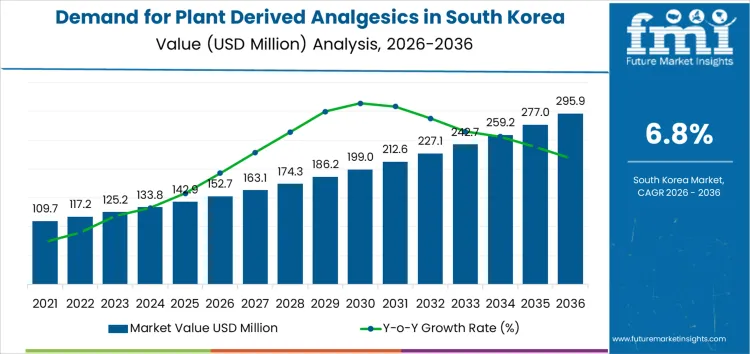
What is the Growth Forecast for the Plant Derived Analgesic Market in South Korea through 2036?
The plant-derived analgesic segment in South Korea is expected to expand steadily through the forecast period, supported by growing consumer preference for natural and plant-based healthcare solutions. Rising awareness around wellness, preventive care, and the long-term safety profile of botanical alternatives is encouraging wider adoption of plant-derived pain relief products across both over-the-counter channels and complementary healthcare settings. Demand is also strengthening as manufacturers introduce more standardized formulations and improve product availability through pharmacies, online platforms, and wellness retailers.
In the later years of the forecast period, the industry is likely to shift into a faster growth phase as consumer adoption accelerates and a broader range of plant-based analgesic options becomes mainstream. This momentum will be reinforced by expanding innovation in herbal extracts, improved clinical positioning, and stronger marketing around clean-label and natural pain management. As plant-derived analgesics gain credibility and familiarity among South Korean consumers, they are expected to secure a stronger role in routine pain care and everyday wellness, contributing to sustained long-term expansion.
Key Takeaways for Demand for Plant Derived Analgesics in South Korea
| Metric | Value |
|---|---|
| Industry Sales Value (2026) | USD 152.7 million |
| Industry Forecast Value (2036) | USD 295.9 million |
| Industry Forecast CAGR (2026 to 2036) | 6.8% |
Why is the Demand for Plant Derived Analgesics Growing in South Korea?
Demand for plant derived analgesics in South Korea has increased as healthcare providers, patients, and retailers seek alternatives to conventional synthetic pain relief medications. Traditionally, South Korean consumers have used herbal and botanical remedies within the context of traditional medicine systems, especially for mild to moderate pain, inflammation, and musculoskeletal discomfort. This cultural familiarity has provided a foundation for the adoption of modern plant derived products that blend scientific formulation with botanical active ingredients.
In the pharmaceutical and nutraceutical sectors, manufacturers have introduced plant derived analgesics containing compounds such as willow bark extract, turmeric, and capsicum that offer analgesic effects without some side effects associated with non steroidal anti inflammatory drugs. Retail penetration of these products through pharmacies, health stores, and online channels has widened, making them accessible to consumers beyond traditional herbal outlets. Regulatory frameworks in South Korea permit marketing of plant based analgesics under specified safety and labeling standards, encouraging suppliers to diversify offerings. Healthcare professionals and clinics have also contributed to uptake by recommending plant derived options as part of multimodal pain management strategies that align with patient preferences for natural or lower risk ingredients.
Looking ahead, demand for plant derived analgesics in South Korea is expected to grow as awareness of botanical alternatives expands and as product innovation continues. Manufacturers that invest in clinical research, quality assurance, and clear efficacy communication will be better positioned to address both practitioner and consumer expectations. Retailers and distributors can benefit from tailoring product assortments to distinct consumer segments, including older adults seeking gentle pain relief and younger adults pursuing preventive wellness solutions. Integration of plant derived analgesics into broader pain management programs, including physiotherapy and lifestyle interventions, may further support market uptake. Collaboration between product developers and regulatory bodies to ensure consistent standards and labeling could strengthen consumer confidence and support longer term growth in this category.
What Are the Key Segments in Demand for Plant-Derived Analgesics in South Korea?
The demand for plant-derived analgesics in South Korea is driven by both product type and formulation type. Key product types include morphine, codeine, salicin, cannabinoids (CBD), and curcumin, with morphine holding the largest share at 29.5%. In terms of formulation type, tablets lead the market, accounting for 42.5%, followed by capsules, creams, and oils. The increasing prevalence of chronic pain and the growing interest in plant-based and natural remedies are driving the demand for these analgesics across various segments.
How Does Product Type Influence Demand for Plant-Derived Analgesics in South Korea?
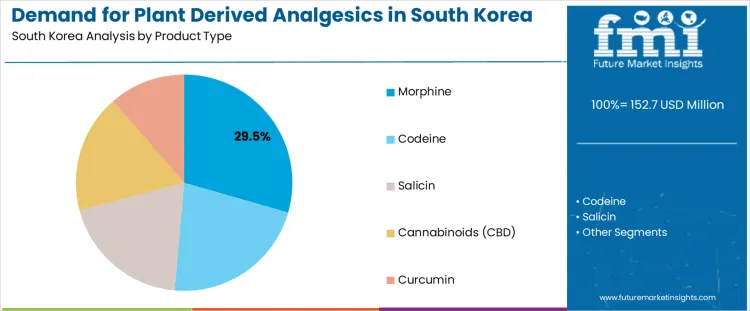
The demand for plant-derived analgesics in South Korea is primarily influenced by the product type, with morphine leading the market at 29.5%. Although morphine is an opioid, it is often derived from plant sources and used for its potent pain-relieving properties. It is widely used in medical settings, particularly for managing severe pain in cancer patients and those recovering from major surgeries. Despite its synthetic and semi-synthetic derivatives, morphine continues to be a dominant product in the analgesic market. Codeine, another opioid derived from the opium poppy, also sees demand in South Korea, particularly for its use in milder pain conditions.
While opioids are under increasing scrutiny globally due to concerns over addiction and side effects, they remain critical in pain management, driving ongoing demand in controlled medical environments. Salicin, derived from willow bark, is a natural alternative to aspirin, known for its anti-inflammatory and pain-relieving properties. This product has been gaining traction as consumers increasingly seek plant-based analgesics with fewer side effects. Cannabinoids (CBD) are also growing in popularity, particularly for their potential to manage chronic pain, anxiety, and inflammation.
The legal landscape surrounding CBD in South Korea is evolving, which may further drive growth in demand. Curcumin, derived from turmeric, is another plant-based analgesic gaining popularity for its anti-inflammatory benefits, especially in the treatment of joint pain and arthritis. As demand for natural, plant-derived alternatives to conventional analgesics increases, these products are expected to play an expanding role in South Korea's pain management market.
What Is the Demand for Plant-Derived Analgesics in South Korea by Formulation Type?
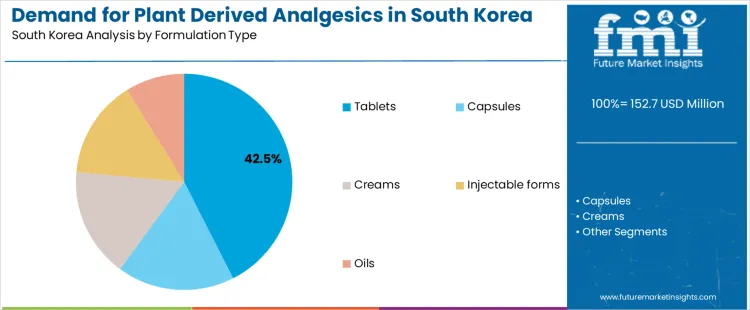
In South Korea, the demand for plant-derived analgesics is significantly influenced by the formulation type, with tablets leading the market at 42.5%. Tablets are preferred due to their convenience, dosage accuracy, and ease of administration. This formulation is particularly popular for both prescription and over-the-counter plant-derived analgesics, making it a staple in pain management for chronic conditions. Capsules follow closely behind in demand, offering a similar convenience and dosage accuracy as tablets but with the added benefit of faster absorption, which appeals to consumers looking for quick relief. Creams and oils are also widely used in the South Korean market, particularly for localized pain relief.
These formulations are favored by individuals seeking targeted treatment for joint pain, muscle aches, and inflammation. Creams are often preferred for their ease of application and quick absorption into the skin, while oils, particularly CBD oils and curcumin-based oils, are gaining popularity for their therapeutic properties in managing inflammation and chronic pain. Injectable forms, though less common, are used in clinical settings where fast and direct relief is necessary, especially for conditions requiring higher doses of pain relief. As the South Korean market for plant-derived analgesics continues to expand, the demand for various formulations will evolve based on consumer preferences, with a growing shift toward natural and localized treatments. This trend indicates a potential increase in the use of creams, oils, and other topical formulations alongside more traditional oral products.
What are the Key Dynamics in the Demand for Plant Derived Analgesics in South Korea?
Demand for plant derived analgesics in South Korea is influenced by healthcare consumption patterns, rising interest in natural health products, and regulatory frameworks governing herbal medicines and supplements. The population’s growing focus on preventive care and discomfort management without long term reliance on synthetic pharmaceuticals drives interest in botanical pain relief options. Companies engaging in this segment must navigate classification under traditional herbal medicines, functional foods, or cosmetic topical analgesics, depending on formulation and claims. Distribution channels span pharmacies, health stores, hospital outpatient departments, and online marketplaces, each with distinct procurement and compliance requirements. Trend data show that product education and clinician recommendations shape adoption among target users.
What are the Drivers of Demand for Plant Derived Analgesics in South Korea?
Key drivers include increasing consumer preference for natural and plant based health solutions, particularly among middle aged and aging populations seeking alternatives to non steroidal anti inflammatory drugs (NSAIDs). Awareness of botanical ingredients such as willow bark extract, turmeric (curcumin), and capsaicin for pain relief encourages trial and repeat purchase. Government policies that support traditional medicine integration and quality assurance for herbal products add credibility to plant derived offerings. Expansion of e commerce and digital health platforms improves access to specialized analgesic products and allows suppliers to target niche segments. Partnerships with healthcare practitioners who understand phytochemical efficacy further encourage usage among patients managing chronic joint or musculoskeletal discomfort.
What are the Restraints on Demand for Plant Derived Analgesics in South Korea?
Restraints include regulatory complexity and classification ambiguity, which can slow product registration and market entry. Manufacturers must demonstrate safety and proportionate efficacy evidence to satisfy Korea’s Ministry of Food and Drug Safety (MFDS) standards, particularly when positioning products with therapeutic claims. Consumer skepticism about the effectiveness of plant derived analgesics compared with conventional pain medications may dampen uptake, especially in acute pain scenarios. Price sensitivity remains a factor, as some high quality botanical extracts incur higher production costs, which transmit to retail pricing. Competitive pressure from established synthetic analgesics and prescription pain management options also limits market expansion among clinical users.
What Key Trends Affect Demand for Plant Derived Analgesics in South Korea?
A notable trend is formulation innovation that enhances bioavailability and targeted delivery, such as transdermal gels, patches, and nano emulsions that improve absorption of active plant compounds. Suppliers are increasingly incorporating standardized extracts with substantiated pain relief benefits to differentiate products. Integration of digital health education and mobile apps that guide usage and tracking amplifies consumer engagement with plant derived options. Retailers are bundling analgesic products with complementary recovery and wellness solutions, such as anti inflammatory supplements and ergonomic supports. Collaborations between domestic herbal product developers and academic institutions are advancing evidence based formulations, which supports broader acceptance among healthcare professionals and end users.
What is the Regional Demand Outlook for Plant-Derived Analgesics in South Korea?
The demand for plant-derived analgesics in South Korea is increasing as consumers seek natural alternatives for pain relief. South Gyeongsang, with a projected CAGR of 7.2%, stands out for its strong market driven by the region’s emphasis on natural health products and a growing demand for herbal medicines. North Jeolla, with a CAGR of 5.5%, shows moderate demand, with a focus on traditional remedies and natural health solutions gaining traction. South Jeolla, with a growth rate of 6.5%, demonstrates steady demand, reflecting an increasing consumer interest in plant-based health supplements. Jeju, with the highest growth rate of 8.2%, is emerging as a key region, driven by its focus on wellness tourism and a local population prioritizing plant-based alternatives for pain relief. As plant-derived analgesics become more mainstream, opportunities for manufacturers and suppliers to expand their market share in these regions are growing.
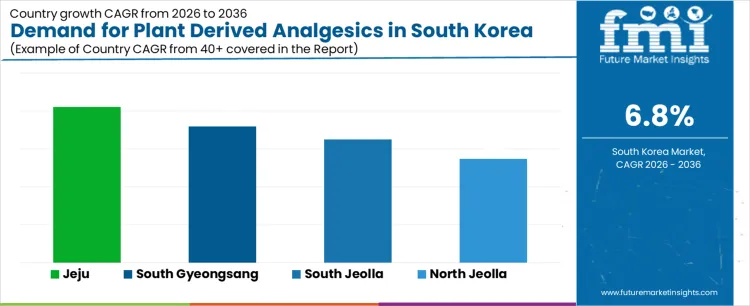
| Region | CAGR (2026 to 2036) |
|---|---|
| South Gyeongsang | 7.2% |
| North Jeolla | 5.5% |
| South Jeolla | 6.5% |
| Jeju | 8.2% |
How Can Manufacturers Capitalize on the Demand in South Gyeongsang for Plant-Derived Analgesics?
South Gyeongsang, with a CAGR of 7.2%, presents significant growth opportunities for manufacturers and suppliers of plant-derived analgesics. The region’s growing awareness of natural health products, coupled with a strong interest in alternative medicine, creates a robust market for these products. Manufacturers should focus on developing high-quality, clinically supported formulations that meet the region's demand for natural pain relief options. Collaborating with local healthcare providers and distributors will be key to expanding market reach. South Gyeongsang’s demand for plant-based analgesics can be driven further by highlighting the efficacy and sustainability of plant-derived ingredients, appealing to both health-conscious consumers and individuals seeking natural pain management solutions.
What Factors are Driving Demand for Plant-Derived Analgesics in North Jeolla?
North Jeolla’s demand for plant-derived analgesics is projected to grow at a moderate rate, with a CAGR of 5.5%. The region’s deep-rooted agricultural heritage, combined with increasing consumer interest in natural health solutions, is contributing to the growth of the plant-based analgesic market. Manufacturers targeting this region should focus on educating consumers about the benefits of plant-derived pain relief alternatives, particularly in a market that values traditional remedies. As North Jeolla embraces more wellness-focused lifestyles, companies can look to expand their reach by offering products that align with local cultural practices, such as incorporating regionally sourced plants and herbs into their formulations.
What is the Growth Outlook for Plant-Derived Analgesics in South Jeolla?
South Jeolla, with a CAGR of 6.5%, is witnessing steady demand for plant-derived analgesics, driven by the increasing adoption of alternative health products. As the region’s population becomes more health-conscious, there is a growing interest in non-pharmaceutical pain relief options. Manufacturers have an opportunity to capitalize on this by offering plant-based solutions that cater to local preferences for natural, holistic health approaches. Additionally, as South Jeolla continues to develop its wellness and preventive healthcare sectors, the demand for plant-derived analgesics will likely continue to rise. Companies should focus on providing effective, sustainable products that appeal to both younger and older demographics seeking pain relief without the side effects of traditional medications.
Why is Jeju a Key Region for Plant-Derived Analgesics Demand?
Jeju, with the highest projected CAGR of 8.2%, represents a significant growth opportunity for plant-derived analgesics. The region’s focus on wellness tourism, combined with its emphasis on natural and organic products, is driving demand for plant-based pain relief options. Visitors and residents alike are increasingly looking for natural alternatives to manage pain, particularly in a market that values sustainable, plant-based remedies. Manufacturers and suppliers targeting Jeju should consider developing products that align with the region’s wellness-focused lifestyle, incorporating local plants and herbs known for their analgesic properties. As Jeju continues to position itself as a wellness destination, the market for plant-derived analgesics is expected to expand rapidly, providing substantial opportunities for businesses in this sector.
What is the Competitive Landscape for Plant Derived Analgesics in South Korea?
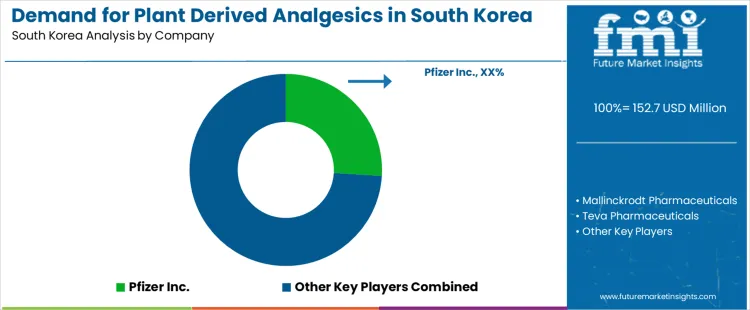
Demand for plant derived analgesics in South Korea is rising as healthcare providers, pharmacies, and wellness retailers seek alternatives that align with consumer interest in naturally sourced pain management solutions. Growth is driven by prevalence of chronic musculoskeletal conditions, ageing population segments, and preference among some patients for products perceived as gentle or complementary to conventional therapies. Institutional buyers evaluate efficacy data, regulatory compliance documentation, and supply reliability when selecting plant derived analgesic products. Requirements in procurement include standardised active compound concentrations, demonstrated safety profiles, and batch to batch consistency.
Product uptake is supported by distribution through pharmacy networks, health clinics, and specialised wellness stores, with online channels expanding availability. Tender specifications in clinical settings increasingly incorporate criteria for supplier traceability and quality assurance processes that align with South Korean pharmaceutical and health supplement regulations. This creates opportunities for manufacturers with robust quality management systems, transparent sourcing practices, and clear product positioning that meets local clinical and consumer expectations.
Competition among key suppliers in the South Korean plant derived analgesic segment is shaped by product portfolios, documented specifications, and end user support services. Pfizer Inc. is positioned as a leading provider, with product literature outlining plant based formulations, analgesic efficacy parameters, and pharmacokinetic profiles useful for institutional buyers and pharmacy purchasers. Mallinckrodt Pharmaceuticals materials present products with emphasis on formulation stability and quality control measures, including details on excipients and release profiles relevant to clinician evaluation. Teva Pharmaceuticals brochures describe plant derived analgesic options alongside administration guidelines and comparative data that aid formulary committees.
Johnson & Johnson documentation focuses on pain management solutions incorporating botanically sourced ingredients, with specification sheets on active constituents and recommended usage. NOW® Foods product materials highlight standardised botanical extracts, ingredient sourcing practices, and third party testing results that inform retail buyers and health focused distributors. These brochures typically include analytical data, regulatory compliance summaries, and handling recommendations that help South Korean purchasers assess product suitability against performance and quality criteria.
Key Players of the Demand for Plant Derived Analgesics in South Korea
- Pfizer Inc.
- Mallinckrodt Pharmaceuticals
- Teva Pharmaceuticals
- Johnson & Johnson
- NOW® Foods
Scope of the Report
| Items | Values |
|---|---|
| Quantitative Units (2026) | USD Million |
| Product Type | Morphine, Codeine, Salicin, Cannabinoids (CBD), Curcumin |
| Formulation Type | Tablets, Capsules, Creams, Injectable Forms, Oils |
| Application | Chronic Pain Management, Acute Pain Relief, Post-surgical Pain, Neuropathic Pain |
| Sales Channel | Hospitals, Clinics, Retail Sales, Online Sales, Hypermarket & Supermarket |
| Companies | Pfizer Inc., Mallinckrodt Pharmaceuticals, Teva Pharmaceuticals, Johnson & Johnson, NOW® Foods |
| Region Covered | South Korea |
| Provinces Covered | South Gyeongsang, North Jeolla, South Jeolla, Jeju |
| Additional Attributes | Dollar sales by product type, formulation type, application, and sales channel. Demand is supported by wider acceptance of plant-based analgesics, rising interest in CBD-derived therapies, and strong use across hospitals, clinics, and retail channels for both acute and chronic pain treatments. |
Key Segments of Demand for Plant Derived Analgesics in South Korea
Product Type
- Morphine
- Codeine
- Salicin
- Cannabinoids (CBD)
- Curcumin
- Other
Formulation Type
- Tablets
- Capsules
- Creams
- Injectable Forms
- Oils
- Other
Application
- Chronic Pain Management
- Acute Pain Relief
- Post-Surgical Pain
- Neuropathic Pain
- Other
Sales Channel
- Hospitals
- Clinics
- Retail Sales
- Online Sales
- Hypermarket & Supermarket
- Other
Provinces
- South Gyeongsang
- North Jeolla
- South Jeolla
- Jeju
Bibliography
- Ministry of Food and Drug Safety. (2024). Guideline on establishment of chemical profiles for herbal medicinal products (English version). Ministry of Food and Drug Safety.
- Korea Legislation Research Institute. (2024). Narcotics control act (consolidated English text reflecting amendments effective August 9, 2024). Korea Legislation Research Institute.
- Choi, Y., & Shin, H.-K. (2024). Adverse events associated with herbal medicine products reported in the Korea Adverse Event Reporting System from 2012 to 2021. Frontiers in Pharmacology, 15, 1378208. doi:10.3389/fphar.2024.1378208
Frequently Asked Questions
How big is the demand for plant derived analgesics in south korea in 2026?
The demand for plant derived analgesics in south korea is estimated to be valued at USD 152.7 million in 2026.
What will be the size of plant derived analgesics in south korea in 2036?
The market size for the plant derived analgesics in south korea is projected to reach USD 295.9 million by 2036.
How much will be the demand for plant derived analgesics in south korea growth between 2026 and 2036?
The demand for plant derived analgesics in south korea is expected to grow at a 6.8% CAGR between 2026 and 2036.
What are the key product types in the plant derived analgesics in south korea?
The key product types in plant derived analgesics in south korea are morphine, codeine, salicin, cannabinoids (cbd) and curcumin.
Which formulation type segment is expected to contribute significant share in the plant derived analgesics in south korea in 2026?
In terms of formulation type, tablets segment is expected to command 42.5% share in the plant derived analgesics in south korea in 2026.
Preview the report firsthand - request a free sample
Get SampleGet the brochure for pricing and purchase details.
Get PDFTable of Content
- Executive Summary
- South Korea Market Outlook
- Demand-side Trends
- Supply-side Trends
- Technology Roadmap Analysis
- Analysis and Recommendations
- Market Overview
- Market Coverage / Taxonomy
- Market Definition / Scope / Limitations
- Market Background
- Market Dynamics
- Drivers
- Restraints
- Opportunity
- Trends
- Scenario Forecast
- Demand in Optimistic Scenario
- Demand in Likely Scenario
- Demand in Conservative Scenario
- Opportunity Map Analysis
- Product Life Cycle Analysis
- Supply Chain Analysis
- Investment Feasibility Matrix
- Value Chain Analysis
- PESTLE and Porter’s Analysis
- Regulatory Landscape
- Regional Parent Market Outlook
- Production and Consumption Statistics
- Import and Export Statistics
- Market Dynamics
- South Korea Market Analysis 2021 to 2025 and Forecast, 2026 to 2036
- Historical Market Size Value (USD Million) Analysis, 2021 to 2025
- Current and Future Market Size Value (USD Million) Projections, 2026 to 2036
- Y-o-Y Growth Trend Analysis
- Absolute $ Opportunity Analysis
- South Korea Market Pricing Analysis 2021 to 2025 and Forecast 2026 to 2036
- South Korea Market Analysis 2021 to 2025 and Forecast 2026 to 2036, By Product Type
- Introduction / Key Findings
- Historical Market Size Value (USD Million) Analysis By Product Type, 2021 to 2025
- Current and Future Market Size Value (USD Million) Analysis and Forecast By Product Type, 2026 to 2036
- Morphine
- Codeine
- Salicin
- Cannabinoids (CBD)
- Curcumin
- Morphine
- Y-o-Y Growth Trend Analysis By Product Type, 2021 to 2025
- Absolute $ Opportunity Analysis By Product Type, 2026 to 2036
- South Korea Market Analysis 2021 to 2025 and Forecast 2026 to 2036, By Formulation Type
- Introduction / Key Findings
- Historical Market Size Value (USD Million) Analysis By Formulation Type, 2021 to 2025
- Current and Future Market Size Value (USD Million) Analysis and Forecast By Formulation Type, 2026 to 2036
- Tablets
- Capsules
- Creams
- Injectable forms
- Oils
- Tablets
- Y-o-Y Growth Trend Analysis By Formulation Type, 2021 to 2025
- Absolute $ Opportunity Analysis By Formulation Type, 2026 to 2036
- South Korea Market Analysis 2021 to 2025 and Forecast 2026 to 2036, By Application
- Introduction / Key Findings
- Historical Market Size Value (USD Million) Analysis By Application, 2021 to 2025
- Current and Future Market Size Value (USD Million) Analysis and Forecast By Application, 2026 to 2036
- Chronic pain management
- Acute pain relief
- Post-surgical pain
- Neuropathic pain
- Chronic pain management
- Y-o-Y Growth Trend Analysis By Application, 2021 to 2025
- Absolute $ Opportunity Analysis By Application, 2026 to 2036
- South Korea Market Analysis 2021 to 2025 and Forecast 2026 to 2036, By Sales Channel
- Introduction / Key Findings
- Historical Market Size Value (USD Million) Analysis By Sales Channel, 2021 to 2025
- Current and Future Market Size Value (USD Million) Analysis and Forecast By Sales Channel, 2026 to 2036
- Hospitals
- Clinics
- Retail sales
- Online sales
- Hypermarket & supermarket
- Hospitals
- Y-o-Y Growth Trend Analysis By Sales Channel, 2021 to 2025
- Absolute $ Opportunity Analysis By Sales Channel, 2026 to 2036
- Market Structure Analysis
- Competition Dashboard
- Competition Benchmarking
- Market Share Analysis of Top Players
- By Regional
- By Product Type
- By Formulation Type
- By Application
- By Sales Channel
- Competition Analysis
- Competition Deep Dive
- Pfizer Inc.
- Overview
- Product Portfolio
- Profitability by Market Segments (Product/Age /Sales Channel/Region)
- Sales Footprint
- Strategy Overview
- Marketing Strategy
- Product Strategy
- Channel Strategy
- Mallinckrodt Pharmaceuticals
- Teva Pharmaceuticals
- Johnson & Johnson
- NOW® Foods
- Pfizer Inc.
- Competition Deep Dive
- Assumptions & Acronyms Used
- Research Methodology


