

- Industry Size (2025)
- USD 81.7 Bn
- Forecast (2035)
- USD 339.4 Bn
- CAGR (2025 to 2035)
- 15.3%
Tech Savvy Hotel Chains Industry Outlook 2025 to 2035
The Tech Savvy Hotel Chains market is experiencing robust growth driven by increasing consumer demand for seamless digital experiences and enhanced personalized services. The future outlook for this market is shaped by the integration of advanced technologies such as mobile check-ins, smart room controls, AI-powered concierge services, and contactless payment systems, which collectively enhance guest convenience and satisfaction. Rising global travel and tourism activities, coupled with changing consumer expectations toward tech-enabled services, are fueling market expansion.
Hotel chains are investing in digital infrastructure to attract tech-oriented travelers, improve operational efficiency, and deliver tailored experiences. Additionally, increasing awareness of hygiene and safety measures in accommodation facilities has accelerated the adoption of technology-driven solutions.
The growing preference for digitally connected services among both leisure and business travelers supports sustained growth in the market As competition intensifies among hotel chains to provide differentiated experiences, the adoption of advanced technology platforms is expected to remain a key driver for market expansion in both domestic and international markets.
Quick Stats for Tech Savvy Hotel Chains Market
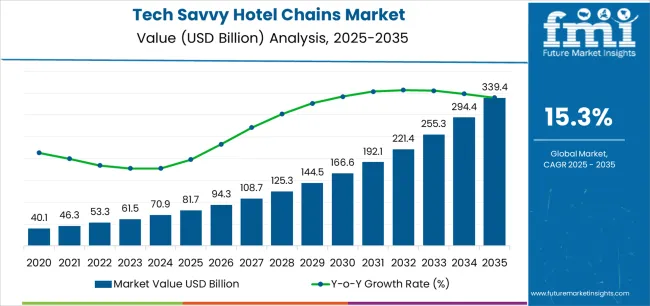
- Tech Savvy Hotel Chains Market Industry Value (2025): USD 81.7 billion
- Tech Savvy Hotel Chains Market Forecast Value (2035): USD 339.4 billion
- Tech Savvy Hotel Chains Market Forecast CAGR: 15.3%
- Leading Segment in Tech Savvy Hotel Chains Market in 2025: Domestic (60.0%)
- Key Growth Region in Tech Savvy Hotel Chains Market: North America, Asia-Pacific, Europe
- Top Key Players in Tech Savvy Hotel Chains Market: W Singapore, The Hotel Silken Puerta América, The Yotel New York City, Eccleston Square Pimlico, Pengheng Space Capsules Hotel, Blow Up Hall 5050, City Hub,Kameha Grand, Hotel Zetta, Henn Na Hotel
| Metric | Value |
|---|---|
| Tech Savvy Hotel Chains Market Estimated Value in (2025 E) | USD 81.7 billion |
| Tech Savvy Hotel Chains Market Forecast Value in (2035 F) | USD 339.4 billion |
| Forecast CAGR (2025 to 2035) | 15.3% |
Segmental Analysis
The market is segmented by Tour Type, Tourist Type, Consumer Orientation, and Age Group and region. By Tour Type, the market is divided into Domestic and International. In terms of Tourist Type, the market is classified into Independent Traveler, Tour Group, and Package Traveler. Based on Consumer Orientation, the market is segmented into Men, Women, and Children. By Age Group, the market is divided into 26-35 Years, 36-45 Years, and 46-55 Years. Regionally, the market is classified into North America, Latin America, Western Europe, Eastern Europe, Balkan & Baltic Countries, Russia & Belarus, Central Asia, East Asia, South Asia & Pacific, and the Middle East & Africa.
Insights into the Domestic Tour Type Segment
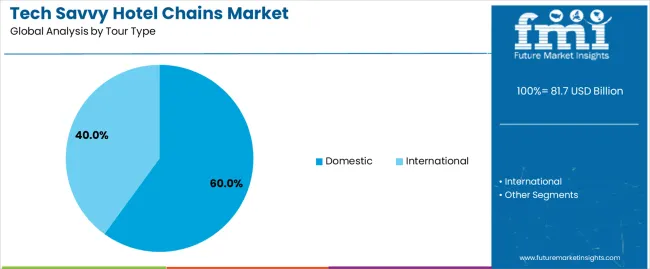
The domestic tour type segment is projected to hold 60.0% of the Tech Savvy Hotel Chains market revenue share in 2025, establishing it as the leading tour type. Growth in this segment is driven by the increasing popularity of local travel and short-distance vacations, which encourages hotels to adopt advanced digital solutions to attract domestic travelers.
The convenience of technology-enabled booking systems, smart room features, and personalized guest services has enhanced the appeal of domestic travel experiences. Additionally, rising disposable incomes and favorable travel policies have supported the expansion of domestic tourism, leading to increased demand for tech-savvy accommodations.
Hotels are leveraging data analytics and digital platforms to better understand domestic traveler preferences and provide customized services, reinforcing the segment’s dominance Operational efficiency and enhanced guest engagement through digital tools are key factors contributing to the sustained growth of this segment.
Insights into the Independent Traveler Segment
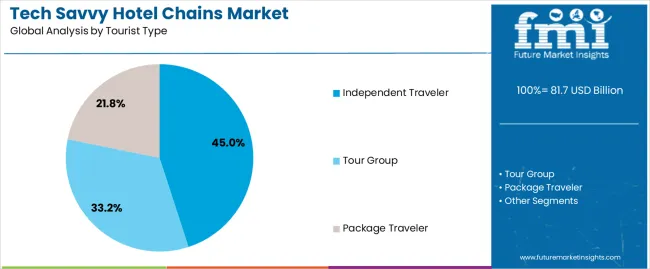
The independent traveler segment is expected to capture 45.0% of the Tech Savvy Hotel Chains market revenue share in 2025, positioning it as the leading tourist type. Growth is driven by the increasing preference for self-planned itineraries and personalized travel experiences, which aligns with the services offered by tech-savvy hotel chains.
Digital platforms enable independent travelers to make flexible bookings, access in-room smart amenities, and interact with AI-driven concierge services, enhancing their travel experience. The segment has been supported by rising urbanization and increased access to travel information, allowing travelers to independently explore destinations.
Hotels that provide tech-enabled personalized experiences, loyalty rewards, and real-time support are increasingly preferred by this consumer group The adoption of technology to streamline operations, improve guest satisfaction, and offer tailored services has reinforced the segment’s leading position in the market.
Insights into the Men Consumer Orientation Segment
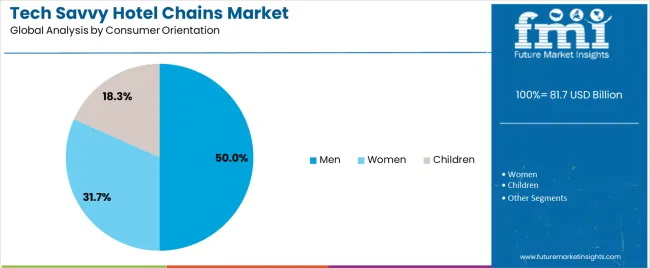
The men consumer orientation segment is anticipated to account for 50.0% of the Tech Savvy Hotel Chains market revenue in 2025, making it the leading consumer group. Growth in this segment is influenced by a strong demand for business travel accommodations and tech-enabled services that cater to professional needs, including seamless connectivity, automated check-in, and in-room productivity solutions.
Male travelers increasingly prioritize efficiency, convenience, and personalization during their stays, which has driven hotel chains to implement advanced technology systems to meet these expectations. The preference for enhanced digital services, mobile applications, and automated amenities has further strengthened adoption among this consumer group.
Hotels are leveraging consumer data and analytics to tailor offerings and improve guest experiences for men, enhancing satisfaction and loyalty The segment’s growth is further reinforced by increased business travel activities and the rising expectation for seamless and tech-driven accommodations.
2020 to 2024 Tech Savvy Hotel Chains Market Outlook Compared to Demand Forecast from 2025 to 2035
Over the period, several renowned brands of the hotel industry have successfully inducted technology into their daily operational flowchart, catering to the rising demand for tech savvy hotel chains.
The new breed of smart hoteliers is promoting digitization to slash recurring costs and also to incorporate some of the state-of-the-art services to their elite customers through the best possible use of technology, positively influencing the tech savvy hotel chains market outlook.The tech-savvy hotel chains market size is expanding slowly but steadily growing around the world and is also getting benefitted by the use of technology and digital boom.
What Are Some of the Factors Spearheading the Tech Savvy Hotel Chains Market?
The Proper Incorporation of Technology Most Likely Has Multiple Effects On the Demography of the Fast- Changing Hospitality Industry
In the last few years, the entire scenario of the hotel industry has changed and the technological revolution has impacted the revenue outcome, successfully pulling up the service levels, and surging the adoption of tech savvy hotel chains. After a long haul, the hotel and hospitality industry has limped back to normalcy with the help of advanced technology, and the demand for tech savvy hotel chains is soared by the massive IT boom around the world.
Tech savvy hotel chains are earning an edge over their competitors as they are collecting more accolades from their customers and expanding the tech savvy hotel chains market share by building a robust list of loyal customers for them.
The Emergence of a Huge Pool of Tech-Savvy Customers Is Also Positively Impacting the Tech Savvy Hotel Chains Market
The customers of the modern world look for quick and easy solutions and to tap this huge market, hotel chains are quickly adapting from their conventional strategies and coming up with technology advanced strategies to capture a huge share of the technology advanced hotel chains market. Over the recent past, several hotels around the world have been victims of some of the worst terror attacks.
Therefore, to give an adequate protection, hotels all over the world have turned them into fortresses using some of the advanced technological ways and gadgets. This overwhelming rise of safety and security is also spearheading the tech savvy hotel chains market future trends.
The Growth of the Ancillary Industry Which Is Directly Linked to The Hotel Industry in Tandem with These Essential Ancillary Services Also Spikes the Revenue of the Hospitality Industry
Services are a key benefiting roles of luxury properties and these extra services not only enhance their tech savvy hotel chains market proportion but also enhance their offerings. On the other hand, the organic tech savvy hotel chains marketing growth is hampered by the rising cost of hotel-friendly technologies.
Since most of the medium level hotel chains cannot afford expensive technological refurbishments, the market size of the tech savvy hotel chains is expected to shrink in the coming years. However, the lack of manpower that is skilled enough to handle the technology also is coming down, and the growth of the tech savvy hotel chains market to an extent.
What Is Driving the Demand for The Tech Savvy Hotel Chains Market?
The Increasing Demand for Digitalization in The Hospitality Sector Has Led to A Significant Adoption of Contactless Solutions
Facilities like automated check-in and checkout, digital room service and bookings have become the norm in the hospitality industry. These technologies not only help in reducing contact between guests but also help in reducing costs and increasing efficiency in operations. In addition, the executives in the hospitality industry are confident that a completely touch-free environment will be the new normal in the near future due to the increasing adoption of such technologies.
Voice Technology Is Quickly Changing the Nature of Guest Engagement In Hotels
Connection with smart personal assistants such as Amazon Alexa and Google Assistant, hotels provide guests with a touchless and convenient experience, which enables them to manage devices, services, and information within a room. It helps in overcoming the problem of staff deficit and also improves the guest experience, making it one of the major forces behind the adoption of technology in hotel chains. The use of voice assistant technology in hospitality is expected to increase in the future, which shows that there is a positive trend in embracing this technology.
Sustainability Is Gradually Growing To Be An Important Factor In Travel, With Many People Being Concerned With Sustainable Lodging
The hotel industry is shifting to the use of renewable energy and other environmentally friendly practices in their operations. Smart room systems and other forms of energy efficient technologies also benefit the guests who are more conscious of the environment as well as the company since it is affordable in the long run. The focus on sustainability is changing the nature of the hospitality industry and therefore hotels must implement new technologies that reflect these principles.
Country-wise Insights
Why United Kingdom Is Expected to Be a Prominent Market in Europe for Tech Savvy Hotel Chains?
United Kingdom is anticipated to have a CAGR of 8.9% by the end of 2035 for the tech savvy hotel chains market. Due to a consistent influx of domestic and international travellers, particularly in major cities like London, a surge in teach savvy hotel demand.
The competition in the hospitality sector in the United Kingdom is stiff with market players such as Whitbread Group and InterContinental Hotels Group who are already adopting technology to gain competitive advantage. The projected expansion of the luxury and economy hotel categories combined with the rising trend of serviced apartments also points to the prospects of technology-based advancements in this dynamic sector.
Thus, as the United Kingdom remains a popular tourist and business destination, the growth of the market, the development of technologies, and the change in consumer preferences make it an ideal location for tech-savvy hotel chains.
What Factor is Driving the Market for Tech Savvy Hotel Chains in Japan?
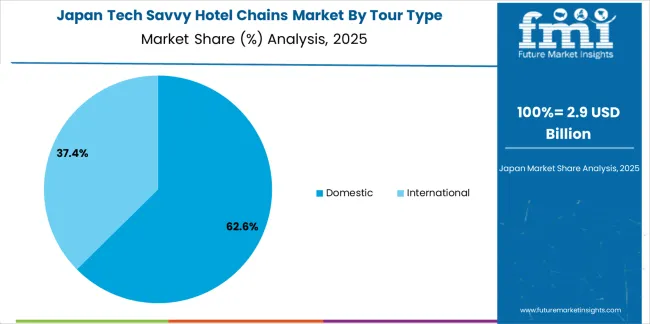
Japan has been the leading tech savvy hotel chains market in the Asia Pacific region, with an estimated CAGR of 17.3% for the Japan market by 2035. The improve guest experience through the use of technology is one of the main drivers of the market for tech-savvy hotel chains in Japan.
The Japanese consumers and foreign visitors demand convenient, effective, and customized services. For instance, most hotels in Japan have embraced the use of technology in that guests are able to check-in and check-out of their rooms through the use of an app.
Further, the use of smart room technologies enables guests to manage the lighting, temperature, and entertainment systems through mobile devices or voice, making the stay very unique. Technological advancement benefits both the guests and the hotel, thus placing tech-savvy hotels in a better position to compete in the market.
Why the United States Is a Prominent Market?
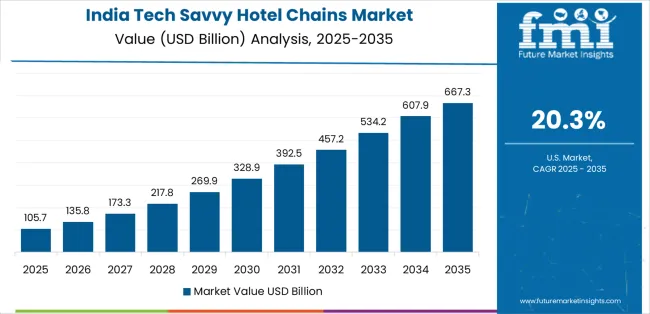
In North America, the United States is expected to have the maximum market share by the end of 2025 and grow with a CAGR value of 7.8% from 2025 to 2035. The market in the United States is driven by a strong tourism sector, high customer expectations of technology, and many well-known international brands. For instance, Marriott and Hilton have incorporated mobile check-ins, concierge services, and in-room automation to meet the needs of the growing technological society.
The competition in the USA market makes hotels to work hard to ensure that they capture the market and this makes technology integration a key factor. The environment supports fast technology diffusion, making the United States a key player in the smart hotel market.
Category-wise Insights
Which Tech Savvy Hotel Chain Tour Type Is More Preferred Worldwide?
The preference for tech-savvy hotel chains varies significantly between domestic and international markets, with international chains often leading in popularity. Leading international hotel chains, including Marriott, Hilton, and AccorHotels, leverage sophisticated technology to enhance guest experiences and drive operational efficiencies that, in turn, standardize the brand experience across the host destinations.
Hotels within a chain often attract business travelers and tourists who expect modern facilities and prompt service. For instance, the implementation of mobile check-ins, smart room controls, and personalized guest services has emerged as a defining characteristic of these international brands, thereby enhancing their attractiveness to technology-oriented customers who prioritize convenience and innovation.
Which Age Group is More Likely to Register Substantial Demand?
In terms of age group, the 36-45 years age segment will show high demand in the market for a tech-savvy hotel chain. The age group is significant among the respondents in the different surveys with a population share of about 39%. On the other hand, the 26-35 years group, seconded by the 46-55 years group is comparatively less engaged.
For example, a survey conducted by HospitalityTech revealed that virtual reality in destination marketing, the most popular age range was 36-45, which shows that people of this age are more likely to use innovative technology in hospitality. The trend indicates that people within this age bracket are likely to use technology-based services and at the same time are likely to look for hotels that can offer such experiences hence creating demand in the market.
Which Consumer Orientation Will Account for the Maximum Market Share?
In terms of consumer orientation, female customers are expected to contribute the largest market share due to women’s growing role in decision-making on travel and their desire for customized and easily accessible services. Safety, comfort, and easy solutions are valued by women and tech-savvy hotels provide mobile check-ins, smart controls of rooms, and AI-based concierge services.
For instance, hotels that incorporate additional security measures and customized services via technology appeal to female travellers. Due to the emphasis on customization, women are considered to be one of the most important consumer groups in this market.
Competitive Landscape
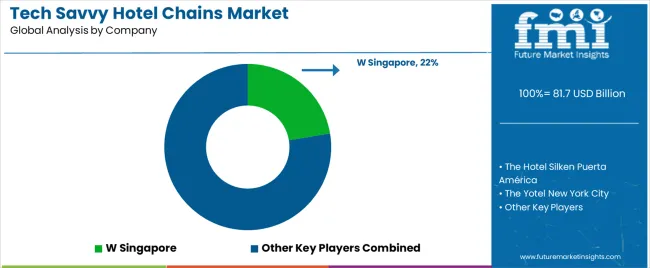
The intense competition in the hotel chains market is the result of the fast-growing use of technologies like artificial intelligence, the internet of things, and mobile applications. Conventional hotel brands and tech-savvy firms are now competing for market control as they seek to incorporate solutions to improve guest satisfaction and organizational effectiveness. Traditional players are also putting significant efforts into technology enhancement and collaborations with technology providers.
For Instance
- In 2025, Marriott International signed a deal with Groups360 to enhance the way meetings and events are booked. It enables the planner to see the best available group rates and inventory on the Internet, thus making the booking easier.
- In 2025, Hyatt introduced “Together by Hyatt” in collaboration with Swapcard, a hybrid and virtual event management platform. The initiative is to merge the on-site and online presence to make the experience for online attendees better through AI.
Scope of Report
| Attribute | Details |
|---|---|
| Forecast Period | 2025 to 2035 |
| Historical Data Available for | 2020 to 2025 |
| Market Analysis | USD Million for Value |
| Key Regions Covered | North America; Latin America; Europe; Asia Pacific and MEA |
| Key Segments Covered | Tour Type, Consumer Orientation, Tourist Type, Age Group and Region. |
| Key Companies Profiled | W Singapore; The Hotel Silken Puerta América; The Yotel New York City; Eccleston Square Pimlico; Pengheng Space Capsules Hotel; Blow Up Hall 5050; City Hub,Kameha Grand; Hotel Zetta; Henn Na Hotel; Others |
| Report Coverage | Market Forecast, Company Share Analysis, Competition Intelligence, DROT Analysis, Market Dynamics and Challenges, and Strategic Growth Initiatives |
| Customization & Pricing | Available upon Request |
Global Tech savvy hotel chains Market by Category
By Tour Type:
- Domestic
- International
By Tourist Type:
- Independent Traveler
- Tour Group
- Package Traveler
By Consumer Orientation:
- Men
- Women
- Children
By Age Group:
- 26-35 Years
- 36-45 Years
- 46-55 Years
By Region:
- North America
- Latin America
- Europe
- Asia Pacific
- MEA
Frequently Asked Questions
How big is the tech savvy hotel chains market in 2025?
The global tech savvy hotel chains market is estimated to be valued at USD 81.7 billion in 2025.
What will be the size of tech savvy hotel chains market in 2035?
The market size for the tech savvy hotel chains market is projected to reach USD 339.4 billion by 2035.
How much will be the tech savvy hotel chains market growth between 2025 and 2035?
The tech savvy hotel chains market is expected to grow at a 15.3% CAGR between 2025 and 2035.
What are the key product types in the tech savvy hotel chains market?
The key product types in tech savvy hotel chains market are domestic and international.
Which tourist type segment to contribute significant share in the tech savvy hotel chains market in 2025?
In terms of tourist type, independent traveler segment to command 45.0% share in the tech savvy hotel chains market in 2025.
Preview the report firsthand - request a free sample
Get SampleGet the brochure for pricing and purchase details.
Get PDFTable of Content
- Executive Summary
- Global Market Outlook
- Demand-side Trends
- Supply-side Trends
- Technology Roadmap Analysis
- Analysis and Recommendations
- Market Overview
- Market Coverage / Taxonomy
- Market Definition / Scope / Limitations
- Market Background
- Market Dynamics
- Drivers
- Restraints
- Opportunity
- Trends
- Scenario Forecast
- Demand in Optimistic Scenario
- Demand in Likely Scenario
- Demand in Conservative Scenario
- Opportunity Map Analysis
- Product Life Cycle Analysis
- Supply Chain Analysis
- Investment Feasibility Matrix
- Value Chain Analysis
- PESTLE and Porter’s Analysis
- Regulatory Landscape
- Regional Parent Market Outlook
- Production and Consumption Statistics
- Import and Export Statistics
- Market Dynamics
- Global Market Analysis 2020 to 2025 and Forecast, 2025 to 2035
- Historical Market Size Value (USD Million) Analysis, 2020 to 2025
- Current and Future Market Size Value (USD Million) Projections, 2025 to 2035
- Y-o-Y Growth Trend Analysis
- Absolute $ Opportunity Analysis
- Global Market Pricing Analysis 2020 to 2025 and Forecast 2025 to 2035
- Global Market Analysis 2020 to 2025 and Forecast 2025 to 2035, By Tour Type
- Introduction / Key Findings
- Historical Market Size Value (USD Million) Analysis By Tour Type , 2020 to 2025
- Current and Future Market Size Value (USD Million) Analysis and Forecast By Tour Type , 2025 to 2035
- Domestic
- International
- Y-o-Y Growth Trend Analysis By Tour Type , 2020 to 2025
- Absolute $ Opportunity Analysis By Tour Type , 2025 to 2035
- Global Market Analysis 2020 to 2025 and Forecast 2025 to 2035, By Tourist Type
- Introduction / Key Findings
- Historical Market Size Value (USD Million) Analysis By Tourist Type, 2020 to 2025
- Current and Future Market Size Value (USD Million) Analysis and Forecast By Tourist Type, 2025 to 2035
- Independent Traveler
- Tour Group
- Package Traveler
- Y-o-Y Growth Trend Analysis By Tourist Type, 2020 to 2025
- Absolute $ Opportunity Analysis By Tourist Type, 2025 to 2035
- Global Market Analysis 2020 to 2025 and Forecast 2025 to 2035, By Consumer Orientation
- Introduction / Key Findings
- Historical Market Size Value (USD Million) Analysis By Consumer Orientation, 2020 to 2025
- Current and Future Market Size Value (USD Million) Analysis and Forecast By Consumer Orientation, 2025 to 2035
- Men
- Women
- Children
- Y-o-Y Growth Trend Analysis By Consumer Orientation, 2020 to 2025
- Absolute $ Opportunity Analysis By Consumer Orientation, 2025 to 2035
- Global Market Analysis 2020 to 2025 and Forecast 2025 to 2035, By Age Group
- Introduction / Key Findings
- Historical Market Size Value (USD Million) Analysis By Age Group, 2020 to 2025
- Current and Future Market Size Value (USD Million) Analysis and Forecast By Age Group, 2025 to 2035
- 26-35 Years
- 36-45 Years
- 46-55 Years
- Y-o-Y Growth Trend Analysis By Age Group, 2020 to 2025
- Absolute $ Opportunity Analysis By Age Group, 2025 to 2035
- Global Market Analysis 2020 to 2025 and Forecast 2025 to 2035, By Region
- Introduction
- Historical Market Size Value (USD Million) Analysis By Region, 2020 to 2025
- Current Market Size Value (USD Million) Analysis and Forecast By Region, 2025 to 2035
- North America
- Latin America
- Western Europe
- Eastern Europe
- East Asia
- South Asia and Pacific
- Middle East & Africa
- Market Attractiveness Analysis By Region
- North America Market Analysis 2020 to 2025 and Forecast 2025 to 2035, By Country
- Historical Market Size Value (USD Million) Trend Analysis By Market Taxonomy, 2020 to 2025
- Market Size Value (USD Million) Forecast By Market Taxonomy, 2025 to 2035
- By Country
- USA
- Canada
- Mexico
- By Tour Type
- By Tourist Type
- By Consumer Orientation
- By Age Group
- By Country
- Market Attractiveness Analysis
- By Country
- By Tour Type
- By Tourist Type
- By Consumer Orientation
- By Age Group
- Key Takeaways
- Latin America Market Analysis 2020 to 2025 and Forecast 2025 to 2035, By Country
- Historical Market Size Value (USD Million) Trend Analysis By Market Taxonomy, 2020 to 2025
- Market Size Value (USD Million) Forecast By Market Taxonomy, 2025 to 2035
- By Country
- Brazil
- Chile
- Rest of Latin America
- By Tour Type
- By Tourist Type
- By Consumer Orientation
- By Age Group
- By Country
- Market Attractiveness Analysis
- By Country
- By Tour Type
- By Tourist Type
- By Consumer Orientation
- By Age Group
- Key Takeaways
- Western Europe Market Analysis 2020 to 2025 and Forecast 2025 to 2035, By Country
- Historical Market Size Value (USD Million) Trend Analysis By Market Taxonomy, 2020 to 2025
- Market Size Value (USD Million) Forecast By Market Taxonomy, 2025 to 2035
- By Country
- Germany
- UK
- Italy
- Spain
- France
- Nordic
- BENELUX
- Rest of Western Europe
- By Tour Type
- By Tourist Type
- By Consumer Orientation
- By Age Group
- By Country
- Market Attractiveness Analysis
- By Country
- By Tour Type
- By Tourist Type
- By Consumer Orientation
- By Age Group
- Key Takeaways
- Eastern Europe Market Analysis 2020 to 2025 and Forecast 2025 to 2035, By Country
- Historical Market Size Value (USD Million) Trend Analysis By Market Taxonomy, 2020 to 2025
- Market Size Value (USD Million) Forecast By Market Taxonomy, 2025 to 2035
- By Country
- Russia
- Poland
- Hungary
- Balkan & Baltic
- Rest of Eastern Europe
- By Tour Type
- By Tourist Type
- By Consumer Orientation
- By Age Group
- By Country
- Market Attractiveness Analysis
- By Country
- By Tour Type
- By Tourist Type
- By Consumer Orientation
- By Age Group
- Key Takeaways
- East Asia Market Analysis 2020 to 2025 and Forecast 2025 to 2035, By Country
- Historical Market Size Value (USD Million) Trend Analysis By Market Taxonomy, 2020 to 2025
- Market Size Value (USD Million) Forecast By Market Taxonomy, 2025 to 2035
- By Country
- China
- Japan
- South Korea
- By Tour Type
- By Tourist Type
- By Consumer Orientation
- By Age Group
- By Country
- Market Attractiveness Analysis
- By Country
- By Tour Type
- By Tourist Type
- By Consumer Orientation
- By Age Group
- Key Takeaways
- South Asia and Pacific Market Analysis 2020 to 2025 and Forecast 2025 to 2035, By Country
- Historical Market Size Value (USD Million) Trend Analysis By Market Taxonomy, 2020 to 2025
- Market Size Value (USD Million) Forecast By Market Taxonomy, 2025 to 2035
- By Country
- India
- ASEAN
- Australia & New Zealand
- Rest of South Asia and Pacific
- By Tour Type
- By Tourist Type
- By Consumer Orientation
- By Age Group
- By Country
- Market Attractiveness Analysis
- By Country
- By Tour Type
- By Tourist Type
- By Consumer Orientation
- By Age Group
- Key Takeaways
- Middle East & Africa Market Analysis 2020 to 2025 and Forecast 2025 to 2035, By Country
- Historical Market Size Value (USD Million) Trend Analysis By Market Taxonomy, 2020 to 2025
- Market Size Value (USD Million) Forecast By Market Taxonomy, 2025 to 2035
- By Country
- Kingdom of Saudi Arabia
- Other GCC Countries
- Turkiye
- South Africa
- Other African Union
- Rest of Middle East & Africa
- By Tour Type
- By Tourist Type
- By Consumer Orientation
- By Age Group
- By Country
- Market Attractiveness Analysis
- By Country
- By Tour Type
- By Tourist Type
- By Consumer Orientation
- By Age Group
- Key Takeaways
- Key Countries Market Analysis
- USA
- Pricing Analysis
- Market Share Analysis, 2025
- By Tour Type
- By Tourist Type
- By Consumer Orientation
- By Age Group
- Canada
- Pricing Analysis
- Market Share Analysis, 2025
- By Tour Type
- By Tourist Type
- By Consumer Orientation
- By Age Group
- Mexico
- Pricing Analysis
- Market Share Analysis, 2025
- By Tour Type
- By Tourist Type
- By Consumer Orientation
- By Age Group
- Brazil
- Pricing Analysis
- Market Share Analysis, 2025
- By Tour Type
- By Tourist Type
- By Consumer Orientation
- By Age Group
- Chile
- Pricing Analysis
- Market Share Analysis, 2025
- By Tour Type
- By Tourist Type
- By Consumer Orientation
- By Age Group
- Germany
- Pricing Analysis
- Market Share Analysis, 2025
- By Tour Type
- By Tourist Type
- By Consumer Orientation
- By Age Group
- UK
- Pricing Analysis
- Market Share Analysis, 2025
- By Tour Type
- By Tourist Type
- By Consumer Orientation
- By Age Group
- Italy
- Pricing Analysis
- Market Share Analysis, 2025
- By Tour Type
- By Tourist Type
- By Consumer Orientation
- By Age Group
- Spain
- Pricing Analysis
- Market Share Analysis, 2025
- By Tour Type
- By Tourist Type
- By Consumer Orientation
- By Age Group
- France
- Pricing Analysis
- Market Share Analysis, 2025
- By Tour Type
- By Tourist Type
- By Consumer Orientation
- By Age Group
- India
- Pricing Analysis
- Market Share Analysis, 2025
- By Tour Type
- By Tourist Type
- By Consumer Orientation
- By Age Group
- ASEAN
- Pricing Analysis
- Market Share Analysis, 2025
- By Tour Type
- By Tourist Type
- By Consumer Orientation
- By Age Group
- Australia & New Zealand
- Pricing Analysis
- Market Share Analysis, 2025
- By Tour Type
- By Tourist Type
- By Consumer Orientation
- By Age Group
- China
- Pricing Analysis
- Market Share Analysis, 2025
- By Tour Type
- By Tourist Type
- By Consumer Orientation
- By Age Group
- Japan
- Pricing Analysis
- Market Share Analysis, 2025
- By Tour Type
- By Tourist Type
- By Consumer Orientation
- By Age Group
- South Korea
- Pricing Analysis
- Market Share Analysis, 2025
- By Tour Type
- By Tourist Type
- By Consumer Orientation
- By Age Group
- Russia
- Pricing Analysis
- Market Share Analysis, 2025
- By Tour Type
- By Tourist Type
- By Consumer Orientation
- By Age Group
- Poland
- Pricing Analysis
- Market Share Analysis, 2025
- By Tour Type
- By Tourist Type
- By Consumer Orientation
- By Age Group
- Hungary
- Pricing Analysis
- Market Share Analysis, 2025
- By Tour Type
- By Tourist Type
- By Consumer Orientation
- By Age Group
- Kingdom of Saudi Arabia
- Pricing Analysis
- Market Share Analysis, 2025
- By Tour Type
- By Tourist Type
- By Consumer Orientation
- By Age Group
- Turkiye
- Pricing Analysis
- Market Share Analysis, 2025
- By Tour Type
- By Tourist Type
- By Consumer Orientation
- By Age Group
- South Africa
- Pricing Analysis
- Market Share Analysis, 2025
- By Tour Type
- By Tourist Type
- By Consumer Orientation
- By Age Group
- USA
- Market Structure Analysis
- Competition Dashboard
- Competition Benchmarking
- Market Share Analysis of Top Players
- By Regional
- By Tour Type
- By Tourist Type
- By Consumer Orientation
- By Age Group
- Competition Analysis
- Competition Deep Dive
- W Singapore
- Overview
- Product Portfolio
- Profitability by Market Segments (Product/Age /Sales Channel/Region)
- Sales Footprint
- Strategy Overview
- Marketing Strategy
- Product Strategy
- Channel Strategy
- The Hotel Silken Puerta América
- The Yotel New York City
- Eccleston Square Pimlico
- Pengheng Space Capsules Hotel
- Blow Up Hall 5050
- City Hub,Kameha Grand
- Hotel Zetta
- Henn Na Hotel
- W Singapore
- Competition Deep Dive
- Assumptions & Acronyms Used
- Research Methodology


