

- Industry Size (2025)
- USD 3.5 Bn
- Forecast (2035)
- USD 5.4 Bn
- CAGR (2025 to 2035)
- 4.3%
Demand for Automotive Timing Chain & Belt in USA Forecast and Outlook 2025 to 2035
Demand for automotive timing chains and belts in the USA is expected to grow from USD 3.5 billion in 2025 to USD 5.4 billion in 2035, with a CAGR of 4.30%. Industry growth curve follows a steady and gradual upward trajectory, marked by incremental annual increases. From 2025 to 2027, demand rises steadily from USD 3.5 billion to USD 3.7 billion, reflecting a consistent but moderate growth rate in the automotive sector.
As automotive manufacturers focus on improving engine efficiency and performance, the demand for reliable timing chains and belts will continue to grow, particularly for newer vehicle models and replacement parts. The growth is characterized by a steady climb, indicating ongoing demand without sudden fluctuations or sharp spikes in the industry.
Quick Stats of the Demand for Automotive Timing Chain & Belt in USA
- Demand for Automotive Timing Chain & Belt in USA Value (2025): USD 3.5 billion
- Demand for Automotive Timing Chain & Belt in USA Forecast Value (2035): USD 5.4 billion
- Demand for Automotive Timing Chain & Belt in USA Forecast CAGR (2025-2035): 4.3%
- Demand for Automotive Timing Chain & Belt in USA Leading Vehicle Type: Passenger Car
- Demand for Automotive Timing Chain & Belt in USA Key Growth Regions: West USA, South USA, Northeast USA, Midwest USA
- Demand for Automotive Timing Chain & Belt in USA Top Players: BorgWarner Inc., Continental AG, Schaeffler AG, Tenneco Inc.
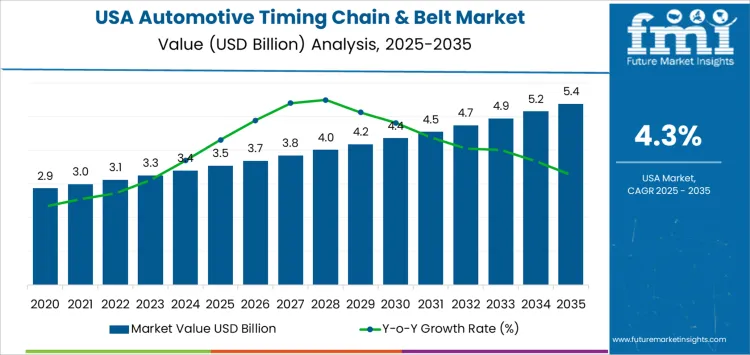
Between 2028 and 2035, growth curve shows a slight acceleration, with demand rising from USD 4.0 billion in 2028 to USD 5.4 billion in 2035. This acceleration is attributed to several key factors, including the increasing adoption of advanced engine technologies, the rise of electric vehicles (EVs), and growing vehicle production. As more vehicles require advanced timing systems to optimize engine performance, particularly in the context of stricter environmental regulations and fuel efficiency standards, demand for timing chains and belts is expected to increase more rapidly in the latter years of the forecast period.
Growth curve’s shape reflects a combination of consistent demand and periodic accelerations driven by technological advancements and industry dynamics in the automotive sector.
Demand for Automotive Timing Chain & Belt in USA Key Takeaways
| Metric | Value |
|---|---|
| Demand for Automotive Timing Chain & Belt in USA Value (2025) | USD 3.5 billion |
| Demand for Automotive Timing Chain & Belt in USA Forecast Value (2035) | USD 5.4 billion |
| Demand for Automotive Timing Chain & Belt in USA Forecast CAGR (2025-2035) | 4.3% |
Why is the Demand for Automotive Timing Chain & Belt in USA Growing?
Demand for automotive timing chains and belts in the USA is growing due to the increasing complexity of modern internal combustion engines (ICE) and the need for high-performance components to ensure engine efficiency and reliability. Timing chains and belts synchronize the rotation of the crankshaft and camshaft, ensuring that the engine's valves open and close at the proper times. As vehicle manufacturers continue to focus on improving engine performance, fuel efficiency, and reducing emissions, the demand for durable and precise timing components is on the rise.
Key drivers for growth include the increasing production of vehicles with advanced engine technologies that require higher-performance timing systems. The ongoing trend of vehicle electrification is also influencing the demand for automotive timing chains and belts, as hybrid and electric vehicle (HEV) engines still require these components for certain configurations. The growing need for vehicles with longer lifespans and reduced maintenance requirements is pushing the adoption of timing chains, which offer a longer service life compared to traditional timing belts.
Technological advancements, such as quieter, more durable, and lighter timing chains and belts, are contributing to this growth. The shift toward more fuel-efficient vehicles, driven by stricter environmental regulations and consumer demand, is further fueling the need for high-quality timing components. Challenges such as the high cost of advanced materials and competition from alternative technologies may limit broader adoption. Despite these hurdles, the ongoing push for more efficient and reliable automotive systems is expected to drive steady growth in the demand for automotive timing chains and belts in the USA through 2035.
What is the Segment-Wise Analysis of Demand for Automotive Timing Chain & Belt in USA?
Demand for automotive timing chains and belts in the USA is segmented by vehicle type, engine type, sales channel, product type, and region. By vehicle type, passenger cars account for 50% of demand, followed by LCVs (light commercial vehicles), HCVs (heavy commercial vehicles), and off-highway vehicles. By engine type, gasoline engines account for 65% of demand, with diesel engines making up the rest. Sales channel-wise, the demand is divided between OEM (original equipment manufacturer) and aftermarket. Regarding product type, chains and belts are the primary timing components. Regionally, demand is distributed across the West USA, the South USA, the Northeast USA, and the Midwest USA.
How Does Passenger Car Lead the Demand for Automotive Timing Chain & Belt in USA?
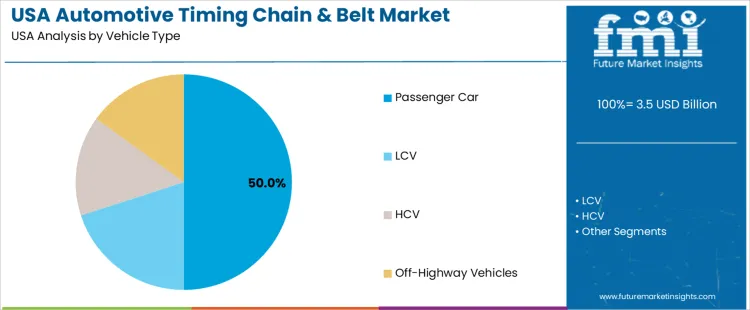
Passenger cars account for 50% of the demand for automotive timing chains and belts in the USA, driven by their widespread use and reliance on these components to ensure smooth engine operation. As the dominant vehicle type in the automotive market, passenger cars require timing chains and belts to synchronize the timing of the engine’s valves, which is crucial for maintaining performance and efficiency. The growing number of passenger cars on the road, coupled with rising consumer demand for more efficient and long-lasting engines, further drives the need for high-quality timing components.
Timing chains and belts are essential for optimizing engine performance, reducing emissions, and ensuring overall vehicle reliability. As the automotive industry focuses on improving fuel efficiency, performance, and sustainability, the demand for durable, high-performing timing components for passenger cars remains strong, securing their position as the leading segment in the automotive timing chain and belt industry.
How Does Gasoline Engine Lead the Demand for Automotive Timing Chain & Belt in USA?
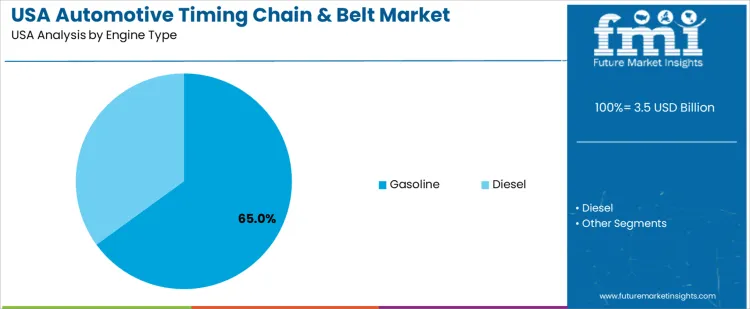
Gasoline engines account for 65% of the demand for automotive timing chains and belts in the USA, driven by their dominance in passenger cars and light commercial vehicles. Gasoline engines are the most common engine type in the automotive industry, and timing components such as chains and belts are essential for synchronizing the engine’s valves and pistons. The demand for gasoline-powered vehicles remains high due to their affordability, reliable performance, and widespread availability.
As gasoline engines continue to be the preferred choice for consumers, the need for efficient and durable timing chains and belts to ensure smooth engine operation and longevity remains strong. With advances in gasoline engine technology, including better fuel efficiency and lower emissions, the demand for high-quality timing components continues to grow. As a result, gasoline engines remain the leading driver in the automotive timing chain and belt industry, further solidifying their dominant role.
What are the Key Trends, Drivers and Restraints in Demand for Automotive Timing Chain & Belt in USA?
Internal combustion engines, used in passenger cars, light trucks, and commercial vehicles, rely on these systems for synchronization of the camshaft and crankshaft. A growing demand for fuel-efficient and high-performance engines is driving the adoption of advanced timing chain and belt systems, which offer precise timing, reduced friction losses, and improved durability. The shift from traditional belts to timing chains is another key trend, as manufacturers and consumers seek parts with longer lifespans and reduced maintenance needs. The growth of electric vehicles (EVs), which do not require timing chains or belts, represents a long-term challenge. Fluctuating raw material costs, such as rubber, steel, and polymers, and increasing regulatory pressure on emissions and manufacturing costs could pose further challenges to demand.
Why is Demand for Automotive Timing Chain & Belt Growing in USA?
Gasoline, turbocharged, diesel, and hybrid engines all rely on accurate timing mechanisms for performance, fuel efficiency, and compliance with emissions standards. As new vehicle sales increase and the existing fleet ages, the need for both original equipment manufacturer (OEM) and aftermarket timing components rises. Timing belt replacement cycles and maintenance for timing chains contribute significantly to aftermarket demand, as vehicles remain in service longer before being replaced.
The growing demand for durability, engine reliability, and reduced maintenance costs drives both consumer and manufacturer investment in high-quality timing systems. Furthermore, the rise in commercial vehicle and light-truck segments, which require more robust timing systems for high-stress applications, is also driving the increased demand for automotive timing chains and belts.
How are Technological & Industry Innovations Driving Timing Chain & Belt Demand in USA?
New high-strength steel alloys, improved polymers, and composite materials provide better tensile strength, heat resistance, and durability. These innovations extend the service life of timing chains and belts, making them more reliable and suitable for demanding engine types, such as turbocharged and direct-injection engines. Improvements in manufacturing processes have reduced friction, noise, and wear, ensuring more efficient and long-lasting operation.
Enhanced designs, such as belt-in-oil systems and better tensioner designs, have improved the lifespan and performance of timing belts, ensuring they remain relevant in certain engine configurations. These advancements align with the growing demand for efficiency, reliability, and reduced maintenance costs in the automotive industry. As OEMs and consumers seek more durable and efficient timing systems, innovations in timing chains and belts continue to drive their adoption in modern vehicles.
What are the Key Challenges and Risks That Could Limit Timing Chain & Belt Demand in USA?
The growing adoption of electric vehicles (EVs), which do not require traditional timing systems, poses a long-term challenge for the industry. Timing belts, although cost-effective and quiet, may not last as long as chains and require periodic replacement, which may reduce demand, especially with improved belt longevity extending replacement intervals. Competition between timing chains and belts also creates a dilemma: while timing chains offer durability, they are heavier and more expensive, while timing belts are lighter and quieter but may not provide the same longevity.
Raw material cost fluctuations, particularly in rubber, steel, and polymers, could drive up production costs, affecting the price and availability of timing chains and belts. Advancements in alternative engine technologies or power transmission methods might reduce reliance on traditional timing systems, further limiting the growth of this industry.
What is the Regional Demand Outlook for Automotive Timing Chain & Belt in USA?
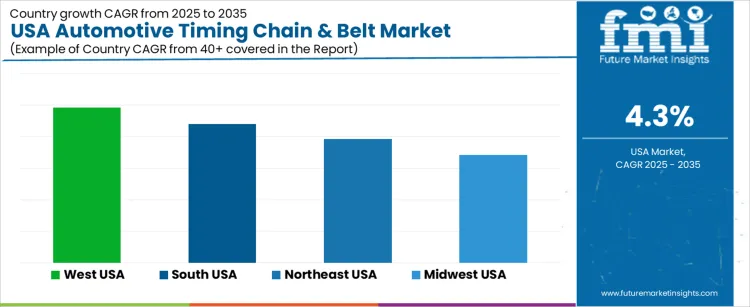
| Region | CAGR (%) |
|---|---|
| West USA | 4.9% |
| South USA | 4.4% |
| Northeast USA | 3.9% |
| Midwest USA | 3.4% |
How is Demand for Automotive Timing Chain & Belt Growing in West USA?
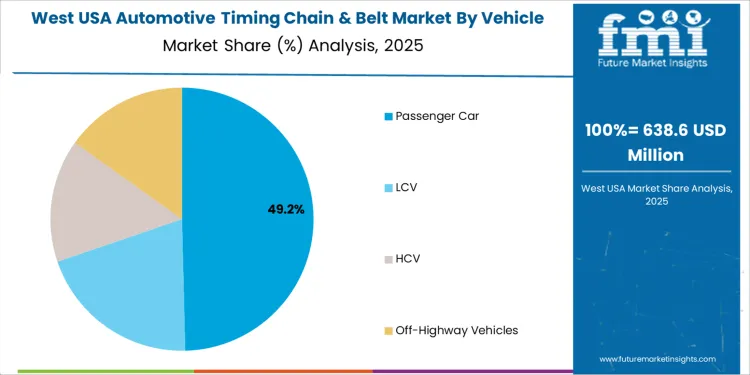
West USA leads the demand for automotive timing chains and belts, growing at a 4.9% CAGR. The region’s strong automotive manufacturing base, coupled with its focus on technological innovation, is driving the need for high-quality timing components. States like California and Nevada have significant automotive industrys, where the demand for replacement parts in both the OEM and aftermarket sectors is growing steadily.
With an increasing number of vehicles on the road, particularly those requiring timing chain and belt replacements for performance and efficiency, demand in West USA continues to rise. The region’s focus on sustainability and fuel efficiency is pushing the automotive industry to adopt more durable and efficient timing components, further boosting the growth of timing chains and belts. As the automotive industry in the West continues to expand, the demand for these essential parts will remain strong, particularly in light of increasing vehicle longevity.
Why is Demand for Automotive Timing Chain & Belt Rising in South USA?
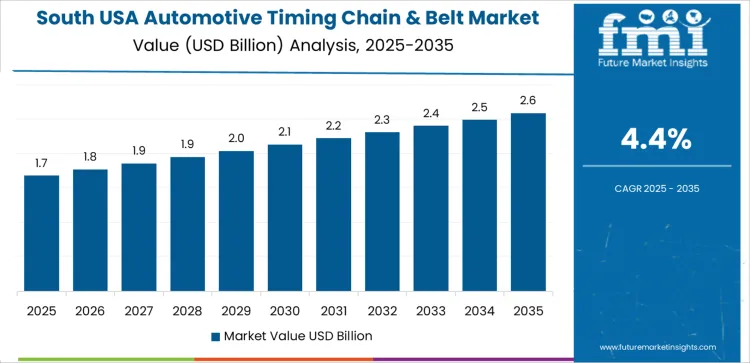
South USA is experiencing steady demand for automotive timing chains and belts, with a 4.4% CAGR. The region’s rapidly growing automotive sector, particularly in states like Texas, Georgia, and Alabama, is driving the need for reliable timing components. As the number of vehicles on the road increases, the demand for replacement parts, including timing chains and belts, continues to rise. The region's automotive manufacturing sector is expanding, creating a steady demand for these parts in the OEM industry.
As more consumers in the South prioritize vehicle maintenance and longevity, the need for high-quality, durable timing components is growing. The shift toward electric vehicles and hybrid technology is also contributing to the demand for automotive timing chains and belts, as these vehicles often require specialized parts for efficient operation. As the South’s automotive industry continues to grow, demand for timing components will remain strong, driven by both the replacement and OEM sectors.
How is Demand for Automotive Timing Chain & Belt Expanding in Northeast USA?
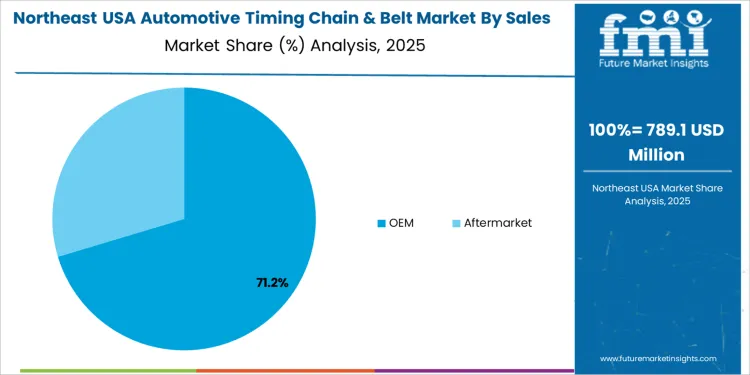
Northeast USA is seeing steady demand for automotive timing chains and belts, with a 3.9% CAGR. The region’s well-established automotive industry, including both manufacturing and aftermarket services, is a key driver behind the demand for these essential components. States like New York and Pennsylvania have large vehicle populations, contributing to the need for replacement parts, especially in older vehicles. As vehicle longevity and performance become increasingly important to consumers, the demand for reliable, durable timing chains and belts grows. The region’s focus on energy efficiency and fuel economy is pushing the automotive sector to adopt advanced, long-lasting timing components.
The Northeast’s strong automotive repair industry is also contributing to the demand for aftermarket timing chains and belts, with consumers seeking high-quality, cost-effective replacement parts for their vehicles. As the region continues to modernize its automotive infrastructure and embrace more sustainable technologies, the demand for timing components will remain steady.
Why is Demand for Automotive Timing Chain & Belt Growing in Midwest USA?
Midwest USA is experiencing moderate demand for automotive timing chains and belts, with a 3.4% CAGR. The region’s automotive manufacturing and repair industries are driving the need for reliable timing components. With major automotive hubs in cities like Detroit and Chicago, the demand for replacement parts is growing steadily, especially as the number of older vehicles on the road increases. The region’s focus on vehicle maintenance and the rising importance of fuel-efficient vehicles are also contributing to the demand for durable, high-performance timing chains and belts.
The Midwest’s strong manufacturing sector ensures a steady need for timing components in the OEM industry. As more vehicles require repairs and upgrades, particularly in older models, the need for replacement parts like timing chains and belts will continue to grow. While the growth rate is moderate compared to other regions, demand for these parts remains consistent, driven by both aftermarket and OEM sectors in the Midwest.
What is the Competitive Landscape of Automotive Timing Chain & Belt Demand in USA?
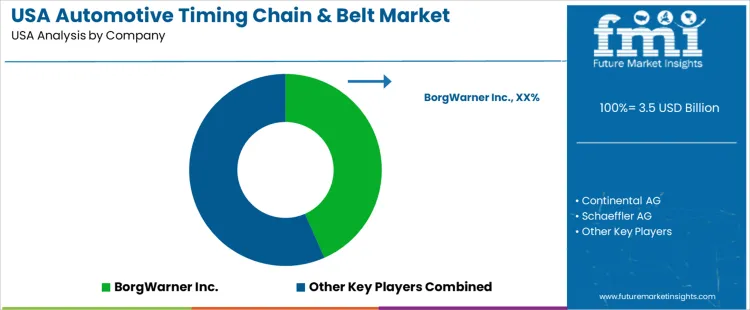
Demand for automotive timing chains and belts in the USA is increasing due to their critical role in engine performance, ensuring the synchronization of engine components for optimal functionality. As consumers and manufacturers prioritize engine efficiency, fuel economy, and reduced emissions, the need for reliable timing chains and belts is growing. These components are essential for improving engine longevity and performance, driving their demand in the automotive sector, particularly with the rise of advanced engine technologies.
BorgWarner Inc. leads the USA industry with a 43.4% share, offering high-quality timing chains and belts designed to meet the evolving needs of the automotive industry. The company’s strategy focuses on providing durable, high-performance products that enhance engine efficiency while meeting the stringent requirements of modern vehicles. BorgWarner’s emphasis on innovation and technology allows it to stay ahead of competitors by offering solutions that optimize fuel efficiency and reduce engine wear.
Other major players in the industry include Continental AG, Schaeffler AG, and Tenneco Inc., each focusing on delivering reliable, high-performance timing chains and belts for automotive applications. Continental AG emphasizes advanced technologies and precision engineering to offer timing solutions that support modern engine designs. Schaeffler AG is known for its high-quality components and innovations aimed at reducing friction and improving engine efficiency. Tenneco Inc. focuses on developing performance-oriented solutions, catering to a wide range of automotive applications. As the industry becomes more competitive, these companies continue to innovate, focusing on improving the durability, performance, and cost-effectiveness of timing chains and belts to meet the evolving demands of the automotive sector.
Key Players in USA Automotive Timing Chain & Belt Demand
- BorgWarner Inc.
- Continental AG
- Schaeffler AG
- Tenneco Inc.
Scope of Report
| Items | Values |
|---|---|
| Quantitative Units (2025) | USD billion |
| Vehicle Type | Passenger Car, LCV (Light Commercial Vehicle), HCV (Heavy Commercial Vehicle), Off-Highway Vehicles |
| Sales Channel | OEM, Aftermarket |
| Product Type | Chain, Belt |
| Engine Type | Gasoline, Diesel |
| Regions Covered | West USA, South USA, Northeast USA, Midwest USA |
| Countries Covered | USA |
| Key Companies Profiled | BorgWarner Inc., Continental AG, Schaeffler AG, Tenneco Inc. |
| Additional Attributes | Dollar sales by vehicle type, product type, and engine type; regional CAGR and growth outlook; increasing adoption in passenger cars and commercial vehicles. |
USA Automotive Timing Chain & Belt Demand by Key Segments
Vehicle Type
- Passenger Car
- LCV
- HCV
- Off-Highway Vehicles
Sales Channel
- OEM
- Aftermarket
Product Type
- Chain
- Belt
Engine Type
- Gasoline
- Diesel
Region
- West USA
- South USA
- Northeast USA
- Midwest USA
Frequently Asked Questions
How big is the demand for automotive timing chain & belt in USA in 2025?
The demand for automotive timing chain & belt in USA is estimated to be valued at USD 3.5 billion in 2025.
What will be the size of automotive timing chain & belt in USA in 2035?
The market size for the automotive timing chain & belt in USA is projected to reach USD 5.4 billion by 2035.
How much will be the demand for automotive timing chain & belt in USA growth between 2025 and 2035?
The demand for automotive timing chain & belt in USA is expected to grow at a 4.3% CAGR between 2025 and 2035.
What are the key product types in the automotive timing chain & belt in USA?
The key product types in automotive timing chain & belt in USA are passenger car, lcv, hcv and off-highway vehicles.
Which sales channel segment is expected to contribute significant share in the automotive timing chain & belt in USA in 2025?
In terms of sales channel, oem segment is expected to command 70.0% share in the automotive timing chain & belt in USA in 2025.
Preview the report firsthand - request a free sample
Get SampleGet the brochure for pricing and purchase details.
Get PDFTable of Content
- Executive Summary
- USA Market Outlook
- Demand-side Trends
- Supply-side Trends
- Technology Roadmap Analysis
- Analysis and Recommendations
- Market Overview
- Market Coverage / Taxonomy
- Market Definition / Scope / Limitations
- Market Background
- Market Dynamics
- Drivers
- Restraints
- Opportunity
- Trends
- Scenario Forecast
- Demand in Optimistic Scenario
- Demand in Likely Scenario
- Demand in Conservative Scenario
- Opportunity Map Analysis
- Product Life Cycle Analysis
- Supply Chain Analysis
- Investment Feasibility Matrix
- Value Chain Analysis
- PESTLE and Porter’s Analysis
- Regulatory Landscape
- Regional Parent Market Outlook
- Production and Consumption Statistics
- Import and Export Statistics
- Market Dynamics
- USA Market Analysis 2020 to 2024 and Forecast, 2025 to 2035
- Historical Market Size Value (USD Million) Analysis, 2020 to 2024
- Current and Future Market Size Value (USD Million) Projections, 2025 to 2035
- Y-o-Y Growth Trend Analysis
- Absolute $ Opportunity Analysis
- USA Market Pricing Analysis 2020 to 2024 and Forecast 2025 to 2035
- USA Market Analysis 2020 to 2024 and Forecast 2025 to 2035, By Vehicle Type
- Introduction / Key Findings
- Historical Market Size Value (USD Million) Analysis By Vehicle Type , 2020 to 2024
- Current and Future Market Size Value (USD Million) Analysis and Forecast By Vehicle Type , 2025 to 2035
- Passenger Car
- LCV
- HCV
- Off-Highway Vehicles
- Y-o-Y Growth Trend Analysis By Vehicle Type , 2020 to 2024
- Absolute $ Opportunity Analysis By Vehicle Type , 2025 to 2035
- USA Market Analysis 2020 to 2024 and Forecast 2025 to 2035, By Sales Channel
- Introduction / Key Findings
- Historical Market Size Value (USD Million) Analysis By Sales Channel, 2020 to 2024
- Current and Future Market Size Value (USD Million) Analysis and Forecast By Sales Channel, 2025 to 2035
- OEM
- Aftermarket
- Y-o-Y Growth Trend Analysis By Sales Channel, 2020 to 2024
- Absolute $ Opportunity Analysis By Sales Channel, 2025 to 2035
- USA Market Analysis 2020 to 2024 and Forecast 2025 to 2035, By Product Type
- Introduction / Key Findings
- Historical Market Size Value (USD Million) Analysis By Product Type, 2020 to 2024
- Current and Future Market Size Value (USD Million) Analysis and Forecast By Product Type, 2025 to 2035
- Chain
- Belt
- Y-o-Y Growth Trend Analysis By Product Type, 2020 to 2024
- Absolute $ Opportunity Analysis By Product Type, 2025 to 2035
- USA Market Analysis 2020 to 2024 and Forecast 2025 to 2035, By Engine Type
- Introduction / Key Findings
- Historical Market Size Value (USD Million) Analysis By Engine Type, 2020 to 2024
- Current and Future Market Size Value (USD Million) Analysis and Forecast By Engine Type, 2025 to 2035
- Gasoline
- Diesel
- Y-o-Y Growth Trend Analysis By Engine Type, 2020 to 2024
- Absolute $ Opportunity Analysis By Engine Type, 2025 to 2035
- Market Structure Analysis
- Competition Dashboard
- Competition Benchmarking
- Market Share Analysis of Top Players
- By Regional
- By Vehicle Type
- By Sales Channel
- By Product Type
- By Engine Type
- Competition Analysis
- Competition Deep Dive
- BorgWarner Inc.
- Overview
- Product Portfolio
- Profitability by Market Segments (Product/Age /Sales Channel/Region)
- Sales Footprint
- Strategy Overview
- Marketing Strategy
- Product Strategy
- Channel Strategy
- Continental AG
- Schaeffler AG
- Tenneco Inc.
- BorgWarner Inc.
- Competition Deep Dive
- Assumptions & Acronyms Used
- Research Methodology


