

- Industry Size (2026)
- USD 14.57 Bn
- Forecast (2036)
- USD 33.55 Bn
- CAGR (2026 to 2036)
- 8.7%
Demand for Home Beer Brewing Machine in USA Size, Market Forecast and Outlook By FMI
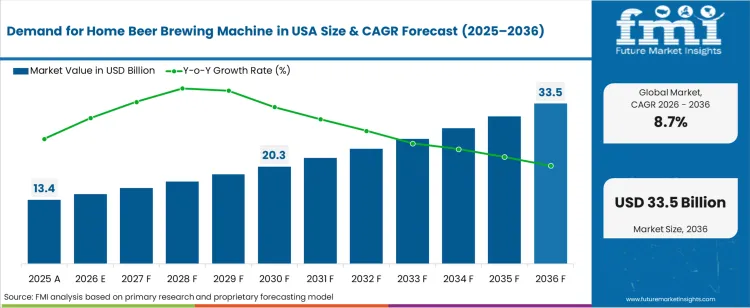
The demand for home beer brewing machine in usa was valued at USD 13.40 billion in 2025, projected to reach USD 14.57 billion in 2026, and is forecast to expand to USD 33.55 billion by 2036 at a 8.7% CAGR. The USA's established homebrewing culture, supported by the American Homebrewers Association's estimated 1.1 million active homebrewers, provides a large and growing addressable market for countertop and full-size brewing machines. Rising consumer preference for craft beer styles and the expanding availability of recipe kits through e-commerce subscription services are converting traditional extract-and-grain homebrewers into automated machine adopters. Mini brewing systems account for the majority of new unit sales as first-time brewers prioritise compact form factors and simplified brewing workflows.
Summary of Demand for Home Beer Brewing Machine in USA
- Market Snapshot
- The demand for home beer brewing machine in usa is valued at USD 13.40 billion in 2025 and is projected to reach USD 33.55 billion by 2036.
- The industry is expected to grow at a 8.7% CAGR from 2026 to 2036, creating an incremental opportunity of USD 18.98 billion.
- The market is anchored by the USA's established homebrewing community of over 1.1 million active brewers and the declining price points of automated brewing appliances.
- Demand and Growth Drivers
- An established homebrewing community of over 1.1 million active brewers provides a large and growing addressable market for automated brewing equipment.
- Declining automated brewer price points and expanding e-commerce recipe kit subscriptions are lowering the adoption barrier for first-time buyers.
- Premiumisation trends in home beverage consumption and craft beer taproom culture are supporting trade-up purchases from extract kits to machine-based brewing.
- Among tracked regions, the West leads at 10.1% CAGR, followed by the South at 9.0%, the Northeast at 8.0%, and the Midwest at 7.0%.
- Product and Segment View
- The market covers mini brewing and full-size brewing systems in stainless steel, plastic, and other materials across manual, semi-automatic, and automatic mechanisms.
- End users include residential home brewers and commercial craft beverage establishments operating at small-batch scale.
- Mini Brewing leads by product type with 55.0% share in 2026.
- Residential leads by end user with 55.0% share in 2026.
- The scope includes home-scale brewing appliances and excludes commercial microbrewery equipment, raw ingredients, and standalone dispensing systems.
- Geography and Competitive Outlook
- The West and South are the fastest-growing regions, driven by concentrated homebrewing communities and recent state-level legalisation expanding consumer access.
- The Northeast and Midwest sustain steady demand through urban compact brewer adoption and traditional homebrewing culture respectively.
- Competition is shaped by brewing automation, recipe kit ecosystems, and retail distribution partnerships, with key players including Brewie, Minibrew, LG Electronics (HomeBrew), PicoBrew, Ss Brewtech.
Demand for Home Beer Brewing Machine in USA Key Takeaways
| Metric | Details |
|---|---|
| Industry Size (2026) | USD 14.57 billion |
| Industry Value (2036) | USD 33.55 billion |
| CAGR (2026 to 2036) | 8.7% |
Source: Future Market Insights, 2026
The incremental opportunity between 2026 and 2036 amounts to USD 18.98 billion. FMI is of the opinion that the growth trajectory reflects the convergence of premiumisation in home beverage consumption, social media-driven homebrew content creation, and the declining price points of automated brewing appliances. Residential demand dominates, with commercial adoption concentrated in craft beer taprooms, brewpubs, and restaurant-scale small-batch operations. The West region leads due to California's and Oregon's concentrated craft beer culture, while the South is the fastest follower as homebrewing legalisation across remaining states unlocks previously restricted consumer segments.
Sub-national growth trajectories reflect craft beer culture penetration and homebrewing legalisation status. West at 10.1%, South at 9.0%, Northeast at 8.0%, Midwest at 7.0%. The West leads, driven by California's and Oregon's concentrated homebrewing communities, specialty retailer density, and craft beer festival culture. The South follows, where recent homebrewing legalisation in several states has unlocked new consumer segments. The Northeast benefits from dense urban apartment-compatible mini brewer adoption, while the Midwest reflects steady growth anchored by traditional homebrewing culture in the upper Midwest states.
Demand for Home Beer Brewing Machine in USA Definition
Home beer brewing machines are consumer and commercial appliances that automate or assist the beer brewing process in residential kitchens and small-scale commercial venues. The USA market covers mini brewing systems, full-size brewing systems, and associated fermentation and dispensing equipment. These machines operate through manual, semi-automatic, or fully automatic mechanisms and are constructed from stainless steel, plastic, and other food-grade materials for residential home brewers and commercial craft beverage establishments.
Demand for Home Beer Brewing Machine in USA Inclusions
Market scope includes countertop mini brewing appliances, full-size home brewing systems, fermentation chambers, temperature management units, and app-connected automated brewing platforms. Brewing accessory kits, cleaning systems, and kegging equipment designed for home-scale operation are included.
Demand for Home Beer Brewing Machine in USA Exclusions
Commercial microbrewery equipment exceeding home-scale capacity, industrial brewing systems, and draft beer dispensing infrastructure for licensed on-premise establishments are excluded. Raw brewing ingredients, recipe subscription kits, and standalone carbonation equipment are outside the analytical scope.
Demand for Home Beer Brewing Machine in USA Research Methodology
- Primary Research: Analysts engaged with procurement managers, facility operators, and distribution channel specialists to map decision triggers, specification requirements, and adoption timelines across institutional and consumer channels.
- Desk Research: Data collection aggregated regulatory filings, public procurement records, industry association publications, and manufacturer financial disclosures to establish baseline market parameters.
- Market-Sizing and Forecasting: Baseline values derive from a bottom-up aggregation of unit shipment data and average selling prices, applying region-specific adoption curves to project forward demand trajectories.
- Data Validation and Update Cycle: Projections are cross-validated against publicly reported financial disclosures from leading manufacturers and verified against distributor sell-through records.
Why is the Demand for Home Beer Brewing Machine in USA Growing?
The demand for home beer brewing machines in the USA is growing due to the increasing interest in craft beer and the rising popularity of at-home brewing as a hobby. More consumers are seeking personalized, hands-on experiences in creating their own beverages, leading to a surge in demand for home beer brewing machines. As the craft beer industry continues to expand, enthusiasts are eager to experiment with different styles, ingredients, and brewing techniques, which home brewing machines offer. These machines provide an easy-to-use and efficient way to brew beer at home, catering to consumers who want to enjoy fresh, custom-made beer while exploring the brewing process.
Advancements in brewing technology and the availability of user-friendly, compact brewing machines are key factors driving this growth. Modern home brewing machines allow for greater control over the brewing process, enabling users to adjust parameters like temperature, fermentation time, and ingredients, thus producing more refined beer. The growing trend toward DIY culture, combined with a desire for more authentic and locally made products, is boosting the demand for these machines. The convenience of having a home brewing system that can easily integrate into home kitchens or dedicated brewing spaces makes it an attractive investment for beer enthusiasts.
Challenges such as the high initial cost of brewing machines and the complexity of the brewing process may limit adoption for some consumers. As more individuals discover the joy of brewing their own beer and technological innovations make the process easier, the demand for home beer brewing machines in the USA is expected to continue rising.
What is the Segment-Wise Analysis of Demand for Home Beer Brewing Machines in USA?
Demand for home beer brewing machines in the USA is segmented by product type, end-user, material, mechanism, and region. By product type, mini brewing machines lead at 55%, followed by full-size brewing machines. In terms of end-users, residential accounts for 55%, with commercial applications also contributing. Materials used in brewing machines include stainless steel, plastic, and other materials. The mechanism for brewing machines is divided into manual, semi-automatic, and automatic types. Regionally, demand spans across West USA, South USA, Northeast USA, and Midwest USA.
How Does Mini Brewing Lead the Demand for Home Beer Brewing Machines in USA?
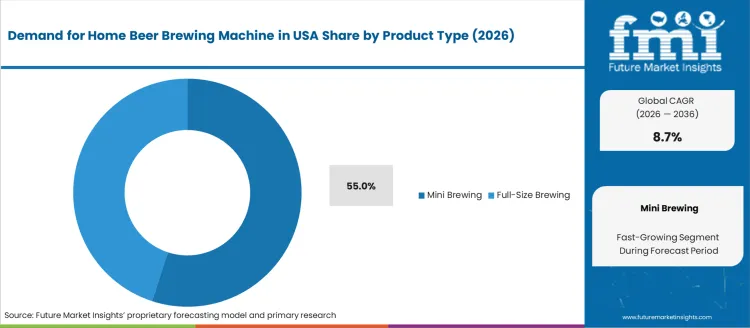
Mini brewing machines account for 55% of the demand for home beer brewing machines in the USA, driven by their compact size, ease of use, and suitability for home brewing enthusiasts. These machines are particularly popular in residential settings, where individuals and small groups enjoy the process of brewing their own craft beer. The demand for mini brewing machines is particularly high in regions like the West and Northeast USA, where craft beer culture is thriving. As more people look for affordable and convenient ways to create custom beers at home, mini brewing machines are increasingly sought after. Their ease of use, lower initial cost, and the ability to experiment with small batches make them the preferred choice for hobbyists, ensuring their dominance in the home brewing industry.
Why Does Residential End-User Lead the Demand for Home Beer Brewing Machines in USA?
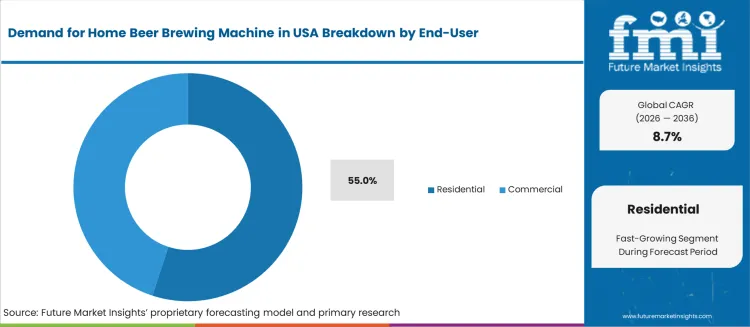
Residential end-users account for 55% of the demand for home beer brewing machines in the USA, reflecting the growing trend of home-based brewing among craft beer enthusiasts. As more people embrace the DIY approach to brewing, home beer brewing machines have become increasingly popular for residential use. These machines allow consumers to brew small batches of beer at home, offering customization in flavors and brewing styles.
The rise in home entertainment, along with the increasing popularity of craft beer, has driven the demand for these machines. Regions like the West and South USA, where craft beer culture is especially strong, are seeing higher adoption rates. The ability to brew unique beer flavors tailored to personal preferences has made home beer brewing a favored activity for many consumers, securing its leading position in the residential segment of the industry.
What are the Key Trends, Drivers, and Restraints in Demand for Home Beer Brewing Machines in USA?
Demand for home beer brewing machines in the USA is rising as craft beer and home-brewing culture gain popularity. Consumers are increasingly seeking to brew their own beer at home, allowing for customization and personalization of flavors. The growth of the DIY movement, along with the rising trend of at-home experiences, contributes to this demand. Technological advancements, such as mini brewers and automated brewing systems, have made the process more accessible to beginners, offering convenience and ease of use. Challenges exist, such as the time commitment and complexity of brewing, which may deter some consumers. Home brewing requires a learning curve, and many may find it easier to purchase commercially brewed beer.
What is Driving Demand for Home Beer Brewing Machines in USA?
The rising popularity of craft beer and DIY culture is a key driver behind the demand for home beer brewing machines in the USA. More consumers are eager to experiment with brewing their own beer, allowing for customization in terms of flavors, ingredients, and strength. The appeal of creating a personalized brew is a significant factor, especially among beer enthusiasts. The increasing trend toward at-home experiences has boosted interest in home brewing. Technological advancements have made the process simpler, with automated and mini brewing machines that cater to beginners, removing the complexities associated with traditional home brewing. As these machines become more affordable and accessible, they attract a wider audience, from hobbyists to casual beer drinkers.
How Are Technological & Industry Innovations Driving Home Beer Brewing Machine Demand in USA?
Technological advancements are playing a crucial role in driving the demand for home beer brewing machines in the USA. Innovations such as automated brewing systems, which control key aspects like fermentation and temperature, have made the brewing process more accessible, especially for beginners. These systems simplify what was once a complicated process, making it possible to produce high-quality beer at home with minimal effort.
Mini brewers, with their compact designs, are also gaining popularity as they offer convenience and portability without sacrificing brewing capacity. The availability of digital platforms that provide home brewers with recipes, advice, and troubleshooting tips has increased interest and engagement. With better access to brewing tools and knowledge, more consumers are encouraged to try home brewing.
What Are the Key Challenges and Risks That Could Limit Home Beer Brewing Machine Demand in USA?
One of the main obstacles is the time and effort required for brewing. Home brewing is a lengthy and sometimes tedious process, which may discourage consumers who are seeking convenience. Many individuals may prefer the ease of purchasing ready-made beer from craft breweries, which offer a wide variety of options. The cost of brewing machines and ingredients can be a deterrent for price-sensitive consumers. While the technology has made brewing easier, it still requires a degree of commitment, which some consumers may lack. Home brewing may not always deliver consistent results, leading to frustration. The competitive craft beer industry, with a variety of high-quality beers available, could limit the long-term growth of home brewing in the USA.
What is the Regional Demand Outlook for Home Beer Brewing Machines in USA?
.webp "Top Country Growth Comparison Demand For Home Beer Brewing Machine In Usa Cagr (2026 2036)")
| Region | CAGR (%) |
|---|---|
| West USA | 10.1% |
| South USA | 9.0% |
| Northeast USA | 8.0% |
| Midwest USA | 7.0% |
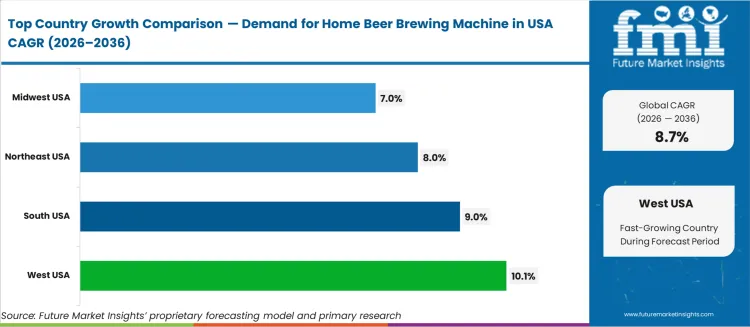
Demand for home beer brewing machines in the USA is increasing across all regions, with West USA leading at a 10.1% CAGR, driven by high interest in craft brewing and DIY culture. South USA follows closely with a 9.0% CAGR, supported by rising consumer interest in homebrewing as part of the broader DIY and craft beer movement. Northeast USA shows an 8.0% CAGR, reflecting the region's strong craft beer culture and demand for specialized brewing equipment.
Midwest USA experiences a 7.0% CAGR, with more people seeking personalized brewing solutions as craft beer popularity grows. As interest in home brewing continues to rise across the country, the demand for home beer brewing machines is expected to keep expanding.
How is Demand for Home Beer Brewing Machines Growing in West USA?
West USA leads the demand for home beer brewing machines, growing at a 10.1% CAGR. The region’s thriving craft beer culture, particularly in states like California, is a significant driver of this trend. With a high number of craft beer enthusiasts and homebrewing communities, West USA sees a strong demand for brewing equipment. The growing popularity of DIY culture and the desire for personalized beer experiences encourage consumers to invest in home brewing machines.
The region’s focus on sustainable living and local products aligns well with the growing interest in making beer at home. With the availability of a wide variety of resources, such as homebrew clubs and online forums, aspiring brewers can easily learn and share their experiences. As craft beer and the DIY movement continue to thrive, demand for home beer brewing machines in West USA is expected to grow steadily, driven by consumers seeking unique, customized brewing experiences.
Why is Demand for Home Beer Brewing Machines Rising in South USA?
In South USA, demand for home beer brewing machines is rising at a 9.0% CAGR. The region’s increasing interest in craft beer is one of the key factors driving the growth. States like Texas and Florida are witnessing a shift toward local and craft breweries, sparking an interest in homebrewing among beer enthusiasts. With more consumers seeking the opportunity to craft their own beer at home, the demand for home beer brewing machines is steadily growing.
Home brewing offers a personalized beer experience, and as local craft breweries and beer festivals gain popularity, the desire to create unique brews at home is becoming a widespread trend. The rise of DIY culture in the region, combined with greater access to brewing resources and equipment, further supports the demand. As more consumers embrace the idea of brewing their own beer, demand for home beer brewing machines is expected to continue rising in South USA.
How is Demand for Home Beer Brewing Machines Expanding in Northeast USA?
Northeast USA shows steady demand for home beer brewing machines, growing at an 8.0% CAGR. The region’s deep-rooted craft beer culture, especially in cities like New York and Boston, plays a central role in this growth. As local craft breweries continue to flourish, more beer enthusiasts in the Northeast are seeking to replicate the brewing process at home. Home brewing offers the opportunity to experiment with different beer styles, and the availability of local ingredients makes it easier for consumers to create unique brews.
Northeast USA’s focus on sustainability and locally sourced products aligns with the growing interest in homebrewing. The region’s numerous homebrew clubs and communities encourage beer enthusiasts to get involved and share knowledge. As demand for craft beer and personalized brewing experiences rises, the adoption of home beer brewing machines will continue to grow, supporting a strong and expanding industry in Northeast USA.
Why is Demand for Home Beer Brewing Machines Growing in Midwest USA?
Midwest USA is experiencing steady demand for home beer brewing machines, growing at a 7.0% CAGR. The region’s growing interest in craft beer, particularly in cities like Chicago and Minneapolis, has contributed to the rise in home brewing. As more people turn to local craft beer, there is an increasing desire to replicate the brewing process at home. Home beer brewing offers an opportunity for creativity and personalization, allowing consumers to experiment with unique recipes and brewing methods.
The region’s strong DIY culture and growing focus on independent, local products contribute to this demand. With the rising popularity of local craft beer festivals and homebrew clubs, more consumers are becoming involved in home brewing. As homebrewing equipment becomes more accessible, demand for home beer brewing machines is expected to continue to grow.
What is the Competitive Landscape of USA Home Beer Brewing Machine Demand?
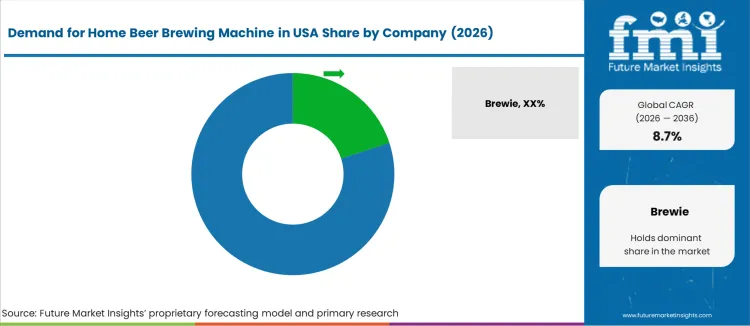
The demand for home beer brewing machines in the USA is growing as more consumers embrace the trend of craft beer brewing at home. With the rise in popularity of personalized, DIY brewing experiences, consumers are seeking easy-to-use and efficient machines that allow them to create their own craft beers. These machines offer convenience and customization, allowing users to experiment with different flavors and brewing techniques without the complexity of traditional brewing methods. As the craft beer culture continues to thrive, the demand for home brewing machines has significantly increased.
Brewie leads the segment with a 20.0% share, driven by its innovative and fully automated home brewing systems that simplify the brewing process. Other key players in the industry, including Minibrew, LG Electronics (HomeBrew), PicoBrew, and Ss Brewtech, are also catering to the growing demand by offering a variety of brewing solutions tailored to different levels of experience and preferences. These brands provide both entry-level and advanced machines that ensure high-quality results, making home brewing accessible to a wide range of consumers.
Technological advancements in brewing machinery are helping to further accelerate the demand for home brewing machines. Innovations such as automated brewing systems, smart connectivity, and more precise temperature controls are improving the brewing experience, enabling better control over the final product. As consumers continue to seek personalized, high-quality beverages and embrace the craft beer movement, the demand for home beer brewing machines in the USA is expected to continue to rise, with companies introducing new features and systems to meet evolving consumer preferences.
Key Players in USA Home Beer Brewing Machine Demand
- Brewie
- Minibrew
- LG Electronics (HomeBrew)
- PicoBrew
- Ss Brewtech
Scope of the Report
| Metric | Value |
|---|---|
| Quantitative Units | USD 14.57 to USD 33.55 billion, at a CAGR of 8.7% |
| Market Definition | Home beer brewing machines are consumer and commercial appliances that automate or assist the beer brewing process in residential kitchens and small-scale commercial venues. The USA market covers mini brewing systems, full-size brewing systems, and associated fermentation and dispensing equipment. |
| Segmentation | Product Type (Mini Brewing, Full-Size Brewing), Material (Stainless Steel, Plastic, Others), Mechanism (Manual, Semi-Automatic, Automatic), End-User (Residential, Commercial) |
| Regions Covered | West, South, Northeast, Midwest |
| Key Companies Profiled | Brewie, Minibrew, LG Electronics (HomeBrew), PicoBrew, Ss Brewtech |
| Forecast Period | 2026 to 2036 |
| Approach | Forecasting models apply a bottom-up methodology starting with unit shipment and average selling price data, cross-validated against manufacturer financial disclosures and distributor sell-through records. |
USA Home Beer Brewing Machine Demand by Key Segments
Product Type
- Mini Brewing
- Full-Size Brewing
Material
- Stainless Steel
- Plastic
- Others
Mechanism
- Manual
- Semi-Automatic
- Automatic
End-User
- Residential
- Commercial
Region
- West USA
- South USA
- Northeast USA
- Midwest USA
Bibliography
- 1. American Homebrewers Association. (2024). National Homebrew Survey: Demographics and Equipment Trends. AHA.
- 2. Brewers Association. (2024). National Beer Sales and Production Data. BA.
- 3. USA Alcohol and Tobacco Tax and Trade Bureau. (2024). Federal Homebrewing Regulations and State Compliance Summary. TTB.
- 4. Organisation for Economic Co-operation and Development. (2024). Consumer Spending Trends in OECD Countries. OECD.
- 5. USA Census Bureau. (2024). Annual Retail Trade Survey: Specialty Food and Beverage Equipment. Census Bureau.
- 6. LG Electronics. (2024). Annual Report 2024: Home Appliance and Air Solution Division. LG Electronics.
This bibliography is provided for reader reference. The full Future Market Insights report contains the complete reference list with primary research documentation.
Frequently Asked Questions
How large is the demand for home beer brewing machine in usa in 2026?
The demand for home beer brewing machine in usa is estimated to be valued at USD 14.57 billion in 2026.
What will be the market size of demand for home beer brewing machine in usa by 2036?
Market size for demand for home beer brewing machine in usa is projected to reach USD 33.55 billion by 2036.
What is the expected growth rate between 2026 and 2036?
The demand for home beer brewing machine in usa is expected to grow at a CAGR of 8.7% between 2026 and 2036.
Which product type is poised to lead by 2026?
Mini Brewing accounts for 55.0% share in 2026, driven by established procurement patterns and broad adoption.
What is the growth outlook for West?
West is projected to grow at a CAGR of 10.1% during 2026 to 2036.
What is included in the scope of this report?
Market scope includes countertop mini brewing appliances, full-size home brewing systems, fermentation chambers, temperature management units, and app-connected automated brewing platforms. Brewing accessory kits, cleaning systems, and kegging equipment designed for home-scale operation are included.
How does FMI build and validate this forecast?
Forecasting models apply a bottom-up methodology starting with unit shipment and average selling price data, cross-validated against manufacturer financial disclosures and distributor sell-through records.
Preview the report firsthand - request a free sample
Get SampleGet the brochure for pricing and purchase details.
Get PDFTable of Content
- Executive Summary
- Global Market Outlook
- Demand-side Trends
- Supply-side Trends
- Technology Roadmap Analysis
- Analysis and Recommendations
- Market Overview
- Market Coverage / Taxonomy
- Market Definition / Scope / Limitations
- Research Methodology
- Chapter Orientation
- Analytical Lens and Working Hypotheses
- Market Structure, Signals, and Trend Drivers
- Benchmarking and Cross-market Comparability
- Market Sizing, Forecasting, and Opportunity Mapping
- Research Design and Evidence Framework
- Desk Research Programme (Secondary Evidence)
- Company Annual and Sustainability Reports
- Peer-reviewed Journals and Academic Literature
- Corporate Websites, Product Literature, and Technical Notes
- Earnings Decks and Investor Briefings
- Statutory Filings and Regulatory Disclosures
- Technical White Papers and Standards Notes
- Trade Journals, Industry Magazines, and Analyst Briefs
- Conference Proceedings, Webinars, and Seminar Materials
- Government Statistics Portals and Public Data Releases
- Press Releases and Reputable Media Coverage
- Specialist Newsletters and Curated Briefings
- Sector Databases and Reference Repositories
- FMI Internal Proprietary Databases and Historical Market Datasets
- Subscription Datasets and Paid Sources
- Social Channels, Communities, and Digital Listening Inputs
- Additional Desk Sources
- Expert Input and Fieldwork (Primary Evidence)
- Primary Modes
- Qualitative Interviews and Expert Elicitation
- Quantitative Surveys and Structured Data Capture
- Blended Approach
- Why Primary Evidence is Used
- Field Techniques
- Interviews
- Surveys
- Focus Groups
- Observational and In-context Research
- Social and Community Interactions
- Stakeholder Universe Engaged
- C-suite Leaders
- Board Members
- Presidents and Vice Presidents
- R&D and Innovation Heads
- Technical Specialists
- Domain Subject-matter Experts
- Scientists
- Physicians and Other Healthcare Professionals
- Governance, Ethics, and Data Stewardship
- Research Ethics
- Data Integrity and Handling
- Primary Modes
- Tooling, Models, and Reference Databases
- Desk Research Programme (Secondary Evidence)
- Data Engineering and Model Build
- Data Acquisition and Ingestion
- Cleaning, Normalisation, and Verification
- Synthesis, Triangulation, and Analysis
- Quality Assurance and Audit Trail
- Market Background
- Market Dynamics
- Drivers
- Restraints
- Opportunity
- Trends
- Scenario Forecast
- Demand in Optimistic Scenario
- Demand in Likely Scenario
- Demand in Conservative Scenario
- Opportunity Map Analysis
- Product Life Cycle Analysis
- Supply Chain Analysis
- Investment Feasibility Matrix
- Value Chain Analysis
- PESTLE and Porter’s Analysis
- Regulatory Landscape
- Regional Parent Market Outlook
- Production and Consumption Statistics
- Import and Export Statistics
- Market Dynamics
- Global Market Analysis 2021 to 2025 and Forecast, 2026 to 2036
- Historical Market Size Value (USD Million) Analysis, 2021 to 2025
- Current and Future Market Size Value (USD Million) Projections, 2026 to 2036
- Y-o-Y Growth Trend Analysis
- Absolute $ Opportunity Analysis
- Global Market Pricing Analysis 2021 to 2025 and Forecast 2026 to 2036
- Global Market Analysis 2021 to 2025 and Forecast 2026 to 2036, By Product Type
- Introduction / Key Findings
- Historical Market Size Value (USD Million) Analysis By Product Type , 2021 to 2025
- Current and Future Market Size Value (USD Million) Analysis and Forecast By Product Type , 2026 to 2036
- Mini Brewing
- Full-Size Brewing
- Mini Brewing
- Y-o-Y Growth Trend Analysis By Product Type , 2021 to 2025
- Absolute $ Opportunity Analysis By Product Type , 2026 to 2036
- Global Market Analysis 2021 to 2025 and Forecast 2026 to 2036, By Material
- Introduction / Key Findings
- Historical Market Size Value (USD Million) Analysis By Material, 2021 to 2025
- Current and Future Market Size Value (USD Million) Analysis and Forecast By Material, 2026 to 2036
- Stainless Steel
- Plastic
- Others
- Stainless Steel
- Y-o-Y Growth Trend Analysis By Material, 2021 to 2025
- Absolute $ Opportunity Analysis By Material, 2026 to 2036
- Global Market Analysis 2021 to 2025 and Forecast 2026 to 2036, By Mechanism
- Introduction / Key Findings
- Historical Market Size Value (USD Million) Analysis By Mechanism, 2021 to 2025
- Current and Future Market Size Value (USD Million) Analysis and Forecast By Mechanism, 2026 to 2036
- Manual
- Semi-Automatic
- Automatic
- Manual
- Y-o-Y Growth Trend Analysis By Mechanism, 2021 to 2025
- Absolute $ Opportunity Analysis By Mechanism, 2026 to 2036
- Global Market Analysis 2021 to 2025 and Forecast 2026 to 2036, By End-User
- Introduction / Key Findings
- Historical Market Size Value (USD Million) Analysis By End-User, 2021 to 2025
- Current and Future Market Size Value (USD Million) Analysis and Forecast By End-User, 2026 to 2036
- Residential
- Commercial
- Residential
- Y-o-Y Growth Trend Analysis By End-User, 2021 to 2025
- Absolute $ Opportunity Analysis By End-User, 2026 to 2036
- Global Market Analysis 2021 to 2025 and Forecast 2026 to 2036, By Region
- Introduction
- Historical Market Size Value (USD Million) Analysis By Region, 2021 to 2025
- Current Market Size Value (USD Million) Analysis and Forecast By Region, 2026 to 2036
- North America
- Latin America
- Western Europe
- Eastern Europe
- East Asia
- South Asia and Pacific
- Middle East & Africa
- Market Attractiveness Analysis By Region
- North America Market Analysis 2021 to 2025 and Forecast 2026 to 2036, By Country
- Historical Market Size Value (USD Million) Trend Analysis By Market Taxonomy, 2021 to 2025
- Market Size Value (USD Million) Forecast By Market Taxonomy, 2026 to 2036
- By Country
- USA
- Canada
- Mexico
- By Product Type
- By Material
- By Mechanism
- By End-User
- By Country
- Market Attractiveness Analysis
- By Country
- By Product Type
- By Material
- By Mechanism
- By End-User
- Key Takeaways
- Latin America Market Analysis 2021 to 2025 and Forecast 2026 to 2036, By Country
- Historical Market Size Value (USD Million) Trend Analysis By Market Taxonomy, 2021 to 2025
- Market Size Value (USD Million) Forecast By Market Taxonomy, 2026 to 2036
- By Country
- Brazil
- Chile
- Rest of Latin America
- By Product Type
- By Material
- By Mechanism
- By End-User
- By Country
- Market Attractiveness Analysis
- By Country
- By Product Type
- By Material
- By Mechanism
- By End-User
- Key Takeaways
- Western Europe Market Analysis 2021 to 2025 and Forecast 2026 to 2036, By Country
- Historical Market Size Value (USD Million) Trend Analysis By Market Taxonomy, 2021 to 2025
- Market Size Value (USD Million) Forecast By Market Taxonomy, 2026 to 2036
- By Country
- Germany
- UK
- Italy
- Spain
- France
- Nordic
- BENELUX
- Rest of Western Europe
- By Product Type
- By Material
- By Mechanism
- By End-User
- By Country
- Market Attractiveness Analysis
- By Country
- By Product Type
- By Material
- By Mechanism
- By End-User
- Key Takeaways
- Eastern Europe Market Analysis 2021 to 2025 and Forecast 2026 to 2036, By Country
- Historical Market Size Value (USD Million) Trend Analysis By Market Taxonomy, 2021 to 2025
- Market Size Value (USD Million) Forecast By Market Taxonomy, 2026 to 2036
- By Country
- Russia
- Poland
- Hungary
- Balkan & Baltic
- Rest of Eastern Europe
- By Product Type
- By Material
- By Mechanism
- By End-User
- By Country
- Market Attractiveness Analysis
- By Country
- By Product Type
- By Material
- By Mechanism
- By End-User
- Key Takeaways
- East Asia Market Analysis 2021 to 2025 and Forecast 2026 to 2036, By Country
- Historical Market Size Value (USD Million) Trend Analysis By Market Taxonomy, 2021 to 2025
- Market Size Value (USD Million) Forecast By Market Taxonomy, 2026 to 2036
- By Country
- China
- Japan
- South Korea
- By Product Type
- By Material
- By Mechanism
- By End-User
- By Country
- Market Attractiveness Analysis
- By Country
- By Product Type
- By Material
- By Mechanism
- By End-User
- Key Takeaways
- South Asia and Pacific Market Analysis 2021 to 2025 and Forecast 2026 to 2036, By Country
- Historical Market Size Value (USD Million) Trend Analysis By Market Taxonomy, 2021 to 2025
- Market Size Value (USD Million) Forecast By Market Taxonomy, 2026 to 2036
- By Country
- India
- ASEAN
- Australia & New Zealand
- Rest of South Asia and Pacific
- By Product Type
- By Material
- By Mechanism
- By End-User
- By Country
- Market Attractiveness Analysis
- By Country
- By Product Type
- By Material
- By Mechanism
- By End-User
- Key Takeaways
- Middle East & Africa Market Analysis 2021 to 2025 and Forecast 2026 to 2036, By Country
- Historical Market Size Value (USD Million) Trend Analysis By Market Taxonomy, 2021 to 2025
- Market Size Value (USD Million) Forecast By Market Taxonomy, 2026 to 2036
- By Country
- Kingdom of Saudi Arabia
- Other GCC Countries
- Turkiye
- South Africa
- Other African Union
- Rest of Middle East & Africa
- By Product Type
- By Material
- By Mechanism
- By End-User
- By Country
- Market Attractiveness Analysis
- By Country
- By Product Type
- By Material
- By Mechanism
- By End-User
- Key Takeaways
- Key Countries Market Analysis
- USA
- Pricing Analysis
- Market Share Analysis, 2025
- By Product Type
- By Material
- By Mechanism
- By End-User
- Canada
- Pricing Analysis
- Market Share Analysis, 2025
- By Product Type
- By Material
- By Mechanism
- By End-User
- Mexico
- Pricing Analysis
- Market Share Analysis, 2025
- By Product Type
- By Material
- By Mechanism
- By End-User
- Brazil
- Pricing Analysis
- Market Share Analysis, 2025
- By Product Type
- By Material
- By Mechanism
- By End-User
- Chile
- Pricing Analysis
- Market Share Analysis, 2025
- By Product Type
- By Material
- By Mechanism
- By End-User
- Germany
- Pricing Analysis
- Market Share Analysis, 2025
- By Product Type
- By Material
- By Mechanism
- By End-User
- UK
- Pricing Analysis
- Market Share Analysis, 2025
- By Product Type
- By Material
- By Mechanism
- By End-User
- Italy
- Pricing Analysis
- Market Share Analysis, 2025
- By Product Type
- By Material
- By Mechanism
- By End-User
- Spain
- Pricing Analysis
- Market Share Analysis, 2025
- By Product Type
- By Material
- By Mechanism
- By End-User
- France
- Pricing Analysis
- Market Share Analysis, 2025
- By Product Type
- By Material
- By Mechanism
- By End-User
- India
- Pricing Analysis
- Market Share Analysis, 2025
- By Product Type
- By Material
- By Mechanism
- By End-User
- ASEAN
- Pricing Analysis
- Market Share Analysis, 2025
- By Product Type
- By Material
- By Mechanism
- By End-User
- Australia & New Zealand
- Pricing Analysis
- Market Share Analysis, 2025
- By Product Type
- By Material
- By Mechanism
- By End-User
- China
- Pricing Analysis
- Market Share Analysis, 2025
- By Product Type
- By Material
- By Mechanism
- By End-User
- Japan
- Pricing Analysis
- Market Share Analysis, 2025
- By Product Type
- By Material
- By Mechanism
- By End-User
- South Korea
- Pricing Analysis
- Market Share Analysis, 2025
- By Product Type
- By Material
- By Mechanism
- By End-User
- Russia
- Pricing Analysis
- Market Share Analysis, 2025
- By Product Type
- By Material
- By Mechanism
- By End-User
- Poland
- Pricing Analysis
- Market Share Analysis, 2025
- By Product Type
- By Material
- By Mechanism
- By End-User
- Hungary
- Pricing Analysis
- Market Share Analysis, 2025
- By Product Type
- By Material
- By Mechanism
- By End-User
- Kingdom of Saudi Arabia
- Pricing Analysis
- Market Share Analysis, 2025
- By Product Type
- By Material
- By Mechanism
- By End-User
- Turkiye
- Pricing Analysis
- Market Share Analysis, 2025
- By Product Type
- By Material
- By Mechanism
- By End-User
- South Africa
- Pricing Analysis
- Market Share Analysis, 2025
- By Product Type
- By Material
- By Mechanism
- By End-User
- USA
- Market Structure Analysis
- Competition Dashboard
- Competition Benchmarking
- Market Share Analysis of Top Players
- By Regional
- By Product Type
- By Material
- By Mechanism
- By End-User
- Competition Analysis
- Competition Deep Dive
- Brewie
- Overview
- Product Portfolio
- Profitability by Market Segments (Product/Age /Sales Channel/Region)
- Sales Footprint
- Strategy Overview
- Marketing Strategy
- Product Strategy
- Channel Strategy
- Minibrew
- LG Electronics (HomeBrew)
- PicoBrew
- Ss Brewtech
- Brewie
- Competition Deep Dive
- Assumptions & Acronyms Used


