

- Industry Size (2025)
- USD 0.8 Bn
- Forecast (2035)
- USD 1.1 Bn
- CAGR (2025 to 2035)
- 3.5%
Demand for Beer Dispensers in USA Forecast and Outlook 2025 to 2035
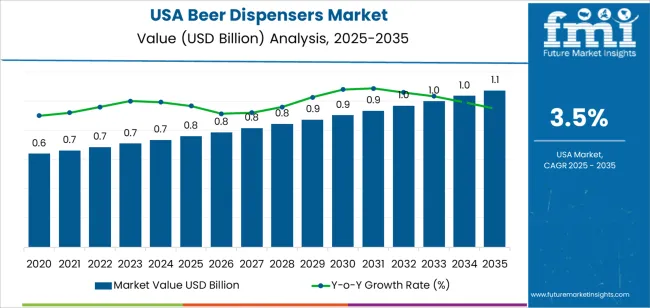
The demand for beer dispensers in the USA is expected to grow from USD 0.8 billion in 2025 to USD 1.1 billion by 2035, reflecting a CAGR of 3.5%. The growing popularity of craft beer, rising consumer demand for convenience, and the growing trend toward at-home entertainment are driving demand for beer dispensers. Consumers are increasingly seeking ways to enjoy bar-quality beer experiences at home, contributing to the adoption of advanced beer dispensing technologies. The growing focus on energy-efficient and eco-friendly appliances is driving innovation in the beer dispenser industry. With improvements in product design, user experience, and technology, beer dispensers are becoming more accessible to a wider consumer base, further fueling demand.
The beer dispenser industry in the USA will also benefit from innovations in product features and design, such as touchless dispensing systems, temperature control, and automatic cleaning features. These advancements cater to the growing demand for convenience and quality in the at-home beer consumption experience. As consumers continue to explore different beer styles and brewing techniques, beer dispensers will also evolve to accommodate the needs of diverse beer preferences. The growth of microbreweries, craft beer bars, and other specialty establishments is driving the adoption of commercial-grade beer dispensers, adding to the overall growth of the industry.
Quick Stats of the Demand for Beer Dispensers in USA
- Demand for Beer Dispensers in USA Value (2025): USD 0.8 billion
- Demand for Beer Dispensers in USA Forecast Value (2035): USD 1.1 billion
- Demand for Beer Dispensers in USA Forecast CAGR (2025 to 2035): 3.5%
- Demand for Beer Dispensers in USA Leading Faucet Type: Single Faucet Dispensers
- Demand for Beer Dispensers in USA Key Growth Regions: West USA, South USA, Northeast USA, Midwest USA
- Demand for Beer Dispensers in USA Top Players: Beerjet GmbH, Lancer Worldwide, Celli Spa, Kegco Brewing & Draft, Micro Matic AS
What is the Growth Forecast for the Demand for Beer Dispensers in USA through 2035?
From 2025 to 2030, the industry is expected to grow from USD 0.8 billion to USD 0.9 billion, adding USD 0.1 billion in value. This phase will contribute strongly to industry expansion, driven by rising demand for craft beer and the growing popularity of home entertainment setups. Consumers will continue to seek premium beer experiences at home, fueling the demand for advanced beer dispensing solutions. The increased focus on energy-efficient and innovative beer dispensers will drive consumer interest, making it an attractive option for households. As the trend of home beer consumption continues to grow, this phase will mark significant increases in product availability and industry penetration.
From 2030 to 2035, the industry will grow from USD 0.9 billion to USD 1.1 billion, contributing USD 0.2 billion in value. This phase will see continued growth, though at a slower rate compared to the earlier period. As the industry matures, growth will be more incremental, driven by the increasing adoption of beer dispensers across both residential and commercial sectors. The demand for advanced features, such as customization options and greater user control, will remain strong, but the industry will experience a gradual transition to a more stable demand cycle. The slower growth will be a result of industry saturation, with earliest adopters already equipped with beer dispensers. Product innovation and the continuous rise of beer-related trends will ensure steady industry demand throughout the forecast period.
Demand for Beer Dispensers in USA Key Takeaways
| Metric | Value |
|---|---|
| Demand for Beer Dispensers in USA Value (2025) | USD 0.8 billion |
| Demand for Beer Dispensers in USA Forecast Value (2035) | USD 1.1 billion |
| Demand for Beer Dispensers in USA Forecast CAGR (2025-2035) | 3.5% |
Why is the Demand for Beer Dispensers in USA Growing?
The demand for beer dispensers in the USA is growing as the popularity of craft beer, home brewing, and at-home entertainment continues to rise. Beer dispensers, which are commonly used in bars, restaurants, and home settings, provide a convenient and efficient way to serve beer, ensuring that it is dispensed at the ideal temperature and carbonation level. As consumers seek more authentic and premium beer-drinking experiences, the demand for high-quality beer dispensers is increasing across both commercial and residential sectors.
A major driver of this growth is the rise of the craft beer industry in the USA. As the number of microbreweries and craft beer options expands, consumers are increasingly seeking ways to enjoy a variety of beers at home or in casual settings. Beer dispensers offer a way to serve beer in optimal conditions, maintaining its freshness and flavor. This trend is particularly popular in home bars, where consumers prefer professional-level dispensing equipment for the best beer-drinking experience.
The growing emphasis on sustainability and reducing waste is driving the adoption of beer dispensers, as they help minimize the use of bottles and cans, aligning with the eco-conscious values of modern consumers. Advancements in beer dispenser technology, such as improved designs for temperature control and ease of cleaning, are making these devices more attractive to both commercial establishments and home users. As the demand for craft beer and premium beer experiences grows, the industry for beer dispensers in the USA is expected to expand steadily through 2035.
What is the Segment-Wise Analysis of Demand for Beer Dispensers in USA?
Demand for beer dispensers in the USA is segmented by faucet type, application, kegs, and sales channel. By faucet type, demand is divided into single faucet dispensers, dual faucet dispensers, triple faucet dispensers, more than three faucet dispensers, and others. The demand is also segmented by application, including commercial, restaurants, hotels, breweries, and household/residential, with the commercial sector leading at 38%. In terms of kegs, demand is segmented into 1 keg, 2 kegs, 3 kegs, 4 kegs, more than 5 kegs, and others. Sales channel segmentation includes hypermarkets/supermarkets, direct, convenience stores, indirect, and exclusive stores. Regionally, demand is divided into West USA, South USA, Northeast USA, and Midwest USA.
Why Do Single Faucet Dispensers Lead the Demand for Beer Dispensers?
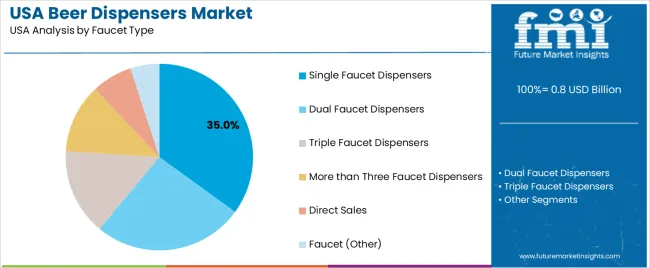
Single faucet dispensers account for 35% of the demand for beer dispensers in the USA. Their popularity is driven by their simplicity, affordability, and versatility, making them the ideal choice for small to medium-sized establishments and home use. Single faucet dispensers are perfect for serving a single type of beer, and their compact design allows for easy installation in a variety of settings, including home bars, small restaurants, and other commercial spaces. These dispensers are generally more cost-effective compared to their multi-faucet counterparts, contributing to their widespread use, particularly in smaller operations. Single faucet dispensers require less maintenance and are easier to clean, making them a practical option for users seeking convenience. The increasing trend of home brewing and small-scale craft beer operations also supports the growing demand for single faucet dispensers, ensuring their continued dominance in the beer dispenser industry.
Why Does the Commercial Sector Lead the Demand for Beer Dispensers?
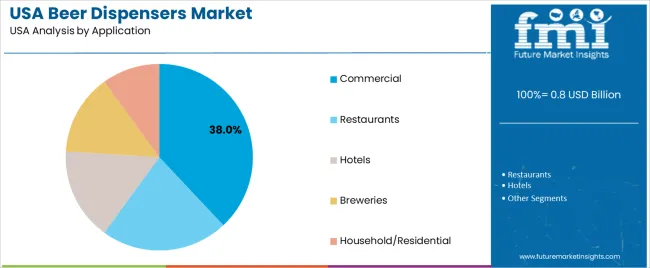
The commercial sector, which includes bars, restaurants, hotels, and breweries, holds the largest share at 38% of the demand for beer dispensers in the USA. This demand is driven by the need for efficient, high-capacity dispensers to serve large numbers of customers in high-traffic environments. Commercial establishments typically require dispensers that can handle multiple kegs and provide fast, consistent pours to keep up with customer demand. The growing craft beer culture has also spurred demand for specialized dispensers, allowing bars and restaurants to offer a variety of beers on tap. In addition, the commercial sector's demand for dispensers is bolstered by the increasing trend of customers seeking unique beer experiences, such as sampling different beers. As the food and beverage industry continues to grow and diversify, the demand for beer dispensers in commercial applications will remain strong, driven by the need for both functionality and quality service.
What are the Key Trends, Drivers, and Restraints in Demand for Beer Dispensers in USA?
Demand for beer dispensers in the USA is increasing as more consumers and businesses, such as bars, restaurants, and home brewers, seek efficient ways to serve and store beer. The rise of craft beer culture and the growing popularity of home brewing are major factors contributing to this growth. Beer dispensers provide convenience, temperature control, and better preservation of beer quality, making them an essential product for both commercial and personal use. As outdoor and at-home entertainment grow in popularity, there is a greater demand for portable and user-friendly dispensers. High upfront costs, maintenance requirements, and competition from traditional methods of serving beer may limit broader adoption.
Why is Demand for Beer Dispensers Growing in USA?
Demand is rising as consumers and businesses look for ways to improve beer serving experiences. Craft beer’s rise in popularity is a significant driver, as it requires careful temperature control to maintain quality, something beer dispensers offer. In bars and restaurants, dispensers enable faster service, while home users are increasingly investing in them to replicate the bar experience. Technological advances such as self‑pour systems and smart dispensers, which allow for better control over temperature, foam, and pour rates, further enhance their appeal. An increasing interest in hosting gatherings at home is making beer dispensers a popular choice for convenience and presentation.
How are Technological & Industry Innovations Driving Beer Dispenser Demand in USA?
Innovations in beer dispenser technology are playing a crucial role in driving demand in the USA. Self‑pour beer dispensers, which allow customers to serve themselves, are gaining traction in both commercial and residential spaces. These systems reduce wait times and improve service efficiency, which is particularly important in high‑traffic establishments. Smart dispensers with temperature controls, flow rate adjustments, and even app-based controls are making it easier to maintain beer quality and enhance the customer experience. These technological advancements are increasing the demand for dispensers across various sectors, especially with the rise of automation in food and beverage services.
What are the Key Challenges and Risks That Could Limit Beer Dispenser Demand in USA?
While demand is growing, several challenges could limit broader adoption. High initial costs and ongoing maintenance can be deterrents for smaller businesses or individual consumers. The complexity of installation and upkeep may discourage some potential users. There is also the risk of industry saturation in commercial settings, especially in areas with many bars and restaurants offering similar services. The need for regular cleaning and compliance with health regulations may also pose challenges. Lastly, the shift in consumer preferences toward other alcoholic beverages like hard seltzers and wine could reduce the focus on beer, limiting the potential industry for dispensers.
What is the Regional Demand Outlook for Beer Dispensers in USA?
| Region | CAGR (%) |
|---|---|
| West USA | 4.0% |
| South USA | 3.6% |
| Northeast USA | 3.2% |
| Midwest USA | 2.8% |
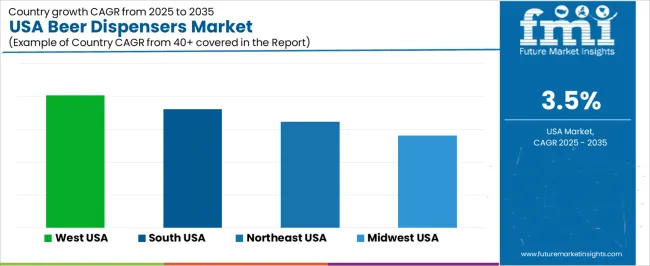
Demand for beer dispensers in the USA is steadily growing, with West USA leading at a 4.0% CAGR, driven by a strong craft beer culture and the popularity of homebrewing. South USA follows at a 3.6% CAGR, supported by the region’s vibrant bar and restaurant culture, coupled with growing home bar trends. Northeast USA shows a 3.2% CAGR, fueled by the region’s craft beer industry, beer festivals, and an increasing number of taprooms and breweries. Midwest USA experiences a 2.8% CAGR, with steady demand driven by local beer culture and the growth of home bars. As the craft beer industry continues to expand and consumers seek diverse, high-quality beer experiences, the demand for efficient, durable, and energy-efficient beer dispensers is expected to rise across all regions.
How is Demand for Beer Dispensers Growing in West USA?
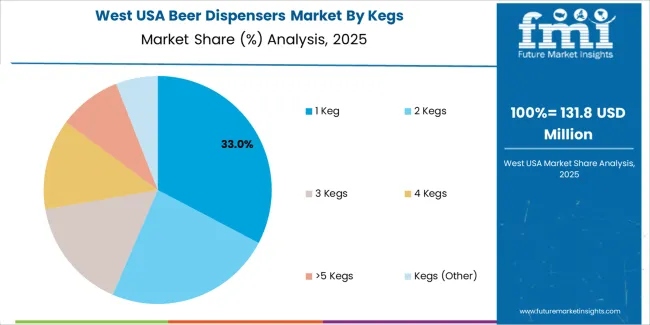
West USA leads the demand for beer dispensers, growing at a 4.0% CAGR. The region’s strong craft beer culture, especially in California, Oregon, and Washington, is a major driver of this growth. The West is home to numerous microbreweries, taprooms, and bars that require high-quality dispensers to serve a variety of craft beers. The increasing popularity of beer festivals and tasting events has created a strong demand for efficient, reliable beer dispensers. As homebrewing and the trend of personal home bars continue to rise, many consumers are opting for professional-quality beer dispensers for their own use. With the craft beer industry expanding and the region’s focus on sustainability, energy-efficient dispensers are in high demand. As more consumers prioritize unique, high-quality beer experiences, West USA will continue to lead the industry for beer dispensers.
Why is Demand for Beer Dispensers Rising in South USA?
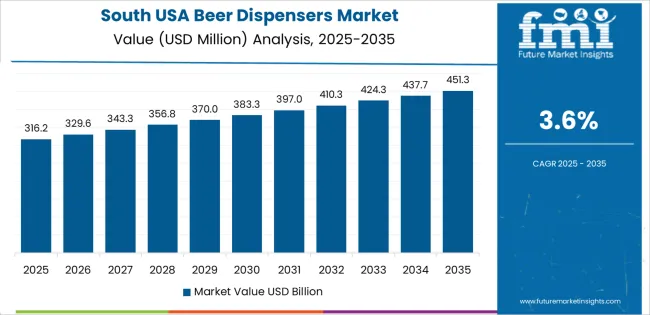
South USA is experiencing steady demand for beer dispensers, with a 3.6% CAGR. The region’s vibrant bar and restaurant culture, particularly in states like Texas, Florida, and Georgia, drives the need for efficient and high-quality beer dispensers. The increasing popularity of craft beer and the growing number of microbreweries in the South are contributing to this demand. As more establishments focus on providing diverse beer offerings, having high-performance dispensers becomes essential. The growing trend of home entertainment, with consumers setting up home bars and hosting parties, also boosts demand for beer dispensers. The South’s warm climate encourages outdoor dining and drinking, where dispensers are often needed for large-scale service. With craft beer gaining popularity and the region’s focus on quality beverages, demand for beer dispensers remains strong in the South, both in commercial settings and private homes.
How is Demand for Beer Dispensers Expanding in Northeast USA?
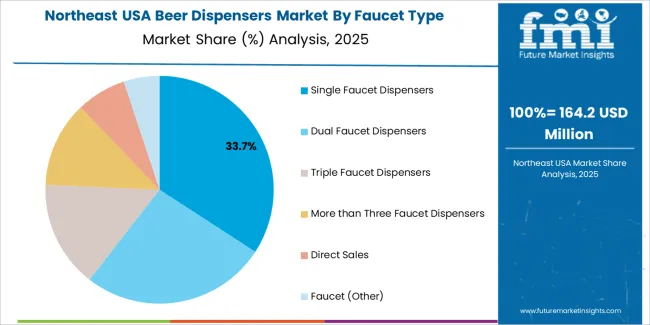
Northeast USA is seeing moderate growth in demand for beer dispensers, with a 3.2% CAGR. The region’s strong craft beer industry, particularly in states like New York and Pennsylvania, plays a key role in driving demand for dispensers in bars, restaurants, and breweries. As craft beer continues to grow in popularity, establishments are investing in efficient dispensers that can handle various beer styles. The increasing number of taprooms, beer festivals, and brewery tours is further supporting the demand. The Northeast’s vibrant nightlife and dining culture contributes to a steady need for beer dispensers in commercial settings. The growing trend of home bars, especially in urban areas, is also driving demand for smaller, residential beer dispensers. As consumers continue to seek unique beer experiences, the industry for beer dispensers in Northeast USA is expected to grow steadily, offering both functional and premium options for commercial and personal use.
Why is Demand for Beer Dispensers Growing in Midwest USA?
Midwest USA is experiencing steady demand for beer dispensers, with a 2.8% CAGR. The region has a well-established beer culture, particularly in states like Michigan, Wisconsin, and Ohio, where breweries, taverns, and bars play a central role in local economies. The growth of craft beer in these areas has contributed to a consistent need for efficient, durable beer dispensers. The region’s preference for home entertainment and backyard gatherings has increased the demand for home bars, driving the industry for smaller, residential beer dispensers. Beer festivals and local brewery tours also contribute to demand, as event organizers require multiple dispensers for large-scale beer service. Although demand in Midwest USA is slower compared to other regions, the continued interest in beer culture and the consistent use of beer dispensers in both commercial and home settings ensures steady growth in this industry.
What is the Competitive Landscape of Beer Dispensers Demand in USA?
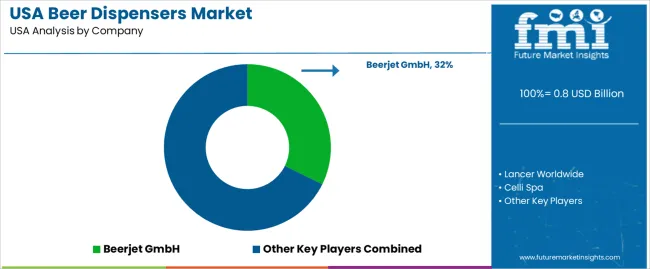
The demand for beer dispensers in the USA is increasing due to the growing popularity of craft beer, the expansion of breweries, and the rise of home brewing and draft beer systems. Beer dispensers are essential in the foodservice and hospitality industries, enabling establishments to serve beer efficiently while maintaining quality. With the growing trend of at-home entertainment and craft beer consumption, the industry for beer dispensers is seeing strong growth, particularly for both commercial and residential applications. The need for dispensers that are easy to use, maintain, and customize is fueling demand across various sectors.
Leading companies in the beer dispenser industry in the USA include Beerjet GmbH, Lancer Worldwide, Celli Spa, Kegco Brewing & Draft, and Micro Matic AS. Beerjet GmbH holds the largest industry share of 32.3%, offering advanced beer dispensing solutions known for their efficiency and quality. Lancer Worldwide provides innovative beer dispensing systems widely used in bars, restaurants, and events. Celli Spa is a major player in the European industry and has a growing presence in the USA, offering high-quality dispensing systems for the hospitality and beverage industries. Kegco Brewing & Draft specializes in both commercial and home draft beer systems, while Micro Matic AS offers a range of beer dispensing products, including systems designed for breweries and bars.
Competition in the beer dispenser industry is driven by the need for efficient, durable, and customizable solutions for both commercial and residential customers. Companies compete by offering products that ensure consistent quality, reduce wastage, and are easy to maintain. Innovations in user-friendly design, including temperature control, pour consistency, and energy efficiency, are key differentiators.
Key Players in USA Beer Dispensers Demand
- Beerjet GmbH
- Lancer Worldwide
- Celli Spa
- Kegco Brewing & Draft
- Micro Matic AS
Scope of Report
| Items | Values |
|---|---|
| Quantitative Units (2025) | USD billion |
| Kegs | 1 Keg, 2 Kegs, 3 Kegs, 4 Kegs, >5 Kegs, Kegs (Other) |
| Faucet Type | Single Faucet Dispensers, Dual Faucet Dispensers, Triple Faucet Dispensers, More than Three Faucet Dispensers, Faucet (Other) |
| Application | Commercial, Restaurants, Hotels, Breweries, Household/Residential |
| Sales Channel | Hypermarkets/Supermarkets, Direct, Convenience Stores, Indirect, Exclusive Stores |
| Region | West USA, South USA, Northeast USA, Midwest USA |
| Countries Covered | USA |
| Key Companies Profiled | Beerjet GmbH, Lancer Worldwide, Celli Spa, Kegco Brewing & Draft, Micro Matic AS |
| Additional Attributes | Dollar sales by keg type, faucet type, application, and sales channel; regional CAGR and adoption trends; demand trends in beer dispensers; growth in commercial and residential sectors; technology adoption for beer dispensing systems; vendor offerings including kegs, faucets, and related accessories; regulatory influences and industry standards |
USA Beer Dispensers Demand by Key Segments
Kegs:
- 1 Keg
- 2 Kegs
- 3 Kegs
- 4 Kegs
- >5 Kegs
- Kegs (Other)
Faucet Type:
- Single Faucet Dispensers
- Dual Faucet Dispensers
- Triple Faucet Dispensers
- More than Three Faucet Dispensers
- Direct Sales
- Faucet (Other)
Application:
- Commercial
- Restaurants
- Hotels
- Breweries
- Household/Residential
Sales Channel:
- Hypermarkets/Supermarkets
- Direct
- Convenience Stores
- Indirect
- Exclusive Stores
Region:
- West USA
- South USA
- Northeast USA
- Midwest USA
Frequently Asked Questions
How big is the demand for beer dispensers in USA in 2025?
The demand for beer dispensers in USA is estimated to be valued at USD 0.8 billion in 2025.
What will be the size of beer dispensers in USA in 2035?
The market size for the beer dispensers in USA is projected to reach USD 1.1 billion by 2035.
How much will be the demand for beer dispensers in USA growth between 2025 and 2035?
The demand for beer dispensers in USA is expected to grow at a 3.5% CAGR between 2025 and 2035.
What are the key product types in the beer dispensers in USA?
The key product types in beer dispensers in USA are 1 keg, 2 kegs, 3 kegs, 4 kegs, >5 kegs and kegs (other).
Which faucet type segment is expected to contribute significant share in the beer dispensers in USA in 2025?
In terms of faucet type, single faucet dispensers segment is expected to command 35.0% share in the beer dispensers in USA in 2025.
Preview the report firsthand - request a free sample
Get SampleGet the brochure for pricing and purchase details.
Get PDFTable of Content
- Executive Summary
- USA Market Outlook
- Demand-side Trends
- Supply-side Trends
- Technology Roadmap Analysis
- Analysis and Recommendations
- Market Overview
- Market Coverage / Taxonomy
- Market Definition / Scope / Limitations
- Market Background
- Market Dynamics
- Drivers
- Restraints
- Opportunity
- Trends
- Scenario Forecast
- Demand in Optimistic Scenario
- Demand in Likely Scenario
- Demand in Conservative Scenario
- Opportunity Map Analysis
- Product Life Cycle Analysis
- Supply Chain Analysis
- Investment Feasibility Matrix
- Value Chain Analysis
- PESTLE and Porter’s Analysis
- Regulatory Landscape
- Regional Parent Market Outlook
- Production and Consumption Statistics
- Import and Export Statistics
- Market Dynamics
- USA Market Analysis 2020 to 2024 and Forecast, 2025 to 2035
- Historical Market Size Value (USD Million) Analysis, 2020 to 2024
- Current and Future Market Size Value (USD Million) Projections, 2025 to 2035
- Y-o-Y Growth Trend Analysis
- Absolute $ Opportunity Analysis
- USA Market Pricing Analysis 2020 to 2024 and Forecast 2025 to 2035
- USA Market Analysis 2020 to 2024 and Forecast 2025 to 2035, By Kegs
- Introduction / Key Findings
- Historical Market Size Value (USD Million) Analysis By Kegs , 2020 to 2024
- Current and Future Market Size Value (USD Million) Analysis and Forecast By Kegs , 2025 to 2035
- 1 Keg
- 2 Kegs
- 3 Kegs
- 4 Kegs
- >5 Kegs
- Kegs (Other)
- Y-o-Y Growth Trend Analysis By Kegs , 2020 to 2024
- Absolute $ Opportunity Analysis By Kegs , 2025 to 2035
- USA Market Analysis 2020 to 2024 and Forecast 2025 to 2035, By Faucet Type
- Introduction / Key Findings
- Historical Market Size Value (USD Million) Analysis By Faucet Type, 2020 to 2024
- Current and Future Market Size Value (USD Million) Analysis and Forecast By Faucet Type, 2025 to 2035
- Single Faucet Dispensers
- Dual Faucet Dispensers
- Triple Faucet Dispensers
- More than Three Faucet Dispensers
- Direct Sales
- Faucet (Other)
- Y-o-Y Growth Trend Analysis By Faucet Type, 2020 to 2024
- Absolute $ Opportunity Analysis By Faucet Type, 2025 to 2035
- USA Market Analysis 2020 to 2024 and Forecast 2025 to 2035, By Application
- Introduction / Key Findings
- Historical Market Size Value (USD Million) Analysis By Application, 2020 to 2024
- Current and Future Market Size Value (USD Million) Analysis and Forecast By Application, 2025 to 2035
- Commercial
- Restaurants
- Hotels
- Breweries
- Household/Residential
- Y-o-Y Growth Trend Analysis By Application, 2020 to 2024
- Absolute $ Opportunity Analysis By Application, 2025 to 2035
- USA Market Analysis 2020 to 2024 and Forecast 2025 to 2035, By Sales Channel
- Introduction / Key Findings
- Historical Market Size Value (USD Million) Analysis By Sales Channel, 2020 to 2024
- Current and Future Market Size Value (USD Million) Analysis and Forecast By Sales Channel, 2025 to 2035
- Hypermarkets/Supermarkets
- Direct
- Convenience Stores
- Indirect
- Exclusive Stores
- Y-o-Y Growth Trend Analysis By Sales Channel, 2020 to 2024
- Absolute $ Opportunity Analysis By Sales Channel, 2025 to 2035
- Market Structure Analysis
- Competition Dashboard
- Competition Benchmarking
- Market Share Analysis of Top Players
- By Regional
- By Kegs
- By Faucet Type
- By Application
- By Sales Channel
- Competition Analysis
- Competition Deep Dive
- Beerjet GmbH
- Overview
- Product Portfolio
- Profitability by Market Segments (Product/Age /Sales Channel/Region)
- Sales Footprint
- Strategy Overview
- Marketing Strategy
- Product Strategy
- Channel Strategy
- Lancer Worldwide
- Celli Spa
- Kegco Brewing & Draft
- Micro Matic AS
- Beerjet GmbH
- Competition Deep Dive
- Assumptions & Acronyms Used
- Research Methodology


