

- Industry Size (2025)
- USD 172.4 Mn
- Forecast (2035)
- USD 245.9 Mn
- CAGR (2025 to 2035)
- 3.6%
Demand for Single Serve Wine in USA Forecast and Outlook 2025 to 2035
The demand for single serve wine in the USA is expected to grow from USD 172.4 million in 2025 to USD 245.9 million by 2035, driven by a CAGR of 3.6%. Single serve wine, which includes convenient, single-portion bottles or cans, has gained popularity among consumers seeking portability, portion control, and ease of consumption. As lifestyles become more fast-paced and demand for on-the-go beverages increases, single serve wine offers a practical solution for those who want a convenient and quality wine experience without opening an entire bottle. The trend toward convenience, particularly among younger, health-conscious, and environmentally conscious consumers, continues to drive the industry for single serve wine in the USA.
The rise of single serve wine is also linked to an increase in social gatherings and casual drinking experiences, where smaller portions are preferred. The growth of canned wine, an eco-friendly alternative to traditional glass bottles, is contributing to industry expansion. Innovations in packaging and a broader range of wine offerings in single serve formats have increased the appeal of these products for their practicality and sustainability. The growing availability of single serve wine in superindustrys, convenience stores, and online platforms has further increased its accessibility, making it more widely available to consumers.
Quick Stats of the Demand for Single Serve Wine in USA
- Demand for Single Serve Wine in USA Value (2025): USD 172.4 million
- Demand for Single Serve Wine in USA Forecast Value (2035): USD 245.9 million
- Demand for Single Serve Wine in USA Forecast CAGR (2025-2035): 3.6%
- Demand for Single Serve Wine in USA Leading Product Type: Red wine
- Demand for Single Serve Wine in USA Key Growth Regions: West USA, South USA, Northeast USA, Midwest USA
- Demand for Single Serve Wine in USA Top Players: Constellation Brands, E&J Gallo Winery, Caviro, The Wine Group, Grupo Penaflor S.A.
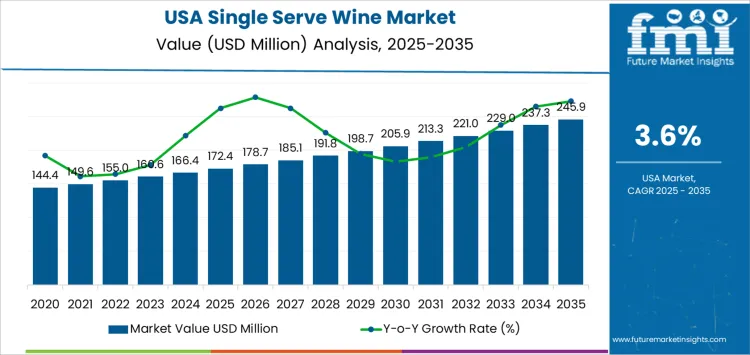
From 2025 to 2030, the demand for single serve wine is expected to grow from USD 172.4 million to USD 205.9 million, adding USD 33.5 million in value. This growth will be driven by the increasing consumer interest in portion-controlled, convenient, and ready-to-drink beverages. As more consumers seek quick, portable options, single serve wine’s ability to offer a quality wine experience in a smaller, more accessible format will continue to drive demand. The growing preference for sustainable packaging, such as cans, will also contribute to this industry expansion, as consumers are increasingly drawn to eco-friendly options. The rise of casual social settings where smaller portions are favored will continue to fuel the demand for single serve wine.
From 2030 to 2035, demand will continue to rise from USD 205.9 million to USD 245.9 million, contributing USD 40.0 million in value. The steady growth in this phase will be supported by the increasing adoption of smaller, practical wine portions for social gatherings and the ongoing focus on sustainability. As more wine brands introduce diverse single serve options and product variety increases, consumer preferences for convenience and sustainability will drive continued demand. The growth of single serve wine will be sustained by its convenience, environmentally friendly packaging, and broadening consumer base throughout this period.
Demand for Single Serve Wine in USA Key Takeaways
| Metric | Value |
|---|---|
| Demand for Single Serve Wine in USA Value (2025) | USD 172.4 million |
| Demand for Single Serve Wine in USA Forecast Value (2035) | USD 245.9 million |
| Demand for Single Serve Wine in USA Forecast CAGR (2025-2035) | 3.6% |
Why is the Demand for Single Serve Wine in USA Growing?
The demand for single-serve wine in the USA is growing as consumers seek convenient and portion-controlled beverage options, particularly for casual drinking, picnics, and on-the-go occasions. Single-serve wine packaging, such as cans, mini bottles, and tetra packs, offers consumers the flexibility to enjoy wine without the need for opening a full bottle, making it ideal for individual consumption or smaller gatherings. The growing popularity of ready-to-drink (RTD) beverages is further supporting this trend.
A major driver of this growth is the increasing demand for convenience in the beverage industry. As busy lifestyles and social events become more fast-paced, consumers are looking for portable, easy-to-consume options that do not require preparation or the use of glassware. Single-serve wine packaging meets this demand, offering a practical solution for consumers who want to enjoy wine without excess or waste. The expanding range of wine styles available in single-serve formats, from reds and whites to rosé and sparkling wines, is attracting a broader consumer base.
The growing focus on sustainability is also contributing to the rise in demand for single-serve wine. Many single-serve wine options come in eco-friendly packaging, such as aluminum cans, which are fully recyclable and offer a smaller carbon footprint than traditional glass bottles. As consumers increasingly prioritize sustainability in their purchasing decisions, single-serve wine is positioned to see continued growth. This trend is expected to drive steady industry expansion through 2035.
What is the Segment-Wise Analysis of Demand for Single Serve Wine in USA?
Demand for single-serve wine in the USA is segmented by type, texture, and region. By type, demand is divided into red wine, white wine, muscat wine, riesling, full-bodied wine, and sauvignon blanc, with red wine leading at 46%. The demand is also segmented by texture, including smooth, coarse, creamy, silky, and waxy, with smooth wine accounting for 37%. Regionally, demand is distributed across West USA, South USA, Northeast USA, and Midwest USA.
Why Does Red Wine Lead the Demand for Single Serve Wine in USA?
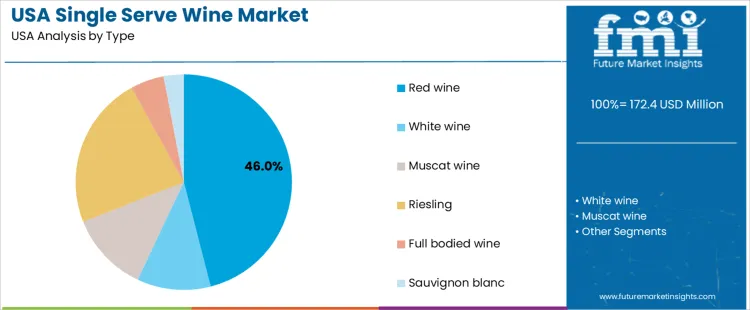
Red wine accounts for 46% of the demand for single-serve wine in the USA, driven by its widespread popularity and versatility. It is commonly enjoyed at various occasions, ranging from casual dinners to formal events, making it a go-to choice for consumers seeking convenient, single-serving options. Red wine is favored for its rich flavors, complexity, and potential health benefits, such as antioxidants found in varieties like Cabernet Sauvignon and Pinot Noir. The rise of single-serve portions for individual consumption has made red wine even more accessible and appealing. As consumers increasingly value convenience while still wanting quality, red wine continues to dominate the single-serve wine industry. This combination of taste, health benefits, and ease of consumption ensures red wine will remain the leading choice for single-serve wine offerings in the USA.
Why Does Smooth Texture Lead the Demand for Single Serve Wine in USA?
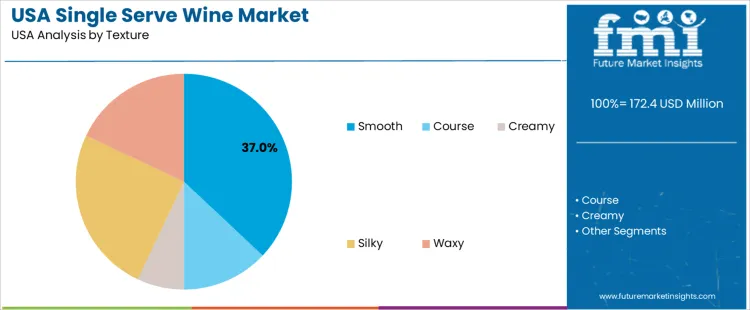
Smooth texture accounts for 37% of the demand for single-serve wine in the USA, largely due to its broad appeal. Smooth wines, with their velvety mouthfeel and balanced flavors, are easy to drink, making them ideal for casual enjoyment and social gatherings. These wines cater to a wide range of consumers, from newcomers to wine enthusiasts, as their drinkability and accessibility make them an attractive choice. The smooth texture allows these wines to pair seamlessly with various foods, enhancing the overall dining experience. As the demand for single-serve wine grows, smooth-textured wines maintain their dominance due to their versatility and broad consumer base. Whether for daily enjoyment or special occasions, smooth wines provide an approachable and satisfying option, contributing to their continued popularity in the single-serve segment.
What are the Key Trends, Drivers, and Restraints in Demand for Single Serve Wine in USA?
Demand for single serve wine in the USA is increasing as consumers seek more convenient and portable beverage options. Single serve wine formats, such as canned wine and small bottles, offer an alternative to traditional full-sized bottles. The trend of convenience, especially for social gatherings, outdoor events, and on-the-go consumption, is driving this demand. The rising popularity of wine among younger generations and the desire for moderation in alcohol consumption are fueling growth. Some consumers still perceive single serve wine as lower quality, which could limit its broader acceptance. Traditional bottle formats also remain the preferred choice for wine enthusiasts, posing a challenge for single serve wine’s expansion.
Why is Demand for Single Serve Wine Growing in USA?
The demand for single serve wine in the USA is growing due to its convenience and appeal to modern consumers. Single serve formats, such as canned wine or small bottles, offer an easy way to enjoy wine without the need to open a full bottle, making them ideal for casual settings, outdoor activities, and on-the-go occasions. Younger consumers, in particular, are drawn to the portability and practicality of these options, reducing waste and making it easier to enjoy wine in moderation. Single serve wine is also becoming increasingly accessible in retail stores and through e-commerce platforms, making it an appealing choice for more consumers.
How are Technological & Industry Innovations Driving Single Serve Wine Demand in USA?
Technological innovations in packaging, preservation, and wine production have significantly contributed to the rise of single serve wine in the USA. Advances in canning technology have allowed wines to be preserved without compromising quality, making them more appealing to consumers. Packaging innovations, such as resealable lids and eco-friendly materials, have further enhanced the appeal of single serve wine. Improvements in cold-chain logistics and distribution have expanded access, particularly in remote or underserved areas. As consumers become more health-conscious and seek convenience, these innovations allow single serve wine to meet modern demands for portability, sustainability, and premium quality.
What are the Key Challenges and Risks That Could Limit Single Serve Wine Demand in USA?
Despite the growth of single serve wine in the USA, several challenges may limit its widespread adoption. One significant barrier is the perception of lower quality, as some consumers still view canned or small-format wine as inferior to traditional bottles. The lack of ageability in single serve wine may reduce its appeal among wine enthusiasts who prefer cellaring wines. The higher price of premium single serve options could also deter price-sensitive buyers. Moreover, competition from other ready-to-drink alcoholic beverages, such as craft beer or cocktails, may hinder the growth of single serve wine, as these products often offer greater variety and lower price points.
What is the Regional Demand Outlook for Single Serve Wine in USA?
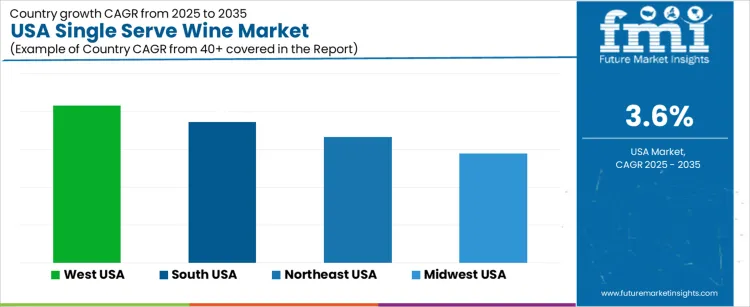
| Region | CAGR (%) |
|---|---|
| West USA | 4.2% |
| South USA | 3.7% |
| Northeast USA | 3.3% |
| Midwest USA | 2.9% |
Demand for single-serve wine in the USA is steadily growing, with West USA leading at a 4.2% CAGR, driven by the region’s convenience-driven, health-conscious consumers. South USA follows with a 3.7% CAGR, fueled by outdoor activities, social gatherings, and the increasing preference for portable wine options. Northeast USA shows a 3.3% CAGR, supported by urban demand for convenient, eco-friendly wine choices. Midwest USA experiences a 2.9% CAGR, with steady growth driven by increasing wine consumption and interest in convenience. As consumer interest in portion control and sustainability continues to rise, demand for single-serve wine will continue to increase across the USA.
How is Demand for Single Serve Wine Growing in West USA?
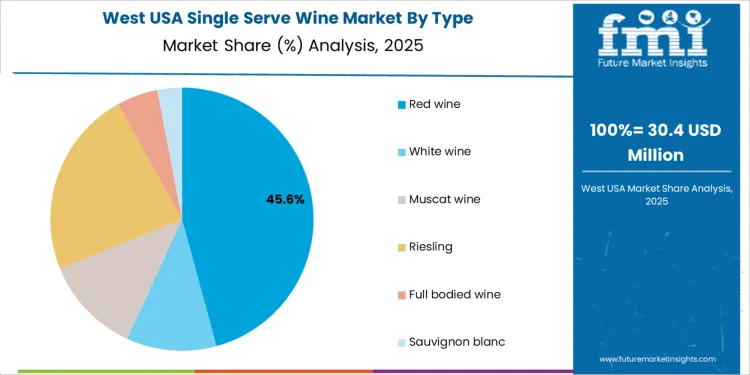
West USA leads the demand for single-serve wine, growing at a 4.2% CAGR. The region’s diverse and health-conscious population is driving the adoption of single-serve wine, especially as consumers seek more convenient and portable beverage options. The growth of single-serve wine is particularly strong in urban areas like Los Angeles and San Francisco, where busy professionals and social drinkers are increasingly choosing single-serve packaging for its convenience. As more consumers prioritize portion control and sustainability, single-serve wine offers an ideal solution, with smaller packaging reducing waste. West USA’s strong wine culture, coupled with increasing interest in premium, eco-friendly packaging, supports the growth of single-serve wine. As consumer preferences shift toward convenient, high-quality wine options, the demand for single-serve wine in West USA is expected to continue its steady rise, especially in both retail and on-the-go consumption.
Why is Demand for Single Serve Wine Rising in South USA?
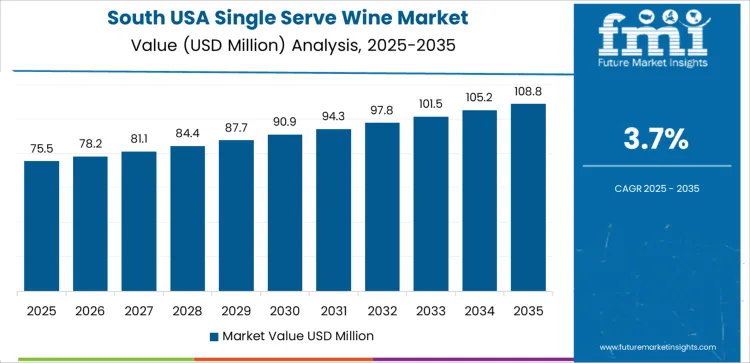
South USA is experiencing steady demand for single-serve wine, with a 3.7% CAGR. The region’s growing interest in convenient, ready-to-drink beverages is driving the adoption of single-serve wine, especially in warmer climates where outdoor activities and social gatherings are common. Single-serve wine offers consumers a convenient option for picnics, barbecues, and casual gatherings, making it particularly popular in states like Texas and Florida. As more consumers embrace the idea of portion control and seek eco-friendly packaging, single-serve wine has gained traction. The rise in wine tourism and the growing popularity of wine festivals further boosts the demand for single-serve wine, as consumers seek smaller quantities for tasting events. As Southern states continue to embrace convenience-driven, socially responsible products, the demand for single-serve wine will continue to grow steadily in the region.
How is Demand for Single Serve Wine Expanding in Northeast USA?
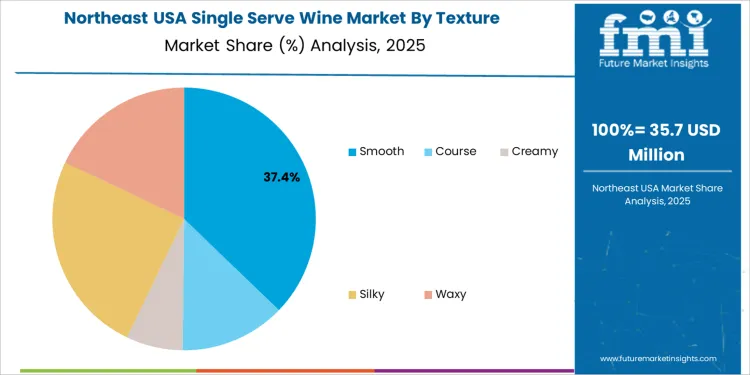
Northeast USA is seeing steady demand for single-serve wine, with a 3.3% CAGR. The region’s urban population, particularly in cities like New York and Boston, is driving the growing preference for convenient and on-the-go wine options. With a focus on lifestyle convenience, busy professionals and social drinkers in the Northeast are increasingly turning to single-serve wine as a portable, easy-to-consume option for both personal enjoyment and social settings. The region’s strong interest in sustainability also contributes to the rising demand for single-serve wine, as consumers seek eco-friendly, recyclable packaging. The growing trend of wine pairings with casual dining, picnics, and small gatherings further boosts demand for single-serve wine in the region. As consumer interest in portion control and convenient, high-quality beverages continues to rise, the demand for single-serve wine in Northeast USA will remain steady.
Why is Demand for Single Serve Wine Growing in Midwest USA?
Midwest USA is experiencing moderate demand for single-serve wine, with a 2.9% CAGR. The region’s growing focus on convenience and portion control is contributing to the rise of single-serve wine, especially among consumers who seek smaller servings and easy portability. The demand for single-serve wine is particularly strong in urban centers, where busy lifestyles and an increasing preference for ready-to-drink options align with the convenience of single-serve packaging. As more consumers in the Midwest embrace wine culture and social drinking, single-serve wine becomes an ideal solution for casual gatherings, picnics, and travel. The growing popularity of outdoor activities and social events also supports demand, as single-serve wine provides a convenient and eco-friendly option. As more retailers introduce single-serve wine in their product offerings, demand is expected to rise steadily, driven by the region’s increasing focus on convenience, portion control, and quality.
What is the Competitive Landscape of Single Serve Wine Demand in USA?
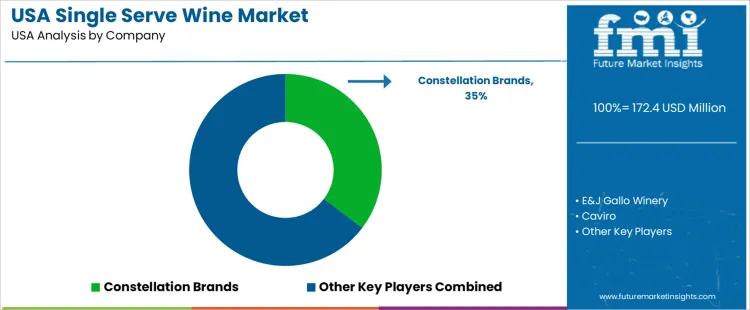
Demand for single‑serve wine in USA is growing, as consumers increasingly value convenience, portion control, and portability. Whether for picnics, travel, individual-serving dessert pairings, or casual occasions at home, single‑serve wine offers a flexible alternative to full bottles. As lifestyles become more fast‑paced and consumption habits shift toward moderation or occasional indulgence, single‑serve formats are becoming a popular choice.
Major players in the USA single‑serve wine segment include Constellation Brands, E&J Gallo Winery, Caviro, The Wine Group, and Grupo Penaflor S.A. Among them, Constellation Brands holds the largest share at 35.3%, offering a wide range of single‑serve wines across different price and style segments. Other producers like E&J Gallo Winery and The Wine Group leverage their broad distribution networks and established brand portfolios to capture significant industry presence. Smaller or niche suppliers such as Caviro and Grupo Penaflor S.A. also contribute by offering unique varietals or imported wine options, expanding the variety available to USA consumers seeking single‑serve wine.
Growth in the single‑serve wine segment is propelled by changing consumer preferences: convenience, ease of serving, reduced waste, and portion control. Single‑serve options appeal to lone consumers or small households who do not wish to open a full bottle. The rise of outdoor dining, picnics, and casual social gatherings supports demand for portable wine packaging such as cans, small bottles, or tetra‑packs. Competition among suppliers centers on offering a balance between quality, price, and convenience. Firms differentiate via packaging formats, flavor profiles, varietals, and distribution availability. As consumer comfort with alternative wine formats increases, providers that deliver consistent quality in single‑serve packages while preserving convenience are likely to lead in USA.
Key Players in USA Single Serve Wine Demand
- Constellation Brands
- E&J Gallo Winery
- Caviro
- The Wine Group
- Grupo Penaflor S.A.
Scope of Report
| Items | Values |
|---|---|
| Quantitative Units (2025) | USD million |
| Type | Red wine, White wine, Muscat wine, Riesling, Full bodied wine, Sauvignon blanc |
| Texture | Smooth, Course, Creamy, Silky, Waxy |
| Region | West USA, South USA, Northeast USA, Midwest USA |
| Countries Covered | USA |
| Key Companies Profiled | Constellation Brands, E&J Gallo Winery, Caviro, The Wine Group, Grupo Penaflor S.A. |
| Additional Attributes | Dollar sales by wine type and texture; regional demand trends for red and white wines; growing popularity of single-serve wine formats; emerging trends in packaging and portion control for convenience. |
USA Single Serve Wine Demand by Key Segments
Type
- Red wine
- White wine
- Muscat wine
- Riesling
- Full bodied wine
- Sauvignon blanc
Texture
- Smooth
- Course
- Creamy
- Silky
- Waxy
Region
- West USA
- South USA
- Northeast USA
- Midwest USA
Frequently Asked Questions
How big is the demand for single serve wine in USA in 2025?
The demand for single serve wine in USA is estimated to be valued at USD 172.4 million in 2025.
What will be the size of single serve wine in USA in 2035?
The market size for the single serve wine in USA is projected to reach USD 245.9 million by 2035.
How much will be the demand for single serve wine in USA growth between 2025 and 2035?
The demand for single serve wine in USA is expected to grow at a 3.6% CAGR between 2025 and 2035.
What are the key product types in the single serve wine in USA?
The key product types in single serve wine in USA are red wine, white wine, muscat wine, riesling, full bodied wine and sauvignon blanc.
Which texture segment is expected to contribute significant share in the single serve wine in USA in 2025?
In terms of texture, smooth segment is expected to command 37.0% share in the single serve wine in USA in 2025.
Preview the report firsthand - request a free sample
Get SampleGet the brochure for pricing and purchase details.
Get PDFTable of Content
- Executive Summary
- USA Market Outlook
- Demand-side Trends
- Supply-side Trends
- Technology Roadmap Analysis
- Analysis and Recommendations
- Market Overview
- Market Coverage / Taxonomy
- Market Definition / Scope / Limitations
- Market Background
- Market Dynamics
- Drivers
- Restraints
- Opportunity
- Trends
- Scenario Forecast
- Demand in Optimistic Scenario
- Demand in Likely Scenario
- Demand in Conservative Scenario
- Opportunity Map Analysis
- Product Life Cycle Analysis
- Supply Chain Analysis
- Investment Feasibility Matrix
- Value Chain Analysis
- PESTLE and Porter’s Analysis
- Regulatory Landscape
- Regional Parent Market Outlook
- Production and Consumption Statistics
- Import and Export Statistics
- Market Dynamics
- USA Market Analysis 2020 to 2024 and Forecast, 2025 to 2035
- Historical Market Size Value (USD Million) Analysis, 2020 to 2024
- Current and Future Market Size Value (USD Million) Projections, 2025 to 2035
- Y-o-Y Growth Trend Analysis
- Absolute $ Opportunity Analysis
- USA Market Pricing Analysis 2020 to 2024 and Forecast 2025 to 2035
- USA Market Analysis 2020 to 2024 and Forecast 2025 to 2035, By Type
- Introduction / Key Findings
- Historical Market Size Value (USD Million) Analysis By Type , 2020 to 2024
- Current and Future Market Size Value (USD Million) Analysis and Forecast By Type , 2025 to 2035
- Red wine
- White wine
- Muscat wine
- Riesling
- Full bodied wine
- Sauvignon blanc
- Y-o-Y Growth Trend Analysis By Type , 2020 to 2024
- Absolute $ Opportunity Analysis By Type , 2025 to 2035
- USA Market Analysis 2020 to 2024 and Forecast 2025 to 2035, By Texture
- Introduction / Key Findings
- Historical Market Size Value (USD Million) Analysis By Texture, 2020 to 2024
- Current and Future Market Size Value (USD Million) Analysis and Forecast By Texture, 2025 to 2035
- Smooth
- Course
- Creamy
- Silky
- Waxy
- Y-o-Y Growth Trend Analysis By Texture, 2020 to 2024
- Absolute $ Opportunity Analysis By Texture, 2025 to 2035
- Market Structure Analysis
- Competition Dashboard
- Competition Benchmarking
- Market Share Analysis of Top Players
- By Regional
- By Type
- By Texture
- Competition Analysis
- Competition Deep Dive
- Constellation Brands
- Overview
- Product Portfolio
- Profitability by Market Segments (Product/Age /Sales Channel/Region)
- Sales Footprint
- Strategy Overview
- Marketing Strategy
- Product Strategy
- Channel Strategy
- E&J Gallo Winery
- Caviro
- The Wine Group
- Grupo Penaflor S.A.
- Constellation Brands
- Competition Deep Dive
- Assumptions & Acronyms Used
- Research Methodology


