

- Industry Size (2026)
- USD 4.6 Bn
- Forecast (2036)
- USD 8.0 Bn
- CAGR (2026 to 2036)
- 5.1%
Demand for Edge Server in USA Forecast and Outlook 2026 to 2036
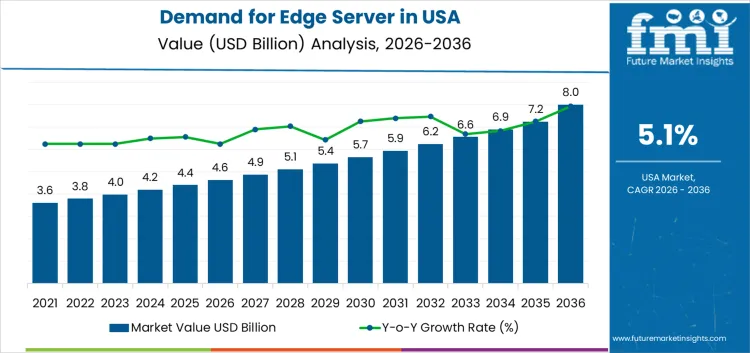
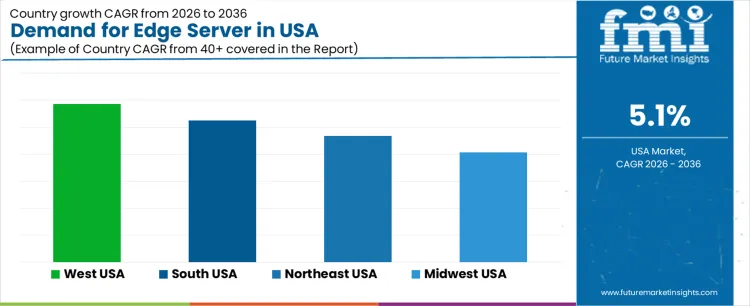
The demand for edge servers in the USA is projected to grow from USD 4.6 billion in 2026 to USD 8.0 billion in 2036, with a 5.1% CAGR. Regionally, the demand is experiencing steady growth, with West USA leading at a 5.9% CAGR, followed by South USA at 5.2%, Northeast USA at 4.7%, and Midwest USA at 4.1%. West USA’s strong growth is driven by technological innovation, particularly in sectors like data centers, cloud computing, and artificial intelligence. States such as California, Washington, and Oregon are at the forefront of adopting edge computing solutions due to their high-tech industries like IoT, autonomous vehicles, and smart manufacturing. The region's focus on energy efficiency and sustainability further contributes to the rising demand for edge servers, as these solutions optimize energy consumption in large-scale data processing.
Quick Stats of the Demand for Edge Server in USA
- Demand for Edge Server in USA Value (2026): USD 4.6 billion
- Demand for Edge Server in USA Forecast Value (2036): USD 8.0 billion
- Demand for Edge Server in USA Forecast CAGR (2026-2036): 5.1%
- Demand for Edge Server in USA Leading Type: Hardware
- Demand for Edge Server in USA Key Growth Regions: West USA, South USA, Northeast USA, Midwest USA
- Demand for Edge Server in USA Top Players: Dell, HPE (Hewlett Packard), Lenovo, Cisco
South USA, growing at a 5.2% CAGR, is benefiting from its expanding manufacturing, telecommunications, and energy sectors. Northeast USA follows with a 4.7% CAGR, where industries like finance, healthcare, and education are significant contributors. Cities such as New York and Boston are hubs for these sectors, which require fast, secure, and low-latency operations for their growing data volumes. Lastly, Midwest USA shows moderate growth at a 4.1% CAGR, supported by manufacturing, agriculture, and energy sectors. The region’s demand for edge servers is increasing as businesses focus on digital transformation, particularly in IoT applications in manufacturing and smart farming, to optimize production and reduce downtime.
Demand for Edge Server in USA Key Takeaways
| Metric | Value |
|---|---|
| Demand for Edge Server in USA Value (2026) | USD 4.6 billion |
| Demand for Edge Server in USA Forecast Value (2036) | USD 8.0 billion |
| Demand for Edge Server in USA Forecast CAGR (2026-2036) | 5.1% |
Why is the Demand for Edge Server in USA Growing?
The demand for edge servers in the USA is growing due to the increasing need for real-time data processing and the rising adoption of the Internet of Things (IoT), 5G networks, and AI-driven applications. Edge servers provide computing power closer to the source of data generation, reducing latency, enhancing speed, and optimizing the performance of applications that require quick decision-making, such as autonomous vehicles, industrial automation, and smart cities. As industries continue to expand their digital infrastructure, there is a growing need to move data processing away from centralized cloud data centers to local edge locations, ensuring faster responses and reducing the load on core networks.
Key drivers for this growth include the widespread deployment of 5G technology, which enables low-latency communication between devices and networks. Edge servers are essential for maximizing the capabilities of 5G by processing data locally and minimizing the need for long-distance transmission to central servers. The growing emphasis on digital transformation across industries, such as healthcare, manufacturing, and retail, is pushing the demand for edge computing solutions to support real-time data analytics and business insights. The increasing need for enhanced security and privacy, with sensitive data being processed locally rather than in the cloud, is further contributing to the rise in edge server adoption.
Technological advancements, such as more powerful and energy-efficient edge computing hardware, are also supporting the growth of edge servers, making them more accessible for a wider range of applications. Despite challenges such as integration complexity and the high initial investment in edge infrastructure, the growing need for fast, secure, and reliable data processing is expected to drive steady demand for edge servers in the USA through 2036.
What is the Segment-Wise Analysis of Demand for Edge Servers in USA?
Demand for edge servers in the USA is segmented by type, application, and region. By type, hardware leads with 50% of the demand, followed by services and platforms. In terms of application, the Internet of Things (IoT) accounts for 45.0% of the demand, with video surveillance, autonomous vehicles, and gaming contributing to the rest. Regionally, demand is distributed across West USA, South USA, Northeast USA, and Midwest USA.
How Does Hardware Lead the Demand for Edge Servers in USA?
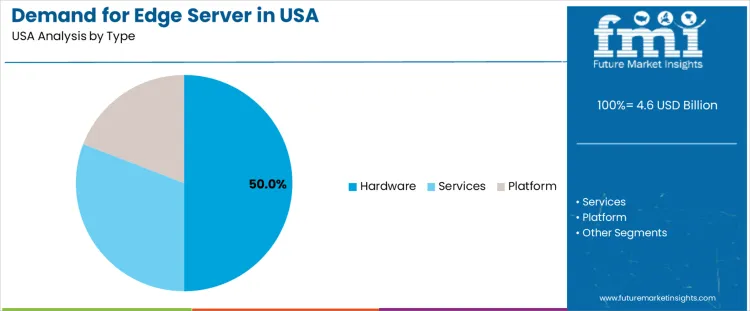
Hardware accounts for 50% of the demand for edge servers in the USA, driven by the increasing need for reliable and high-performance infrastructure to support edge computing. Edge servers, which handle data processing closer to the source rather than relying on centralized cloud data centers, are critical for applications requiring low-latency, high-speed processing. Hardware solutions, including servers with powerful processors, storage, and networking capabilities, are key components in deploying edge computing for industries like IoT, video surveillance, and autonomous vehicles.
The growing adoption of edge computing to improve real-time data processing and reduce cloud dependency continues to drive demand for hardware. As industries look to optimize operations and meet the growing need for real-time analytics, the demand for edge server hardware is expected to remain strong, particularly in sectors that prioritize speed and reliability.
How Does Internet of Things (IoT) Lead the Demand for Edge Servers in USA?
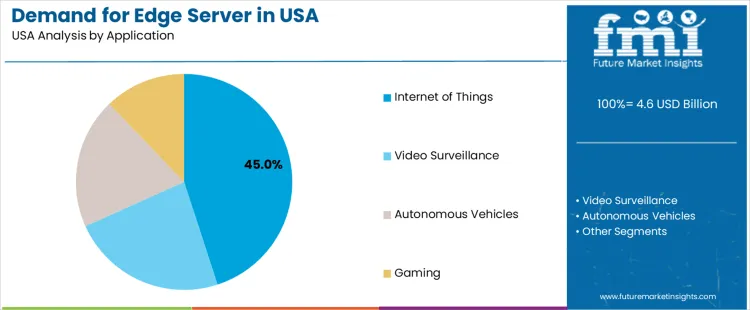
The Internet of Things (IoT) application accounts for 45.0% of the demand for edge servers in the USA, driven by the proliferation of connected devices that generate vast amounts of data in real time. IoT applications, such as smart cities, industrial automation, and healthcare systems, require efficient data processing close to the source to minimize latency and improve performance. Edge servers are essential in handling IoT data locally, ensuring that devices communicate and process information without the delays associated with sending data to centralized cloud servers.
The rapid expansion of IoT devices and the need for real-time analytics to support decision-making continue to fuel the demand for edge computing infrastructure. As more IoT devices are deployed across various sectors, the demand for edge servers that can efficiently handle the data load and provide faster processing will remain strong, solidifying IoT as a key driver for the edge server industry.
What are the Key Trends, Drivers and Restraints in Demand for Edge Server in USA?
Demand for edge servers in the USA is growing as businesses and service providers seek faster data processing closer to end users. Trends include adoption by telecoms for 5G services, manufacturing for real‑time automation, retail for instant analytics, and autonomous systems that require millisecond responses. Drivers include rapid growth of IoT, expansion of connected devices, and rising demand for real‑time computing in industries like healthcare, smart cities, and automotive. Restraints include high upfront cost of edge infrastructure, complexity of deployment, and the need for skilled IT personnel. Security and interoperability concerns can also slow adoption in some sectors.
Why is Demand for Edge Server Growing in USA?
Demand for edge servers in the USA is increasing because enterprises require faster data processing and reduced latency for critical applications. As IoT devices, autonomous machines, AI analytics, and video streaming grow, centralized data centers can no longer handle all processing without delays. Edge servers allow data analysis close to the source, improving performance and reliability for real‑time use cases such as manufacturing controls, autonomous vehicles, and remote healthcare monitoring. Telecom operators are deploying edge computing for 5G services to ensure low latency and high bandwidth for users. Cost savings on bandwidth and improved user experience further drive adoption. With businesses prioritizing digital transformation and real‑time insights, edge servers are becoming essential infrastructure.
How are Technological and Industry Innovations Driving Edge Server Demand in USA?
Technological innovations are significantly boosting demand for edge servers in the USA by enhancing performance, scalability, and ease of deployment. Advances in compact server designs, virtualization, containerization, and software‑defined networking make it easier to deploy edge computing in distributed environments. Integration with AI processing, analytics engines, and machine learning frameworks allows edge servers to handle complex workloads locally. Telecom operators and cloud providers are offering edge‑as‑a‑service models, lowering barriers to entry for enterprises. Improvements in security frameworks, orchestration tools, and automated management reduce operational complexity. As industries adopt smart manufacturing, connected vehicles, and real‑time analytics, edge servers enable reliable, low‑latency computing that complements traditional cloud infrastructure, expanding overall demand.
What are the Key Challenges and Risks That Could Limit Edge Server Demand in USA?
High initial costs for hardware, integration, and ongoing maintenance can deter smaller enterprises. Deploying edge infrastructure across many sites increases complexity and requires skilled IT teams or managed service partners. Security remains a concern, as distributed edge environments increase the number of access points that must be protected against cyber threats. Standardization and interoperability issues between different platforms and vendors can delay deployment. Some businesses may choose to rely on centralized cloud computing for simplicity, deferring edge investments. These challenges may slow adoption in cost‑sensitive and less technically mature organizations.
What is the Regional Demand Outlook for Edge Server in USA?
| Region | CAGR (%) |
|---|---|
| West USA | 5.9% |
| South USA | 5.2% |
| Northeast USA | 4.7% |
| Midwest USA | 4.1% |
Demand for edge servers in the USA is growing steadily, with West USA leading at a 5.9% CAGR, driven by technological innovation, data centers, and the adoption of IoT and 5G technologies. South USA follows with a 5.2% CAGR, supported by growing manufacturing, telecommunications, and energy industries that require real-time data processing. Northeast USA shows a 4.7% CAGR, fueled by industries like finance, healthcare, and education that depend on fast, secure data processing. Midwest USA experiences a 4.1% CAGR, with moderate growth driven by manufacturing, agriculture, and energy sectors seeking to improve operational efficiency.
How is Demand for Edge Servers Growing in West USA?
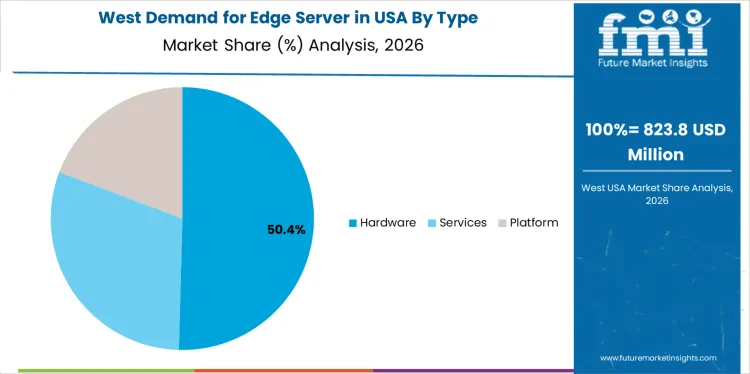
West USA leads the demand for edge servers, growing at a 5.9% CAGR. The region's strong focus on technological innovation, especially in sectors such as data centers, cloud computing, and artificial intelligence, is driving the adoption of edge computing solutions. States like California, Washington, and Oregon are at the forefront of technology and IT infrastructure, where edge servers are used to process data closer to the source for faster response times, reduced latency, and improved performance. The demand is also driven by industries like entertainment, autonomous vehicles, and the Internet of Things (IoT), which require real-time data processing at the edge. Furthermore, the West's emphasis on energy efficiency and sustainable technology is pushing the adoption of edge servers, as these solutions can help optimize energy consumption in large-scale data processing operations. As edge computing becomes more critical to modern technology stacks, the West will continue to see strong growth in demand for edge servers.
Why is Demand for Edge Servers Rising in South USA?
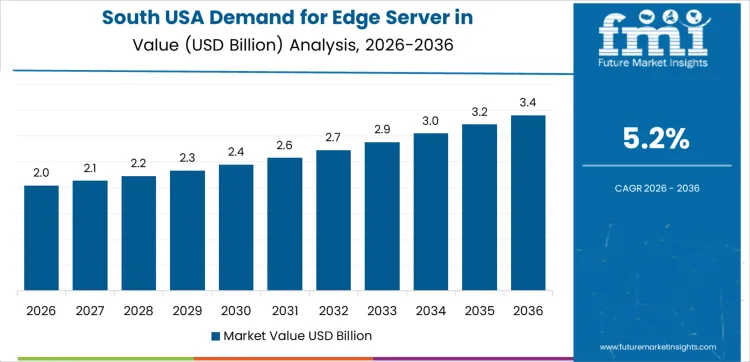
South USA is experiencing steady demand for edge servers, with a 5.2% CAGR. The region’s growing presence in industries like manufacturing, telecommunications, and energy is contributing to the rising need for edge computing solutions. States like Texas, Florida, and Georgia are investing heavily in smart manufacturing and infrastructure, which requires real-time data processing and analytics. Edge servers enable low-latency, high-speed processing, which is essential for these industries to operate efficiently and stay competitive. The increasing adoption of 5G networks in the South further drives the need for edge servers, as 5G requires decentralized computing resources to manage the massive data generated by connected devices. The region’s expanding tech and IoT sectors are also pushing the demand for localized computing solutions, ensuring faster data processing and improved user experiences. As businesses in the South prioritize automation and digital transformation, the demand for edge servers will continue to rise.
How is Demand for Edge Servers Expanding in Northeast USA?
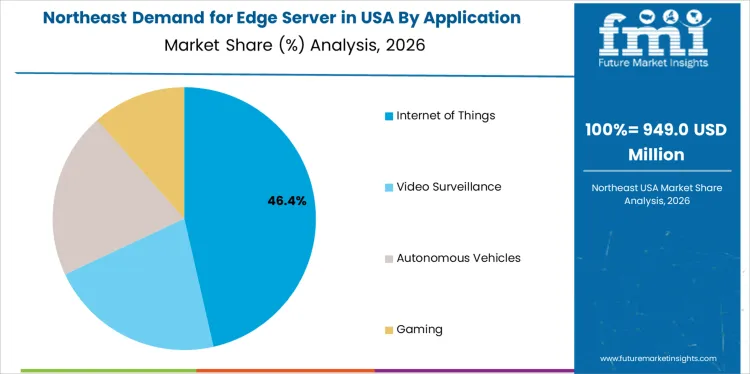
Northeast USA is seeing steady demand for edge servers, with a 4.7% CAGR. The region’s strong presence in industries such as finance, healthcare, and education is driving the growth of edge computing. Cities like New York, Boston, and Philadelphia are hubs for major financial institutions and healthcare organizations, which increasingly rely on edge servers to ensure fast data processing, improved security, and low-latency operations. The rise of remote work, telemedicine, and digital learning has also fueled the need for edge computing solutions to handle the increasing volume of data generated by these sectors. The Northeast’s focus on technological innovation and smart city initiatives further drives the adoption of edge servers for real-time data analytics and decision-making. As demand for cloud services, cybersecurity, and real-time data processing continues to rise, the Northeast is expected to experience steady growth in edge server adoption, particularly in industries requiring fast and secure data processing capabilities.
How is Demand for Edge Servers Growing in Midwest USA?
Midwest USA is experiencing moderate demand for edge servers, with a 4.1% CAGR. The region’s manufacturing, agriculture, and energy sectors are increasingly adopting edge computing to improve operational efficiency and enhance data processing capabilities. States like Michigan, Ohio, and Illinois are seeing growth in IoT applications in manufacturing plants, where edge servers help process large volumes of sensor data locally to optimize production and minimize downtime. The rise of smart farming and energy solutions in the Midwest is also contributing to the demand for edge servers, as these sectors require quick data analysis and decision-making to improve productivity. As industries across the Midwest focus on digital transformation and automation, the demand for edge computing solutions will continue to grow, particularly as businesses seek to reduce latency, enhance performance, and improve operational efficiencies.
What is the Competitive Landscape of Edge Server Demand in USA?
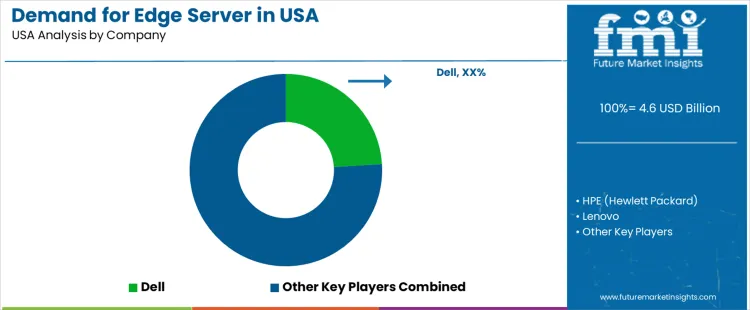
Demand for edge servers in the USA is rising as businesses look for solutions that enable faster data processing at the source, reducing latency and improving real-time decision-making. Edge computing is becoming increasingly critical for applications that require immediate data processing, such as the Internet of Things (IoT), autonomous vehicles, and smart manufacturing. With the growing need for efficient and localized computing, edge servers are positioned to play a key role in helping organizations meet the demands of an increasingly connected world.
Dell is a major player in the edge server industry, offering a variety of robust, scalable solutions that cater to a wide range of industries. Dell's strategy focuses on delivering flexible edge computing platforms that support both cloud-based and on-premise deployments, helping businesses optimize performance, reduce costs, and enhance security. The company’s strong focus on innovation and deep integration with its existing IT infrastructure allows it to maintain a competitive edge in the industry.
Hewlett Packard Enterprise (HPE), Lenovo, and Cisco are also significant competitors in the edge server industry. HPE provides high-performance, purpose-built edge computing systems designed for demanding environments, with a focus on security and ease of management. Lenovo emphasizes cost-effective and energy-efficient solutions, helping businesses deploy edge servers at scale while meeting their growing computing needs. Cisco, known for its networking expertise, offers edge servers that integrate seamlessly with its network solutions, providing businesses with end-to-end connectivity and data processing capabilities. As the demand for edge computing solutions continues to grow, these companies are working to innovate and deliver reliable, high-performance servers that meet the evolving needs of businesses across the USA.
Key Players in USA Edge Server Demand
- Dell
- HPE (Hewlett Packard)
- Lenovo
- Cisco
Scope of Report
| Items | Values |
|---|---|
| Quantitative Units (2026) | USD billion |
| Key Segments | Hardware, Services, Platform |
| Application | Internet of Things, Video Surveillance, Autonomous Vehicles, Gaming |
| Key Country | USA |
| Region | West USA, South USA, Northeast USA, Midwest USA |
| Key Players Profiled | Dell, HPE (Hewlett Packard), Lenovo, Cisco |
| Additional Attributes | Dollar sales by type and application; regional CAGR and growth trends in Edge Servers in the USA |
USA Edge Server Demand by Key Segments
Type:
- Hardware
- Services
- Platform
Application:
- Internet of Things
- Video Surveillance
- Autonomous Vehicles
- Gaming
Region:
- West USA
- South USA
- Northeast USA
- Midwest USA
Frequently Asked Questions
How big is the demand for edge server in USA in 2026?
The demand for edge server in USA is estimated to be valued at USD 4.6 billion in 2026.
What will be the size of edge server in USA in 2036?
The market size for the edge server in USA is projected to reach USD 8.0 billion by 2036.
How much will be the demand for edge server in USA growth between 2026 and 2036?
The demand for edge server in USA is expected to grow at a 5.1% CAGR between 2026 and 2036.
What are the key product types in the edge server in USA?
The key product types in edge server in USA are hardware, services and platform.
Which application segment is expected to contribute significant share in the edge server in USA in 2026?
In terms of application, internet of things segment is expected to command 45.0% share in the edge server in USA in 2026.
Preview the report firsthand - request a free sample
Get SampleGet the brochure for pricing and purchase details.
Get PDFTable of Content
- Executive Summary
- USA Market Outlook
- Demand-side Trends
- Supply-side Trends
- Technology Roadmap Analysis
- Analysis and Recommendations
- Market Overview
- Market Coverage / Taxonomy
- Market Definition / Scope / Limitations
- Market Background
- Market Dynamics
- Drivers
- Restraints
- Opportunity
- Trends
- Scenario Forecast
- Demand in Optimistic Scenario
- Demand in Likely Scenario
- Demand in Conservative Scenario
- Opportunity Map Analysis
- Product Life Cycle Analysis
- Supply Chain Analysis
- Investment Feasibility Matrix
- Value Chain Analysis
- PESTLE and Porter’s Analysis
- Regulatory Landscape
- Regional Parent Market Outlook
- Production and Consumption Statistics
- Import and Export Statistics
- Market Dynamics
- USA Market Analysis 2021 to 2026 and Forecast, 2026 to 2036
- Historical Market Size Value (USD Million) Analysis, 2021 to 2026
- Current and Future Market Size Value (USD Million) Projections, 2026 to 2036
- Y-o-Y Growth Trend Analysis
- Absolute $ Opportunity Analysis
- USA Market Pricing Analysis 2021 to 2026 and Forecast 2026 to 2036
- USA Market Analysis 2021 to 2026 and Forecast 2026 to 2036, By Type
- Introduction / Key Findings
- Historical Market Size Value (USD Million) Analysis By Type , 2021 to 2026
- Current and Future Market Size Value (USD Million) Analysis and Forecast By Type , 2026 to 2036
- Hardware
- Services
- Platform
- Y-o-Y Growth Trend Analysis By Type , 2021 to 2026
- Absolute $ Opportunity Analysis By Type , 2026 to 2036
- USA Market Analysis 2021 to 2026 and Forecast 2026 to 2036, By Application
- Introduction / Key Findings
- Historical Market Size Value (USD Million) Analysis By Application, 2021 to 2026
- Current and Future Market Size Value (USD Million) Analysis and Forecast By Application, 2026 to 2036
- Internet of Things
- Video Surveillance
- Autonomous Vehicles
- Gaming
- Y-o-Y Growth Trend Analysis By Application, 2021 to 2026
- Absolute $ Opportunity Analysis By Application, 2026 to 2036
- Market Structure Analysis
- Competition Dashboard
- Competition Benchmarking
- Market Share Analysis of Top Players
- By Regional
- By Type
- By Application
- Competition Analysis
- Competition Deep Dive
- Dell
- Overview
- Product Portfolio
- Profitability by Market Segments (Product/Age /Sales Channel/Region)
- Sales Footprint
- Strategy Overview
- Marketing Strategy
- Product Strategy
- Channel Strategy
- HPE (Hewlett Packard)
- Lenovo
- Cisco
- Dell
- Competition Deep Dive
- Assumptions & Acronyms Used
- Research Methodology


