Veterinary Biologics Market

Veterinary Biologics Market Size and Share Forecast Outlook 2026 to 2036

Methodology

Veterinary Biologics Market Forecast and Outlook 2026 to 2036

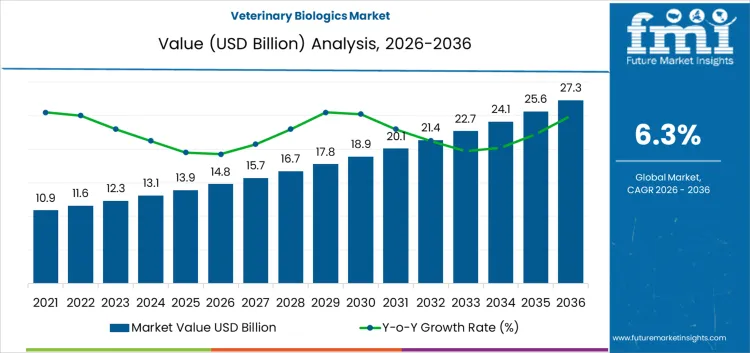
The veterinary biologics market is valued at USD 14.8 billion in 2026 and is projected to reach USD 27.3 billion by 2036, reflecting a CAGR of 6.30%. Growth is driven by rising demand for disease prevention and health management in livestock, companion animals, and poultry, alongside expanding veterinary infrastructure. Products include vaccines, attenuated live, conjugate, inactivated, subunit, toxoid, DNA, recombinant, bacterial extracts, monoclonal antibodies, immunomodulators, cytokines, and allergenic extracts. Cost structures reflect R&D intensity, regulatory compliance, and distribution logistics, while margin concentration favors companies offering validated, multi-species biologics rather than bulk commodity solutions.

Between 2026 and 2036, distribution spans veterinary clinics, hospitals, research institutes, and retail pharmacies. Leading companies such as Elanco Animal Health, Ceva, Phibro Animal Health Corporation, Boehringer Ingelheim, Zoetis Inc., Merck and Co. Inc., Virbac, Hester Biosciences, Colorado Serum Company, Addison Biological Laboratory Inc., American Animal Health Inc., HIPRA, and Bimeda Inc. capture value through product portfolio breadth, regulatory alignment, and distribution scale. Fragmentation persists in regional or niche providers, while established players maintain pricing power, higher margins, and concentrated revenue streams through multi-species coverage and validated clinical efficacy.
Quick Stats of the Veterinary Biologics Market

  • Veterinary Biologics Market Value (2026): USD 14.8 billion
  • Veterinary Biologics Market Forecast Value (2036): USD 27.3 billion
  • Veterinary Biologics Market Forecast CAGR 2026 to 2036: 6.30%
  • Veterinary Biologics Market Leading Animal Type: Livestock (75%)
  • Veterinary Biologics Market Key Growth Regions: Germany, France, USA, Japan, UK
  • Veterinary Biologics Market Top Players: Elanco Animal Health, Ceva, Phibro Animal Health Corporation, Boehringer Ingelheim, Zoetis Inc., Merck and Co. Inc., Virbac, Hester Biosciences Limited, Colorado Serum Company.

Veterinary Biologics Market Market Value Analysis

What is the Growth Forecast for Veterinary Biologics Market through 2036?

Between 2026 and 2031, the veterinary biologics market is projected to grow from USD 14.8 billion to USD 20 billion, generating an absolute increase of USD 5.2 billion and reflecting a CAGR of 6.3%. Early-stage growth is driven by increasing livestock populations, rising adoption of animal vaccines and immunotherapies, and expanding veterinary healthcare infrastructure. Volume growth contributes approximately 68% of expansion, while price growth accounts for 32%, supported by premium biologic formulations and enhanced efficacy. Value capture favors manufacturers providing clinically validated vaccines and biologics with strong distribution networks rather than focusing solely on unit sales.

From 2031 to 2036, the market is expected to expand from USD 20 billion to USD 27.3 billion, adding USD 7.3 billion. Volume remains the dominant driver, representing roughly 67% of growth due to broader adoption, increased animal healthcare awareness, and expansion in emerging markets. Price growth accounts for 33%, supported by innovative formulations and differentiated biologics. Competitive advantage shifts toward firms offering reliable, high-quality products, strong veterinary partnerships, and broad geographic coverage, while late entrants focus on niche applications and cost efficiency to capture incremental market share.

Veterinary Biologics Market Key Takeaways

Metric Value
Market Value (2026) USD 14.8 billion
Forecast Value (2036) USD 27.3 billion
Forecast CAGR 2026 to 2036 6.30%

What Is Driving Growth in the Veterinary Biologics Market?

The veterinary biologics market is expanding due to rising demand for vaccines, immunotherapeutics, and diagnostic products to prevent and control diseases in livestock, companion animals, and aquaculture. Historically, disease management relied heavily on conventional pharmaceuticals and reactive treatment, which offered limited herd immunity and variable effectiveness. Modern biologics include recombinant vaccines, monoclonal antibodies, and viral vector platforms that provide targeted immune protection and improved safety profiles. Livestock producers, veterinary clinics, and aquaculture operators prioritize efficacy, regulatory compliance, and cold chain stability. Early adoption focused on high-value livestock and companion animal populations, while current demand spans large-scale production systems and global pet care markets, driven by animal health awareness and biosecurity requirements.

Future growth is shaped by regulatory frameworks, disease prevalence, and increasing adoption of preventive healthcare rather than reactive interventions alone. Compared with initial biologics, contemporary products emphasize recombinant technologies, adjuvant optimization, and multi-species applicability to enhance protection and reduce treatment frequency. Cost structures depend on R&D, manufacturing, and distribution logistics, concentrating margins among suppliers capable of delivering consistent, high-quality biologics. Veterinarians and producers adopt biologics to improve herd health, reduce mortality, and comply with safety standards. By 2036, veterinary biologics are expected to become standard in animal healthcare, supporting disease prevention, productivity, and sustainable livestock management globally.

What Factors Are Shaping the Demand for Veterinary Biologics in Terms of Animal Type and Distribution Channel?

The demand for veterinary biologics is segmented by animal type and distribution channel. Animal types include livestock, companion animals, canine, feline, avian, bovine, porcine, ovine and caprine, poultry, and equine. Distribution channels cover veterinary clinics, veterinary hospitals, veterinary research institutes, and retail pharmacies. Segment adoption is influenced by disease prevalence, vaccination schedules, and animal health priorities. Uptake is driven by regulatory approvals, safety standards, and efficacy of biologics rather than marketing considerations. Selection of animal type and distribution channel is guided by herd size, species susceptibility, and access to veterinary services, ensuring effective immunization coverage across commercial and companion animal populations.
What Is Driving the Leading Demand for Livestock in the Veterinary Biologics Market?

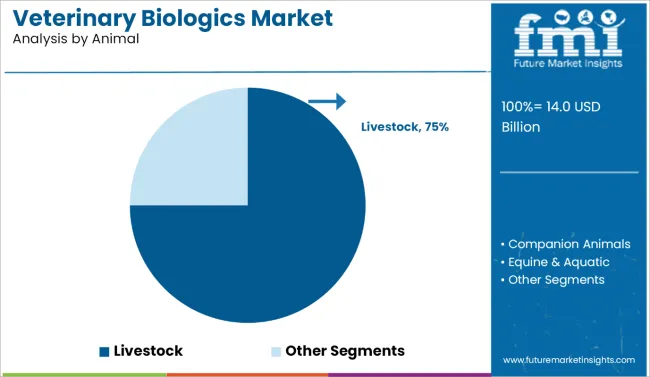
Veterinary Biologics Market Analysis By Animal

Livestock accounts for approximately 75% of total animal type demand, making it the dominant category. This reflects the high economic value and population density of cattle, poultry, swine, and small ruminants in commercial agriculture. Farmers and veterinarians prioritize immunization to prevent disease outbreaks, reduce mortality, and maintain productivity. Adoption is reinforced by large-scale vaccination programs, regulatory mandates, and the need for herd immunity. Biologics for livestock include vaccines, antitoxins, and immune modulators designed to protect against bacterial, viral, and parasitic infections, supporting operational efficiency and profitability in animal husbandry.

Demand for livestock biologics is further shaped by production scale and supply chain reliability. Clinics, mobile veterinary units, and farm-based distribution ensure effective coverage across extensive herds. Cold chain management, dosing accuracy, and vaccine stability are critical to maintain efficacy. The segment leads because livestock biologics combine high volume requirements, regulatory oversight, and measurable impact on animal health and farm economics, establishing them as the primary driver of global veterinary biologics demand.
Why Do Veterinary Clinics Represent the Largest Distribution Channel in Veterinary Biologics?

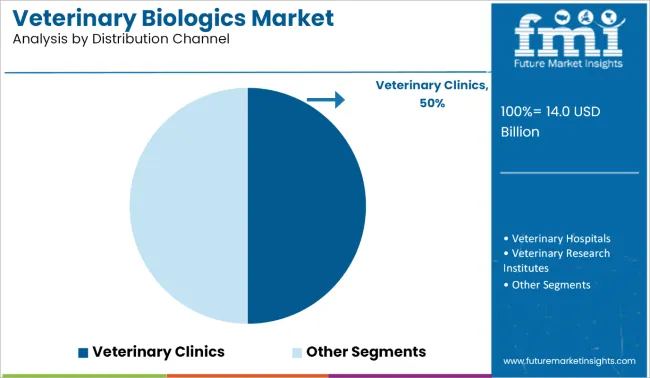
Veterinary Biologics Market Analysis By Distribution Channel

Veterinary clinics account for approximately 50% of total distribution channel demand, making them the largest segment. Clinics serve as the primary access point for routine vaccination, preventive care, and treatment of livestock and companion animals. They provide trained personnel, cold storage, and documentation systems to ensure safe and effective administration of biologics. Adoption is reinforced by high client trust, procedural oversight, and accessibility to both rural and urban animal populations.

Demand in veterinary clinics is driven by operational efficiency, regulatory compliance, and herd or pet health management. Clinics support both single-animal care and herd-based immunization, coordinating schedules and follow-up doses. They integrate biologic administration with diagnostic services, health monitoring, and owner education. The segment leads because veterinary clinics combine accessibility, professional expertise, and infrastructure to deliver consistent, regulated, and effective biologic coverage across multiple animal types, making them the primary distribution channel for veterinary biologics globally.

How Are Veterinary Biologics Transforming Animal Health Management?

Veterinary biologics, including vaccines, antisera, and diagnostic immunogens, are increasingly adopted to prevent and control infectious diseases in livestock, poultry, and companion animals. Adoption is strongest in regions with high-density livestock farming, strict animal health regulations, and growing awareness of zoonotic disease risks. Manufacturers prioritize product efficacy, safety, and regulatory compliance rather than volume alone. Growth is driven by disease prevention, herd health management, and adherence to regional veterinary standards. Investment decisions focus on cold chain maintenance, quality assurance, and batch consistency. Biologics reduce mortality, improve productivity, and enhance animal welfare across commercial and smallholder operations.

Why Are Regional Disease Prevalence and Regulatory Frameworks Driving Veterinary Biologics Demand?

Demand is influenced by local incidence of infectious animal diseases, livestock density, and government vaccination programs. Regions with frequent outbreaks of avian influenza, foot-and-mouth disease, or rabies show higher adoption. Regulatory approval for veterinary biologics, along with compliance to safety and efficacy standards, ensures consistent product quality. The driver is disease prevention and risk mitigation rather than cost. Suppliers capable of delivering validated, traceable biologics gain preference among veterinarians, farmers, and government programs. Regional livestock management practices and disease monitoring policies strongly shape production, distribution, and adoption strategies.

What Factors Limit Broader Adoption of Veterinary Biologics?

Barriers include high costs for advanced vaccines, storage and cold chain requirements, and limited access in rural or resource-constrained regions. Variability in animal immunity response, supply chain inefficiencies, and regulatory delays can affect product availability. Smaller farms or low-income regions may rely on traditional or locally produced vaccines. Limited awareness of disease prevention and lack of trained veterinary staff further constrain adoption. These factors concentrate early deployment in well-resourced commercial farms and organized veterinary networks, slowing broader uptake despite the critical need for biologics in disease management.

How Are Innovation and Industry Partnerships Shaping Veterinary Biologics Development?

Trends focus on recombinant vaccines, combination biologics, and region-specific immunogens targeting prevalent diseases. Collaboration between biotech firms, veterinary research institutions, and government agencies supports product validation, distribution, and farmer education. Pilot programs validate efficacy and safety in local livestock populations before full-scale rollout. Digital tracking and batch certification improve traceability and regulatory compliance. Emphasis is on disease prevention, product reliability, and herd health outcomes rather than throughput or cost. Collaborative approaches enhance adoption in commercial and smallholder farms, improving livestock productivity, biosecurity, and regional animal health management.
What is the Demand for Veterinary Biologics by Country?

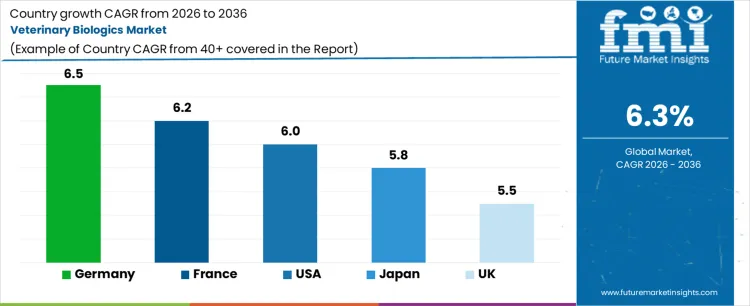
Veterinary Biologics Market Cagr Analysis By Country

Country CAGR (%)
Germany 6.5%
France 6.2%
USA 6.0%
Japan 5.8%
UK 5.5%

Demand for veterinary biologics is rising as livestock and companion animal sectors increasingly adopt vaccines, immunotherapies, and biologically derived treatments to improve animal health and productivity. Germany leads with a 6.5% CAGR, supported by strong livestock farming, advanced veterinary infrastructure, and high adoption of preventive biologics. France follows at 6.2%, driven by regulatory support and widespread use in dairy and meat production. The USA grows at 6.0%, shaped by large-scale livestock operations, companion animal healthcare demand, and biologic innovation. Japan records 5.8% growth, supported by companion animal care and preventive livestock applications. The UK shows 5.5% CAGR, reflecting steady adoption in livestock and pet healthcare markets and gradual integration of advanced biologics.

How Is Germany Growing in the Veterinary Biologics Market?

Germany veterinary biologics market is expanding at a CAGR of 6.5%, supported by increasing adoption of vaccines, immunotherapies, and biologically derived treatments for livestock and companion animals. Veterinary clinics, livestock farms, and animal health distributors are implementing biologics to improve herd immunity and disease prevention. Demand is concentrated among commercial farms, veterinary hospitals, and animal health organizations. Investments focus on product quality, regulatory compliance, and cold chain logistics rather than broad-scale capacity expansion. Growth reflects rising awareness of animal health management and adoption of advanced biologic treatments.

  • Vaccine and immunotherapy adoption drives growth.
  • Livestock and companion animal applications are primary.
  • Commercial farms and veterinary hospitals concentrate demand.
  • Product quality and regulatory compliance guide investment.

How Is France Experiencing Expansion Through Animal Health Initiatives?

France veterinary biologics market is growing at a CAGR of 6.2%, supported by increasing preventive care, adoption of biologics, and rising demand for disease control in livestock and pets. Veterinary clinics and animal health distributors are supplying vaccines, serum-based therapies, and biologically derived treatments. Demand is concentrated among commercial farms, veterinary hospitals, and companion animal care centers. Investments prioritize product efficacy, cold chain management, and regulatory adherence rather than production scale expansion. Growth reflects heightened animal health awareness and integration of biologic solutions in veterinary practice.

  • Preventive care and biologic adoption drive market growth.
  • Vaccines and serum-based therapies are key applications.
  • Commercial farms and veterinary clinics concentrate demand.
  • Product efficacy and cold chain management guide investment.

How Is the United States Witnessing Steady Growth in Veterinary Biologics?

United States veterinary biologics market is expanding at a CAGR of 6%, supported by rising livestock and companion animal populations, regulatory support, and growing adoption of vaccines and immunotherapies. Animal health providers and distributors are supplying biologics to improve herd immunity, prevent disease outbreaks, and enhance animal wellness. Demand is concentrated among veterinary hospitals, livestock farms, and commercial distributors. Investments focus on product quality, regulatory compliance, and distribution efficiency rather than rapid capacity expansion. Growth reflects consistent adoption of preventive and therapeutic biologic treatments.

  • Livestock and companion animal health drives adoption.
  • Vaccines and immunotherapies are primary products.
  • Veterinary hospitals and commercial farms concentrate demand.
  • Product quality and regulatory compliance guide investment.

How Is Japan Experiencing Adoption Through Preventive Animal Health Practices?

Japan veterinary biologics market is growing at a CAGR of 5.8%, supported by increasing preventive care for livestock and pets, rising animal health awareness, and adoption of biologic treatments. Veterinary clinics and livestock operations are implementing vaccines, serum therapies, and immunomodulatory products. Demand is concentrated in urban veterinary hospitals, commercial farms, and animal health distributors. Investments prioritize product reliability, regulatory adherence, and cold chain management rather than broad production expansion. Growth reflects gradual integration of biologic solutions to enhance animal disease prevention.

  • Preventive care and biologics drive market adoption.
  • Vaccines, serum therapies, and immunomodulators are key applications.
  • Veterinary hospitals and livestock farms concentrate demand.
  • Product reliability and regulatory adherence guide investment.

How Is the United Kingdom Experiencing Steady Growth With Companion and Livestock Applications?

United Kingdom veterinary biologics market is expanding at a CAGR of 5.5%, supported by increasing adoption of vaccines and biologic therapies in companion animals and livestock. Veterinary hospitals, farms, and distributors are supplying biologics to prevent disease and enhance animal welfare. Demand is concentrated among urban veterinary clinics, commercial livestock farms, and specialized distributors. Investments focus on product quality, regulatory compliance, and supply chain reliability rather than large-scale expansion. Growth reflects consistent awareness of animal health and preventive care practices.
  • Vaccines and biologic therapies drive adoption.
  • Companion animals and livestock are key applications.
  • Urban clinics and commercial farms concentrate demand.
  • Product quality and supply chain reliability guide investment.

Who Competes in the Veterinary Biologics Market and How Do They Differ?

Veterinary Biologics Market Analysis By Company

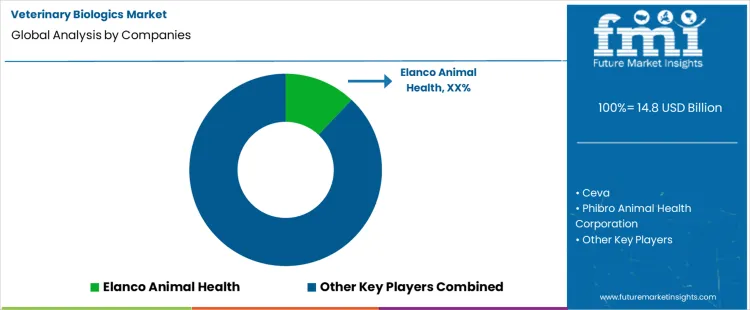
Competition in the veterinary biologics market is shaped by differences in product breadth, species coverage, disease targets, distribution networks, and regional regulatory approvals. Zoetis Inc. is widely recognised for its extensive portfolio of vaccines, immunotherapeutics, and diagnostics for companion animals and livestock, supported by broad global distribution and strong field support infrastructure. Merck and Co. Inc. competes with a comprehensive range of biologics, focusing on high impact livestock diseases and integrated preventive health programs. Boehringer Ingelheim differentiates through its targeted immunisation solutions and emphasis on respiratory and reproductive disease prevention in production animal systems.

Other firms bring varied depth and regional speciality. Elanco Animal Health and Ceva offer broad biologics for poultry, swine, and small animals, with Ceva’s portfolio tailored to certain regional markets and disease niches. Phibro Animal Health Corporation and Virbac provide vaccines and immunomodulators with strengths in specific segments like aquaculture, equine health, and companion animals. Smaller and regional players such as Hester Biosciences Limited, Colorado Serum Company, Addison Biological Laboratory Inc., American Animal Health Inc., HIPRA, and Bimeda Inc. (Texas Vet Lab Inc.) focus on niche disease targets, regional vaccine strains, or species specific immunogens. Competitive differences emerge in the depth of R&D pipelines, approval reach across geographies, and ability to tailor biologics to emerging disease pressures, with firms that combine robust disease coverage, regulatory agility, and strong practitioner support positioned to serve diverse veterinary needs.

Key Players in the Veterinary Biologics Market

  • Elanco Animal Health
  • Ceva
  • Phibro Animal Health Corporation
  • Boehringer Ingelheim
  • Zoetis Inc.
  • Merck and Co. Inc.
  • Virbac
  • Hester Biosciences Limited
  • Colorado Serum Company
  • Addison Biological Laboratory Inc.
  • American Animal Health Inc.
  • HIPRA
  • Bimeda Inc. (Texas Vet Lab Inc.)

Scope of the Report

Items Values
Quantitative Units (2026) USD billion
Animal Livestock, Companion Animals, Canine, Feline, Avian, Aquatic, Bovine, Porcine, Ovine and Caprine, Poultry, Equine
Product Vaccines, Attenuated Live Vaccines, Conjugate Vaccines, Inactivated Vaccines, Subunit Vaccines, Toxoid Vaccines, DNA Vaccines, Recombinant Vaccines, Bacterial Extracts, Monoclonal Antibody, Immunomodulatory, Cytokines, Allergenic Extracts, Others
Distribution Channel Veterinary Clinics, Veterinary Hospitals, Veterinary Research Institutes, Retail Pharmacies
Region Asia Pacific, Europe, North America, Latin America, Middle East & Africa
Key Countries Covered China, Japan, South Korea, India, Australia & New Zealand, ASEAN, Rest of Asia Pacific, Germany, United Kingdom, France, Italy, Spain, Nordic, BENELUX, Rest of Europe, United States, Canada, Mexico, Brazil, Chile, Rest of Latin America, Kingdom of Saudi Arabia, Other GCC Countries, Turkey, South Africa, Other African Union, Rest of Middle East & Africa
Key Companies Profiled Elanco Animal Health, Ceva, Phibro Animal Health Corporation, Boehringer Ingelheim, Zoetis Inc., Merck and Co. Inc., Virbac, Hester Biosciences Limited, Colorado Serum Company, Addison Biological Laboratory Inc., American Animal Health Inc., HIPRA, Bimeda Inc. (Texas Vet Lab Inc.)
Additional Attributes Dollar sales by animal type, product type, and distribution channel; regional CAGR and growth projections; volume vs. price contribution; margin concentration among suppliers offering multi-species validated biologics; competitive differentiation through R&D depth, regulatory approvals, cold chain reliability, and distribution reach; adoption driven by disease prevention, herd health management, and veterinary compliance

Veterinary Biologics Market Segmentation

Animal:

  • Livestock
  • Companion Animals
  • Canine
  • Avian
  • Feline
  • Aquatic
  • Bovine
  • Porcine
  • Ovine and Caprine
  • Poultry
  • Equine

Distribution Channel:

  • Veterinary Clinics
  • Veterinary Hospitals
  • Veterinary Research Institutes
  • Retail Pharmacies

Product:

  • Vaccines
  • Attenuated Live Vaccines
  • Conjugate Vaccines
  • Inactivated Vaccines
  • Subunit Vaccines
  • Toxoid Vaccines
  • DNA Vaccines
  • Recombinant Vaccines
  • Bacterial Extracts
  • Monoclonal Antibody
  • Immunomodulatory
  • Cytokines
  • Others
  • Allergenic Extracts

Region

  • Asia Pacific
    • China
    • Japan
    • South Korea
    • India
    • Australia & New Zealand
    • ASEAN
    • Rest of Asia Pacific
  • Europe
    • Germany
    • United Kingdom
    • France
    • Italy
    • Spain
    • Nordic
    • BENELUX
    • Rest of Europe
  • North America
    • United States
    • Canada
    • Mexico
  • Latin America
    • Brazil
    • Chile
    • Rest of Latin America
  • Middle East & Africa
    • Kingdom of Saudi Arabia
    • Other GCC Countries
    • Turkey
    • South Africa
    • Other African Union
    • Rest of Middle East & Africa

Frequently Asked Questions

How big is the veterinary biologics market in 2026?

The global veterinary biologics market is estimated to be valued at USD 14.8 billion in 2026.

What will be the size of veterinary biologics market in 2036?

The market size for the veterinary biologics market is projected to reach USD 27.3 billion by 2036.

How much will be the veterinary biologics market growth between 2026 and 2036?

The veterinary biologics market is expected to grow at a 6.3% CAGR between 2026 and 2036.

What are the key product types in the veterinary biologics market?

The key product types in veterinary biologics market are livestock, companion animals, canine, avian, feline, aquatic, bovine, porcine, ovine and caprine, poultry and equine.

Which distribution channel segment to contribute significant share in the veterinary biologics market in 2026?

In terms of distribution channel, veterinary clinics segment to command 50.0% share in the veterinary biologics market in 2026.

Table of Content

  1. Executive Summary
    • Global Market Outlook
    • Demand to side Trends
    • Supply to side Trends
    • Technology Roadmap Analysis
    • Analysis and Recommendations
  2. Market Overview
    • Market Coverage / Taxonomy
    • Market Definition / Scope / Limitations
  3. Market Background
    • Market Dynamics
      • Drivers
      • Restraints
      • Opportunity
      • Trends
    • Scenario Forecast
      • Demand in Optimistic Scenario
      • Demand in Likely Scenario
      • Demand in Conservative Scenario
    • Opportunity Map Analysis
    • Product Life Cycle Analysis
    • Supply Chain Analysis
    • Investment Feasibility Matrix
    • Value Chain Analysis
    • PESTLE and Porter’s Analysis
    • Regulatory Landscape
    • Regional Parent Market Outlook
    • Production and Consumption Statistics
    • Import and Export Statistics
  4. Global Market Analysis 2021 to 2025 and Forecast, 2026 to 2036
    • Historical Market Size Value (USD Million) Analysis, 2021 to 2025
    • Current and Future Market Size Value (USD Million) Projections, 2026 to 2036
      • Y to o to Y Growth Trend Analysis
      • Absolute $ Opportunity Analysis
  5. Global Market Pricing Analysis 2021 to 2025 and Forecast 2026 to 2036
  6. Global Market Analysis 2021 to 2025 and Forecast 2026 to 2036, By Animal
    • Introduction / Key Findings
    • Historical Market Size Value (USD Million) Analysis By Animal , 2021 to 2025
    • Current and Future Market Size Value (USD Million) Analysis and Forecast By Animal , 2026 to 2036
      • Livestock
      • Companion Animals
      • Canine
      • Avian
      • Feline
      • Aquatic
      • Bovine
      • Porcine
      • Ovine and Caprine
      • Poultry
      • Equine
    • Y to o to Y Growth Trend Analysis By Animal , 2021 to 2025
    • Absolute $ Opportunity Analysis By Animal , 2026 to 2036
  7. Global Market Analysis 2021 to 2025 and Forecast 2026 to 2036, By Distribution Channel
    • Introduction / Key Findings
    • Historical Market Size Value (USD Million) Analysis By Distribution Channel, 2021 to 2025
    • Current and Future Market Size Value (USD Million) Analysis and Forecast By Distribution Channel, 2026 to 2036
      • Veterinary Clinics
      • Veterinary Hospitals
      • Veterinary Research Institutes
      • Retail Pharmacies
    • Y to o to Y Growth Trend Analysis By Distribution Channel, 2021 to 2025
    • Absolute $ Opportunity Analysis By Distribution Channel, 2026 to 2036
  8. Global Market Analysis 2021 to 2025 and Forecast 2026 to 2036, By Product
    • Introduction / Key Findings
    • Historical Market Size Value (USD Million) Analysis By Product, 2021 to 2025
    • Current and Future Market Size Value (USD Million) Analysis and Forecast By Product, 2026 to 2036
      • Vaccines
      • Attenuated Live Vaccines
      • Conjugate Vaccines
      • Inactivated Vaccines
      • Subunit Vaccines
      • Toxoid Vaccines
      • DNA Vaccines
      • Recombinant Vaccines
      • Bacterial Extracts
      • Monoclonal Antibody
      • Immunomodulatory
    • Y to o to Y Growth Trend Analysis By Product, 2021 to 2025
    • Absolute $ Opportunity Analysis By Product, 2026 to 2036
  9. Global Market Analysis 2021 to 2025 and Forecast 2026 to 2036, By Region
    • Introduction
    • Historical Market Size Value (USD Million) Analysis By Region, 2021 to 2025
    • Current Market Size Value (USD Million) Analysis and Forecast By Region, 2026 to 2036
      • North America
      • Latin America
      • Western Europe
      • Eastern Europe
      • East Asia
      • South Asia and Pacific
      • Middle East & Africa
    • Market Attractiveness Analysis By Region
  10. North America Market Analysis 2021 to 2025 and Forecast 2026 to 2036, By Country
    • Historical Market Size Value (USD Million) Trend Analysis By Market Taxonomy, 2021 to 2025
    • Market Size Value (USD Million) Forecast By Market Taxonomy, 2026 to 2036
      • By Country
        • USA
        • Canada
        • Mexico
      • By Animal
      • By Distribution Channel
      • By Product
    • Market Attractiveness Analysis
      • By Country
      • By Animal
      • By Distribution Channel
      • By Product
    • Key Takeaways
  11. Latin America Market Analysis 2021 to 2025 and Forecast 2026 to 2036, By Country
    • Historical Market Size Value (USD Million) Trend Analysis By Market Taxonomy, 2021 to 2025
    • Market Size Value (USD Million) Forecast By Market Taxonomy, 2026 to 2036
      • By Country
        • Brazil
        • Chile
        • Rest of Latin America
      • By Animal
      • By Distribution Channel
      • By Product
    • Market Attractiveness Analysis
      • By Country
      • By Animal
      • By Distribution Channel
      • By Product
    • Key Takeaways
  12. Western Europe Market Analysis 2021 to 2025 and Forecast 2026 to 2036, By Country
    • Historical Market Size Value (USD Million) Trend Analysis By Market Taxonomy, 2021 to 2025
    • Market Size Value (USD Million) Forecast By Market Taxonomy, 2026 to 2036
      • By Country
        • Germany
        • UK
        • Italy
        • Spain
        • France
        • Nordic
        • BENELUX
        • Rest of Western Europe
      • By Animal
      • By Distribution Channel
      • By Product
    • Market Attractiveness Analysis
      • By Country
      • By Animal
      • By Distribution Channel
      • By Product
    • Key Takeaways
  13. Eastern Europe Market Analysis 2021 to 2025 and Forecast 2026 to 2036, By Country
    • Historical Market Size Value (USD Million) Trend Analysis By Market Taxonomy, 2021 to 2025
    • Market Size Value (USD Million) Forecast By Market Taxonomy, 2026 to 2036
      • By Country
        • Russia
        • Poland
        • Hungary
        • Balkan & Baltic
        • Rest of Eastern Europe
      • By Animal
      • By Distribution Channel
      • By Product
    • Market Attractiveness Analysis
      • By Country
      • By Animal
      • By Distribution Channel
      • By Product
    • Key Takeaways
  14. East Asia Market Analysis 2021 to 2025 and Forecast 2026 to 2036, By Country
    • Historical Market Size Value (USD Million) Trend Analysis By Market Taxonomy, 2021 to 2025
    • Market Size Value (USD Million) Forecast By Market Taxonomy, 2026 to 2036
      • By Country
        • China
        • Japan
        • South Korea
      • By Animal
      • By Distribution Channel
      • By Product
    • Market Attractiveness Analysis
      • By Country
      • By Animal
      • By Distribution Channel
      • By Product
    • Key Takeaways
  15. South Asia and Pacific Market Analysis 2021 to 2025 and Forecast 2026 to 2036, By Country
    • Historical Market Size Value (USD Million) Trend Analysis By Market Taxonomy, 2021 to 2025
    • Market Size Value (USD Million) Forecast By Market Taxonomy, 2026 to 2036
      • By Country
        • India
        • ASEAN
        • Australia & New Zealand
        • Rest of South Asia and Pacific
      • By Animal
      • By Distribution Channel
      • By Product
    • Market Attractiveness Analysis
      • By Country
      • By Animal
      • By Distribution Channel
      • By Product
    • Key Takeaways
  16. Middle East & Africa Market Analysis 2021 to 2025 and Forecast 2026 to 2036, By Country
    • Historical Market Size Value (USD Million) Trend Analysis By Market Taxonomy, 2021 to 2025
    • Market Size Value (USD Million) Forecast By Market Taxonomy, 2026 to 2036
      • By Country
        • Kingdom of Saudi Arabia
        • Other GCC Countries
        • Turkiye
        • South Africa
        • Other African Union
        • Rest of Middle East & Africa
      • By Animal
      • By Distribution Channel
      • By Product
    • Market Attractiveness Analysis
      • By Country
      • By Animal
      • By Distribution Channel
      • By Product
    • Key Takeaways
  17. Key Countries Market Analysis
    • USA
      • Pricing Analysis
      • Market Share Analysis, 2025
        • By Animal
        • By Distribution Channel
        • By Product
    • Canada
      • Pricing Analysis
      • Market Share Analysis, 2025
        • By Animal
        • By Distribution Channel
        • By Product
    • Mexico
      • Pricing Analysis
      • Market Share Analysis, 2025
        • By Animal
        • By Distribution Channel
        • By Product
    • Brazil
      • Pricing Analysis
      • Market Share Analysis, 2025
        • By Animal
        • By Distribution Channel
        • By Product
    • Chile
      • Pricing Analysis
      • Market Share Analysis, 2025
        • By Animal
        • By Distribution Channel
        • By Product
    • Germany
      • Pricing Analysis
      • Market Share Analysis, 2025
        • By Animal
        • By Distribution Channel
        • By Product
    • UK
      • Pricing Analysis
      • Market Share Analysis, 2025
        • By Animal
        • By Distribution Channel
        • By Product
    • Italy
      • Pricing Analysis
      • Market Share Analysis, 2025
        • By Animal
        • By Distribution Channel
        • By Product
    • Spain
      • Pricing Analysis
      • Market Share Analysis, 2025
        • By Animal
        • By Distribution Channel
        • By Product
    • France
      • Pricing Analysis
      • Market Share Analysis, 2025
        • By Animal
        • By Distribution Channel
        • By Product
    • India
      • Pricing Analysis
      • Market Share Analysis, 2025
        • By Animal
        • By Distribution Channel
        • By Product
    • ASEAN
      • Pricing Analysis
      • Market Share Analysis, 2025
        • By Animal
        • By Distribution Channel
        • By Product
    • Australia & New Zealand
      • Pricing Analysis
      • Market Share Analysis, 2025
        • By Animal
        • By Distribution Channel
        • By Product
    • China
      • Pricing Analysis
      • Market Share Analysis, 2025
        • By Animal
        • By Distribution Channel
        • By Product
    • Japan
      • Pricing Analysis
      • Market Share Analysis, 2025
        • By Animal
        • By Distribution Channel
        • By Product
    • South Korea
      • Pricing Analysis
      • Market Share Analysis, 2025
        • By Animal
        • By Distribution Channel
        • By Product
    • Russia
      • Pricing Analysis
      • Market Share Analysis, 2025
        • By Animal
        • By Distribution Channel
        • By Product
    • Poland
      • Pricing Analysis
      • Market Share Analysis, 2025
        • By Animal
        • By Distribution Channel
        • By Product
    • Hungary
      • Pricing Analysis
      • Market Share Analysis, 2025
        • By Animal
        • By Distribution Channel
        • By Product
    • Kingdom of Saudi Arabia
      • Pricing Analysis
      • Market Share Analysis, 2025
        • By Animal
        • By Distribution Channel
        • By Product
    • Turkiye
      • Pricing Analysis
      • Market Share Analysis, 2025
        • By Animal
        • By Distribution Channel
        • By Product
    • South Africa
      • Pricing Analysis
      • Market Share Analysis, 2025
        • By Animal
        • By Distribution Channel
        • By Product
  18. Market Structure Analysis
    • Competition Dashboard
    • Competition Benchmarking
    • Market Share Analysis of Top Players
      • By Regional
      • By Animal
      • By Distribution Channel
      • By Product
  19. Competition Analysis
    • Competition Deep Dive
      • Elanco Animal Health
        • Overview
        • Product Portfolio
        • Profitability by Market Segments (Product/Age /Sales Channel/Region)
        • Sales Footprint
        • Strategy Overview
          • Marketing Strategy
          • Product Strategy
          • Channel Strategy
      • Ceva
      • Phibro Animal Health Corporation
      • Boehringer Ingelheim
      • Zoetis Inc.
      • Merck and Co. Inc.
      • Virbac
      • Hester Biosciences Limited
      • Colorado Serum Company
      • Addison Biological Laboratory Inc.
      • American Animal Health Inc.
      • HIPRA
      • Bimeda Inc. (Texas Vet Lab Inc.)
  20. Assumptions & Acronyms Used
  21. Research Methodology

List of Tables

  • Table 1: Global Market Value (USD Million) Forecast by Region, 2021 to 2036
  • Table 2: Global Market Value (USD Million) Forecast by Animal , 2021 to 2036
  • Table 3: Global Market Value (USD Million) Forecast by Distribution Channel, 2021 to 2036
  • Table 4: Global Market Value (USD Million) Forecast by Product, 2021 to 2036
  • Table 5: North America Market Value (USD Million) Forecast by Country, 2021 to 2036
  • Table 6: North America Market Value (USD Million) Forecast by Animal , 2021 to 2036
  • Table 7: North America Market Value (USD Million) Forecast by Distribution Channel, 2021 to 2036
  • Table 8: North America Market Value (USD Million) Forecast by Product, 2021 to 2036
  • Table 9: Latin America Market Value (USD Million) Forecast by Country, 2021 to 2036
  • Table 10: Latin America Market Value (USD Million) Forecast by Animal , 2021 to 2036
  • Table 11: Latin America Market Value (USD Million) Forecast by Distribution Channel, 2021 to 2036
  • Table 12: Latin America Market Value (USD Million) Forecast by Product, 2021 to 2036
  • Table 13: Western Europe Market Value (USD Million) Forecast by Country, 2021 to 2036
  • Table 14: Western Europe Market Value (USD Million) Forecast by Animal , 2021 to 2036
  • Table 15: Western Europe Market Value (USD Million) Forecast by Distribution Channel, 2021 to 2036
  • Table 16: Western Europe Market Value (USD Million) Forecast by Product, 2021 to 2036
  • Table 17: Eastern Europe Market Value (USD Million) Forecast by Country, 2021 to 2036
  • Table 18: Eastern Europe Market Value (USD Million) Forecast by Animal , 2021 to 2036
  • Table 19: Eastern Europe Market Value (USD Million) Forecast by Distribution Channel, 2021 to 2036
  • Table 20: Eastern Europe Market Value (USD Million) Forecast by Product, 2021 to 2036
  • Table 21: East Asia Market Value (USD Million) Forecast by Country, 2021 to 2036
  • Table 22: East Asia Market Value (USD Million) Forecast by Animal , 2021 to 2036
  • Table 23: East Asia Market Value (USD Million) Forecast by Distribution Channel, 2021 to 2036
  • Table 24: East Asia Market Value (USD Million) Forecast by Product, 2021 to 2036
  • Table 25: South Asia and Pacific Market Value (USD Million) Forecast by Country, 2021 to 2036
  • Table 26: South Asia and Pacific Market Value (USD Million) Forecast by Animal , 2021 to 2036
  • Table 27: South Asia and Pacific Market Value (USD Million) Forecast by Distribution Channel, 2021 to 2036
  • Table 28: South Asia and Pacific Market Value (USD Million) Forecast by Product, 2021 to 2036
  • Table 29: Middle East & Africa Market Value (USD Million) Forecast by Country, 2021 to 2036
  • Table 30: Middle East & Africa Market Value (USD Million) Forecast by Animal , 2021 to 2036
  • Table 31: Middle East & Africa Market Value (USD Million) Forecast by Distribution Channel, 2021 to 2036
  • Table 32: Middle East & Africa Market Value (USD Million) Forecast by Product, 2021 to 2036

List of Figures

  • Figure 1: Global Market Pricing Analysis
  • Figure 2: Global Market Value (USD Million) Forecast 2021-2036
  • Figure 3: Global Market Value Share and BPS Analysis by Animal , 2026 and 2036
  • Figure 4: Global Market Y-o-Y Growth Comparison by Animal , 2026-2036
  • Figure 5: Global Market Attractiveness Analysis by Animal
  • Figure 6: Global Market Value Share and BPS Analysis by Distribution Channel, 2026 and 2036
  • Figure 7: Global Market Y-o-Y Growth Comparison by Distribution Channel, 2026-2036
  • Figure 8: Global Market Attractiveness Analysis by Distribution Channel
  • Figure 9: Global Market Value Share and BPS Analysis by Product, 2026 and 2036
  • Figure 10: Global Market Y-o-Y Growth Comparison by Product, 2026-2036
  • Figure 11: Global Market Attractiveness Analysis by Product
  • Figure 12: Global Market Value (USD Million) Share and BPS Analysis by Region, 2026 and 2036
  • Figure 13: Global Market Y-o-Y Growth Comparison by Region, 2026-2036
  • Figure 14: Global Market Attractiveness Analysis by Region
  • Figure 15: North America Market Incremental Dollar Opportunity, 2026-2036
  • Figure 16: Latin America Market Incremental Dollar Opportunity, 2026-2036
  • Figure 17: Western Europe Market Incremental Dollar Opportunity, 2026-2036
  • Figure 18: Eastern Europe Market Incremental Dollar Opportunity, 2026-2036
  • Figure 19: East Asia Market Incremental Dollar Opportunity, 2026-2036
  • Figure 20: South Asia and Pacific Market Incremental Dollar Opportunity, 2026-2036
  • Figure 21: Middle East & Africa Market Incremental Dollar Opportunity, 2026-2036
  • Figure 22: North America Market Value Share and BPS Analysis by Country, 2026 and 2036
  • Figure 23: North America Market Value Share and BPS Analysis by Animal , 2026 and 2036
  • Figure 24: North America Market Y-o-Y Growth Comparison by Animal , 2026-2036
  • Figure 25: North America Market Attractiveness Analysis by Animal
  • Figure 26: North America Market Value Share and BPS Analysis by Distribution Channel, 2026 and 2036
  • Figure 27: North America Market Y-o-Y Growth Comparison by Distribution Channel, 2026-2036
  • Figure 28: North America Market Attractiveness Analysis by Distribution Channel
  • Figure 29: North America Market Value Share and BPS Analysis by Product, 2026 and 2036
  • Figure 30: North America Market Y-o-Y Growth Comparison by Product, 2026-2036
  • Figure 31: North America Market Attractiveness Analysis by Product
  • Figure 32: Latin America Market Value Share and BPS Analysis by Country, 2026 and 2036
  • Figure 33: Latin America Market Value Share and BPS Analysis by Animal , 2026 and 2036
  • Figure 34: Latin America Market Y-o-Y Growth Comparison by Animal , 2026-2036
  • Figure 35: Latin America Market Attractiveness Analysis by Animal
  • Figure 36: Latin America Market Value Share and BPS Analysis by Distribution Channel, 2026 and 2036
  • Figure 37: Latin America Market Y-o-Y Growth Comparison by Distribution Channel, 2026-2036
  • Figure 38: Latin America Market Attractiveness Analysis by Distribution Channel
  • Figure 39: Latin America Market Value Share and BPS Analysis by Product, 2026 and 2036
  • Figure 40: Latin America Market Y-o-Y Growth Comparison by Product, 2026-2036
  • Figure 41: Latin America Market Attractiveness Analysis by Product
  • Figure 42: Western Europe Market Value Share and BPS Analysis by Country, 2026 and 2036
  • Figure 43: Western Europe Market Value Share and BPS Analysis by Animal , 2026 and 2036
  • Figure 44: Western Europe Market Y-o-Y Growth Comparison by Animal , 2026-2036
  • Figure 45: Western Europe Market Attractiveness Analysis by Animal
  • Figure 46: Western Europe Market Value Share and BPS Analysis by Distribution Channel, 2026 and 2036
  • Figure 47: Western Europe Market Y-o-Y Growth Comparison by Distribution Channel, 2026-2036
  • Figure 48: Western Europe Market Attractiveness Analysis by Distribution Channel
  • Figure 49: Western Europe Market Value Share and BPS Analysis by Product, 2026 and 2036
  • Figure 50: Western Europe Market Y-o-Y Growth Comparison by Product, 2026-2036
  • Figure 51: Western Europe Market Attractiveness Analysis by Product
  • Figure 52: Eastern Europe Market Value Share and BPS Analysis by Country, 2026 and 2036
  • Figure 53: Eastern Europe Market Value Share and BPS Analysis by Animal , 2026 and 2036
  • Figure 54: Eastern Europe Market Y-o-Y Growth Comparison by Animal , 2026-2036
  • Figure 55: Eastern Europe Market Attractiveness Analysis by Animal
  • Figure 56: Eastern Europe Market Value Share and BPS Analysis by Distribution Channel, 2026 and 2036
  • Figure 57: Eastern Europe Market Y-o-Y Growth Comparison by Distribution Channel, 2026-2036
  • Figure 58: Eastern Europe Market Attractiveness Analysis by Distribution Channel
  • Figure 59: Eastern Europe Market Value Share and BPS Analysis by Product, 2026 and 2036
  • Figure 60: Eastern Europe Market Y-o-Y Growth Comparison by Product, 2026-2036
  • Figure 61: Eastern Europe Market Attractiveness Analysis by Product
  • Figure 62: East Asia Market Value Share and BPS Analysis by Country, 2026 and 2036
  • Figure 63: East Asia Market Value Share and BPS Analysis by Animal , 2026 and 2036
  • Figure 64: East Asia Market Y-o-Y Growth Comparison by Animal , 2026-2036
  • Figure 65: East Asia Market Attractiveness Analysis by Animal
  • Figure 66: East Asia Market Value Share and BPS Analysis by Distribution Channel, 2026 and 2036
  • Figure 67: East Asia Market Y-o-Y Growth Comparison by Distribution Channel, 2026-2036
  • Figure 68: East Asia Market Attractiveness Analysis by Distribution Channel
  • Figure 69: East Asia Market Value Share and BPS Analysis by Product, 2026 and 2036
  • Figure 70: East Asia Market Y-o-Y Growth Comparison by Product, 2026-2036
  • Figure 71: East Asia Market Attractiveness Analysis by Product
  • Figure 72: South Asia and Pacific Market Value Share and BPS Analysis by Country, 2026 and 2036
  • Figure 73: South Asia and Pacific Market Value Share and BPS Analysis by Animal , 2026 and 2036
  • Figure 74: South Asia and Pacific Market Y-o-Y Growth Comparison by Animal , 2026-2036
  • Figure 75: South Asia and Pacific Market Attractiveness Analysis by Animal
  • Figure 76: South Asia and Pacific Market Value Share and BPS Analysis by Distribution Channel, 2026 and 2036
  • Figure 77: South Asia and Pacific Market Y-o-Y Growth Comparison by Distribution Channel, 2026-2036
  • Figure 78: South Asia and Pacific Market Attractiveness Analysis by Distribution Channel
  • Figure 79: South Asia and Pacific Market Value Share and BPS Analysis by Product, 2026 and 2036
  • Figure 80: South Asia and Pacific Market Y-o-Y Growth Comparison by Product, 2026-2036
  • Figure 81: South Asia and Pacific Market Attractiveness Analysis by Product
  • Figure 82: Middle East & Africa Market Value Share and BPS Analysis by Country, 2026 and 2036
  • Figure 83: Middle East & Africa Market Value Share and BPS Analysis by Animal , 2026 and 2036
  • Figure 84: Middle East & Africa Market Y-o-Y Growth Comparison by Animal , 2026-2036
  • Figure 85: Middle East & Africa Market Attractiveness Analysis by Animal
  • Figure 86: Middle East & Africa Market Value Share and BPS Analysis by Distribution Channel, 2026 and 2036
  • Figure 87: Middle East & Africa Market Y-o-Y Growth Comparison by Distribution Channel, 2026-2036
  • Figure 88: Middle East & Africa Market Attractiveness Analysis by Distribution Channel
  • Figure 89: Middle East & Africa Market Value Share and BPS Analysis by Product, 2026 and 2036
  • Figure 90: Middle East & Africa Market Y-o-Y Growth Comparison by Product, 2026-2036
  • Figure 91: Middle East & Africa Market Attractiveness Analysis by Product
  • Figure 92: Global Market - Tier Structure Analysis
  • Figure 93: Global Market - Company Share Analysis

Full Research Suite comprises of:

Market outlook & trends analysis

Market outlook & trends analysis

Interviews & case studies

Interviews & case studies

Strategic recommendations

Strategic recommendations

Vendor profiles & capabilities analysis

Vendor profiles & capabilities analysis

5-year forecasts

5-year forecasts

8 regions and 60+ country-level data splits

8 regions and 60+ country-level data splits

Market segment data splits

Market segment data splits

12 months of continuous data updates

12 months of continuous data updates

DELIVERED AS:

PDF EXCEL ONLINE

Full Research Suite


$5000

$7500

$10000

Buy Report Now
Similar Industry Reports

Similar Industry Reports

Future Market Insights

Veterinary Biologics Market

