

- Industry Size (2025)
- USD 333.6 Mn
- Forecast (2035)
- USD 603.1 Mn
- CAGR (2025 to 2035)
- 6.1%
Wireless Hydrometer Market Forecast and Outlook 2025 to 2035
The global wireless hydrometer market is projected to grow from USD 333.6 million in 2025 to approximately USD 603.1 million by 2035, recording an absolute increase of USD 269.5 million over the forecast period. This translates into a total growth of 80.8%, with the market forecast to expand at a CAGR of 6.1% between 2025 and 2035. The overall market size is expected to grow by 1.8X during the same period, supported by expanding home brewing activities, increasing adoption of digital monitoring solutions in industrial applications, and growing demand for precision measurement devices in laboratory environments.
The robust market expansion reflects the essential role of wireless monitoring technology in modernizing traditional brewing processes, scientific research applications, and industrial quality control systems. Brewing facilities worldwide are increasingly adopting wireless hydrometers to enhance process monitoring capabilities while maintaining product quality standards, with advanced sensor technologies and connectivity solutions creating enhanced performance characteristics for diverse operating environments including commercial breweries, home brewing setups, and research laboratory applications.
Production capabilities are advancing through specialized sensor manufacturing technologies and automated assembly systems that enable consistent quality control while reducing production costs. Leading manufacturers are investing in advanced sensor development and wireless communication protocols to create hydrometer products that deliver superior accuracy, extended battery life, and reliable data transmission under varying environmental conditions. Equipment suppliers and brewing technology specialists are expanding their wireless hydrometer offerings to address specific application requirements across craft brewing, industrial fermentation, educational institutions, and professional research applications.
Quality standards continue evolving as applications demand higher precision specifications and consistent performance under diverse measurement conditions including temperature variations, liquid compositions, and extended monitoring cycles. Industry certification programs and testing protocols ensure reliable product performance while supporting market confidence in wireless measurement technology adoption across critical brewing processes and regulated laboratory environments. Compliance requirements for industrial process monitoring and research documentation are driving investments in comprehensive calibration systems and validation procedures throughout the manufacturing supply chain.
International manufacturing coordination is supporting market development as major brewing operations require standardized monitoring solutions across multiple production facilities. Global beverage companies are establishing unified specifications for fermentation monitoring that influence worldwide procurement standards and create opportunities for specialized hydrometer manufacturers. Research institutions are forming partnerships with instrumentation suppliers to develop application-specific monitoring solutions tailored to emerging analytical requirements and laboratory equipment specifications.
Investment patterns are shifting toward integrated monitoring solutions as brewing facilities seek comprehensive fermentation control systems that combine wireless connectivity with advanced data analytics and maintenance-friendly characteristics. Industrial companies are implementing standardized monitoring specifications across their facilities, while equipment manufacturers are incorporating advanced wireless hydrometer technology into their process control designs to ensure measurement accuracy and operational efficiency. This trend toward digitalization and performance optimization is reshaping competitive dynamics across the brewing and analytical instrumentation value chain.
Market maturation is evident in the emergence of specialized application segments that demand unique sensor characteristics and performance specifications. Laboratory applications require calibration-certified measurement accuracy and traceability standards under strict quality requirements, while commercial brewing systems need hydrometers that maintain performance during continuous operations and provide consistent data transmission in automated production environments. These specialized requirements are driving innovation in sensor technology, wireless protocols, and data integration methodologies that extend beyond traditional gravity measurement applications.
Quick Stats for Wireless Hydrometer Market
- Market Value (2025): USD 333.6 million
- Forecast Value (2035): USD 603.1 million
- Forecast CAGR (2025 to 2035): 6.1%
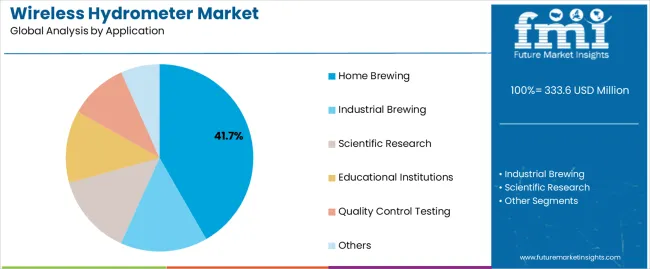
- Leading Application (2025): Home Brewing - 41.7% share
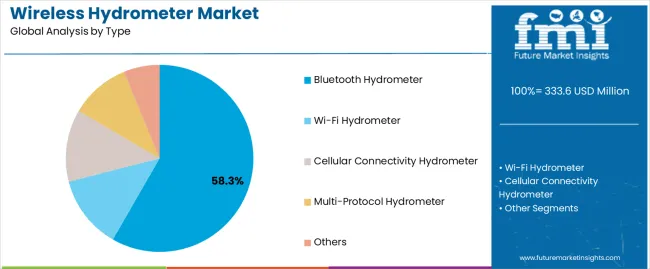
- Leading Type Segment (2025): Bluetooth Hydrometer - 58.3% share
- Leading End-User (2025): Home Brewers - 45.2% share
- Key Growth Regions: Asia Pacific, North America, and Europe
- Top Companies by Market Share: Tilt Hydrometer, PLAATO, iSpindel
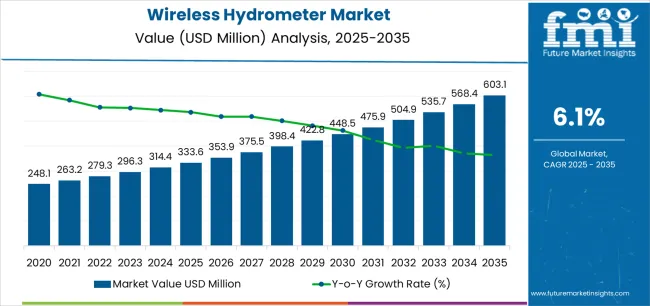
Wireless Hydrometer Market Key Takeaways
| Metric | Value |
|---|---|
| Market Value (2025) | USD 333.6 million |
| Market Forecast Value (2035) | USD 603.1 million |
| Forecast CAGR (2025-2035) | 6.1% |
Why is the Wireless Hydrometer Market Growing?
| HOME BREWING EXPANSION | DIGITAL MONITORING ADOPTION | LABORATORY MODERNIZATION |
|---|---|---|
| Craft Beer Culture - Home brewing hobby growth requiring specialized monitoring solutions for fermentation control, gravity measurement, and brewing optimization with enhanced precision and convenience characteristics for residential brewing applications requiring consistent quality and process reliability. | Process Automation - Industrial facility standards requiring comprehensive monitoring solutions for production operations, quality control, and facility expansions with documented performance and certification requirements. | Research Advancement - Laboratory facility improvements implementing wireless monitoring technology for analytical procedures, measurement accuracy, and enhanced equipment integration while maintaining productive research environments and quality standards. |
| DIY Brewing Growth - Consumer interest advancement requiring integrated monitoring components for home brewing systems, fermentation tracking, and recipe development applications with superior accuracy and reliability characteristics. | Quality Control Enhancement - Industrial equipment advancement requiring integrated monitoring components for automated production systems, process optimization, and quality assurance applications with enhanced performance and standardized specifications. | Educational Applications - Research institutions requiring specialized monitoring components for teaching laboratories, analytical procedures, and facility infrastructure with enhanced performance and educational specifications. |
| Hobbyist Technology - Consumer electronics integration implementing comprehensive monitoring solutions for brewing projects, fermentation tracking, and recipe optimization with specialized design characteristics and performance specifications. | Industrial Integration - Process control suppliers implementing comprehensive monitoring solutions for industrial applications, manufacturing system installations, and equipment upgrades with specialized design characteristics and performance specifications. | Scientific Precision - Research cost reduction initiatives requiring accurate monitoring solutions for laboratory equipment, measurement systems, and facility operational efficiency with proven performance and reliability characteristics. |
Wireless Hydrometer Market Segmentation
| Category | Segments / Values |
|---|---|
| By Type | Bluetooth Hydrometer; Wi-Fi Hydrometer; Cellular Connectivity Hydrometer; Multi-Protocol Hydrometer; Others |
| By Application | Home Brewing; Industrial Brewing; Scientific Research; Educational Institutions; Quality Control Testing; Others |
| By End-User | Home Brewers; Commercial Breweries; Research Laboratories; Educational Institutions; Food & Beverage Manufacturers; Others |
| By Connectivity | Bluetooth Low Energy; Wi-Fi 802.11; Cellular Networks; Hybrid Connectivity; Others |
| By Measurement Range | Standard Gravity (0.990-1.200); Extended Range (0.800-1.300); Precision Range (0.950-1.150); Others |
| By Region | North America; Europe; Asia Pacific; Latin America; Middle East & Africa |
Wireless Hydrometer Market Analysis by Type
| Segment | 2025-2035 Outlook |
|---|---|
| Bluetooth Hydrometer |
|
| Wi-Fi Hydrometer |
|
| Cellular Connectivity Hydrometer |
|
| Others |
|
Wireless Hydrometer Market Analysis by Application
| Segment | 2025-2035 Outlook |
|---|---|
| Home Brewing |
|
| Industrial Brewing |
|
| Scientific Research |
|
| Others |
|
Wireless Hydrometer Market Analysis by End-User
| End-User | Status & Outlook (2025-2035) |
|---|---|
| Home Brewers |
|
| Commercial Breweries |
|
| Research Laboratories |
|
| Others |
|
What are the Key Trends, Drivers, and Restraints in the Brewing Monitoring Systems Market?
| KEY TRENDS | DRIVERS | RESTRAINTS |
|---|---|---|
| Smart Connectivity - Advanced wireless protocols and mobile app integration delivering enhanced user experience, real-time monitoring capabilities, and cloud-based data analytics for comprehensive brewing management with improved accessibility and performance tracking capabilities. | Home Brewing Growth across consumer markets and hobbyist communities creating substantial demand for wireless monitoring solutions supporting fermentation control, recipe development, and quality optimization requiring effective measurement accuracy and user-friendly operation. | Price Sensitivity in consumer markets and budget constraints limiting adoption of premium monitoring solutions across cost-conscious home brewers and educational institutions with restricted equipment budgets. |
| Data Analytics Integration - Expanding integration with brewing management software, process optimization platforms, and industrial IoT systems enabling comprehensive fermentation monitoring, predictive analytics, and performance optimization capabilities. | Process Automation - Industrial brewing facility upgrades and production system enhancements requiring specialized monitoring components for improved operational efficiency, quality control, and regulatory compliance applications requiring documented measurement performance and validation. | Technical Complexity - Application-specific requirements, calibration procedures, and integration challenges affecting deployment timelines and operational capabilities for users lacking specialized brewing system expertise and maintenance capabilities. |
| Battery Technology - Integration with advanced power management systems and long-life battery solutions enabling extended monitoring periods, reduced maintenance requirements, and enhanced reliability for continuous fermentation tracking applications. | Quality Standards - Industrial facility modernization and brewing system improvements requiring specialized monitoring technology for enhanced production control, measurement precision, and workplace safety with superior accuracy and reliability performance. | Market Fragmentation - Diverse brewing applications, equipment specifications, and regional requirements creating complexity for suppliers developing standardized monitoring solutions across multiple brewing sectors and international markets. |
How is the Wireless Hydrometer Market Performing in Key Countries?
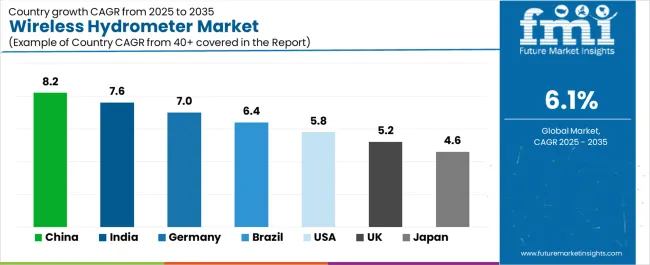
| Country | CAGR (2025-2035) |
|---|---|
| China | 8.2% |
| India | 7.6% |
| Germany | 7.0% |
| Brazil | 6.4% |
| USA | 5.8% |
| UK | 5.2% |
| Japan | 4.6% |
China Leads Global Market Growth with Manufacturing Excellence
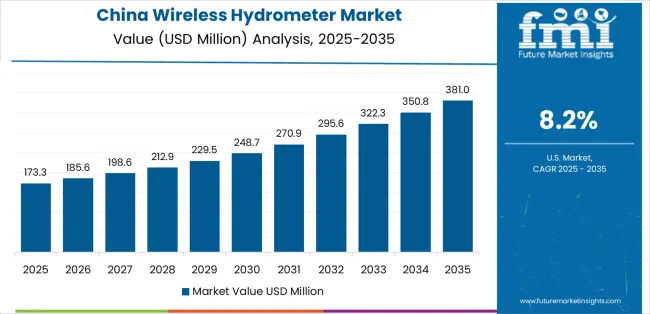
Revenue from wireless hydrometers in China is projected to exhibit strong growth with a market value expected to expand at a CAGR of 8.2% by 2035. This growth is driven by extensive brewing industry development programs and comprehensive consumer electronics advancements, creating substantial opportunities for monitoring technology suppliers across home brewing applications, commercial brewery installations, and educational facility sectors. The country’s ambitious manufacturing modernization programs, including national electronics innovation initiatives and automated production facility expansions, are creating consistent demand for specialized wireless monitoring systems. Major electronics companies and brewing equipment suppliers, including consumer electronics manufacturers, brewing technology companies, and specialized sensor manufacturers, are establishing comprehensive monitoring solution programs to support large-scale consumer markets and advanced brewing technology applications.
- National electronics manufacturing programs and consumer technology development projects are supporting widespread adoption of wireless monitoring technologies across brewing applications, driving demand for reliable performance components
- Consumer electronics facility development initiatives and manufacturing infrastructure programs are creating substantial opportunities for suppliers requiring consistent performance and cost-effective monitoring solutions for diverse brewing applications
- Brewing equipment expansion and consumer facility upgrades are facilitating adoption of specialized wireless monitoring systems throughout major consumer market regions
India Demonstrates Strong Market Potential with Technology Growth
Demand for wireless hydrometers in India is expanding to reach a CAGR of 7.6% by 2035, supported by extensive technology industry development programs and comprehensive consumer electronics modernization initiatives. These factors are creating demand for wireless monitoring solutions across diverse brewing facility and educational institution application segments. The country's growing electronics manufacturing capabilities and expanding consumer technology infrastructure are driving demand for monitoring components that provide exceptional reliability while supporting advanced brewing system requirements. Consumer companies and brewing facilities are investing in wireless monitoring technology to meet growing market demand and the increasing requirements for brewing technology advancements.
- Technology industry expansion and consumer electronics development are creating opportunities for wireless monitoring components across diverse application segments requiring exceptional reliability and competitive performance specifications
- Infrastructure development programs and consumer facility modernization are driving investments in automated monitoring systems supporting operational efficiency requirements throughout major technology regions
- Consumer facility growth and specialized brewing technology development programs are enhancing demand for quality wireless monitoring solutions throughout Indian consumer markets
Germany Maintains Leadership with Engineering Excellence
Demand for wireless hydrometers in Germany is projected to expand at a CAGR of 7.0% by 2035, supported by the country's leadership in precision instrumentation technology and advanced brewing systems requiring sophisticated wireless monitoring solutions for craft brewing and industrial applications. German brewing operators are implementing cutting-edge monitoring platforms that support advanced operational capabilities, precision measurement, and comprehensive quality monitoring protocols. The market is characterized by a focus on engineering excellence, technology innovation, and compliance with stringent brewing quality and performance standards.
- Precision instrumentation industry investments and brewing technology leadership are prioritizing advanced wireless monitoring technologies that demonstrate superior performance and reliability while meeting German brewing and safety standards
- Craft brewing leadership programs and technology innovation initiatives are driving adoption of precision-engineered monitoring systems that support advanced brewing infrastructure and production optimization
- Brewing system engineering programs for facility enhancement are facilitating adoption of specialized wireless monitoring technologies throughout major brewing manufacturing and development centers
Brazil Expands Market with Consumer Technology Development
Revenue from wireless hydrometers in Brazil is growing at a CAGR of 6.4% and is projected to reach USD 89.7 million by 2035, driven by consumer technology development programs and increasing brewing capabilities. This growth is creating opportunities for monitoring suppliers serving both hobbyist brewers and commercial equipment contractors. The country's expanding brewing sector and growing consumer electronics infrastructure are generating demand for monitoring components that support diverse brewing requirements while maintaining performance standards. Consumer companies and brewing facilities are developing technology strategies to support operational efficiency and system reliability advancements.
- Consumer technology development programs and brewing modernization are facilitating adoption of wireless monitoring components capable of supporting diverse brewing requirements and competitive performance standards
- Brewing expansion and consumer-focused development programs are enhancing demand for quality monitoring solutions that support operational efficiency and brewing system reliability
- Technology market expansion and specialized brewing system development are creating opportunities for advanced wireless monitoring capabilities across Brazilian consumer and commercial facilities
United States Focuses on Technology Innovation and Premium Applications
Demand for wireless hydrometers in United States is projected to reach USD 72.4 million by 2035, expanding at a CAGR of 5.8%, driven by advanced brewing technology innovation and specialized consumer applications supporting craft brewing and comprehensive automation technology applications. The country's established brewing technology tradition including major craft breweries and home brewing communities are creating demand for high-performance wireless monitoring components that support operational advancement and quality standards. Manufacturers and brewing system suppliers are maintaining comprehensive development capabilities to support diverse brewing and consumer requirements.
- Advanced brewing technology innovation including major craft brewery manufacturers and specialized brewing programs are supporting demand for quality wireless monitoring systems that meet contemporary performance and reliability standards
- Craft brewing advancement and consumer brewing system programs are creating opportunities for specialized monitoring components that provide comprehensive brewing quality support
- Consumer technology excellence and component quality enhancement programs are facilitating adoption of advanced wireless monitoring capabilities throughout major brewing and consumer regions
United Kingdom Emphasizes Brewing Heritage
Revenue from wireless hydrometers in the United Kingdom is growing at a CAGR of 5.2% and is projected to reach USD 68.3 million by 2035, supported by the country’s brewing technology heritage and established brewing communities. This growth is driving demand for premium wireless monitoring solutions across traditional brewing systems and specialized craft brewing applications. The UK's rich brewing heritage, including major breweries and established brewing system capabilities, creates demand for monitoring components that support both legacy system advancements and modern brewing applications.
- Brewing technology heritage preservation and advanced brewing system programs are supporting demand for specialized wireless monitoring systems that meet historical excellence and contemporary performance standards
- Craft brewing collaboration and international partnership development are creating opportunities for wireless monitoring components throughout British brewing system facilities
- Technology modernization and infrastructure advancement programs are facilitating adoption of advanced wireless monitoring technologies across traditional brewing markets
Japan Maintains Precision with Technology Leadership
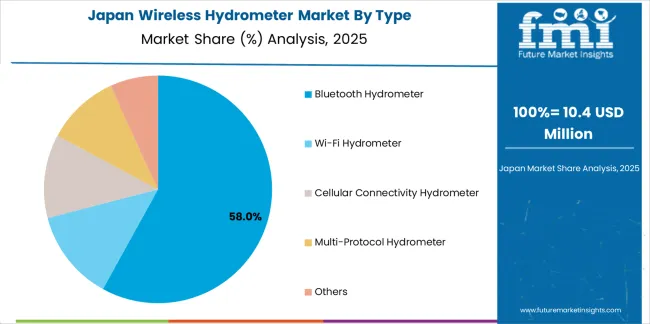
Demand for wireless hydrometers in Japan is projected to grow at a CAGR of 4.6% and is expected to reach USD 61.8 million by 2035, driven by the country's precision instrumentation technology tradition and established electronics leadership. This growth is supporting both domestic brewing system markets and export-oriented component production. Japanese companies maintain sophisticated wireless monitoring development capabilities, with established manufacturers continuing to lead in monitoring technology and brewing equipment standards.
- Precision instrumentation technology tradition and electronics leadership including major consumer electronics manufacturers are supporting continued demand for high-performance components that meet exacting quality standards
- Advanced consumer electronics research and traditional brewing excellence are creating opportunities for premium wireless monitoring components throughout Japanese consumer markets
- Export electronics excellence and component quality programs are facilitating adoption of advanced wireless monitoring production capabilities across specialized consumer electronics manufacturing facilities
Europe Market Split by Application Focus
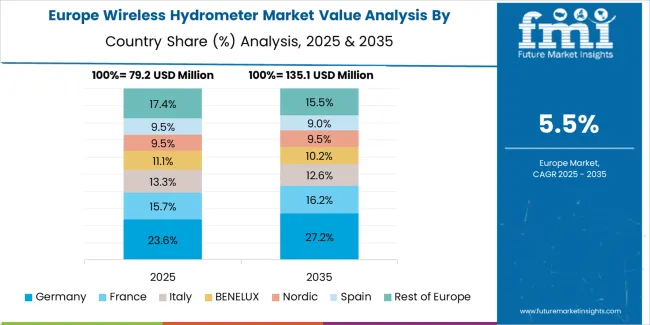
European wireless hydrometer operations are increasingly concentrated between German engineering excellence and specialized brewing technology across multiple countries. German facilities dominate high-performance wireless monitoring production for craft brewing and industrial applications, leveraging cutting-edge sensor technologies and strict quality protocols that command price premiums in global markets. British brewing technology operators maintain leadership in brewing system innovation and wireless monitoring method development, with organizations like specialized brewing companies and university research centers driving technical specifications that suppliers must meet to access major brewing contracts.
Eastern European operations in Czech Republic and Poland are capturing specialized production contracts through precision manufacturing expertise and EU compliance standards, particularly in sensor fabrication and assembly technologies for brewing applications. These facilities increasingly serve as development partners for Western European brewing programs while building their own brewing technology expertise.
The regulatory environment presents both opportunities and constraints. European food safety framework requirements create quality standards that favor established European manufacturers and brewing system operators while ensuring consistent performance specifications for critical brewing infrastructure and safety applications. Brexit has created complexity for UK brewing collaboration with EU programs, driving opportunities for direct relationships between British operators and international wireless monitoring suppliers.
Technology collaboration accelerates as brewing companies seek technology advancement to support major brewing modernization milestones and consumer development timelines. Vertical integration increases, with major brewing system operators acquiring specialized manufacturing capabilities to secure component supplies and quality control for critical brewing programs. Smaller brewing contractors face pressure to specialize in niche applications or risk displacement by larger, more comprehensive operations serving mainstream brewing and consumer requirements.
Market Dynamics Drive Innovation in South Korea
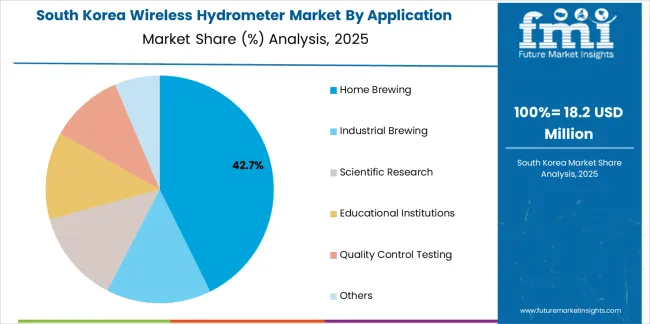
South Korean wireless hydrometer operations reflect the country's advanced electronics technology capabilities and export-oriented consumer development model. Major consumer electronics operators including Samsung Electronics and technology companies drive component procurement strategies for their manufacturing facilities, establishing direct relationships with specialized wireless monitoring suppliers to secure consistent quality and performance for their consumer development programs and advanced brewing technology systems targeting both domestic infrastructure and international collaboration projects.
The Korean market demonstrates particular strength in integrating wireless monitoring technologies into consumer electronics platforms and advanced brewing system configurations, with engineering teams developing solutions that bridge traditional brewing monitoring applications and next-generation consumer systems. This integration approach creates demand for specific performance specifications that differ from conventional applications, requiring suppliers to adapt monitoring capabilities and system coordination characteristics.
Regulatory frameworks emphasize consumer safety and electronics system reliability, with Korean consumer standards often exceeding international requirements for wireless monitoring systems. This creates barriers for standard component suppliers but benefits established manufacturers who can demonstrate consumer-grade performance capabilities. The regulatory environment particularly favors suppliers with Korean electronics system qualification and comprehensive testing documentation systems.
Supply chain excellence remains critical given Korea's electronics focus and international collaboration dynamics. Consumer electronics operators increasingly pursue development partnerships with suppliers in Japan, Germany, and specialized manufacturers to ensure access to cutting-edge wireless monitoring technologies while managing infrastructure risks. Investment in consumer infrastructure supports performance advancement during extended electronics development cycles.
What is the Competitive Landscape of the Wireless Hydrometer Market?
Tilt Hydrometer leads the market with 28.7% share owing to its comprehensive home brewing focus and established hobbyist community relationships, which brewers use to implement integrated monitoring solutions across diverse fermentation applications. Profit pools are consolidating upstream in advanced sensor development and downstream in application-specific solutions for craft brewing, commercial facilities, and specialized laboratory markets where measurement accuracy, connectivity reliability, and consistent data transmission command substantial premiums. Value is migrating from basic monitoring component production to specification-driven, application-ready brewing systems where sensor expertise, wireless technology, and reliable integration capabilities create competitive advantages.
Several archetypes define market leadership: established American brewing companies defending share through comprehensive home brewing development and proven hobbyist community support; German precision suppliers leveraging instrumentation excellence and engineering capabilities; Japanese technology leaders with electronics expertise and sensor manufacturing heritage; and emerging Asian manufacturers pursuing cost-effective production while developing advanced connectivity capabilities.
Switching costs - system integration, brewing equipment compatibility validation, user app development - provide stability for established suppliers, while technological advancement requirements and specialized application growth create opportunities for innovative component manufacturers. Consolidation continues as companies seek manufacturing scale; direct brewing partnerships grow for specialized applications while traditional brewing distribution remains relationship-driven. Focus areas: secure premium brewing and hobbyist market positions with application-specific performance specifications and technical collaboration; develop wireless monitoring technology and advanced sensor capabilities; explore specialized applications including educational institutions and research laboratory requirements.
| Stakeholder Type | Primary Advantage | Repeatable Plays |
|---|---|---|
| American Brewing Leaders | Comprehensive brewing expertise; proven hobbyist integration; established brewer relationships | Home brewing focus; technical innovation; community support |
| German Precision Suppliers | Instrumentation excellence; comprehensive sensor development programs; established customer partnerships | Engineering collaboration focus; integrated solutions; technical consultation |
| Japanese Technology Leaders | Electronics system expertise; precision technology leadership; trusted by major electronics programs | Consumer partnerships; application-specific specifications; electronics infrastructure collaboration |
| Emerging Asian Producers | Manufacturing efficiency; competitive pricing; rapid technology development | Production scaling; connectivity advancement; market entry strategies |
| Brewing Distributors | Technical distribution networks; brewing service relationships | Brewing expertise; inventory management; technical support services |
Key Players in the Wireless Hydrometer Market
- Tilt Hydrometer
- PLAATO
- iSpindel
- Anton Paar
- Kegland
- Cooper-Atkins
- Paul Marienfeld
- Normax
- DWK Life Sciences
- ThermoPro
- Govee
- Brewometer
- Craft Metrics
- BrewPi
- Brewbot
- Spike Brewing
- Williams Brewing
- Northern Brewer
Scope of the Report
| Item | Value |
|---|---|
| Quantitative Units | USD 333.6 million |
| Type Segments | Bluetooth Hydrometer; Wi-Fi Hydrometer; Cellular Connectivity Hydrometer; Multi-Protocol Hydrometer; Others |
| Applications | Home Brewing; Industrial Brewing; Scientific Research; Educational Institutions; Quality Control Testing; Others |
| End-Users | Home Brewers; Commercial Breweries; Research Laboratories; Educational Institutions; Food & Beverage Manufacturers; Others |
| Connectivity Segments | Bluetooth Low Energy; Wi-Fi 802.11; Cellular Networks; Hybrid Connectivity; Others |
| Measurement Ranges | Standard Gravity (0.990-1.200); Extended Range (0.800-1.300); Precision Range (0.950-1.150); Others |
| Regions Covered | North America; Latin America; Europe; Asia Pacific; Middle East & Africa |
| Key Countries | China; India; Germany; Brazil; United States; United Kingdom; Japan (+35 additional countries) |
| Key Companies Profiled | Tilt Hydrometer; PLAATO; iSpindel; Anton Paar; Kegland; Cooper-Atkins; Paul Marienfeld; Normax; DWK Life Sciences; ThermoPro; Govee; Brewometer; Craft Metrics; BrewPi; Brewbot; Spike Brewing; Williams Brewing; Northern Brewer |
| Additional Attributes | Dollar sales by type and application; Regional demand trends (NA, EU, APAC); Competitive landscape; Home brewing vs. commercial adoption patterns; Consumer electronics and brewing system integration; Advanced connectivity innovations driving measurement accuracy, user experience enhancement, and brewing process excellence |
Wireless Hydrometer Market Segmentation
Type
- Bluetooth Hydrometer
- Wi-Fi Hydrometer
- Cellular Connectivity Hydrometer
- Multi-Protocol Hydrometer
- Others
Application
- Home Brewing
- Industrial Brewing
- Scientific Research
- Educational Institutions
- Quality Control Testing
- Others
End-User
- Home Brewers
- Commercial Breweries
- Research Laboratories
- Educational Institutions
- Food & Beverage Manufacturers
- Others
Connectivity
- Bluetooth Low Energy
- Wi-Fi 802.11
- Cellular Networks
- Hybrid Connectivity
- Others
Measurement Range
- Standard Gravity (0.990-1.200)
- Extended Range (0.800-1.300)
- Precision Range (0.950-1.150)
- Others
Region
- North America
- United States
- Canada
- Mexico
- Latin America
- Brazil
- Chile
- Rest of Latin America
- Western Europe
- Germany
- United Kingdom
- France
- Italy
- Spain
- Nordic
- BENELUX
- Rest of Western Europe
- Eastern Europe
- Russia
- Poland
- Rest of Eastern Europe
- East Asia
- China
- Japan
- South Korea
- South Asia Pacific
- India
- ASEAN
- Australia & New Zealand
- Rest of South Asia Pacific
- Middle East & Africa
- Kingdom of Saudi Arabia
- Other GCC Countries
- Turkey
- South Africa
- Other African Union
- Rest of Middle East & Africa
Frequently Asked Questions
How big is the wireless hydrometer market in 2025?
The global wireless hydrometer market is estimated to be valued at USD 333.6 million in 2025.
What will be the size of wireless hydrometer market in 2035?
The market size for the wireless hydrometer market is projected to reach USD 603.1 million by 2035.
How much will be the wireless hydrometer market growth between 2025 and 2035?
The wireless hydrometer market is expected to grow at a 6.1% CAGR between 2025 and 2035.
What are the key product types in the wireless hydrometer market?
The key product types in wireless hydrometer market are bluetooth hydrometer, wi-fi hydrometer, cellular connectivity hydrometer, multi-protocol hydrometer and others.
Which application segment to contribute significant share in the wireless hydrometer market in 2025?
In terms of application, home brewing segment to command 41.7% share in the wireless hydrometer market in 2025.
Preview the report firsthand - request a free sample
Get SampleGet the brochure for pricing and purchase details.
Get PDFTable of Content
- Executive Summary
- Global Market Outlook
- Demand-side Trends
- Supply-side Trends
- Technology Roadmap Analysis
- Analysis and Recommendations
- Market Overview
- Market Coverage / Taxonomy
- Market Definition / Scope / Limitations
- Market Background
- Market Dynamics
- Drivers
- Restraints
- Opportunity
- Trends
- Scenario Forecast
- Demand in Optimistic Scenario
- Demand in Likely Scenario
- Demand in Conservative Scenario
- Opportunity Map Analysis
- Product Life Cycle Analysis
- Supply Chain Analysis
- Investment Feasibility Matrix
- Value Chain Analysis
- PESTLE and Porter’s Analysis
- Regulatory Landscape
- Regional Parent Market Outlook
- Production and Consumption Statistics
- Import and Export Statistics
- Market Dynamics
- Global Market Analysis 2020 to 2024 and Forecast, 2025 to 2035
- Historical Market Size Value (USD Million) Analysis, 2020 to 2024
- Current and Future Market Size Value (USD Million) Projections, 2025 to 2035
- Y-o-Y Growth Trend Analysis
- Absolute $ Opportunity Analysis
- Global Market Pricing Analysis 2020 to 2024 and Forecast 2025 to 2035
- Global Market Analysis 2020 to 2024 and Forecast 2025 to 2035, By Type
- Introduction / Key Findings
- Historical Market Size Value (USD Million) Analysis By Type , 2020 to 2024
- Current and Future Market Size Value (USD Million) Analysis and Forecast By Type , 2025 to 2035
- Bluetooth Hydrometer
- Wi-Fi Hydrometer
- Cellular Connectivity Hydrometer
- Multi-Protocol Hydrometer
- Others
- Y-o-Y Growth Trend Analysis By Type , 2020 to 2024
- Absolute $ Opportunity Analysis By Type , 2025 to 2035
- Global Market Analysis 2020 to 2024 and Forecast 2025 to 2035, By Application
- Introduction / Key Findings
- Historical Market Size Value (USD Million) Analysis By Application, 2020 to 2024
- Current and Future Market Size Value (USD Million) Analysis and Forecast By Application, 2025 to 2035
- Home Brewing
- Industrial Brewing
- Scientific Research
- Educational Institutions
- Quality Control Testing
- Others
- Y-o-Y Growth Trend Analysis By Application, 2020 to 2024
- Absolute $ Opportunity Analysis By Application, 2025 to 2035
- Global Market Analysis 2020 to 2024 and Forecast 2025 to 2035, By Region
- Introduction
- Historical Market Size Value (USD Million) Analysis By Region, 2020 to 2024
- Current Market Size Value (USD Million) Analysis and Forecast By Region, 2025 to 2035
- North America
- Latin America
- Western Europe
- Eastern Europe
- East Asia
- South Asia and Pacific
- Middle East & Africa
- Market Attractiveness Analysis By Region
- North America Market Analysis 2020 to 2024 and Forecast 2025 to 2035, By Country
- Historical Market Size Value (USD Million) Trend Analysis By Market Taxonomy, 2020 to 2024
- Market Size Value (USD Million) Forecast By Market Taxonomy, 2025 to 2035
- By Country
- USA
- Canada
- Mexico
- By Type
- By Application
- By Country
- Market Attractiveness Analysis
- By Country
- By Type
- By Application
- Key Takeaways
- Latin America Market Analysis 2020 to 2024 and Forecast 2025 to 2035, By Country
- Historical Market Size Value (USD Million) Trend Analysis By Market Taxonomy, 2020 to 2024
- Market Size Value (USD Million) Forecast By Market Taxonomy, 2025 to 2035
- By Country
- Brazil
- Chile
- Rest of Latin America
- By Type
- By Application
- By Country
- Market Attractiveness Analysis
- By Country
- By Type
- By Application
- Key Takeaways
- Western Europe Market Analysis 2020 to 2024 and Forecast 2025 to 2035, By Country
- Historical Market Size Value (USD Million) Trend Analysis By Market Taxonomy, 2020 to 2024
- Market Size Value (USD Million) Forecast By Market Taxonomy, 2025 to 2035
- By Country
- Germany
- UK
- Italy
- Spain
- France
- Nordic
- BENELUX
- Rest of Western Europe
- By Type
- By Application
- By Country
- Market Attractiveness Analysis
- By Country
- By Type
- By Application
- Key Takeaways
- Eastern Europe Market Analysis 2020 to 2024 and Forecast 2025 to 2035, By Country
- Historical Market Size Value (USD Million) Trend Analysis By Market Taxonomy, 2020 to 2024
- Market Size Value (USD Million) Forecast By Market Taxonomy, 2025 to 2035
- By Country
- Russia
- Poland
- Hungary
- Balkan & Baltic
- Rest of Eastern Europe
- By Type
- By Application
- By Country
- Market Attractiveness Analysis
- By Country
- By Type
- By Application
- Key Takeaways
- East Asia Market Analysis 2020 to 2024 and Forecast 2025 to 2035, By Country
- Historical Market Size Value (USD Million) Trend Analysis By Market Taxonomy, 2020 to 2024
- Market Size Value (USD Million) Forecast By Market Taxonomy, 2025 to 2035
- By Country
- China
- Japan
- South Korea
- By Type
- By Application
- By Country
- Market Attractiveness Analysis
- By Country
- By Type
- By Application
- Key Takeaways
- South Asia and Pacific Market Analysis 2020 to 2024 and Forecast 2025 to 2035, By Country
- Historical Market Size Value (USD Million) Trend Analysis By Market Taxonomy, 2020 to 2024
- Market Size Value (USD Million) Forecast By Market Taxonomy, 2025 to 2035
- By Country
- India
- ASEAN
- Australia & New Zealand
- Rest of South Asia and Pacific
- By Type
- By Application
- By Country
- Market Attractiveness Analysis
- By Country
- By Type
- By Application
- Key Takeaways
- Middle East & Africa Market Analysis 2020 to 2024 and Forecast 2025 to 2035, By Country
- Historical Market Size Value (USD Million) Trend Analysis By Market Taxonomy, 2020 to 2024
- Market Size Value (USD Million) Forecast By Market Taxonomy, 2025 to 2035
- By Country
- Kingdom of Saudi Arabia
- Other GCC Countries
- Turkiye
- South Africa
- Other African Union
- Rest of Middle East & Africa
- By Type
- By Application
- By Country
- Market Attractiveness Analysis
- By Country
- By Type
- By Application
- Key Takeaways
- Key Countries Market Analysis
- USA
- Pricing Analysis
- Market Share Analysis, 2024
- By Type
- By Application
- Canada
- Pricing Analysis
- Market Share Analysis, 2024
- By Type
- By Application
- Mexico
- Pricing Analysis
- Market Share Analysis, 2024
- By Type
- By Application
- Brazil
- Pricing Analysis
- Market Share Analysis, 2024
- By Type
- By Application
- Chile
- Pricing Analysis
- Market Share Analysis, 2024
- By Type
- By Application
- Germany
- Pricing Analysis
- Market Share Analysis, 2024
- By Type
- By Application
- UK
- Pricing Analysis
- Market Share Analysis, 2024
- By Type
- By Application
- Italy
- Pricing Analysis
- Market Share Analysis, 2024
- By Type
- By Application
- Spain
- Pricing Analysis
- Market Share Analysis, 2024
- By Type
- By Application
- France
- Pricing Analysis
- Market Share Analysis, 2024
- By Type
- By Application
- India
- Pricing Analysis
- Market Share Analysis, 2024
- By Type
- By Application
- ASEAN
- Pricing Analysis
- Market Share Analysis, 2024
- By Type
- By Application
- Australia & New Zealand
- Pricing Analysis
- Market Share Analysis, 2024
- By Type
- By Application
- China
- Pricing Analysis
- Market Share Analysis, 2024
- By Type
- By Application
- Japan
- Pricing Analysis
- Market Share Analysis, 2024
- By Type
- By Application
- South Korea
- Pricing Analysis
- Market Share Analysis, 2024
- By Type
- By Application
- Russia
- Pricing Analysis
- Market Share Analysis, 2024
- By Type
- By Application
- Poland
- Pricing Analysis
- Market Share Analysis, 2024
- By Type
- By Application
- Hungary
- Pricing Analysis
- Market Share Analysis, 2024
- By Type
- By Application
- Kingdom of Saudi Arabia
- Pricing Analysis
- Market Share Analysis, 2024
- By Type
- By Application
- Turkiye
- Pricing Analysis
- Market Share Analysis, 2024
- By Type
- By Application
- South Africa
- Pricing Analysis
- Market Share Analysis, 2024
- By Type
- By Application
- USA
- Market Structure Analysis
- Competition Dashboard
- Competition Benchmarking
- Market Share Analysis of Top Players
- By Regional
- By Type
- By Application
- Competition Analysis
- Competition Deep Dive
- Tilt Hydrometer
- Overview
- Product Portfolio
- Profitability by Market Segments (Product/Age /Sales Channel/Region)
- Sales Footprint
- Strategy Overview
- Marketing Strategy
- Product Strategy
- Channel Strategy
- PLAATO
- iSpindel
- Anton Paar
- Kegland
- Cooper-Atkins
- Paul Marienfeld
- Normax
- DWK Life Sciences
- ThermoPro
- Govee
- Brewometer
- Craft Metrics
- BrewPi
- Brewbot
- Spike Brewing
- Williams Brewing
- Northern Brewer
- Tilt Hydrometer
- Competition Deep Dive
- Assumptions & Acronyms Used
- Research Methodology


