


- Chickpea protein industry growth is becoming more application-specific, rather than simply relying on overall growth of plant protein consumption.
- Dairy replacements, baked goods, snacks, and functional foods are proving to be key growth areas for chickpea protein producers.
- Food manufacturers are using chickpea protein due to its taste characteristics, familiar ingredients, and suitability for clean labels.
- Plant-based meat continues to represent a potential opportunity, yet it faces stiff competition from pea protein and soy protein.
- Diversification initiatives prompt food firms to use chickpea protein in their broader product formulations.
- Misunderstandings revolve around the even growth across all applications. Actually, several application sectors represent a high percentage of growth opportunities.
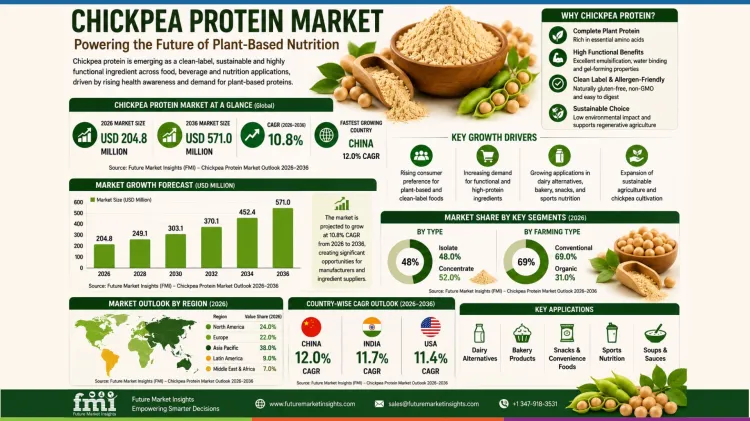
The global Chickpea Protein Market is expanding as food manufacturers search for ingredients capable of meeting evolving consumer expectations around nutrition, taste, clean-label positioning, and sustainability. While the broader growth story often focuses on increasing demand for plant-based proteins, the reality is more nuanced.
All applications do not add equally to market growth. Certain product types drive significantly more demand for protein derived from chickpeas compared to other types. Knowing where market growth is being driven helps determine potential opportunities within the supply chain.
This trend is also influencing the broader Plant Protein Market, where competition among protein sources is becoming increasingly application-specific. Instead of asking which protein will dominate overall, manufacturers are evaluating which ingredients perform best in particular product categories.
Dairy Alternatives Are Emerging as a Key Growth Engine
Among all application categories, dairy alternatives represent one of the most promising opportunities for chickpea protein.
The rapid expansion of the Dairy Alternatives Market has increased demand for ingredients capable of supporting nutritional fortification while maintaining desirable sensory characteristics. Consumers purchasing plant-based milk, yogurt, frozen desserts, and dairy-free beverages expect products to deliver both nutrition and an enjoyable eating experience.
The neutrality of the flavor becomes a key competitive differentiator in such scenarios. Protein sources that are known to provide nutrition without imparting strong flavors which require further formulation become a popular choice.
The mild flavor associated with chickpea protein allows for greater application within dairy replacements. As companies look to develop high-end dairy-free beverages, they will find products that make the process easier, more effective.
This factor is predicted to continue becoming one of the key drivers for growth within the chickpea protein category over the next ten years.
Bakery and Snack Applications Are Expanding Rapidly
Products from the bakery category and snack foods are becoming another important demand driver. The consumer inclination towards foods which offer increased levels of proteins but do not compromise on flavor and texture is making companies explore protein fortification solutions for various product lines like crackers, cookies, energy bars, and other ready-to-eat food items.
Within the broader Food Ingredients Market, ingredient flexibility has become increasingly valuable. Chickpea protein allows manufacturers to improve nutritional profiles while maintaining familiar product characteristics.
This characteristic is not present in other protein sources, which may change the taste and texture of a product. Because the focus of consumers on the taste of their products is extremely high, it makes the use of chickpea proteins extremely valuable.
In light of the growing trend of high-protein snacks, it is evident that bakery and snack applications will play an essential role in the development of future markets.
Functional Foods Are Creating New Opportunities
The emergence of health foods represents yet another opportunity for growth. Consumers are becoming increasingly interested in foods that provide benefits beyond mere sustenance. Foods associated with wellness, active lifestyles, healthy digestion, and overall wellbeing remain popular choices in several markets.
This trend is influencing the broader Functional Food Ingredients Market, where ingredient selection increasingly depends on a combination of nutritional value, functionality, and consumer perception.
Chickpea protein satisfies both criteria, since it is not only rich in protein but also highly familiar to consumers. It enables companies to create food products that retain the clean label image and recognizable ingredient statements.
In view of the continued growth of functional foods, it is anticipated that ingredients which can confer several advantages at once will gain greater market interest.
Plant-Based Meat Offers Opportunity but Also Intense Competition
Plant-based meat remains an important application for chickpea protein, but it is not necessarily the category where the ingredient enjoys the strongest competitive advantage.
The broader Plant-Based Food Market continues to generate demand for proteins capable of supporting texture development, water retention, and nutritional claims. However, pea protein and The significance of soy proteins in this category cannot be overlooked since they have already proven their capabilities and production facilities.
It should not be interpreted that the prospects for chickpea protein are not good, but rather that its development will be slower and more selective.
More and more manufacturers assess the benefits of protein blends that consist of several components to optimize flavor and nutritional value. In such formulas, chickpea protein acts as an additional component of the composition.
Thus, the market of plant meat is still promising, yet unlikely to become the only factor influencing demand in the future.
Diversification Strategies Are Expanding Protein Portfolios
A further growth driver in the industry is protein diversification.
The reluctance of food companies to rely solely on one type of raw material has been growing. This is due to supply chain disruptions, fluctuations in commodity prices, and changes in consumer behavior.
This shift is visible throughout the Alternative Protein Market, where manufacturers increasingly combine multiple protein ingredients to improve resilience and product performance.
It is good for chickpea protein as it becomes an option to formulate with, for corporations. Even if the main ingredient being used is pea or soy protein, the addition of chickpea protein will bring flavor profiles, clean-label advantages, and alternative sourcing.
The growth that comes through diversification could be equally significant as growth through specific application use cases.
Sports Nutrition Remains a Selective Opportunity
The Sports Nutrition Market continues to represent a significant protein-consuming category, but chickpea protein's role remains more selective.
When it comes to sports nutrition, proteins' efficacy and performance properties are prioritized in a bid to maximize their appeal over anything else. This means that the competition for such products is going to come from other ingredients that dominate this market space.
However, there is potential for chickpeas' protein to play more roles in other products which would be marketed to wellness consumers as opposed to athletes.
The Biggest Misconception
The primary fallacy revolves around the distribution of demand increases among all applications.
It is believed that the growing preference for plant-based nutrition would be beneficial to all end-use applications at equal measure. This is far from the truth.
Most demand growth is being fueled by dairy substitutes, functional food, bakery items, snack products, and diversification. These applications have been key to driving growth.
Knowing which areas hold most of the demand is critical.
Bottom Line
In fact, the growth potential for chickpea protein is less tied to general demand for plant-based foods than its success in particular applications.
Dairy replacement, bakery items, snack foods, and functional foods represent the most promising areas due to their alignment with the flavor properties and clean-label appeal of chickpea proteins.
While the meat alternatives and sports nutrition categories will present additional opportunities for growth, they will face higher levels of competition.
The suppliers that will achieve growth success will do so in the areas that offer the greatest potential, aligning product and business strategies to capitalize on these trends.
In a maturing marketplace, it will be less about how large the market becomes and more about knowing where growth is happening.

