


- Chickpea protein is able to earn a premium if it enables the food manufacturer to address formulation issues pertaining to taste, clean-label position, ingredient recognition, and allergen-free formulation.
- It is not about food companies paying more for plant-based ingredients. Premiums arise out of the competitive advantage that chickpea protein offers over alternative proteins.
- Premiums are easier to earn when it comes to dairy alternatives, clean-label formulations, functional foods, bakery applications, and products that require neutral flavors.
- Situations where it becomes harder to sustain premiums are those where formulations become very commoditized, where protein concentration is important over and above formulation benefits.
- Diversification of supply chains is becoming an increasingly relevant point in chickpea protein adoption.
- The most common misunderstanding regarding premiums paid for chickpea protein is that all plant proteins compete based on price.
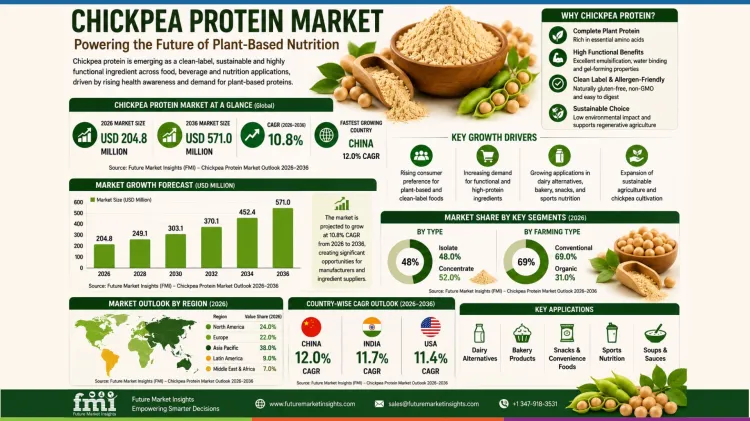
The global Chickpea Protein Market is growing because food manufacturers are becoming increasingly selective about the ingredients they use. Although in the past, plant proteins have been considered from a nutritional standpoint as well as protein quantity, modern consumers make their purchases considering a much wider set of criteria such as taste, functional benefits, suitability for clean labels, recognition of ingredients, and sustainability of the ingredient’s source.
It means that premiums are now justified in terms of business benefits rather than any marketing advantage associated with plant protein itself. This is why chickpea protein has become increasingly attractive as an ingredient due to its commercial benefits compared to its competitors.
The broader Plant Protein Market provides useful context. As manufacturers gain access to a growing range of plant proteins including pea, soy, rice, oat, fava bean, and mung bean proteins, competition is intensifying. Under these conditions, ingredients capable of solving multiple formulation problems simultaneously are better positioned to defend premium pricing.
Why Premium Pricing Is About Functionality, Not Protein Content
A typical misconception about chickpea protein is the assumption that its premium price is due to the protein content alone. While the protein content still matters, manufacturers generally do not base their purchase decisions solely on one criterion.
The effect of an ingredient on the entire formulation is considered by food producers. An ingredient whose use helps cut costs for masking flavors, has clear labeling, positive customer reception, and satisfies several functional needs will be of greater value than one with slightly higher protein content.
This is particularly relevant within the Food Ingredients Market, where manufacturers increasingly seek ingredients capable of serving multiple functions. The ability to contribute protein enrichment while supporting texture, emulsification, and clean-label objectives creates economic value beyond nutritional specifications alone.
As a result, the premium associated with chickpea protein is often linked more closely to functionality than to protein percentage.
Dairy Alternatives Are Supporting Premium Opportunities
One of the strongest premium opportunities for chickpea protein exists within the Dairy Alternatives Market. Taste and texture remain among the most important purchase drivers for consumers buying plant-based milk, yogurt, creamers, frozen desserts, and other dairy-free products.
Companies working in these areas have quite a tough time on their hands. Customers have high expectations regarding the nutritional value of products as well as keeping sensory qualities comparable to conventional dairy-based products. The addition of ingredients with off-notes could hinder future purchases and increase costs involved in formulation.
The relatively subtle nature of flavor of chickpea protein enables companies to increase the amount of proteins in their products without facing the same sensory issues with other proteins.
It becomes easier for manufacturers to pay extra money for ingredients that not only increase the nutritional value but also enhance the sensory qualities of the products.
Clean-Label Positioning Creates Additional Value
Another important driver of premium pricing is clean-label demand. Consumers increasingly scrutinize ingredient declarations and show greater interest in recognizable ingredients. Products perceived as simple, transparent, and minimally processed often enjoy stronger consumer trust.
This trend is influencing the broader Functional Food Ingredients Market, where ingredient selection is increasingly shaped by consumer perception as well as technical performance.
Chickpea protein is advantaged by high-level ingredient recognition. The recognition enjoyed by chickpeas stems from its presence as an important ingredient in healthy foods such as hummus and snacking products.
Such recognition makes chickpea protein highly valuable for manufacturers trying to reduce ingredient labels while at the same time providing sufficient protein levels in their products.
Manufacturers Are Paying for Diversification
Supply chain diversification is becoming an increasingly valuable source of premium value that tends to be overlooked.
Recent years have shown what may happen when food producers rely solely on one type of ingredients. Instability in prices, supplies, political situation, and farming practices have made food producers diversify their sources of raw materials.
This trend is visible throughout the Alternative Protein Market, where manufacturers are broadening their protein portfolios to improve resilience.
Chickpea protein benefits from this strategy because it gives companies an additional sourcing option. Even when a manufacturer continues to use pea protein or soy protein as a primary ingredient, chickpea protein may still provide strategic value by reducing concentration risk.
In this context, manufacturers are not simply purchasing protein. They are purchasing flexibility.
Where Premiums Become Difficult to Sustain
Although chickpea protein may help support premium prices in many different uses, this premium is certainly not universal.
The uses where the emphasis is on protein content and economy pose greater challenges. Large scale and economical products tend to value cost over flavor distinction.
This dynamic is particularly visible in portions of the Sports Nutrition Market, where protein density often carries greater importance than ingredient familiarity or flavor neutrality. Manufacturers serving these markets may be less willing to pay significant premiums unless functional advantages are clearly demonstrated.
Similarly, products competing primarily on price may struggle to justify ingredient premiums if consumers do not perceive meaningful differences in the finished product.
The premium therefore weakens when functionality becomes less important than cost efficiency.
The Biggest Misconception
The biggest misconception is that protein sources that are derived from plants necessarily have higher price tags.
The above statement fails to understand how the manufacturing industry looks at its raw materials. It does not care about whether a protein is popular, sustainable, or derived from plant sources; food companies pay more if a protein can solve any of their issues.
Chickpea protein, for example, earns its premium through easier formulation, better sensory performance, superior labeling, and flexible sourcing capabilities.
Bottom Line
Premiumization of chickpea protein is not just about the nutritional value anymore; it is now becoming more and more linked to performance, taste, familiar ingredients, clean label, and diversified supply chains.
The areas of premiumization with the greatest potential include dairy alternatives, clean labels, baked goods, and functional foods, where sensory performance is key to consumer decisions.
Areas of premiumization with the least potential are those applications that are already highly commoditized, where protein content and price continue to be paramount considerations.
Those manufacturers who are willing to pay a premium are doing so for much more than just the protein itself.

