


- Pea protein still stands tall as the leading pulse protein used in foods and beverages, although chickpea protein is becoming more popular because of its sensory attributes, clean label status, and flexibility in formulating.
- Food manufacturers are increasingly combining chickpea protein with pea protein instead of seeing it as an alternative.
- Chickpea protein is getting into dairy alternatives, baked goods, snack foods, and clean label formulations where sensory performance is essential.
- As for pea protein, it is still leading in meat substitutes and sports nutrition because of its high protein content and well-developed supply chain.
- Diversification of the supply chain is emerging as a key driver of growth for manufacturers looking to be less reliant on a specific plant protein.
- The greatest misunderstanding is that chickpea protein and pea protein fight for identical uses. In fact, they tend to serve different formulation purposes.
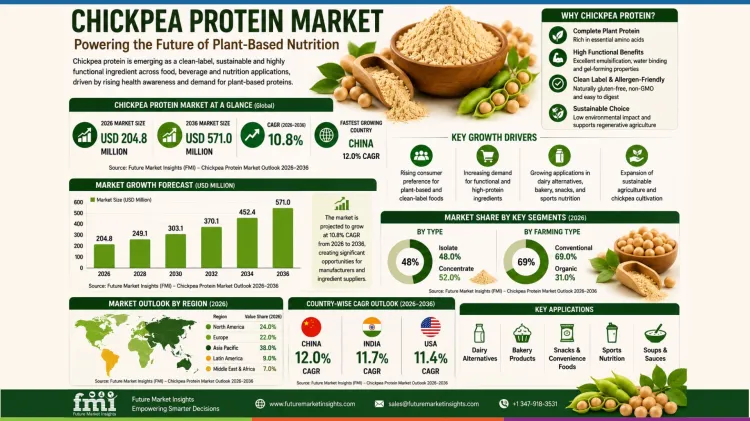
The global Chickpea Protein Market is entering a new stage of development. Pea protein was, for much of the previous decade, seen as the natural go-to source of pulse protein for companies wishing to leverage the benefits of the protein trend in plant-based nutrition. Pea protein gained traction because it offered an excellent balance of protein, functionality, scalability, and consumer acceptance.
Times have changed, however, and food manufacturers are now getting smarter about protein ingredients. No longer is the focus on determining what protein can do everything; now, the goal is to determine which proteins work well for certain applications and how various ingredients can be combined to boost functionality, nutrition, flavor, and stability in the supply chain.
This shift is becoming increasingly visible across the broader Plant Protein Market. As manufacturers gain access to a wider range of protein sources including pea, soy, rice, oat, fava bean, mung bean, and chickpea proteins, formulation decisions are becoming more application-specific. The question is no longer which protein is superior overall. The more relevant question is which protein delivers the greatest value in a particular product category.
Why Pea Protein Became the Industry Standard
Pea protein gained a foothold within the plant-based market as a result of fulfilling many business and technological needs at once. It had good protein content, a nutritionally desirable profile, and was easy to incorporate into numerous production lines for food products. With all of these traits, it became possible to create products that could compete with more traditional protein sources.
Its rise accelerated alongside the expansion of the Plant-Based Food Market. Plant-based burgers, sausages, nuggets, ready meals, and meat alternatives required ingredients capable of supporting texture formation, water retention, and protein claims. Pea protein proved particularly effective in these applications, allowing manufacturers to formulate products with meaningful protein content while maintaining acceptable texture and processing performance.
With increasing demand came investment in production processes. Supply chains grew larger to increase extraction capabilities and improve processing techniques. Ultimately, pea protein established itself as the standard plant protein to measure new developments against. This competitive advantage remains a key attribute even today. Any evaluation of alternative proteins takes into account not only functionality, but also supply and reliability of the raw material. In those respects, pea protein continues to hold a decided edge.
Why Chickpea Protein Is Gaining Ground
However, despite its financial success, pea protein is not free from problems. Among those which are most frequently mentioned by developers are flavor-related ones. Pea protein tends to provide earthy, grassy, or beany flavor components, and therefore, a certain approach to covering, adjusting, or addressing these issues needs to be found. Although it is usually possible to solve these kinds of problems, they make a project more difficult to work on.
And here comes another type of protein – chickpea protein. Unlike many other types of protein derived from pulses, chickpea protein does not have such a strong flavor. Therefore, in cases where it is important for the final product not to interfere with sensory experience, this kind of protein may serve well.
Another advantage of using chickpeas is their higher level of consumer recognition. Within the broader Food Ingredients Market, recognizable ingredients are becoming increasingly valuable as consumers scrutinize labels and seek products with simpler formulations.
The appeal of chickpea protein therefore extends beyond technical functionality. It also aligns with consumer expectations regarding transparency, ingredient familiarity, and clean-label positioning.
Dairy Alternatives Are Creating New Opportunities
One of the strongest opportunities for chickpea protein is emerging within the Dairy Alternatives Market. Unlike plant-based meat products, dairy alternatives are highly dependent on sensory performance. Consumers expect plant-based milk, yogurt, creamers, frozen desserts, and dairy-free beverages to deliver a smooth, pleasant eating experience that closely resembles traditional dairy products.
In this respect, even the slightest flavor flaws may be quite detrimental. In such cases, ingredient suppliers opt for products that can add more value nutritionally but not flavor-wise.
The mild taste properties of chickpea protein make it quite beneficial in the current setting. Formulators can thus raise protein levels while limiting the effort of flavor masking. This becomes more relevant in view of the transition of dairy-free options from niche markets to mass consumption.
The opportunity also extends into the broader Functional Food Ingredients Market. Manufacturers increasingly seek ingredients capable of delivering multiple benefits simultaneously. Chickpea protein can contribute protein enrichment, emulsification, texture support, and clean-label formulation advantages. As food companies search for multifunctional ingredients that simplify formulations, chickpea protein becomes increasingly relevant.
Manufacturers Are Choosing Diversification Instead of Replacement
The diversification trend has been the most significant trend affecting the competitiveness of chickpea protein against pea protein.
The manufacturing of foods has become less confident about depending solely on one ingredient supplier. Due to the occurrence of uncertainties, which include supply chain problems, volatility in raw material prices, political instability, and shifting consumer preferences, food processors are now seeking ways to diversify their sources of protein.
This trend mirrors developments across the broader Alternative Protein Market. Companies increasingly view proteins as complementary assets rather than direct competitors. Different proteins bring different strengths, and successful formulations often combine multiple ingredients to achieve specific nutritional and functional objectives.
There are benefits that can be realized by blending proteins like improved amino acid profile, texture optimization, risk reduction in sourcing, and better performance of the protein. This context creates an opportunity for chickpea protein not because companies are shunning pea protein but because they are increasing their protein blend options.
This point should be made clear since chickpea protein growth will arise from diversification, not necessarily replacement.
Where Pea Protein Still Holds the Advantage
Despite growing interest in chickpea protein, pea protein continues to dominate several major application categories.
The most obvious example is the Sports Nutrition Market. Protein powders, ready-to-drink beverages, meal replacements, and performance-focused nutritional products often prioritize protein concentration above all other factors. Pea protein's high protein content makes it particularly attractive in these applications.
In the same vein, manufacturers of plant-based meats have continued to depend on pea proteins due to their ability to help create structure and texture. Years of formulating and optimizing manufacture have resulted in competitive strengths that are hard to match for nascent protein types.
In addition, there is greater infrastructure for the manufacture of pea proteins. Increased infrastructure in manufacturing typically results in improved supply chain security and cost competitiveness. Such considerations are critical in global businesses in the food industry.
This explains why pea proteins will likely dominate in the high-protein segments for many years to come.
The Biggest Misconception
The major misunderstanding is that chickpea protein is trying to beat out the use of pea protein.
Such an assumption fails to account for the complexity of ingredient formulation. It is unusual for a company to seek out one ingredient that can solve all their issues at once. Instead, companies construct complex systems with various ingredients that will optimize nutritional value, taste, cost efficiency, and performance in processing.
It is often the case that chickpea protein and pea protein do not compete against each other. One could enhance flavor while the other could increase protein density. One could help meet clean label requirements while the other could enhance texture. The goal isn’t necessarily to compete but rather to optimize.
The firms that will be successful will know this.
Bottom Line
The rivalry between chickpea protein and pea protein is changing the way in which manufacturers formulate with plant proteins. Pea protein continues to lead the way for the size of its well-established infrastructure, protein content, and proven efficacy in formulations such as meat substitutes and sports nutrition.
The popularity of chickpea protein, meanwhile, stems from its strengths in terms of flavor, familiarity, its clean-label status, and versatility in formulating. This protein is now being incorporated in a variety of products including dairy substitutes, snacks, bakery items, and functional foods.
The future of this market does not seem likely to yield a single victor. The reality of protein formulations will be in diversification based upon functionality, nutritional benefits, sensory performance, and supply chain robustness.
Plant-based formulation will demand an ability to formulate not only with proteins but also to understand their interaction with one another.

