

- Market Size (2026)
- USD 611.4 Mn
- Forecast (2036)
- USD 1557.2 Mn
- CAGR (2026 to 2036)
- 9.8%
How big is AI Infrastructure Dependency Mapping Software Market in 2026?
USD 611.4 million in 2026 and USD 1,557.2 million by 2036 at a 9.8% CAGR.
Demand for AI infrastructure dependency mapping software is projected to rise at a 9.8% CAGR by 2036, driving industry valuation from USD 611.4 million in 2026 to USD 1,557.2 million during the forecast period. AI infrastructure dependency mapping enters software budgets because accelerated compute changes power, cooling and service availability together. In April 2025, the International Energy Agency projected data-center electricity use to more than double to about 945 TWh by 2030. Larger loads make isolated dashboards less useful for rack and workload approvals. Operators fund dependency-aware AI data-center cooling and data-center power views before releasing capacity.
National adoption depends on operators turning facility limits into usable operating data. The USA Energy Information Administration estimated in June 2025 that computing used 8% of USA commercial-sector electricity in 2024 and could reach 20% by 2050. Higher computing load brings power management systems closer to AI capacity decisions, but the software still needs reconciled facility records, IT discovery and service relationships. Greenfield sites can establish records during commissioning, whereas retrofit-heavy estates usually require more integration and governance work.
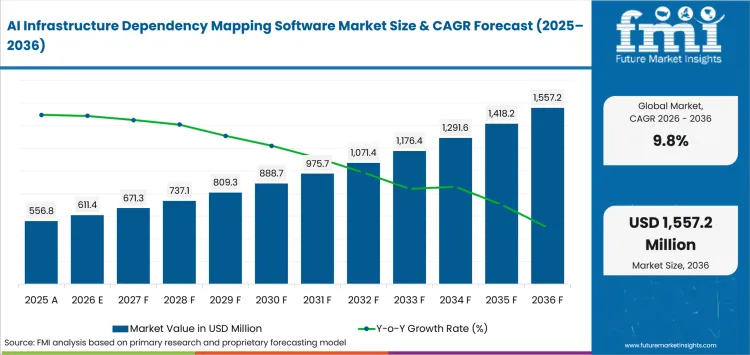
Key Takeaways
- Demand is rising as AI capacity decisions increasingly depend on the same power, cooling, network and service relationships that determine usable compute.
- Based on platform function, monitoring & telemetry is projected to account for 27.0% in 2026, owing to the need for current operating state before engineers trust dependency analysis.
- In 2026, SaaS / public cloud is expected to lead deployment model with 38.0% share, supported by centralized administration for multi-site infrastructure records and integrations.
- By AI rack density, the 251-500 kW segment is estimated to hold 32.0% in 2026, given the tighter coupling between rack power and cooling capacity.
- Fragmented asset records, telemetry sources and security boundaries can lengthen implementation since a dependency model loses decision value if teams cannot keep relationships current.
- Some of the key players in this market include Device42, Sunbird Software, FNT Software, Nlyte Software, EkkoSense, Schneider Electric, Siemens, and Vertiv.
Analyst Perspective
"The useful test for AI infrastructure dependency mapping is whether engineers can trace a high-density rack to the power, cooling and service records that constrain it. Commercial performance depends on keeping those relationships current enough for change approval ahead of production."
- Sudip saha, Principal Consultant, Future Market Insights
How is the AI infrastructure dependency mapping software market segmented?
The market is segmented by platform function, deployment model, AI rack density, data center type, commercial model and region.
Platform function covers monitoring & telemetry, planning & simulation, optimization & control, fault / reliability analytics, and reporting & governance. Deployment model includes SaaS / public cloud, private cloud, on-premise, and hybrid deployment. AI rack density spans below 100 kW, 100-250 kW, 251-500 kW, and above 500 kW. Data center type includes hyperscale AI data centers, colocation AI facilities, enterprise private AI, and HPC & research centers. Commercial model covers direct enterprise contract, system integrator / EPC-led, subscription / license, and managed-service contract.
What makes monitoring & telemetry central to the platform function category?
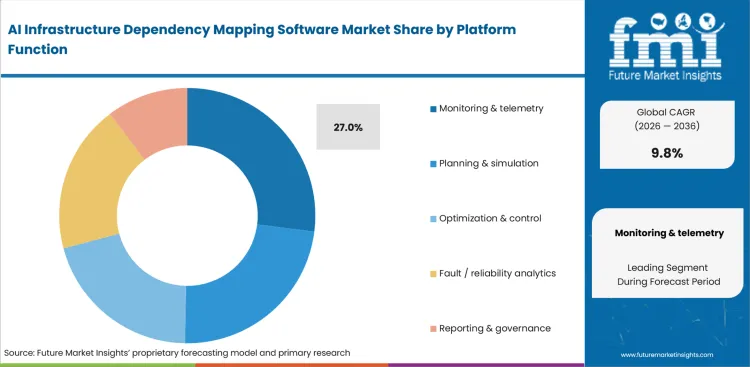
Monitoring & telemetry supplies the current operating state engineers need before planning or control can influence production infrastructure. FNT Software launched Infrastructure Health and Monitoring in September 2025 with real-time status, resource-utilization, temperature and humidity data tied to its infrastructure digital twin.
- By platform function, monitoring & telemetry is forecast to represent 27.0% in 2026, attributable to the need for live conditions before engineering teams accept capacity or failure-impact decisions.
- Data center infrastructure management teams rely on synchronized physical and virtual records because stale telemetry can send engineers down the wrong dependency path during operational change review.
How do multi-site operators evaluate SaaS / public cloud deployment?
Multi-site teams favor centrally maintained software so dependency records stay available to IT, facilities and engineering groups without separate application stacks at each location.
- In 2026, SaaS / public cloud is expected to lead deployment model with 38.0% share, tied to shorter upgrade cycles and centralized integration administration for distributed estates.
- Restricted records keep private cloud and on-premise deployments in use. Data-center management policies determine which infrastructure data can leave a controlled environment. Device42 added SaaS discovery in September 2025 and extended business-service management so software-use records and service membership could be maintained in one platform context.
How does the 251-500 kW band shape AI rack density decisions?
The 251-500 kW band forces electrical headroom, liquid cooling and workload placement into one approval decision since small design errors can consume material capacity.
- The 251-500 kW segment is likely to capture 32.0% share in 2026, due to engineers needing to model power and cooling dependencies during high-density capacity approval.
- Direct-to-chip cooling increases the rack-level relationships dependency software must trace among compute, coolant distribution, electrical paths and operational alarms. Schneider Electric and AMD published a validated Helios reference design in July 2026 for 246 kW racks, placing commercial designs just below this band’s lower boundary.
What supports hyperscale AI data centers within the data center type category?
Hyperscale AI sites carry the broadest dependency graph as utility interconnection, electrical distribution, cooling, compute and network systems enter service in stages. Siemens published a 136 MW reference design in June 2026 with 100 MW of IT load and centralized management spanning power, cooling and compute. Installed capacity is not always usable capacity.
- Hyperscale AI data centers are set to lead the data center type with 46.0% share in 2026, given the number of cross-domain systems that can constrain usable capacity.
- Modular data centers repeat capacity blocks, yet models must separate design intent from commissioned operating state before engineers approve each block for use.
What are the drivers, restraints and opportunities in the AI Infrastructure Dependency Mapping Software Market?
Higher-density AI compute raises demand for cross-domain operating context, fragmented infrastructure records slow implementation, and scenario-based digital twins extend dependency mapping into design validation.
- Driver: AI server growth tightens power and cooling decisions, increasing the value of software that relates facility conditions to compute and service dependencies.
- Restraint: Disconnected asset, network and telemetry records reduce confidence in dependency models and lengthen the integration path into formal change control.
- Opportunity: Scenario models can test electrical and thermal consequences ahead of deployment, moving dependency analysis earlier into design, commissioning and capacity approval.
AI Server Growth Raises the Cost of Incomplete Infrastructure Context
AI compute makes facility capacity a scheduling constraint for engineering teams deciding which workloads or racks can be added. In May 2026, the USA Energy Information Administration estimated servers at 7% of commercial-sector electricity use in 2025 and projected 22%-33% by 2050. Data-center power management becomes more useful as software relates electrical limits to the services and equipment affected by a proposed change.
Disconnected Records Delay Trust in the Dependency Model
Integration becomes a material restraint once a platform must reconcile authoritative records owned by different operational teams. Sunbird Software addressed that issue in April 2025 by adding bidirectional synchronization between dcTrack and ServiceNow, Cisco ACI and Equinix SmartView. Mappings that drift after implementation push engineers back to manual reconciliation and weaken the platform's role in change approval.
Scenario Models Extend Dependency Analysis into Design Review
Engineering teams can test infrastructure changes before hardware reaches production, especially where electrical and thermal limits affect workload placement. Schneider Electric and ETAP introduced a grid-to-chip digital twin in March 2025 with what-if analysis and real-time electrical performance tracking. Electrical digital twins bring dependency mapping into design review so planned compute can be checked against power-system behavior before capital is committed.
Which country CAGRs are profiled in the AI Infrastructure Dependency Mapping Software Market?
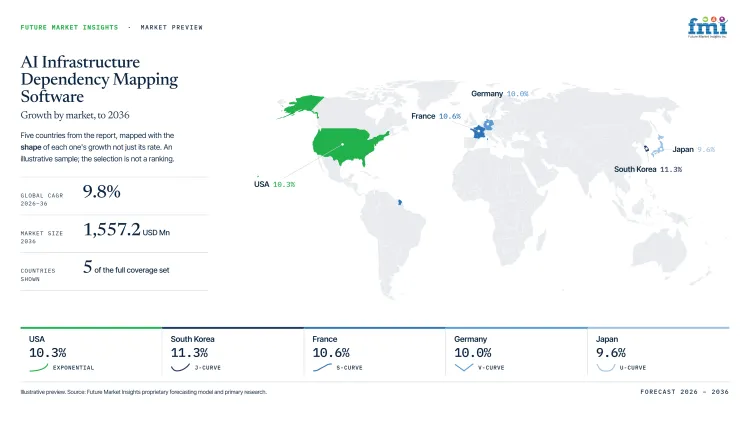
| Country | CAGR |
|---|---|
| South Korea | 11.3% |
| UAE | 10.9% |
| France | 10.6% |
| USA | 10.3% |
| Germany | 10.0% |
| Japan | 9.6% |
How do country-level CAGRs compare in the AI Infrastructure Dependency Mapping Software Market?
The profiled CAGRs form a narrow 1.7-point band, with South Korea at 11.3% and the UAE at 10.9% ahead of France at 10.6% and the USA at 10.3%. Germany at 10.0% and Japan at 9.6% sit close enough that local implementation conditions can outweigh the headline growth-rate gap alone.
- South Korea's concentrated AI projects raise multi-system change volume.
- UAE campus scale concentrates software decisions.
- French colocation density raises costs from unclear tenant-facility links.
- USA integrator depth lowers complex connector deployment risk.
- German energy scrutiny raises demand for auditable facility relationships.
- Japanese space constraints favor pre-build dependency mapping.
Integration scope and project ownership mean similar CAGRs can produce different software revenue. The full report provides country-level CAGR analysis across North America, Latin America, Europe, East Asia, South Asia, Oceania and the Middle East and Africa.
Country-wise Analysis
- For qualifying AI data-center projects in South Korea, the national approval route can shorten administrative work but grid access still determines when planned compute capacity can enter service and generate operating data. The Ministry of Science and ICT confirmed in May 2026 that the AIDC Special Act passed on May 7 and takes effect in February 2027, establishing a firm timetable for the faster approval process. South Korea is estimated to post 11.3% CAGR during the assessment period, owing to earlier project coordination that gives platforms with commissioning-grade dependency records a clearer route into qualifying AIDC programs during early commissioning.
- Large greenfield AI campuses in the UAE develop power, cooling, network and security designs on one project schedule, giving software teams a chance to establish dependency records during design. Adoption of AI infrastructure dependency mapping software in the UAE is estimated to expand at 10.9% CAGR through 2036, attributable to the value of establishing those relationships ahead of commissioning under compressed delivery schedules. Abu Dhabi Media Office announced Stargate UAE in May 2025 as a 1-gigawatt cluster inside a 5-gigawatt campus with the first 200 MW phase expected in 2026, showing why slow connector work or weak access controls can become project-level friction.
- With grid connections reserved years ahead of planned load, French data-center operators need software that separates reserved capacity from installed equipment and usable operating headroom as local projects move through phased build-outs. RTE reported in May 2026 that nearly 18 GW had been reserved for about 80 projects and operators expected ten to fifteen years to reach roughly 80% of requested consumption, making capacity-state records useful long before full utilization. AI infrastructure dependency mapping software demand in France is predicted to advance at 10.6% CAGR through 2036, given the value of tracking those stages even as slow load ramp-up delays full operational use.
- Retrofit-heavy AI data-center programs in the USA often reach software procurement after facility teams reconcile new compute orders with electrical and cooling headroom inside existing operating sites with inherited asset and service records. AI infrastructure dependency mapping software demand in the USA is forecast to rise at 10.3% CAGR over the forecast period, tied to retrofit estates where integrations can shorten planning work. Lawrence Berkeley National Laboratory estimated in June 2026 that data centers could use 11.8% of USA electricity by 2030, making linked IT and facility records more useful during capacity approval for major expansion projects in retrofit clusters.
- In Germany, mature engineering and monitoring systems give operators detailed facility records, but new dependency software must fit those records without forcing teams to maintain a second operating source. The Federal Ministry for Economic Affairs and Energy noted in July 2025 that data-center capacity reached 2,730 MW in 2024 and could exceed 4,800 MW by 2030, increasing the integration burden as installed estates expand. The German AI infrastructure dependency mapping software sector is projected to record 10.0% CAGR during the assessment period, supported by the need to trace power and cooling relationships back to IT assets without replacing existing operational records.
- Coordinating electricity and telecommunications planning during site preparation is becoming a normal requirement for Japanese data-center projects because utility and carrier decisions follow different timetables and capacity is unusable until both progress. AI infrastructure dependency mapping software sales in Japan are forecast to expand at 9.6% CAGR by 2036, driven by planning needs that span digital and physical capacity ahead of equipment service. The Ministry of Economy, Trade and Industry and the Ministry of Internal Affairs and Communications published Watt-Bit Collaboration Report 1.0 in June 2025 to coordinate both infrastructure systems, giving planning-led platforms a longer sales window despite power and network lead times.
Who are the notable companies in the AI Infrastructure Dependency Mapping Software Market?
Device42, Sunbird Software, FNT Software, Nlyte Software, EkkoSense, Schneider Electric, Siemens, and Vertiv are the notable companies serving this market.
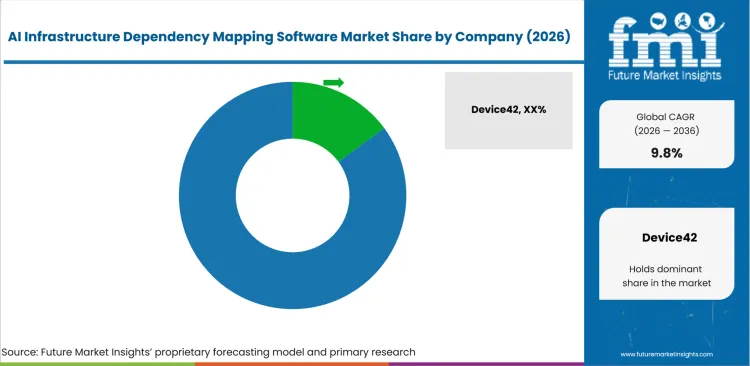
Competition spans IT discovery, DCIM, thermal optimization and facility-control software because no single record owns every dependency needed for AI capacity decisions. Device42 maps application relationships, whereas Sunbird Software, FNT Software and Nlyte Software focus on asset records. EkkoSense covers thermal capacity, and Schneider Electric, Siemens and Vertiv extend into power, cooling and digital-twin engineering. Data-center liquid cooling increases cross-domain record needs as rack density rises.
- Device42, Sunbird Software, FNT Software and Nlyte Software compete from discovery, DCIM and infrastructure records.
- EkkoSense uses live thermal, cooling and rack data to identify capacity constraints during deployment decisions.
- Schneider Electric, Siemens and Vertiv extend dependency analysis into power, cooling, controls and model-based AI infrastructure engineering.
Competitive Benchmarking: AI Infrastructure Dependency Mapping Software Market
| Company | Dependency Model Breadth | Live Infrastructure Data | Capacity & Impact Analysis | Geographic Reach |
|---|---|---|---|---|
| Device42 | High | High | Medium | North America and international enterprise software |
| Sunbird Software | Medium | High | High | Global DCIM customer base |
| FNT Software | High | High | Medium | Europe, Americas and international deployments |
| Nlyte Software | Medium | High | High | North America and international data centers |
| EkkoSense | Medium | High | High | Americas, EMEA and Asia-Pacific |
| Schneider Electric | High | High | High | Global data-center and energy infrastructure |
| Siemens | High | High | High | Global smart-infrastructure and data-center reach |
| Vertiv | High | Medium | High | Global critical digital infrastructure |
Scoring basis: High dependency breadth covers at least three documented infrastructure or service domains, Medium covers two and Low covers one. For live data, High requires real-time or bidirectional refresh, Medium automated or narrower updates, and Low static or manual refresh. High capacity and impact analysis includes documented planning or simulation tied to infrastructure conditions. Medium covers narrower change impact, and Low covers basic monitoring. Geographic reach is descriptive.
Key Developments in the AI Infrastructure Dependency Mapping Software Market
- In April 2025, Device42 released v19.05 MA with revised application dependency mapping logic for shared infrastructure and automatic business-service updates, improving how teams represent common dependencies during change analysis.
- In August 2025, EkkoSense released EkkoSoft Critical 9.1 with rack-capacity checks and power or cooling restrictions, giving high-density projects tighter approval controls as new racks move toward service.
- In October 2025, Vertiv announced gigawatt-scale NVIDIA Omniverse DSX reference architectures using Vertiv OneCore and targeting up to 50% faster Time to First Token, moving dependency modeling into deployment decisions.
Key Players in the AI Infrastructure Dependency Mapping Software Market
IT discovery and dependency intelligence
- Device42
DCIM and infrastructure record platforms
- Sunbird Software
- FNT Software
- Nlyte Software
Thermal and capacity optimization
- EkkoSense
Power, cooling and AI infrastructure engineering
- Schneider Electric
- Siemens
- Vertiv
AI Infrastructure Dependency Mapping Software Market - Report Scope
| Coverage field | Report scope |
|---|---|
| Market breakdown | By platform function, deployment model, AI rack density, data center type, commercial model and region. |
| Quantitative Units | USD million. |
| Market Definition | Software that maps and maintains dependencies between AI compute, IT services, data-center assets, power, cooling, network and operating conditions for planning, monitoring, capacity and change decisions. |
| Regions Covered | North America, Latin America, Western Europe, Eastern Europe, East Asia, South Asia and Pacific, and the Middle East and Africa. |
| Countries Covered | South Korea, UAE, France, USA, Germany, Japan, and 30+ countries included in the full report. |
| Key Companies Profiled | Device42, Sunbird Software, FNT Software, Nlyte Software, EkkoSense, Schneider Electric, Siemens, and Vertiv. |
| Forecast Period | 2026 to 2036. |
| Approach | Primary and secondary research with market triangulation. |
AI Infrastructure Dependency Mapping Software Market - Research Methodology
| Method | Approach |
|---|---|
| Primary Research | FMI analysts gathered input from manufacturers, service providers, technology developers, distributors, end users, procurement teams, and subject-matter experts. Interviews examined purchasing decisions, product or service evaluation, adoption barriers, approval requirements, pricing considerations, and expectations for technical or commercial support. Respondents were also asked what evidence is required before a trial, pilot, or initial order develops into regular purchasing. |
| Desk Research | Desk research covered government statistics, regulatory publications, trade data, industry associations, technical literature, standards, company filings, product information, and official corporate announcements. Sources were reviewed for relevance, publication date, geographic coverage, and consistency with the defined market scope. Claims relating to performance, applications, approvals, capacity, investment, and commercial activity were retained only when supported by credible public evidence. |
| Market Sizing and Forecasting | The market model combined the baseline value with historical performance, segment structure, pricing and volume indicators, adoption levels, company participation, and country-level demand conditions. Forecast assumptions considered economic activity, investment trends, regulatory developments, technology adoption, purchasing cycles, supply availability, and barriers to wider market use. Segment and regional estimates were reconciled before the final market total was calculated. |
| Data Validation | Estimates were checked against multiple independent indicators, including public data, company activity, trade patterns, industry developments, and findings from primary interviews. Validation also tested whether products, services, applications, and company revenues fell within the defined market boundaries. Adjacent categories, unsupported claims, overlapping revenues, and activities without direct market relevance were excluded to reduce double counting and maintain consistency across segments and countries. |
AI Infrastructure Dependency Mapping Software Market by Segments
AI Infrastructure Dependency Mapping Software Market segmented by Platform Function:
- Monitoring & telemetry
- Planning & simulation
- Optimization & control
- Fault / reliability analytics
- Reporting & governance
AI Infrastructure Dependency Mapping Software Market segmented by Deployment Model:
- SaaS / public cloud
- Private cloud
- On-premise
- Hybrid deployment
AI Infrastructure Dependency Mapping Software Market segmented by AI Rack Density:
- 251-500 kW
- 100-250 kW
- Below 100 kW
- Above 500 kW
AI Infrastructure Dependency Mapping Software Market segmented by Data Center Type:
- Hyperscale AI data centers
- Colocation AI facilities
- Enterprise private AI
- HPC & research centers
AI Infrastructure Dependency Mapping Software Market segmented by Commercial Model:
- Direct enterprise contract
- System integrator / EPC-led
- Subscription / license
- Managed-service contract
AI Infrastructure Dependency Mapping Software Market by Region:
- North America
- United States
- Canada
- Latin America
- Brazil
- Mexico
- Argentina
- Chile
- Western Europe
- Germany
- France
- United Kingdom
- Italy
- Spain
- Benelux
- Nordics
- Eastern Europe
- Poland
- Czech Republic
- Romania
- Hungary
- East Asia
- China
- Japan
- South Korea
- South Asia and Pacific
- India
- ASEAN
- Australia and New Zealand
- Middle East and Africa
- GCC Countries
- South Africa
- Türkiye
- Israel
Research Sources and Bibliography
- International Energy Agency. (2025, April 10). Energy and AI.
- USA Energy Information Administration. (2025, June 25). Electricity use for commercial computing could surpass space cooling, ventilation.
- FNT Software. (2025, September 22). FNT launches Infrastructure Health and Monitoring feature for the FNT Command Platform.
- Device42. (2025, September 3). SaaS Discovery and Business Service Improvements - v19.07.10 MA.
- Schneider Electric. (2026, July 23). Schneider Electric and AMD release first Helios platform reference design to accelerate AI Factory deployment.
- Siemens. (2026, June 1). Siemens and partners develop reference architecture purpose-built for NVIDIA AI data centers.
- USA Energy Information Administration. (2026, May 19). Data center server energy use grows across the commercial building stock.
- Sunbird Software. (2025, April 25). Sunbird dcTrack Release 9.2.3 Available Now.
- Schneider Electric. (2025, March 18). ETAP and Schneider Electric unveil digital twin to simulate AI Factory power requirements from grid to chip level using NVIDIA Omniverse.
- Lawrence Berkeley National Laboratory. (2026, June). United States Data Center Energy Usage Report: 2025 Update.
- Ministry of Science and ICT, Republic of Korea. (2026, May). The AIDC Special Act Passes the National Assembly Plenary Session.
- Ministry of Economy, Trade and Industry, Japan. (2025, June 12). Report 1.0 of the Public-Private Advisory Council on Watt-Bit Collaboration Published.
- RTE. (2026, May). Les data centers en chiffres clés.
- Federal Ministry for Economic Affairs and Energy. (2025, July 15). How data centres increase our demand for energy.
- Abu Dhabi Media Office. (2025, May 22). Global tech alliance launches 'Stargate UAE'.
- Device42. (2025, April 2). ADM and UI enhancements - v19.05 MA.
- EkkoSense. (2025, August 19). New levels of data center capacity management released.
- Vertiv. (2025, October 28). Delivering flexibility at gigawatt-scale: Vertiv announces rapidly deployed, system-level reference architectures for the NVIDIA Omniverse DSX Blueprint.
- FNT Software. (2025, February 13). FNT Software partners with Netcon Americas to enhance IT, data center and telecommunications infrastructure management.
- Siemens. (2025, December 9). Siemens and nVent to release joint reference architecture purpose-built for NVIDIA AI data centers.
- Nlyte Software. (2026, February 26). Nlyte 16.0.300 Release: Enhancements, Integrations, and Fixes.
- Schneider Electric. (2025, November 18). Schneider Electric, AVEVA and ETAP join Alliance for OpenUSD to advance digital twins and 3D modeling for industries.
- EkkoSense. (2025, July 15). Kinetic IT partners with EkkoSense to add AI-powered data centre optimisation to its services portfolio.
- Device42. (2025, May 6). Business Service and Freshservice enhancements - v19.06 MA.
- Sunbird Software. (2025, December 2). Sunbird dcTrack Release 9.3 Available Now.
- FNT Software. (2025, May 9). FNT Software announces enhanced version of its flagship Data Center Infrastructure Management platform.
- Nlyte Software. (2025, November 19). Nlyte Software announces launch of Nlyte Software Version 16, delivering next-generation Data Center Infrastructure Management.
- EkkoSense. (2025, December 17). EkkoSense extends US data center management partner network.
- Schneider Electric. (2026, March 16). Schneider Electric teams with NVIDIA to develop validated blueprints to design, simulate, build, operate and maintain gigawatt-scale AI Factories.
- Siemens. (2026, March 18). Siemens expands data center partner ecosystem to scale next-generation AI infrastructure.
- Vertiv. (2026, June 1). Vertiv introduces Vertiv SmartRun digital twin.
This bibliography is provided for reader reference and is not exhaustive. The full report contains the complete reference list and detailed citations
This Report Answers
- How large is the AI infrastructure dependency mapping software market in 2026 and 2036?
- What increases demand for dependency mapping in AI capacity decisions?
- Why does monitoring & telemetry account for 27.0% of platform function revenue in 2026?
- How does SaaS / public cloud fit multi-site infrastructure management?
- Why does the 251-500 kW band lead AI rack density?
- How do the profiled country CAGRs differ?
- Which companies span discovery, DCIM, thermal analysis and facility controls?
- What integration problems limit trust during capacity approvals?
Frequently Asked Questions
How big is the AI Infrastructure Dependency Mapping Software Market in 2026?
The AI infrastructure dependency mapping software market is valued at USD 611.4 million in 2026 and is projected to reach USD 1,557.2 million by 2036. AI capacity decisions increasingly require current power, cooling and service dependencies.
What is the CAGR of the AI Infrastructure Dependency Mapping Software Market from 2026 to 2036?
The AI infrastructure dependency mapping software market is projected to grow at a CAGR of 9.8% between 2026 and 2036. Higher rack densities and constrained power capacity raise spending on dependency-aware planning.
Which platform function leads the AI Infrastructure Dependency Mapping Software Market?
The monitoring & telemetry segment is expected to hold 27.0% of platform function revenue in 2026, driven by the need for current operating state. Engineers use live infrastructure data to check capacity and failure impact during change approval.
How much value will the AI Infrastructure Dependency Mapping Software Market add between 2026 and 2036?
The AI infrastructure dependency mapping software market is expected to add USD 945.8 million between 2026 and 2036. Spending increases as operators link AI compute decisions with power, cooling and service conditions.
Which companies are active in the AI Infrastructure Dependency Mapping Software Market?
Key companies include Device42, Sunbird Software, FNT Software, Nlyte Software, EkkoSense, Schneider Electric, Siemens, and Vertiv. Their positions span discovery, DCIM, thermal analysis, facility engineering and model-based planning.
Preview the report firsthand - request a free sample
Get SampleGet the brochure for pricing and purchase details.
Get PDFTable of Content
- Key Takeaways
- Market Size and CAGR
- Top Growth Driver
- Fastest Growing Segment
- Leading Region
- Key Companies
- Emerging Opportunities
- Executive Summary
- Global Market Outlook
- Demand-side Trends
- Supply-side Trends
- Technology Roadmap Analysis
- Analysis and Recommendations
- Analyst Perspective (What is happening? Why now? What should investors know?)
- Key Questions Answered
- How large is the market?
- What is the CAGR?
- What are key trends?
- Which region dominates?
- Who are the leaders?
- Market Overview
- Market Coverage / Taxonomy
- Market Definition / Scope / Limitations
- Research Methodology
- Chapter Orientation
- Analytical Lens and Working Hypotheses
- Market Structure, Signals, and Trend Drivers
- Benchmarking and Cross-market Comparability
- Market Sizing, Forecasting, and Opportunity Mapping
- Research Design and Evidence Framework
- Desk Research Programme (Secondary Evidence)
- Expert Input and Fieldwork (Primary Evidence)
- Tooling, Models, and Reference Databases
- Data Engineering and Model Build
- Quality Assurance and Audit Trail
- Market Background
- Market Dynamics (Drivers, Restraints, Opportunity, Trends)
- Scenario Forecast (Optimistic, Likely, Conservative)
- Impact Analysis
- AI Impact
- Sustainability Impact
- Regulatory Impact
- Technology Impact
- Consumer / Buyer Analysis
- Purchase Drivers
- Adoption Barriers
- Buyer Journey
- Opportunity Map Analysis
- Product Life Cycle Analysis
- Supply Chain Analysis
- Investment Feasibility Matrix
- Value Chain Analysis
- PESTLE and Porter's Analysis
- Regulatory Landscape
- Regional Parent Market Outlook
- Production and Consumption Statistics
- Import and Export Statistics
- Global Market Analysis and Forecast, 2021 to 2036
- Historical Market Size Value (USD Million) Analysis, 2021 to 2025
- Current and Future Market Size Value (USD Million) Projections, 2026 to 2036
- Y-o-Y Growth Trend Analysis
- Absolute $ Opportunity Analysis
- Global Market Pricing Analysis, 2021 to 2036
- Global Market Analysis and Forecast, By Platform Function, 2021 to 2036
- Introduction / Key Findings
- Historical Market Size Value (USD Million) Analysis By Platform Function, 2021 to 2025
- Current and Future Market Size Value (USD Million) Analysis and Forecast By Platform Function, 2026 to 2036
- Monitoring & telemetry
- Planning & simulation
- Optimization & control
- Fault / reliability analytics
- Reporting & governance
- Monitoring & telemetry
- Y-o-Y Growth Trend Analysis By Platform Function, 2021 to 2025
- Absolute $ Opportunity Analysis By Platform Function, 2026 to 2036
- Global Market Analysis and Forecast, By Deployment Model, 2021 to 2036
- Introduction / Key Findings
- Historical Market Size Value (USD Million) Analysis By Deployment Model, 2021 to 2025
- Current and Future Market Size Value (USD Million) Analysis and Forecast By Deployment Model, 2026 to 2036
- SaaS / public cloud
- Private cloud
- On-premise
- Hybrid deployment
- SaaS / public cloud
- Y-o-Y Growth Trend Analysis By Deployment Model, 2021 to 2025
- Absolute $ Opportunity Analysis By Deployment Model, 2026 to 2036
- Global Market Analysis and Forecast, By AI Rack Density, 2021 to 2036
- Introduction / Key Findings
- Historical Market Size Value (USD Million) Analysis By AI Rack Density, 2021 to 2025
- Current and Future Market Size Value (USD Million) Analysis and Forecast By AI Rack Density, 2026 to 2036
- 251-500 kW
- 100-250 kW
- Below 100 kW
- Above 500 kW
- 251-500 kW
- Y-o-Y Growth Trend Analysis By AI Rack Density, 2021 to 2025
- Absolute $ Opportunity Analysis By AI Rack Density, 2026 to 2036
- Global Market Analysis and Forecast, By Data Center Type, 2021 to 2036
- Introduction / Key Findings
- Historical Market Size Value (USD Million) Analysis By Data Center Type, 2021 to 2025
- Current and Future Market Size Value (USD Million) Analysis and Forecast By Data Center Type, 2026 to 2036
- Hyperscale AI data centers
- Colocation AI facilities
- Enterprise private AI
- HPC & research centers
- Hyperscale AI data centers
- Y-o-Y Growth Trend Analysis By Data Center Type, 2021 to 2025
- Absolute $ Opportunity Analysis By Data Center Type, 2026 to 2036
- Global Market Analysis and Forecast, By Commercial Model, 2021 to 2036
- Introduction / Key Findings
- Historical Market Size Value (USD Million) Analysis By Commercial Model, 2021 to 2025
- Current and Future Market Size Value (USD Million) Analysis and Forecast By Commercial Model, 2026 to 2036
- Direct enterprise contract
- System integrator / EPC-led
- Subscription / license
- Managed-service contract
- Direct enterprise contract
- Y-o-Y Growth Trend Analysis By Commercial Model, 2021 to 2025
- Absolute $ Opportunity Analysis By Commercial Model, 2026 to 2036
- Global Market Analysis and Forecast, By Region, 2021 to 2036
- Introduction
- Historical Market Size Value (USD Million) Analysis By Region, 2021 to 2025
- Current Market Size Value (USD Million) Analysis and Forecast By Region, 2026 to 2036
- North America
- Latin America
- Western Europe
- Eastern Europe
- East Asia
- South Asia and Pacific
- Middle East & Africa
- Market Attractiveness Analysis By Region
- North America Market Analysis and Forecast, By Country, 2021 to 2036
- Historical Market Size Value (USD Million) Trend Analysis By Market Taxonomy, 2021 to 2025
- Market Size Value (USD Million) Forecast By Market Taxonomy, 2026 to 2036
- By Country
- USA
- Canada
- By Platform Function
- By Deployment Model
- By AI Rack Density
- By Data Center Type
- By Commercial Model
- By Country
- Market Attractiveness Analysis
- By Country
- By Platform Function
- By Deployment Model
- By AI Rack Density
- By Data Center Type
- By Commercial Model
- Key Takeaways
- Latin America Market Analysis and Forecast, By Country
- Historical Market Size Value (USD Million) Trend Analysis By Market Taxonomy, 2021 to 2025
- Market Size Value (USD Million) Forecast By Market Taxonomy, 2026 to 2036
- By Country
- Brazil
- Mexico
- Chile
- Rest of Latin America
- By Platform Function
- By Deployment Model
- By AI Rack Density
- By Data Center Type
- By Commercial Model
- By Country
- Market Attractiveness Analysis
- By Country
- By Platform Function
- By Deployment Model
- By AI Rack Density
- By Data Center Type
- By Commercial Model
- Key Takeaways
- Western Europe Market Analysis and Forecast, By Country
- Historical Market Size Value (USD Million) Trend Analysis By Market Taxonomy, 2021 to 2025
- Market Size Value (USD Million) Forecast By Market Taxonomy, 2026 to 2036
- By Country
- Germany
- UK
- Italy
- Spain
- France
- Nordic
- BENELUX
- Rest of Western Europe
- By Platform Function
- By Deployment Model
- By AI Rack Density
- By Data Center Type
- By Commercial Model
- By Country
- Market Attractiveness Analysis
- By Country
- By Platform Function
- By Deployment Model
- By AI Rack Density
- By Data Center Type
- By Commercial Model
- Key Takeaways
- Eastern Europe Market Analysis and Forecast, By Country
- Historical Market Size Value (USD Million) Trend Analysis By Market Taxonomy, 2021 to 2025
- Market Size Value (USD Million) Forecast By Market Taxonomy, 2026 to 2036
- By Country
- Russia
- Poland
- Hungary
- Balkan & Baltic
- Rest of Eastern Europe
- By Platform Function
- By Deployment Model
- By AI Rack Density
- By Data Center Type
- By Commercial Model
- By Country
- Market Attractiveness Analysis
- By Country
- By Platform Function
- By Deployment Model
- By AI Rack Density
- By Data Center Type
- By Commercial Model
- Key Takeaways
- East Asia Market Analysis and Forecast, By Country
- Historical Market Size Value (USD Million) Trend Analysis By Market Taxonomy, 2021 to 2025
- Market Size Value (USD Million) Forecast By Market Taxonomy, 2026 to 2036
- By Country
- China
- Japan
- South Korea
- By Platform Function
- By Deployment Model
- By AI Rack Density
- By Data Center Type
- By Commercial Model
- By Country
- Market Attractiveness Analysis
- By Country
- By Platform Function
- By Deployment Model
- By AI Rack Density
- By Data Center Type
- By Commercial Model
- Key Takeaways
- South Asia and Pacific Market Analysis and Forecast, By Country
- Historical Market Size Value (USD Million) Trend Analysis By Market Taxonomy, 2021 to 2025
- Market Size Value (USD Million) Forecast By Market Taxonomy, 2026 to 2036
- By Country
- India
- ASEAN
- Australia & New Zealand
- Rest of South Asia and Pacific
- By Platform Function
- By Deployment Model
- By AI Rack Density
- By Data Center Type
- By Commercial Model
- By Country
- Market Attractiveness Analysis
- By Country
- By Platform Function
- By Deployment Model
- By AI Rack Density
- By Data Center Type
- By Commercial Model
- Key Takeaways
- Middle East & Africa Market Analysis and Forecast, By Country
- Historical Market Size Value (USD Million) Trend Analysis By Market Taxonomy, 2021 to 2025
- Market Size Value (USD Million) Forecast By Market Taxonomy, 2026 to 2036
- By Country
- Kingdom of Saudi Arabia
- Other GCC Countries
- Türkiye
- South Africa
- Other African Union
- Rest of Middle East & Africa
- By Platform Function
- By Deployment Model
- By AI Rack Density
- By Data Center Type
- By Commercial Model
- By Country
- Market Attractiveness Analysis
- By Country
- By Platform Function
- By Deployment Model
- By AI Rack Density
- By Data Center Type
- By Commercial Model
- Key Takeaways
- Key Countries Market Analysis
- USA
- Pricing Analysis
- Market Share Analysis, 2025
- By Platform Function
- By Deployment Model
- By AI Rack Density
- By Data Center Type
- By Commercial Model
- Canada
- Pricing Analysis
- Market Share Analysis, 2025
- By Platform Function
- By Deployment Model
- By AI Rack Density
- By Data Center Type
- By Commercial Model
- Mexico
- Pricing Analysis
- Market Share Analysis, 2025
- By Platform Function
- By Deployment Model
- By AI Rack Density
- By Data Center Type
- By Commercial Model
- Brazil
- Pricing Analysis
- Market Share Analysis, 2025
- By Platform Function
- By Deployment Model
- By AI Rack Density
- By Data Center Type
- By Commercial Model
- Chile
- Pricing Analysis
- Market Share Analysis, 2025
- By Platform Function
- By Deployment Model
- By AI Rack Density
- By Data Center Type
- By Commercial Model
- Germany
- Pricing Analysis
- Market Share Analysis, 2025
- By Platform Function
- By Deployment Model
- By AI Rack Density
- By Data Center Type
- By Commercial Model
- UK
- Pricing Analysis
- Market Share Analysis, 2025
- By Platform Function
- By Deployment Model
- By AI Rack Density
- By Data Center Type
- By Commercial Model
- Italy
- Pricing Analysis
- Market Share Analysis, 2025
- By Platform Function
- By Deployment Model
- By AI Rack Density
- By Data Center Type
- By Commercial Model
- Spain
- Pricing Analysis
- Market Share Analysis, 2025
- By Platform Function
- By Deployment Model
- By AI Rack Density
- By Data Center Type
- By Commercial Model
- France
- Pricing Analysis
- Market Share Analysis, 2025
- By Platform Function
- By Deployment Model
- By AI Rack Density
- By Data Center Type
- By Commercial Model
- India
- Pricing Analysis
- Market Share Analysis, 2025
- By Platform Function
- By Deployment Model
- By AI Rack Density
- By Data Center Type
- By Commercial Model
- ASEAN
- Pricing Analysis
- Market Share Analysis, 2025
- By Platform Function
- By Deployment Model
- By AI Rack Density
- By Data Center Type
- By Commercial Model
- Australia & New Zealand
- Pricing Analysis
- Market Share Analysis, 2025
- By Platform Function
- By Deployment Model
- By AI Rack Density
- By Data Center Type
- By Commercial Model
- China
- Pricing Analysis
- Market Share Analysis, 2025
- By Platform Function
- By Deployment Model
- By AI Rack Density
- By Data Center Type
- By Commercial Model
- Japan
- Pricing Analysis
- Market Share Analysis, 2025
- By Platform Function
- By Deployment Model
- By AI Rack Density
- By Data Center Type
- By Commercial Model
- South Korea
- Pricing Analysis
- Market Share Analysis, 2025
- By Platform Function
- By Deployment Model
- By AI Rack Density
- By Data Center Type
- By Commercial Model
- Russia
- Pricing Analysis
- Market Share Analysis, 2025
- By Platform Function
- By Deployment Model
- By AI Rack Density
- By Data Center Type
- By Commercial Model
- Poland
- Pricing Analysis
- Market Share Analysis, 2025
- By Platform Function
- By Deployment Model
- By AI Rack Density
- By Data Center Type
- By Commercial Model
- Hungary
- Pricing Analysis
- Market Share Analysis, 2025
- By Platform Function
- By Deployment Model
- By AI Rack Density
- By Data Center Type
- By Commercial Model
- Kingdom of Saudi Arabia
- Pricing Analysis
- Market Share Analysis, 2025
- By Platform Function
- By Deployment Model
- By AI Rack Density
- By Data Center Type
- By Commercial Model
- Türkiye
- Pricing Analysis
- Market Share Analysis, 2025
- By Platform Function
- By Deployment Model
- By AI Rack Density
- By Data Center Type
- By Commercial Model
- South Africa
- Pricing Analysis
- Market Share Analysis, 2025
- By Platform Function
- By Deployment Model
- By AI Rack Density
- By Data Center Type
- By Commercial Model
- USA
- Market Structure Analysis
- Competition Dashboard
- Competition Benchmarking
- Market Share Analysis of Top Players
- By Regional
- By Platform Function
- By Deployment Model
- By AI Rack Density
- By Data Center Type
- By Commercial Model
- Emerging Startups
- Innovation Benchmarking
- Competition Analysis
- Competition Deep Dive
- Device42
- Overview
- Product Portfolio
- Profitability by Market Segments
- Sales Footprint
- Strategy Overview
- Marketing Strategy
- Product Strategy
- Channel Strategy
- Sunbird Software
- Schneider Electric
- Siemens
- Device42
- Case Studies
- Success Stories
- Recent Developments
- Competition Deep Dive
- Assumptions & Acronyms Used


