

- Market Size (2026)
- USD 219.9 Mn
- Forecast (2036)
- USD 602.2 Mn
- CAGR (2026 to 2036)
- 10.6%
How big is Baking Chocolate Market in 2026?
USD 219.9 million in 2026 and USD 602.2 million by 2036 at a 10.6% CAGR.
Sales of baking chocolate are estimated to rise at 10.6% CAGR through 2036, increasing valuation from USD 219.9 million in 2026 to USD 602.2 million by 2036. Commercial bakeries purchase chocolate repeatedly because every production batch requires the same flavor and heat behavior. In February 2026, the USA Census Bureau published USD 42.48 billion in 2023 commercial-bakery sales. The documented bakery scale supports qualified bakery ingredients for line-specific formulations that must repeat reliably under commercial oven conditions. Industrial bakery mixes require equally stable behavior because one dry-system change can alter finished-batch consistency.
UAE demand is closely tied to hotel menus and foodservice turnover that generate frequent pastry recipe changes. Dubai DET recorded 19.59 million international overnight visitors in 2025 in its February 2026 release. The 5% annual increase keeps dessert menu rotation high for hotel and event-catering programs. The USA has a deeper industrial bakery base where production yield weighs more heavily before replacing a proven commercial chocolate specification. The channel differences shape baking ingredients demand without implying equal current market size between countries.
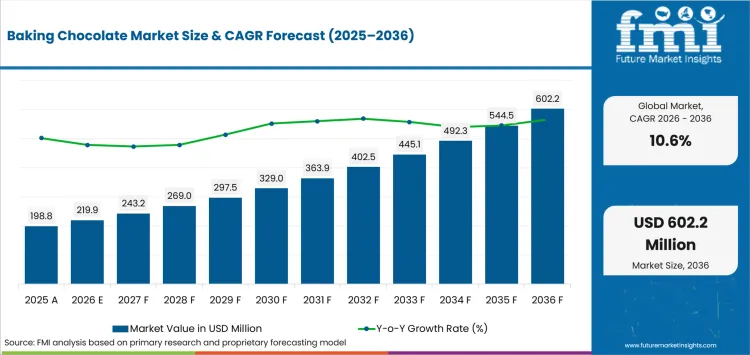
Key Takeaways
- Industrial bakeries sustain baking chocolate demand because repeat production requires stable flavor and predictable heat behavior from batch to batch.
- By product type, dark is estimated to hold 35.0% in 2026 owing to concentrated cocoa flavor and broad recipe flexibility.
- In 2026, powder - dry is expected to lead form demand with 40.0% share because dry dosing fits high-volume bakery handling.
- Bread & rolls is projected to hold 28.0% of application demand in 2026 attributable to multiple insertion points for cocoa powders and pieces.
- Cocoa-price volatility can force recipe changes and repeated production trials before a replacement formulation is approved for regular use.
- Key players in the baking chocolate market include Barry Callebaut, Puratos, IRCA Group, Cargill, ofi, Dawn Foods, Luker Chocolate, and Natra.
Analyst Perspective
"Baking chocolate earns its margin by holding flavor and shape after oven exposure without adding line loss. Industrial bakeries should compare melt behavior and finished-unit yield under their own oven profile before treating ingredient price as the deciding metric."
- Nandini Roy Choudhury, Principal Consultant, Future Market Insights
How is the Baking Chocolate Market segmented?
The market is segmented by product type, form, application, claim, sales channel and region.
Product type covers dark, milk, white & blond and sugar-free & specialty formulations within the defined market taxonomy. Form covers powder - dry, liquid, paste / semi-solid and granules / pieces as separate physical formats for commercial use. Application includes bread & rolls, cakes & muffins, biscuits & cookies, viennoiserie & pastry and other bakery & snacks. Claim distinguishes conventional, clean label, organic and non-GMO / identity preserved specifications used in commercial purchasing. Sales channel separates direct to industrial bakeries, ingredient distributors, foodservice & artisan supply and online B2B routes.
How does Bread & Rolls shape demand within the Application category?
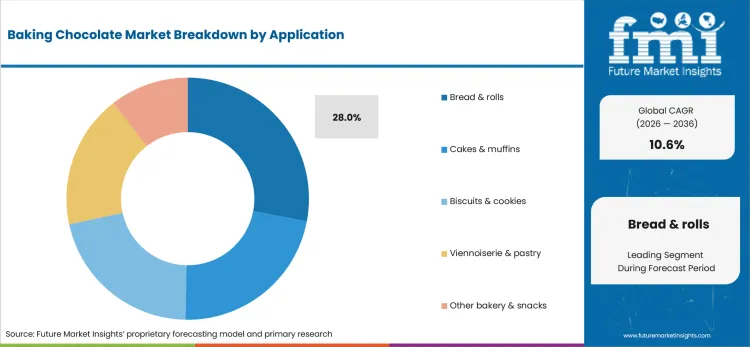
Bread and roll lines expose chocolate and flour improvers to mixing, fermentation and oven heat before cooling and packing. Chocolate pieces must retain visual identity after baking while fillings must remain inside the intended deposited zone during oven exposure.
- Bread & rolls is projected to hold 28.0% of application demand in 2026 driven by repeated use of cocoa powders, chips and fillings in sweet bread formats.
- South Korea's agriculture ministry launched a 2025 recipe program with about 100 bakeries after thirty bakeries developed 120 floury-rice breads and confections during 2024. The program shows how quickly bakery assortments can change once processors have a workable recipe base.
What makes Dark central to the Product type category?
Dark baking chocolate gives formulators a strong cocoa note without relying on milk solids to set the flavor profile. Industrial recipes can adjust sweetness and fat elsewhere while retaining a recognizable chocolate character after baking.
- By product type, dark is estimated to hold 35.0% in 2026 owing to concentrated flavor and its fit with chips, chunks, coatings and fillings.
- IRCA Group opened its St. Louis chocolate facility in February 2025 and began local RENO X production in dark, milk and white variants. The same USA program covers baking chips and chunks, shortening the qualification route for manufacturers that need several bake-stable formats.
Why does Powder - dry lead the Form category?
Powder - dry formats fit plants that meter cocoa beside flour before mixing. South Korea's agriculture ministry identified cocoa powder among twelve agri-food items reaching record export values in 2025 in its January 2026 release. The evidence places dry cocoa formats inside current commercial food activity.
- In 2026, powder - dry is expected to lead the form category with 40.0% share because storage and dosing fit scaled bakery workflows.
- Dry formats avoid the temperature control required for many liquid systems and keep moisture additions separate during formulation trials. Industrial bakeries compare dispersion and color at the mixer before qualifying a new powder specification for regular production.
What drives Direct to industrial bakeries within the Sales channel category?
Direct accounts become valuable once chocolate performance depends on oven settings and finished-unit yield. Puratos opened innovation centers in Montreal and Costa Rica during August 2025 and reported 120 centers worldwide. The Montreal site gives bakery teams a direct route from formulation questions into supervised trials.
- Direct to industrial bakeries is set to lead the sales channel with 52.0% share in 2026 attributable to volume planning and direct application support.
- Direct contracts improve planning because ingredient manufacturers see production forecasts earlier and can coordinate trials with regular orders. Earlier visibility reduces avoidable downtime and gives both sides a clearer point for resolving line-performance questions.
What are the drivers, restraints and opportunities in the Baking Chocolate Market?
Industrial bakery scale sustains repeat ingredient orders, cocoa volatility raises requalification costs and alternative cocoa technologies offer new formulation routes.
- Driver: High-throughput bakeries reorder chocolate because each batch requires controlled flavor, dosing and bake performance.
- Restraint: Cocoa price shocks can change recipe economics quickly enough to trigger smaller doses, alternate sourcing and new production trials.
- Opportunity: Application teams can win reformulation work by qualifying cocoa-saving or alternative-cocoa recipes without sacrificing finished-product performance.
Repeat purchasing starts with a large installed bakery base instead of a one-time equipment cycle. The USA Census business profile lists 2,842 employer establishments in commercial bakeries and provides a direct scale measure for regular USA bakery ingredients demand. Adjacent confectionery ingredients also enter sweet-bakery recipes that must hold flavor and texture during routine production.
Rising cocoa ingredients costs can interrupt routine purchasing because reformulation changes flavor and finished-unit cost simultaneously. USDA ERS reported in February 2025 that global cocoa bean prices had risen 310% before the December 2024 peak. The price shock raises requalification work for cocoa butter alternatives once bakeries revise recipes to protect finished-unit economics.
Alternative cocoa routes become commercially relevant if they preserve chocolate taste and process behavior under normal bakery conditions. Puratos announced in February 2026 that professional chocolate containing cultured cocoa is planned for USA availability toward the end of 2026. Application laboratories can compare cultured cocoa with standard chocolate inclusions under the same bakery conditions before industrial qualification.
Which country CAGRs are profiled in the Baking Chocolate Market?
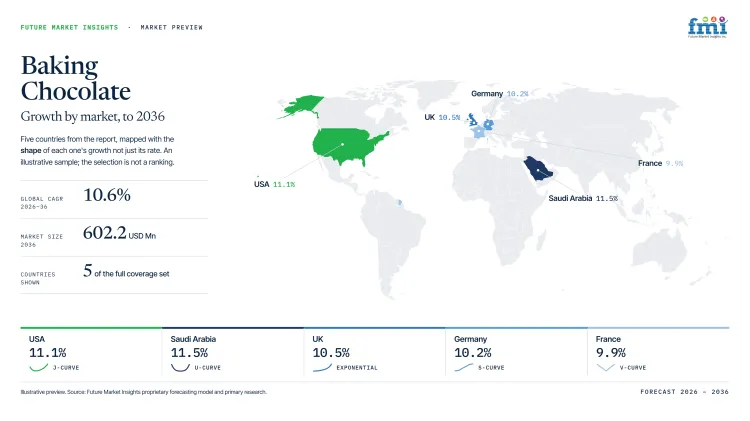
| Country | CAGR |
|---|---|
| Saudi Arabia | 11.5% |
| USA | 11.1% |
| UK | 10.5% |
| Germany | 10.2% |
| France | 9.9% |
How do country-level CAGRs compare in the Baking Chocolate Market?
The country range is narrow as 1.3 percentage points separate the UAE at 11.8% CAGR from the UK at 10.5%. The UAE and Saudi Arabia form the upper Gulf cluster, and the USA follows at 11.1%. South Korea and the UK complete the lower band because channel structure separates their commercial conditions more than forecast pace alone.
- Saudi chains favor scheduled supply for multi-city hospitality programs.
- USA plants reward domestic scale and deeper industrial contracts.
- UK private-label listings require disciplined specifications and retailer documentation.
- Germany manufacturers emphasize technical consistency and established industrial bakery relationships.
- France buyers prioritize premium formulations and established specialty distribution channels.
Similar CAGRs still require different account strategies because local channels convert demand differently. The full report provides country-level CAGR analysis across North America, Latin America, Europe, East Asia, South Asia, Oceania and the Middle East and Africa.
Country-wise Analysis
- Saudi bakery and hospitality operators serve travel demand that extends from hotel breakfast programs into cafes and event catering in several major cities. GASTAT reported 140.9 million airport passengers during 2025 in its May 2026 air transport release, with traffic rising 9.6% from 2024. The Saudi Arabia baking chocolate sector is projected to record 11.5% CAGR during the assessment period, helped by expanding travel occasions and broader foodservice coverage. Regional inventory supports planned launches for professional kitchens, yet long import routes raise replenishment risk outside the largest distribution centers and narrow premium recipe economics for secondary-city accounts during peak periods.
- Large American bakery plants scrutinize chocolate dosage closely because small formulation changes alter finished-unit cost and scrap over multi-shift production schedules. By 2036, the USA is projected to grow at 11.1% CAGR, propelled by industrial bakeries requiring stable chocolate performance under persistent cocoa-cost pressure. BLS listed 164.8 thousand payroll jobs in commercial bakeries and frozen cakes and pastry manufacturing for December 2025. Domestic technical teams can shorten trials for chips and fillings at large production plants. A national rollout still requires several production sites and customer specifications to pass fresh checks before the revised recipe becomes routine at each location..
- UK sweet-bakery manufacturers entered 2026 with tighter advertising rules shaping the commercial value of reformulating chocolate-rich products for national retail programs. The Department of Health and Social Care confirmed that less-healthy food advertising restrictions took effect on 5 January 2026 for television and online advertising. Recipe work can preserve bake performance and improve nutritional composition, though an in-scope finished product still carries a marketing constraint after ingredient changes and retailer review. Baking chocolate demand in the UK is forecast to rise at 10.5% CAGR over the forecast period, attributable to continued recipe renovation and premium sweet-bakery demand under stricter promotion economics.
- German bakery manufacturers emphasize technical consistency, production efficiency, and reliable ingredient specifications across established industrial and artisanal channels. Germany’s baking chocolate market is projected to expand at 10.2% CAGR through 2036, supported by premium bakery applications, product renovation, and continued demand from commercial producers. Strict quality expectations encourage suppliers to maintain consistent cocoa profiles, particle sizes, melting behavior, and processing performance across batches. Established domestic distribution networks can support dependable replenishment, while energy, labor, and cocoa-cost pressures keep formulation efficiency important for manufacturers seeking to protect margins.
- French bakery and pastry producers place greater emphasis on premium chocolate quality, sensory performance, and formulation differentiation across retail and foodservice applications. France’s baking chocolate market is forecast to grow at 9.9% CAGR during the assessment period, supported by premiumization, artisanal pastry demand, and continued product innovation. Suppliers with strong technical support can help manufacturers balance cocoa intensity, texture, and processing stability across recipes. Established specialty distribution provides broad market access, although higher formulation and ingredient costs can limit adoption of premium baking chocolate products among price-sensitive commercial bakery accounts.
Who are the notable companies in the Baking Chocolate Market?
Barry Callebaut, Puratos, IRCA Group, Cargill, ofi, Dawn Foods, Luker Chocolate, and Natra are the notable companies serving this market.
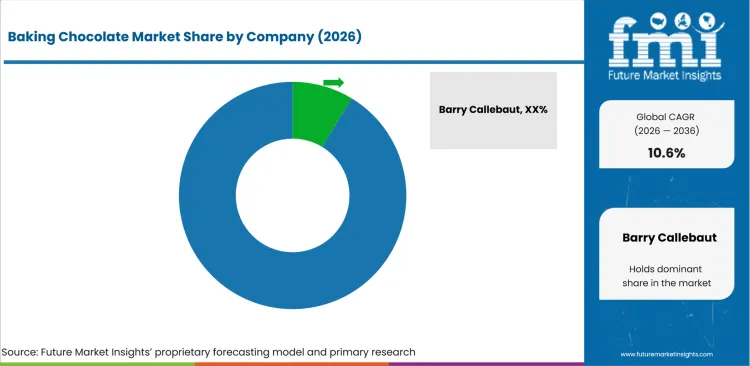
The field separates integrated cocoa and chocolate producers from bakery-system specialists and contract chocolate manufacturers. Industrial accounts test heat behavior, delivery continuity and application support before a formulation reaches routine production, which raises the entry threshold beyond recipe breadth alone.
- Barry Callebaut, Puratos and IRCA Group pair chocolate breadth with application infrastructure suited to industrial bakery qualification and regional customer work.
- Cargill, ofi and Dawn Foods compete from cocoa, specialty-fat or bakery-system positions that influence formulation economics and production support.
- Luker Chocolate and Natra serve brands needing customized chocolate manufacturing or co-manufacturing capacity for defined product programs and regional launches.
Competitive Benchmarking: Baking Chocolate Market
| Company | Chocolate Portfolio Breadth | Bakery Application Support | Manufacturing and Supply Depth | Geographic Reach |
|---|---|---|---|---|
| Barry Callebaut | High | High | High | Global |
| Puratos | High | High | High | Global |
| IRCA Group | High | High | Medium | Europe, North America and international sales |
| Cargill | Medium | High | High | Global |
| ofi | Medium | Medium | High | Global |
| Dawn Foods | Medium | High | Medium | North America, Europe and selected international markets |
| Luker Chocolate | Medium | High | Medium | Americas, Europe and international sales |
| Natra | High | Medium | High | Europe, North America and international sales |
Scoring basis: High portfolio breadth requires at least four documented baking-relevant chocolate or cocoa routes, while Medium requires two or three verified routes and Low identifies one. High application support requires several dedicated development centers or documented formulation programs, while Medium reflects a narrower technical network and Low identifies limited coverage. High manufacturing depth requires multi-region production or integrated cocoa-to-chocolate control, while Medium represents several plants or one integrated regional chain and Low identifies a narrower specialty route.
Key Developments in the Baking Chocolate Market
- In March 2026, Cargill expanded its Port Klang facility in Malaysia with a specialty fats line serving chocolate, bakery and filling applications.
- In February 2026, Barry Callebaut opened its Global Innovation Center in Singapore with chocolate R&D, pilot production and a cacao coatings center.
- In September 2025, Dawn Foods expanded its Royal Steensma range in North America with a ready-to-use dark chocolate ganache for bakery applications.
Key Players in the Baking Chocolate Market
Integrated Chocolate and Cocoa Platforms
- Barry Callebaut
- Puratos
- IRCA Group
Cocoa, Specialty Fats and Bakery Systems
- Cargill
- ofi
- Dawn Foods
Specialty Chocolate and Co-Manufacturing
- Luker Chocolate
- Natra
Baking Chocolate Market - Report Scope
| Coverage field | Report scope |
|---|---|
| Market breakdown | By product type, form, application, claim, sales channel and region. |
| Quantitative Units | USD Million. |
| Market Definition | Business-to-business sales of chocolate and cocoa-based baking ingredients formulated for use in commercial bakery products. Finished bakery goods and non-chocolate substitute ingredients are excluded. |
| Regions Covered | North America, Latin America, Europe, East Asia, South Asia and Pacific and Middle East and Africa. |
| Countries Covered | UAE, Saudi Arabia, USA, South Korea, UK, and 20+ countries included in the full report. |
| Key Companies Profiled | Barry Callebaut, Puratos, IRCA Group, Cargill, ofi, Dawn Foods, Luker Chocolate, Natra. |
| Forecast Period | 2026 to 2036. |
| Approach | Primary and secondary research with market triangulation. |
Baking Chocolate Market - Research Methodology
| Method | Approach |
|---|---|
| Primary Research | FMI analysts gathered input from manufacturers, service providers, technology developers, distributors, end users, procurement teams, and subject-matter experts. Interviews examined purchasing decisions, product or service evaluation, adoption barriers, approval requirements, pricing considerations, and expectations for technical or commercial support. Respondents were also asked what evidence is required before a trial, pilot, or initial order develops into regular purchasing. |
| Desk Research | Desk research covered government statistics, regulatory publications, trade data, industry associations, technical literature, standards, company filings, product information, and official corporate announcements. Sources were reviewed for relevance, publication date, geographic coverage, and consistency with the defined market scope. Claims relating to performance, applications, approvals, capacity, investment, and commercial activity were retained only when supported by credible public evidence. |
| Market Sizing and Forecasting | The market model combined the baseline value with historical performance, segment structure, pricing and volume indicators, adoption levels, company participation, and country-level demand conditions. Forecast assumptions considered economic activity, investment trends, regulatory developments, technology adoption, purchasing cycles, supply availability, and barriers to wider market use. Segment and regional estimates were reconciled before the final market total was calculated. |
| Data Validation | Estimates were checked against multiple independent indicators, including public data, company activity, trade patterns, industry developments, and findings from primary interviews. Validation also tested whether products, services, applications, and company revenues fell within the defined market boundaries. Adjacent categories, unsupported claims, overlapping revenues, and activities without direct market relevance were excluded to reduce double counting and maintain consistency across segments and countries. |
Baking Chocolate Market by Segments
Baking Chocolate Market segmented by Product Type:
- Dark
- Milk
- White & blond
- Sugar-free & specialty
Baking Chocolate Market segmented by Form:
- Powder - dry
- Liquid
- Paste / semi-solid
- Granules / pieces
Baking Chocolate Market segmented by Application:
- Bread & rolls
- Cakes & muffins
- Biscuits & cookies
- Viennoiserie & pastry
- Other bakery & snacks
Baking Chocolate Market segmented by Claim:
- Conventional
- Clean label
- Organic
- Non-GMO / identity preserved
Baking Chocolate Market segmented by Sales Channel:
- Direct to industrial bakeries
- Ingredient distributors
- Foodservice & artisan supply
- Online B2B
Baking Chocolate Market by Region:
- North America
- United States
- Canada
- Latin America
- Brazil
- Mexico
- Argentina
- Chile
- Western Europe
- Germany
- France
- United Kingdom
- Italy
- Spain
- Benelux
- Nordics
- Eastern Europe
- Poland
- Czech Republic
- Romania
- Hungary
- East Asia
- China
- Japan
- South Korea
- South Asia and Pacific
- India
- ASEAN
- Australia and New Zealand
- Middle East and Africa
- GCC Countries
- South Africa
- Türkiye
- Israel
Research Sources and Bibliography
- USA Census Bureau. (2026, February 26). All Sectors: Summary Statistics for Industry Groups and Industries for Employer Firms in the USA and Selected Geographies, 2023 Annual Integrated Economic Survey.
- Dubai Department of Economy and Tourism. (2026, February 9). Dubai welcomes 19.59 million visitors in third record year.
- IRCA Group. (2025, February 18). Crafted in Italy, Produced in the USA.
- Ministry of Agriculture, Food and Rural Affairs, Republic of Korea. (2026, January 20). Exports of K-Food Plus reached USD 13.6 billion in 2025, up 5.1% year-over-year.
- Ministry of Agriculture, Food and Rural Affairs, Republic of Korea. (2025, April 2). Invigorating the Floury Rice Industry: a Win-Win Situation for Both Bakeries and Farmers.
- Puratos. (2025, August 25). Puratos Announces Two New Hubs for Food Innovation: Montreal and Costa Rica.
- USA Census Bureau. (2025). Commercial bakeries: United States business profile.
- USA Department of Agriculture, Economic Research Service. (2025, February 13). High cocoa prices on smaller global crops lead to decreased USA imports in 2023 and 2024.
- Puratos. (2026, February 24). Puratos Launches World’s First Professional Chocolate with Cultured Cocoa.
- Ministry of Economy and Tourism, United Arab Emirates. (2026, April 13). Emirates Tourism Council discusses new action plans to enhance the growth and resilience of the sector in the coming period.
- General Authority for Statistics. (2026, May 18). GASTAT: Passenger traffic at the Kingdom’s airports increases to 140.9 million passengers during 2025.
- USA Bureau of Labor Statistics. (2025, December). Employees on nonfarm payrolls by industry sector and selected industry detail, not seasonally adjusted.
- Ministry of Agriculture, Food and Rural Affairs, Republic of Korea. (2026, March 29).
- Department of Health and Social Care. (2026, January 5). Landmark junk food ad ban to protect kids’ health.
- Cargill. (2026, March 31). Cargill strengthens global specialty fats portfolio with expansion of Port Klang, Malaysia facility.
- Barry Callebaut. (2026, February 10). Barry Callebaut Opens Global Innovation Center in Singapore, Pioneering the Future of Chocolate Through AI and Advanced Innovation.
- Dawn Foods. (2025, September 15). Dawn Foods Expands Royal Steensma Product Line in North America With Four New Premium, Easy-to-use Products.
- Barry Callebaut. (2025, November 13). Barry Callebaut Opens Third Canadian Chocolate Factory in Brantford, Ontario.
- AAK. (2025, October 24). AAK strengthens supply of specialty palm fractions.
- ofi. (2026, April 15). Mars and ofi Announce Strategic Collaboration to Accelerate Net Zero Cocoa in Ecuador.
- Puratos. (2026, January 23). Puratos Strengthens Italian Presence with Puratos Cascarano.
- Cargill. (2025, April 10). Cargill unveils transformed Innovation Center in Singapore to advance food innovation, for Asia from Asia.
- Barry Callebaut. (2025, November 18). Barry Callebaut Partners with NotCo AI to Unlock Next-Level Chocolate Innovation.
- Puratos. (2026, January 21). Puratos acquires Vör Foods, accelerating USA nut-based innovation.
- IRCA Group. (2025, July 7). New design. Same passion.
- ofi. (2025, April 23). Nestlé and ofi launch global agroforestry partnership in largest collaboration yet.
- Dawn Foods. (2025, September 15). Dawn Foods Introduces New Dawn Balance Cleaner Ingredients Colorful Buttercreme Style Icings.
- Luker Chocolate. (2026, March 18). Luker Chocolate debuts new Chocolate with Whey Protein.
- Natra. (2025, September 4). Leading Dutch peanut butter and ingredients supplier Bredabest joins Natra.
- Blommer Chocolate Company. (2025, March 17). Blommer Chocolate Company Expands Lab Capabilities and Opens New 10,000 Square Foot R&D Center in Chicago, IL.
This bibliography is provided for reader reference and is not exhaustive. The full report contains the complete reference list and detailed citations
This Report Answers
- How large is the baking chocolate market in 2026 and what value is forecast by 2036?
- Which bakery operating conditions sustain repeat purchases of baking chocolate?
- Why does dark hold the leading position within product type demand?
- How does powder - dry fit industrial bakery handling and dosing requirements?
- Why do bread & rolls account for a large share of application demand?
- How does direct selling change technical support for industrial bakery accounts?
- Why do the UAE and Saudi Arabia record the fastest profiled country CAGRs?
- Which companies combine chocolate manufacturing with bakery application support?
- How do cocoa-price shocks affect recipe qualification and finished-unit economics?
Frequently Asked Questions
How big is the baking chocolate market in 2026?
The baking chocolate market is valued at USD 219.9 million in 2026 and is projected to reach USD 602.2 million by 2036. Repeat industrial bakery production sustains ingredient purchasing because qualified chocolate is consumed in every production batch.
What is the CAGR of the baking chocolate market from 2026 to 2036?
The baking chocolate market is projected to grow at a CAGR of 10.6% between 2026 and 2036. Expansion is supported by bakery product renewal and industrial demand for chocolate formats with predictable bake performance.
Which product type leads the baking chocolate market?
The dark segment is expected to hold 35.0% of the baking chocolate market in 2026, attributable to concentrated cocoa flavor and broad recipe flexibility. Industrial bakeries use dark chocolate in chips, chunks, coatings and fillings without changing the core cocoa profile.
Which claim leads the baking chocolate market?
The conventional segment is expected to hold 53.0% of the baking chocolate market in 2026, supported by broad availability and familiar qualification requirements. Industrial bakeries prioritize flavor consistency and line performance before accepting the sourcing complexity attached to specialty claims.
How much value will the baking chocolate market add between 2026 and 2036?
The baking chocolate market is expected to add USD 382.3 million in value between 2026 and 2036. The increase follows repeat ingredient demand from commercial bakery production together with wider use of chocolate in bread and pastry formats.
Which countries are projected to record the highest growth in the baking chocolate market?
The UAE is projected to grow at 11.8% CAGR, followed by Saudi Arabia at 11.5% and the USA at 11.1% through 2036. Hospitality demand and large industrial bakery capacity support the fastest profiled growth paths among the five displayed countries.
Which companies are active in the baking chocolate market?
Key companies operating in the baking chocolate market include Barry Callebaut, Puratos, IRCA Group, Cargill, ofi, Dawn Foods, Luker Chocolate, and Natra. The eight companies differentiate on chocolate manufacturing depth, bakery application support and regional supply coverage for industrial accounts.
Preview the report firsthand - request a free sample
Get SampleGet the brochure for pricing and purchase details.
Get PDFTable of Content
- Key Takeaways
- Market Size and CAGR
- Top Growth Driver
- Fastest Growing Segment
- Leading Region
- Key Companies
- Emerging Opportunities
- Executive Summary
- Global Market Outlook
- Demand-side Trends
- Supply-side Trends
- Technology Roadmap Analysis
- Analysis and Recommendations
- Analyst Perspective (What is happening? Why now? What should investors know?)
- Key Questions Answered
- How large is the market?
- What is the CAGR?
- What are key trends?
- Which region dominates?
- Who are the leaders?
- Market Overview
- Market Coverage / Taxonomy
- Market Definition / Scope / Limitations
- Research Methodology
- Chapter Orientation
- Analytical Lens and Working Hypotheses
- Market Structure, Signals, and Trend Drivers
- Benchmarking and Cross-market Comparability
- Market Sizing, Forecasting, and Opportunity Mapping
- Research Design and Evidence Framework
- Desk Research Programme (Secondary Evidence)
- Expert Input and Fieldwork (Primary Evidence)
- Tooling, Models, and Reference Databases
- Data Engineering and Model Build
- Quality Assurance and Audit Trail
- Market Background
- Market Dynamics (Drivers, Restraints, Opportunity, Trends)
- Scenario Forecast (Optimistic, Likely, Conservative)
- Impact Analysis
- AI Impact
- Sustainability Impact
- Regulatory Impact
- Technology Impact
- Consumer / Buyer Analysis
- Purchase Drivers
- Adoption Barriers
- Buyer Journey
- Opportunity Map Analysis
- Product Life Cycle Analysis
- Supply Chain Analysis
- Investment Feasibility Matrix
- Value Chain Analysis
- PESTLE and Porter's Analysis
- Regulatory Landscape
- Regional Parent Market Outlook
- Production and Consumption Statistics
- Import and Export Statistics
- Global Market Analysis and Forecast, 2021 to 2036
- Historical Market Size Value (USD Million) Analysis, 2021 to 2025
- Current and Future Market Size Value (USD Million) Projections, 2026 to 2036
- Y-o-Y Growth Trend Analysis
- Absolute $ Opportunity Analysis
- Global Market Pricing Analysis, 2021 to 2036
- Global Market Analysis and Forecast, By Product Type, 2021 to 2036
- Introduction / Key Findings
- Historical Market Size Value (USD Million) Analysis By Product Type, 2021 to 2025
- Current and Future Market Size Value (USD Million) Analysis and Forecast By Product Type, 2026 to 2036
- Dark
- Milk
- White & blond
- Sugar-free & specialty
- Dark
- Y-o-Y Growth Trend Analysis By Product Type, 2021 to 2025
- Absolute $ Opportunity Analysis By Product Type, 2026 to 2036
- Global Market Analysis and Forecast, By Form, 2021 to 2036
- Introduction / Key Findings
- Historical Market Size Value (USD Million) Analysis By Form, 2021 to 2025
- Current and Future Market Size Value (USD Million) Analysis and Forecast By Form, 2026 to 2036
- Powder / dry
- Liquid
- Paste / semi-solid
- Granules / pieces
- Powder / dry
- Y-o-Y Growth Trend Analysis By Form, 2021 to 2025
- Absolute $ Opportunity Analysis By Form, 2026 to 2036
- Global Market Analysis and Forecast, By Application, 2021 to 2036
- Introduction / Key Findings
- Historical Market Size Value (USD Million) Analysis By Application, 2021 to 2025
- Current and Future Market Size Value (USD Million) Analysis and Forecast By Application, 2026 to 2036
- Bread & rolls
- Cakes & muffins
- Biscuits & cookies
- Viennoiserie & pastry
- Other bakery & snacks
- Bread & rolls
- Y-o-Y Growth Trend Analysis By Application, 2021 to 2025
- Absolute $ Opportunity Analysis By Application, 2026 to 2036
- Global Market Analysis and Forecast, By Claim, 2021 to 2036
- Introduction / Key Findings
- Historical Market Size Value (USD Million) Analysis By Claim, 2021 to 2025
- Current and Future Market Size Value (USD Million) Analysis and Forecast By Claim, 2026 to 2036
- Conventional
- Clean label
- Organic
- Non-GMO / identity preserved
- Conventional
- Y-o-Y Growth Trend Analysis By Claim, 2021 to 2025
- Absolute $ Opportunity Analysis By Claim, 2026 to 2036
- Global Market Analysis and Forecast, By Sales Channel, 2021 to 2036
- Introduction / Key Findings
- Historical Market Size Value (USD Million) Analysis By Sales Channel, 2021 to 2025
- Current and Future Market Size Value (USD Million) Analysis and Forecast By Sales Channel, 2026 to 2036
- Direct to industrial bakeries
- Ingredient distributors
- Foodservice & artisan supply
- Online B2B
- Direct to industrial bakeries
- Y-o-Y Growth Trend Analysis By Sales Channel, 2021 to 2025
- Absolute $ Opportunity Analysis By Sales Channel, 2026 to 2036
- Global Market Analysis and Forecast, By Region, 2021 to 2036
- Introduction
- Historical Market Size Value (USD Million) Analysis By Region, 2021 to 2025
- Current Market Size Value (USD Million) Analysis and Forecast By Region, 2026 to 2036
- North America
- Latin America
- Western Europe
- Eastern Europe
- East Asia
- South Asia and Pacific
- Middle East & Africa
- Market Attractiveness Analysis By Region
- North America Market Analysis and Forecast, By Country, 2021 to 2036
- Historical Market Size Value (USD Million) Trend Analysis By Market Taxonomy, 2021 to 2025
- Market Size Value (USD Million) Forecast By Market Taxonomy, 2026 to 2036
- By Country
- USA
- Canada
- By Product Type
- By Form
- By Application
- By Claim
- By Sales Channel
- By Country
- Market Attractiveness Analysis
- By Country
- By Product Type
- By Form
- By Application
- By Claim
- By Sales Channel
- Key Takeaways
- Latin America Market Analysis and Forecast, By Country
- Historical Market Size Value (USD Million) Trend Analysis By Market Taxonomy, 2021 to 2025
- Market Size Value (USD Million) Forecast By Market Taxonomy, 2026 to 2036
- By Country
- Brazil
- Mexico
- Chile
- Rest of Latin America
- By Product Type
- By Form
- By Application
- By Claim
- By Sales Channel
- By Country
- Market Attractiveness Analysis
- By Country
- By Product Type
- By Form
- By Application
- By Claim
- By Sales Channel
- Key Takeaways
- Western Europe Market Analysis and Forecast, By Country
- Historical Market Size Value (USD Million) Trend Analysis By Market Taxonomy, 2021 to 2025
- Market Size Value (USD Million) Forecast By Market Taxonomy, 2026 to 2036
- By Country
- Germany
- UK
- Italy
- Spain
- France
- Nordic
- BENELUX
- Rest of Western Europe
- By Product Type
- By Form
- By Application
- By Claim
- By Sales Channel
- By Country
- Market Attractiveness Analysis
- By Country
- By Product Type
- By Form
- By Application
- By Claim
- By Sales Channel
- Key Takeaways
- Eastern Europe Market Analysis and Forecast, By Country
- Historical Market Size Value (USD Million) Trend Analysis By Market Taxonomy, 2021 to 2025
- Market Size Value (USD Million) Forecast By Market Taxonomy, 2026 to 2036
- By Country
- Russia
- Poland
- Hungary
- Balkan & Baltic
- Rest of Eastern Europe
- By Product Type
- By Form
- By Application
- By Claim
- By Sales Channel
- By Country
- Market Attractiveness Analysis
- By Country
- By Product Type
- By Form
- By Application
- By Claim
- By Sales Channel
- Key Takeaways
- East Asia Market Analysis and Forecast, By Country
- Historical Market Size Value (USD Million) Trend Analysis By Market Taxonomy, 2021 to 2025
- Market Size Value (USD Million) Forecast By Market Taxonomy, 2026 to 2036
- By Country
- China
- Japan
- South Korea
- By Product Type
- By Form
- By Application
- By Claim
- By Sales Channel
- By Country
- Market Attractiveness Analysis
- By Country
- By Product Type
- By Form
- By Application
- By Claim
- By Sales Channel
- Key Takeaways
- South Asia and Pacific Market Analysis and Forecast, By Country
- Historical Market Size Value (USD Million) Trend Analysis By Market Taxonomy, 2021 to 2025
- Market Size Value (USD Million) Forecast By Market Taxonomy, 2026 to 2036
- By Country
- India
- ASEAN
- Australia & New Zealand
- Rest of South Asia and Pacific
- By Product Type
- By Form
- By Application
- By Claim
- By Sales Channel
- By Country
- Market Attractiveness Analysis
- By Country
- By Product Type
- By Form
- By Application
- By Claim
- By Sales Channel
- Key Takeaways
- Middle East & Africa Market Analysis and Forecast, By Country
- Historical Market Size Value (USD Million) Trend Analysis By Market Taxonomy, 2021 to 2025
- Market Size Value (USD Million) Forecast By Market Taxonomy, 2026 to 2036
- By Country
- Kingdom of Saudi Arabia
- Other GCC Countries
- Türkiye
- South Africa
- Other African Union
- Rest of Middle East & Africa
- By Product Type
- By Form
- By Application
- By Claim
- By Sales Channel
- By Country
- Market Attractiveness Analysis
- By Country
- By Product Type
- By Form
- By Application
- By Claim
- By Sales Channel
- Key Takeaways
- Key Countries Market Analysis
- USA
- Pricing Analysis
- Market Share Analysis, 2025
- By Product Type
- By Form
- By Application
- By Claim
- By Sales Channel
- Canada
- Pricing Analysis
- Market Share Analysis, 2025
- By Product Type
- By Form
- By Application
- By Claim
- By Sales Channel
- Mexico
- Pricing Analysis
- Market Share Analysis, 2025
- By Product Type
- By Form
- By Application
- By Claim
- By Sales Channel
- Brazil
- Pricing Analysis
- Market Share Analysis, 2025
- By Product Type
- By Form
- By Application
- By Claim
- By Sales Channel
- Chile
- Pricing Analysis
- Market Share Analysis, 2025
- By Product Type
- By Form
- By Application
- By Claim
- By Sales Channel
- Germany
- Pricing Analysis
- Market Share Analysis, 2025
- By Product Type
- By Form
- By Application
- By Claim
- By Sales Channel
- UK
- Pricing Analysis
- Market Share Analysis, 2025
- By Product Type
- By Form
- By Application
- By Claim
- By Sales Channel
- Italy
- Pricing Analysis
- Market Share Analysis, 2025
- By Product Type
- By Form
- By Application
- By Claim
- By Sales Channel
- Spain
- Pricing Analysis
- Market Share Analysis, 2025
- By Product Type
- By Form
- By Application
- By Claim
- By Sales Channel
- France
- Pricing Analysis
- Market Share Analysis, 2025
- By Product Type
- By Form
- By Application
- By Claim
- By Sales Channel
- India
- Pricing Analysis
- Market Share Analysis, 2025
- By Product Type
- By Form
- By Application
- By Claim
- By Sales Channel
- ASEAN
- Pricing Analysis
- Market Share Analysis, 2025
- By Product Type
- By Form
- By Application
- By Claim
- By Sales Channel
- Australia & New Zealand
- Pricing Analysis
- Market Share Analysis, 2025
- By Product Type
- By Form
- By Application
- By Claim
- By Sales Channel
- China
- Pricing Analysis
- Market Share Analysis, 2025
- By Product Type
- By Form
- By Application
- By Claim
- By Sales Channel
- Japan
- Pricing Analysis
- Market Share Analysis, 2025
- By Product Type
- By Form
- By Application
- By Claim
- By Sales Channel
- South Korea
- Pricing Analysis
- Market Share Analysis, 2025
- By Product Type
- By Form
- By Application
- By Claim
- By Sales Channel
- Russia
- Pricing Analysis
- Market Share Analysis, 2025
- By Product Type
- By Form
- By Application
- By Claim
- By Sales Channel
- Poland
- Pricing Analysis
- Market Share Analysis, 2025
- By Product Type
- By Form
- By Application
- By Claim
- By Sales Channel
- Hungary
- Pricing Analysis
- Market Share Analysis, 2025
- By Product Type
- By Form
- By Application
- By Claim
- By Sales Channel
- Kingdom of Saudi Arabia
- Pricing Analysis
- Market Share Analysis, 2025
- By Product Type
- By Form
- By Application
- By Claim
- By Sales Channel
- Türkiye
- Pricing Analysis
- Market Share Analysis, 2025
- By Product Type
- By Form
- By Application
- By Claim
- By Sales Channel
- South Africa
- Pricing Analysis
- Market Share Analysis, 2025
- By Product Type
- By Form
- By Application
- By Claim
- By Sales Channel
- USA
- Market Structure Analysis
- Competition Dashboard
- Competition Benchmarking
- Market Share Analysis of Top Players
- By Regional
- By Product Type
- By Form
- By Application
- By Claim
- By Sales Channel
- Emerging Startups
- Innovation Benchmarking
- Competition Analysis
- Competition Deep Dive
- Barry Callebaut
- Overview
- Product Portfolio
- Profitability by Market Segments
- Sales Footprint
- Strategy Overview
- Marketing Strategy
- Product Strategy
- Channel Strategy
- Puratos
- Dawn Foods
- Zeelandia
- CSM Ingredients
- Bakels
- AGRANA
- Zentis
- Fabbri 1905
- Irca Group
- Barry Callebaut
- Case Studies
- Success Stories
- Recent Developments
- Competition Deep Dive
- Assumptions & Acronyms Used


