

- Industry Size (2026)
- USD 0.83 Bn
- Forecast (2036)
- USD 1.23 Bn
- CAGR (2026 to 2036)
- 4%
Beverage Filter Paper Market Size, Market Forecast and Outlook By FMI
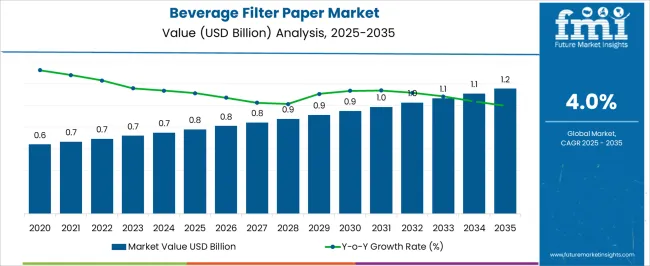
The beverage filter paper market was valued at USD 0.80 billion in 2025, projected to reach USD 0.83 billion in 2026, and is forecast to expand to USD 1.23 billion by 2036 at a 4% CAGR. Growing specialty coffee consumption and rising consumer preference for manual brewing methods are sustaining demand for purpose designed filter papers across institutional, commercial, and household segments. FMI opines that the bifurcation between bleached papers preferred by commercial chains for taste neutrality and unbleached papers favored by specialty coffee consumers for environmental positioning is the defining product segmentation dynamic in this market.
Summary of Beverage Filter Paper Market
- Market Overview
- The market is valued at USD 0.80 billion in 2025 and is projected to reach USD 1.23 billion by 2036.
- The industry is expected to grow at a 4% CAGR from 2026 to 2036, creating an incremental opportunity of USD 0.40 billion.
- The market is a specialty consumables category where cellulose fiber quality, food contact certification, and taste neutrality performance define procurement decisions across institutional and retail channels.
- Demand and Growth Drivers
- Demand is sustained by growing per capita specialty coffee and tea consumption across institutional, commercial, and household brewing channels.
- The manual brewing revival among specialty coffee consumers is creating incremental filter paper demand beyond automatic drip machine replacement cycles.
- Sustainable packaging mandates are accelerating transition from synthetic to cellulose based filtration media in commercial beverage preparation.
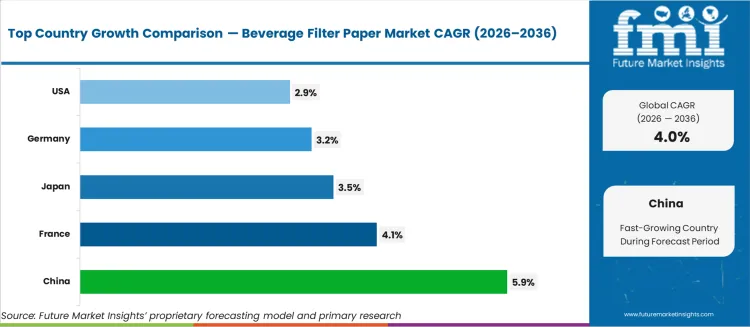
- Among countries, China (5.9% CAGR), France (4.1% CAGR), Japan (3.5% CAGR), Germany (3.2% CAGR), USA (2.9% CAGR).
- Product and Segment View
- The market includes the beverage filter paper market encompasses bleached and unbleached paper products engineered for liquid filtration in coffee, tea, alcoholic beverage, and other beverage preparation processes.
- Bleached leads by Material with 54.3% share in 2026.
- Coffee leads by Beverage Type with 42.8% share in 2026.
- Institutional leads by End Use with 38.6% share in 2026.
- Geography and Competitive Outlook
- China and France are the fastest growing markets, while mature economies sustain demand through equipment replacement and specification upgrade cycles.
- Competition is shaped by product specification breadth, supply chain reliability, and integration with downstream buyer procurement systems.
- Key players include Ahlstrom-Munksjo, Hario, Bunn-O-Matic Corporation, AeroPress, Chemex, Melitta, Flair Espresso.
- Analyst Opinion at FMI
- Ismail Sutaria, Principal Consultant for Packaging observe that: 'In my analysis, I have observed that the beverage filter paper market is being reshaped by two concurrent forces: commercial coffee chains demanding consistent bleached papers with certified taste neutrality, and specialty coffee consumers selecting unbleached papers as a visible sustainability signal. Manufacturers who position exclusively in one segment face margin pressure as buyers in both channels increasingly demand price concessions from single source suppliers.'
- Strategic Implications / Executive Takeaways
- Filter paper manufacturers must maintain dual production capability for bleached and unbleached grades to serve both commercial chain consistency requirements and specialty consumer sustainability preferences.
- Institutional beverage service procurement teams should consolidate filter paper sourcing with manufacturers who can deliver food contact certified products across multiple brewing equipment formats.
- Specialty coffee roasters need to develop co-branded filter paper partnerships with paper manufacturers to capture the growing retail consumer segment that associates filter paper choice with brewing quality.
Beverage Filter Paper Market Key Takeaways
| Metric | Details |
|---|---|
| Industry Size (2026) | USD 0.83 Billion |
| Industry Value (2036) | USD 1.23 Billion |
| CAGR (2026 to 2036) | 4% |
Source: Future Market Insights, 2026
The incremental opportunity of USD 0.40 billion between 2026 and 2036 reflects steady per capita coffee consumption growth and expanding specialty tea markets. Bleached filter papers maintain the majority share because commercial coffee chains require taste neutral filtration that does not impart paper flavor. The unbleached segment is growing faster in percentage terms as environmentally conscious specialty coffee consumers associate natural paper with sustainable brewing practices.
All major regional markets reflect differentiated growth trajectories. China leads with a 5.9% CAGR, France follows at 4.1%, Japan follows at 3.5%, Germany follows at 3.2%, and USA registers 2.9% growth. China's lead growth rate reflects its expanding specialty coffee culture and institutional beverage service modernization. France and Japan maintain growth through established coffee and tea consumption traditions that sustain filter paper demand across all end use channels. Germany and the USA contribute through commercial chain procurement cycles and household brewing equipment attachment rates.
Beverage Filter Paper Market Definition
The beverage filter paper market encompasses bleached and unbleached paper products engineered for liquid filtration in coffee, tea, alcoholic beverage, and other beverage preparation processes. Filter papers are consumed across institutional (hotels, airlines, offices), commercial (cafes, restaurants), and household end use segments. The products are manufactured from cellulose fibers processed to deliver specific porosity, flow rate, and taste neutrality characteristics.
Beverage Filter Paper Market Inclusions
Market scope includes bleached and unbleached beverage filter papers sold for coffee, tea, alcoholic beverage, and other beverage filtration applications. Global and regional market sizes, material type, beverage type, and end use segment breakdowns, and forecast projections from 2026 to 2036 are covered.
Beverage Filter Paper Market Exclusions
The scope excludes industrial liquid filtration media, laboratory grade filter papers, water treatment filters, and reusable metal or cloth filters. Single serve coffee pods and capsules with integrated filter elements are also excluded.
Beverage Filter Paper Market Research Methodology
Primary Research
Analysts engaged with specialty paper mill production managers, coffee roaster supply chain directors, and institutional beverage service procurement leads to map filter paper specification requirements and sourcing patterns.
Desk Research
Data collection aggregated published coffee and tea consumption statistics, specialty paper production capacity reports, food contact material certification standards, and sustainable packaging mandate timelines.
Market Sizing and Forecasting
Baseline values derive from a bottom up aggregation of filter paper consumption volumes by beverage type and end use segment, applying regional pricing benchmarks and per capita coffee and tea consumption rates to project demand growth.
Data Validation and Update Cycle
Projections are tested against published specialty paper manufacturer revenue disclosures, coffee and tea import volume statistics, and institutional catering procurement records.
Sales Trend Analysis from 2021 to 2025 Compared to Market Outlook for 2026 to 2036
From 2021 to 2026, the beverage filter paper market experienced significant growth, witnessing a surge in specialty applications. During this period, the market expanded at a 1.9% CAGR. This period saw a pronounced shift towards specialty and artisanal beverages, driving the demand for tailored filter papers to suit diverse brewing techniques and flavor profiles. Technological advancements played a pivotal role during this phase, with manufacturers focusing on improving filtration efficiency and consistency in brewed beverages.
| CAGR from 2021 to 2025 | 1.9% |
|---|---|
| CAGR from 2026 to 2036 | 4.2% |
The market also witnessed a notable emphasis on health and wellness. Filter papers were engineered to maintain the nutritional elements of beverages while effectively filtering out impurities and sediments, aligning with consumer preferences for healthier drink options.
Moving forward to the forecasted period of 2026 to 2036, these trends are expected to amplify further. Specialty applications are projected to continue their upward trajectory, with an increased emphasis on tailored filter papers for the burgeoning Market of specialty coffees, teas, and other unique beverages. Technological advancements will persist, focusing on enhancing filtration precision and brewing quality.
The market anticipates substantial expansion, particularly in emerging Industries due to rising disposable incomes and an evolving café culture. These factors collectively suggest a continued evolution and steady growth for the beverage filter paper market, catering to diverse consumer demands and evolving market landscapes.
Key Growth Drivers Fueling the Beverage Filter Paper Market
- Rising interest in specialty coffees and teas fuels the need for tailored filter papers catering to unique flavors and brewing methods, driving Market growth.
- Advancements in filter paper manufacturing technologies enhance filtration precision, consistency, and efficiency, meeting evolving beverage market standards.
- Consumer inclination towards healthier beverages prompts the development of filter papers that maintain nutritional elements while refining taste and purity.
- Increasing disposable incomes and evolving beverage cultures in emerging regions drive the demand for quality filter papers, expanding its footprint.
- Rising environmental concerns encourage the adoption of ecofriendly filter papers, aligning with global sustainability goals and driving Market momentum.
Factors Restraining the Growth of the Beverage Filter Paper Market
- Balancing performance with eco friendly solutions poses a challenge, requiring innovations to create sustainable filter papers without compromising quality or efficiency.
- Implementing innovative filtration technologies can be cost prohibitive, impacting Market accessibility for some manufacturers and consumers.
- Catering to diverse beverage preferences and brewing methods necessitates versatile filter paper solutions, challenging manufacturers to meet varying market demands.
- Ensuring consistent quality across filter paper batches presents a challenge, as variations can affect beverage taste, aroma, and overall consumer experience.
- Competition from alternative materials and filter solutions pressures traditional filter paper manufacturers to innovate, maintain relevance, and offer distinct advantages to consumers.
Analysis of Top Countries Manufacturing,Supplying,Using,and Regulating Beverage Filter Paper
The table below displays revenues in terms of the top five leading countries spearheaded by China.
.webp "Top Country Growth Comparison Beverage Filter Paper Market Cagr (2026 2036)")
| Countries | Forecast CAGRs from 2026 to 2036 |
|---|---|
| China | 5.9% |
| France | 4.1% |
| Japan | 3.5% |
| Germany | 3.2% |
| The United States | 2.9% |
Beverage Filter Paper Trends in China, Market Dynamics and Projections
Growing beverage market in China fuels demand for specialized filter papers, especially in tea and coffee segments, driving technological innovations and fostering a diverse product range.
Manufacturers prioritize eco friendly solutions, developing biodegradable filter papers to align with its sustainability goals and consumer preferences for environmentally conscious products.
Continuous research and development efforts lead to enhanced filtration precision and efficiency, addressing the demand for high quality filter papers and supporting its forecasted 5.9% CAGR until 2036.
Exploring Promising Avenues in the Beverage Filter Paper Ecosystem in France
France appreciation for gourmet beverages presents an opportunity for specialized filter papers tailored to enhance the taste profiles of premium coffees and teas, catering to discerning consumers.
Collaborations with upscale restaurants, cafes, and luxury hotels offer a niche Market for high quality filter papers, aligning with its gastronomic culture and emphasizing refinement in brewing experiences.
The urgeoning trend of artisanal brewing creates opportunities for filter paper manufacturers to supply specialized papers that cater to small scale, craft beverage producers seeking distinct filtration solutions. A CAGR of 4.1% is expected for the market from 2026 to 2036.
Key Drivers enhancing Japan Beverage Filter Paper Sales in Japan
Japan’s reverence for tea ceremonies and traditional brewing methods stimulates demand for specialized filter papers, aligning with cultural practices and emphasizing precision in tea preparation.
Rising health consciousness fosters demand for filter papers that maintain beverage nutritional values, meeting consumer preferences for healthier drink options. A CAGR of 3.5% is expected through 2036.
The evolution of convenient, on the go beverage formats in Japan creates opportunities for innovative filter paper applications in portable brewing systems, catering to modern lifestyles.
Challenges in the German Beverage Filter Paper Market with Solutions
Ensuring uniform quality across filter paper batches poses a challenge. Implementing stringent quality control measures and advanced production techniques can address variations, maintaining consistent filtration performance.
Intense market competition demands innovation. Research and development investments in novel materials and improved designs can offer distinct advantages, securing Market relevance.
Meeting stringent environmental standards requires sustainable solutions. Developing biodegradable filter papers and eco friendly materials complies with regulations, aligning with sustainability objectives.
Challenges in the United States Beverage Filter Paper Market and Remedies
Meeting sustainability demands while maintaining filter paper efficiency challenges the Market. Developing recyclable or biodegradable filter papers addresses eco conscious consumer preferences.
Intense competition necessitates differentiation. Innovation in materials or designs can create unique selling propositions, ensuring Market relevance.
Balancing quality and affordability is critical. Streamlining manufacturing processes or exploring cost effective materials can mitigate price concerns while maintaining product quality.
Beverage Filter Paper Industry Analysis by Top Investment Segments
| Category | Market Share in 2026 |
|---|---|
| Unbleached | 61.3% |
| Institutional | 46.2% |
The Reign of Unbleached Beverage Filter Papers
The unbleached category is anticipated dominance, projected to secure a substantial 61.3% market share until 2026, stems from evolving consumer preferences favoring eco friendly and natural products. Unbleached filter papers align with sustainability trends, appealing to conscientious consumers seeking environmentally responsible options.
Their natural appearance, devoid of chemical treatments, resonates with those valuing authenticity and purity in their beverages. The unbleached variety often retains more of the paper is innate properties, potentially enhancing the taste and overall quality of brewed beverages, further cementing its stronghold in the Market.
Institutional Ascendancy, Projected Market Dominance by 2026
The institutional segment is anticipated to rise, set to secure a substantial 46.2% market share by 2026, is driven by heightened demand from cafes, restaurants, and hospitality sectors.
This surge results from their consistent need for high quality beverage filter papers to maintain standards in brewing. As the foodservice market expands, coupled with growing consumer preferences for specialty coffees and teas in these settings, its reliance on filter papers for consistent taste and quality amplifies, propelling its expected dominance in the beverage filter paper Market.
Leading Suppliers of Beverage Filter Paper
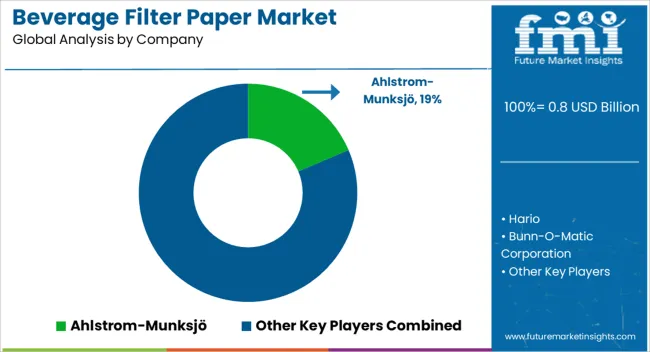
The competitive landscape in the beverage filter paper market is dynamic, marked by intense rivalry among key players striving for innovation and market differentiation.
Established brands invest significantly in technological advancements, aiming to enhance filtration precision and sustainability. New entrants focus on niche segments, catering to evolving consumer preferences for specialty beverages and eco friendly solutions.
Price competitiveness, product quality, and unique value propositions dictate Market standings, driving constant innovation. Collaborations and strategic partnerships to access diversified distribution channels and global Industries characterize this landscape, intensifying competition and encouraging continuous evolution to meet the dynamic demands of the beverage market.
Product Portfolio
- AeroPress offers portable coffee makers delivering rich flavor and versatility. Known for its compact design and rapid brewing, it caters to on the go coffee enthusiasts, ensuring a smooth and efficient brewing experience.
- Chemex excels in elegant pour over coffee makers, renowned for their sophisticated design and capability to produce clean, flavorful brews, appealing to aficionados valuing aesthetics and taste precision.
- Melitta provides diverse coffee makers and filters, emphasizing simplicity and reliability. Its range includes classic drip coffee makers and innovative filters, ensuring consistent brewing for coffee lovers seeking convenience and quality.
Scope of the Report
| Metric | Value |
|---|---|
| Quantitative Units | USD 0.83 Billion to USD 1.23 Billion, at a CAGR of 4% |
| Market Definition | The beverage filter paper market encompasses bleached and unbleached paper products engineered for liquid filtration in coffee, tea, alcoholic beverage, and other beverage preparation processes. Filte... |
| Segmentation | Material: Bleached, Unbleached; Beverage Type: Coffee, Tea, Alcoholic Beverages, Other Beverages; End Use: Institutional, Commercial, Household |
| Regions Covered | North America, Latin America, Europe, East Asia, South Asia, Oceania, Middle East & Africa |
| Countries Covered | China, France, Japan, Germany, USA, and 40 plus countries |
| Key Companies Profiled | Ahlstrom-Munksjo, Hario, Bunn-O-Matic Corporation, AeroPress, Chemex, Melitta, Flair Espresso, Toddy, Wilbur Curtis, Brewista, Kalita |
| Forecast Period | 2026 to 2036 |
| Approach | Hybrid bottom up methodology combining primary research, supply chain analysis, and proprietary forecasting models. |
Top Segments Studied in the Beverage Filter Paper Market Report
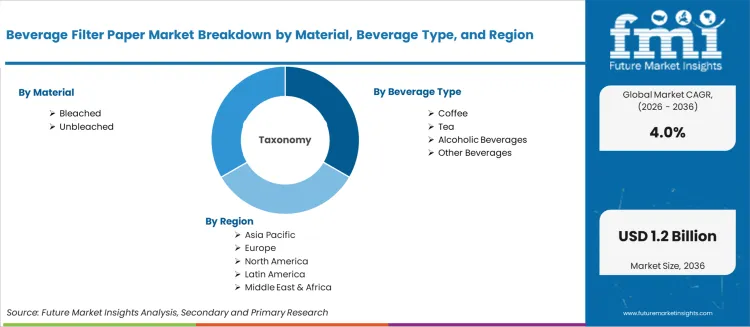
By Material:
- Bleached
- Unbleached
By Beverage Type:
- Coffee
- Tea
- Alcoholic Beverages
- Other Beverages
By End Use:
- Institutional
- Commercial
- Household
By Region:
- North America
- Latin America
- Western Europe
- Eastern Europe
- South Asia & Pacific
- East Asia
- The Middle East & Africa
Bibliography
- 1. International Coffee Organization. (2025). Coffee market report: Annual review 2024. ICO.
- 2. Food and Agriculture Organization. (2024). Tea market: A review of recent developments. FAO.
- 3. European Commission. (2024). Regulation on food contact materials: Framework implementation guidance. European Commission.
- 4. USA Food and Drug Administration. (2024). Indirect food additives: Paper and paperboard components. FDA.
- 5. Ahlstrom Corporation. (2025). Annual report 2024: Filtration and food packaging. Ahlstrom.
- 6. Specialty Coffee Association. (2024). Global specialty coffee consumption trends. SCA.
This bibliography is provided for reader reference. The full Future Market Insights report contains the complete reference list with primary research documentation.
Frequently Asked Questions
How large is the demand for Beverage Filter Paper in the global market in 2026?
Demand for Beverage Filter Paper in the global market is estimated to be valued at USD 0.83 billion in 2026.
What will be the market size of Beverage Filter Paper in the global market by 2036?
Market size for Beverage Filter Paper is projected to reach USD 1.23 billion by 2036.
What is the expected demand growth for Beverage Filter Paper in the global market between 2026 and 2036?
Demand for Beverage Filter Paper is expected to grow at a CAGR of 4% between 2026 and 2036.
Which Material is poised to lead global sales by 2026?
Bleached accounts for 54.3% in 2026.
How significant is the role of Coffee in driving Beverage Filter Paper adoption in 2026?
Coffee represents 42.8% of segment share in 2026.
What is driving demand in China?
China leads with a 5.9% CAGR through 2036.
What is Beverage Filter Paper and what is it mainly used for?
The beverage filter paper market encompasses bleached and unbleached paper products engineered for liquid filtration in coffee, tea, alcoholic beverage, and other beverage preparation processes. Filte.
What is included in the scope of this Beverage Filter Paper report?
Market scope includes bleached and unbleached beverage filter papers sold for coffee, tea, alcoholic beverage, and other beverage filtration applications. Global and regional market sizes, material type, beverage type, and end use segment breakdowns, and forecast projections from 2026 to 2036 are covered.
Preview the report firsthand - request a free sample
Get SampleGet the brochure for pricing and purchase details.
Get PDFTable of Content
- Executive Summary
- Global Market Outlook
- Demand-side Trends
- Supply-side Trends
- Technology Roadmap Analysis
- Analysis and Recommendations
- Market Overview
- Market Coverage / Taxonomy
- Market Definition / Scope / Limitations
- Research Methodology
- Chapter Orientation
- Analytical Lens and Working Hypotheses
- Market Structure, Signals, and Trend Drivers
- Benchmarking and Cross-market Comparability
- Market Sizing, Forecasting, and Opportunity Mapping
- Research Design and Evidence Framework
- Desk Research Programme (Secondary Evidence)
- Company Annual and Sustainability Reports
- Peer-reviewed Journals and Academic Literature
- Corporate Websites, Product Literature, and Technical Notes
- Earnings Decks and Investor Briefings
- Statutory Filings and Regulatory Disclosures
- Technical White Papers and Standards Notes
- Trade Journals, Industry Magazines, and Analyst Briefs
- Conference Proceedings, Webinars, and Seminar Materials
- Government Statistics Portals and Public Data Releases
- Press Releases and Reputable Media Coverage
- Specialist Newsletters and Curated Briefings
- Sector Databases and Reference Repositories
- FMI Internal Proprietary Databases and Historical Market Datasets
- Subscription Datasets and Paid Sources
- Social Channels, Communities, and Digital Listening Inputs
- Additional Desk Sources
- Expert Input and Fieldwork (Primary Evidence)
- Primary Modes
- Qualitative Interviews and Expert Elicitation
- Social and Community Interactions
- Stakeholder Universe Engaged
- C-suite Leaders
- Board Members
- Presidents and Vice Presidents
- R&D and Innovation Heads
- Technical Specialists
- Domain Subject-matter Experts
- Scientists
- Physicians and Other Healthcare Professionals
- Governance, Ethics, and Data Stewardship
- Research Ethics
- Data Integrity and Handling
- Primary Modes
- Tooling, Models, and Reference Databases
- Desk Research Programme (Secondary Evidence)
- Data Engineering and Model Build
- Data Acquisition and Ingestion
- Cleaning, Normalisation, and Verification
- Synthesis, Triangulation, and Analysis
- Quality Assurance and Audit Trail
- Market Background
- Market Dynamics
- Drivers
- Restraints
- Opportunity
- Trends
- Scenario Forecast
- Demand in Optimistic Scenario
- Demand in Likely Scenario
- Demand in Conservative Scenario
- Opportunity Map Analysis
- Product Life Cycle Analysis
- Supply Chain Analysis
- Investment Feasibility Matrix
- Value Chain Analysis
- PESTLE and Porter’s Analysis
- Regulatory Landscape
- Regional Parent Market Outlook
- Production and Consumption Statistics
- Import and Export Statistics
- Market Dynamics
- Global Market Analysis 2021 to 2025 and Forecast, 2026 to 2036
- Historical Market Size Value (USD Million) Analysis, 2021 to 2025
- Current and Future Market Size Value (USD Million) Projections, 2026 to 2036
- Y-o-Y Growth Trend Analysis
- Absolute $ Opportunity Analysis
- Global Market Pricing Analysis 2021 to 2025 and Forecast 2026 to 2036
- Global Market Analysis 2021 to 2025 and Forecast 2026 to 2036, By Material
- Introduction / Key Findings
- Historical Market Size Value (USD Million) Analysis By Material , 2021 to 2025
- Current and Future Market Size Value (USD Million) Analysis and Forecast By Material , 2026 to 2036
- Bleached
- Unbleached
- Bleached
- Y-o-Y Growth Trend Analysis By Material , 2021 to 2025
- Absolute $ Opportunity Analysis By Material , 2026 to 2036
- Global Market Analysis 2021 to 2025 and Forecast 2026 to 2036, By Beverage Type
- Introduction / Key Findings
- Historical Market Size Value (USD Million) Analysis By Beverage Type, 2021 to 2025
- Current and Future Market Size Value (USD Million) Analysis and Forecast By Beverage Type, 2026 to 2036
- Coffee
- Tea
- Alcoholic Beverages
- Other Beverages
- Coffee
- Y-o-Y Growth Trend Analysis By Beverage Type, 2021 to 2025
- Absolute $ Opportunity Analysis By Beverage Type, 2026 to 2036
- Global Market Analysis 2021 to 2025 and Forecast 2026 to 2036, By End Use
- Introduction / Key Findings
- Historical Market Size Value (USD Million) Analysis By End Use, 2021 to 2025
- Current and Future Market Size Value (USD Million) Analysis and Forecast By End Use, 2026 to 2036
- Institutional
- Commercial
- Household
- Institutional
- Y-o-Y Growth Trend Analysis By End Use, 2021 to 2025
- Absolute $ Opportunity Analysis By End Use, 2026 to 2036
- Global Market Analysis 2021 to 2025 and Forecast 2026 to 2036, By Region
- Introduction
- Historical Market Size Value (USD Million) Analysis By Region, 2021 to 2025
- Current Market Size Value (USD Million) Analysis and Forecast By Region, 2026 to 2036
- North America
- Latin America
- Western Europe
- Eastern Europe
- East Asia
- South Asia and Pacific
- Middle East & Africa
- Market Attractiveness Analysis By Region
- North America Market Analysis 2021 to 2025 and Forecast 2026 to 2036, By Country
- Historical Market Size Value (USD Million) Trend Analysis By Market Taxonomy, 2021 to 2025
- Market Size Value (USD Million) Forecast By Market Taxonomy, 2026 to 2036
- By Country
- USA
- Canada
- Mexico
- By Material
- By Beverage Type
- By End Use
- By Country
- Market Attractiveness Analysis
- By Country
- By Material
- By Beverage Type
- By End Use
- Key Takeaways
- Latin America Market Analysis 2021 to 2025 and Forecast 2026 to 2036, By Country
- Historical Market Size Value (USD Million) Trend Analysis By Market Taxonomy, 2021 to 2025
- Market Size Value (USD Million) Forecast By Market Taxonomy, 2026 to 2036
- By Country
- Brazil
- Chile
- Rest of Latin America
- By Material
- By Beverage Type
- By End Use
- By Country
- Market Attractiveness Analysis
- By Country
- By Material
- By Beverage Type
- By End Use
- Key Takeaways
- Western Europe Market Analysis 2021 to 2025 and Forecast 2026 to 2036, By Country
- Historical Market Size Value (USD Million) Trend Analysis By Market Taxonomy, 2021 to 2025
- Market Size Value (USD Million) Forecast By Market Taxonomy, 2026 to 2036
- By Country
- Germany
- UK
- Italy
- Spain
- France
- Nordic
- BENELUX
- Rest of Western Europe
- By Material
- By Beverage Type
- By End Use
- By Country
- Market Attractiveness Analysis
- By Country
- By Material
- By Beverage Type
- By End Use
- Key Takeaways
- Eastern Europe Market Analysis 2021 to 2025 and Forecast 2026 to 2036, By Country
- Historical Market Size Value (USD Million) Trend Analysis By Market Taxonomy, 2021 to 2025
- Market Size Value (USD Million) Forecast By Market Taxonomy, 2026 to 2036
- By Country
- Russia
- Poland
- Hungary
- Balkan & Baltic
- Rest of Eastern Europe
- By Material
- By Beverage Type
- By End Use
- By Country
- Market Attractiveness Analysis
- By Country
- By Material
- By Beverage Type
- By End Use
- Key Takeaways
- East Asia Market Analysis 2021 to 2025 and Forecast 2026 to 2036, By Country
- Historical Market Size Value (USD Million) Trend Analysis By Market Taxonomy, 2021 to 2025
- Market Size Value (USD Million) Forecast By Market Taxonomy, 2026 to 2036
- By Country
- China
- Japan
- South Korea
- By Material
- By Beverage Type
- By End Use
- By Country
- Market Attractiveness Analysis
- By Country
- By Material
- By Beverage Type
- By End Use
- Key Takeaways
- South Asia and Pacific Market Analysis 2021 to 2025 and Forecast 2026 to 2036, By Country
- Historical Market Size Value (USD Million) Trend Analysis By Market Taxonomy, 2021 to 2025
- Market Size Value (USD Million) Forecast By Market Taxonomy, 2026 to 2036
- By Country
- India
- ASEAN
- Australia & New Zealand
- Rest of South Asia and Pacific
- By Material
- By Beverage Type
- By End Use
- By Country
- Market Attractiveness Analysis
- By Country
- By Material
- By Beverage Type
- By End Use
- Key Takeaways
- Middle East & Africa Market Analysis 2021 to 2025 and Forecast 2026 to 2036, By Country
- Historical Market Size Value (USD Million) Trend Analysis By Market Taxonomy, 2021 to 2025
- Market Size Value (USD Million) Forecast By Market Taxonomy, 2026 to 2036
- By Country
- Kingdom of Saudi Arabia
- Other GCC Countries
- Turkiye
- South Africa
- Other African Union
- Rest of Middle East & Africa
- By Material
- By Beverage Type
- By End Use
- By Country
- Market Attractiveness Analysis
- By Country
- By Material
- By Beverage Type
- By End Use
- Key Takeaways
- Key Countries Market Analysis
- USA
- Pricing Analysis
- Market Share Analysis, 2025
- By Material
- By Beverage Type
- By End Use
- Canada
- Pricing Analysis
- Market Share Analysis, 2025
- By Material
- By Beverage Type
- By End Use
- Mexico
- Pricing Analysis
- Market Share Analysis, 2025
- By Material
- By Beverage Type
- By End Use
- Brazil
- Pricing Analysis
- Market Share Analysis, 2025
- By Material
- By Beverage Type
- By End Use
- Chile
- Pricing Analysis
- Market Share Analysis, 2025
- By Material
- By Beverage Type
- By End Use
- Germany
- Pricing Analysis
- Market Share Analysis, 2025
- By Material
- By Beverage Type
- By End Use
- UK
- Pricing Analysis
- Market Share Analysis, 2025
- By Material
- By Beverage Type
- By End Use
- Italy
- Pricing Analysis
- Market Share Analysis, 2025
- By Material
- By Beverage Type
- By End Use
- Spain
- Pricing Analysis
- Market Share Analysis, 2025
- By Material
- By Beverage Type
- By End Use
- France
- Pricing Analysis
- Market Share Analysis, 2025
- By Material
- By Beverage Type
- By End Use
- India
- Pricing Analysis
- Market Share Analysis, 2025
- By Material
- By Beverage Type
- By End Use
- ASEAN
- Pricing Analysis
- Market Share Analysis, 2025
- By Material
- By Beverage Type
- By End Use
- Australia & New Zealand
- Pricing Analysis
- Market Share Analysis, 2025
- By Material
- By Beverage Type
- By End Use
- China
- Pricing Analysis
- Market Share Analysis, 2025
- By Material
- By Beverage Type
- By End Use
- Japan
- Pricing Analysis
- Market Share Analysis, 2025
- By Material
- By Beverage Type
- By End Use
- South Korea
- Pricing Analysis
- Market Share Analysis, 2025
- By Material
- By Beverage Type
- By End Use
- Russia
- Pricing Analysis
- Market Share Analysis, 2025
- By Material
- By Beverage Type
- By End Use
- Poland
- Pricing Analysis
- Market Share Analysis, 2025
- By Material
- By Beverage Type
- By End Use
- Hungary
- Pricing Analysis
- Market Share Analysis, 2025
- By Material
- By Beverage Type
- By End Use
- Kingdom of Saudi Arabia
- Pricing Analysis
- Market Share Analysis, 2025
- By Material
- By Beverage Type
- By End Use
- Turkiye
- Pricing Analysis
- Market Share Analysis, 2025
- By Material
- By Beverage Type
- By End Use
- South Africa
- Pricing Analysis
- Market Share Analysis, 2025
- By Material
- By Beverage Type
- By End Use
- USA
- Market Structure Analysis
- Competition Dashboard
- Competition Benchmarking
- Market Share Analysis of Top Players
- By Regional
- By Material
- By Beverage Type
- By End Use
- Competition Analysis
- Competition Deep Dive
- Ahlstrom-Munksjö
- Overview
- Product Portfolio
- Profitability by Market Segments (Product/Age /Sales Channel/Region)
- Sales Footprint
- Strategy Overview
- Marketing Strategy
- Product Strategy
- Channel Strategy
- Hario
- Bunn-O-Matic Corporation
- AeroPress
- Chemex
- Melitta
- Flair Espresso
- Toddy
- Wilbur Curtis
- Brewista
- Kalita
- Ahlstrom-Munksjö
- Competition Deep Dive
- Assumptions & Acronyms Used


