

- Market Size (2026)
- USD 31.0 Mn
- Forecast (2036)
- USD 156.8 Mn
- CAGR (2026 to 2036)
- 17.6%
How big is Chemogenetic DREADD Therapeutics Market in 2026?
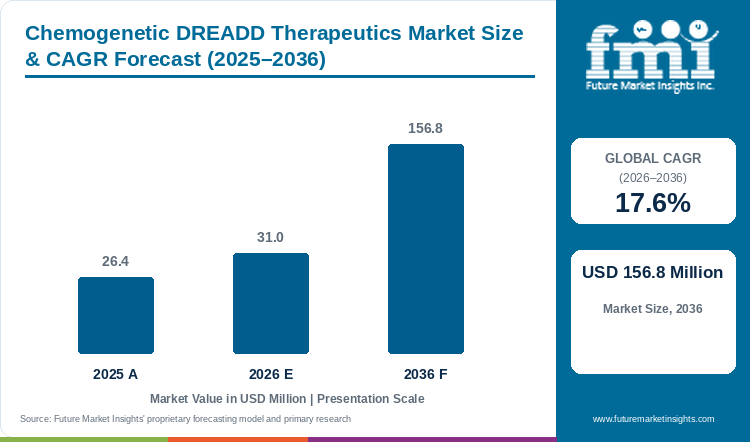
With a valuation of USD 26.4 million in 2025 and moving to USD 31.0 million in 2026, the global chemogenetic DREADD therapeutics market is positioned to attain USD 156.8 million by 2036, exhibiting a CAGR of 17.6%.
PSAM4-GlyR chimeric receptors capture 54.8% of the engineered receptor platform segment in 2026 as the global chemogenetic DREADD therapeutics market advances from USD 26.4 million in 2025 and USD 31.0 million in 2026 toward USD 156.8 million by 2036 at a 17.6% CAGR. Hospital epilepsy centers and biopharma sponsors are buying packaged viral vectors and oral actuator ligands because one-third of focal seizure patients fail daily pills and need a reversible alternative to permanent brain-tissue surgery. On-demand neuronal silencing turns one-time viral infusions into controllable hospital treatments. Although pre-existing viral antibodies in adult patients still slow clinical screening, vector adoption is growing more than four times faster than antiepileptic drugs at a 4.3% CAGR. Clinical onboarding moved forward in April 2026 when the Second Affiliated Hospital of Zhejiang University registered Phase I trial NCT07533591 to evaluate stereotaxic AAV-hSyn-hM4Di gene therapy in patients [1]. Meanwhile, Voyager Therapeutics reported in May 2025 that its ALPL-binding VCAP-102 capsid boosted non-surgical brain gene transfer 20-fold to 400-fold in primates, widening systemic dosing options for neurology trial sponsors [2].
Key Market Trends & Insights
- By engineered receptor platform: PSAM4-GlyR Chimeric Receptors are expected to hold a 54.8% share in 2026, driven by humanized nicotinic-glycine chloride pores that silence neurons without G-protein delay.
- By actuator ligand: Ultra-Low-Dose Approved Agonists are estimated to command a 66.2% share in 2026, owing to repurposed oral drugs that bypass novel chemical entity toxicology filings.
- By therapeutic area: Focal Refractory Epilepsy is projected to account for a 51.6% share in 2026, attributable to localized stereotaxic AAV dosing directly into seizure foci.
- By viral delivery vector: BBB-Penetrant Engineered Capsids are predicted to record a 49.2% share in 2026, supported by transvascular brain gene transfer in primate and IND cohorts.
- By end user: Academic & Translational Centers are anticipated to garner a 46.5% share in 2026, reinforced by university hospital epilepsy and spinal-recovery vector cores.
Regional Highlights
- Top national expansion: Japan is projected to lead country growth at an 18.6% CAGR through 2036, enabled by QST primate deschloroclozapine PET imaging and corticospinal stroke recovery platforms.
- Broader country progression: Canada is forecast to expand at an 18.3% CAGR ahead of Germany at 18.1% and China at 17.8%, while the USA registers 17.5% and the UK reaches 17.0%.
Market Size & Forecast
Table 1: Market Size and Forecast for the Chemogenetic DREADD Therapeutics Market (USD million and CAGR percentage), 2025 to 2036
| Metric | Value |
|---|---|
| 2025 Market Size | USD 26.4 million |
| Estimated Market Size in 2026 | USD 31.0 million |
| Projected Market Size by 2036 | USD 156.8 million |
| CAGR, 2026 to 2036 | 17.6% |
| Added Revenue, 2026 to 2036 | USD 125.8 million |
Substitution of first-generation clozapine-N-oxide with selective, metabolically stable small-molecule actuators has become a core requirement for translational CNS gene-therapy sponsors across the USD 125.8 million growth window. Conventional clozapine-N-oxide shows poor brain entry and converts back into sedating clozapine, which clouds seizure and behavioral readouts during IND qualification. In January 2026, behavioral neuropharmacologists showed that while clozapine-N-oxide impairs spatial memory in mice lacking DREADD receptors, the synthetic agonist Compound 21 preserves cognitive performance [3]. Supported by cleaner actuator pharmacology, neuro-genetic teams are contracting with GMP adeno-associated virus packaging services to scale clinical DREADD and PSAM vector batches.
Viral-Vector Prep and Actuator-Ligand Batch Sizing
Table 2: Viral-Vector Prep and Actuator-Ligand Batch Sizing for the Chemogenetic DREADD Therapeutics Market (USD million and operational ranges), 2025 to 2036
| Metric | 2025 | 2026 | 2036 |
|---|---|---|---|
| Market size (USD million) | 26.4 | 31.0 | 156.8 |
| Chemogenetic AAV/LV preps & plasmid lots shipped (thousand units) | 14.5 to 17.2 | 16.8 to 20.0 | 72.0 to 86.0 |
| Selective actuator ligand vials dispensed (thousand packs) | 28.0 to 33.5 | 32.5 to 39.0 | 145.0 to 172.0 |
| Translational & IND cohort valuation per program (USD thousand) | 165.0 to 210.0 | 175.0 to 225.0 | 310.0 to 390.0 |
Operational note: Vector lot and ligand vial ranges align nonprofit plasmid repository distributions and specialty neuro-pharmacology catalog shipments with translational IND cohort budgets across focal epilepsy and neuropathic pain programs.
Selective cell-type promoters such as CaMKIIalpha and human synapsin restrict chemogenetic receptor expression to targeted excitatory pyramidal cells or dorsal-root pain neurons. Translational teams integrate chemogenetic circuit silencing into rare neurological disorder treatment pipelines so clinicians can adjust neuronal inhibition with oral micro-doses.
Per Capita & Neuro-Gene Therapy Center Sizing
Table 3: Per Capita and Neuro-Gene Therapy Center Spending Indicators for the Chemogenetic DREADD Therapeutics Market (USD), 2025 to 2036
| Metric | 2025 | 2026 | 2036 |
|---|---|---|---|
| World population (billion) | 8.2 | 8.3 | 9.0 |
| Market value per 1,000,000 people (USD) | 3,219.5 | 3,734.9 | 17,422.2 |
| Annual valuation per active neuro-gene therapy center (USD thousand) | 48.0 to 58.0 | 53.5 to 64.5 | 185.0 to 225.0 |
| PSAM4-GlyR & FDA-approved ultra-low-dose agonist share (%) | 53.5% to 65.0% | 54.8% to 66.2% | 58.0% to 69.5% |
Table 4: Neuro-Gene Therapy Center and Actuator Ligand Spending Indicators for the Chemogenetic DREADD Therapeutics Market (USD and percentages), 2026
| Metric | Value | Institutional Reference Basis |
|---|---|---|
| Market size, 2026 | USD 31.0 million | 2026 global chemogenetic valuation baseline |
| Active chemogenetic & CNS gene therapy labs | 540 institutions | Global viral-vector & circuit neuroscience registry |
| PSAM4-GlyR chimeric receptor allocation, 2026 | USD 17.0 million | 54.8% engineered receptor platform share |
| Ultra-low-dose approved agonist allocation, 2026 | USD 20.5 million | 66.2% actuator ligand share |
Clinical trial sponsors combine positron-emission tomography radioligands such as carbon-11 deschloroclozapine with video-EEG telemetry to verify transgene expression in vivo before oral agonist dosing. Non-invasive receptor occupancy verification speeds up neurology clinical trial execution across academic medical centers.
Analyst Perspective
"Moving chemogenetics from rodent circuit mapping into human epilepsy and chronic pain clinics requires pairing non-immunogenic chimeric ion channels with already approved ultra-low-dose oral ligands. Developers that combine blood-brain-barrier-penetrant AAV capsids with sub-milligram varenicline or deschloroclozapine dosing will lead clinical commercialization through 2036."
- Anurag Sharma, Principal Consultant, Future Market Insights.
How is the chemogenetic DREADD therapeutics market segmented?
The chemogenetic DREADD therapeutics market is segmented across five core axes covering engineered receptor platform and actuator ligand as well as therapeutic area, viral delivery vector, and end user. In 2026, PSAM4-GlyR Chimeric Receptors is projected at 54.8% and Ultra-Low-Dose Approved Agonists at 66.2%. Focal Refractory Epilepsy holds 51.6% and BBB-Penetrant Engineered Capsids record 49.2%, while Academic & Translational Centers account for 46.5%.
By engineered receptor platform: PSAM4-GlyR Chimeric Receptors and Inhibitory hM4Di & KORD as well as Excitatory hM3Dq & GsD and Peripheral & Enteric DREADDs.
By actuator ligand: Ultra-Low-Dose Approved Agonists, Deschloroclozapine (DCZ), and Compound 21 & uPSEM817.
By therapeutic area: Focal Refractory Epilepsy, Intractable Neuropathic Pain, and Stroke & Spinal Recovery.
By viral delivery vector: BBB-Penetrant Engineered Capsids and Stereotaxic AAV8 & AAV9 as well as Cell-Specific Enhancer AAVs and Lentiviral & Non-Viral Vectors.
By end user: Academic & Translational Centers and Biopharma R&D Sponsors as well as Neurosurgical Epilepsy Clinics, Contract Research Organizations, and Nonprofit Vector Repositories.
Why do PSAM4-GlyR Chimeric Receptors lead the engineered receptor platform category?
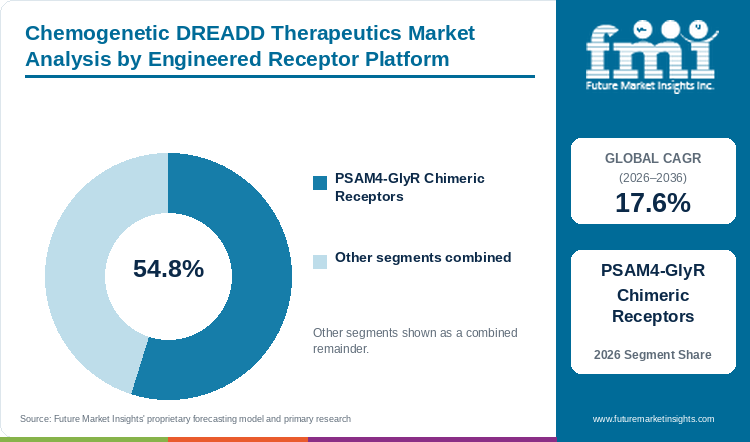
PSAM4-GlyR Chimeric Receptors are expected to hold a 54.8% share in 2026, driven by humanized ion-pore architecture and direct chloride shunting.
Table 5: Engineered Receptor Platform Share for the Chemogenetic DREADD Therapeutics Market (percentage share), 2026
| Product Type | Share (2026) |
|---|---|
| PSAM4-GlyR Chimeric Receptors | 54.8% |
| Other Segments Combined* | 45.2% |
| Total | 100.0% |
*Calculated as the balance remaining after deducting the leading segment's reported share from 100.0%.
Table 6: Engineered Receptor Platform Leadership and Market Growth for the Chemogenetic DREADD Therapeutics Market (segment and CAGR percentage), 2026 to 2036
| Metric | Value |
|---|---|
| Global CAGR (2026 to 2036) | 17.6% |
| Leading Segment | PSAM4-GlyR Chimeric Receptors |
PSAM4-GlyR splices a mutated human alpha-7 nicotinic acetylcholine binding domain onto a human glycine receptor chloride pore, forming an ion channel that shunts depolarizing sodium currents upon agonist binding. Whereas muscarinic GPCR DREADDs depend on intracellular G-protein cascades that can desensitize over repeated dosing, chimeric ion channels give direct membrane conductance control across neurodegenerative disease therapy pipelines.
- PSAM4-GlyR Chimeric Receptors are expected to hold a 54.8% share in 2026, driven by humanized sequence homology and rapid neuronal silencing.
- In March 2025, epilepsy gene-therapy investigators at Lund University reported in Gene Therapy that AAV-delivered PSAM4-GlyR activated by uPSEM792 or varenicline suppressed epileptiform discharges across epileptic hippocampus models [4].
Why do Ultra-Low-Dose Approved Agonists define the largest actuator ligand segment?
Ultra-Low-Dose Approved Agonists are estimated to hold a 66.2% share in 2026, owing to established human safety and pharmacokinetic dossiers.
First-generation clozapine-N-oxide suffers from weak blood-brain barrier entry and metabolic back-conversion into sedating clozapine. Dosing FDA-approved varenicline for PSAM4-GlyR or ultra-low-dose olanzapine for mutated muscarinic receptors at nanomolar plasma levels lets investigators use licensed oral tablets during cell and gene therapy clinical trials.
- Ultra-Low-Dose Approved Agonists are estimated to hold a 66.2% share in 2026, owing to pre-cleared human pharmacokinetics and reliable oral bioavailability.
- In December 2025, Lund University epilepsy researchers noted in the Journal of Internal Medicine that pairing synthetic ligand-gated ion channels with clinically approved small-molecule activators removes CNO back-metabolism risks in human translation [5].
What keeps Focal Refractory Epilepsy ahead in the therapeutic area category?
Focal Refractory Epilepsy is projected to account for a 51.6% share in 2026, attributable to localized hippocampal AAV dosing.
Mesial temporal lobe epilepsy with hippocampal sclerosis starts inside a defined unilateral seizure focus that neurosurgeons can transduce with microliter stereotaxic AAV infusions without altering whole-brain cognition. Patients then take a fast-acting oral actuator capsule only when aura symptoms or EEG signals warn of an oncoming seizure, placing chemogenetics at the front of in vivo CNS disorder gene therapies.
- Focal Refractory Epilepsy is projected to account for a 51.6% share in 2026, attributable to clear surgical target boundaries and high unmet drug-resistant patient demand.
- In April 2025, medicinal chemists at Harbin Medical University published a study in Frontiers in Cellular Neuroscience introducing a humanized Gs-coupled DREADD cloned from Addgene plasmid 213972 to expand human-compatible chemogenetic signaling [6].
Why do BBB-Penetrant Engineered Capsids lead the viral delivery vector category?
BBB-Penetrant Engineered Capsids are predicted to record a 49.2% share in 2026, supported by non-surgical transvascular CNS delivery.
RNA-directed AAV capsid evolution platforms identify capsid variants that bind blood-brain barrier receptors such as alkaline phosphatase (ALPL) to cross into the brain after a simple intravenous infusion. Transvascular delivery avoids invasive craniotomy for multifocal cortical and spinal pain circuits while integrating with viral vector manufacturing workflows.
- BBB-Penetrant Engineered Capsids are predicted to record a 49.2% share in 2026, supported by broad cortical and spinal cord transduction in non-human primates.
- In February 2026, University of Colorado Boulder and Yale neuroscientists reported in The Journal of Neuroscience that multiweek chemogenetic DREADD inhibition of caudal granular insular cortex projections produced an enduring reversal of neuropathic pain [7].
What gives Academic & Translational Centers the leading position in end user?
Academic & Translational Centers are anticipated to garner a 46.5% share in 2026, reinforced by NIH and AMED circuit-mapping and IND grants.
University medical centers and national neuroscience institutes purchase the largest annual volume of ready-to-use AAV-DREADD viral preps, enhancer-AAV toolkits, and water-soluble actuator ligands. Academic vector cores validate cell-type-specific promoters in human resected brain slices before licensing clinical candidates to biopharma sponsors.
- Academic & Translational Centers are anticipated to garner a 46.5% share in 2026, reinforced by multi-center epilepsy and spinal-cord recovery grants.
- In December 2025, Harvard Medical School pain researchers reported in Pain that DREADD-based chemogenetic activation of visual cortex astrocytes triggered CGRP-dependent meningeal nociception and migraine-like pain behaviors [8].
What are the drivers, restraints, and opportunities in the chemogenetic DREADD therapeutics market?
Across the chemogenetic DREADD therapeutics market, reversible oral-ligand seizure silencing and spinal circuit recovery propel vector and agonist demand, whereas neutralizing AAV antibodies restrain continuous dosing and BBB-penetrant capsids unlock systemic indications.
- Driver: Reversible, patient-titrated oral ligand activation gives neurosurgeons a controllable safety switch over permanent gene overexpression or tissue ablation.
- Restraint: Prolonged GPCR agonist exposure can arrest glial homeostasis or downregulate receptors, while neutralizing AAV antibodies exclude seropositive patients.
- Opportunity: Excitatory hM3Dq and inhibitory PSAM4-GlyR circuit remodeling after ischemic stroke and spinal cord injury opens large neuro-rehabilitation markets.
Growth Analysis and Future Potential: Qualitative Demand Catalysts
Unlike constitutive potassium-channel or neuropeptide gene therapies that permanently alter baseline neuronal firing, chemogenetics stays silent until the patient takes a micro-dose of the selective actuator ligand. Reversible pharmacology lets clinicians calm hyperexcitable hippocampal CA2 pyramidal cells during seizure clusters while preserving normal memory and pairing with neurological biomarker monitoring. In January 2026, psychiatric neuroscientists at the Nathan Kline Institute and Columbia University demonstrated in Neurobiology of Disease that selective chemogenetic modulation of hippocampal area CA2 pyramidal cells governs acute and chronic seizure generation in temporal lobe epilepsy mice [9]. Neurosurgical epilepsy teams are therefore prioritizing inducible chemogenetic cassettes that can be adjusted or paused if off-target sedation appears.
Risk Assessment of the Chemogenetic DREADD Therapeutics Market: Operational and Formulation Friction
Continuous high-dose DREADD agonist administration over several days can trigger beta-arrestin receptor internalization or disrupt microglial signaling inside injured brain tissue. In addition, 30% to 60% of adult patients carry pre-existing neutralizing antibodies against wild-type AAV8 and AAV9 capsids, requiring plasmapheresis or capsid engineering paired with precision gene editing tools. In a January 2025 Mayo Clinic study published in Brain Behavior and Immunity, researchers showed that acute Gi-DREADD activation reduced kainic-acid seizure severity whereas repeated three-day CNO dosing arrested microglia in a low-activity state that increased neuronal loss [10]. Translational protocols therefore favor intermittent, on-demand ultra-low-dose agonists over continuous receptor saturation.
Commercial Opportunity Analysis: Formulation Differentiation and Value-Add Formats
Neuro-rehabilitation represents a major growth avenue as investigators use excitatory hM3Dq and inhibitory PSAM4-GlyR vectors to rewire spared corticospinal tracts after stroke or spinal cord trauma. Targeted chemogenetic interneuron modulation paired with custom viral vector development platforms speeds up forelimb and walking recovery during physical therapy windows. In July 2025, neurosurgical teams at Wuhan University and Duke University Medical Center reported in Brain Stimulation that chemogenetic hM3Dq activation in peri-infarct and contralateral motor cortex circuits boosted post-stroke neuroplasticity and motor recovery [11]. Suppliers offering ready-to-inject spinal and cortical AAV-DREADD kits paired with water-soluble deschloroclozapine dihydrochloride are capturing neuro-regeneration grant budgets.
Chemogenetic DREADD Therapeutics Market by Country (2026 to 2036)
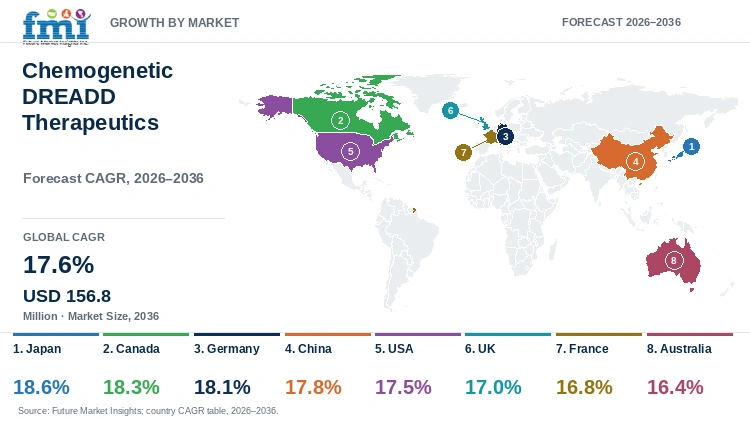
According to FMI country modeling, Japan is projected to lead national chemogenetic DREADD therapeutics growth at an 18.6% CAGR between 2026 and 2036, followed by Canada at 18.3% and Germany at 18.1%.
Table 7: Country CAGR and Primary Growth Levers for the Chemogenetic DREADD Therapeutics Market (CAGR percentage and operational drivers), 2026 to 2036
| Country | CAGR (2026 to 2036) | Primary Growth Lever |
|---|---|---|
| Japan | 18.6% | QST/AMED primate deschloroclozapine (DCZ) chemogenetics and corticospinal stroke recovery platforms |
| Canada | 18.3% | Spinal cord injury circuit-reconstruction cohorts and CIHR-funded AAV9 chemogenetic neuroregeneration |
| Germany | 18.1% | Helmholtz and university hospital focal epilepsy AAV-DREADD and patch-clamp validation networks |
| China | 17.8% | First-in-human Phase I stereotaxic AAV-hM4Di clinical trials and CNS gene-therapy hospital consortia |
| USA | 17.5% | Voyager TRACER BBB-penetrant capsids, Addgene viral vector repository, and NIH HEAL pain programs |
| UK | 17.0% | UCL Queen Square genetic epilepsy trials and Hello Bio / Tocris chemogenetic actuator manufacturing |
| France | 16.8% | Paris Brain Institute and INSERM translational epilepsy and basal-ganglia circuit modulation |
| Australia | 16.4% | MRFF neuro-epilepsy gene therapy consortia and cortical pain-circuit chemogenetic validation |
Source: Future Market Insights analysis
Japan Chemogenetic DREADD Therapeutics Market Outlook (2026 to 2036)
Investigators in Japan at the National Institutes for Quantum Science and Technology (QST) invented deschloroclozapine (DCZ) and carbon-11 DCZ PET imaging, making Japan the primary hub for non-human primate chemogenetics. In June 2026, researchers at Niigata University and Kyoto University reported in Nature Communications that AAV-Syn-FLEX-PSAM4-GlyR chemogenetic silencing in the cervical spinal cord proved secretogranin II-driven corticospinal-V2a interneuron rewiring governs post-stroke motor recovery [12]. High GMP viral-vector import fees still encourage domestic CDMO packaging partnerships across Tokyo and Kobe. Supported by AMED primate connectomics and PMDA Sakigake regenerative medicine pathways, demand for chemogenetic DREADD therapeutics in Japan is projected to expand at an 18.6% CAGR through 2036.
Key takeaway: In Japan, deschloroclozapine PET-guided primate chemogenetics and post-stroke PSAM4-GlyR motor recovery studies are projected to drive an 18.6% CAGR.
Canada Chemogenetic DREADD Therapeutics Market Outlook (2026 to 2036)
Spinal cord injury and epilepsy research institutes in Winnipeg and Toronto as well as Montreal and Vancouver rely on Cre-dependent AAV9 vectors and selective chemogenetic actuators to rebuild damaged neural pathways across Canada. Between 2026 and 2036, the chemogenetic DREADD therapeutics market in Canada is forecast to expand at an 18.3% CAGR, supported by federal health research grants and translational neuro-regeneration consortia. In July 2025, spinal cord neuroscientists at the University of Manitoba reported in The Journal of Neuroscience that combining Addgene-sourced AAV9-CamKII-GFP-Cre and AAV9-hSyn-eGFP-Cre transneuronal tracing with receptor neuromodulation restored synaptic connectivity after traumatic spinal cord injury [13]. Cross-border dry-ice shipping fees for high-titer viral vectors still pressure academic lab budgets across Canada.
Key takeaway: In Canada, CIHR-funded spinal cord circuit reconstruction programs and epilepsy surgery centers are forecast to sustain an 18.3% CAGR through 2036.
Germany Chemogenetic DREADD Therapeutics Market Outlook (2026 to 2036)
Neurology departments in Bonn and Berlin as well as Munich and Freiburg combine human resected epileptic tissue slice electrophysiology with AAV-transduced chemogenetic validation before clinical trial entry. Across Germany, the chemogenetic DREADD therapeutics market is anticipated to rise at an 18.1% CAGR between 2026 and 2036 across university hospital viral-vector core facilities and neurosurgical epilepsy clinics. Whereas uniQure's Phase I/IIa AMT-260 program uses constitutive AAV9 microRNA silencing of endogenous GRIK2/GluK2 kainate receptors [14], translational teams in Germany focus on inducible PSAM4-GlyR and hM4Di vectors that allow reversible oral agonist titration in refractory patients. Strict Paul-Ehrlich-Institut advanced therapy medicinal product release testing governs clinical vector batch certification across German academic centers.
Key takeaway: In Germany, human hippocampal slice validation and Paul-Ehrlich-Institut ATMP trial pathways are anticipated to support an 18.1% CAGR through 2036.
China Chemogenetic DREADD Therapeutics Market Outlook (2026 to 2036)
Neurosurgical hospitals in Hangzhou, Beijing, and Wuhan are moving stereotaxic AAV-hM4Di and enteric Gi-DREADD constructs directly into translational primate and human clinical studies. Demand for chemogenetic DREADD therapeutics in China is predicted to climb at a 17.8% CAGR from 2026 to 2036, propelled by domestic GMP viral-vector biomanufacturing and municipal brain-science grants across major metropolitan medical centers. In April 2025, gastroenterology and neural-circuit investigators reported in Cellular and Molecular Gastroenterology and Hepatology that deschloroclozapine-driven Gi-DREADD activation selectively modulates enteric and central neural pathways at nanomolar doses [15]. Hospital ethics boards in China still require multi-month carbon-11 PET biodistribution tracking before approving multi-center stereotaxic patient dosing across neurology departments.
Key takeaway: In China, Phase I neurosurgical AAV-hM4Di trials and domestic viral-vector biomanufacturing are predicted to deliver a 17.8% CAGR through 2036.
USA Chemogenetic DREADD Therapeutics Market Outlook (2026 to 2036)
Anchored by Addgene's viral repository in Massachusetts and Voyager Therapeutics' TRACER capsid discovery platform as well as NIH HEAL non-opioid pain consortia, the USA represents the largest national buyer of chemogenetic vectors and selective agonists. Valuation for chemogenetic DREADD therapeutics in the USA is projected to grow at a 17.5% CAGR between 2026 and 2036 across IND-enabling refractory epilepsy and neuropathic pain programs. In May 2026, University of Michigan neuroscientists demonstrated in Frontiers in Cellular Neuroscience that clozapine-N-oxide impairs spatial memory independent of DREADDs whereas selective Compound 21 preserves cognitive performance [16]. FDA combination-product potency assays for paired viral vectors and small-molecule actuators require dedicated CDMO analytical validation.
Key takeaway: In the USA, NIH HEAL pain programs and domestic BBB-penetrant AAV capsid licensing are projected to sustain a 17.5% CAGR through 2036.
UK Chemogenetic DREADD Therapeutics Market Outlook (2026 to 2036)
Bristol-based chemogenetic ligand manufacturers Tocris Bioscience and Hello Bio and genetic epilepsy research groups at the UCL Queen Square Institute of Neurology anchor demand in the UK. Sales of chemogenetic DREADD therapeutics in the UK are estimated to expand at a 17.0% CAGR through 2036 under MHRA Innovative Licensing and Access Pathway incentives for neurological gene therapies. In February 2025, neurosurgery and rehabilitation investigators demonstrated in Neurotherapeutics that acute-phase chemogenetic AAV5-hSyn-hM3Dq injection combined with low-dose clozapine sped up locomotor recovery and axonal regeneration after spinal cord injury [17]. Tight NHS specialized commissioning budgets still require clear cost-effectiveness evidence against resective temporal lobectomy across UK hospital trusts.
Key takeaway: In the UK, Bristol high-purity DREADD agonist production and UCL genetic epilepsy trials are estimated to drive a 17.0% CAGR through 2036.
France Chemogenetic DREADD Therapeutics Market Outlook (2026 to 2036)
Translational neuroscience teams in France at the Paris Brain Institute (ICM) and INSERM deploy hM3Dq and hM4Di vectors to map basal ganglia and cortical seizure networks. In August 2025, a translational review in JOR Spine detailed how chemogenetic DREADD modulation of lumbar central pattern generators and serotonergic pathways restores rhythmic walking after severe spinal cord injury [18]. Market value for chemogenetic DREADD therapeutics in France is forecast to advance at a 16.8% CAGR through 2036, supported by France 2030 biotherapy and viral-vector biomanufacturing grants across Paris and Lyon. ANSM genetically modified organism containment reviews for hospital stereotaxic suites remain the main procedural hurdle in France.
Key takeaway: In France, INSERM and Paris Brain Institute circuit-mapping programs funded by France 2030 biotherapy grants are forecast to support a 16.8% CAGR.
Australia Chemogenetic DREADD Therapeutics Market Outlook (2026 to 2036)
Melbourne and Sydney epilepsy and pain research institutes are adopting water-soluble deschloroclozapine and enhancer-AAV vectors to study cortical pain circuits and drug-resistant genetic epilepsies. Between 2026 and 2036, the chemogenetic DREADD therapeutics market in Australia is expected to grow at a 16.4% CAGR, supported by Medical Research Future Fund neuro-translation grants and Therapeutic Goods Administration clinical trial notifications. Hello Bio's technical dossier for water-soluble Deschloroclozapine dihydrochloride (HB9126) documents over 99% purity and 100-fold higher hM3Dq/hM4Di affinity than CNO across international cortical pain and epilepsy laboratories [19]. Cold-chain air freight for imported AAV viral preps still adds lead time for Australian university and hospital neuroscience laboratories.
Key takeaway: In Australia, MRFF epilepsy and cortical pain research programs are expected to sustain a 16.4% CAGR through 2036.
Full report country CAGRs cover: North America; Latin America; Western Europe; Eastern Europe; East Asia; South Asia and Pacific; Middle East and Africa.
Who are the notable companies in the chemogenetic DREADD therapeutics market?
Codon / Magnus Neurosciences, Zhejiang University Neuro-AAV Consortia, Voyager Therapeutics, Inc., Addgene, Bio-Techne Corporation (Tocris Bioscience), Hello Bio Ltd., Cayman Chemical Company, and Charles River Laboratories are the notable companies in the chemogenetic DREADD therapeutics market.
FMI analysis indicates that the chemogenetic DREADD therapeutics ecosystem connects translational PSAM and DREADD receptor developers with blood-brain-barrier AAV capsid pioneers and high-purity actuator ligand manufacturers. Suppliers compete on AAV serotype packaging titers and transvascular brain penetration as well as zero-clozapine-impurity synthesis of water-soluble deschloroclozapine, uPSEM817, and Compound 21.
- Translational PSAM & Neuro-AAV Chemogenetic Developers: Codon / Magnus Neurosciences and Zhejiang University Neuro-AAV Consortia advance chimeric ion-channel neuromodulation and Phase I stereotaxic AAV-hM4Di gene therapy cohorts.
- Blood-Brain-Barrier-Penetrant AAV Capsid & Vector Repositories: Voyager Therapeutics and Addgene along with Charles River Laboratories provide transvascular CNS capsids, ready-to-use enhancer-AAV chemogenetic preps, and GMP viral packaging.
- Specialty Chemogenetic Agonist & GMP Small-Molecule Formulators: Bio-Techne Corporation (Tocris Bioscience) and Hello Bio Ltd. along with Cayman Chemical Company synthesize water-soluble deschloroclozapine (DCZ), uPSEM792/817, and Compound 21.
Competitive Benchmarking: Chemogenetic DREADD Therapeutics Market
Table 8: Competitive Benchmarking for the Chemogenetic DREADD Therapeutics Market (qualitative capability ratings), 2026
| Company | Receptor & AAV Vector Depth | Actuator Ligand Purity | Clinical & Translational Reach | Geographic Reach |
|---|---|---|---|---|
| Codon / Magnus Neurosciences | High | High | High | Medium |
| Zhejiang University Neuro-AAV Consortia | High | Medium | High | High |
| Voyager Therapeutics, Inc. | High | Medium | High | High |
| Addgene | High | Medium | High | High |
| Bio-Techne Corporation (Tocris Bioscience) | Medium | High | High | High |
| Hello Bio Ltd. | Medium | High | High | High |
| Cayman Chemical Company | Medium | High | High | High |
| Charles River Laboratories | High | Medium | High | High |
Scoring basis: Capability tiers assess validated AAV serotype packaging titers above 1e13 vg/mL and blood-brain-barrier transcytosis efficiency as well as >=99% HPLC purity of water-soluble DREADD and PSAM agonists with zero parent clozapine contamination.
Key Developments in the Chemogenetic DREADD Therapeutics Market
- In July 2025, structural pharmacologists published cryo-EM design data for a peripherally restricted Gi-DREADD (HCAD) that selectively silences dorsal-root ganglion pain neurons without crossing the blood-brain barrier [20].
- In May 2025, Addgene expanded its enhancer-AAV toolbox and ready-to-use chemogenetic AAV viral repository to enable cell-type-specific neuronal circuit manipulation [21].
- In October 2025, QST investigators in Japan published longitudinal carbon-11 deschloroclozapine PET imaging benchmarks in eLife confirming stable AAV-hM4Di and AAV-hM3Dq expression in non-human primate brains over 150 days [22].
Key Players in the Chemogenetic DREADD Therapeutics Market
Translational PSAM & Neuro-AAV Gene Therapy Developers
- Codon / Magnus Neurosciences
- Zhejiang University Neuro-AAV Consortia
- Voyager Therapeutics, Inc.
Viral Vector Repositories & CNS Biomanufacturing Platforms
- Addgene
- Charles River Laboratories
- Bio-Techne Corporation (Tocris Bioscience)
Specialty Chemogenetic Agonist & GMP Small-Molecule Formulators
- Hello Bio Ltd.
- Cayman Chemical Company
Chemogenetic DREADD Therapeutics Market - Report Scope
Table 9: Report Scope for the Chemogenetic DREADD Therapeutics Market (coverage fields and definitions), 2026 to 2036
| Coverage field | Report scope |
|---|---|
| Market breakdown | Engineered Receptor Platform; Actuator Ligand; Therapeutic Area; Viral Delivery Vector; End User |
| Quantitative Units | USD Million |
| Market Definition | Includes commercial supplier, licensing, and translational R&D contract revenue from engineered chemogenetic receptor vectors (PSAM4-GlyR, PSAM-5HT3, hM3Dq, hM4Di, KORD, GsD), BBB-penetrant AAV chemogenetic capsids, and selective actuator ligands (ultra-low-dose varenicline/olanzapine, deschloroclozapine, uPSEM817/792, Compound 21). Excludes constitutive non-chemogenetic AAV9 microRNA gene silencing therapies (such as uniQure's AMT-260 GRIK2/GluK2 knockdown), conventional high-dose oral antiepileptic drugs, and fiber-tethered optogenetic laser systems. |
| Regions Covered | North America; Latin America; Western Europe; Eastern Europe; East Asia; South Asia and Pacific; Middle East and Africa |
| Countries Covered | Japan, Canada, Germany, China, USA, UK, France, Australia, and additional countries in the full report |
| Key Companies Covered | Codon / Magnus Neurosciences, Zhejiang University Neuro-AAV Consortia, Voyager Therapeutics, Inc., Addgene, Bio-Techne Corporation (Tocris Bioscience), Hello Bio Ltd., Cayman Chemical Company, Charles River Laboratories |
| Forecast Period | 2026 to 2036 |
| Approach | Primary and secondary research with top-down and bottom-up market triangulation. |
Chemogenetic DREADD Therapeutics Market - Research Methodology
Table 10: Research Methodology for the Chemogenetic DREADD Therapeutics Market (research methods and approach), 2026 edition
| Method | Approach |
|---|---|
| Primary Research | Structured interviews with epilepsy gene therapy investigators and AAV capsid protein engineers as well as neuro-pharmacology medicinal chemists and viral repository directors. |
| Secondary Research | Analysis of peer-reviewed chemogenetic studies in Gene Therapy, Molecular Therapy, Nature Communications, and The Journal of Neuroscience in addition to ClinicalTrials.gov registry records (NCT07533591). |
| Market Sizing and Forecasting | Top-down CNS gene therapy and translational neuromodulation R&D budgets reconciled against bottom-up AAV chemogenetic vector lot shipments and selective actuator ligand sales from 2026 to 2036. |
| Country Forecasting Model | Country growth rates weight drug-resistant focal epilepsy surgical waitlists and national viral-vector biomanufacturing capacity across eight evaluated countries. |
| Operational Benchmark Traceability | Viral-vector prep and actuator-ligand sizing indicators in Tables 2, 3, and 4 cross-check against Lund University PSAM4-GlyR epilepsy cohorts and Voyager ALPL capsid studies. |
| Data Triangulation and Validation | Segment shares and revenue projections are audited across all five parent axes to verify 100.0% share summation without double counting standard psychiatric antipsychotics. |
Chemogenetic DREADD Therapeutics Market by Segments
Chemogenetic DREADD Therapeutics Market segmented by Engineered Receptor Platform:
- PSAM4-GlyR Chimeric Receptors
- Inhibitory hM4Di & KORD
- Excitatory hM3Dq & GsD
- Peripheral & Enteric DREADDs
Chemogenetic DREADD Therapeutics Market segmented by Actuator Ligand:
- Ultra-Low-Dose Approved Agonists
- Deschloroclozapine (DCZ)
- Compound 21 & uPSEM817
Chemogenetic DREADD Therapeutics Market segmented by Therapeutic Area:
- Focal Refractory Epilepsy
- Intractable Neuropathic Pain
- Stroke & Spinal Recovery
Chemogenetic DREADD Therapeutics Market segmented by Viral Delivery Vector:
- BBB-Penetrant Engineered Capsids
- Stereotaxic AAV8 & AAV9
- Cell-Specific Enhancer AAVs
- Lentiviral & Non-Viral Vectors
Chemogenetic DREADD Therapeutics Market segmented by End User:
- Academic & Translational Centers
- Biopharma R&D Sponsors
- Neurosurgical Epilepsy Clinics
- Contract Research Organizations
- Nonprofit Vector Repositories
Chemogenetic DREADD Therapeutics Market by Region
- North America
- United States
- Canada
- Latin America
- Brazil
- Mexico
- Argentina
- Chile
- Western Europe
- Germany
- France
- United Kingdom
- Italy
- Spain
- Benelux
- Nordics
- Eastern Europe
- Poland
- Czech Republic
- Romania
- Hungary
- East Asia
- China
- Japan
- South Korea
- South Asia and Pacific
- India
- ASEAN
- Australia and New Zealand
- Middle East and Africa
- GCC Countries
- South Africa
- Türkiye
- Israel
Research Sources and Bibliography
- [1] Second Affiliated Hospital, Zhejiang University School of Medicine / U.S. National Library of Medicine. (2026, April 24). Study Details | NCT07533591 | Clinical Study of Chemogenetic Gene Therapy With AAV for Parkinson's Disease Using Stereotactic Surgery in the Subthalamic Nucleus (STP-001 AAV-hSyn-hM4Di). ClinicalTrials.gov.
- [2] Voyager Therapeutics, Inc. (2025, May 15). Voyager Demonstrates ALPL Receptor-Mediated Blood-Brain Barrier Transport of Novel AAV Capsids in Molecular Therapy Publication. Voyager Therapeutics Investor Relations.
- [3] Bunce, B., VanKampen, A. A., He, A., Aton, S. J., & Raven, F. (2026, January 12). DREADD agonist Clozapine-N-oxide, but not Compound 21, impairs spatial memory in non-DREADD expressing mice. Preprint / PMC Open Access (PubMed Central PMC12871256).
- [4] Gonzalez-Ramos, A., Berglind, F., Kudlacek, J., Rocha, E. R., Melin, E., Sebastiao, A. M., Valente, C. A., Ledri, M., Andersson, M., & Kokaia, M. (2025, March 01). Chemogenetics with PSAM4-GlyR decreases excitability and epileptiform activity in epileptic hippocampus. Gene Therapy, 32(2), 106-120 (PubMed Central PMC11946892 / PMID 39455855).
- [5] Ledri, M., & Kokaia, M. (2025, December 09). Gene therapy for epilepsy: An emerging, promising approach for a serious neurological disorder. Journal of Internal Medicine, 299(3), 302-327 (PubMed Central PMC12869011).
- [6] Zhang, Q., Wang, R., Zhang, L., Li, M., Lin, J., Lu, X., Tian, Y., Lin, Y., Liu, T., Chen, Y., Li, Y., Cao, J., Wu, Q., Wang, J., Lu, Z., & Hong, Z. (2025, April 09). A humanized Gs-coupled DREADD for circuit and behavior modulation. Frontiers in Cellular Neuroscience, 19, 1577117 (PubMed Central PMC12015759).
- [7] Ball, J. B., Finch, M. R., Taylor, J. A., Smith, Z. Z., Rocha, I. R. C., Green-Fulgham, S. M., Rowe, E. B., Dragavon, J. M., McNulty, C. J., Dreher, R. A., Siddique, I. I., Davis, G., Tan, A. M., Baratta, M. V., Barth, D. S., & Watkins, L. R. (2026, February 04). Caudal Granular Insular Cortex to Somatosensory Cortex I: A Critical Pathway for the Transition of Acute to Chronic Pain. The Journal of Neuroscience, 46(5), e1306252025 (PubMed PMID 41402127).
- [8] Bree, D., Zhao, J., Stratton, J., & Levy, D. (2025, December 01). Cortical astrocyte activation triggers meningeal nociception and migraine-like pain. Pain, 166(12), e758-e769 (PubMed PMID 40728530).
- [9] LaFrancois, J. J., Kennedy, M., Rathod, M., Santoro, B., Lisgaras, C. P., Siegelbaum, S. A., & Scharfman, H. E. (2026, January 03). Chemogenetic activation of hippocampal area CA2 promotes acute and chronic seizures in a mouse model of epilepsy. Neurobiology of Disease, 107256 (PubMed PMID 41490873).
- [10] Dheer, A., Bosco, D. B., Zheng, J., Wang, L., Zhao, S., Haruwaka, K., Yi, M.-H., Barath, A., Tian, D.-S., & Wu, L.-J. (2025, January 01). Chemogenetic approaches reveal dual functions of microglia in seizures. Brain, Behavior, and Immunity, 115, 406-418 (PubMed Central PMC10841657).
- [11] Yu, X., Jian, Z., Dang, L., Zhang, X., He, P., Xiong, X., Feng, Y., & Rehman, A. U. (2025, July 15). Chemogenetic modulation in stroke recovery: A promising stroke therapy approach. Brain Stimulation, 18(4), 1028-1036 (PubMed PMID 40340020).
- [12] Sato, T., Nakamura, Y., Hoshina, K., Inoue, K., Takada, M., Yano, M., Matsuzawa, H., & Ueno, M. (2026, June 09). Scg2 drives corticospinal circuit reorganization with spinal premotor interneurons and astrocytes for motor recovery after stroke in mice. Nature Communications, 17, 4880 (PubMed Central PMC13249867).
- [13] Hosseini, S. M., Stecina, K., Nemati, S., Wang, R. R., Zhang, J. V., & Karimi-Abdolrezaee, S. (2025, July 31). Circuit Reconstruction after Traumatic Spinal Cord Injury by Cellular and Pharmacological Approaches. The Journal of Neuroscience, 45(35), e0362252025 (PubMed Central PMC12392074).
- [14] uniQure N.V. (2026, June 19). Phase I/IIa Clinical Trial of AMT-260 | Programs & Pipeline | uniQure (AAV9 microRNA Silencing of GRIK2/GluK2 Kainate Receptors in Refractory MTLE; Non-Chemogenetic Comparator). uniQure N.V.
- [15] Chen, X., et al. (2025, April 14). DREADDs-Based Chemogenetics Induced Slow Transit Driven by Deschloroclozapine (DCZ) Selectively Modulates Enteric and Central Neural Circuits. Cellular and Molecular Gastroenterology and Hepatology (PubMed Central PMC12038534 / PMID 40223443).
- [16] Bunce, B., VanKampen, A. A., He, A., Aton, S. J., & Raven, F. (2026, May 08). Clozapine-N-oxide impairs spatial memory independent of DREADDs. Frontiers in Cellular Neuroscience, 20, 1785079 (PubMed Central PMC13194068 / PMID 42179846).
- [17] Kim, J. H., Hwang, S. Y., Lee, H.-L., Yoon, S. L., Ha, Y., Lee, H. Y., & Ryu, S. (2025, February 14). Effects of chemogenetic virus injection and clozapine administration in spinal cord injury. Neurotherapeutics, 22(2), e00547 (PubMed Central PMC12014403).
- [18] Su, H., Jing, L., Lv, D., Huan, Z., & Xu, W. (2025, August 11). Central Pattern Generators in Spinal Cord Injury: Mechanisms, Modulation, and Therapeutic Strategies for Motor Recovery. JOR Spine, 8(3), e70100 (PubMed Central PMC12338084).
- [19] Hello Bio Ltd. (2026, January 15). Deschloroclozapine dihydrochloride (DCZ) (water soluble) (HB9126) Technical & Biological Data. Hello Bio Chemogenetics Catalog.
- [20] Kang, H. J., et al. (2025, July 10). Structure-guided design of a peripherally restricted chemogenetic system for dorsal root ganglion pain modulation. Cell / PMC Open Access (PubMed Central PMC12291529).
- [21] Addgene. (2025, May 21). An enhancer-AAV toolbox to target and manipulate distinct neuronal populations with ready-to-use chemogenetic AAV preparations. Addgene Scientific Repository.
- [22] Nagai, Y., Miyakawa, N., Takuwa, H., Hori, Y., Oyama, K., Ji, B., Takahashi, M., Huang, X.-P., Slocum, S. T., DiBerto, J. F., Xiong, Y., Urushihata, T., Hirabayashi, T., Fujimoto, A., Mimura, K., English, J. G., Liu, J., Inoue, K.-I., Kumata, K., & Minamimoto, T. (2025, October 22). Longitudinal assessment of DREADD expression and efficacy in the nonhuman primate brain using [11C]deschloroclozapine PET. eLife (PubMed PMID 41123579 / PMC12543322).
- [23] Huang, Z., et al. (2025). Hippocampal Inhibitory Interneuron-Specific DREADDs Treatment Alters mTORC1-4E-BP Signaling and Impairs Memory Formation.. Journal of neurochemistry, 169(3), e70048 (PMC11931476).
This bibliography is provided for reader reference and is not exhaustive. The full report contains the complete reference list and detailed citations.
This Report Answers
- How large is the chemogenetic DREADD therapeutics market in 2026 and what is forecast for 2036?
- Which clinical and neuro-genetic catalysts accelerate adoption of chemogenetic DREADD therapeutics?
- Why do PSAM4-GlyR Chimeric Receptors lead the engineered receptor platform category?
- Why do Ultra-Low-Dose Approved Agonists lead the actuator ligand category?
- How do national growth rates compare between Japan and Canada versus Germany, China, and the USA?
- Which companies lead AAV chemogenetic vector design, BBB-penetrant capsids, and selective actuator ligand synthesis?
- What biological and immunological hurdles restrain continuous dosing in the chemogenetic DREADD therapeutics market?
- What specifications should translational teams verify when selecting chemogenetic viral vectors and small-molecule actuators?
Frequently Asked Questions
How big is the chemogenetic DREADD therapeutics market in 2026, and what is forecast for 2036?
FMI estimates that the global chemogenetic DREADD therapeutics market will move from USD 26.4 million in 2025 to USD 31.0 million in 2026, before reaching USD 156.8 million by 2036 as focal epilepsy and neuropathic pain programs advance.
What is the CAGR for the chemogenetic DREADD therapeutics market from 2026 to 2036?
Between 2026 and 2036, the market is forecast to expand at a 17.6% CAGR, creating USD 125.8 million in added revenue across viral vectors and small-molecule actuator ligands.
Which engineered receptor platform segment leads the chemogenetic DREADD therapeutics market?
PSAM4-GlyR Chimeric Receptors are expected to hold a 54.8% share in 2026 because chimeric nicotinic-glycine chloride channels directly silence hyperexcitable neurons.
Which actuator ligand segment leads the market?
Ultra-Low-Dose Approved Agonists are estimated to hold a 66.2% share in 2026 since previously approved human drugs streamline clinical IND regulatory filings.
Which country has a notable growth outlook during the assessment period?
Japan leads national growth projections at an 18.6% CAGR through 2036, enabled by carbon-11 deschloroclozapine primate PET imaging at QST and post-stroke PSAM4-GlyR circuit recovery research.
Who are the key players in the market?
Codon / Magnus Neurosciences and Zhejiang University Neuro-AAV Consortia along with Voyager Therapeutics, Inc. and Addgene lead viral and receptor development. Bio-Techne Corporation and Hello Bio Ltd. along with Cayman Chemical Company and Charles River Laboratories supply actuator ligands and GMP vector testing.
Preview the report firsthand - request a free sample
Get SampleGet the brochure for pricing and purchase details.
Get PDFTable of Content
- Key Takeaways
- Market Size and CAGR
- Top Growth Driver
- Fastest Growing Segment
- Leading Region
- Key Companies
- Emerging Opportunities
- Executive Summary
- Global Market Outlook
- Demand-side Trends
- Supply-side Trends
- Technology Roadmap Analysis
- Analysis and Recommendations
- Analyst Perspective (What is happening? Why now? What should investors know?)
- Key Questions Answered
- How large is the market?
- What is the CAGR?
- What are key trends?
- Which region dominates?
- Who are the leaders?
- Market Overview
- Market Coverage / Taxonomy
- Market Definition / Scope / Limitations
- Research Methodology
- Chapter Orientation
- Analytical Lens and Working Hypotheses
- Market Structure, Signals, and Trend Drivers
- Benchmarking and Cross-market Comparability
- Market Sizing, Forecasting, and Opportunity Mapping
- Research Design and Evidence Framework
- Desk Research Programme (Secondary Evidence)
- Expert Input and Fieldwork (Primary Evidence)
- Tooling, Models, and Reference Databases
- Data Engineering and Model Build
- Quality Assurance and Audit Trail
- Market Background
- Market Dynamics (Drivers, Restraints, Opportunity, Trends)
- Scenario Forecast (Optimistic, Likely, Conservative)
- Impact Analysis
- AI Impact
- Sustainability Impact
- Regulatory Impact
- Technology Impact
- Consumer / Buyer Analysis
- Purchase Drivers
- Adoption Barriers
- Buyer Journey
- Opportunity Map Analysis
- Product Life Cycle Analysis
- Supply Chain Analysis
- Investment Feasibility Matrix
- Value Chain Analysis
- PESTLE and Porter's Analysis
- Regulatory Landscape
- Regional Parent Market Outlook
- Production and Consumption Statistics
- Import and Export Statistics
- Global Market Analysis and Forecast, 2021 to 2036
- Historical Market Size Value (USD Million) Analysis, 2021 to 2025
- Current and Future Market Size Value (USD Million) Projections, 2026 to 2036
- Y-o-Y Growth Trend Analysis
- Absolute $ Opportunity Analysis
- Global Market Pricing Analysis, 2021 to 2036
- Global Market Analysis and Forecast, By Engineered Receptor Platform, 2021 to 2036
- Introduction / Key Findings
- Historical Market Size Value (USD Million) Analysis By Engineered Receptor Platform, 2021 to 2025
- Current and Future Market Size Value (USD Million) Analysis and Forecast By Engineered Receptor Platform, 2026 to 2036
- PSAM4-GlyR Chimeric Receptors
- Inhibitory hM4Di & KORD
- Excitatory hM3Dq & GsD
- Peripheral & Enteric DREADDs
- Y-o-Y Growth Trend Analysis By Engineered Receptor Platform, 2021 to 2025
- Absolute $ Opportunity Analysis By Engineered Receptor Platform, 2026 to 2036
- Global Market Analysis and Forecast, By Actuator Ligand, 2021 to 2036
- Introduction / Key Findings
- Historical Market Size Value (USD Million) Analysis By Actuator Ligand, 2021 to 2025
- Current and Future Market Size Value (USD Million) Analysis and Forecast By Actuator Ligand, 2026 to 2036
- Ultra-Low-Dose Approved Agonists
- Deschloroclozapine (DCZ)
- Compound 21 & uPSEM817
- Y-o-Y Growth Trend Analysis By Actuator Ligand, 2021 to 2025
- Absolute $ Opportunity Analysis By Actuator Ligand, 2026 to 2036
- Global Market Analysis and Forecast, By Therapeutic Area, 2021 to 2036
- Introduction / Key Findings
- Historical Market Size Value (USD Million) Analysis By Therapeutic Area, 2021 to 2025
- Current and Future Market Size Value (USD Million) Analysis and Forecast By Therapeutic Area, 2026 to 2036
- Focal Refractory Epilepsy
- Intractable Neuropathic Pain
- Stroke & Spinal Recovery
- Y-o-Y Growth Trend Analysis By Therapeutic Area, 2021 to 2025
- Absolute $ Opportunity Analysis By Therapeutic Area, 2026 to 2036
- Global Market Analysis and Forecast, By Viral Delivery Vector, 2021 to 2036
- Introduction / Key Findings
- Historical Market Size Value (USD Million) Analysis By Viral Delivery Vector, 2021 to 2025
- Current and Future Market Size Value (USD Million) Analysis and Forecast By Viral Delivery Vector, 2026 to 2036
- BBB-Penetrant Engineered Capsids
- Stereotaxic AAV8 & AAV9
- Cell-Specific Enhancer AAVs
- Lentiviral & Non-Viral Vectors
- Y-o-Y Growth Trend Analysis By Viral Delivery Vector, 2021 to 2025
- Absolute $ Opportunity Analysis By Viral Delivery Vector, 2026 to 2036
- Global Market Analysis and Forecast, By End User, 2021 to 2036
- Introduction / Key Findings
- Historical Market Size Value (USD Million) Analysis By End User, 2021 to 2025
- Current and Future Market Size Value (USD Million) Analysis and Forecast By End User, 2026 to 2036
- Academic & Translational Centers
- Biopharma R&D Sponsors
- Neurosurgical Epilepsy Clinics
- Contract Research Organizations
- Nonprofit Vector Repositories
- Y-o-Y Growth Trend Analysis By End User, 2021 to 2025
- Absolute $ Opportunity Analysis By End User, 2026 to 2036
- Global Market Analysis and Forecast, By Region, 2021 to 2036
- Introduction
- Historical Market Size Value (USD Million) Analysis By Region, 2021 to 2025
- Current Market Size Value (USD Million) Analysis and Forecast By Region, 2026 to 2036
- North America
- Latin America
- Western Europe
- Eastern Europe
- East Asia
- South Asia and Pacific
- Middle East and Africa
- Market Attractiveness Analysis By Region
- North America Market Analysis and Forecast, By Country, 2021 to 2036
- Historical Market Size Value (USD Million) Trend Analysis By Market Taxonomy, 2021 to 2025
- Market Size Value (USD Million) Forecast By Market Taxonomy, 2026 to 2036
- By Country
- United States
- Canada
- By Engineered Receptor Platform
- By Actuator Ligand
- By Therapeutic Area
- By Viral Delivery Vector
- By End User
- By Country
- Market Attractiveness Analysis
- By Country
- By Engineered Receptor Platform
- By Actuator Ligand
- By Therapeutic Area
- By Viral Delivery Vector
- By End User
- Key Takeaways
- Latin America Market Analysis and Forecast, By Country
- Historical Market Size Value (USD Million) Trend Analysis By Market Taxonomy, 2021 to 2025
- Market Size Value (USD Million) Forecast By Market Taxonomy, 2026 to 2036
- By Country
- Brazil
- Mexico
- Argentina
- Chile
- By Engineered Receptor Platform
- By Actuator Ligand
- By Therapeutic Area
- By Viral Delivery Vector
- By End User
- By Country
- Market Attractiveness Analysis
- By Country
- By Engineered Receptor Platform
- By Actuator Ligand
- By Therapeutic Area
- By Viral Delivery Vector
- By End User
- Key Takeaways
- Western Europe Market Analysis and Forecast, By Country
- Historical Market Size Value (USD Million) Trend Analysis By Market Taxonomy, 2021 to 2025
- Market Size Value (USD Million) Forecast By Market Taxonomy, 2026 to 2036
- By Country
- Germany
- France
- United Kingdom
- Italy
- Spain
- Benelux
- Nordics
- By Engineered Receptor Platform
- By Actuator Ligand
- By Therapeutic Area
- By Viral Delivery Vector
- By End User
- By Country
- Market Attractiveness Analysis
- By Country
- By Engineered Receptor Platform
- By Actuator Ligand
- By Therapeutic Area
- By Viral Delivery Vector
- By End User
- Key Takeaways
- Eastern Europe Market Analysis and Forecast, By Country
- Historical Market Size Value (USD Million) Trend Analysis By Market Taxonomy, 2021 to 2025
- Market Size Value (USD Million) Forecast By Market Taxonomy, 2026 to 2036
- By Country
- Poland
- Czech Republic
- Romania
- Hungary
- By Engineered Receptor Platform
- By Actuator Ligand
- By Therapeutic Area
- By Viral Delivery Vector
- By End User
- By Country
- Market Attractiveness Analysis
- By Country
- By Engineered Receptor Platform
- By Actuator Ligand
- By Therapeutic Area
- By Viral Delivery Vector
- By End User
- Key Takeaways
- East Asia Market Analysis and Forecast, By Country
- Historical Market Size Value (USD Million) Trend Analysis By Market Taxonomy, 2021 to 2025
- Market Size Value (USD Million) Forecast By Market Taxonomy, 2026 to 2036
- By Country
- China
- Japan
- South Korea
- By Engineered Receptor Platform
- By Actuator Ligand
- By Therapeutic Area
- By Viral Delivery Vector
- By End User
- By Country
- Market Attractiveness Analysis
- By Country
- By Engineered Receptor Platform
- By Actuator Ligand
- By Therapeutic Area
- By Viral Delivery Vector
- By End User
- Key Takeaways
- South Asia and Pacific Market Analysis and Forecast, By Country
- Historical Market Size Value (USD Million) Trend Analysis By Market Taxonomy, 2021 to 2025
- Market Size Value (USD Million) Forecast By Market Taxonomy, 2026 to 2036
- By Country
- India
- ASEAN
- Australia and New Zealand
- By Engineered Receptor Platform
- By Actuator Ligand
- By Therapeutic Area
- By Viral Delivery Vector
- By End User
- By Country
- Market Attractiveness Analysis
- By Country
- By Engineered Receptor Platform
- By Actuator Ligand
- By Therapeutic Area
- By Viral Delivery Vector
- By End User
- Key Takeaways
- Middle East and Africa Market Analysis and Forecast, By Country
- Historical Market Size Value (USD Million) Trend Analysis By Market Taxonomy, 2021 to 2025
- Market Size Value (USD Million) Forecast By Market Taxonomy, 2026 to 2036
- By Country
- GCC Countries
- South Africa
- Türkiye
- Israel
- By Engineered Receptor Platform
- By Actuator Ligand
- By Therapeutic Area
- By Viral Delivery Vector
- By End User
- By Country
- Market Attractiveness Analysis
- By Country
- By Engineered Receptor Platform
- By Actuator Ligand
- By Therapeutic Area
- By Viral Delivery Vector
- By End User
- Key Takeaways
- Key Countries Market Analysis
- United States
- Pricing Analysis
- Market Share Analysis, 2025
- By Engineered Receptor Platform
- By Actuator Ligand
- By Therapeutic Area
- By Viral Delivery Vector
- By End User
- Canada
- Pricing Analysis
- Market Share Analysis, 2025
- By Engineered Receptor Platform
- By Actuator Ligand
- By Therapeutic Area
- By Viral Delivery Vector
- By End User
- Mexico
- Pricing Analysis
- Market Share Analysis, 2025
- By Engineered Receptor Platform
- By Actuator Ligand
- By Therapeutic Area
- By Viral Delivery Vector
- By End User
- Brazil
- Pricing Analysis
- Market Share Analysis, 2025
- By Engineered Receptor Platform
- By Actuator Ligand
- By Therapeutic Area
- By Viral Delivery Vector
- By End User
- Chile
- Pricing Analysis
- Market Share Analysis, 2025
- By Engineered Receptor Platform
- By Actuator Ligand
- By Therapeutic Area
- By Viral Delivery Vector
- By End User
- Germany
- Pricing Analysis
- Market Share Analysis, 2025
- By Engineered Receptor Platform
- By Actuator Ligand
- By Therapeutic Area
- By Viral Delivery Vector
- By End User
- United Kingdom
- Pricing Analysis
- Market Share Analysis, 2025
- By Engineered Receptor Platform
- By Actuator Ligand
- By Therapeutic Area
- By Viral Delivery Vector
- By End User
- Italy
- Pricing Analysis
- Market Share Analysis, 2025
- By Engineered Receptor Platform
- By Actuator Ligand
- By Therapeutic Area
- By Viral Delivery Vector
- By End User
- Spain
- Pricing Analysis
- Market Share Analysis, 2025
- By Engineered Receptor Platform
- By Actuator Ligand
- By Therapeutic Area
- By Viral Delivery Vector
- By End User
- France
- Pricing Analysis
- Market Share Analysis, 2025
- By Engineered Receptor Platform
- By Actuator Ligand
- By Therapeutic Area
- By Viral Delivery Vector
- By End User
- India
- Pricing Analysis
- Market Share Analysis, 2025
- By Engineered Receptor Platform
- By Actuator Ligand
- By Therapeutic Area
- By Viral Delivery Vector
- By End User
- ASEAN
- Pricing Analysis
- Market Share Analysis, 2025
- By Engineered Receptor Platform
- By Actuator Ligand
- By Therapeutic Area
- By Viral Delivery Vector
- By End User
- Australia and New Zealand
- Pricing Analysis
- Market Share Analysis, 2025
- By Engineered Receptor Platform
- By Actuator Ligand
- By Therapeutic Area
- By Viral Delivery Vector
- By End User
- China
- Pricing Analysis
- Market Share Analysis, 2025
- By Engineered Receptor Platform
- By Actuator Ligand
- By Therapeutic Area
- By Viral Delivery Vector
- By End User
- Japan
- Pricing Analysis
- Market Share Analysis, 2025
- By Engineered Receptor Platform
- By Actuator Ligand
- By Therapeutic Area
- By Viral Delivery Vector
- By End User
- South Korea
- Pricing Analysis
- Market Share Analysis, 2025
- By Engineered Receptor Platform
- By Actuator Ligand
- By Therapeutic Area
- By Viral Delivery Vector
- By End User
- Poland
- Pricing Analysis
- Market Share Analysis, 2025
- By Engineered Receptor Platform
- By Actuator Ligand
- By Therapeutic Area
- By Viral Delivery Vector
- By End User
- Hungary
- Pricing Analysis
- Market Share Analysis, 2025
- By Engineered Receptor Platform
- By Actuator Ligand
- By Therapeutic Area
- By Viral Delivery Vector
- By End User
- Türkiye
- Pricing Analysis
- Market Share Analysis, 2025
- By Engineered Receptor Platform
- By Actuator Ligand
- By Therapeutic Area
- By Viral Delivery Vector
- By End User
- South Africa
- Pricing Analysis
- Market Share Analysis, 2025
- By Engineered Receptor Platform
- By Actuator Ligand
- By Therapeutic Area
- By Viral Delivery Vector
- By End User
- Australia
- Pricing Analysis
- Market Share Analysis, 2025
- By Engineered Receptor Platform
- By Actuator Ligand
- By Therapeutic Area
- By Viral Delivery Vector
- By End User
- United States
- Market Structure Analysis
- Competition Dashboard
- Competition Benchmarking
- Market Share Analysis of Top Players
- By Regional
- By Engineered Receptor Platform
- By Actuator Ligand
- By Therapeutic Area
- By Viral Delivery Vector
- By End User
- Emerging Startups
- Innovation Benchmarking
- Competition Analysis
- Competition Deep Dive
- Codon / Magnus Neurosciences
- Overview
- Product Portfolio
- Profitability by Market Segments
- Sales Footprint
- Strategy Overview
- Marketing Strategy
- Product Strategy
- Channel Strategy
- Zhejiang University Neuro-AAV Consortia
- Voyager Therapeutics, Inc.
- Addgene
- Bio-Techne Corporation (Tocris Bioscience)
- Hello Bio Ltd.
- Cayman Chemical Company
- Charles River Laboratories
- Codon / Magnus Neurosciences
- Case Studies
- Success Stories
- Recent Developments
- Competition Deep Dive
- Assumptions & Acronyms Used


